|
|
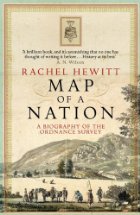 If you’re hiking somewhere in the UK and you’ve bought a map, you’re probably holding a little piece of the Ordnance Survey in your hands. The governmental organization responsible for mapping the nation, the Ordnance Survey faced a difficult road in its early years to successfully covering the entirety of the UK, including England, Scotland, Wales, and Ireland. In the seventeenth and eighteenth centuries, maps were inaccurate, expensive, and incomplete, leaving travellers in most of the world unsure about the shape of the space in which they lived. The Ordnance Survey was created for the military, but it quickly became something that ordinary people eagerly followed as the outlines of their world were defined correctly for the first time. In this book, Rachel Hewitt traces the origins of the Survey through to the completion of the “First Series” of maps, where the entirety of Great Britain and Ireland was completely mapped in detail for the first time. If you’re hiking somewhere in the UK and you’ve bought a map, you’re probably holding a little piece of the Ordnance Survey in your hands. The governmental organization responsible for mapping the nation, the Ordnance Survey faced a difficult road in its early years to successfully covering the entirety of the UK, including England, Scotland, Wales, and Ireland. In the seventeenth and eighteenth centuries, maps were inaccurate, expensive, and incomplete, leaving travellers in most of the world unsure about the shape of the space in which they lived. The Ordnance Survey was created for the military, but it quickly became something that ordinary people eagerly followed as the outlines of their world were defined correctly for the first time. In this book, Rachel Hewitt traces the origins of the Survey through to the completion of the “First Series” of maps, where the entirety of Great Britain and Ireland was completely mapped in detail for the first time.
I don’t really know all that much about the Ordnance Survey, except for the fact that most maps seem to come from them, but I was very intrigued by the prospect of the origins of accurate map-making. Another little niche part of history that I know nothing about? Please, tell me more. Hewitt, in great detail, does exactly that, creating a readable early “biography” of an institution, peopled with many intelligent characters and full of descriptions about just how maps were created several hundred years ago.
I will completely at first admit that I didn’t actually come away from this book understanding precisely how maps are made, although I do have a greater knowledge than I did before. The geometry just baffled me; it’s been over ten years since I studied actual geometry and more than eight since I did any sort of mathematical subject, so I would suggest you hold this against me, not the book. I sort of understood the process of making triangles out of the land based on visible landmarks to check accuracy and map everything in between, but if I was ever asked to do such a thing, I’m pretty sure no maps of the world would have existed before satellites. There is enough of this sort of thing here to slow the book down occasionally, but I wouldn’t let it put you off.
What I personally found far more interesting were the people that Hewitt profiles, especially the earliest ones and those who successfully run the Ordnance Survey from its inception on to the conclusion of the book. Their efforts and seeming belief in their hard work was admirable, and I was left with a distinct sense of awe at the actual enormity of the task they were trying to accomplish. There is a fantastic reminder that all of these men (because of course the project was exclusively run by men, unfortunately) were really just people on page 225 of my edition. As a reward for working diligently over four months’ surveying in Scotland, the men are treated to an enormous plum pudding, nearly 100 lbs of it, for which they conscripted many spare pots and pans and bits of cloth, and all took turns watching it boil so it didn’t burn.
The sections I also really liked had to do with place names, or toponymy. Coming up with accurate place names, especially as detailed here in Wales and Ireland, was a severe problem. The mainly English surveyors struggled to understand what people were calling their towns, much less how to spell it, and in Ireland the surveyors met with some reticence on behalf of the Irish (for which no one can blame them). The early Welsh maps were riddled with inaccuracies and the system used to determine place names had to be revised several times – in Ireland, eventually a separate team of all Irishmen was hired just to work out what the accurate names of places were.
In all, I found Map of a Nation to be a completely fascinating piece of history on a subject I really did know absolutely nothing about. I also trusted it more as it originated as a PhD thesis and the huge number of notes and works cited led me to believe that the author knew exactly where she was coming from. At the end, the author has bolded her works cited to indicate which books are most appropriate for further reading, a nice touch which has inspired me to see if I can get my hands on any of her copious recommendations. Those who aren’t particularly used to reading history might find it a bit dry and hard to get through, especially during the parts describing how the map-making happened, but it’s an endeavor that is well worth it.
All external book links are affiliate links. I purchased this book.
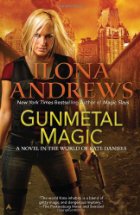 Andrea Nash is broken. Still traumatized in some ways by her childhood as a beastkin, kicked out of the Order of Knights of Merciful Aid, and seemingly single after losing the love of her life, Andrea has no direction. She finds herself sleeping in cupboards, avoiding her friends, and hiding from her true nature. She’s trying to put her life together, in part by running a new investigative firm called Cutting Edge with her best friend, Kate Daniels. One of the first cases that she needs to handle is an investigation at a dig site run by that former lover, Raphael, the alpha of Clan Bouda. Several shapeshifters have lost their lives and it’s Andrea’s job to find the killer, setting her feelings aside for the good of the Pack and all of Atlanta. Andrea Nash is broken. Still traumatized in some ways by her childhood as a beastkin, kicked out of the Order of Knights of Merciful Aid, and seemingly single after losing the love of her life, Andrea has no direction. She finds herself sleeping in cupboards, avoiding her friends, and hiding from her true nature. She’s trying to put her life together, in part by running a new investigative firm called Cutting Edge with her best friend, Kate Daniels. One of the first cases that she needs to handle is an investigation at a dig site run by that former lover, Raphael, the alpha of Clan Bouda. Several shapeshifters have lost their lives and it’s Andrea’s job to find the killer, setting her feelings aside for the good of the Pack and all of Atlanta.
This excellent expansion of the Kate Daniels universe is expertly well crafted, giving us a new main character who is distinctly (thankfully) different in voice from Kate and a real character in her own right. Andrea is clever and interesting but hurting constantly, and parts of this book definitely had my emotions in tangles. Her real problem is her nature as beastkin; her father was a hyena first, which means she’s considered a target by much of the shapeshifting world, as she can’t shift properly. Instead, she becomes a hybrid human and hyena, more beautiful and natural in appearance than a normal shapeshifter’s “warrior” form, but discriminated against because of her father’s beast-like nature. Her inability to accept who she is due to this discrimination has led to many of the problems she’s facing and a big part of the book is her acceptance of who she really is and just why she should be loved.
As usual with the rest of this series, the novel is action-packed. I loved the way that Andrea and Raphael interacted; I have always been a fan of them as a couple, but this novel in my opinion took that to new heights. Raphael’s quest to win Andrea back, knowing that she harbored feelings for him, was fantastic. One of my favorite moments was when he carved “MINE” into her kitchen table, a perfect summation of shapeshifter feelings and courtship. If she hadn’t loved him, this might well have been creepy, but in the book it works perfectly, as does Andrea’s retaliation.
Overall, I didn’t find that Gunmetal Magic ever really reached the heights that the books featuring Kate do, mainly because it didn’t quite give me that feel of desperately saving the world that Kate’s books usually manage, but I sincerely hope that there are more featuring Andrea. This could be the start of a fantastic spin-off series.
Also included in this volume is the novella Magic Gifts, which does feature Kate, and lines up with the story in the first part of Gunmetal Magic. Some reviews have advised to read this first; I didn’t read those reviews, so I read this one second. I did think it would probably have been better first, because those parts would have been fresher in my mind, but I certainly wasn’t complaining. I missed this story when it was posted on the Ilona Andrews website (I have since become a devoted follower) and I was very happy to get it, and a little bit of Kate, at the same time. It helps that this story is a good one and brings Kate and all of her gathered crew together to save a little boy from a choking magic necklace.
All I have left to say, really, is when is the next book coming out again? I’ll be first in line to buy it.
All external book links are affiliate links. I bought this book.
 Hannah Levi is renowned as the best midwife Venice has to offer. She delivers babies that no other midwife can manage, aided by her set of birthing spoons that enable her to pull reluctant babies from their mother’s wombs, saving both of them. But Hannah is Jewish, which means that she can’t practice on Christian mothers and babies, until a nobleman enters her house and begs for her help to save his wife. Hannah’s initial reluctance vanishes when the count offers her enough money to ransom her husband, who has been captured at sea and enslaved for months. Her choice to try and save mother and baby creates an intense rivalry amongst the count’s family that endangers everything she strove to save and may leave her husband trapped on Malta forever. Hannah Levi is renowned as the best midwife Venice has to offer. She delivers babies that no other midwife can manage, aided by her set of birthing spoons that enable her to pull reluctant babies from their mother’s wombs, saving both of them. But Hannah is Jewish, which means that she can’t practice on Christian mothers and babies, until a nobleman enters her house and begs for her help to save his wife. Hannah’s initial reluctance vanishes when the count offers her enough money to ransom her husband, who has been captured at sea and enslaved for months. Her choice to try and save mother and baby creates an intense rivalry amongst the count’s family that endangers everything she strove to save and may leave her husband trapped on Malta forever.
I wasn’t really sure what to expect from The Midwife of Venice; even though I had it for review, it spent a bit too long on the shelf before I finally persuaded myself to pick it up and give it a try. Compared to The Red Tent and People of the Book – both books I loved – it did sound like something I would like, but I simply don’t crave historical fiction these days. With this book, I was initially reluctant and it took me a few pages to get into it, but before long I became invested in Hannah and Isaac and eager to find out what happened to each of them next.
The story is told through alternating viewpoints, with Hannah in Venice and Isaac stranded in Malta. Each of them deal with completely different difficulties, but one of the constants of the book is their longing to be back together, though they’ve been separated for months and fear the other dead. It’s a story about an established love, which doesn’t occur quite as often as new romance in a book like this one.
In addition, Hannah’s half of the story revolves around the uniquely female sphere of childhood and, in that time, child-rearing. Many of the people she deals with are women, and in fact the only kind character who is male on her side of the story is the count himself. His wife, the previous midwife, and Hannah’s sister all have a role to play in her quest to get her husband back, making the female relationships in this novel intriguing even as we note how precarious their positions are. Hannah, as a Jewish midwife, is intensely vulnerable when delivering a Christian child, as she could be accused of killing the baby and its mother in a heartbeat. Her sister, a converted Christian prostitute, also faces the very severe difficulties of her position, especially when we discover exactly how she ended up that way.
I found Isaac’s side of the story somewhat less compelling, as he battles against people trying to enslave him and stays faithful to his religion despite the temptation of nourishment and safety. I’m not entirely sure why; I know that slave stories are important, but Isaac’s didn’t have much to add, and people in general just seemed too keen to help him. I know this sounds like me saying “he isn’t suffering enough!” but it just felt somewhat unrealistic that he’d have multiple helpers devoted to rescuing him when undoubtedly most captured slaves had a very difficult time of it.
Reservations aside, The Midwife of Venice is a book that I enjoyed very much, and would be a perfect fit for someone looking for historical fiction outside the standard templates of Great Britain, monarchy, or Rome.
All external book links are affiliate links. I received this book for free for review.
 It has started feeling decidedly like autumn in the UK already, which has depressed me to a ridiculous degree; I truly feel as though we haven’t had summer this year. The temperature has stayed very low and the rain we’ve had (the most since 1912) has certainly made it gloomy. I seem to require a higher temperature to be comfortably warm than most Brits, probably because my American skin is used to hot summer weather, so even when my husband and friends noted that it was a bit warmer, I just never really got there. Summers aren’t always like this here, fortunately, so I’m already hoping for next year. It has started feeling decidedly like autumn in the UK already, which has depressed me to a ridiculous degree; I truly feel as though we haven’t had summer this year. The temperature has stayed very low and the rain we’ve had (the most since 1912) has certainly made it gloomy. I seem to require a higher temperature to be comfortably warm than most Brits, probably because my American skin is used to hot summer weather, so even when my husband and friends noted that it was a bit warmer, I just never really got there. Summers aren’t always like this here, fortunately, so I’m already hoping for next year.
The colder weather does seem to have inspired me to read more books, though. I’m still reading at a slower pace than I have in the past, but I was delighted to finish 12 books this month (although I am including a novella in that figure). Of the ones that I intend to review, I’ve actually done a fair job, too, with 3 more reviews coming next week. I’m attributing the reviews to last week’s bank holiday, but clearly a single three-day weekend gives me enough time to get back into the swing of reviewing. Yay!
Here’s what I read:
- The Killing Moon, N.K. Jemisin
- The Secret Life of Bletchley Park, Sinclair McKay
- The Midwife of Venice, Roberta Rich
- The Last Caesar, Henry Venmore-Roland
- White Night, Jim Butcher
- Secret Desires of a Gentleman, Laura Lee Guhrke
- Tides of War, Stella Tillyard
- Gunmetal Magic, Ilona Andrews
- The Unlikely Pilgrimage of Harold Fry, Rachel Joyce
- Map of a Nation, Rachel Hewitt
- Winter’s Passage, Julie Kagawa
- The Dirty Streets of Heaven, Tad Williams
Favourite of the Month

Totally different books, both awesome in their own completely different ways. I already reviewed Harold Fry. Gunmetal Magic is going to be reviewed this week. Nothing like a new Ilona Andrews book to make my reading world brighter.
What’s coming in September
This should give you a good idea of what I’ll be reading this September:
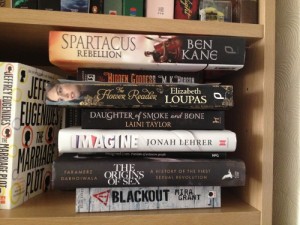
This is my immediate TBR pile, which alternates between review books (that’s a review book up top) and my own books that I’d like to read next. Blackout is definitely getting read this month; I’ll probably start this week, in fact. I’m also planning to read 1356 by Bernard Cornwell, and will be featuring an excerpt from the book ahead of its pub date in the UK this month. I’m excited; I really enjoy all of Cornwell’s books, and I don’t think this is going to be an exception.
Finally, I’m also participating in Aarti’s A More Diverse Universe blog tour, which involves lots of bloggers reading speculative fiction books by authors of color. This is a fantastic project; I was so dismayed to discover that there are so few speculative fiction books actually written by authors of color in comparison to how many there are and that I’ve personally read. I need to make more of an effort.
As for what else I have planned this month – I’ve just ordered some books to start refreshing my Russian. Working amongst so many people who speak multiple languages has made me both jealous and irritated that I never kept up the one language I did study intensively (for six and a half years). I do also hope to go to Russia in the next couple of years, so it’s a good time to start trying to refresh my memory and get back into it.
What does September have in store for you?
|
|


Recent Comments