|
|
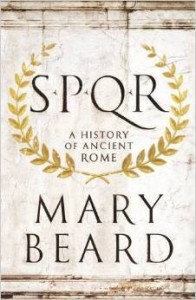 I am fortunate enough to have visited, and fallen in love with, Rome. It isn’t called The Eternal City for nothing; it’s layers upon layers of history, untold secrets still hiding underneath every building that stands there, where every turn could lead you to something ancient. The Pantheon is my favourite example, as you walk along twisty streets until suddenly, you stand in a plaza with an architectural feat looming above you. Actually magical. So worth a visit, and I find myself often longing for a repeat so I can walk those streets again. I am fortunate enough to have visited, and fallen in love with, Rome. It isn’t called The Eternal City for nothing; it’s layers upon layers of history, untold secrets still hiding underneath every building that stands there, where every turn could lead you to something ancient. The Pantheon is my favourite example, as you walk along twisty streets until suddenly, you stand in a plaza with an architectural feat looming above you. Actually magical. So worth a visit, and I find myself often longing for a repeat so I can walk those streets again.
Anyway, huge history nerd that I am, I couldn’t resist SPQR for long. When I don’t know much about a time period, one of my favourite ways to get into it is by reading a mammoth work of history first, then narrowing down into areas that specifically interest me. I feel like everyone must know bits and pieces about Rome, but putting it together in a coherent story is what’s beyond me. Mary Beard’s colossal new work on Rome is probably one of the best of this type that I’ve read. It focuses on just ancient Rome, and of course when I say “just”, it fails to encompass the enormous amount of information that Beard had to draw upon and cover, as parts of this period in history are better documented than others. It looks the period from the rise of Rome, and examines those founding myths, up to the republic and then the rise of imperial Rome, ending in 212 AD.
Beard looks at the history of ancient Rome in three ways; first, by drawing upon sources and telling us what happened, then by questioning what “traditional” sources and later interpretations have told us, and finally by analysing how people outside fame and records might have lived. I love this approach because it’s still narratively interesting, taking us mostly chronologically through Roman history, but it questions and toys with the sources that exist rather than presenting history as fact. History isn’t fact, and it shouldn’t be presented as such; so much of what we have especially in this period comes from a single source somewhere, and often a biased one, and which has been changed and misinterpreted as time goes by. Too much popular history (that I’ve read, anyway) simply tells a narrative without thinking about the sources behind that narrative and whether we can trust them or not. Beard clears away these cobwebs, as much as she can anyway, and gives us a great picture of what the republic of Rome might have been like. She’s impartial, she’s clear, she’s compelling, whether she’s discussing Nero or women in Rome or terrorism (because yes, Romans had terrorism too).
This is absolutely a book I’d recommend to anyone who is seeking to learn a little bit more about this period in history.
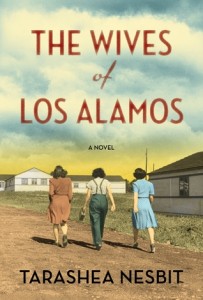 When the top physicists in the United States – and many from the rest of the world – were assigned to Los Alamos to build the atomic bomb, so were their wives. Though their experiences were different, much of it was the same; the arrival, the mystery, the lies, and the way that life went on. The wives, strangers at first, grow to know one another and to rely on each other in the absence of the men who used to influence so many of their activities. This book takes an unusual perspective, that of all of the women, to highlight the differences amongst them while telling the story of the events that shaped their lives. When the top physicists in the United States – and many from the rest of the world – were assigned to Los Alamos to build the atomic bomb, so were their wives. Though their experiences were different, much of it was the same; the arrival, the mystery, the lies, and the way that life went on. The wives, strangers at first, grow to know one another and to rely on each other in the absence of the men who used to influence so many of their activities. This book takes an unusual perspective, that of all of the women, to highlight the differences amongst them while telling the story of the events that shaped their lives.
In this book, there is no “I”. There is only “we”, as in the collective. All of the women had to keep their lives secret from families and friends elsewhere. All of the women had to lie about what their husbands were doing and where exactly they lived. All of the women were mostly left to their own devices in a dusty, half-built town, often with children to raise and houses to maintain all by themselves, wondering what exactly had led them to this point in their lives. And yet somehow Nesbit does manage to get individuality across, a reminder that every woman is different.
The book takes us through most of the time that the scientists of the Manhattan Project and their wives spent at Los Alamos, telling the story through lots of different eyes rather than just a single pair. I’ve had an interest in this since I read Age of Radiance a few months ago, and I liked getting the perspective of the many women who lived through this rather than just the mostly male scientists. This is naturally fictionalised, but I liked how it got into the heads of so many women, imagining what this experience must have been like. Really enjoyable and recommended.
I received this book for free for review consideration.
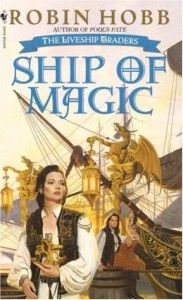 I want to start this post by saying that I adored this trilogy when I read it the first time. I remember loving it so much that I proceeded to push it on all the people that I knew at the time. My expectations were high. After my really enjoyable reread of the Farseer trilogy, they actually went up. I want to start this post by saying that I adored this trilogy when I read it the first time. I remember loving it so much that I proceeded to push it on all the people that I knew at the time. My expectations were high. After my really enjoyable reread of the Farseer trilogy, they actually went up.
Like I experienced last month, I was surprised by how much I’d forgotten about these books. In this case, I at least remembered the characters and the beginning of the trilogy in particular, mainly because I think I read it after both the Farseer and the Tawny Man trilogies the first time. But by the time I was in the middle of the second book it was like experiencing everything again with no knowledge of what had come before. It’s honestly been a surprise to me how much reading things I thought I remembered has been like reading them for the first time. I wonder if it will stick a little bit more now that it’s been through twice, but I have enjoyed letting these books take me on the same exciting journey they did over a decade ago.
Anyway, on to this particularly trilogy. The books are set in the same world as the Farseer trilogy, but further to the south in Bingtown, a small settlement on the Cursed Shores. Bingtown governs itself through the Traders’ Council, but are subject to a larger country called Jamaillia and ruled by the Satrap. Althea Vestrit, a Trader’s daughter, is waiting to take on her father’s ship, the Vivacia; her father is unwell and on his death the liveship will awaken. After three deaths, a liveship awakens, as the wizardwood figurehead has absorbed enough life experience and memories to take on the characteristics of a member of that family. Althea has been with Vivacia for years, in the place of her brothers who died of the Blood Plague before she was born, and fully expects to guide young Vivacia through her awakening. But when Ephron Vestrit dies, nothing goes as expected, and the small saga of the Vestrit family becomes wrapped up in many larger events. the Traders’ Council, but are subject to a larger country called Jamaillia and ruled by the Satrap. Althea Vestrit, a Trader’s daughter, is waiting to take on her father’s ship, the Vivacia; her father is unwell and on his death the liveship will awaken. After three deaths, a liveship awakens, as the wizardwood figurehead has absorbed enough life experience and memories to take on the characteristics of a member of that family. Althea has been with Vivacia for years, in the place of her brothers who died of the Blood Plague before she was born, and fully expects to guide young Vivacia through her awakening. But when Ephron Vestrit dies, nothing goes as expected, and the small saga of the Vestrit family becomes wrapped up in many larger events.
The main thing that appeals to me about this series, especially this time, is the amazing ladies who make up the cast of the books. Brave, determined Althea is still my favorite, but this time, I much more appreciated the depth and variety of the other women who make up this world. Keffria, who thought she just wanted to hide behind her husband but actually has the strength and will to take care of herself. Ronica, who has been capable all her life but has to admit her mistakes. Even Malta, starting off a spoiled and incredibly irritating girl, eventually sees the wider picture. The huge changes that take place for everyone, the way they learn and develop and change, are a big part of the book, even as the events sweep them along as much as the readers. The people who start out these books are not the same people who end them, and it feels realistic and believable.
It’s not just that, though – it’s that Robin Hobb has the ability to help you see things from so many characters’ points of view. Kyle Haven, for instance, acts in a way that is incomprehensible to many of the characters, but in his own head, his views make sense (which is disturbing as a reader). Keffria finds herself swayed along with her husband because he can argue relentlessly and act as though logic backs him up, when in reality it doesn’t. He’s a product of his culture, so even as we revile him as readers we can reluctantly understand how he ended up being that way. Malta is kind of similar to this, and in fact Althea even says she could see herself in Malta, had she been stuck in the house and forced to conform to the stereotypes of female behavior when it ill-suited her personality. I love this, and I think it’s a big reason why this trilogy is my favorite. I adore Fitz, from the other two trilogies, but I even more appreciate seeing so many viewpoints and understanding the population of this society.
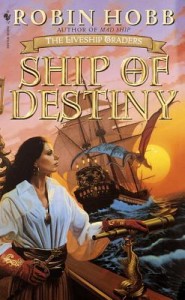 The plot, of course, is fantastic, and had me completely swept up in it, particularly in the final book. I forgot what happened so I was swept along, breathless page after page, more or less ignoring actual chores and responsibilities to read this book (who could do washing up when someone’s life is on the line??). It is wide-ranging across lots of different territories, involves king-making and romance and danger and friendship and madness and healing and so much more. It has both that appeal of a closed environment – the liveships – and the sense of a wider, varied world, along with a rich and fascinating history. The plot, of course, is fantastic, and had me completely swept up in it, particularly in the final book. I forgot what happened so I was swept along, breathless page after page, more or less ignoring actual chores and responsibilities to read this book (who could do washing up when someone’s life is on the line??). It is wide-ranging across lots of different territories, involves king-making and romance and danger and friendship and madness and healing and so much more. It has both that appeal of a closed environment – the liveships – and the sense of a wider, varied world, along with a rich and fascinating history.
The only part that I felt was somewhat less appealing was the sections about the serpents. They’re important, but they’re infrequent and mostly consist of searches for She Who Remembers and various worries about how they haven’t found her and are starving. But this is a very small part of a series of books that consumed my thoughts and culminated in a very happy reader.
With that, I’ll stop gushing; but if epic fantasy is something you enjoy, and you haven’t read this trilogy yet, you should. No real need to read the Farseer trilogy first, but of course, they do loosely tie together and are actually chronologically immediately after in terms of the wider world story, so I would recommend it. I’m so glad I’m still loving these books just as much as I did the first time.
 I didn’t know who Wendy Cope was when I started reading this book; I picked it up due to the blurb, which reads: I didn’t know who Wendy Cope was when I started reading this book; I picked it up due to the blurb, which reads:
Selected prose from Wendy Cope, one of the nation’s best-loved poets, from a lifetime of published and unpublished work as a reviewer, critic, and journalist. Readers can meet the Enid Blyton-obsessed schoolgirl, the ambivalent daughter, the amused teacher, and the sardonic television critic.
A book for anyone who’s ever fallen in love, tried to give up smoking, or consoled themselves that they’ll never be quite as old as Mick Jagger.
Sounds pretty good, doesn’t it? I thought so; it was also on the table as recommended in my local Waterstones, so I thought I’d give it a try*. I was hoping for something of a biography, or at least a selection of essays about the author’s life experiences. I got some of that, but I suppose what I didn’t realize is that this is more of a collection of writings than anything else. The editors have gone through a number of archives and collected works to be published in this one volume. The book is split into sections based on Wendy’s girlhood, teaching years, time as a poet, and then a few other collections of various pieces of work.
For me, by far the most interesting parts were those about her life and her transition from a teacher into a poet and how that changed her. I was immediately drawn in by the very first piece, which is composed of snapshots of her memories as a girl, and stories of her time as a teacher. I would venture to guess that I was probably most taken with this because it is the most like a memoir and suits what I’d like to read. I can also say that I enjoy the way Cope writes and I’m actually intrigued to pick up her poems now, simply because this is clear and straightforward and there isn’t enough poetry in my life. She’s also a big believer in people getting paid for their work (rather than poetry getting shared for free online) and I respect her for that; she’s not after fame, she’s after making a living for herself doing something that she loves and is good at.
The rest of it didn’t really reflect any sort of universal experience and to be perfectly honest, I sometimes found it boring. I might have been more interested if I’d known who Wendy Cope was before, but the blurb above made it seem like I could enjoy it even though I didn’t, and in this I was disappointed. The interesting sections were interspersed with too much that I really didn’t particularly like. Perhaps personal taste, as I think I might be the wrong audience, but I didn’t really find it to be nearly as universal as the blurb seems to suggest.
Would I recommend this? I’m not sure. As I said above, I’m not sure I’m the target audience for this particular book, and I don’t think I really thought very much about what I was getting before I got it. But what I will do is go out, buy and read some of Wendy Cope’s poetry. I think it will be much more suited to what I’d like to read – and I will, of course, let you know what I think.
*I already had it for review but I bought five other books on that particular visit, so doing what I can to keep bookstores alive too. Obviously this means I received it for review consideration.
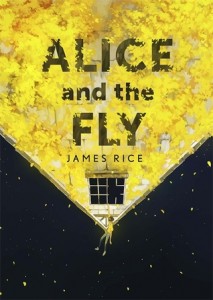 I’m not sure how to even start describing this book. Greg is a very shy, awkward teen boy who is deathly afraid of Them – spiders. This fear permeates many of his thoughts, and amongst a few other things, like a lisp and fits, makes him a complete and total outcast who virtually never speaks to anyone. But he does think, and feel, and want to share, so he does this in the form of a diary to a pretty girl he likes. This is what we read, gaining access to Greg’s innermost thoughts while only intermittently experiencing others’ thoughts of him. I’m not sure how to even start describing this book. Greg is a very shy, awkward teen boy who is deathly afraid of Them – spiders. This fear permeates many of his thoughts, and amongst a few other things, like a lisp and fits, makes him a complete and total outcast who virtually never speaks to anyone. But he does think, and feel, and want to share, so he does this in the form of a diary to a pretty girl he likes. This is what we read, gaining access to Greg’s innermost thoughts while only intermittently experiencing others’ thoughts of him.
Just like the summary to this book is hard to write, so is any review of it. It’s extremely affecting, but difficult to describe. The story is revealed very slowly, mainly because Greg’s diary is interlaced with interviews done after an unknown event about him. In this way, we get to know him mainly through his own eyes, but also through the eyes of others. This is a heartbreaking way of telling the story, really effectively getting across how very different someone can be on the inside. Greg is isolated, but he both does and doesn’t want to be, something that the people around him don’t realize at all. It casts a fresh perspective on the way we treat those we consider to be different, especially mentally ill, who may look or act differently but are still so human.
This book is designed to make us uncomfortable, to make us think about how we treat people. It costs so little to be friendly yet we can be so horrible to someone we perceive as different from us. Greg’s mind is not an easy place to be, but it’s how people treat him that hurt the most, even when he shrugs it off. It is painful, and it is uncomfortable, but it is worth reading.
A lot of the press surrounding this book emphasizes that it’s really about love, and I didn’t see this at all at first but eventually came to see this point of view by the end. Greg’s illness doesn’t stop him from loving with all of his being, nor does it stop others from being capable of loving him, even if he is isolated. It is also about the struggle to put on a front and appear normal, even when we really aren’t, even when no one is. Greg’s family is far from normal, but they go to lengths to pretend and to project an image of perfection and happiness rather than addressing any of the causes behind their root misery. This willingness to ignore very obvious issues is part of what results in the final piece of the plot falling into place.
I couldn’t say I enjoyed this book, because I don’t think it’s a book to enjoy. I was certainly drawn to it, intrigued enough to find out what had actually happened, to gain some sort of resolution, but it was hard going. Not hard to read, but very affecting. I can see why it’s garnered so much pre-publication praise, and I would add my voice to theirs. This is a book that’s worth reading.
I received this book for free for review consideration.
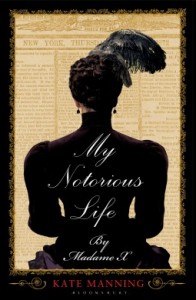 Ann “Axie” Muldoon is an Irish girl poor in money but rich in family, with a mother and two beloved siblings. When she, Dutch, and Joe meet a philanthropist intent on saving children, she finds her young life spiralling deeper into poverty, this time without the people she loves, as her brother and sister are left behind in Illinois with adoptive parents. Now an orphan, Axie is taken in by a doctor and midwife, learning a trade that will rescue her from the poorhouse but set her up for an infamy her young mind can’t imagine. Ann “Axie” Muldoon is an Irish girl poor in money but rich in family, with a mother and two beloved siblings. When she, Dutch, and Joe meet a philanthropist intent on saving children, she finds her young life spiralling deeper into poverty, this time without the people she loves, as her brother and sister are left behind in Illinois with adoptive parents. Now an orphan, Axie is taken in by a doctor and midwife, learning a trade that will rescue her from the poorhouse but set her up for an infamy her young mind can’t imagine.
Loosely inspired by the life of Ann Trow Lohman and set in mid-nineteenth-century New York City, My Notorious Life by Madame X is a brilliant historical novel rooted in actual fact. While Ann Muldoon didn’t exist in real life, children were taken from their parents in New York City and sent to the midwest to be adopted. Midwives – particularly those who performed abortions – were persecuted for the smallest of visible crimes, as was anyone doing anything perceived immoral in a similar way by the male lawmakers of the time. And Ann Trow Lohman did make an absolute fortune as Madame Restell, midwife and seller of contraceptive medicines under a different name. These historical events, combined with Manning’s gripping storytelling and evocative scene-setting, resulted in an excellent read.
Though Axie is a midwife, her practice is secondary to the relationships that make this novel. This is not only with Charlie, her husband, but with her mother, the midwife who teaches her the trade, the cook who cares for her, her only friend as a girl, her lost brother and sister, and finally the women she cares for and helps in desperate circumstances. Throughout the novel it’s clear that she firmly believes that she is doing right by these women, helping many of them out of a situation they cannot handle, or doing her best to help them avoid pregnancy altogether. As a modern reader it seems obvious that her medicines won’t always do the job she’s advertising, but she doesn’t know that, and she sticks fiercely by the women she’s caring for even at risk to herself, more than once. This, combined with her vulnerability, made me love her. She’s by no means perfect, struggling constantly with the idea that people might love her and pushing against them as a result, and she certainly does some things I wouldn’t personally agree with, but she’s strong, loyal, and ultimately admirable.
Axie also gives women early term abortions, which is discussed in detail. She is a midwife, first and foremost, but it is certainly a huge component of her working life, because women need her for so many reasons. They are too poor to feed another child. They have been raped. Their lover, who was full of compliments and kind words, will not marry them. Their families will disown them and they will live on the street. She says that she wishes the men persecuting her for helping women found themselves in some of the same situations that the pregnant women who approach her do; she’s certain that if that was the case then laws would be different. How depressingly little has changed in this respect in many parts of the world, even with the advent of birth control and women’s rights, which makes this novel resonate even more strongly with a modern reader.
And then there is Axie’s relationship with Charlie, which is never easy but had my romance-reading heart in thrall to the book more than once. From the rooftop of an orphan train to a prison cell to a 5th avenue mansion, their love story is never boring and, although it isn’t the focal point of the novel, so well done.
This book was so much more than I was expecting – a deeply powerful, fantastic novel which reminds me once again that I do love historical fiction. Well worth reading and highly recommended.
I received this book for free for review. All external book links are affiliate links.
 We might all know the ending to the relationship between Beatrice and Benedick, from Shakespeare’s Much Ado About Nothing, but how did they meet? Throughout the play it’s clear they have a history and Marina Fiorato has taken it upon herself to imagine what that history might be. From their first summer together through the ten years it takes them to reunite, this is a love story woven in and around Shakespeare’s wonderful play. We might all know the ending to the relationship between Beatrice and Benedick, from Shakespeare’s Much Ado About Nothing, but how did they meet? Throughout the play it’s clear they have a history and Marina Fiorato has taken it upon herself to imagine what that history might be. From their first summer together through the ten years it takes them to reunite, this is a love story woven in and around Shakespeare’s wonderful play.
Much Ado About Nothing is the first play that taught me that Shakespeare could be for me. It was the first Shakespearean play I’d ever seen performed live by professionals (there have been more now, I assure you). I went to see it in the Globe, with a group of friends I had never met before. It was amazing. I loved the entire experience and it’s something I simply can’t get enough of. So it’s entirely possible that this book had a little too much to live up to and maybe it isn’t surprise that I didn’t like it all that much.
My previous experience with Marina Fiorat0’s books hasn’t been the most positive, either. I read The Glassblower of Murano a few years ago and while it was okay, it didn’t blow me away. I feel similarly about Beatrice and Benedick. I would probably not have picked this up on my own as a result, but it arrived as an unsolicited review copy. The book itself is beautiful (yep, I judged a book by its cover) and the connection with the play made it something I chose to read and looked forward to. To be perfectly honest, the book didn’t really capture me until we got to the part Shakespeare had already written – and it’s not always the best idea to mess with someone that is already so wonderful. The misunderstanding that leads to their separation was certainly Shakespearean in nature, but it frustrated me, using a common theme of two romance characters failing to talk to each other as a reason for years of suffering.
There’s also that awkward juxtaposition between the years-long story of the main characters meeting and the very few days that make up the play, as usual with Shakespeare. It just doesn’t fit together that well. The pacing feels off and rushed in the latter half because the author suddenly has to speed up the pace of events, instead of spreading them out over a summer or several years. There might be a reason there aren’t many novelizations of Shakespearean plays.
Overall, I felt it was okay, a book I didn’t mind reading, but not a book that will stay with me as I know the play will. Perhaps I shouldn’t compare, as it’s a different medium, but it is hard to come up against Shakespeare and not be found wanting.
I received this book for free for review.
 Boy Novak is the daughter of an abusive rat catcher, a man she longs to escape. One day, finally, she goes; she gets on a bus and finds herself somewhere new. In her new home, Boy meets a few friends and Arturo Whitman, father of a beautiful little girl called Snow. Boy and Arturo marry and only when Boy gives birth to her own daughter, Bird, does she discover that Arturo’s family has a secret – one that has a great deal of resonance in 1950’s America. Boy Novak is the daughter of an abusive rat catcher, a man she longs to escape. One day, finally, she goes; she gets on a bus and finds herself somewhere new. In her new home, Boy meets a few friends and Arturo Whitman, father of a beautiful little girl called Snow. Boy and Arturo marry and only when Boy gives birth to her own daughter, Bird, does she discover that Arturo’s family has a secret – one that has a great deal of resonance in 1950’s America.
This book is somewhat obviously modeled on Snow White, but twists and turns that fairy tale to become almost entirely different, with the evil stepmother actively trying her best not to be an evil stepmother. It struck me as a novel primarily about how people appear and how a little change can make a lot of difference. There are several characters in this book whose appearances don’t match the way their “true” selves would be perceived in society, which is both good and bad for them. It’s about prejudice and how we apply it based on something so shallow which actually resonates a lot with current events. And that’s all I’ll say about that, to avoid overtly spoiling a crucial plot point.
Though it’s a twisty book with a lot of surprises and a mystical feel, I actually didn’t enjoy Boy, Snow, Bird very much. I often struggle with books where I don’t connect to or empathise with any of the characters and this was the case here. The three title women are the only characters who are fleshed out to any degree, with the rat catcher, Arturo, Boy’s first love, and Arturo’s family mostly glossed over. The letters between Bird and Snow towards the second half of the book were easily my favorite part; two sisters getting to know each other again, understanding how they are alike and how they are different. But overall I just found myself feeling sort of underwhelmed. I felt like I’d seen a lot of other bloggers heap praise on Oyeyemi’s works and I just felt cold towards this, never really involved or that interested in what was happening to the characters or why. It’s been a few days since I finished it and I already feel like it’s left my consciousness, rather than causing me to dwell on some of the powerful messages it contained.
I’d be very interested to know if any of you would recommend any other Oyeyemi works to try, but in the meantime I probably wouldn’t recommend this one.
All external book links are affiliate links. I received this book for free for review.
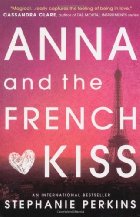 Anna Oliphant’s sudden-millionaire author father has decided that his settled American daughter needs to finish high school in France. So, for her senior year of high school, and mostly against her will, Anna is sent to an American school in the centre of Paris. She’s ready for a year of hiding in her room, longing for her American life back, but then she meets Etienne St Clair, a ridiculously gorgeous boy with an English accent, incredible personality, and a girlfriend. Anna soon fits in with his crowd, but she can’t help her feelings for him, and suspects that they might just be mutual. Anna Oliphant’s sudden-millionaire author father has decided that his settled American daughter needs to finish high school in France. So, for her senior year of high school, and mostly against her will, Anna is sent to an American school in the centre of Paris. She’s ready for a year of hiding in her room, longing for her American life back, but then she meets Etienne St Clair, a ridiculously gorgeous boy with an English accent, incredible personality, and a girlfriend. Anna soon fits in with his crowd, but she can’t help her feelings for him, and suspects that they might just be mutual.
I thought I didn’t really like YA, but books like this one just keep on winning me over. I have known so many book bloggers who have read and adored this book, but I still thought – not for me. I’m not even entirely sure why, now; I know I don’t particularly like contemporary books, sometimes I find YA romance a little too overwhelming, but neither of those are justifications. I bought it, based on all the rave reviews out in the world, but I didn’t pick it up until last week, when to be perfectly honest I needed something that was light, stress-relieving, and not a huge chunkster like the other two books I found myself reading.
I didn’t expect much, but this book is so sweet and wonderful. It is a romance which grows from a friendship, even if attraction is always there. I love books that do this – completely portray the underpinnings to the love story, not just oh-look-I’ve-seen-you-I-love-you-now. Etienne and Anna are friends. They grow together. They learn how to talk to each other, and they learn how to deal with the myriad concerns that compose their lives. They really turn into best friends. And it’s not actually to the exclusion of all of their other friends, either. It’s easy to believe that a couple like them could genuinely stay together in the real world because they’ve had to learn so much to get to the point where the book ends.
Anna’s confusion and homesickness at the beginning of the book completely and totally won me over. Her embarrassment at her foreignness, her terror of embodying stereotypes, her complete block against even trying to speak French – these are things I could relate to, even though I have always consciously chosen to live away from my own country. I’ve actually read reviews that criticize Anna for this, which baffles me. Perhaps they’ve never quite experienced the combined paralysis of shyness and unfamiliar culture. The fact that Etienne is experienced in more cultures than Anna is but still understands then in turn made me love him (also, the English accent, never gets old even when you live in England and are married to an English man), and the rest of the book I spent luxuriating in the slow burn of their growing romance.
Although, seriously, sometimes people in books need to talk to each other.
Plus, Paris itself. I will be completely honest, I didn’t like it that much in person, but in this book I loved it. I could connect my memories to Anna’s experiences and think, yes, actually; this could have been magical. For her it is as she gets used to it and the city becomes a place of wonder and discovery. I loved the way their love story was woven into the fabric of the city, that their major landmarks in discovering each other are mirrored by shared experiences within such a romantic place. If a book could make me want to go back to Paris and try it all over again, this is the book.
I finished it in one day with a happy sigh, and then bought Lola and the Boy Next Door and Isla and the Happily Ever After. If you, like me, have been waiting to read this book because you’re not sure, I would encourage you to give it a try anyway. It might surprise you.
 Kolya is a deserter. He and his brother have left their Red Army unit, disgusted and uncomfortable with the atrocities they have been committing in Russia in 1920. On the way back to his family, Kolya’s brother Alec dies, and Kolya lives for nothing but the chance to spend the rest of his life with his wife and children. But the village is empty. There is no sign of anyone, no hint of what’s happened to them except a legend told by an old woman. Kolya sets off on a desperate trek to find them, through frozen wilderness and into the heart of the army he left behind. Kolya is a deserter. He and his brother have left their Red Army unit, disgusted and uncomfortable with the atrocities they have been committing in Russia in 1920. On the way back to his family, Kolya’s brother Alec dies, and Kolya lives for nothing but the chance to spend the rest of his life with his wife and children. But the village is empty. There is no sign of anyone, no hint of what’s happened to them except a legend told by an old woman. Kolya sets off on a desperate trek to find them, through frozen wilderness and into the heart of the army he left behind.
This landed on my doorstep as an unsolicited review copy with a cover that, to be perfectly honest, didn’t appeal to me all that much (okay, not at all). Nor did the cover slogan, “The only thing that matters is blood”, and I think both are doing the novel a huge disservice. I decided to read it because the description sounded interesting and because I’ve been fascinated with Russian history for more than half of my life. The decision I made was the correct one, because behind the bland cover and needlessly violent words was a book that I genuinely enjoyed.
First of all, the setting. Russian wilderness in the grip of coming winter leaps out from the page. The season is perfectly chosen – winter is choking the countryside just as suspicion gone mad is choking the people with fear. Everything feels cold, closed-off, and terrifying. Smith’s writing helps this come alive; it’s easy to be really scared for these characters because there is no hint of what might happen next. Anyone could be an enemy, even your friend, because that’s exactly the attitude that the leaders are using to scare the many, many peasants into submission.
Kolya himself is an excellent character. He’s committed many wrongs and justified them in his head, just like all of the other soldiers, but he wants to make things right. He has finally seen what matters in his life and when he goes to find it, he can’t. It could drive him mad but instead it makes him more determined, although tinged with an edge of despair. I liked both the idea that Kolya was redeeming himself and his admirable drive to find his family. He doesn’t try to do everything; he’s not a superman. He just wants to save the people he cares about, and to me this seems a very human reaction. We perhaps would all like to end every atrocity in the world, but at this point he has to understand what is and isn’t possible and accept it. And this is why the sentence on the cover annoys me – what really makes Kolya move is his family, not “blood”. I worried about what happened to them for him.
The story itself is well-paced. Endless trudging through a frozen forest could have easily become boring, but the actual journey keeps throwing obstacles in Kolya’s way, both good and bad ones, that help inform his plan. It probably does qualify as a thriller, with plenty of exciting scenes and a few fights, but the overall impression the book gave me was quieter than that. Its strengths were in the cold, quiet nights, the air of suspicion and uncertainty, the crunch of hooves moving through a freezing, silent forest.
In conclusion, I really liked Red Winter. I would suggest it to those who enjoy historical fiction, especially if you’re interested like me in the dangerous times when societies are changing or in Russia.
I received this book for free for review consideration.
|
|



Recent Comments