|
|
 The Hemings family as slaves are most famous for their connection with Thomas Jefferson, of course, because while he owned the family he also had a long-term affair with Sally Hemings after the death of his wife. That affair was made public while Jefferson was a very visible figure, leaving an impression of Sally that lasts up until the present day. Gordon-Reed views the Hemings family as a whole, covering multiple generations to explore who they were, how slavery affected them, and thus to look more in depth at this relationship between Jefferson and Hemings. The Hemings family as slaves are most famous for their connection with Thomas Jefferson, of course, because while he owned the family he also had a long-term affair with Sally Hemings after the death of his wife. That affair was made public while Jefferson was a very visible figure, leaving an impression of Sally that lasts up until the present day. Gordon-Reed views the Hemings family as a whole, covering multiple generations to explore who they were, how slavery affected them, and thus to look more in depth at this relationship between Jefferson and Hemings.
I’m no scholar of American history; my interests have been firmly European for a good few years now. That doesn’t mean I can’t appreciate an excellent work of American history and that is precisely what The Hemingses of Monticello is. It is very detailed and long, so not for the faint of heart, but I felt it unearthed a ton of truth in its portrayal of this family so affected by slavery. Gordon-Reed in many respects returns agency to Sally and the rest of her family, looking at how they may have been as people rather than as objects or simply as enslaved people who, despite the pain of their condition, were not all the same in other fundamental respects.
One of my favorite sections of the book took place before Jefferson was president, while he and Sally and one of her brothers were together in France. This was fascinating because, in France, they could have become free. It was a recognized possibility and Jefferson did not follow the law while they were there; instead he paid them wages and seems to have treated them more like free servants instead of the slaves they were. What does it mean that both of them returned with him, seemingly voluntarily, to the world of slavery? Or that Sally had already conceived at that point? Evidence is slim but Gordon-Reed’s case is convincing, and I did believe that she went with him because he promised her children would be free (and they were). A risky decision given that he could have died before that, and indeed his death was disastrous for the Hemings family, but not in that way.
Tied up in that is the notion of their relationship, naturally, and the fact that Jefferson clearly slept with a woman who was his slave and had a relationship with her. He could have forced her for all we know – but if he did why didn’t she flee? Slave women did flee from their rapists, as the author demonstrates. They did cry out for help. Gordon-Reed continues by questioning what options were open to them – why do we dismiss the possibility of love if there is no option for marriage? Jefferson never married again and didn’t father children (that we know of) with any others of his slave women. He treated her family and her in particular very differently than he did the rest of his slaves. It’s something we don’t want to touch because slavery is so horrific but I felt Gordon-Reed did very well in considering what was happening from all angles, not just one.
Overall I felt Gordon-Reed did an excellent job probing into many of the thorny issues surrounding history, slavery, and our ideas of the two, taking a deeper look at individuals without treating the subject of slavery like it was anything but wrong. The Hemingses of Monticello was wordy and very carefully considered but well argued and, for me, worth the week I spent reading it. Recommended.
All book links to external sites are affiliate links. I borrowed this book from my local library.
 Catherine Sanderson decided she was destined for Paris as a young girl and followed through on her dreams as an adult, eventually establishing herself in a solid relationship with a Frenchman, called ‘Mr Frog’, and giving birth to a daughter, appropriated named Tadpole, while living and working in Paris. But as Tadpole begins to grow, Catherine realizes that she is unhappy and starts a blog to chronicle her love affair with Paris alongside her more personal musings about the difficulties of her relationship with Mr Frog. Catherine’s blog brings her into contact with an eager reader, James, opening up a whole new world of conflicts in her relationships and catharsis to a community of worldwide readers. Catherine Sanderson decided she was destined for Paris as a young girl and followed through on her dreams as an adult, eventually establishing herself in a solid relationship with a Frenchman, called ‘Mr Frog’, and giving birth to a daughter, appropriated named Tadpole, while living and working in Paris. But as Tadpole begins to grow, Catherine realizes that she is unhappy and starts a blog to chronicle her love affair with Paris alongside her more personal musings about the difficulties of her relationship with Mr Frog. Catherine’s blog brings her into contact with an eager reader, James, opening up a whole new world of conflicts in her relationships and catharsis to a community of worldwide readers.
I’ve heard of the Petite Anglaise blog once or twice and I’m sure I saw this book reviewed elsewhere, so when I saw it at the library I decided to read it. I have no real love affair of my own with Paris but I greatly enjoyed my visit there and, oddly, I love reading about other people who feel passionately about places that aren’t their homes, I suppose because I can relate to them.
Catherine’s life as contained in this memoir read more like a soap opera than anything else. From the minute Jim from Rennes showed up in the comments of her blog, I knew something was going to happen there, and I was proven correct. She goes from staid and ordinary Parisian life with steady partner and child to feeling like a siren again, recapturing the passion lost from her relationship with Mr Frog and coming to learn more about herself as an individual in the process. While I wouldn’t agree with her actions in that she cheats on her partner, it’s a bit like a roller coaster that you have to stay on just to get to the end. I will note that the cover description is very misleading as it doesn’t really cover what happens in this book – she’s never really ‘in trouble’ in the way I’d imagined it.
What comes across in this memoir that I found fascinating was Catherine’s relationship with blogging itself. I’m not a personal blogger; there are snapshots here and there of my life and opinions and I do share big news that comes up, but I’m blogging about books, not about my life, and Catherine experiences many of the pitfalls I would expect from putting life out on the internet for anyone to read. Writing is inherently cathartic and Catherine comes to crave the opinions of her readers. She puts love letters and exchanges out there for anyone to read and she does hurt people she loves in the process. I can’t remember ever previously reading a memoir that covers what happens when your life becomes so glaringly public and you’re not already a celebrity. (Unsurprisingly, she’s almost stopped blogging now for these very reasons).
There were a few things I didn’t like about the memoir, namely that it doesn’t really accomplish much. It’s simply a snapshot of a sensational time in the author’s life and covers quite a few of the dramas she experiences between her relationships, parenthood, blogging, and Paris; it’s not really any one thing because it has aspects of all of these, giving it a haphazard feel at times. It focuses on one person which makes it feel very self-centered, something a lot of memoirs suffer from, and at times I felt worse for the people hurt by the author’s blog than for her, who could at least control what she put out there and what she did.
Still, if you’re looking for the perspective of a very public blogger, snapshots of life in Paris, and the difficulties of relationships, Petite Anglaise is an excellent choice.
I am an Amazon Associate. I borrowed this book from my library.
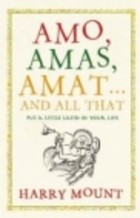 Mount has declared that Latin is fun and is using this book to show the rest of us the way. It’s a quick Latin primer, designed to take the casual reader or lapsed Latin learner through the paces of the language, up to the point of translating a small passage at the end. Interspersed with the tables are a lot of amusing stories about Latin and the appropriate hints of what you’ll begin to understand once you actually can read Latin. Mount decries the falling trends in Latin learning and explains, convincingly, why Latin is indeed a worthy language to learn. Mount has declared that Latin is fun and is using this book to show the rest of us the way. It’s a quick Latin primer, designed to take the casual reader or lapsed Latin learner through the paces of the language, up to the point of translating a small passage at the end. Interspersed with the tables are a lot of amusing stories about Latin and the appropriate hints of what you’ll begin to understand once you actually can read Latin. Mount decries the falling trends in Latin learning and explains, convincingly, why Latin is indeed a worthy language to learn.
In many ways, Mount is preaching to the crowd with this book and me. I have taken Latin, both at undergrad and graduate levels, but it has slipped out of my mind in the past two years. I don’t want to get too rusty, as I do want to do a PhD, so I have been trying to find ways to improve and refresh my Latin without actively sitting down and devoting hours to it. This was a fun way to do so and reminded me of all the Latin I used to know (thanks Professor Johnston!). Plus, I adore languages. I ascribe my general ability to understand grammar and my wide vocabulary (not usually evidenced around here) to the fact that I’ve studied five – even though I speak none but English fluently, they’ve taught me an insane amount about my own language and codified the intuition I’d picked up from reading everything in sight.
Latin in particular is surprisingly fun, and that’s one of the best parts of this book. Translating Latin into English is like doing a puzzle; you first have to find all the pieces and then put them together in a way that makes sense. I’m probably crazy for thinking that’s fun, but it truly is if you’re armed with the knowledge to do so. The not-so-great part of this book is that it’s too speedy. It’s easy to just skip the charts and move on to the next bit of English. It’s a nice refresher, but I couldn’t imagine actually learning any Latin from the book, and I certainly wouldn’t have been able to translate the bit at the end.
Regardless, Mount reminded me of how much I love to study languages, and his goal to encourage others to learn them too is nothing short of inspiring. He laments ‘the good old days’ a bit too much, but his intentions are excellent. I immediately decided to learn French, too, and actually bought myself a beginner’s course. In for a penny, in for a pound, I suppose – why not learn both languages I need to at once?
Anyway, Amo, Amas, Amat, and all that … is a fantastic choice for the lapsed Classicist and an interesting book for the rest of us, too, giving us a peek into the history of a civilisation and a language that has influenced a huge amount of what we do today. Highly recommended.
I am an Amazon Associate. I borrowed this book from my library.
 More and more women over the course of the twentieth century made the choice to be single; still more didn’t choose to be single but ended up in that boat anyway. Marching alongside the female crusade for greater freedoms was often a parade of usually young women determined to enjoy them, creating waves and social trends as they went along. Israel’s book charts their progress, from the Flappers of the ’20s to the working women in World War II to the professional single women of today. She ends by asking whether or not women are still expected to marry and have children – and if so, why? More and more women over the course of the twentieth century made the choice to be single; still more didn’t choose to be single but ended up in that boat anyway. Marching alongside the female crusade for greater freedoms was often a parade of usually young women determined to enjoy them, creating waves and social trends as they went along. Israel’s book charts their progress, from the Flappers of the ’20s to the working women in World War II to the professional single women of today. She ends by asking whether or not women are still expected to marry and have children – and if so, why?
This is a very light, magazine-like read about the history of single women, mainly in New York City to give the book a focal point, though Israel actually starts out with nineteenth century women that chose to be or ended up single like Louisa May Alcott. In many respects the book wavers between these two types of women, the ones who chose not to marry and the ones who were widowed or simply couldn’t find an appropriate husband (the advent of the spinster). She charts the greater freedoms accorded to women and just when it became okay for a girl to go out on dates alone, when they went out dancing with just their girlfriends, and how employment helped the single woman get by and enjoy herself.
The most interesting aspect for me was obviously the historical, rather than the sociological angle. I had fun imagining my grandma out in New York City with her friends as a young girl; I know she got married young and didn’t really work before she married my grandpa, but it was still fun to think about, putting a human face on the stories of the women Israel actually discusses. It’s fascinating to see how the pendulum on treatment of women swings depending on circumstances and even events going on in the wider world – everyone knows that women were freer during the World Wars because the men were off fighting and they had to work, but the book also discusses what happened when the Depression hit and mentions other, later eras as well.
The real downside of the book was the fact that, although it is meant to focus on the single woman, the author really emphasizes the stigma they’ve always faced in opposition to the celebration the book suggests. Yes, there are issues even now; women are still looked down upon for not wanting to have children, for getting on in years without marrying, and so on. Men are still praised for doing things that women are expected to do, like childcare and housework. But I went into the book expecting a celebration of choices, because we really can lead happy and fulfilled lives without getting married (not that I can talk having been married at 23), and didn’t really feel I got that. The author takes things from a feminist point of view, but I felt depressed by the end of the book instead of empowered. If it makes sense, there wasn’t enough, “Look how far we’ve come, we can go even further!”, and too much, “Things are still bad and probably won’t get better.”
Still, Bachelor Girl was an engaging read that delved a bit deeper into the issues single women have faced throughout history right up until the present day. Its approachable, magazine-style prose makes it perfect for even the most casual reader. Recommended.
- No buy links because the book appears to be out of print and I can’t find anywhere that has it!
I am an Amazon Associate. I borrowed this book from my library.
 Despite being a son of the North of England, Stuart Maconie has found himself mostly living in the South, a very different place. When he realizes he has a cappuccino maker and keeps sundried tomatoes on hand at all times – both, apparently, very un-Northern things to do – he decides to return to the country of his childhood in search of the true North. He explores how the cities and countryside have changed over the years and whether any of the stereotypes still hold true. Despite being a son of the North of England, Stuart Maconie has found himself mostly living in the South, a very different place. When he realizes he has a cappuccino maker and keeps sundried tomatoes on hand at all times – both, apparently, very un-Northern things to do – he decides to return to the country of his childhood in search of the true North. He explores how the cities and countryside have changed over the years and whether any of the stereotypes still hold true.
I haven’t lived in England for all that long and even I know the stereotypes of Northerners – generally big, dirty men (I always think of miners, probably for good reason as there were many here) with rough exteriors but a heart of gold. For the most part, that’s what you get on TV shows, especially older ones. Of course, the mining industry is basically gone now, and Northern towns are pretty much the same as Southern towns, in my limited experience, so Maconie’s quest to discover the true North interested me very much. After all, we live in the North now, so I was looking forward to finding out more about it.
Unfortunately, I think this book didn’t really suit me personally as a reader. For one thing, I’m American. There are many, many British cultural references that I’m still unfamiliar with and I’m pretty sure Maconie uses every last one of them. He also relies heavily on many places’ musical roots, which again I’m unfamiliar with. I know the big British bands that made it over the pond, but there are quite a few – many of which are probably big names over here – that I just hadn’t heard of. There were also a few notes about football, which is again something I’m not crazy about, nor do I know the details of football history and rivalries. So, I’d recommend other non-Brits to be a bit hesitant before picking it up.
For me that was kind of a shame, because I did quite enjoy the rest of the book. I loved learning about the different Northern cities and how they’d changed over the years, whether they’d done well this century or not. The book is slightly outdated so I’m not sure the same towns are still prosperous, but it was all very interesting and usually focused on areas I didn’t know much about. He did manage to leave out a large part of Yorkshire, including the bit that I live in, despite having a whole chapter on the country. I think his focus was on the “happening” cities and the ones around here aren’t really what I’d call exciting. I think Maconie does a decent job breaking the North out of its stereotyping and explaining just why it’s so appealing. It’s not the dirty poor place that it’s imagined to be.
I think Pies and Prejudice would appeal to those Brits who are interested in a cultural journey through the North of England, but I’d hesitate to recommend it to anyone who isn’t very familiar with British culture and recent history.
I am an Amazon Associate. I borrowed this book from my local library.
 The written word is a powerful thing, and every once in a while, a book comes along that hits the mood of the times perfectly and influences history. Because there are very many of these books, Bragg limits his selection to books published by British authors, and includes a single fiction title in his list. His aim is to present the measurable affects of these books – and while fiction touches us deeply, it’s nearly impossible to gauge reactions to fiction titles in the same way. His list consists of: The written word is a powerful thing, and every once in a while, a book comes along that hits the mood of the times perfectly and influences history. Because there are very many of these books, Bragg limits his selection to books published by British authors, and includes a single fiction title in his list. His aim is to present the measurable affects of these books – and while fiction touches us deeply, it’s nearly impossible to gauge reactions to fiction titles in the same way. His list consists of:
- Principia Mathematica (1687) by Isaac Newton
- Married Love (1918) by Marie Stopes
- Magna Carta (1215) by members of the English ruling classes
- Book of Rules of Association Football (1863) by a group of former English public-school men
- On the Origin of Species (1859) by Charles Darwin
- On the Abolition of the Slave Trade (1789) by William Wilberforce in Parliament, immediately printed in several versions
- A Vindication of the Rights of Woman (1792) by Mary Wollstonecraft
- Experimental Researches in Electricity (three volumes, 1839, 1844, 1855) by Michael Faraday
- Patent Specification for Arkwright’s Spinning Machine (1769) by Richard Arkwright
- The King James Bible (1611) by William Tyndale and 54 scholars appointed by the king
- An Inquiry into the Nature and Causes of the Wealth of Nations (1776) by Adam Smith
- The First Folio (1623) by William Shakespeare
While I thought this book was very interesting for what it covered, there was a lot it didn’t cover, and sometimes I didn’t agree with his choices. For one thing, a couple of the choices aren’t actually books. One is a patent and one is a speech later made into a pamphlet. Bragg argues that because they were so influential, they should still count, but I wasn’t sure I agreed with him. The book is also quite Anglo-focused, but he explains that clearly in the introduction so it’s not really a fault – it’s just something I didn’t consider when initially browsing in the library and picking up the book.
The books are described in much the way they’re ordered and I thought Bragg did a great job of explaining the period of the times and how, in many cases, the book more or less guided public consciousness along the way it was prepared to go. The same book wouldn’t have had such an effect 50 years earlier or 50 years after – the world might in fact have been an entirely different place by that point. He doesn’t dig deeply into any of the books, but when he has so many books to get through in so few pages, what’s there is still very interesting and, I thought, makes a good cause for it being there.
The exception, for me, was football. Personally, I’m not the world’s biggest fan of football. I have a difficult time understanding why anyone really cares and particularly why fans get so militant about their teams. My philosophy is, generally, you go ahead and watch it as long as you don’t make me watch it, too, so I was never going to really like that section. Plus, Bragg explains that football is a game that had been played in some form or another for centuries, and which has continued to evolve since then. Even if football has an effect on nations, for once I wasn’t convinced that the book itself had actually influenced anything besides rules. The game would have continued.
Again unsurprisingly, my favorite chapter was the final one on Shakespeare. It’s pretty clear that Bragg loves literature himself, and I felt Shakespeare was the perfect person to end the book with. It may be difficult to pinpoint what effect other novels have had on the public consciousness, but it’s easy enough with Shakespeare, and this is one section Bragg excels in.
So, if you’re interested in a very Anglo-centred vision of world-changing books, 12 Books That Changed the World might be a good choice. But it’s not quite what it says on the cover and I wouldn’t have minded the inclusion of more fiction and a more solid definition of “book”. It was interesting, but had quite a bit of missed potential.
I am an Amazon Associate. I borrowed this book from my local library.
 Until he was 12, Ishmael Beah lived with his mother and brothers in Mattru Jong, Sierra Leone. Then the war came to his hometown with the arrival of the rebels and he was forced to flee for his life, losing his entire family in the process. Because he then proceeds to hang around with a group of boys, his friends, he is kicked out of towns, starved, and forced to run again and again until he is finally drafted into the army. Force fed drugs and given an AK-47, Ishmael is turned into a mini killing machine, hardly aware of what he’s doing, until he is chosen for a rehabilitation program and begins the slow process of re-acclimatizing into civilian life. Eventually, he becomes a spokesman against putting children in war, and has written his memoirs in a bid to stop this horrible practice. Until he was 12, Ishmael Beah lived with his mother and brothers in Mattru Jong, Sierra Leone. Then the war came to his hometown with the arrival of the rebels and he was forced to flee for his life, losing his entire family in the process. Because he then proceeds to hang around with a group of boys, his friends, he is kicked out of towns, starved, and forced to run again and again until he is finally drafted into the army. Force fed drugs and given an AK-47, Ishmael is turned into a mini killing machine, hardly aware of what he’s doing, until he is chosen for a rehabilitation program and begins the slow process of re-acclimatizing into civilian life. Eventually, he becomes a spokesman against putting children in war, and has written his memoirs in a bid to stop this horrible practice.
This is a difficult book to read, not only because Beah’s childhood and teenage years are so horrific but because this drafting of children into warfare is something that still happens around the globe. Beah never wanted to be a soldier; he spends most of the book actually running away from them, while at the same time regularly condemned simply for his age. He and his friends nearly starve and are nearly killed a number of times by the very same forces they end up fighting for. Once they’re caught, there is simply no choice.
In terms of prose style, Beah’s book is plainly written but descriptive enough to get his point across; more and I think some of the things he describes would have been almost too graphic, even if they did happen. His time as a child soldier was easily the hardest to take. He describes how he was turned from a regular boy into a violence machine. The army used drugs and persuasion to make the children kill with a vengeance; these same acts make Beah’s rehabilitation all the more difficult when it does happen. One of the most heartbreaking parts of the book occurs when Freetown, the capital of Sierra Leone, is retaken by soldiers, and many of the rehabilitated children wind up back in the army. Beah is saved this fate and indeed turns out incredibly fortunate as he finds a new life in the United States, but he doesn’t fail to remind us that his case is unusual and is the very reason he can write his book.
Personally, I knew very little about child soldiers before reading this book, and I’ve been reminded once again how fortunate I am to have grown up in a peaceful society. I never had to worry that a gang of rebel soldiers was going to invade my town, evict me from my home, and kill everyone I’d ever known. Beah did, and these things are still happening around the world. This is one of those books that I believe everyone should read; it’s important to know what’s going on in the world and to find out ways we can help. I can’t recommend A Long Way Gone enough.
I am an Amazon Associate. I borrowed this book from my local library.
 Idina Sackville was one of the most scandalous British women of the 20s – her reputation was so destroyed that her great-granddaughter, the author of this book, wasn’t even told they were related until a coincidence forced her mother to reveal the truth. Idina married not just once but five times, divorcing most of her husbands; her need for intimacy caused her to cheat on many of them and lent her character to a number of infamous seductresses depicted in fiction. Throughout, however, it’s clear that Idina is a woman who simply needed to be loved, who was treated unfairly by the rules of her society, and whose life gives us a perfect lens for looking at this period in history for women. Idina Sackville was one of the most scandalous British women of the 20s – her reputation was so destroyed that her great-granddaughter, the author of this book, wasn’t even told they were related until a coincidence forced her mother to reveal the truth. Idina married not just once but five times, divorcing most of her husbands; her need for intimacy caused her to cheat on many of them and lent her character to a number of infamous seductresses depicted in fiction. Throughout, however, it’s clear that Idina is a woman who simply needed to be loved, who was treated unfairly by the rules of her society, and whose life gives us a perfect lens for looking at this period in history for women.
I’ve seen this book around for what seems like a year now, and one day I finally saw it on the library shelf and decided it was time to read it. That decision was a good one, because in many ways this book was fascinating. Idina epitomizes the raciness of the 20s and the post-war era, but because she didn’t remain safely in the bonds of marriage, she was completely ostracized. From a young age, she learned that men leave, because her father left her mother and they divorced – which meant Idina’s mother couldn’t introduce her into society. Instead, an aunt had to do it. She seems to have adored her first husband, but after the honeymoon period his attention wandered to other women, especially when Idina fell ill and couldn’t satisfy his needs effectively. And so she fled, divorcing him and leaving two small boys that she was forbidden to ever see again, thus starting the cycle of scandals that defined her life.
What struck me most about this book was how hypocritical Idina’s society seemed. The author relates plenty of stories about just how the Edwardians were emerging from the strict Victorian era, and how in particular the two world wars started to shake the foundations of marriages and morals, especially in the higher echelons of society and particularly as these started to break down. It was fairly typical for aristocratic married couples to take lovers, but it was kept safely under the guise of marriage. Divorce became less and less scandalous over the course of the period, but Idina pushed the limits with her many husbands – most of whom were younger than her and by quite a bit as she aged. Yet we also got stories of women who greeted their guests while arising from their baths and one particular story of a woman who went to her own party clothed in nothing but pearls. For married women, this seems fine; for Idina, a divorcee, not so.
Truly the saddest part of the book was the way that Idina’s many marriages and divorces robbed her of all chances of happiness. Through the author’s eyes, she seems to have just wanted love and affection. Otherwise, why marry? Why divorce? Why not just take lovers under the safe cover of marriage if all she needed was physical? Her attempts to regain contact with her children at the end of her life show that she started to regret her choices and excerpts from her letters at the end of the book are heartbreaking.
This wasn’t a perfect book, though; I did feel that Idina remained an elusive, mysterious figure throughout. I struggled to get a true feel for her and her decisions don’t always make the most sense. I’m not sure what would have done the trick; I think I would have preferred more excerpts from letters by her. At the start of the book, they’re mainly from her husband, with a few interruptions from Idina, and I felt that trend continued. At times the author reimagines scenes, with speech quotes, which make it clear she did have access to personal records, and I think I’d have preferred straight quotes from letters to get a feel for Idina’s voice and character from the woman herself. I certainly felt for her, but I didn’t get that connection I was craving.
If you’re looking for a interesting social history through the lens of one woman embodying an ever-changing society, The Bolter is definitely a book for you. It’s less a portrait of a woman and more a portrait of a time; regardless, it’s fascinating.
I am an Amazon Associate. I borrowed this book from my local library.
 The Passport, Herta Muller The Passport, Herta Muller
This short novella revolves around the quest for a passport out of Romania for a miller, his wife, and daughter. I can’t summarize it more than that because this book and I really just didn’t get along at all. I found it to be far too vague, one of those books where every word means something and you have to spend time puzzling it out before you can properly appreciate the story. As such, I might have liked it if I’d read it in a class and had a chance to dissect it, but as I did read it I just wasn’t in the mood for that sort of thing. I finished it, but I doubt I will read anything else by Herta Muller. I’ve seen elsewhere that this was a poor translation from the German, but despite that I just don’t normally want to read anything that literary.
 A Long Way Down, Nick Hornby A Long Way Down, Nick Hornby
New Year’s Eve is a very popular time to kill yourself. Four people from entirely different walks of life in London discover that as they meet atop a tower. They manage to talk themselves out of suicide and spend an evening wandering around the town. Afterwards, they struggle to find a place for one another in their lives, even though they recognize that few other people will understand their unique experiences.
I didn’t really know what to make of this book. I liked that it highlighted the differences yet similarities between people of all different backgrounds, how their problems seemed more or less severe but all were in despair. I didn’t think the book really had a point, though, unless it was that people are different from the way they think about themselves – butI’m not sure it was meant to. I can’t decide if I like that or not. I read this one during the Read-a-thon so it’s gone sadly fuzzy now, but I do intend to read more of Hornby in the future.
 The Year of Magical Thinking, Joan Didion The Year of Magical Thinking, Joan Didion
This is a hard book to write about, so I’m chickening out with a mini review. Basically, Didion’s husband passed away suddenly at her dinner table, just days before Christmas, and while their daughter was severely ill in hospital. The book is about the year after she lost her husband, how she behaved irrationally because of her grief, and the profound effect that losing someone can have.
This was a difficult book for me; ever since I lost my brother, I’ve been incredibly worried that I’ll lose someone else. I don’t grieve in this way any longer, but it’s still such a tough subject to cope with. I read the book mainly because I thought it was worthwhile to see how other people felt, to try and learn about emotions that aren’t mine. The loss of a husband and a brother are different, but I could recognize much of myself in this book. Ultimately, it’s difficult to take, but it does give you a real insight into how a grieving widow will feel – and it may make you stop and think when you or someone you love loses someone.
 Dead in the Family, Charlaine Harris Dead in the Family, Charlaine Harris
This tenth book in the Sookie Stackhouse series deals with the aftermath of the catastrophic events in Dead and Gone. Sookie’s changed quite a bit over the course of the series and now has her own grief and hard feelings towards others to deal with. Things never stand still, though, so she’s not left alone to recover. Instead, her friend Amelia moves away and her fairy cousin Claude moves in. She has a visit from Hunter, her little cousin who shares her powers, and she has to deal with some unexpected visitors from Eric’s surprising side of the family.
I love getting my hand on another installment of this series; it’s a nice return to a familiar world, even if it’s changed somewhat since the first books. I think Sookie herself has probably undergone the most changes. So I definitely liked the book, but the plot was very loose if at all existent. This is another book where some things happen, but most of them don’t actually lead to much. The climax of the book is quite speedy, but we lose much of the build-up to it. Mainly, it’s Sookie going about her life; I don’t mind this, but as a book I don’t think it held together all that well. Still, always looking forward to the next!
I am an Amazon Associate. The first of these books was sent to me for review; the rest I acquired on my own.
 Cod is a fish most of us probably take for granted. We can buy it, though it’s often expensive, and we don’t always think about where it came from, how it got to be popular, or what’s going to happen to it next. Mark Kurlansky does just that, however, and explore cod’s role in history from when its abundance helped the Vikings to explore to the present day, when overfishing has severely depleted fish stocks. Interspersed with this look at cod and its history are recipes from each time period, giving the book an authentic feel and an extra edge. Cod is a fish most of us probably take for granted. We can buy it, though it’s often expensive, and we don’t always think about where it came from, how it got to be popular, or what’s going to happen to it next. Mark Kurlansky does just that, however, and explore cod’s role in history from when its abundance helped the Vikings to explore to the present day, when overfishing has severely depleted fish stocks. Interspersed with this look at cod and its history are recipes from each time period, giving the book an authentic feel and an extra edge.
I thought this book was surprisingly interesting. I originally wanted to read Salt by Kurlansky, which does a similar thing but rather obviously with salt, and when my library didn’t have that one I spotted this one instead. I’ve recently started to eat more fish – it’s healthier and I seem to have outgrown my distaste for most of it – so it also seemed like great timing to learn a little bit more about cod. With history in the mix, how could the book go wrong?
Thankfully, it didn’t go wrong at all, and remained interesting and informative throughout. Because of Kurlansky’s focus on cod, he does neglect some of the wider issues, so at times I didn’t feel like I was getting a full picture. Cod was obviously not the only reason that the Vikings explored the north Atlantic, and it also wasn’t the only reason that Boston became an important city – but it helped both of those along, and I think the book may have lost some of its focus if he delved into some of the deeper issues. I suppose all I’m trying to say is that it sparked my interest in some other time periods, so I could learn a bit more about them in addition to learning about the fish.
Of course, the book also deals very heavily with the main problem facing cod these days, which is overfishing. Due to long-term misunderstanding about the way cod worked and rampant attempts to land more of the incredibly abundant fish, there is now an incredible shortage and, at the time the book was written, moratoriums on fishing cod in parts of Canada. Kurlansky writes about the many problems this has caused; namely, the fact that the fish may not recover the same way, the loss of livelihoods for the fishermen, and the changes in sealife that the lack of cod may cause. There’s a lot of theorizing here, but I could appreciate that it was because no one really knows what will happen, and they still don’t know. All they can do is hope that overfishing stops long enough for the stock to recover, and that it does precisely that.
As for the last bit, the recipes, they did add something nice to the book, but I found that overall I wouldn’t be making any of them towards the beginning! They were very interesting in terms of learning what people ate at different times in history, but for myself? Not so much. They are fairly basic, however, so anyone interested would be able to make them with ease.
Cod is a really interesting book about the fish and its role in history. It’s well worth a read if you’ve ever been interested in the fish or its role in history – or even if you’re just looking for something a little bit different.
I am an Amazon Associate. I borrowed this book from my local library.
|
|


Recent Comments