|
|
 I didn’t know who Wendy Cope was when I started reading this book; I picked it up due to the blurb, which reads: I didn’t know who Wendy Cope was when I started reading this book; I picked it up due to the blurb, which reads:
Selected prose from Wendy Cope, one of the nation’s best-loved poets, from a lifetime of published and unpublished work as a reviewer, critic, and journalist. Readers can meet the Enid Blyton-obsessed schoolgirl, the ambivalent daughter, the amused teacher, and the sardonic television critic.
A book for anyone who’s ever fallen in love, tried to give up smoking, or consoled themselves that they’ll never be quite as old as Mick Jagger.
Sounds pretty good, doesn’t it? I thought so; it was also on the table as recommended in my local Waterstones, so I thought I’d give it a try*. I was hoping for something of a biography, or at least a selection of essays about the author’s life experiences. I got some of that, but I suppose what I didn’t realize is that this is more of a collection of writings than anything else. The editors have gone through a number of archives and collected works to be published in this one volume. The book is split into sections based on Wendy’s girlhood, teaching years, time as a poet, and then a few other collections of various pieces of work.
For me, by far the most interesting parts were those about her life and her transition from a teacher into a poet and how that changed her. I was immediately drawn in by the very first piece, which is composed of snapshots of her memories as a girl, and stories of her time as a teacher. I would venture to guess that I was probably most taken with this because it is the most like a memoir and suits what I’d like to read. I can also say that I enjoy the way Cope writes and I’m actually intrigued to pick up her poems now, simply because this is clear and straightforward and there isn’t enough poetry in my life. She’s also a big believer in people getting paid for their work (rather than poetry getting shared for free online) and I respect her for that; she’s not after fame, she’s after making a living for herself doing something that she loves and is good at.
The rest of it didn’t really reflect any sort of universal experience and to be perfectly honest, I sometimes found it boring. I might have been more interested if I’d known who Wendy Cope was before, but the blurb above made it seem like I could enjoy it even though I didn’t, and in this I was disappointed. The interesting sections were interspersed with too much that I really didn’t particularly like. Perhaps personal taste, as I think I might be the wrong audience, but I didn’t really find it to be nearly as universal as the blurb seems to suggest.
Would I recommend this? I’m not sure. As I said above, I’m not sure I’m the target audience for this particular book, and I don’t think I really thought very much about what I was getting before I got it. But what I will do is go out, buy and read some of Wendy Cope’s poetry. I think it will be much more suited to what I’d like to read – and I will, of course, let you know what I think.
*I already had it for review but I bought five other books on that particular visit, so doing what I can to keep bookstores alive too. Obviously this means I received it for review consideration.
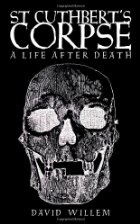 St. Cuthbert died over 1300 years ago, but the mystery of his incorrupt corpse has continued to fascinate generations of religious Brits, especially Northerners. Years after St Cuthbert died, a group of monks opened his tomb for the first time and were amazed to discover that he appeared lifelike in every way; though his body was covered with a white shroud, his limbs were flexible and his skin pliable. Over the centuries, his tomb has been moved across northeast England, finally finding a home in Durham Cathedral, but it’s been opened five times since with different discoveries made each time. David Willem looks at the original sources of each tomb opening to create the most reliable possible account of the corpse’s history. St. Cuthbert died over 1300 years ago, but the mystery of his incorrupt corpse has continued to fascinate generations of religious Brits, especially Northerners. Years after St Cuthbert died, a group of monks opened his tomb for the first time and were amazed to discover that he appeared lifelike in every way; though his body was covered with a white shroud, his limbs were flexible and his skin pliable. Over the centuries, his tomb has been moved across northeast England, finally finding a home in Durham Cathedral, but it’s been opened five times since with different discoveries made each time. David Willem looks at the original sources of each tomb opening to create the most reliable possible account of the corpse’s history.
I found this book unexpectedly fascinating, so much so that I actually came home from reading it on my commute and told my husband all about it (he’s not a history person but tends to listen patiently to my excited ramblings, as in this case). It’s a short book which I read over just two days, covering each instance of tomb-opening from the saint’s death to the last opening in 1899. There is no real ending possible, although the author does draw some conclusions; the saint’s corpse is still in the awe-inspiring Durham Cathedral, but it’s quite unlikely that it will be opened again any time soon. But the way he traces back the history and tries to figure out exactly what happened and how a corpse could be “incorrupt” two hundred years after burial was really interesting. It’s also fascinating to see what might happen to a prominent person’s body for centuries after death. This saint hasn’t been forgotten in the slightest and it does serve to remind us of how our mortal remains might gain a history of their own.
This is a very tightly focused book and doesn’t include much context; we don’t really learn much about what’s happening outside the small piece of the world inhabited by the corpse and those who tended to it. But for someone with a good background of the various periods of history, it’s clear that the corpse is actually impacted by each, from the Viking and Norman invasions to the dissolution of the monasteries right up to the later Victorian interest in antiquities. The way the corpse is treated is itself indicative of the general atmosphere at each given point. Very designed for people who already love history, rather than those who might be dipping their toe into the water, the book contains a number of excerpts from the primary sources consulted by the author. He’ll normally tell the story (and let it be told through the eyes of the primary sources) and then look more carefully at what the person has actually said.
In summary, I really enjoyed St. Cuthbert’s Corpse and would happily read more like it. A quick read that nevertheless adds a dimension onto history, certainly worth the time I spent reading it. I now know a lot more about St. Cuthbert and I’d like to go back to Durham Cathedral to visit the tomb in person.
I received this book for free for review.
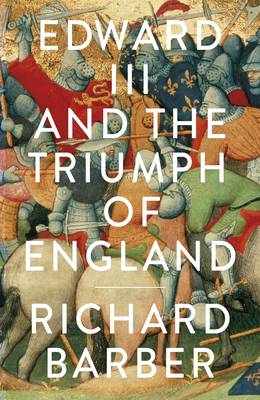 King Edward III of England is a pretty fascinating guy – especially if, like me, you have a deep and abiding interest in the Middle Ages. This surprisingly successful king, although that’s quite a simplified interpretation, managed to overthrow the rule of his mother and her lover as a teenager, laid claim to France, which started the Hundred Years’ War, and founded the Company of the Garter, a chivalric order which still survives unlike so many of its contemporaries. He was also the father of Edward the Black Prince (a name which is too awesome not to use, even though he was not called this during his lifetime), one of the most intriguing historical figures in England for me. In this work of history, Richard Barber not only looks at Edward and his reign, but those who surrounded him, inspired him, and succeeded him. King Edward III of England is a pretty fascinating guy – especially if, like me, you have a deep and abiding interest in the Middle Ages. This surprisingly successful king, although that’s quite a simplified interpretation, managed to overthrow the rule of his mother and her lover as a teenager, laid claim to France, which started the Hundred Years’ War, and founded the Company of the Garter, a chivalric order which still survives unlike so many of its contemporaries. He was also the father of Edward the Black Prince (a name which is too awesome not to use, even though he was not called this during his lifetime), one of the most intriguing historical figures in England for me. In this work of history, Richard Barber not only looks at Edward and his reign, but those who surrounded him, inspired him, and succeeded him.
Of course, I loved it. I’d been looking forward to this book ever since I heard about it, particularly because I was already familiar with the historian who wrote it. It was right on par with my expectations. I appreciated so much the approach that Barber took – this isn’t a biography of Edward. It’s a complete view of everything happening around Edward, putting him firmly in the context of the period. This, for me, far more than historical fiction these days, gives me a feel for the period. It’s about the battles and tournaments, the personalities that filled the court, the literature that these people read and which inspired and taught them about their world. It’s really difficult to separate Edward III and Philippa of Hainault, his queen, from the obsession that the Victorians had with the Middle Ages, but Barber does his best and pulls out as much history away from that as he can manage.
Among this is the surprising discovery of how little we actually know about the founding of the Order of the Garter, or its history in the early days. Chivalric orders sprang up in this period in a number of countries, and Barber looks at each of these and tries to find out where Edward got the idea from, who might have been in that order, and why – ultimately, drawing the conclusion that it sprang in some form from the battle of Crecy, which we learn about in as much detail as we can manage. Barber goes so far as to research the layout of the battle and the tactics that might have been used by the English to gain the spectacular victories that they did, which was really fascinating and something I hadn’t read about before. There are a lot of primary sources here and Barber doesn’t hesitate to quote directly, with often large portions of pages taken up with excerpts giving us a huge amount of insight.
In addition, the book isn’t particularly dry, although as with every bit of history I’m obsessed with, your opinion on this may vary. I’d think it would be perfectly readable and enjoyable for someone who might be looking to move on from historical fiction to something based more on primary sources and fact. I loved it, and if you are interested in tournaments, battles, and the high middle ages, this book is definitely for you.
Continuing with my new determination to write at least a little bit about all the books I’ve been reading …
 Deadshifted, Cassie Alexander Deadshifted, Cassie Alexander
This is the fourth book in the Edie Spence series. I’ve not reviewed any of these books previously on the blog, but this is a series I’ve been enjoying. Edie is a smart nurse who was thrust into the world of paranormal healthcare to save her brother. By this fourth book, she’s met her current boyfriend after a particular failure and she’s left the hospital where the first couple of books take place. She’s on vacation – a well-deserved cruise with Asher, her boyfriend. But things are never really simple for Edie, and they run into someone that Asher used to know in his previous life as an active, not-quite-conscientious shapeshifter. Although I’ve missed the familiar setting of the hospital, this book really threw Edie in the deep end (literally). She’s had to deal with so much and, although the summary of the already-pre-ordered fifth book spoiled the ending somewhat, I was still shocked. Definitely continuing with these.
 We Need New Names, NoViolet Bulawayo We Need New Names, NoViolet Bulawayo
I wanted to do a full review of this one, but given how seldom I actually get myself to write full reviews, I thought it was better to get my thoughts down as soon as I could. This book was amazing – it forced me to think about so many issues outside my normal day-to-day existence and reminded me forcefully that there is a reason I want to expand my reading horizons. Darling grows up in Robert Mugabe-era Zimbabwe, now desperately poor and starving in a shantytown called Paradise, though previously her family was moderately prosperous. Though her life in Zimbabwe is a challenging one, to say the least, and she and her friends dream of escape, when she actually does manage to leave her home country she has to confront a huge range of new experiences. One of the most striking parts for me was when Darling can’t understand why her employer’s daughter is depressed and has anorexia. She – as someone who has spent much of her childhood starving – simply can’t understand why a pretty, thin white girl would actively starve herself. Their worlds are too different. And some of the passages about leaving home and trying to decide who you are without your home were unbelievably striking. So worth reading.
 Orange is the New Black, Piper Kerman Orange is the New Black, Piper Kerman
When Piper graduates from college, she still hasn’t decided what she wants to do with her life. And she craves adventure. So, as she describes in this memoir, she gets involved with the older Nora, a sophisticated woman who clearly has a large amount of cash to throw around, and finds herself involved with the drug trade. She wises up after a short period of time and runs back into the arms of her family, landing a good job, a loving boyfriend, and a life she thinks is secure. But it isn’t, and ten years after her crime, Piper finds herself in Danbury, a women’s prison.
Her journey through the prison system was fascinating reading, although I suspect it was easier for her than the other women in a number of ways. She freely acknowledges that her shorter tenure and her frequent visitors were huge factors in helping her cope, but that doesn’t change the essential fact of prison. By far the most shocking part was towards the end, when Piper enters the program meant to prepare inmates for the real world again. Instead of useful advice, like how to rent an apartment or find a job with a criminal offense against your name, the inmates are advised on topics like what to wear; they weren’t even advised on how to use the internet when some of them had never encountered it or a computer in their lives. It’s fairly obvious why some of them simply fall back into the drug trade, which is disastrous. I learned a lot I didn’t know and am glad I read this – I’ve never seen the TV show, so can’t comment on how it compares there.
 The Iron Witch, Karen Mahoney The Iron Witch, Karen Mahoney
This book demonstrated, quite vividly, that some YA just isn’t for me. In this particular book, Donna is a teenager who was scarred during her youth in an attack which also cost her her parents. Her father was killed defending her and her mother has been mentally unstable ever since, sometimes unable to recognize Donna. She’s raised by her aunt, but has spent her entire life being considered a freak due to the iron scars that twine their way up her arms. Now the wood elves who ruined her life so thoroughly when she was a child have returned, and only she, her best friend Navin, and the mysterious half-fey Xan have a shot at saving themselves.
My attitude towards this book was decidedly “meh”. It’s even complete with a love triangle. I actually kept expecting Xan – the mysteriously sexy object of Donna’s insta-love, as opposed to her nice guy best friend – to turn out to be evil, simply because it all seemed ridiculous to me, but instead all the gooey eyes and instant connection were actually sincere. I was disappointed, similar to how I felt about Daughter of Smoke & Bone. Won’t be reading the rest of the books.
I purchased all of these books.
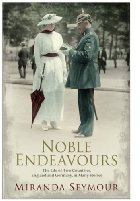 The histories of England and Germany have been intertwined for centuries. Among other things, the tie is in the very root of the words we speak, as the English language is based on a Germanic language, albeit with plenty of other languages thrown in for good measure. Miranda Seymour picks up the story of these two countries in the seventeenth century with the marriage of an English Stuart princess to the Elector Palatine, the son of a very different German landscape. From those nuptials to the end of World War II, Seymour picks up the story of these two countries primarily through people that loved and lived in both of them. The histories of England and Germany have been intertwined for centuries. Among other things, the tie is in the very root of the words we speak, as the English language is based on a Germanic language, albeit with plenty of other languages thrown in for good measure. Miranda Seymour picks up the story of these two countries in the seventeenth century with the marriage of an English Stuart princess to the Elector Palatine, the son of a very different German landscape. From those nuptials to the end of World War II, Seymour picks up the story of these two countries primarily through people that loved and lived in both of them.
I had an interesting time with Noble Endeavours. I couldn’t say that I loved it unreservedly, because it had faults. As it’s set over a wide span of time, there were very many historical personalities introduced, and I for one found it surprisingly difficult to keep track of who everyone was over the centuries. I could have used some sort of guide to who was who in the front or back of the book, especially when some of those mentioned got married and their names changed. In places it felt scattered as we jumped from one person to another (who I invariably didn’t remember). This may have been partly my fault as I didn’t read the whole thing in one go, preferring to jump in and out over the course of a couple of weeks, normally how I handle non-fiction these days.
When the book was great, though, it was really great, and at times I could feel how some of these people were genuinely pulled between two countries. The best part was towards the end where we got to the World Wars – not “best” because of the circumstances, but because it gave me the opportunity to view the huge historical turning point from a new angle. And, because of the focus on specific people, we get a much more intimate view of the heartbreak caused by these divisions. Both World Wars were devastating events and this book brought more of that into focus through individual affected people from all sectors of society rather than a big picture view.
The part that I found most horrifying, actually, was how wilfully Hitler was ignored and even praised by Brits for revitalizing Germany when they had plenty of evidence of what his actual plans were. Part of that was due to the way the two countries had interacted for several hundred years, part of it was because those plans were well hidden on both sides, but it’s scary how many lives may have been lost because intelligence reports were ignored and insider knowledge was dismissed. And the price is still paid to this day.
Not a perfect book, but a fascinating one. I’d recommend Noble Endeavours for anyone interested in English or German history.
All external links are associate links. I received this book for free for review.
 Getting back into writing about books has proven more difficult than I expected. I have such a huge backlog that I wasn’t sure where to begin, which seems like a silly reason, but which did keep me from even trying earlier this week. Today, though, I finished Proust and the Squid, which was such an excellent book that I was immediately inspired to write something about it. Getting back into writing about books has proven more difficult than I expected. I have such a huge backlog that I wasn’t sure where to begin, which seems like a silly reason, but which did keep me from even trying earlier this week. Today, though, I finished Proust and the Squid, which was such an excellent book that I was immediately inspired to write something about it.
This book is all about reading and its development, both in history and in a child’s (or adult’s) brain. Wolf, who is a well-known authority on the subject, decodes what to many adults now seems straightforward and obvious; the many factors that go into the surprisingly magical ability to read. Reading is not a natural human activity, like communicating seems to be, but is something that has been developed over time and which actually shapes our brains.
So many elements of this book fascinated me. The difference between a native-English-speaking brain and a native-Chinese-speaking brain, for one, because Chinese characters contain pictorial elements which require different levels of processing. I had no real idea that there were so many elements involved in reading or how it worked. Naturally, I was also transfixed by the passages about the history of the development of our alphabet, which revolutionized reading, as we can understand it so quickly that we can think more widely while reading. The alphabet also opened reading up to more people as it became “easier” to learn.
What I found most interesting, though, were the parts about how children learn to read. Reading, for me, has always been easy. I was lucky when I was little. My parents read to me every night and taught me letters, colors, recognition and naming of everything around me – basically, everything this book says is key to a successful reading life. I never had to be taught how to read in school because it all clicked into place for me before I got there. Other children are not that lucky, and Wolf devotes a large portion of the book to children with reading disabilities, primarily dyslexia, and how this relates back to the many processes involved in reading. She makes a strong argument for dyslexic children and adults being “gifted” and more creative with several prominent examples from history, which is undoubtedly something that these children need to hear more often. I know many children and adults have frustrating experiences with reading difficulties.
Finally, Wolf questions how much internet culture will impact reading. We all read information online, but we’re not encouraged to read deeply and think widely; when all information is available via Wikipedia, what happens to specialist knowledge, understanding, and a framework for understanding? She’s not sure.
I loved, though, how much Wolf is a reader, who understands the way that books change and shape who we are. Each quote at the start of each chapter was thoughtfully and perfectly chosen. It’s very clear that she loves reading. At times it felt like the book was speaking directly to me and the experiences I’ve had, and it underscores how very valuable it is to encourage us to think outside ourselves and step into others’ shoes, something that is inherent in reading.
Proust and the Squid is absolutely worth reading by anyone who loves reading or is raising children. I have a feeling I’ll refer back to it again and again.
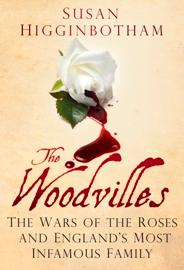 Today I’m thrilled to welcome Susan Higginbotham, author of such fantastic historical novels as The Traitor’s Wife and Hugh and Bess, with a guest post to celebrate the release of her first published non-fiction work! The Woodvilles is out now in the UK and on Kindle in the US; in the meantime enjoy Susan’s post below on the death of Edward Woodville. Today I’m thrilled to welcome Susan Higginbotham, author of such fantastic historical novels as The Traitor’s Wife and Hugh and Bess, with a guest post to celebrate the release of her first published non-fiction work! The Woodvilles is out now in the UK and on Kindle in the US; in the meantime enjoy Susan’s post below on the death of Edward Woodville.
In April 1488, Edward Woodville, the youngest brother of Elizabeth Woodville and one of the men who had shared in Henry Tudor’s victory at Bosworth three years before, was awarded the Order of the Garter. He did not enjoy it long, because on July 28 of that same year, he fell in battle attempting to aid Francis, the Duke of Brittany.
The duke, who had offered succor and support to Henry Tudor as well as to Edward Woodville during their exile, was threatened with a French invasion. Edward longed to help his old friend. As Polydore Vergil tells it:
Edward Woodville, a stout and courageous man . . . either to avoid the tedium of peace or moved by his love of the duke, earnestly beseeched King Henry that by his permission he might go to Britanny with some band of soldiers to aid his friends. And, lest the King of France could reproach Henry for this, he said he would go secretly with no supplies, which would give a show of unfeigned flight. The king, who hoped that a peace would be arranged by his ambassadors, was so far from indulging Edward’s ardor that he strictly forbade him to undertake any scheme of the kind, thinking it foreign to his dignity to offend Charles, to whom he hoped to ingratiate himself in a matter of little importance which he thought would do nothing to aid the Duke of Britanny. But Edward, when the king had forbidden him to do as he wished, decided to act without his knowledge, and quickly and secretly went to the Isle of Wight, of which he was lieutenant. And from there, having gathered a band of soldiers to the number of approximately four hundred, he crossed over to Britanny and joined with them against the French.
King Charles of France instructed his commander, General de la Trémoille, on 5 July 1488 to “make war as vigorously as you can,” an order which the general followed with enthusiasm. On 28 July, Duke Francis, after meeting with a council of war that included Edward, determined to go to the relief of Fougères and St Aubin, both under siege. Although it turned out to be too late to save the fortresses, which had surrendered, the Bretons determined, as reported by Molinet, “to engage the French . . . as best they could.”
The Marshal de Rieux was in overall command of the Breton forces, Trémoille in charge of the French. To fool the French into believing that there were a large number of English troops, the Breton army dressed 1,700 Bretons in surcoats bearing the red cross of St George, like the men of Edward’s forces.
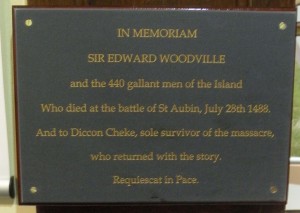 Plaque on Isle of Wight commemorating Edward Woodville.
Photograph courtesy of author Dorothy Davies”? Thanks! As reported by Edmund Hall:
When both the armies were approaching to the other, the ordinance shot so terribly and with such a violence, that it sore damaged and encumbered both the parties. When the shot was finished, both the vanguards joined together with such a force that it was marvell[ous] to behold. The Englishmen shot so fast, that the Frenchmen in the forward, were fain to recule to the battle where their horsemen were. The rearward of the Frenchmen, seeing this first discomfiture began to flee, but the captains retired their men together again, & the horsemen set fiercely on the Bretons, and slew the most part of the footmen. When the forward of the Bretons perceived that their horsemen nor the Almaines carne not forward they provided for themselves & fled, some here, and some there, where they thought to have refuge or succour. So that in conclusion the Frenchmen obtained the victory, & slew all such as wore red crosses, supposing them all to be Englishmen. In this conflict were slain almost all the Englishmen, & six thousand Bretons, Amongst whom were found dead the lord Woodville . . .
Legend has it that only one of the men who had left with Edward returned to the Isle of Wight: a page named Diccon Cheke.
When the Knights of the Garter met again in 1489, they would hold a requiem mass and offer the swords, helms, and crests of two fallen knights, one of whom was Edward. It was left for the heralds to write his epitaph: “a noble and courageous knight” who bravely fought and died for a cause not his own.
 Neil Armstrong and Buzz Aldrin are household names (although admittedly they and John Glenn are the only two astronaut names I recognize); they and the astronauts who originated the space program in particular are American national heroes. But their wives, while often in the spotlight alongside them, have been neglected as people. Groomed as ideal 50’s housewives, even when the 50’s were over, the wives of the astronauts never got much of a chance to show their own personalities, as whoever they were was sidelined in support of their famous husbands. But it wasn’t easy holding on while the man you loved was orbiting the earth or touching down on the moon. The Astronaut Wives Club is their story. Neil Armstrong and Buzz Aldrin are household names (although admittedly they and John Glenn are the only two astronaut names I recognize); they and the astronauts who originated the space program in particular are American national heroes. But their wives, while often in the spotlight alongside them, have been neglected as people. Groomed as ideal 50’s housewives, even when the 50’s were over, the wives of the astronauts never got much of a chance to show their own personalities, as whoever they were was sidelined in support of their famous husbands. But it wasn’t easy holding on while the man you loved was orbiting the earth or touching down on the moon. The Astronaut Wives Club is their story.
Although the mechanics of space flight are well over my head, the fact that human beings have flown into space is fascinating. These men – and now women – have truly put their lives at risk in pursuit of better knowledge and understanding for all of us. As I studied Russian in high school and college, the space race was something that we learned about in detail; I think I’ve probably heard more about Laika and Yuri Gagarin personally than I have about our own American astronauts. It’s a fascinating topic for me, and how much more fascinating are the lives of the women who supported these famous men in their endeavors? I’d heard some hype about The Astronaut Wives Club and I thought it was worth reading for myself.
Unfortunately, I found this book very disappointing. I definitely did not feel like I got to know the real personalities of any of the wives at all, though Koppel had access to a number of them for private interviews. The book is organized in groups of astronauts, so we start with the Mercury wives, then the Gemini wives, and finally the Apollo wives, and some of the wives stick through the whole book. But because there are so very many wives covered, it’s impossible to get to know any of them, and I kept forgetting which wife was married to which astronaut. I have an ARC, so I’m hoping the full edition has some sort of guide as to who is who, as well as some pictures, particularly since clothes and jewelry are described in great detail.
Even when I could remember who the wives were, their personalities are hardly painted with any level of detail, especially once the Gemini wives come into the picture. They decry the fact that they had to be portrayed in the press as perfect housewives when in reality they were women with feelings and thoughts and ambitions of their own, but this book certainly doesn’t get across the latter. They’re broad caricatures, defined almost exclusively, still, by what their husbands are doing. When her husband goes off into space, each woman gets a section to herself, but this mainly consists of anxiety about the flight and how they react to the potential loss of their husbands. They all worry that their husbands are having affairs (and with good cause as many of them did just that). The first Astrowife to get a divorce is really only depicted in the context of that divorce. The book is so short and there are so many wives that there is simply no chance to talk about anything else.
I suspect this book would have been much stronger if the focus was narrower. At the moment, while it’s organized, it feels like nothing more than a surface glimpse, with nothing of substance, and I don’t necessarily feel I actually understand the struggle of these women in any more detail than I might have guessed for myself. If the author had chosen to focus on just the Mercury Seven, or on one wife from each group, or something to that effect, I think the book would have been a lot stronger. Instead, it’s simply a chatty, gossipy commentary that only skims the surface of the true feelings and personalities of these women. Disappointing.
All external links are affiliate links. I received this book for free for review.
 Americans love watching people cook, on TV and in restaurants, and they love eating delicious food (along with taking pictures of it). But cooking times on average are the lowest they’ve ever been, with the average person spending less than 30 minutes preparing a meal every day. People are getting larger on the whole and diets are incredibly unhealthy, yet we’re obsessed with food. To rediscover our lost cooking heritage, Michael Pollan delves into cooking with each of the four elements – fire, air, water, and earth – and discloses the results and his discoveries in this book. Americans love watching people cook, on TV and in restaurants, and they love eating delicious food (along with taking pictures of it). But cooking times on average are the lowest they’ve ever been, with the average person spending less than 30 minutes preparing a meal every day. People are getting larger on the whole and diets are incredibly unhealthy, yet we’re obsessed with food. To rediscover our lost cooking heritage, Michael Pollan delves into cooking with each of the four elements – fire, air, water, and earth – and discloses the results and his discoveries in this book.
I am a very inconsistent cook. Sometimes I want to make everything from scratch, by hand, as best as I possibly can. Tomato sauce is an example of this – I’m convinced that when I make it myself, it’s the best thing ever, but I rarely feel I have enough time to make that happen, even though it mostly involves browning meat and throwing ingredients in the slow cooker, which isn’t particularly time-consuming. I’ve long harbored a not-so-secret desire to start making my own bread and I’ve managed to move us slowly away from making packaged microwave meals (at least for dinner) and cooking proper food. But sometimes, perhaps like everyone, I just can’t bring myself to find the energy to cook something, and so we end up eating fast food – exactly how Pollan describes is probably damaging to our health.
I thought Cooked was fascinating primarily because most of what Pollan delves into *is* actually lost. If we were faced with an entire pig, we probably wouldn’t know how to cook it over an open flame without burning half and undercooking the other half. Making sourdough bread from scratch with just flour and water? How flour is actually made and which parts we eat and don’t eat? I didn’t know how to do any of these, much less make beer or cheese, nor did Pollan. His discovery was really interesting to me and made me want to make what he makes myself, just to see how it happens.
Of course, the main reason we have stopped making food ourselves is time. Brewing beer takes weeks. Making a loaf of bread requires a week’s advance preparation, if you don’t already have a starter, and if you do, you need to take care of it every day. Even braising meat takes hours of chopping, slow cooking, and monitoring. Processing has taken on these jobs for us, so that we now don’t even understand half the ingredients in the food we eat. But Pollan gains essential skills that we’ve lost, a way to feel for how to make food and how to experiment with it and how to tell when it’s as delicious as possible. He’s no longer tied to recipes.
Along the way Pollan delves very tentatively into racial and gender politics – how certain kinds of people don’t touch certain kinds of cooking because it’s been “claimed” or historically “beneath” them. He also explores how processed food became the so-called savior of housewives, even though when surveyed, most housewives preferred cooking to any other chore. And how professional cooking is a man’s domain, but somehow cooking at home is a woman’s domain even though the concepts are the same. He doesn’t explore these topics very far – the book isn’t about this at all – but it made me think about that phenomenon, which I’d already noticed.
But primarily what Pollan discovers is that cooking is pretty amazing. We can turn raw plants, most of which we couldn’t even identify in the wild, and animals into delicious things by some of the strangest processes (particularly in the earth section). We’ve lost real skills that mean valuable things for our health. Isn’t it time we started re-claiming the kitchen?
All external book links are affiliate links. I received this book for free for review.
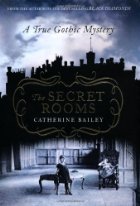 Catherine Bailey, intent on writing a book about villages affected World War I, visited Belvoir Castle to investigate the extensive archives kept by the ninth duke, John Manners. To her dismay, she found that John’s journal abruptly ended in June 1914, just when his unit was about to enter the fighting. When she read his correspondence, she found the same gap, and on further investigation, found three complete gaps in otherwise comprehensive archives. She was so curious that she kept looking and the result was this book, a mystery unwinding into a fascinating picture of a still-privileged aristocracy hovering on the brink of change. Catherine Bailey, intent on writing a book about villages affected World War I, visited Belvoir Castle to investigate the extensive archives kept by the ninth duke, John Manners. To her dismay, she found that John’s journal abruptly ended in June 1914, just when his unit was about to enter the fighting. When she read his correspondence, she found the same gap, and on further investigation, found three complete gaps in otherwise comprehensive archives. She was so curious that she kept looking and the result was this book, a mystery unwinding into a fascinating picture of a still-privileged aristocracy hovering on the brink of change.
This is a book that actually took me by surprise. I’d read the first few pages a while back and didn’t feel compelled to continue. I have to be in a certain kind of a mood for a mystery, and I never felt that the time was right. When I finally did persevere, though, I found an absolute gem of a book. There are actually 3 mysteries, which are the gaps in John’s life, and Bailey does an excellent job of keeping the reader wondering about what’s happened while slowly revealing a picture of an aristocratic family which simply no longer exists.
The book is structured with chapters that are fairly short. A number of them end in cliffhangers, so that as a reader I was compelled to go on and read more to see what the author would find next; I actually read most of the book on a train and it was the perfect distraction to make a long journey seem much shorter. More than waiting to find out the mysteries, though, I was fascinated by the world which Bailey revealed. John’s life, and that of his parents and siblings, is still full of aristocratic excess, but crisis and change is very clearly on the horizon. When he is young, his family is virtually untouchable, yet by the time the first World War is over, this world is simply gone.
The amount of influence the family has – and believes they have – is incredible, and some of the strings pulled to get some of the events in the book to happen are almost difficult to believe now. Bailey quotes copiously from the letters and journals she finds, which helped me feel like I was digging through the archives with her. The way she slowly reveals John’s character and the events that shaped his life gave a feel for how she must have experienced the unveiling of his character; overall I thought it was an excellent way to keep me invested and reading. It’s also worth mentioning that this is a really quick and easy read for non-fiction; Bailey’s writing is smooth and easy to read, and her detective story makes the book feel like it could be fiction.
I’d definitely recommend The Secret Rooms and now I’m eager to read Bailey’s first book, Black Diamonds, too.
I received this book for free for review.
|
|


Recent Comments