|
|
 I didn’t know who Wendy Cope was when I started reading this book; I picked it up due to the blurb, which reads: I didn’t know who Wendy Cope was when I started reading this book; I picked it up due to the blurb, which reads:
Selected prose from Wendy Cope, one of the nation’s best-loved poets, from a lifetime of published and unpublished work as a reviewer, critic, and journalist. Readers can meet the Enid Blyton-obsessed schoolgirl, the ambivalent daughter, the amused teacher, and the sardonic television critic.
A book for anyone who’s ever fallen in love, tried to give up smoking, or consoled themselves that they’ll never be quite as old as Mick Jagger.
Sounds pretty good, doesn’t it? I thought so; it was also on the table as recommended in my local Waterstones, so I thought I’d give it a try*. I was hoping for something of a biography, or at least a selection of essays about the author’s life experiences. I got some of that, but I suppose what I didn’t realize is that this is more of a collection of writings than anything else. The editors have gone through a number of archives and collected works to be published in this one volume. The book is split into sections based on Wendy’s girlhood, teaching years, time as a poet, and then a few other collections of various pieces of work.
For me, by far the most interesting parts were those about her life and her transition from a teacher into a poet and how that changed her. I was immediately drawn in by the very first piece, which is composed of snapshots of her memories as a girl, and stories of her time as a teacher. I would venture to guess that I was probably most taken with this because it is the most like a memoir and suits what I’d like to read. I can also say that I enjoy the way Cope writes and I’m actually intrigued to pick up her poems now, simply because this is clear and straightforward and there isn’t enough poetry in my life. She’s also a big believer in people getting paid for their work (rather than poetry getting shared for free online) and I respect her for that; she’s not after fame, she’s after making a living for herself doing something that she loves and is good at.
The rest of it didn’t really reflect any sort of universal experience and to be perfectly honest, I sometimes found it boring. I might have been more interested if I’d known who Wendy Cope was before, but the blurb above made it seem like I could enjoy it even though I didn’t, and in this I was disappointed. The interesting sections were interspersed with too much that I really didn’t particularly like. Perhaps personal taste, as I think I might be the wrong audience, but I didn’t really find it to be nearly as universal as the blurb seems to suggest.
Would I recommend this? I’m not sure. As I said above, I’m not sure I’m the target audience for this particular book, and I don’t think I really thought very much about what I was getting before I got it. But what I will do is go out, buy and read some of Wendy Cope’s poetry. I think it will be much more suited to what I’d like to read – and I will, of course, let you know what I think.
*I already had it for review but I bought five other books on that particular visit, so doing what I can to keep bookstores alive too. Obviously this means I received it for review consideration.
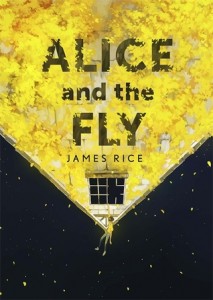 I’m not sure how to even start describing this book. Greg is a very shy, awkward teen boy who is deathly afraid of Them – spiders. This fear permeates many of his thoughts, and amongst a few other things, like a lisp and fits, makes him a complete and total outcast who virtually never speaks to anyone. But he does think, and feel, and want to share, so he does this in the form of a diary to a pretty girl he likes. This is what we read, gaining access to Greg’s innermost thoughts while only intermittently experiencing others’ thoughts of him. I’m not sure how to even start describing this book. Greg is a very shy, awkward teen boy who is deathly afraid of Them – spiders. This fear permeates many of his thoughts, and amongst a few other things, like a lisp and fits, makes him a complete and total outcast who virtually never speaks to anyone. But he does think, and feel, and want to share, so he does this in the form of a diary to a pretty girl he likes. This is what we read, gaining access to Greg’s innermost thoughts while only intermittently experiencing others’ thoughts of him.
Just like the summary to this book is hard to write, so is any review of it. It’s extremely affecting, but difficult to describe. The story is revealed very slowly, mainly because Greg’s diary is interlaced with interviews done after an unknown event about him. In this way, we get to know him mainly through his own eyes, but also through the eyes of others. This is a heartbreaking way of telling the story, really effectively getting across how very different someone can be on the inside. Greg is isolated, but he both does and doesn’t want to be, something that the people around him don’t realize at all. It casts a fresh perspective on the way we treat those we consider to be different, especially mentally ill, who may look or act differently but are still so human.
This book is designed to make us uncomfortable, to make us think about how we treat people. It costs so little to be friendly yet we can be so horrible to someone we perceive as different from us. Greg’s mind is not an easy place to be, but it’s how people treat him that hurt the most, even when he shrugs it off. It is painful, and it is uncomfortable, but it is worth reading.
A lot of the press surrounding this book emphasizes that it’s really about love, and I didn’t see this at all at first but eventually came to see this point of view by the end. Greg’s illness doesn’t stop him from loving with all of his being, nor does it stop others from being capable of loving him, even if he is isolated. It is also about the struggle to put on a front and appear normal, even when we really aren’t, even when no one is. Greg’s family is far from normal, but they go to lengths to pretend and to project an image of perfection and happiness rather than addressing any of the causes behind their root misery. This willingness to ignore very obvious issues is part of what results in the final piece of the plot falling into place.
I couldn’t say I enjoyed this book, because I don’t think it’s a book to enjoy. I was certainly drawn to it, intrigued enough to find out what had actually happened, to gain some sort of resolution, but it was hard going. Not hard to read, but very affecting. I can see why it’s garnered so much pre-publication praise, and I would add my voice to theirs. This is a book that’s worth reading.
I received this book for free for review consideration.
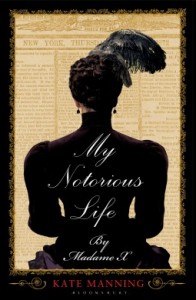 Ann “Axie” Muldoon is an Irish girl poor in money but rich in family, with a mother and two beloved siblings. When she, Dutch, and Joe meet a philanthropist intent on saving children, she finds her young life spiralling deeper into poverty, this time without the people she loves, as her brother and sister are left behind in Illinois with adoptive parents. Now an orphan, Axie is taken in by a doctor and midwife, learning a trade that will rescue her from the poorhouse but set her up for an infamy her young mind can’t imagine. Ann “Axie” Muldoon is an Irish girl poor in money but rich in family, with a mother and two beloved siblings. When she, Dutch, and Joe meet a philanthropist intent on saving children, she finds her young life spiralling deeper into poverty, this time without the people she loves, as her brother and sister are left behind in Illinois with adoptive parents. Now an orphan, Axie is taken in by a doctor and midwife, learning a trade that will rescue her from the poorhouse but set her up for an infamy her young mind can’t imagine.
Loosely inspired by the life of Ann Trow Lohman and set in mid-nineteenth-century New York City, My Notorious Life by Madame X is a brilliant historical novel rooted in actual fact. While Ann Muldoon didn’t exist in real life, children were taken from their parents in New York City and sent to the midwest to be adopted. Midwives – particularly those who performed abortions – were persecuted for the smallest of visible crimes, as was anyone doing anything perceived immoral in a similar way by the male lawmakers of the time. And Ann Trow Lohman did make an absolute fortune as Madame Restell, midwife and seller of contraceptive medicines under a different name. These historical events, combined with Manning’s gripping storytelling and evocative scene-setting, resulted in an excellent read.
Though Axie is a midwife, her practice is secondary to the relationships that make this novel. This is not only with Charlie, her husband, but with her mother, the midwife who teaches her the trade, the cook who cares for her, her only friend as a girl, her lost brother and sister, and finally the women she cares for and helps in desperate circumstances. Throughout the novel it’s clear that she firmly believes that she is doing right by these women, helping many of them out of a situation they cannot handle, or doing her best to help them avoid pregnancy altogether. As a modern reader it seems obvious that her medicines won’t always do the job she’s advertising, but she doesn’t know that, and she sticks fiercely by the women she’s caring for even at risk to herself, more than once. This, combined with her vulnerability, made me love her. She’s by no means perfect, struggling constantly with the idea that people might love her and pushing against them as a result, and she certainly does some things I wouldn’t personally agree with, but she’s strong, loyal, and ultimately admirable.
Axie also gives women early term abortions, which is discussed in detail. She is a midwife, first and foremost, but it is certainly a huge component of her working life, because women need her for so many reasons. They are too poor to feed another child. They have been raped. Their lover, who was full of compliments and kind words, will not marry them. Their families will disown them and they will live on the street. She says that she wishes the men persecuting her for helping women found themselves in some of the same situations that the pregnant women who approach her do; she’s certain that if that was the case then laws would be different. How depressingly little has changed in this respect in many parts of the world, even with the advent of birth control and women’s rights, which makes this novel resonate even more strongly with a modern reader.
And then there is Axie’s relationship with Charlie, which is never easy but had my romance-reading heart in thrall to the book more than once. From the rooftop of an orphan train to a prison cell to a 5th avenue mansion, their love story is never boring and, although it isn’t the focal point of the novel, so well done.
This book was so much more than I was expecting – a deeply powerful, fantastic novel which reminds me once again that I do love historical fiction. Well worth reading and highly recommended.
I received this book for free for review. All external book links are affiliate links.
 We might all know the ending to the relationship between Beatrice and Benedick, from Shakespeare’s Much Ado About Nothing, but how did they meet? Throughout the play it’s clear they have a history and Marina Fiorato has taken it upon herself to imagine what that history might be. From their first summer together through the ten years it takes them to reunite, this is a love story woven in and around Shakespeare’s wonderful play. We might all know the ending to the relationship between Beatrice and Benedick, from Shakespeare’s Much Ado About Nothing, but how did they meet? Throughout the play it’s clear they have a history and Marina Fiorato has taken it upon herself to imagine what that history might be. From their first summer together through the ten years it takes them to reunite, this is a love story woven in and around Shakespeare’s wonderful play.
Much Ado About Nothing is the first play that taught me that Shakespeare could be for me. It was the first Shakespearean play I’d ever seen performed live by professionals (there have been more now, I assure you). I went to see it in the Globe, with a group of friends I had never met before. It was amazing. I loved the entire experience and it’s something I simply can’t get enough of. So it’s entirely possible that this book had a little too much to live up to and maybe it isn’t surprise that I didn’t like it all that much.
My previous experience with Marina Fiorat0’s books hasn’t been the most positive, either. I read The Glassblower of Murano a few years ago and while it was okay, it didn’t blow me away. I feel similarly about Beatrice and Benedick. I would probably not have picked this up on my own as a result, but it arrived as an unsolicited review copy. The book itself is beautiful (yep, I judged a book by its cover) and the connection with the play made it something I chose to read and looked forward to. To be perfectly honest, the book didn’t really capture me until we got to the part Shakespeare had already written – and it’s not always the best idea to mess with someone that is already so wonderful. The misunderstanding that leads to their separation was certainly Shakespearean in nature, but it frustrated me, using a common theme of two romance characters failing to talk to each other as a reason for years of suffering.
There’s also that awkward juxtaposition between the years-long story of the main characters meeting and the very few days that make up the play, as usual with Shakespeare. It just doesn’t fit together that well. The pacing feels off and rushed in the latter half because the author suddenly has to speed up the pace of events, instead of spreading them out over a summer or several years. There might be a reason there aren’t many novelizations of Shakespearean plays.
Overall, I felt it was okay, a book I didn’t mind reading, but not a book that will stay with me as I know the play will. Perhaps I shouldn’t compare, as it’s a different medium, but it is hard to come up against Shakespeare and not be found wanting.
I received this book for free for review.
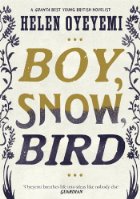 Boy Novak is the daughter of an abusive rat catcher, a man she longs to escape. One day, finally, she goes; she gets on a bus and finds herself somewhere new. In her new home, Boy meets a few friends and Arturo Whitman, father of a beautiful little girl called Snow. Boy and Arturo marry and only when Boy gives birth to her own daughter, Bird, does she discover that Arturo’s family has a secret – one that has a great deal of resonance in 1950’s America. Boy Novak is the daughter of an abusive rat catcher, a man she longs to escape. One day, finally, she goes; she gets on a bus and finds herself somewhere new. In her new home, Boy meets a few friends and Arturo Whitman, father of a beautiful little girl called Snow. Boy and Arturo marry and only when Boy gives birth to her own daughter, Bird, does she discover that Arturo’s family has a secret – one that has a great deal of resonance in 1950’s America.
This book is somewhat obviously modeled on Snow White, but twists and turns that fairy tale to become almost entirely different, with the evil stepmother actively trying her best not to be an evil stepmother. It struck me as a novel primarily about how people appear and how a little change can make a lot of difference. There are several characters in this book whose appearances don’t match the way their “true” selves would be perceived in society, which is both good and bad for them. It’s about prejudice and how we apply it based on something so shallow which actually resonates a lot with current events. And that’s all I’ll say about that, to avoid overtly spoiling a crucial plot point.
Though it’s a twisty book with a lot of surprises and a mystical feel, I actually didn’t enjoy Boy, Snow, Bird very much. I often struggle with books where I don’t connect to or empathise with any of the characters and this was the case here. The three title women are the only characters who are fleshed out to any degree, with the rat catcher, Arturo, Boy’s first love, and Arturo’s family mostly glossed over. The letters between Bird and Snow towards the second half of the book were easily my favorite part; two sisters getting to know each other again, understanding how they are alike and how they are different. But overall I just found myself feeling sort of underwhelmed. I felt like I’d seen a lot of other bloggers heap praise on Oyeyemi’s works and I just felt cold towards this, never really involved or that interested in what was happening to the characters or why. It’s been a few days since I finished it and I already feel like it’s left my consciousness, rather than causing me to dwell on some of the powerful messages it contained.
I’d be very interested to know if any of you would recommend any other Oyeyemi works to try, but in the meantime I probably wouldn’t recommend this one.
All external book links are affiliate links. I received this book for free for review.
 Kolya is a deserter. He and his brother have left their Red Army unit, disgusted and uncomfortable with the atrocities they have been committing in Russia in 1920. On the way back to his family, Kolya’s brother Alec dies, and Kolya lives for nothing but the chance to spend the rest of his life with his wife and children. But the village is empty. There is no sign of anyone, no hint of what’s happened to them except a legend told by an old woman. Kolya sets off on a desperate trek to find them, through frozen wilderness and into the heart of the army he left behind. Kolya is a deserter. He and his brother have left their Red Army unit, disgusted and uncomfortable with the atrocities they have been committing in Russia in 1920. On the way back to his family, Kolya’s brother Alec dies, and Kolya lives for nothing but the chance to spend the rest of his life with his wife and children. But the village is empty. There is no sign of anyone, no hint of what’s happened to them except a legend told by an old woman. Kolya sets off on a desperate trek to find them, through frozen wilderness and into the heart of the army he left behind.
This landed on my doorstep as an unsolicited review copy with a cover that, to be perfectly honest, didn’t appeal to me all that much (okay, not at all). Nor did the cover slogan, “The only thing that matters is blood”, and I think both are doing the novel a huge disservice. I decided to read it because the description sounded interesting and because I’ve been fascinated with Russian history for more than half of my life. The decision I made was the correct one, because behind the bland cover and needlessly violent words was a book that I genuinely enjoyed.
First of all, the setting. Russian wilderness in the grip of coming winter leaps out from the page. The season is perfectly chosen – winter is choking the countryside just as suspicion gone mad is choking the people with fear. Everything feels cold, closed-off, and terrifying. Smith’s writing helps this come alive; it’s easy to be really scared for these characters because there is no hint of what might happen next. Anyone could be an enemy, even your friend, because that’s exactly the attitude that the leaders are using to scare the many, many peasants into submission.
Kolya himself is an excellent character. He’s committed many wrongs and justified them in his head, just like all of the other soldiers, but he wants to make things right. He has finally seen what matters in his life and when he goes to find it, he can’t. It could drive him mad but instead it makes him more determined, although tinged with an edge of despair. I liked both the idea that Kolya was redeeming himself and his admirable drive to find his family. He doesn’t try to do everything; he’s not a superman. He just wants to save the people he cares about, and to me this seems a very human reaction. We perhaps would all like to end every atrocity in the world, but at this point he has to understand what is and isn’t possible and accept it. And this is why the sentence on the cover annoys me – what really makes Kolya move is his family, not “blood”. I worried about what happened to them for him.
The story itself is well-paced. Endless trudging through a frozen forest could have easily become boring, but the actual journey keeps throwing obstacles in Kolya’s way, both good and bad ones, that help inform his plan. It probably does qualify as a thriller, with plenty of exciting scenes and a few fights, but the overall impression the book gave me was quieter than that. Its strengths were in the cold, quiet nights, the air of suspicion and uncertainty, the crunch of hooves moving through a freezing, silent forest.
In conclusion, I really liked Red Winter. I would suggest it to those who enjoy historical fiction, especially if you’re interested like me in the dangerous times when societies are changing or in Russia.
I received this book for free for review consideration.
 Kit loves being a Blackhart. She’s finally living with her cousins and learning about her heritage and her amazing magical skills. She’s completed her first solo mission and she’s ready to take on whatever the world has to throw at her. She starts finding out in no short order when her cousins are away fighting monsters and Kit is left alone in a suddenly not-so-safe Blackhart Manor. Complete with a prince, Thorn, in tow, who shows up in the forest needing serious help, it’s up to Kit to find her cousins, figure out what’s going on, and make sure neither of them gets killed. Kit loves being a Blackhart. She’s finally living with her cousins and learning about her heritage and her amazing magical skills. She’s completed her first solo mission and she’s ready to take on whatever the world has to throw at her. She starts finding out in no short order when her cousins are away fighting monsters and Kit is left alone in a suddenly not-so-safe Blackhart Manor. Complete with a prince, Thorn, in tow, who shows up in the forest needing serious help, it’s up to Kit to find her cousins, figure out what’s going on, and make sure neither of them gets killed.
Like probably lots of other people, I have had Liz de Jager on my radar since she ran a book blog. I’ve been looking forward to this from the day the book deal was signed and it didn’t disappoint. Banished is a fantastic YA adventure peopled with some interesting, kickass characters. It seemed to me like a mesh between some of the darker urban fantasy that I like with a more classic fantasy story (goblins, elves, etc.) and it was a blend that I really enjoyed.
The heroine, Kit, is also a great character. She already knows about her heritage, so we can skip all of the various ways in which characters learn that they are different and special. She’s already aware that she’s different and special and, instead of being freaked out by it, she loves it and embraces it. Her full magical potential hasn’t been explored yet, but she’s on her way. She has a supportive family and even though she’s left on her own in this instance, she isn’t permanently and she knows that she has support. I liked Thorn, too, and I’m looking forward to finding out more about the other characters.
Great book, easy to read, bring on Vowed!
 Carp is a small town with small town traditions and Panic is one of them. Every year, high school seniors take on dangerous dares in order to win a large monetary prize that will help them escape their town for good. Heather thinks she’s too sensible to get involved, but she finds herself caught up in the rush anyway with her best friend Natalie. Dodge, another student, has always known that he would participate in Panic, although for different reasons than Heather. The book alternates between the points of view of these two students while the game gets ever more dangerous. Carp is a small town with small town traditions and Panic is one of them. Every year, high school seniors take on dangerous dares in order to win a large monetary prize that will help them escape their town for good. Heather thinks she’s too sensible to get involved, but she finds herself caught up in the rush anyway with her best friend Natalie. Dodge, another student, has always known that he would participate in Panic, although for different reasons than Heather. The book alternates between the points of view of these two students while the game gets ever more dangerous.
I felt decidedly “meh” about this book. I had anticipated something more along the lines of Before I Fall and Delirium. Both of those struck me hard, especially the first; I love the concept of living over and over again and learning as you go (see also Life after Life by Kate Atkinson, another big hit with me). They were interesting and innovative and they made me excited to read Panic, too.
But as soon as I started I knew it was different – this is just an ordinary town. The concept of high schoolers taking on a life-or-death game isn’t really the same as a world without love or a girl who lives the same day over and over again. It’s something that could actually happen in the real world. I suppose for some that might be an advantage, but for me it was a drawback. Some of the games are ridiculously dangerous and outrageous, yes, but none beyond the realms of our actual real world. This wasn’t what I’d expected and I wasn’t as impressed with this as I was with the other two books I’d read by the same author. It didn’t suit my own personal taste and it wasn’t a book that I felt went above and beyond.
Is it worth your time? That’s a separate question, I think. This is more in the style of a thriller than the other two and I have seen positive reviews floating around. It has its positive points – I think the characters grow over the course of the book, the romance is okay, and it does keep a reader’s attention – but it just didn’t work for me. I would start with Oliver’s other books in any case.
I received this book for free for review.
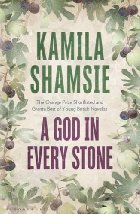 In July 1914, Vivian Rose Spencer is a twenty-two year old young woman who has finally been given permission to go on her first archaeological expedition. In the shadow of coming war, she falls in love and is forced back to England, where her life seems on hold until she’s not sure how it can continue. At the same time, Qayyum Gul is fighting in the war, losing an eye at Ypres. He and Vivian meet once, unaware how their lives will change around each other, until fifteen years later their fates are united again in the search for a historic artifact and a second fight for independence. In July 1914, Vivian Rose Spencer is a twenty-two year old young woman who has finally been given permission to go on her first archaeological expedition. In the shadow of coming war, she falls in love and is forced back to England, where her life seems on hold until she’s not sure how it can continue. At the same time, Qayyum Gul is fighting in the war, losing an eye at Ypres. He and Vivian meet once, unaware how their lives will change around each other, until fifteen years later their fates are united again in the search for a historic artifact and a second fight for independence.
This review has been difficult to start writing. I didn’t feel the way I expected to after reading this book. Burnt Shadows was powerful. It left an impression on me and it took a long time to get out of my head. I mean, I read it nearly five years ago and I still have feelings about it. By contrast, I finished A God in Every Stone towards the end of July and I’m struggling to recall any feelings I had towards it besides indifference.
I think part of the reason I didn’t appreciate it so much was because I didn’t get on very well with the main character. Viv irritated me. Unfortunately I think I am one of those readers who generally has to at least sympathize a little bit with the main characters in a book to actually enjoy the book itself; this isn’t always the case, but I couldn’t really recover from a decision she makes towards the beginning of the book. The very beginning of the book seemed like it would be perfect for me – an archaeological expedition, a burgeoning love story, and the shifting uncertainty caused by the approach of war. Because Viv’s expedition is comprised of her and Turks and Germans, I initially thought this would be a book which demonstrated how people are just people, no matter what country they come from.
It kind of is, but doesn’t really get there. The characters in the book are certainly people with all the flaws inherent in that and I spent most of the end of the book worrying about the fate of one particular character, but I suppose in the end it just didn’t connect with me. Which is a shame, because a lot of people seem to think highly of it. Shamsie is a beautiful, skilled writer with a real talent for getting into her character’s minds and evoking atmosphere. It makes me feel as though I missed something, but for me it did fall short. As you can probably tell, it’s difficult to articulate just why, and I don’t think I’ve succeeded in this review.
I would still look forward to Kamila Shamsie’s next book with eagerness, but I would recommend Burnt Shadows before A God in Every Stone.
All external links are affiliate links. I received this book for free for review.
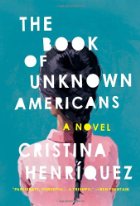 Arturo Rivera, his wife Alma, and their daughter Maribel arrive in the United States with close to nothing. Unlike many immigrants, who come to the United States out of poverty and desperation, the Riveras have arrived in the hopes of getting Maribel into a special school for children with brain damage. Beautiful sixteen-year-old Maribel hasn’t been the same since a terrible accident and Arturo and Alma would do anything to help her recover. They find themselves in an apartment building full of other immigrants. Entwined with the Riveras story is that of the Toro family, whose son Mayor falls in love with Maribel on first sight and only loves her more when he gets to know her better, and snapshots from the lives of other immigrants from all over Central and South America. Arturo Rivera, his wife Alma, and their daughter Maribel arrive in the United States with close to nothing. Unlike many immigrants, who come to the United States out of poverty and desperation, the Riveras have arrived in the hopes of getting Maribel into a special school for children with brain damage. Beautiful sixteen-year-old Maribel hasn’t been the same since a terrible accident and Arturo and Alma would do anything to help her recover. They find themselves in an apartment building full of other immigrants. Entwined with the Riveras story is that of the Toro family, whose son Mayor falls in love with Maribel on first sight and only loves her more when he gets to know her better, and snapshots from the lives of other immigrants from all over Central and South America.
I really loved The World in Half, the first novel I read by Cristina Henríquez, so when I was offered The Book of Unknown Americans for review consideration, I immediately accepted. Although I’ve forgotten the details, I still remember how beautiful that book was and how much of an effect it had on me. This book was different, but again had an impact and slightly shifted my worldview.
One of the things that stands out most, again, is Henríquez’s beautiful, clear writing. The very first scenes of the novel, when the Riveras are arriving into their new apartment for the first time, are surprisingly moving. We learn the details of their lives – the cracked windows, the cupboards with bedsheets tacked on instead of doors, the mattress a discarded relic they found on the way – and even when the story gains more heft, we know that this is in the background, not only for the Riveras but for the other tenants in the building.
Their story is interspersed with those of the other people in the apartment building. They all have different reasons for arriving in the United States, some legal, some illegal, and this is what the book is trying to convey. There are so many of these people, all Americans, who are unknown, who don’t count as much because they have slightly darker skin, who slip beneath the radar. Like immigrants in what seems the world over, especially those who aren’t white, they suffer simply for being slightly different and are held accountable for all manner of ills. I found this passage really powerful:
I mean, does anyone ever talk about why people are crossing? I can promise you it’s not with some grand ambition to come here and ruin everything for the gringo chingaos. People are desperate, man. We’re talking about people who can’t even get a toilet that works, and the government is so corrupt that when they have money, instead of sharing it, instead of using it in ways that would help their own citizens, they hold on to it and encourage people to go north instead. What choice do people have in the face of that? Like they really want to be tied to the underside of a car or stuffed into a trunk like a rug or walking in nothing but some sorry-ass sandals through the burning sand for days, a bottle of hot water in their hands? (p.241)
I didn’t get tired of these parts of the book, even though I liked the main story too. All of them were different and had stories worth hearing. Although they were brief, and for the most part had settled in that apartment building and left the more difficult parts of their immigration behind, I personally found them really moving and a perspective I hadn’t encountered often enough.
Very highly recommended and I will continue to keep my eyes open for Henríquez’s next book!
All external links are affiliate links. I received this book for free for review consideration.
|
|



Recent Comments