|
|
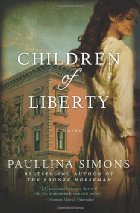 Gina Attaviano is a fourteen-year-old Italian immigrant girl living her father’s dream when she and her mother and brother arrive in Boston. Their father Alessandro has passed away, but the rest of the family arrive to stay with a cousin and aunt in Lawrence, Massachusetts. They arrive in Boston Harbor and meet two surprisingly helpful locals, Ben Shaw and Harry Barrington, who lend them an apartment for the night. Both are from prominent families, but that doesn’t stop them getting involved with the Attaviano family; Ben immediately becomes infatuated with fourteen-year-old Gina, while Gina herself develops a massive crush on Harry, who remains aloof. Over the course of the novel, determined Gina decides to find a way to fit herself in Boston society, having discovered what she truly longs to have. Gina Attaviano is a fourteen-year-old Italian immigrant girl living her father’s dream when she and her mother and brother arrive in Boston. Their father Alessandro has passed away, but the rest of the family arrive to stay with a cousin and aunt in Lawrence, Massachusetts. They arrive in Boston Harbor and meet two surprisingly helpful locals, Ben Shaw and Harry Barrington, who lend them an apartment for the night. Both are from prominent families, but that doesn’t stop them getting involved with the Attaviano family; Ben immediately becomes infatuated with fourteen-year-old Gina, while Gina herself develops a massive crush on Harry, who remains aloof. Over the course of the novel, determined Gina decides to find a way to fit herself in Boston society, having discovered what she truly longs to have.
I’ve never read any of Paullina Simons’s books before and I have a feeling that I chose the wrong place to start. I was deeply underwhelmed by this book, having heard many good things about the author’s Bronze Horseman trilogy, and I’m now not sure I’m curious enough about what happens next to actually delve into that trilogy. I read this first as I got it for review and a prequel is generally not a bad place to start reading a series, but I think I should have started with Simons’s other books.
Let me explain why. First of all, the characters were simply not people I wanted to spend time with. Gina decides to go off and do her own thing, lying to everyone who loves her, from the minute she steps foot on American soil. She refuses to listen to any sort of logic and, in short, behaves like a reckless teenager. That’s fine – that’s what she is for most of the book anyway. But she also turns out to be a character who is impossibly perfect; she excels at school when she decides she should, she earns all sorts of mysterious extra money with her cleverness and makes herself beautiful clothes, she begs a loan to start her family’s restaurants, and every man who sees her falls at her feet, except of course Harry (until he finally does). She even somehow speaks perfect English, even though she admits in the beginning of the book that she hadn’t paid as much attention to her father’s lessons as she should have.
Harry, on the other hand, is an adult, but seems like he could have happily remained a child or student forever. He ignores all sense of responsibility and lets his life happen to him, rather than doing anything at all to influence it himself. He’s content enough, it seems, to be in a relationship with a well-bred girl he doesn’t love, to flounder about wondering what he’s supposed to be doing while continuing to study (and getting nowhere doing it), and living off his father’s money well into his twenties. Ben, his best friend, was far more interesting because he actually had a spine and went off and did things himself. When Harry finally makes a decision about his life, he hides it from everyone and creates a disaster. Twice.
Second, the book has little plot. Gina decides she’s in love with Harry and the rest of the book is spent on various conversations, political talks and meetings, and her often fruitless efforts to entice him. I felt zero spark between them, even when Harry finally wakes up and realizes that a gorgeous Italian woman has him firmly on a leash. The romance part of the book felt dreamlike and I had no real sense of why these two people had chosen to be together. It’s one of those attraction-and-nothing-else storylines which get on my nerves.
Lastly, much of the book is spent on little happening but talking. I’m normally fine with this and tend to even enjoy “quiet” books, generally because they have some sort of meaning. But here? Gina’s entire existence is focused around Harry; everything she’s done, everything she’s learned, has simply been to attract a man. So her ideals seem faked, while Harry hides from his life and ignores responsibility, spouting nonsense about what he believes in and failing to act on any of it. I just got fed up with them and with the book – after writing this review I’m actually surprised that I finished it.
The Bronze Horseman might be worth reading, but I’m not sure Children of Liberty is. If you’re interested, I’d recommend visiting your library first. That’s where I’ll be getting the rest of the trilogy from, if I decide to continue.
I received this book for free for review.
 I originally bought Huntress for A More Diverse Universe before I decided not to blog in November. I also didn’t manage to read it in November. But I loved Ash and I still wanted to support the initiative, even a full month late, so I recently picked it up and found myself devouring it in just a couple of days. I originally bought Huntress for A More Diverse Universe before I decided not to blog in November. I also didn’t manage to read it in November. But I loved Ash and I still wanted to support the initiative, even a full month late, so I recently picked it up and found myself devouring it in just a couple of days.
Set centuries before Ash but in the same world, two girls and a prince are tasked with making a journey to the Fairy Queen, across deadly lands with no maps, to find out why the kingdom exists in a permanent state of gray. The girls are students: Kaede, the Chancellor’s daughter who rejects her life as a proper lady, political marriage and all, and Taisin, a gifted future sage whose dreams are true visions. With them go the heir to the kingdom and three guards to the first summons to the Fay in a generation.
This book opens with a vision; Taisin sees an element of the future, but she doesn’t understand it or how she will get there. As the book unfolds, the mystery of that vision unwinds, and it’s only towards the end of the book that she, and we, understand exactly what she saw and how she needs to use it to ensure that she and those she love survive.
In Huntress, women (and girls) take on all the primary roles; Kaede and Taisin are the main characters, who go to visit a Fairy Queen, while their enemy similarly turns out to be a woman. As in Ash, the love story is between women, in a world where all love is freely accepted (although it seems political marriages still need to be between men and women in order to produce children). The change is perspective is not radical, it’s just enough to subvert expectations slightly and produces a much richer book for it.
The core of the story is an adventure into unknown lands, where mysterious perils await and some of the small band may not survive. As with all such stories, this makes it easier for us to get involved in the world as we discover new elements of the universe right along with the characters. And two diverse main characters make it easier; Taisin is destined to be a nun, or so she thinks, and acts accordingly, while Kaede wants nothing more than to live an unconventional life. Yet these two very different girls bond truly, through shared experiences and deep emotion, and their journey is one that is worth following and loving.
A quick and engaging read, Huntress is definitely recommended for other fantasy readers.
I purchased this book. All external book links are affiliate links.
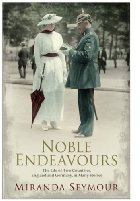 The histories of England and Germany have been intertwined for centuries. Among other things, the tie is in the very root of the words we speak, as the English language is based on a Germanic language, albeit with plenty of other languages thrown in for good measure. Miranda Seymour picks up the story of these two countries in the seventeenth century with the marriage of an English Stuart princess to the Elector Palatine, the son of a very different German landscape. From those nuptials to the end of World War II, Seymour picks up the story of these two countries primarily through people that loved and lived in both of them. The histories of England and Germany have been intertwined for centuries. Among other things, the tie is in the very root of the words we speak, as the English language is based on a Germanic language, albeit with plenty of other languages thrown in for good measure. Miranda Seymour picks up the story of these two countries in the seventeenth century with the marriage of an English Stuart princess to the Elector Palatine, the son of a very different German landscape. From those nuptials to the end of World War II, Seymour picks up the story of these two countries primarily through people that loved and lived in both of them.
I had an interesting time with Noble Endeavours. I couldn’t say that I loved it unreservedly, because it had faults. As it’s set over a wide span of time, there were very many historical personalities introduced, and I for one found it surprisingly difficult to keep track of who everyone was over the centuries. I could have used some sort of guide to who was who in the front or back of the book, especially when some of those mentioned got married and their names changed. In places it felt scattered as we jumped from one person to another (who I invariably didn’t remember). This may have been partly my fault as I didn’t read the whole thing in one go, preferring to jump in and out over the course of a couple of weeks, normally how I handle non-fiction these days.
When the book was great, though, it was really great, and at times I could feel how some of these people were genuinely pulled between two countries. The best part was towards the end where we got to the World Wars – not “best” because of the circumstances, but because it gave me the opportunity to view the huge historical turning point from a new angle. And, because of the focus on specific people, we get a much more intimate view of the heartbreak caused by these divisions. Both World Wars were devastating events and this book brought more of that into focus through individual affected people from all sectors of society rather than a big picture view.
The part that I found most horrifying, actually, was how wilfully Hitler was ignored and even praised by Brits for revitalizing Germany when they had plenty of evidence of what his actual plans were. Part of that was due to the way the two countries had interacted for several hundred years, part of it was because those plans were well hidden on both sides, but it’s scary how many lives may have been lost because intelligence reports were ignored and insider knowledge was dismissed. And the price is still paid to this day.
Not a perfect book, but a fascinating one. I’d recommend Noble Endeavours for anyone interested in English or German history.
All external links are associate links. I received this book for free for review.
 Getting back into blogging is really, really difficult. I’ve found myself staring at an empty blog post far more often than I’d like and I can’t decide which books to actually review. For example, I wrote the last two sentences of this post yesterday. I then decided to attempt to write a review of the book I just finished, Huntress. I wrote a summary of that, found writing what I thought of the book really difficult (even though I loved it and thought I’d have plenty to say) and then gave up for the evening. Getting back into blogging is really, really difficult. I’ve found myself staring at an empty blog post far more often than I’d like and I can’t decide which books to actually review. For example, I wrote the last two sentences of this post yesterday. I then decided to attempt to write a review of the book I just finished, Huntress. I wrote a summary of that, found writing what I thought of the book really difficult (even though I loved it and thought I’d have plenty to say) and then gave up for the evening.
In short, this whole blogging thing is not flowing the way that it used to.
The Christmas season is more or less in full swing here. My work Christmas party was Friday night and I’ve got my department Christmas party this Thursday, plus some drinks with friends in between. I’ve been enjoying the increased levels of socialising, surprisingly, as long as I do get some downtime to recharge batteries. I’ve definitely got that coming up, as I’m off work from a half day on the 24th until the 6th of January. I’ve been pondering what to do with all that time; I don’t think I’ve been at home so long without any concrete plans since I started working and I’m looking forward to it. Options include playing through one of my favorite games again, getting a start on Long-Awaited Reads month, or reorganizing my bookshelves, which have been neglected and look a bit woeful (not even close to alphabetized).
In current reading news, I just finished the above-mentioned Huntress, which was meant to be for A More Diverse Universe until I decided not to bog in November. It was fantastic, of course, and I do intend to write about it. I hope. I’m working my way, slowly, through Noble Endeavours, a somewhat scattered account of many different relationships between Britons and Germans leading up to World War I and beyond. I also decided that the first book I’ll read once the holidays begin is River of Stars by Guy Gavriel Kay; my reading recently has mostly been limited to what I can carry on the train or what’s on my Kindle and I’m going to enjoy sinking into that and a few other longer reads when I get the chance.
How are your holidays shaping up? Do you have any reading planned? I’d love to hear about it.
 Getting back into writing about books has proven more difficult than I expected. I have such a huge backlog that I wasn’t sure where to begin, which seems like a silly reason, but which did keep me from even trying earlier this week. Today, though, I finished Proust and the Squid, which was such an excellent book that I was immediately inspired to write something about it. Getting back into writing about books has proven more difficult than I expected. I have such a huge backlog that I wasn’t sure where to begin, which seems like a silly reason, but which did keep me from even trying earlier this week. Today, though, I finished Proust and the Squid, which was such an excellent book that I was immediately inspired to write something about it.
This book is all about reading and its development, both in history and in a child’s (or adult’s) brain. Wolf, who is a well-known authority on the subject, decodes what to many adults now seems straightforward and obvious; the many factors that go into the surprisingly magical ability to read. Reading is not a natural human activity, like communicating seems to be, but is something that has been developed over time and which actually shapes our brains.
So many elements of this book fascinated me. The difference between a native-English-speaking brain and a native-Chinese-speaking brain, for one, because Chinese characters contain pictorial elements which require different levels of processing. I had no real idea that there were so many elements involved in reading or how it worked. Naturally, I was also transfixed by the passages about the history of the development of our alphabet, which revolutionized reading, as we can understand it so quickly that we can think more widely while reading. The alphabet also opened reading up to more people as it became “easier” to learn.
What I found most interesting, though, were the parts about how children learn to read. Reading, for me, has always been easy. I was lucky when I was little. My parents read to me every night and taught me letters, colors, recognition and naming of everything around me – basically, everything this book says is key to a successful reading life. I never had to be taught how to read in school because it all clicked into place for me before I got there. Other children are not that lucky, and Wolf devotes a large portion of the book to children with reading disabilities, primarily dyslexia, and how this relates back to the many processes involved in reading. She makes a strong argument for dyslexic children and adults being “gifted” and more creative with several prominent examples from history, which is undoubtedly something that these children need to hear more often. I know many children and adults have frustrating experiences with reading difficulties.
Finally, Wolf questions how much internet culture will impact reading. We all read information online, but we’re not encouraged to read deeply and think widely; when all information is available via Wikipedia, what happens to specialist knowledge, understanding, and a framework for understanding? She’s not sure.
I loved, though, how much Wolf is a reader, who understands the way that books change and shape who we are. Each quote at the start of each chapter was thoughtfully and perfectly chosen. It’s very clear that she loves reading. At times it felt like the book was speaking directly to me and the experiences I’ve had, and it underscores how very valuable it is to encourage us to think outside ourselves and step into others’ shoes, something that is inherent in reading.
Proust and the Squid is absolutely worth reading by anyone who loves reading or is raising children. I have a feeling I’ll refer back to it again and again.
|
|


Recent Comments