|
|
 What book would you love to be able to read again for the first time?
This is actually a bit of a tough question. I love re-reading so I don’t mind if I know what happens in a book. I have a bad memory anyway, so I forget little details and sometimes big ones if it’s been a few years. I would say, probably, that I’d like to read one of my ultimate favorites again for the first time, Jane Eyre or The Age of Innocence, just because I’ve read them so many times I don’t remember what it was like the first time I read them.
I think I’d also like to start over with two big fantasy series that I love. The first would be George R.R. Martin’s A Song of Ice and Fire. Ideally this is because he’s ruthless with his characters and I’d like to forget who dies, who lives, and who comes back from dead, so I can be surprised again. I’d also probably wait several years until he’d finished. I’ve forgotten enough of the story that I’m going to have to reread all 4 chunksters in preparation for each new books. While I love them, it’s going to be time consuming and my TBR pile will not thank me.
The second fantasy series I’d choose would be the Kushiel’s Legacy series by Jacqueline Carey. I love this series to little tiny bits. It’s one of the few fantasy series I have made time to reread. It was very interesting to see what caught me the second time through as opposed to the first and I was glad that I knew what to expect from the third book, but I would love to experience them without preconceptions once again. I remembered quite a bit once I’d started reading. I’m glad that I have Naamah’s Kiss waiting so that I can happily experience a new story in the world I love so much, though!
What book would you like to read for the first time again?
 Sookie Stackhouse is a waitress in a small bar in Louisiana. She keeps to herself because of her disability. That is, she can read thoughts, and being close to people makes her uncomfortable, especially men. One night, a vampire named Bill walks into her bar, and she realizes that she can’t hear him. Not only that, but he’s good-looking and interested in her. Unfortunately, a string of murders has plagued her small town lately, and it looks like a vampire did it. Bill’s under suspicion and Sookie’s life is in danger; can they figure out who did it before their lives are torn apart?
This was a fantastic, fun little book. Sookie is already an interesting character, and having a vampire named Bill who fought in the Civil War just adds potential for a lot of great background. It seems fairly natural when they get together and stay together, although some of Bill’s vampire habits creep me out. They clearly don’t creep Sookie out as much as me, though. I like that even though she’s a blond, busty barmaid (as she says) she’s still intelligent.
This is a mystery, but I think setting the background for the series was more important. We meet a number of vampires and get a feel for their world, both good and bad, like how they got to be recognized, how apparently they have a “virus”, and even whether or not they can procreate. We get acquainted with Sookie and her supporting cast. As it turns out, the murderer was actually someone who bugged me throughout the book; I hadn’t guessed, but I was pleased, and glad that person will probably not be turning up again. The mystery and the murders were important, but it didn’t frustrate me as mysteries have in the past. I didn’t feel like I was supposed to guess, I could just enjoy the story and wonder who did it.
I also enjoyed the southern feel that this book has. In particular, I appreciated that the dialogue wasn’t written in an atrocious approximation of regional accent but gave me the impression that the characters had particular accents through word choice and behavior. It feels like how I think Louisiana should feel but without irritating me in any way. I liked that a lot.
I would definitely recommend this book to someone looking for a fun read with supernatural elements. I’m very much looking forward to the next in the series and once again glad that I “discovered” urban fantasy. I’ve been missing out on a lot of fun!
Buy Dead Until Dark on Amazon.
 Miraflores always assumed that her Panaman father was a callous man who had an affair with her married mother and cared little about the child that resulted. He has never called her, written to her, or made an effort to get involved in her life. When her mother falls ill, Mira goes through her papers and discovers letters from her father, expressing his vibrant love for her mother and for Mira herself, even though he has never met her. Torn by her realization, Mira lies to her mother and her mother’s new caregiver and flies to Panama City, determined to find the man who loved her mother so and fill in the missing pieces of her life.
This is a lovely, lovely book. It’s carefully written in measured, beautiful prose, allowing the impact of the emotions that the characters are feeling to sweep the reader away more than telling us that it should. The setting is gorgeous. I could feel the warm breeze in Panama and the chill in Chicago’s winter. I could see the Panama Canal for myself for the first time.
As Mira starts to peel away the secrets of her life, the book becomes more and more absorbing. Meanwhile, she makes a very special friend in Panama who adds a bit of tension to the book. We’re never sure what his intentions are or even what Mira’s intentions are. They are united in a quest to find her father, but beyond that is a mystery and helps to propel the story along when the clues aren’t fast in coming. It also sets up an interesting parallel between Mira and her mother once the truth is exposed. History can only repeat itself if we let it happen.
Interspersed with the novel’s story are bits of scientific information about geography. These are carefully chosen to reflect the emotions of the characters. For example, the beginning of the novel has a description about the hardening of the earth’s core and its fiery heart; later we learn that one of the characters has become exactly like that over the course of her life. We get a description of volcanoes when Mira nearly has a breakdown and can no longer control how she’s feeling. I thought this was a really nice touch since Mira is an aspiring geologist herself. It ties together Mira’s voice with science and with the story in a deeper way.
The questions this book asks, mostly through the relationship of Mira and Danilo, are similarly inspiring and relevant. Mira struggles with questions of belonging in Panama; her father lived there and she wants to belong, even speaking Spanish, but she vascillates between feeling welcome and feeling different. More than looking for her father, Mira is looking for herself and the half of her that she never had a chance to know. With Danilo, she has cause to question how well they fit together and how any relationship, even a friendship, between them can work. Their lives are different, but does that mean their future must also be different?
The World in Half is a wonderful, thoughtful book. I loved Mira and I wanted her to find her father and the happiness that she deserves. The ending is left open, but I liked it better that way. Life is unpredictable and we already know the path Mira would choose if she had a choice. I very strongly recommend this book.
This book is available from Amazon and Amazon UK  .
 Again, this is not really a review, more my thoughts on this installment of the series!
Edward’s back in her life and Bella couldn’t be happier, but she still cares for Jacob Black, the werewolf who has become her best friend. The animosity between Edward and Jacob means that Bella struggles to keep her two worlds apart. Even worse, someone is committing murder after murder in Seattle, and Bella, the Cullens, and the Quileutes have reason to think that they’re after Bella. In the midst of trying to stay safe and protect all those she cares about, Bella realizes that she may have to make a choice with which she isn’t at all comfortable.
I do actually think this installment of the series may be the best so far. (It’s later ruined by Breaking Dawn, but we’ll leave that review for next week.) Edward has developed something of a personality, which makes me pleased that he’s not just a God-like perfect creature, although we still hear about his beauty nearly every page he’s on. He’s still very controlling, though, and that I didn’t appreciate. Bella doesn’t seem to care, but he regularly thwarts her will and convinces her to do what he likes, like when he forbids her to see Jacob and has Alice actually kidnap her to prevent that from happening. I can’t even tell you what I’d do if Keith tried to stop me from seeing someone who wasn’t harmful to me at all. The scene where he forces Bella to visit her mother on a particular weekend and worse, completely overrides her father’s objection springs to mind. What Stephenie Meyer shows us and tells us are two entirely different things.
My favorite is still Jacob. I can’t help it. If I was an obsessed teenager, I’d be wearing a “Team Jacob” t-shirt. He’s so much more interesting than Edward. He seems to actually care for Bella rather than spout endless platitudes about eternal love; we don’t need to hear his feelings so often because he shows them. What a novelty! He’s also more fun, and Bella is more fun around him. She’s better when she’s not passing out from kisses or thinking about how unworthy she is, although she does get annoying by constantly worrying at the hurt she’s causing Jacob. I wanted to kick her. If she felt so bad, she should have cut off the friendship and let him recover.
This is still the best book in the series, though. It felt smoother, and though the characters annoyed me, I felt that they were gaining more dimensions, even if they weren’t dimensions I liked. The vampire past was interesting, too, because I like world-building even if the author likes to break conventions. I’m still not sure I’ll go around recommending this series – not because anyone needs me to anyway – but I am enjoying them in a superficial sort of way, at least when I don’t want to smack Bella.
Buy Eclipse on Amazon.
 As many of you who follow me on twitter know, I had a fabulous week last week. I did very well on my second essay, I got notified that I have a job interview at a library (a job which I would LOVE), my dissertation is progressing very well, and I was contacted by new publishers here in the UK for reviews. I’ve been quite pleased with myself and thrilled that things are going at least a little bit in the direction that I would like. A few roadblocks have presented themselves in the past couple of days, but I’m hoping to surmount them anyway.
Not much time for this post today as my lovely fiance is currently making us lunch! I’m very lucky.  I’m reading Atlas of Unknowns by Tania James, an absolutely fabulous book about an Indian girl who uses her sister’s talent to get a visa for the USA, only to get caught in a huge web of her own lies and struggle with who she is and what she wants to get out of her life. I anticipate finishing it a little later today, and then I plan on starting The Bridge of the Golden Horn by Emile Sevgi Ozdamar. That one appears to be a memoir about a sixteen-year-old girl who flees Istanbul to work on an assembly line in a factory in Germany. I think it sounds interesting, and I know I need to read more books set outside the USA and the UK, so I’m looking forward to it.
I’m also looking forward to watching more of Season 2 of LOST, courtesy of Amy, who is certainly an amazing friend! We are loving this show. Tomorrow morning I’ll be heading back to York to work on my dissertation; I’m digging deep into the primary sources for the next two weeks in search of useful mentions of Anthony Woodville.
What’s ahead for you this week? Anything exciting?
 Bella Swan is still deliriously happy to be with Edward Cullen, the love of her life who just happens to be a vampire. It’s Bella’s eighteenth birthday, but it reminds her that she is growing older while Edward remains a teenager. Regardless, he wants to celebrate and whisks her off to the Cullen household for a party. At the party, Bella falls and tears her arm open, bleeding everywhere and exposing her vulnerability to the world as the vampires can hardly keep themselves away. Convinced he’s doing the right thing, the family, including Edward, leave Bella behind. This devastating separation drives Bella closer to Jacob, who has a secret of his own, and results in misunderstandings and drama as the strength of Bella, Edward, and their relationship is pushed to the limit.
This doesn’t really need a review, as there are reviews scattered across the entire internet, so this is more a collection of thoughts than a proper review.
Various other bloggers told me I would and in fact I did like this book better because of Edward’s absence. Bella whined, but at least I didn’t have to hear about how perfect he was for pages on end. I like Jacob much better than Edward. He seems more like a real person. He is, of course, in love with Bella and he’s gorgeous, but I prefer his earnest, cheerful personality. I know how the series ends, but I’d have firmly declared myself for “Team Jacob” if I was 10 years younger and paid attention to the fuss surrounding the release of Breaking Dawn. In fact, I liked this book all around better than Twilight. Yeah, their relationship is more or the less full of the same problems that bugged me the first time, but I think I’m beginning to “get” why teenage girls are so enthralled with Edward. He really will do anything for Bella and it probably is his devotion that teenagers want. I don’t think I’d want a boyfriend who would kill himself if I died, but at 13, I’m sure I would have thought it terribly romantic.
I’m a little annoyed with Bella’s self-deprecating attitude though; it seems worse here. She values herself based on the attention that others give her. She only recovers from her depression when she has a new admirer in Jacob. I think this series would have been stronger had Bella come into her own and not just followed the whims of her vampire boyfriend or werewolf best friend. That said, I haven’t finished the series, so maybe she does, at least a little. I’ll find out as I plan on continuing. I know what happens, but these books are fun, even with their irritating edges. I still think I’d have to talk to any children of mine about the messages this series is conveying, but I don’t have to worry about that and can focus more on the enjoyable factor.
Buy New Moon on Amazon.
 Juana of Castile never expected to be queen, with an older brother and sister ahead of her. As a daughter of Ferdinand and Isabella of Spain and thus a Spanish Infanta, she is married to Philip of Flanders, with whom she quickly falls in love. Juana does not trust her husband’s advisor, and within reason, for when Juana’s brother and sister die, he persuades Philip to seize the Spanish throne for himself. When everyone around her deserts her, Juana keeps fighting through her despair and her determination is creatively interpreted as madness by all those who have greater designs on her throne and no interest in the woman who should hold it.
I have never really known much about Juana. She is just outside my time period and just outside my geographical sphere of knowledge. I am so grateful for the opportunity to have read this novel. Juana is a fiery character and I knew little about her quirks. I love how she grows from girl to woman over the course of this book. Her voice is strong and believable and to be honest, I can hardly believe a man wrote this book! Since I didn’t know what happened, I had a rare opportunity to let the plot of a historical novel really take over and I can say that this book doesn’t fail at all in that respect either. It was wonderful and I think it still would have been even if I’d known how it ended.
Knowing full well the ways in which medieval and early modern figures manipulated heirs to make their way to a throne, I had no trouble at all imagining that Juana’s madness was a convenient foil. It would be nothing new. I found the way the author used known events and cast them in a different light to be extremely creative and appealing, like her reasoning for staying outside for several days in winter and taking her husband’s coffin with her well beyond when he should have been buried. So many people let Juana down, most notably her father and her husband. She was determined to secure the throne for her son, Charles, and did not back down even when these men did their best. Is it any surprise that they attempted to cast her aside?
I’ve never been to Spain, but I could almost picture it in this book. I want to go now and I want to learn more. That, more than anything, is the mark of a great historical fiction novel for me. This is an extremely enjoyable book and one that I would certainly recommend.
The Last Queen is available from Amazon and Amazon UK. You can also check out C.W. Gortner’s website, blog, and tour stops.
 Thursday Next retreats into the Well of Lost Plots to avoid getting into more trouble with Goliath and the Chronoguard in the real world. With a baby on the way and her husband Landen erased from everyone’s memory but hers, she wants to stay safe, and the best way to do that is to take up residence in a failing detective novel. Unfortunately, trouble finds Thursday even when she’s hiding, as she must battle the new book upgrade, save the novel she has moved into, and figure out why Jurisfiction agents are being murdered.
As with the other books I’ve read by Jasper Fforde, this one is a treat. My favorite part is unquestionably the many literary references sprinkled throughout the text. We visit Alice In Wonderland, Great Expectations, Wuthering Heights, and several other literary destinations as well as hints. For example, Mr. Toad from The Wind in the Willows has a never-ending battle with Miss Haversham to see who can drive the fastest. During a meeting, everyone present remarks constantly that they are waiting for Godot. Humpty Dumpty and his nursery rhyme cohorts need to be satisfied; their stories aren’t always written down and they want equal rights with book characters. I think it’s those sneaky hints and literary connections that make these books great.
I did wonder a little bit why Thursday wasn’t gung ho about finding Landen. She has to battle her own memories to keep him alive and that certainly means a lot to her, but she uses the excuse of the baby to stop going out into the real world. Of course, she’s in plenty of danger in the Well of Lost Plots, too, but I guess gigantic monsters aren’t as scary as the Goliath corporation. You could also say that one is expected and one is not, but, well, I’m nitpicky.
Anyway, after reading this I feel I have definitely gotten back into the Thursday Next groove. This was a library book and I actually own book 4, but it’s at my parents’. So it’ll be at least July or so until I can read the next one, but I’m really looking forward to it.
The Well of Lost Plots is available from Amazon and Amazon UK.
Book Gluttony! Are your eyes bigger than your book belly? Do you have a habit of buying up books far quicker than you could possibly read them? Have you had to curb your book buying habits until you can catch up with yourself? Or are you a controlled buyer, only purchasing books when you have run out of things to read?
If there is a controlled buyer out there, I would really like to meet them! I’m certainly not one. I can’t hold back. That’s why my TBR pile is 350 books strong, mostly books that my mom is generous enough to buy me from our favorite charity shop. I buy new books, too, in alarming quantities. I should curb my book buying habits. I’m much better when I’m poor, as now. I’ve told Keith that I’ll certainly catch up because we’re too poor to buy many books, but he thinks that as soon as I get a job and have an income that I’ll be using the extra to get more and more books. Heh. Heh. We’ll see. I do have so many books these days that it takes me a half hour just to choose what I want to read next if I haven’t decided it already. I’ve started pulling out two or three books at once and reading them in a row to avoid these choices. A little like my read-a-thon pile, only smaller!
***
Secondly, I have a very special announcement to make. We are all book bloggers but we also have lives outside these blogs. When special events happen, we want to celebrate together, because we are a community. With this in mind, Amy, Michele, and I have put together the Book Blog Social Club so that we can celebrate virtually, the same way we all know each other. We’re kicking off with a baby shower for Jen at Devourer of Books tomorrow.
Of course, the website was designed for all of us to take part and host our own parties and celebrations. We invite you to make use of it in the future, on a first come first served basis. All you have to do is send an email to bookblogsocialclub at gmail dot com and we’ll be happy to discuss it with you!
Welcome to the blog tour for C.W. Gortner’s wonderful book, The Last Queen, here at Medieval Bookworm. Today Christopher has graciously agreed to answer a few questions for me, and I hope the answers are as interesting for you as they are for me!
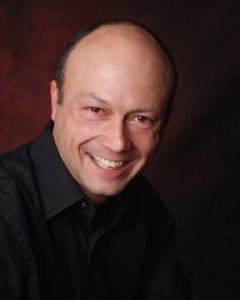 1. My blog readers will know that, as a historian-in-training, historical accuracy is a frequent issue of mine when it comes to fiction. I very much dislike historical books to go against known facts. I know that you strove for this kind of historical accuracy with THE LAST QUEEN. Would you mind weighing in on this issue? How close do you think authors need to get to real history in fiction?
This is a very interesting issue, and, I must say, an often contentious one. For my writing, I always strive for accuracy; I think as writers of historical fiction it’s our responsibility to get our facts right. But sometimes dramatic license is required for the sake of a story that would otherwise get lost in a morass of history or to illustrate complex elements in a single scene. When this license is taken it should be well-considered and as plausible as possible. I did some of this to make THE LAST QUEEN accessible; my editors and my agent helped immensely in this regard. I also made some inadvertent mistakes, because, after all, I am human. Historical fiction is still fiction; as novelists we’re dramatizing a story based on actual events and/or people; but actual history, like life, isn’t always easily distilled. A historical novelist sometimes faces difficult choices in order to tell his or her story and because of these choices I believe some dramatic license is essential, providing it doesn’t go so far beyond what is known it careens into fantasy. If it does, then at the very least an author’s afterword or note is required.
2. I loved Juana’s character and had a really hard time believing that a man wrote this book! I had always heard that men couldn’t write women and women couldn’t write men but you completely eradicated that stereotype. Did you have any inspiration for her or experience that fueled your ability to portray a woman so well?
I heard that, too – for thirteen years as I attempted to get published! I think it’s one of those generalized misconceptions that persist, despite ample evidence to the contrary. Of course, there are men who can’t write women and vice versa, but novelists should, for all intensive purposes, strive to be as invisible as possible. Our characters tell our stories, not us. One of the marvelous boons of writing is that we are defined not by our gender but rather by our ability to inhabit the characters we create. That said, I was raised by women – my mom, my grandmother, my aunts – and I grew up at the table listening to them tell stories and gossip; maybe I somehow learned more about the female heart? I don’t know. I must admit, however, I often feel I understand women more than I do my own gender. I also first wrote THE LAST QUEEN in the third-person and it didn’t work. Juana was too enigmatic; the editors who read it came back with rejections that basically said, “Something is missing here.” It wasn’t until I put my own trepidations aside and slipped into her skin, so to speak, that much of her inner life became clear to me. Call it inspiration or channeling or imagination: whatever the case, Juana spoke to me as she never had before and as a result the book transformed in dramatic and unexpected ways.
3. What inspired you to write about Juana of Castile?
I grew up in southern Spain, near a ruined castle that used to be a summer residence of her parents, Queen Isabel and Fernando. I clambered about in that castle and knew she had lived there; in a way, she was a part of my world. Every school child grows up hearing the story of Juana la Loca; we even sing a childish rhyme about her. But when I first visited her tomb in Granada, I was fascinated by the sight of her effigy. It literally haunted me. I immediately wanted to know more about her. My grandmother was a celebrated theatre actress for years in Spain and had played Juana on stage; she introduced me to the drama inherent in the legend. She even took me to see a movie that was made in the 1940s about Juana, which had become a classic. I was entranced. I couldn’t get enough. I must have seen that movie over fifty times. I studied history in school, too, and Juana was one of those characters that everyone shuddered over, the poor mad queen. I remember thinking, What if she wasn’t really mad? Even then I had this sense that her side of the story had been buried under historical propaganda. The legend was dark and macabre and very juicy, but it felt like a legend, not the truth. Years later, when I began to pursue writing seriously in the hope of publication, I decided to write about her after my first novel didn’t sell. I set out to find out as much as I could, and the more I researched, the more inspired I became. Here was this woman who was locked up for forty-six years, accused of being insane, when in fact she may have been anything but. I felt she deserved a chance to speak for herself, and historical fiction was the perfect vehicle for it. Still, now and then I get e-mail from the occasional reader who tells me I’ve played fast and loose with her story; that everyone around her agreed she was unstable and unfit to rule. It shows how deep the legend has permeated, that for some readers the mere fact that I’ve chosen to depict a different version of Juana must mean I’m inaccurate. It could be I’m wrong; after all, I never met her. But I’m not convinced the popular version of her story is accurate, either.
4. I’m planning on visiting Spain in the next few years and, especially after reading your book, I can’t wait! Can you share with us a couple of places in the novel that you’d recommend visiting?
Absolutely! Spain is a marvelous country, full of contrast and vibrancy, much like Juana herself. I’d say a trip to Castile, the central part of Spain, is essential, as it’s where most of Juana’s story took place. The city of Toledo near Madrid is a medieval marvel and the Cathedral was embellished by Queen Isabel; also near Madrid is the Castle of La Mota, where Juana staged her infamous act of defiance. About three hours from Madrid is the city of Burgos, where you can visit the Gothic cathedral where Juana first declared herself queen; the Casa del Cordon, where Philip of Hapsburg died, is now a bank but the stone knotted façade remains intact. In southern Spain, you can visit the mountain city of Granada, the last stronghold of the Moors, and the stunning Moorish palace of the Alhambra.
5. Do you mind telling us what you’re working on now?
I’ve just finished a novel about Catherine de Medici, which will be published by Ballantine Books in 2010. Catherine de Medici is a much misunderstood and maligned woman in history, accused of some of the 16th century’s most heinous crimes, including the Massacre of St Bartholomew. She’s been called ruthless, ambitious and cruel; she truly has a black legend attached to her name. But during my research I uncovered a different picture of this Italian woman who became mother of the last Valois kings and one of France’s most influential queens. She had immense perseverance, loyalty, intelligence, and tolerance. She loved animals and detested the senseless waste of war. In an era of savage religious conflict, she steered France to safety. She’s interesting and complex; and I had an incredible time slipping into her skin. I’m very proud of this book. Though it was exacting and I had to revise it a few times to get it right, in the end I think I’ve done her justice.
6. How about favorite authors? Do you have any favorite authors or books we should be reading while we’re waiting for your next book, or perhaps seeking out your first?
I don’t have any favorite authors, per se, simply because I like so many for different reasons. Historical fiction books I’ve really enjoyed recently include Robin Maxwell’s Signora da Vinci; Karen Maitland’s Company of Liars; Vanora Benett’s Figures in Silk; Michelle Moran’s The Heretic Queen; Karen Essex’s Stealing Athena; David Blixt’s Master of Verona; and Judith Merkle Riley’s The Water Devil. All are well worth your time and money!
Many, many thanks to C.W. Gortner for answering my questions! The Last Queen was released in paperback on May 5th and has been published in 10 countries. It’s available from Amazon and Amazon UK.
|
|


Recent Comments