|
|
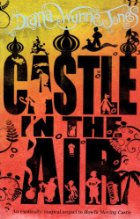 Living in a stall, selling carpets, is not really what one dreams of at night, no matter how successful. In Abdullah’s dreams, he is a prince, destined to marry a beautiful Arabian princess. But they’re just dreams, until one day, a merchant walks by Abdullah’s stall bearing a magic carpet. Abdullah can hardly believe his luck, even as he doubts the merchant, but he buys the carpet regardless and sleeps on it to ensure no one steals it. To his surprise, he wakes up in the garden of a castle, with a beautiful princess, Flower-in-the-Night, by his side. Abdullah quickly falls in love, but his dreams shatter when Flower-in-the-Night is stolen by a djinn. He must travel far and wide, to another castle in a foreign land, to save his princess before she is wed to another. Living in a stall, selling carpets, is not really what one dreams of at night, no matter how successful. In Abdullah’s dreams, he is a prince, destined to marry a beautiful Arabian princess. But they’re just dreams, until one day, a merchant walks by Abdullah’s stall bearing a magic carpet. Abdullah can hardly believe his luck, even as he doubts the merchant, but he buys the carpet regardless and sleeps on it to ensure no one steals it. To his surprise, he wakes up in the garden of a castle, with a beautiful princess, Flower-in-the-Night, by his side. Abdullah quickly falls in love, but his dreams shatter when Flower-in-the-Night is stolen by a djinn. He must travel far and wide, to another castle in a foreign land, to save his princess before she is wed to another.
How I didn’t read Diana Wynne Jones until last year is a complete mystery to me. She writes the type of books that I would have completely fallen in love with as a young adult – not that this means I love them any less now, but my younger self could have spent days wading through her books, off in various dream worlds inspired by these books. I loved Howl’s Moving Castle, which I read last year, and so it’s no surprise that I also enjoyed Castle in the Air – though not quite as much.
This book felt very much like a fairy tale to me, though also distinctly reminiscent of the Arabian Nights series of stories, especially in the beginning. As Abdullah’s quest takes him off north, he meets a number of curious individuals who scramble this somewhat, including a renegade soldier, a cat who seems to turn into a massive feline when she or her kitten is threatened, and a genie in a bottle.
As his journey begins to come to an end, he starts to realize that everyone has put up an illusion of some kind, and nothing is quite what it seems – but none of this is at all bad for him or for those concerned. Diana Wynne Jones seems to take some pleasure in turning stereotypes on their heads while emphasizing core strong ideals with honorable characters, which makes these perfect reads for young adults.
Though the sequel to Howl’s Moving Castle, it takes a good long while for any connections to become obvious. They’re clear by the end, but this is very much its own book, and can be read on its own. (Although why you’d want to, I’m not sure.) It’s still a very good read, and I’m looking forward to continuing with the third of this series.
All external book links are affiliate links. I purchased this book.
 Isn’t it fantastic when an author sends you little goodies to promote their products? I’ll be reviewing Christine Blevins’s newest book, The Turning of Anne Merrick, in a couple of weeks for the blog tour put together by Historical Fiction Virtual Book Tours, and Christine sent along a lovely little collection of items designed to get readers in the mood for the seventeenth century while enjoying her historical novels. Isn’t it fantastic when an author sends you little goodies to promote their products? I’ll be reviewing Christine Blevins’s newest book, The Turning of Anne Merrick, in a couple of weeks for the blog tour put together by Historical Fiction Virtual Book Tours, and Christine sent along a lovely little collection of items designed to get readers in the mood for the seventeenth century while enjoying her historical novels.
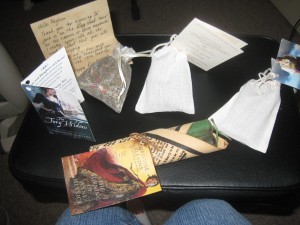 That’s two little bags of tea, one from before the Revolution, and one from during, small scented lavender soap, two bayberry candles, and a letter. This was such a fun package to open and I was particularly impressed that it came across the pond to me. Last time I reviewed The Tory Widow, Christine also sent along a couple of surprises, but I hadn’t expected it this time. I’m looking forward to the book even more now! That’s two little bags of tea, one from before the Revolution, and one from during, small scented lavender soap, two bayberry candles, and a letter. This was such a fun package to open and I was particularly impressed that it came across the pond to me. Last time I reviewed The Tory Widow, Christine also sent along a couple of surprises, but I hadn’t expected it this time. I’m looking forward to the book even more now!
Secondly, I’ve developed a surprisingly intense desire to read more science fiction, but my own shelves seem a bit empty when it comes to this – I’ve got one book left by John Scalzi after reading all of his, and another book left in the Miles Vorkosigan series by Lois McMaster Bujold. I also have Leviathan Wakes sitting on my shelf. I’m only not participating in Carl’s Science Fiction Experience because I always fail when challenges are made official, but I’d love to know what you’d recommend to me to add to the shelves, as I know I’ve read nowhere near enough.
Have a wonderful Sunday and a fantastic week, everyone!
 Humans will never stop trying to find a cure for death and disease. In Rhine’s world, scientists thought they’d figured it out – until they realized that the disease simply killed everyone, girls at 20 and boys at 25. Just four years before her inevitable death, orphaned Rhine is kidnapped from her twin brother and married to wealthy Linden with two other stolen sister-brides. Rhine longs for nothing more than to escape – the last thing she wants to do is bear Linden’s baby and spend the rest of her life under the thumb of his scheming, aging father as he attempts to find the cure for the disease that kills all of the perfect generation. Humans will never stop trying to find a cure for death and disease. In Rhine’s world, scientists thought they’d figured it out – until they realized that the disease simply killed everyone, girls at 20 and boys at 25. Just four years before her inevitable death, orphaned Rhine is kidnapped from her twin brother and married to wealthy Linden with two other stolen sister-brides. Rhine longs for nothing more than to escape – the last thing she wants to do is bear Linden’s baby and spend the rest of her life under the thumb of his scheming, aging father as he attempts to find the cure for the disease that kills all of the perfect generation.
I so badly wanted to like this book. It caused a huge splash when it came out, and I’m not capable of resisting dystopias that sound awesome – plus, when it arrived as part of my Secret Santa gift, signed and everything, I started reading almost immediately. Couldn’t resist. So maybe this is a case of expectations getting too high, or me reading too much amazing science fiction and fantasy over the past few months, but this book didn’t live up to my expectations.
First of all, I’m not one to question too much, especially in books like this; I’m really good at suspending disbelief and going where the author takes me. In this book, I had way too much trouble doing that, particularly because the book hammers the discrepancies into your mind. Rhine’s life before the kidnapping is terrible, and she says that she fares better than most in her home city of New York City. She and her brother get by, with both of them working, hiding from the kidnapping gangs that want to take Rhine away. Other orphans get shut out to die in the cold by these two, because they can’t support any more people.
But when Rhine arrives at Linden’s mansion, she is truly in the lap of luxury. She’s a prisoner, in theory, but a very well-treated one. What I don’t understand is why there aren’t poor orphaned girls banging down Linden’s gate trying to get into this life of luxury. Do they simply not know what awaits them? But why shouldn’t rich people tell them, so they have a choice of wives, instead of kidnapping and killing girls? Wouldn’t it be better to have a willing wife than one you had to kill sisters to get? Maybe someone else can explain this to me – not the obvious wealth disparity, but the fact that rich, single men are not in demand. And that they kill the wives that weren’t selected – surely they’d want all the women in the world alive to continue producing children?
The other aspects of the book were enjoyable – it was well-written and well-plotted as it kept me turning the pages – but the world-building simply didn’t make sense. Some of the blurbs compared it to The Handmaid’s Tale and implied that this is a future we could imagine happening, but to be honest, I couldn’t, so it lost the whole creepy point of dystopia where we can see what our world could become. I couldn’t see our world turning into this one, unfortunately, and the best writing in the world wouldn’t be enough to cover that lack.
So, Wither is an enjoyable quick read, but don’t expect to believe in the world.
All book links to external sites are affiliate links.
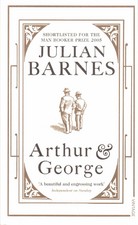 Arthur and George are born in Great Britain in the mid-19th century, but their lives couldn’t be any more different. Arthur grows up in Edinburgh, in a shabby but intellectual and loving family, becoming an eye doctor and then a world-famous author. George grows up in rural Shropshire, tortured by farmboys due to his dark Indian skin, but nevertheless persevering to become a published solicitor in Birmingham. George is one of many; Arthur is one in a million. But when George’s life begins to unravel completely, it is Arthur who must come to his rescue, in this deep exploration of race, prejudice, circumstance, and deeply-held beliefs. Arthur and George are born in Great Britain in the mid-19th century, but their lives couldn’t be any more different. Arthur grows up in Edinburgh, in a shabby but intellectual and loving family, becoming an eye doctor and then a world-famous author. George grows up in rural Shropshire, tortured by farmboys due to his dark Indian skin, but nevertheless persevering to become a published solicitor in Birmingham. George is one of many; Arthur is one in a million. But when George’s life begins to unravel completely, it is Arthur who must come to his rescue, in this deep exploration of race, prejudice, circumstance, and deeply-held beliefs.
Julian Barnes recently won the Booker Prize for The Sense of an Ending, which I immediately wanted to read, but since I had Arthur and George on my shelf, I decided it had to come first. To be honest with you, that was a brilliant decision, because I loved this book. It made me think on so many levels, while at the same time providing a cleverly told story set in a fascinating part of history.
The short description I wrote about probably makes it obvious that the Arthur is question is Sir Arthur Conan Doyle, ridiculously famous for creating Sherlock Holmes, a figure who resonates with us still so strongly that he’s having films and revival novels made about him. He’s less famous for his efforts to reform the law and grant justice to the wrongly accused. One of those cases was that of George Edalji, who is naturally the George in this book. Wrongly convicted of a series of horse murders and threatening letters, even though the letters threatened his own family and the mutilations continued when he couldn’t have committed them, George winds up in prison, and sends a letter to the author of the famous detective stories for help. Luckily for us – and Julian Barnes – Arthur came to help.
Knowing that this was a true story gave it particular resonance for me. The letters quoted within are real letters, including the threatening ones sent to George’s family. What was recorded has been included. Barnes has instead stepped into the minds of the characters and explored what these people might have been thinking and feeling.
In particular, this is a deep exploration of the injustice that was once inherent in the criminal system, but which invites us to work out our own prejudices in the process. We may not condemn George for his half-Indian heritage now, as these Englishmen did, but who do we accuse in his place? I’ll let you read the book to consider this for yourself, as Arthur must when he studies the suspects, but it’s the sort of book to place a reader just slightly on edge, fervently aware of how much and how little has changed.
It’s also an incredibly fascinating case study of two completely different men, who might have grown up in two different worlds, but for the cozy feel of England that seems to steep the book in tradition while carefully probing at these stereotypes that we’re still working to smash. I was kept reading, eager to learn more, and I found both halves of the narrative equally consuming, even before the central characters finally meet. It’s completely engrossing, beautifully written, and convincingly fleshed out. Very highly recommended – thank you, Julian Barnes, for getting my 2012 reading year off to a fantastic start.
All external book links are affiliate links. I purchased this book.
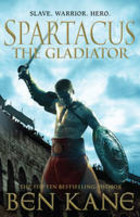 Spartacus is famed as a warrior, a Thracian who led a band of rebellious gladiators against the might of the Roman republic. Ben Kane has taken this story, only the bare bones of which exist in historical record, and crafted a duology of fiction novels around those bones. This, the first, covers the story of Spartacus’s rise from a trapped and betrayed gladiator to the leader of an army capable of striking fear into the heart of the experienced Roman legions. Spartacus is famed as a warrior, a Thracian who led a band of rebellious gladiators against the might of the Roman republic. Ben Kane has taken this story, only the bare bones of which exist in historical record, and crafted a duology of fiction novels around those bones. This, the first, covers the story of Spartacus’s rise from a trapped and betrayed gladiator to the leader of an army capable of striking fear into the heart of the experienced Roman legions.
Spartacus: The Gladiator isn’t the first book Ben Kane has written about Rome, but it is the first of his that I’ve read so far. In the tradition of Bernard Cornwell and Simon Scarrow, this is a book about the darker side of historical fiction, full of battles, rough men, and treachery. Amongst all this is Spartacus, a man who clearly stands apart due to his natural sense of leadership and his stringent moral code, which extends completely outside the battlefield.
Like many choosing to read a book like this, I was seeking an active and exciting plot, and in this respect, Spartacus: The Gladiator delivers handily. Even though we know the lead character must survive – how else would there be a second book about him? – that doesn’t mean everyone else will. Several of the other characters have viewpoints, namely Ariadne, Spartacus’s wife, and Carbo, a Roman who becomes a gladiator after falling deeply into debt. We also sometimes witness events from the other side, usually through the eyes of Roman consuls and generals who are about to get massacred by Spartacus’s ever-growing army.
I liked both Ariadne and Carbo; each served a different purpose for seeing Spartacus through other eyes, albeit adoring ones. The great warrior wins their loyalties differently, by treating Ariadne with respect she’s never received from other men, and by believing in Carbo despite his Roman origins. In this way, we can see just why Spartacus was a natural leader, and start to believe why his rebellion started to meet with success.
This is not a book for those who actively dislike battle scenes. It may also contain triggers because there is more than one rape scene – I wouldn’t call any of them gratuitous, as each furthers the plot and causes significant reactions in different characters – but I could easily imagine them becoming upsetting. This is the Roman world, however, and when you’re reading a book about a war fought by deprived and vengeful men, it’s unfortunately to be expected.
I’m not particularly familiar with the legend of Spartacus, but Kane fills us in with a handy endnote, explaining what exists and what he extrapolated from the evidence. It’s fantastic when authors do this. Naturally, some of the characters are fictional, and no one is even sure Spartacus actually came from Thrace, because he might have been assigned that once he’d become a gladiator. But his battles and his comrades are recorded enough that the story follows the timeline as it happened.
If you’re seeking more historical fiction set in Rome in the days of the Republic, from the viewpoint of the oppressed, Spartacus: The Gladiator is a good choice.
All external book links are affiliate links. I received this book for free for review from the publisher.
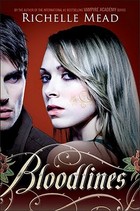 Richelle Mead’s Vampire Academy series is one of the few YA series I’ve actually kept up with over the past year or so; as a result, I immediately latched on to this book as soon as it was released. I was curious to know more about the minor characters from the first series, and Bloodlines follows on seamlessly from those with a change in characters. This means the review will contain spoilers for the Vampire Academy series, but I’ll try and keep them to a minimum. Richelle Mead’s Vampire Academy series is one of the few YA series I’ve actually kept up with over the past year or so; as a result, I immediately latched on to this book as soon as it was released. I was curious to know more about the minor characters from the first series, and Bloodlines follows on seamlessly from those with a change in characters. This means the review will contain spoilers for the Vampire Academy series, but I’ll try and keep them to a minimum.
Sydney Sage worked together with Rose to help save the Moroi world from catastrophe, but her close association with vampires and dhampirs has gotten her into trouble with her fellow Alchemists. After all, the goal of the Alchemists is to keep vampires and other supernatural races from discovery, not to associate with them personally, and as a result Sydney’s motivations have been called into question. But when Lissa’s sister Jill needs cover and a protector, Sydney goes in the place of her sister, who is judged too young for the responsibilities. Living life as a normal high school student, Sydney, along with series regulars Eddie and Adrian, must keep Jill out of harm – but there’s something strange going on at the school, and Sydney decides that finding out might just be worth the risk to her reputation.
Like the rest of the VA series, this was a light read that provided a lot of page-turning entertainment. I’ve always liked Sydney – I’m immediately attracted to fellow nerds and Sydney knows a lot – and I was happy that Mead chose to turn this new series around her story. At the same time, it also feels like we’ve set up a larger story for the rest of the series, which didn’t bother me but might with someone who was looking for a book without a cliffhanger ending.
Also, because it follows on directly from the Vampire Academy series, I feel it’s well worth having read the previous books before digging into this one – you’ll feel immediately familiar with the world and the issues contained in the novel. Otherwise, I feel as though you’ll miss out on the purpose for protecting Jill – the book says, but unless you’ve experienced the rest of the series, the importance may be diminished – and won’t understand the severity of Sydney’s plight.
Overall, another solid, enjoyable entry in this series, worth the read if you’re already invested.
I purchased this book.
 As I’m trying to catch up on my reviews from 2011, and now my As I’m trying to catch up on my reviews from 2011, and now my five six reviews from 2012, I thought I’d better start putting together some mini reviews for those books I can get out of the way quickly! Here are the two short, lighter non-fiction books I read at the end of 2011.
Life Below Stairs, Alison Maloney
Inspired by the success of Downton Abbey, Alison Maloney has composed a brief, easily digestible book about the lives of servants in Edwardian England, around when the period drama is set. The book covers a huge variety of topics and, for me, actually made some of the show’s choices more understandable. For instance, I now understand the purpose and history behind the difference between Miss O’Brien’s clothing and the rest of the maids’, the servant’s ball, and even why Mrs Hughes is a “Mrs” even though she’s not a married woman.
It also highlighted a few of the differences between the show and real life, and the genuine struggles and difficulties that servants had. Life was definitely not as rosy for these folks as it is for the below-stairs servants at Downton. The book has plenty of quotes illustrating this, including one of a poor girl who missed her day off because she was so exhausted from work that she slept through it!
Life Below Stairs also has a few illustrative photos and is a brief overview that will suit fans of the show perfectly, but it’s probably too shallow for anyone who has previously read about the Edwardian period.
 The King’s Speech, Mark Logue and Peter Conradi The King’s Speech, Mark Logue and Peter Conradi
Like almost everyone else who has an interest in English history, I saw The King’s Speech in film form last year and absolutely adored it, so it was a no-brainer for me to pick up its written counterpart. Pleasantly, the book contains a few surprises even for those who have seen the film, particularly because it tells the story of Lionel Logue chronologically and includes plenty of background. Naturally, no one could or desires to fit all of this into a biopic framed around a speech, but I delighted in the extra details and in particular the genuine letters and photographs that accompanied the text.
One thing that struck me was that, even though this was less than 100 years ago, the social gap between Logue and George VI was massive. Just reading their letters to one another makes that clear – and also emphasizes how unusual and important their intimacy was. I found the book almost more valuable for that, in my mind, than for the extra details about that particular case. It’s a window into a world that hasn’t been gone for very long, but which is still utterly fascinating.
Highly recommended for those who enjoyed the movie and who are interested in social history.
 Ashima and Ashoke Ganguli begin their lives together with an arranged marriage and a move to the United States from India. Ashoke is still a student, with ambitions to become a professor, while Ashima stays home to take care of their son, Gogol, who is born shortly after their marriage. The Namesake is really about Gogol, who sits between the generations, watching the effect his life has on his immigrant parents even as he tries to sort out his own culture, to reconcile his Bengali roots with his American present. Ashima and Ashoke Ganguli begin their lives together with an arranged marriage and a move to the United States from India. Ashoke is still a student, with ambitions to become a professor, while Ashima stays home to take care of their son, Gogol, who is born shortly after their marriage. The Namesake is really about Gogol, who sits between the generations, watching the effect his life has on his immigrant parents even as he tries to sort out his own culture, to reconcile his Bengali roots with his American present.
I’ve been hearing about Jhumpa Lahiri for years, and actually I’ve owned this book since 2008. Shameful, I know, especially because once I got started reading this I completely fell in love. It wasn’t a hard task to win me over; Lahiri managed it almost immediately by tying Gogol, the Russian author, to the story in the form of Gogol, the character, adding in a whole range of meaning for me as a reader of that particular author. I loved how the author followed the character throughout his life, subtly reminding him of his parents, and simultaneously making him confused and guilty and a little bit wistful.
I’m an immigrant myself, and though not nearly as isolated as Ashoke and Ashima, I still sympathised with the feeling of being in a foreign land, lacking friends simply because you have no basis for knowing people, and essentially feeling isolated. The couple eventually make themselves at home, but there’s always something there that is lacking, even once you realize that you’ve lived in a foreign place for long enough that you’ll never quite fit in at home, either.
The contrast between the experience of the parents and the children when they visit India, for instance, is striking. Though Ashoke and Ashima are happy enough in the United States, they come back to themselves in India. In vivid contrast, their children feel irritated at the absence from home and confused by a different way of life. They don’t enjoy the visits, but their parents relish them and despair at leaving.
This is also a novel about identity, about the confusion between who you individually are and where you’ve come from. Gogol, in typical young adult fashion, seems to discard everything about his culture, including his own name, in a search to figure out who he truly is. It takes a powerful shock to remind him that there’s more to his background, that there are essential threads of his life that he just missed while he was busy asserting that identity. But he quickly swings back the other way. It’s not a simple thing, working out who you are and entangling it from the mess created of your life up to that point, and Lahiri not only recognizes this but pulls it off beautifully.
A quiet but powerful book about identity and heritage, The Namesake struck every chord correctly with me, catapulting itself onto my 2011 favorites list at the tail end of the year. Very highly recommended.
Do you ever find that, while or after reading particular books, that the author’s prose starts to change your own thoughts?
This is happening to me right now with The Art of Fielding by Chad Harbach. I’m not sure if the way that Harbach writes just fits too perfectly into my subconscious, or whether the existential nature of the characters’ thoughts simply suits what has been happening in my mind at the moment, but this isn’t the first time that it’s happened. In fact, I often find my writing starts to echo others’ as well, depending on how drawn I am to the book. For me, this only happens with thoughtful, musing, almost quiet authors – a style that I think suits my own, when I actually manage to write fiction. But I’m never quite sure if this only affects me, or whether it’s a wide-ranging phenomenon.
At the same time, maybe it’s because I’m reading so much. December was a relatively quiet month for my reading; I spent two full weeks immersed in video games instead. I became temporarily obsessed with Mass Effect, and then its sequel, Mass Effect 2, on the Xbox 360, and as a result read barely a word over the whole period because the games sucked up my free time. (Seriously, if you want a ridiculously epic science fiction RPG, look no further than those two). I feel as though that break was exceptionally good for my reading, though, as I’ve finished nearly five books this year so far, and it’s only been a week – and two of them have been serious, thoughtful chunksters.
All this goes to say, really, is that sometimes a break, even from a lifelong hobby, is necessary. I’m sure it helps that all five have been my own books, not inspired by any mind but my own. At some point this year, I’ll have to get back on the review book wagon and go through a few that are released in the next few weeks, but not yet. For now, I am going to enjoy the renewal of my reading mojo while it lasts.
How has the first week of 2012 been for you, reading-wise?
 I named Courtney Milan as one of my top discoveries of 2011 and books like this one are exactly why she ended up on that list. I named Courtney Milan as one of my top discoveries of 2011 and books like this one are exactly why she ended up on that list.
Smite Turner isn’t a normal hero. Traumatised by his mentally ill mother throughout his childhood, in a time when treatment was more harmful than helpful, he’s grown into a conscientious magistrate fixated on justice who nevertheless sets people apart from him. He knows that they’re unlikely to understand just how he ticks, and as such he’d simply rather be alone – or with his dog. Miranda Darling, in contrast, does just about everything for someone else – under the protection of a figure of the underworld in which she lives, she puts on numerous fake identities to mislead the law. Until she encounters Smite, who never forgets a face, and somehow can’t get hers out of his head.
I feel as though every Courtney Milan book I read is better than the last, and Unraveled was no exception. Treading dangerous waters with a mentally damaged hero, a heroine turned into a mistress, and seedy crime, Milan never puts a foot – or a word – down wrong. Instead, she has created a fantastic, heart-wrenching love story that I simply couldn’t put down. (She even manages to stick a perfectly happy gay couple in there, who helped raise Miranda and gave her a ton of happy memories.)
What I loved most about this book, I think, was that Miranda didn’t “cure” Smite. He is still damaged by his past, and he’s always going to be uncomfortable with certain aspects of intimacy and behavior. That doesn’t change. What does change is that she loves him for who he is, and she understands which of his gestures mean “I love you” when he can’t say the words. In real life, we all know that if we go into a relationship looking to change someone, we’re virtually guaranteed to fail. Why should the world of romance novels be any different? That is why her characters are so appealing, so human, so easily able to sneak their way in and tug at your heartstrings.
At the end of the book, Milan explains the historical context behind the book and her inspiration for setting it in Bristol and amongst those who walk a careful line between breaking the law and staying alive. I loved this – so often romance novels in particular are simply modern day characters dressed up in fancy old-fashioned outfits who go to balls, and while I accept them for that and still enjoy them, I can’t help but love an author who goes out and tells me that she was inspired by actual history.
Just writing about this book has made me wish I could go and read it all over again. It’s such an addicting, romantic read, with characters so appealing that you genuinely won’t want to leave them until you’ve finished. Highly recommended for any romance readers.
I purchased this book. All book links are affiliate links.
|
|



Recent Comments