|
|
 It’s interview day of BBAW 2011 and Jenn of The Picky Girl and I were paired. We decided to do a bit of a twist on the normal interview format and instead answer questions with book titles (explanation allowed) – just for a little creativity. I had of course seen Jenn and visited her blog before, but for some reason never really connected with her until now. Of course, I’ve now added her blog to my Google Reader and fully intend to keep up with her posts. It’s interview day of BBAW 2011 and Jenn of The Picky Girl and I were paired. We decided to do a bit of a twist on the normal interview format and instead answer questions with book titles (explanation allowed) – just for a little creativity. I had of course seen Jenn and visited her blog before, but for some reason never really connected with her until now. Of course, I’ve now added her blog to my Google Reader and fully intend to keep up with her posts.
Her answers to my questions are below!
1. If you could choose one book title to sum up how you feel right now, what would it be?
I feel like one of the Scribbling Women (Marthe Jocelyn) as I have lots of blog writing, grading, and editing to do this afternoon.
2. How would you like to be remembered?
Among the Mad (Jacqueline Winspear), as in the Austen quote: “Run mad as often as you choose, but do not faint.”
 3. What’s your favourite kind of place (for reading or in general)? 3. What’s your favourite kind of place (for reading or in general)?
I like to be surrounded by An Object of Beauty (Steven Martin), and I try to cultivate beautiful, meaningful pieces in my home. This can be old maps, a snapshot of my brother, sister, and I or a vintage chest.
4. I think it’s appropriate for this week – how would you describe the book blogging community?
This is a toss up because the book blogging community has given me Attachments (Rainbow Rowell), people I would never have met otherwise, but bloggers themselves have given me Stories for the Nighttime and Some for the Day (Ben Loory), introducing me to books I may never have seen, and for both of those aspects of blogging, I am truly grateful.
5. What are your goals for the year ahead?
In general, it’s to do focus on doing Whatever You Love (Louise Doughty) because …why not?
6. How would you describe your relationship with books? Have you always been a reader?
I have always been a reader, since I was very young, so I’d have to say my life after reading is best described as Everything Beautiful Began After (Van Booy) because reading and books and talking about reading and books makes me incredibly happy and mindful of the beauty around me.
First of all, yay for BBAW! This has been a highlight of the book blogging year for the last 3 years for me, and I’m looking forward to this week, the fourth BBAW. On to the first topic:
While the awards are a fun part of BBAW, they can never accurately represent the depth and breadth of diversity in the book blogging community. Today you are encouraged to highlight a couple of bloggers that have made book blogging a unique experience for you. They can be your mentors, a blogger that encouraged you to try a different kind of book, opened your eyes to a new issue, made you laugh when you needed it, or left the first comment you ever got on your blog. Stay positive and give back to the people who make the community work for you!
I hesitate to highlight individual bloggers, because I know I’ll leave out so many of the people who have made my time blogging special – there just aren’t one or two, there are dozens, both old and new bloggers. If anything, the one site that led to my enthusiastic book blogging and discovery of other blogs was LibraryThing, where I used to be much more active on the forums in “Talk”. I always loved the idea of cataloguing my books – turns out I love even more the idea of chatting with other people who love books!
As soon as I discovered the book blogging community and started commenting myself, I felt immediately welcome. It’s so easy to connect, and though we do tend to have recurring dramas (that I try to avoid these days), it’s also easy to make friends.
At the same time, since I’ve been blogging for over four years now, I find that I miss many people who have stopped blogging as much as I rejoice in those who still are. These years have drastically changed the community; friends have left and friends have joined. What I’ve enjoyed the most is the constant sense of connection, the vibrance of blogging friendships, especially when I can devote enough time to Twitter, and the fact that we do our best to remain as welcoming as ever. I feel like I’m always finding new bloggers, whether on Twitter or through the blogs I already read, and when I have time I try to pop over and leave comments. Spare time happens less often now, but I’m always so glad to see so many people who love books. Before blogging, I knew others must enjoy reading, but I’ve never have my reading life so enhanced by such a group of people.
So thanks to the many wonderful members of the book blogging community. I owe you four years of fantastic reading, and I hope to owe you many more.
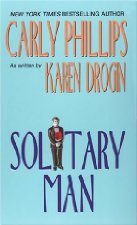 Boston cop Kevin Manning promised his partner that he would look out for his family. But for two months, after sleeping with Tony’s little sister Nikki, Kevin has done just the opposite; blaming himself for the death, he’s hidden himself away thinking that would cause less pain. Instead, Nikki has not only been confused about Kevin’s silence, but is now pregnant with his child. If Kevin wants to be part of their lives, he’ll have to come to terms with the loss of his partner and his own role as a cop, a son, and a father. Boston cop Kevin Manning promised his partner that he would look out for his family. But for two months, after sleeping with Tony’s little sister Nikki, Kevin has done just the opposite; blaming himself for the death, he’s hidden himself away thinking that would cause less pain. Instead, Nikki has not only been confused about Kevin’s silence, but is now pregnant with his child. If Kevin wants to be part of their lives, he’ll have to come to terms with the loss of his partner and his own role as a cop, a son, and a father.
As far as contemporary romances go, this one felt very typical of the genre to me, but in a good way – if you enjoy this sort of thing, you’ll unquestionably like this book. As it’s an ebook reissue of an older book by Carly Phillips, it makes sense that it conforms more closely to characters we consider stereotypes now. Kevin is a standard damaged hero, with a heart of gold who of course loves the girl but who has decided to close himself up emotionally because he’s had too much pain in the past. His father is a dependent alcoholic who has never repented or tried to recover and he’s been trained to consider things his fault, rather than letting people love him and accept love in return.
This leads to a difficult situation for Nikki, who genuinely cares for Kevin and, as most women would be, is downright confused by his behavior. He walks out on her after their first night together, when both are clearly still grieving for her brother Tony, and then vanishes, leaving her to pick up the pieces of her life and somehow fit them back into a shape that resembles happiness. Unsurprisingly, she’s failed, as she can no longer pay the bills to continue her degree and actually get to the stage where she can support herself and the baby. Kevin finds her again waitressing in a bar, dodging men persistent on flirting with her, and is enraged, even though if he’d stuck around he probably would have been able to help.
I have mixed feelings on this book. It frustrates me that, for example, Nikki is rendered so helpless by the absence of men in her lives. She loses all of her possibilities in life on the death of her brother, who can no longer support her through her degree, which makes sense, but then she is forced by pregnancy to give up work and become completely dependent on Kevin. She tries to retain her independence by becoming a waitress, and then by taking steps to continue her education and become her own woman eventually, though, which helped to redeem her in my eyes. Events conspire against her, but she does the best she can overall.
Kevin, however, I just found to be irritating overall. I could see why he had problems, especially when his father appears in the picture, but as a less patient woman, I would have walked out well before Nikki. Still, when he finally does open up (this is a romance, we all know it’s coming), the ending is sweet and I did leave the book behind satisfied. They both have issues to overcome and that makes the ending feel like a proper coming together.
For a fast, romantic contemporary read, Solitary Man would certainly be a good choice.
All book links to external sites are affiliate links. I received this ebook for free for review from a publicist.
 Edward de Lacey’s father reveals, on his deathbed, that he and his two brothers may be without an inheritance after all. That’s because, unknown to everyone, the duke was married – and not divorced – before he married their mother. The heir, Charles, is a wastrel and may now be without any money to waste; Gerard, the youngest, solves his problems with force. That leaves Edward, the middle son and always the one in charge of the estate, to hire a solicitor and get the de Lacey family back to its rightful position. Unfortunately, he snatches London’s top solicitor out from under the nose of Lady Francesca Gordon, who wants to win custody of her niece from the girl’s stepmother, who won’t allow Francesca to even see the girl. As recompense, Francesca demands he help her find another solicitor, in exchange for silencing the tabloid rumors about the brothers’ illegitimacy. Edward de Lacey’s father reveals, on his deathbed, that he and his two brothers may be without an inheritance after all. That’s because, unknown to everyone, the duke was married – and not divorced – before he married their mother. The heir, Charles, is a wastrel and may now be without any money to waste; Gerard, the youngest, solves his problems with force. That leaves Edward, the middle son and always the one in charge of the estate, to hire a solicitor and get the de Lacey family back to its rightful position. Unfortunately, he snatches London’s top solicitor out from under the nose of Lady Francesca Gordon, who wants to win custody of her niece from the girl’s stepmother, who won’t allow Francesca to even see the girl. As recompense, Francesca demands he help her find another solicitor, in exchange for silencing the tabloid rumors about the brothers’ illegitimacy.
As Francesca and Edward’s partnership develops and their cases progress, they grow closer, but at what cost to both of them?
This was a sweet, endearing romance; I really liked both of the main characters, particularly Edward. I think most women are fond of the strong, silent type; Edward certainly has emotions, but he’s good at hiding them behind a more reserved exterior. When the scandal breaks out, his fiance leaves him, and it’s his own fault for telling her. What makes it even sadder was that he was convinced he loved her, at least until he meets fiery Francesca.
It’s pretty obvious from the start that these characters actually work quite well together, as they become invested in one another’s problems and truly develop a partnership as well as a romance. One Night in London is a sweet story that many romance lovers will enjoy – although I’m really not sure about that cover. Don’t let it stop you from enjoying this one!
All book links to external sites are affiliate links. I received this book for review from Netgalley.
My friend and I started out our trip in Amsterdam. We are definitely not the target audience of Amsterdam, as neither of us had much interest in smoking pot or doing anything in the Red Light district besides gawking during the very safe daylight. Nor did we visit any of the more famous art museums. Regardless, we still had fun, even though it rained a lot.
We arrived first to discover that Dutch people seem to drink tea in clear glass mugs. And you add the teabag into the hot water rather than pouring the water over the teabag. I kept seeing this happen, and even tried it myself (we needed tea after finding the hotel in the rain!).
 The narrow houses lean a lot but are still ridiculously cute. The older ones all still stand on wooden pillars. They have to carefully monitor the canal levels to prevent the wood from rotting away – when it starts, the houses lean, and they have to be shored up with other materials. The narrow houses lean a lot but are still ridiculously cute. The older ones all still stand on wooden pillars. They have to carefully monitor the canal levels to prevent the wood from rotting away – when it starts, the houses lean, and they have to be shored up with other materials.
Did you know many of them used to be warehouses? Now, instead of hauling goods, they use the little hooks on top to haul furniture through windows:
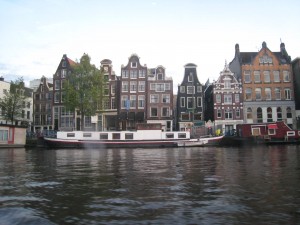 They have ridiculously steep staircases because of their narrow size, which also explains why they bring big furniture in through the windows: They have ridiculously steep staircases because of their narrow size, which also explains why they bring big furniture in through the windows:
 Also, Darth Vader likes to hang out around the palace in Dam Square and lure small children to the Dark Side: Also, Darth Vader likes to hang out around the palace in Dam Square and lure small children to the Dark Side:
 By far, though, the best part, if you can call it best, of Amsterdam was visiting the Anne Frank House. I don’t have any pictures of the experience, aside from a very dark one of the exterior of the building: By far, though, the best part, if you can call it best, of Amsterdam was visiting the Anne Frank House. I don’t have any pictures of the experience, aside from a very dark one of the exterior of the building:
 That is the warehouse / office that the Frank family hid in over two years. Like most young girls (and probably boys), I read Anne’s diary, more than once, and it’s something that has stayed with me all of my life, and which I’m sure will stay with me for the rest of it too. Seeing the rooms where she walked, the pictures she posted on her walls to cheer up, and pages that she wrote while in hiding was incredibly moving and memorable. That is the warehouse / office that the Frank family hid in over two years. Like most young girls (and probably boys), I read Anne’s diary, more than once, and it’s something that has stayed with me all of my life, and which I’m sure will stay with me for the rest of it too. Seeing the rooms where she walked, the pictures she posted on her walls to cheer up, and pages that she wrote while in hiding was incredibly moving and memorable.
The museum compiles information about Anne’s life, living conditions in hiding, videos from survivors and friends and Otto Frank himself, and actual items from the period. It also ends in a fantastic bookstore. If you go to Amsterdam, you simply can’t miss it. We spent three days there in total and that was definitely the most significant and memorable part of the city for me.
I probably won’t go to Amsterdam again, as I felt like we saw everything we wanted to really, but I’m really glad we stopped there. My favorite, though, was Bruges, which is the next stop for next week!
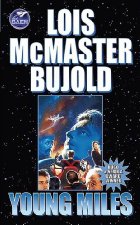 Miles Vorkosigan is born into a noble family on a planet called Barrayar, but with a disability that may permanently bar him from gaining any merit in his warrior-based society. His bones are as fragile as glass and a simple fall can render him unable to walk. Yet Miles is clever, resourceful, and determined to live up to the example set him by his father and grandfather. Miles Vorkosigan is born into a noble family on a planet called Barrayar, but with a disability that may permanently bar him from gaining any merit in his warrior-based society. His bones are as fragile as glass and a simple fall can render him unable to walk. Yet Miles is clever, resourceful, and determined to live up to the example set him by his father and grandfather.
This omnibus edition actually consists of three different stories; two novels and a short story. In The Warrior’s Apprentice, Miles fails to gain entry to the military academy due to his handicaps. Instead he goes off-planet to visit his Betan grandmother, along with his bodyguard Bothari and Bothari’s daughter Elena, with whom Miles is enamored. Miles manages to get himself and his companions into serious trouble in a war zone.
It’s hard to emphasize how pleased I was even just by this first story. The plot is surprisingly complex as Miles manages to think and innovate his way out of the many difficult situations he encounters. But what really makes this shine is the immediate fondness and admiration we feel for Miles, starting off with his painfully failed entry to the military academy. I don’t know if anyone could fail to feel for Miles, but it’s not just pity, it’s admiration of someone who refuses to let his damaged body restrict his possibilities.
Miles isn’t the only fantastic character in these books; each and every one of them is well-drawn. Even just a few encounters lead us to build up relationships and understand how each character relates to one another. Once I’d started reading, I was hooked. While science fiction, these fall more into the genre of “space opera”, which I’ve always understood to be more character and story-focused than science based. I like this definition, from the Wikipedia page: “colorful, dramatic, large-scale science fiction adventure, competently and sometimes beautifully written, usually focused on a sympathetic, heroic central character and plot action, and usually set in the relatively distant future, and in space or on other worlds, characteristically optimistic in tone. It often deals with war, piracy, military virtues, and very large-scale action, large stakes.” To me, this means almost everyone can enjoy this book without getting bogged down in the details.
The second story, The Mountains of Mourning, is short and demonstrates Miles’s life on his home planet, as an old woman comes to him begging for justice. Her baby daughter has been murdered due to a deformity, a subject naturally close to Miles’s heart given his own physical problems, even if they aren’t genetic. This was a perfect contrast to the first novel, showing another side of Miles as we encounter the difficulties he grew up with. Miles still shows his trademark clever ingenuity, but it’s at a completely different pace.
Lastly, we finish with The Vor Game. Ensign Miles hopes for spaceship duty as his first assignment, but instead ends up on frozen Lazkowski Base in the midst of a mutiny. Eventually, he finds himself once again dodging high treason, but with the young emperor in tow, who he has to save from himself, and then from those who would cause him harm. This shows how much Miles has developed since the start of the series, tying in more world-building and giving us a glimpse of how Miles advances through the various challenges that he is presented with.
As Bujold tells us herself, all of these stories touch on growing up. Miles is learning how to inhabit his skin, coming of age in a world of pressures made even worse by his physical problems. This utterly fantastic novel takes a deeper look at prejudices, war, and politics as Miles questions himself and makes decisions that he believes will work the best. I honestly could not believe how much I enjoyed this book – it’s incredibly thoughtful yet action-packed space opera, mixed with just the right amount of humor and tragedy, which has had me eager to read the next book every time. I couldn’t believe how quickly the “pages” fled by as I was wrapped up in this story.
Best of all, if you’d like to try these books for yourself, they are all available freely from the publisher. I know I’ll be reading all books available, and then proceeding to purchase everything Bujold writes in future. I would highly recommend you give this a try!
I downloaded this book for free from the publisher.
 As I say virtually every month, it’s so hard to believe we’re already in September. I’ve just spent a week in the Netherlands and Belgium with a friend from college. I think we both had a great time; for me in particular, Bruges was the highlight. It’s so easy to imagine the way this little town would have looked in the late Middle Ages, even though it’s been modified somewhat in the past few centuries and heavily restored. I’ll be posting a few pictures on Wednesday to give you an idea! As I say virtually every month, it’s so hard to believe we’re already in September. I’ve just spent a week in the Netherlands and Belgium with a friend from college. I think we both had a great time; for me in particular, Bruges was the highlight. It’s so easy to imagine the way this little town would have looked in the late Middle Ages, even though it’s been modified somewhat in the past few centuries and heavily restored. I’ll be posting a few pictures on Wednesday to give you an idea!
I also wanted to wrap up my August reading. I haven’t reviewed a lot of books that I read in August; as I said, I’ve been moving and travelling a whole lot these past few weeks. But I have more than a month to catch up now, so I’m looking forward to digging back into these reads and sharing them with you.
It’s been all fiction this month I’m afraid. I haven’t had the brain power to focus on the non-fiction I want to read. I hope this will change in September though, as I have a lot of non-fiction just waiting for me to read it. In the meantime, here are the 13 books I read in August:
- The Wild Rose, Jennifer Donnelly
- In a Treacherous Court, Michelle Diener
- The Beekeeper’s Apprentice, Laurie R. King
- Young Miles, Lois McMaster Bujold
- The Last Unicorn, Peter S. Beagle
- Late Eclipses, Seanan McGuire
- Outside the Ordinary World, Dori Ostermiller
- One Night in London, Caroline Linden
- Cordelia’s Honor, Lois McMaster Bujold
- 22 Britannia Road, Amanda Hodgkinson
- Hostage to Pleasure, Nalini Singh
- This Burns My Heart, Samuel Park
- Solitary Man, Carly Phillips
Pick of the Month
Apologies to the many review books I’ve received, but my favorite books this month simply have to be:

Somehow, these books are exactly what I’ve been craving, with incredibly memorable and sympathetic characters, thoughtful yet action-packing storylines, and a universe that expands with every installment. I really couldn’t ask for more. I know I keep talking about these books without reviewing them, but I’ll be doing that this week. Many, many thanks to Fyrefly for bringing them to my attention, once again – there is a reason I’ve been hearing about these books for years.
Runners-up, however, definitely include This Burns My Heart and The Beekeeper’s Apprentice.
Next Month
September promises to be a busy month hereabouts, with BBAW, lots of books to review, and catching up all around the blogosphere. In addition to the books I’ve already finished above, I’ll be reviewing:
- The Emperor of All Maladies, Siddhartha Mukherjee
- The Lady of the Rivers, Philippa Gregory
- The Reinvention of Love, Helen Humphreys
And I also want to share some of my travels with you, as I’m relatively new to seeing the world (despite living in a country different to the one I grew up in) and find the little corners I’ve explored so far to be very exciting. I hope you don’t mind!
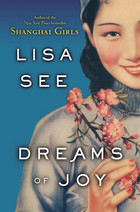 This review contains spoilers for Shanghai Girls. This is the sequel to that book. This review contains spoilers for Shanghai Girls. This is the sequel to that book.
Joy has just learned that her entire life is a lie. Her parents aren’t really her birth parents and she believe she’s caused her father’s suicide. Unable to bear the consequences and taught the ideals of Mao’s China, Joy flees to Shanghai, convinced she’ll find the life she’s always wanted in the arms of Communism. Pearl, her mother in love if not in body, immediately goes after her daughter. She knows how bad China is, while Joy has no idea. Getting into China is easy; getting out of China is very difficult. As Pearl searches for Joy and Joy searches for meaning, both women end up learning more about who they are and what they treasure most in their lives.
Lisa See’s books have always been great reads, full of the detail and culture of the times they portray and rich with realistic characters. This book is no exception. While we saw the collapse of Shanghai in the last book, in this one we’re witness to how it has changed. I went through a minor obsession with books about China a while ago and this book was a return to a culture that still fascinates me even as it is horrifying. In this book, we’re in the midst of the ‘Great Leap Forward’. American teenager Joy has to accept that the ideals she’d been taught about life in China were wrong, and that life could be immensely harder for her than it had ever been previously. She also has to learn – the hard way – that she isn’t always right, and that stubbornness can lead to huge mistakes.
Meanwhile, it’s Pearl who can see how much the China of her youth has changed, how some things are the same but others are incredibly different. I found all of this fascinating and particularly well done, evoking memories from reading Shanghai Girls a while ago while providing a new, refreshing storyline that breathed different life into characters I already knew. Only May is on the edge of this book; it’s about mother and daughter, here, not about sisters, and the difficulty of parenthood on both sides of the equation.
If you’ve enjoyed other books by Lisa See, you will definitely enjoy this one too. I wouldn’t recommend reading it prior to Shanghai Girls, but it does fill in the gaps reasonably well so I don’t think a newcomer would be lost. Dreams of Joy definitely earns its spot next to her others as a moving story with well-developed characters and thoughtful questions set in a fascinating country.
All book links to external sites are affiliate links. I received this book for free for review from LibraryThing Early Reviewers.
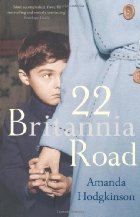 World War II had a massive effect on lives across the world; Silvana and Janusz, living in war zones, have been affected more than most. Separated at the very beginning of the war as a young married couple with a small son, Janusz immediately joins the army while Silvana is left in Warsaw with their son Aurek. Soon forced to flee the city, Silvana and Aurek hide in the woods, while Janusz eventually finds himself in England as a veteran. Six years after their separation, they’re reunited and start family life in a small house in Ipswich, but both have changed, and both have damaging secrets they’re determined to keep. World War II had a massive effect on lives across the world; Silvana and Janusz, living in war zones, have been affected more than most. Separated at the very beginning of the war as a young married couple with a small son, Janusz immediately joins the army while Silvana is left in Warsaw with their son Aurek. Soon forced to flee the city, Silvana and Aurek hide in the woods, while Janusz eventually finds himself in England as a veteran. Six years after their separation, they’re reunited and start family life in a small house in Ipswich, but both have changed, and both have damaging secrets they’re determined to keep.
22 Britannia Road has received a great deal of acclaim on its release, so I was expecting quite a lot from this novel. World War II stories are everywhere these days, so it does take something special or a different perspective to help a book stand out from the crowd. With its post-war story told simultaneously with the immediate history leading up to the war and afterwards, along with its Polish characters, the book easily accomplishes that much, providing a new family perspective on the hardships endured during the war.
Silvana and Janusz’s reunion is uneasy; they barely remember what one another look like. Everything in their lives has changed. For Aurek, things are even more difficult and confusing, as he simply doesn’t remember his father and just wants to go live with his mother in the woods again. He has no concept of society, much less that required by the strict British school system and, partly, his father, who wants a son to be proud of.
One of the most interesting aspects of the book was actually Aurek’s reaction to other children, school, his father, and so on; it demonstrates the adaptability of children as much as it shows how much adults struggle to accept the same tasks. Oddly, in this way it reminded me of Room by Emma Donoghue, even though the subject matters diverge wildly.
And then, of course, there are the secrets, which have the potential to destroy the family’s newly forged life. Complicating things are people who thrust themselves into the Nowaks’ newly forged lives, like Aurek’s first friend Peter and his elegant father. Silvana is a character that is difficult to understand, with her complicated past, while I think Janusz longs for the life that will be familiar to most readers; a promotion, a son to be proud of, a wife who loves him, a shiny new car. The opening scenes of the book, when he paints his house worrying what his stranger wife and child will appreciate, while reminiscing about the woman he’s fallen in love with in France, were actually some of the most poignant for me in the entire book.
While, for me, 22 Britannia Road wasn’t earth shattering, it was a book that certainly shed another light on life during and after World War II, particularly for immigrants. And it’s a worthy look into the minds of both adults and children who have to deal with the nearly unimaginable happening thanks to the horrors of war. Recommended.
All book links to external sites are affiliate links. I received this book for free from Amazon Vine.
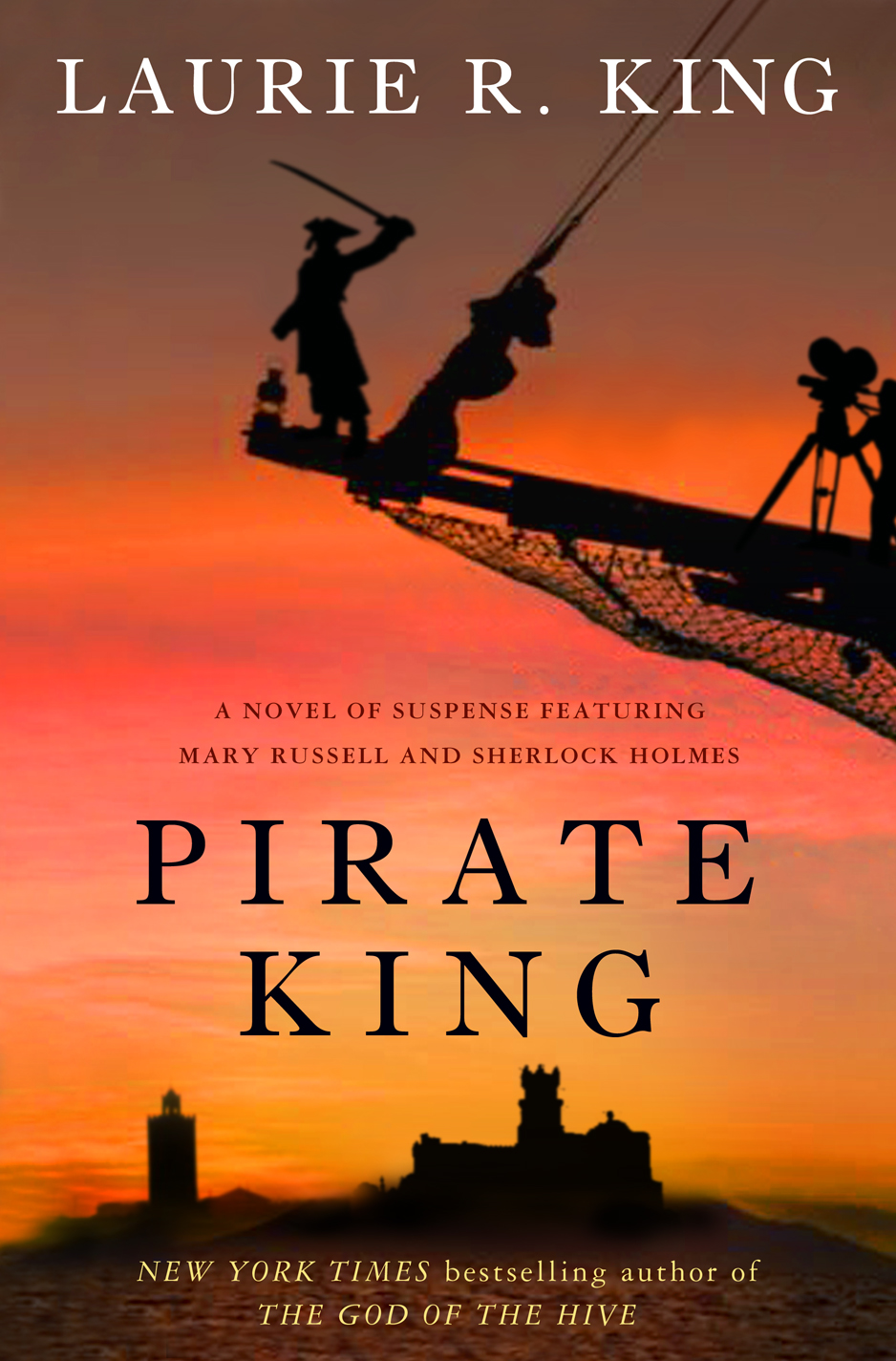
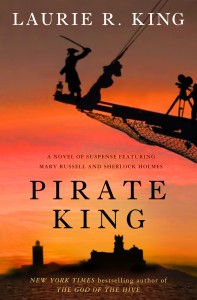 I’m delighted to welcome Laurie R. King to Medieval Bookworm today! Laurie is the author of 21 bestselling crime novels, including the historical series featuring Mary Russell and Sherlock Holmes. I reviewed the first in the series on Wednesday. King’s upcoming novel Pirate King is set in 1924 Lisbon, London, and Morocco. I’m delighted to welcome Laurie R. King to Medieval Bookworm today! Laurie is the author of 21 bestselling crime novels, including the historical series featuring Mary Russell and Sherlock Holmes. I reviewed the first in the series on Wednesday. King’s upcoming novel Pirate King is set in 1924 Lisbon, London, and Morocco.
I met Sherlock Holmes one September morning in 1987, when I sat down with a pad of paper and gave birth to his apprentice.
Strictly speaking, of course, I had encountered Holmes before that. The PBS series with Jeremy Brett was broadcasting, and no doubt I’d read one of the stories in high school, Hound of the Baskervilles, maybe, or The Speckled Band. However, I didn’t really meet the detective until the week both my kids were off at school for the first time, and I wrote the line, “I was fifteen when I first met Sherlock Holmes, fifteen years old with my nose in a book as I walked the Sussex Downs, and nearly stepped on him.”
That’s when I realized I had no clue who Sherlock Holmes was.
The next day I got my hands on a two-volume paperback of the four Holmes novels and fifty-six short stories (with small print!) Reading the Conan Doyle stories was a revelation. Sherlock Holmes is a thinking machine, right? And he’s filed in the Young Adult section of the library, because those are boy’s adventure stories, right?
 What I didn’t expect were the humor and passion the stories contain. What I didn’t expect were the humor and passion the stories contain.
Not that both qualities aren’t tucked securely behind the adventure. When Holmes looks at a client (The Red-Headed League) and says, “Beyond the obvious facts that he has at some time done manual labour, that he takes snuff, that he is a Freemason, that he has been in China, and that he has done a considerable amount of writing lately, I can deduce nothing,” the surface meaning at first seems to be that Holmes is demanding a great deal more of himself than normal human beings do. That his list may also be a gentle pulling of Watson’s leg tends to be set aside. But when Watson comes into their shared rooms (in Hound of the Baskervilles) and protests at the quantity of tobacco smoke in the air, Holmes’ reply is definitely snort-worthy: “It is a singular thing, but I find that a concentrated atmosphere helps a concentration of thought. I have not pushed it to the length of getting into a box to think, but that is the logical outcome of my convictions.”
Holmes passion was in the stories I read, too. Not so much a passion for women—as Watson says, “all emotions, and that one particularly, were abhorrent to his cold, precise but admirably balanced [sic] mind.” And Holmes himself clearly states (Devil’s Foot) “I have never loved, Watson.”
However, the rest of his statement is where a reader begins to doubt this passionless exterior: “…but if I did and if the woman I loved had met such an end, I might act as our lawless lion-hunter had done.” Similarly (Three Garridebs) when Watson is shot, Holmes’ “face set like flint as he glared at our prisoner…’By the Lord, it is as well for you. If you had killed Watson, you would not have got out of this room alive.’”
A person who admits that he would be capable of murder is no passionless thinking machine.
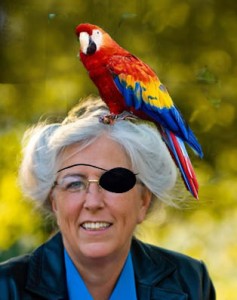 As later generations were to find with the Star Trek character Mr. Spock, passion under iron control (be it anger or eroticism) is far more fascinating than passion freely expressed. Reading the Conan Doyle stories knowing that the man at their center is a man seething with clamped-down passion makes for a very different vision of Sherlock Holmes. As later generations were to find with the Star Trek character Mr. Spock, passion under iron control (be it anger or eroticism) is far more fascinating than passion freely expressed. Reading the Conan Doyle stories knowing that the man at their center is a man seething with clamped-down passion makes for a very different vision of Sherlock Holmes.
It also opens all kinds of doors when it comes to writing about Holmes’ married life. But perhaps that is a blog post for a different day.
Laurie’s thoughts on Sherlock Holmes, including a chronology of his age, can be found on her web site.
To order a signed copy of the upcoming Pirate King, visit the Poisoned Pen.
|
|




Recent Comments