|
|
 This short story collection contains “five stories of music and nightfall”, revolving around some similar characters and locations. This short story collection contains “five stories of music and nightfall”, revolving around some similar characters and locations.
“Crooner”
This story features a Hungarian musician in Venice who sees his mother’s favorite singer, Tony Gardner, at a cafe where he is playing. When he rushes over to greet Mr. Gardner, he is surprisingly invited to accompany the famous man in a serenade for his wife. As their barge circles Mrs. Gardner’s window, the musician learns that the married couple is not what he originally thought.
“Come Rain or Come Shine”
The narrator, Ray, goes to visit two of his college friends, Emily and Charlie, whose marriage is breaking up. Charlie asks Ray to help him save it, but Emily has hated Ray for years, only appreciating his taste in music. When Emily leaves, Ray finds himself accidentally peeking in her diary, tearing out a page. In an attempt to save the day, Charlie tells Ray to pretend the neighbors with the dog have come by and ruined everything.
“Malvern Hills”
A young man goes to visit his sister and her husband for the summer after a number of failed attempts to join a band. While there, he meets a European couple who have performed all over the world. The man, an eternal optimist, and his wife, a much more negative person, have a few lessons to teach the narrator about his music.
“Nocturne”
Both Steve’s marriage and his music career are failing. His wife’s new lover offers to give him a facelift, which according to his manager will re-launch his career, as he’s quite an ugly man. When Steve takes the offer, he discovers that he is next door to Lindy Gardner, Tony Gardner’s ex-wife, and together they have a series of adventures at night in the recovery hotel.
“Cellists”
The only story to be told mostly in third person returns to Venice, where cellist Tibor meets an older American woman who considers herself a virtuoso on his instrument. Through a series of lessons, Eloise teaches Tibor that he is a great cellist and that he deserves more than a place in a restaurant band. Eloise, however, is holding something back.
For the most part, these stories were a little disappointing. While they are still beautifully written, they just didn’t have the impact that Ishiguro’s novels do. There isn’t enough time for that slow emotional build-up, nor to even get to know the characters. I felt a few of them were almost insufferably arrogant when it came to their musical talent, which didn’t help. While these stories did make me think, particularly about relationships and identity, and had some smaller revelations, overall Nocturnes was just not up to my expectations.
I am an Amazon Associate. I borrowed this collection from the library.
I just wanted to let everyone know that I’m currently without internet at home and it looks like I’ll be that way for another two weeks. I have enough reviews to keep going and I can get on at my MIL’s, as I am doing right now, but unfortunately I’m probably not going to be reading many posts or commenting while I can’t get on at home. I am very happy that my TBR pile is massively high right now, as I can read a LOT in two weeks without the interruption of the internet, and I’ll need it while I’m moping to myself about everything that I’m missing. So, please don’t think I’m neglecting you!
For anyone in the UK, just to let you know: if you switch to Sky and change your phone line, your broadband service will probably stop working until Sky’s kicks in! Just as a warning, they were very wrong when they told us our service would continue until the switch.
 Aisling’s grief at her mother’s death was strong, but nothing compared to how she felt when her father also fell ill, shortly after taking a new wife. Ash, connected deeply with the forest, was forced to move to the city for her father’s care. When he died, her stepmother declared that Ash’s fathers debts had been so numerous that Ash would have to work as a servant for the rest of her life to pay them off. Ash’s unhappiness leads her to the forest, where she meets the fairy Sidhean and begins to hope that he’ll steal her away from her mortal life. But then she meets Kaisa, the king’s huntress, and Ash’s wishes begin to change. Aisling’s grief at her mother’s death was strong, but nothing compared to how she felt when her father also fell ill, shortly after taking a new wife. Ash, connected deeply with the forest, was forced to move to the city for her father’s care. When he died, her stepmother declared that Ash’s fathers debts had been so numerous that Ash would have to work as a servant for the rest of her life to pay them off. Ash’s unhappiness leads her to the forest, where she meets the fairy Sidhean and begins to hope that he’ll steal her away from her mortal life. But then she meets Kaisa, the king’s huntress, and Ash’s wishes begin to change.
My expectations for this book were severely lowered thanks to Nymeth’s review. She also adores fairy tale retellings, and in case you couldn’t tell, this is a version of Cinderella. So when she didn’t like it, I thought there wasn’t all that much hope for me to like it, and I started the book thinking that. Imagine my complete surprise when I sat down and read the entire book in one sitting, staying up late just to finish it. I enjoyed it that much. Maybe it was the fact that it was a Cinderella story, a fairy tale I have always loved*, or the fact that I was craving fantasy at the time, but this book worked out beautifully for me.
Ash has been publicized as the book where Cinderella falls in love with a woman, but it’s more than that. It’s also not nearly as big a deal in the book as it has been in the publicity. Same sex relationships are normal in Ash’s world, which was a refreshing viewpoint. It surprised me how completely normal it felt and made me wish that I lived in a world where the same was true.
Malinda Lo creates a whole world and a mythology here, and I felt that frame was absolutely perfect for the story that unfolded. While the introduction of all the lore at the beginning was fairly slow, it did help as the book went along. The depiction of Ash’s grief at the loss of her parents felt real, and, though not the best I’ve read, really was moving. I thought at first that the part of the story with Sidhean was going to take away from her relationship with Kaisa, which only begins in the second half of the book, but I enjoyed the way it was developed and wrapped up in the end. I really loved Ash’s romance with Kaisa. I felt that it was so organically written and so natural; they really became friends and then realized what they had. The whole storyline left me breathless, and for me that’s unusual but cherished.
I also really liked Ash as a character. As time passed, she grew as a person and as a woman, and her love led her to take a step back into having a life, not just wishing the fairies could whisk her away. She likes to read, which automatically endeared her to me. So I wanted her to escape her life of servitude and I relished every step on the way. If someone was brave enough to be her friend, I liked them too. I was not fond of the evil stepmother and her daughters, but I still appreciated the fact that Lo built credible family dynamics into their relationships. They’re all human beings, even if they are very selfish.
I know how the Cinderella story goes, but I was still captivated by Ash, still reading until the very end. To me, that’s the mark of a good retelling.
*Some useless knowledge about me: I watched the movie Ever After at the perfect age and I have basically adored Cinderella stories since. I don’t know what it is about that movie, but I still love it.
Also, I received this book from review from the Amazon Vine program and I am an Amazon Associate.
 Portugal’s first reigning female monarch, Queen Maria I, was plagued with a poor family history that led to extreme mental instability and unhappiness in her later life. In this new biography, Jenifer Roberts explores the queen’s youth, dominated by a powerful member of the aristocracy, her reign, and her unhappy death in exile in Brazil. The author gives voice to Maria’s struggles and provides an illuminating picture of an absolute monarchy on the brink of destruction as discontent reached a fever pitch throughout Europe. Portugal’s first reigning female monarch, Queen Maria I, was plagued with a poor family history that led to extreme mental instability and unhappiness in her later life. In this new biography, Jenifer Roberts explores the queen’s youth, dominated by a powerful member of the aristocracy, her reign, and her unhappy death in exile in Brazil. The author gives voice to Maria’s struggles and provides an illuminating picture of an absolute monarchy on the brink of destruction as discontent reached a fever pitch throughout Europe.
Queen Maria is a surprisingly interesting figure. It’s always refreshing to find a woman in history who is not controlled by men. While Maria’s childhood was dominated by her grandfather, father, and prime minister Pombal, when she came to the throne she genuinely took control. Though she was advised by men, she embarked on her own journey to restore religion, undo the wrongs she believed her forebears had done, and appointed her own advisors with the help of her mother. Before she lost her senses due to hereditary mental illness, seemingly brought on by six deaths in her family in a very short period of time, Maria actually seemed a good queen and one that her people liked.
Many of the quotes in this book are from the perspective of British ambassadors at the time, which made the book that much more interesting for me. I have a generally good grasp of British history at this period and it was very illuminating to see the comparisons made. The same physician who successfully (for the time) treated George III was called in to treat Maria’s madness but failed. Maria is a part of the world stage, so we also hear about the monarchies of France and Spain as well as the revolution in France and how it affects the political situation in Portugal. As a result the book, while short, is a complete picture of this period in history, so volatile and prone to change as we with hindsight can see and consider.
The back cover copy says that the book reads like a novel and I would certainly agree with that. It’s very readable and unfolds as a story should, particularly before Maria’s madness strikes. From the prologue, we know how that happens, and the rest of the book reveals the history of her life. The shortest period covers Maria’s madness, but given that she was in a convent for much of this time, there probably was not much to say. Endnotes are used throughout the text for references, which appears to be the trend in popular history. The author has also included an extremely useful introduction and several appendices, including the original account of the royal family’s visit to Marinha Grande, the home of an Englishman in charge of the glass factory, which inspired this work. There is also a list of all the personalities mentioned, an explanation of the Portuguese words and other unfamiliar terms, and more. There is no point at which any reader could be confused and it was easy to find that I was learning quite a bit more about Portugal than just on the queen herself.
Overall, this is a very well done, comprehensive account of a fascinating queen. I very much enjoyed reading it and felt that I learned a lot, particularly given how ignorant I am about Portugal. I highly recommend The Madness of Queen Maria.
This book was sent to me by the author for review. I am an Amazon Associate.
 Even though I have dozens of books I’d love to read right now, somehow I still have issues when staring at the many books I have to read. I just can’t decide which to choose and nothing is calling to me particularly strongly. I solved this issue in part when I found the sixth Sookie Stackhouse book in the library yesterday, but very shortly I’m going to be confronted by my indecision again. I reinstated my policy of rotating my oldest TBR books, review books, and then library books, just making a pile now, but it’s too dark for a picture. I’ll try to compare next week and see how far I get. My next book is The Foundling by Georgette Heyer, though, and I’m looking forward to it very much. Do you ever suffer from TBR indecision? Even though I have dozens of books I’d love to read right now, somehow I still have issues when staring at the many books I have to read. I just can’t decide which to choose and nothing is calling to me particularly strongly. I solved this issue in part when I found the sixth Sookie Stackhouse book in the library yesterday, but very shortly I’m going to be confronted by my indecision again. I reinstated my policy of rotating my oldest TBR books, review books, and then library books, just making a pile now, but it’s too dark for a picture. I’ll try to compare next week and see how far I get. My next book is The Foundling by Georgette Heyer, though, and I’m looking forward to it very much. Do you ever suffer from TBR indecision?
My Nanowrimo novel is still going very well. At last count I had around 31,000 words. I haven’t been working on it today, but this is only my second day off all month. At this rate, I will be nearly finished by next Sunday, especially because I made an essential discovery this week. The way I now write is vastly different from the way I used to write. I was a seat-of-the-pants writer, letting the story unfold as it would and as I went along. I can’t do this any more. I found it hard to just write without knowing where I was going and I found it stressful to try and put my characters into situations that would allow them to interact the way they wanted. So I sat down for a few minutes and plotted out the second half of my story. Suddenly the joy is back and it’s just as fun as it was in the beginning, when I did have a plan for how it was going to start. I’m not sure why this change has happened, but I do know I’m going to plot out all my writing from now on. I’m not sure if academics caused this or if I just like to have a plan these days, but I have a lot more confidence in finishing this thing now.
That’s about all that’s new from me this week; not much is going on in my life so nothing more interesting to report! I do hope everyone has a great week, though, with a wonderful book or two to read.
 First, if you haven’t read The Thief, stay away from this review to avoid spoilers. Second, I like the back cover summary, it reveals very little but hints at so much, so I’m going to be a little lazy and just use it here: First, if you haven’t read The Thief, stay away from this review to avoid spoilers. Second, I like the back cover summary, it reveals very little but hints at so much, so I’m going to be a little lazy and just use it here:
“When his small mountainous country goes to war with the powerful nation of Attolia, Eugenides the thief is faced with his greatest challenge. He must steal a man, he must steal a queen, and he must steal peace.
But his greatest triumph – as well as his greatest loss – can only come if he succeeds in capturing something the Queen of Attolia may have sacrificed long ago.”
Thinking about this book now, I believe I may love it even more than I did when I’d finished it. It just feels so well done, so well put together, that I’m still thinking about it days later, and I read it during the read-a-thon, when I couldn’t really give it as much attention as if I’d been well rested and had no other books on my mind.
The first thing that I noticed was a shift to third person narration, which was a little odd after being in Gen’s head for the entirety of the first book. When the view switched around, though, I realized how important this was, because Eugenides is not entirely the central character here. There is now a war brewing between his country, which is Eddis, Attolia, and Sounis, but Eugenides is out of commission for a while and instead we get the viewpoints of the queens as they manuever in this new war. There are politics involved and lives are at stake. The queens are strong, powerful women in their own rights and it was really wonderful to have a focus on women after the male-centered first book.
The world has expanded; this is no longer a boy’s journey, and Eugenides is definitely no longer a boy. He’s lost that playful thieving edge, but to be honest I loved him even more, for his suffering and the man he became because of it. There are a few gods in this book and they do manipulate events to suit themselves; it’s so fascinating to see the results and how they had a purpose in the way everything turned out. Gen is the clever one, of course, without or without the help of the gods, and his plotting is startling; all the plot threads come together in an astonishing way. It leaves the reader marveling at his strength, self-possession, mind, and remarkable ability to cope with adversity.
Then of course, there is the love story. I didn’t know what I expected, but it wasn’t what I got; what I got was beautiful and almost hard to believe, but somehow credible. An author who can convince you that something you’d never normally believe is possible and downright wonderful is an author to watch, and Megan Whalen Turner is definitely that.
I hope I haven’t spoiled anything in this wonderful book. I’ve done my best. I do hope that I’ve encouraged you to seek it out. Set aside a few hours and spend some time with The Queen of Attolia. You won’t regret it.
 After bragging that he could steal anything, and promptly laying his hands on the king’s seal, Gen finds himself in prison for that very theft. That is, until the king’s magus recruits him for the ultimate theft in another country, a treasure that no one has ever managed to steal. Of course Gen accepts, but he has ideas of his own, and he knows that once he gets out into the open, nothing is going to hold him back from freedom. After bragging that he could steal anything, and promptly laying his hands on the king’s seal, Gen finds himself in prison for that very theft. That is, until the king’s magus recruits him for the ultimate theft in another country, a treasure that no one has ever managed to steal. Of course Gen accepts, but he has ideas of his own, and he knows that once he gets out into the open, nothing is going to hold him back from freedom.
I’ve widely heard that this is the least of all the books of the series but I loved it. I adored the characters. Gen is a trickster and a liar, but he is just so clever. I really wanted him to succeed in his mission, whatever it finally turned out to be. I enjoyed the conflicts between all the travelers as they went along and the realistic way their relationships changed and grew. The magus genuinely learned who Gen was and what he was capable of and it was remarkable to watch his respect for Gen grow as the journey continued. In the beginning, Gen was marginalized, a prisoner and a thief, but as his companions got to know him, they considered him a person. I love books that do this and show how people are forced to reconsider those they classify as “other”.
The book is written in first person, which really works, but its difference lies in the fact that we still don’t know all about Gen. He doesn’t reveal who he really is or his past until the end. We’re given little tantalizing glimpses, like when he talks about his family and lets us know that it’s a big one, but his secrets for me kept the whole book very interesting. I wanted to know more about him. It was also a good choice for a read-a-thon book, as it’s very short and extremely absorbing.
I thought overall that this was a great little adventure story about identity. It’s well-written, with nice imagery, but the characters really stole the show for me. There was a reason I immediately picked up The Queen of Attolia and just writing this review has made me really long to read The King of Attolia as soon as possible. If you enjoy YA fantasy and haven’t read The Thief yet, I highly, highly recommend it.
I am an Amazon Associate. I purchased all books mentioned in this post.
 This is book five in the Sookie Stackhouse series. I’m in part reading these for the challenge over at Beth Fish Reads. Do not read if you want to avoid spoilers for the previous books! This is book five in the Sookie Stackhouse series. I’m in part reading these for the challenge over at Beth Fish Reads. Do not read if you want to avoid spoilers for the previous books!
A sniper is shooting to kill the shapeshifter population and Sookie is worried for her brother and her friends. It isn’t enough that Jason has become a werepanther and is about to endure his first change, but now he’s suspected of the crimes. After all, he’s just been changed, and it’s the shapeshifters’ fault. Can Sookie find the true villain before it’s too late?
This was another fun novel in the series and I really enjoyed reading it during the Read-a-Thon. By now I have tabs on all of the characters and I look forward not only to each book’s individual plot but to seeing how things grow and develop in each book. This one doesn’t disappoint. Sookie has all of her usual love interests and then some. It’s remarkable that one girl could have so many men decide they love her, but it does keep the story interesting even if I have to suspend my disbelief a little bit.
The plot in this book itself was okay. I’m obviously not really reading these books for the plot, but I didn’t really guess who the culprit was until he/she was revealed. I don’t think there were really many clues at all, and if there were any I completely missed them. I much prefer to read and see what happens to Sookie. She is just such a charming character; in this one she even went to the library and worried about messing up her books before other, perhaps more important, issues. How could you not love a character that goes home with a bag of books from the library, when she’s also great in a lot of other respects?
Anyway, I don’t really have much else to say about Dead as a Doornail. It was a read-a-thon choice, and while a great one for it, I don’t remember all that much in the mix of the other five books I read. So I’ll just say I continue to enjoy this series, Sookie is a fantastic character, and I hope you’re reading it too!
I am an Amazon Associate. I borrowed this book from my local library.
 This was a fairly quiet week at the library for me. I haven’t been reading many of the books I’ve taken out, mostly because I’ve actually been reading a bit less this month. For one thing, my evenings are generally no longer my own because I’m married, which I clearly don’t mind, and while I’m unemployed, I’m in charge of the flat, so I spend more time cleaning and cooking. Nanowrimo takes a couple of hours out of my day, and I spend time every day looking for and applying for new jobs, if I can find any I’m qualified to do. There are depressingly few jobs out there that aren’t for IT specialists or business/marketing majors. If there are any British publishing companies out there looking for someone who is passionate about books, I’m willing to work! This was a fairly quiet week at the library for me. I haven’t been reading many of the books I’ve taken out, mostly because I’ve actually been reading a bit less this month. For one thing, my evenings are generally no longer my own because I’m married, which I clearly don’t mind, and while I’m unemployed, I’m in charge of the flat, so I spend more time cleaning and cooking. Nanowrimo takes a couple of hours out of my day, and I spend time every day looking for and applying for new jobs, if I can find any I’m qualified to do. There are depressingly few jobs out there that aren’t for IT specialists or business/marketing majors. If there are any British publishing companies out there looking for someone who is passionate about books, I’m willing to work!
Anyway, on to the books! Click on the pictures to be taken to individual Librarything pages.
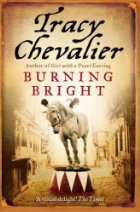   
- Burning Bright by Tracy Chevalier – Chevalier is a hit or miss author for me, so I got this out of the library for a reason.
- Crazy for You by Jennifer Crusie – I really enjoyed the first book of hers I read and was recently getting annoyed that I’d read all the lightest fiction I have in my possession (in this country – 2/3 of my TBR is in the US) except for a few historical romances, which I’m not in the mood to read right now. Jennifer Crusie seemed like a good way to remedy the situation.
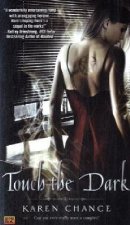
- Touch the Dark by Karen Chance – Same reasoning here as above, and I liked Karen Chance’s story in On the Prowl.
- Daisy: The Life and Loves of the Countess of Warwick by Sushila Anand – I mentioned this book in my Sunday Salon post and I’m still enjoying it. The first half of the book was more about Daisy’s love life, while this second half is much more about Daisy’s involvement in politics. Both are interesting and quite a reflection on the turn of the century in England. I’ll be finished with this one soon.
Have you read any of these books? What did you think?
Library Loot is a weekly meme hosted by Eva and Marg.
 Twelve-year-old Percy Jackson has always had issues in school. He’s been diagnosed with attention disorders but still ends up failing out of school every time. In his latest boarding school, Percy has a peculiar encounter with one of his teachers, after which no one seems to remember the teacher! Perplexed, Percy starts listening in on conversations and begins to realize that his life is not at all what he’d thought. Things get even stranger when mythological creatures appear in his life and Percy is sent to a summer camp for half-bloods; children descended from one god and one human. When Zeus’s lightning bolt is stolen and Percy is the prime suspect, he must get it back before the mythological world erupts into war. Twelve-year-old Percy Jackson has always had issues in school. He’s been diagnosed with attention disorders but still ends up failing out of school every time. In his latest boarding school, Percy has a peculiar encounter with one of his teachers, after which no one seems to remember the teacher! Perplexed, Percy starts listening in on conversations and begins to realize that his life is not at all what he’d thought. Things get even stranger when mythological creatures appear in his life and Percy is sent to a summer camp for half-bloods; children descended from one god and one human. When Zeus’s lightning bolt is stolen and Percy is the prime suspect, he must get it back before the mythological world erupts into war.
While this was certainly a fun book, it was definitely a children’s book. Let me clarify. Percy is 12, so the book doesn’t exactly count for young adult literature because I believe that means a teenage protagonist is necessary. Yet with some kid’s books, I can still enjoy the intricacies of plot and character, so I don’t even notice that they’re written for children. I noticed here, and while the book was a lot of fun, there were times when I rolled my eyes. Others have agreed with me, so at least I’m not alone.
That said, I read this during the Read-a-Thon and it was a perfect choice. It’s fast-paced, there is a lot of action, there was some humor that I still found funny, and the book sped by very quickly. For a light read, if you’re not expecting much, this is perfect. I think this would be a brilliant read for a kid. It has a lot of tame humor and situations that a kid who hadn’t gone through puberty yet would probably enjoy. And with all the mythology, it’s educational as well, in a way that kids could perfectly understand because the gods are all described in familiar terms. Percy doesn’t know who they are at first, so each of them is described fully in his own words, giving kids an easy introduction to exactly who these gods are before they’re presented with an unfamiliar name to remember. It’s easy to see why Rick Riordan is so very popular. This is clean, adventurous fun that would probably appeal to both boys and girls of that age.
So, The Lightning Thief does what it’s meant to do for kids, it’s just a shame I didn’t love it as an adult. I do intend to continue with the series, though, because I liked Percy and I’m intrigued enough to see what happens next.
You guessed it, I’m an Amazon Associate.
|
|



Recent Comments