|
|
 Martin is a thief, but he isn’t an ordinary thief. He meticulously studies his victims – who he calls clients – before he steals from them, to ensure that they don’t have any danger factors and that he won’t get caught by a dog or a child home sick from school. He starts to feel that he knows his clients based on the items he takes from them – from one, he’ll steal some laundry detergent and a packet of nearly expired tomatoes, while from another he’ll nab toothpaste or a box of pasta. His big operations take months of planning and he does his best to take things that his clients won’t miss for long periods of time. But when he gets trapped in one of his clients’ homes and starts to believe he can help them, Martin finds that his life of crime may turn into an attempt to be a guardian angel for his clients. Martin is a thief, but he isn’t an ordinary thief. He meticulously studies his victims – who he calls clients – before he steals from them, to ensure that they don’t have any danger factors and that he won’t get caught by a dog or a child home sick from school. He starts to feel that he knows his clients based on the items he takes from them – from one, he’ll steal some laundry detergent and a packet of nearly expired tomatoes, while from another he’ll nab toothpaste or a box of pasta. His big operations take months of planning and he does his best to take things that his clients won’t miss for long periods of time. But when he gets trapped in one of his clients’ homes and starts to believe he can help them, Martin finds that his life of crime may turn into an attempt to be a guardian angel for his clients.
This was a startlingly original and often delightful read. Who could imagine that a thief could be so lovable? It helps that he hardly ever steals anything actually worth money, and when he does he takes extra effort to ensure its owners will never miss it. Instead, he seems to consider his clients as friends. He’s a peculiar character to start; he’s obsessed with mapping out houses and following his routines. He thinks he’s gone on dates with a woman at the local diner when she’s just being friendly, and has a single friend to his name. He works at a coffee shop and tells the people that he knows that he writes technical manuals rather than divulging his real career. He seems as though he might have happily gone along continuing to steal from his clients for years, until he realizes that maybe he can use his intimate knowledge of them for good rather than for his own personal gain.
In some respects, I think making it so easy to relate to him trivializes the fact that he is actually stealing, but this is a minor note and is completely contradicted by the good he actually ends up doing. Since we spend over 100 pages following him on his travels, we get a really good idea of what he actually steals and how he goes about doing it. Still, somehow, we appreciate and start to like him even as he describes his meticulous process of removing fingerprints and approaching houses from a variety of methods. It’s after we’ve known him that the book takes off – things start to go wrong and Martin has to cope with not only dangers but unfamiliar environments he isn’t prepared for. I didn’t feel anxious for his clients as he investigated, I felt anxious for him.
Something Missing completely delivers on its unusual premise with a fantastic main character as well as an intense and addicting storyline. This sweet read is highly recommended.
I am an Amazon Associate. I received this book for free for review from the publisher.
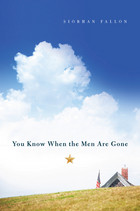 Life in the military is difficult, not only for the men who go off to war, but for the women and children they are forced to leave behind. This new collection of stories from Siobhan Fallon explores the lives of the men and women who are forced to endure the separation, from both perspectives. We see men who dream of nothing but home, only to find themselves strangely out of place away from the war. We meet women who are bereft without their men, but when the men return are unsure how to fit them back into their strict lives. And we witness the spouses who can’t take the separation, who cheat, from both sides of the equation. Life in the military is difficult, not only for the men who go off to war, but for the women and children they are forced to leave behind. This new collection of stories from Siobhan Fallon explores the lives of the men and women who are forced to endure the separation, from both perspectives. We see men who dream of nothing but home, only to find themselves strangely out of place away from the war. We meet women who are bereft without their men, but when the men return are unsure how to fit them back into their strict lives. And we witness the spouses who can’t take the separation, who cheat, from both sides of the equation.
Every tiny bit of praise you’ve heard for You Know When the Men Are Gone is true. This is an incredible collection of stories, and I say that as someone who doesn’t normally like short stories, whose loved ones are all civilians, and who is hesitant about reading books about modern day women’s emotions. Each story in this book is wonderful on its own and as part of this collection. They are all very loosely connected, some having more links than others, but with several universal themes coming through.
Many of those themes are explored through the two different perspectives. We witness just how difficult it is for women when their husbands are gone. They bond together with other mothers, have children early to have something left of their husbands, and end up coping with absolutely everything in the men’s absence. Meanwhile, the men are dreaming of home, even as they’re adjusting to Iraq. Each story in some way deals with a soldier’s return or lack of return.
Infidelity is a big concern for both the soldiers and the women who are waiting for them. After all, a year’s deployment is a very long time, and all of them can get desperate. One husband returns, convinced his wife is cheating, and hides in his own basement to catch her in the act. A wife suspects her husband of cheating, but decides to forgive him and save the love that she still has for him and, she hopes, him for her.
Each story in this collection affected me in some way, tugging on my heartstrings relentlessly. Several had me in tears, which doesn’t happen very often for me and books. I can’t imagine how difficult these lives are, but I truly feel that Fallon gave me a glimpse into the tough struggles that military families go through each and every day. There is definitely a reason this collection has earned so much buzz, and it’s so well deserved. I’m glad to add my voice to the many others who have fallen in love with this book – Fallon is unquestionably an author to watch and You Know When the Men Are Gone is an amazing read.
I am an Amazon Associate. I received this book for free for review from the publisher.
 Lady Julia Yardley would do almost anything to divorce her husband. She stops short of killing him, but only because jail would be yet another prison. Justice for an early twentieth century lady with an abusive husband is difficult to find, however, so in the end Julia realizes she has only one way out: adultery. She arranges a seduction of a friend, Aidan Carr, the duke of Trathen, so that her atrocious husband will catch her in the act, and she is granted the divorce she so craves, causing a ridiculous but necessary amount of scandal in the process. But what she doesn’t account for is the fact that Aidan will continue to be drawn to her and, as her feelings thaw from a destructive decades-long marriage, that she will be tempted by his advances. Lady Julia Yardley would do almost anything to divorce her husband. She stops short of killing him, but only because jail would be yet another prison. Justice for an early twentieth century lady with an abusive husband is difficult to find, however, so in the end Julia realizes she has only one way out: adultery. She arranges a seduction of a friend, Aidan Carr, the duke of Trathen, so that her atrocious husband will catch her in the act, and she is granted the divorce she so craves, causing a ridiculous but necessary amount of scandal in the process. But what she doesn’t account for is the fact that Aidan will continue to be drawn to her and, as her feelings thaw from a destructive decades-long marriage, that she will be tempted by his advances.
Reading this in close succession with Wedding of the Season was, I think, a great idea. Both Julia and Aidan are introduced in that book, and therein they absolutely can’t stand each other. Julia is constantly needling upright, proper Aidan, who was engaged to her cousin Beatrix (the heroine of that book). There was clearly something there, but I was genuinely shocked when I realized that these two were actually the stars of this particular book. I shouldn’t have been, though; everyone knows that strong antagonism can be much more than it appears on the surface, and here it’s jealousy and longing in their most potent forms. Scandal of the Year fleshes out the back story of these two characters, so we learn just why Julia is out to irritate Aidan and, simultaneously, why he is the one she chooses to seduce when her situation gets desperate.
I loved the way this series revolves around scandal. None of these events would be anything close to scandalous in our society, unless a celebrity was the one committing them; a woman like Julia would have divorced her husband and had legal protection, no less. But for Victorians, desperate times call for desperate measures, and Julia suffers in a way she never would have done in our world. This isn’t just virgins hopping into bed with dukes without a thought for the consequences, as happens in so very many romances; Julia does think about and suffer the consequences of her decisions. She’s cut in society, she only gets invited to balls by her friends (some of whom abandon her), and she is a proper divorcee. Her previous scandalous behavior is quickly hushed up and she’s speedily married off to prevent gossip. Julia knows that, were she to have children, they will suffer even more. Aidan’s association with her damages his prospects and means his search to find a suitable heiress is vastly more difficult. It doesn’t stop them falling in love with one another, but they are firmly planted within the society of their time.
The romance itself was at times frustrating; I felt Julia clung too closely to her stubbornness, but this was ingrained in her character from the beginning. I could understand why it was happening, but rather strangely I was always on Aidan’s side. I’ve been wondering if that is simply due to my own fortunate experience in the romantic department, and I’ll be very interested to read other reviews and see how other women viewed these two characters.
Scandal of the Year is another wonderful romance from Laura Lee Guhrke; I am definitely eager to read more of her work after these two books and I’m glad to have discovered another good romance author (especially when a few of my favorites seem to have gone downhill these days). I would definitely recommend it to other romance readers.
I am an Amazon Associate. I received this book for free for review from Netgalley.
 When Eddie’s father killed himself, her life fell apart. She can’t figure out how he could have left her, left her mother, when they all seemed so happy. Now her mother can’t get out of her bathrobe, her mother’s best friend Beth is constantly in the house and invading Eddie’s life, and there are ever-growing boundaries between her and her own best friend Milo. When Eddie meets her father’s last student, Culler Evans, she begins to hope that he can finally answer the question “why?”, even at the expense of everyone and everything she thinks she knows. When Eddie’s father killed himself, her life fell apart. She can’t figure out how he could have left her, left her mother, when they all seemed so happy. Now her mother can’t get out of her bathrobe, her mother’s best friend Beth is constantly in the house and invading Eddie’s life, and there are ever-growing boundaries between her and her own best friend Milo. When Eddie meets her father’s last student, Culler Evans, she begins to hope that he can finally answer the question “why?”, even at the expense of everyone and everything she thinks she knows.
I don’t think I can do this book justice in a review. It was such an all-consuming experience, a complete cascade of grief, hope, and love, that I genuinely don’t think I can express the effect this book had on me. Needless to say, I was totally wrapped up in Eddie’s experiences. At times, I wished she could have been more forthcoming – that all of the people in the novel could say what they really wanted to – but conversations in real life are difficult, too, and I didn’t think the author could have done a better job portraying real people suffering.
When Culler comes into the picture, I could completely understand Eddie’s desire to know, to understand. A death, especially a suicide, makes us question what happened, and in our grief, it can be so easy to get lost in that question. I was worried for her, dealing with an older boy who could hurt her so easily, and at that moment I realized just how wrapped up I was in this book. I didn’t want to put it down for anything, I just wanted to see what happened and whether Eddie managed to find the meaning she so craved.
Amidst all of this are the usual teenage dramas – because at the heart of it these characters are distinctly teenage even when their lives are turned upside down. Eddie still wants to be with her friend, Milo, even though he won’t tell her essential facts about the night her father died. His ex-girlfriend still manages to get in the way of their friendship. And she still sometimes goes out to parties, where occasionally she feels a spark of normality. She’s changed but she’s still recognizably a teenage girl, which gives us hope that she will find answers and return to enjoying her life eventually.
Fall for Anything was simply an incredible book. Beautifully written, with realistic characters and an absolutely gut-wrenching storyline, don’t miss this if you enjoy contemporary YA. And let me tell you, I have Some Girls Are on my shelf and I cannot wait to get to it now.
I am an Amazon Associate. Many thanks to the author and publisher for sending me this review copy!
 Margaret of Anjou has no idea what’s in store for her when she travels as a seasick French fifteen-year-old to marry the English king Henry VI. Not fluent in English and, due to her nationality, viewed as an enemy by many English people, Margaret doesn’t have the easiest time of it, particularly when her marriage fails to bring peace between England and France and takes years to produce an heir to the throne. Amidst suspicions over his illegitimacy, challenges to her husband’s throne, and eventual war between her suspects, Margaret struggles to retain the birthrights of herself, her husband, and her son. Margaret of Anjou has no idea what’s in store for her when she travels as a seasick French fifteen-year-old to marry the English king Henry VI. Not fluent in English and, due to her nationality, viewed as an enemy by many English people, Margaret doesn’t have the easiest time of it, particularly when her marriage fails to bring peace between England and France and takes years to produce an heir to the throne. Amidst suspicions over his illegitimacy, challenges to her husband’s throne, and eventual war between her suspects, Margaret struggles to retain the birthrights of herself, her husband, and her son.
Susan Higginbotham is a historical fiction writer who never fails to deliver the books that I personally want to read. Well-written, historically accurate, and meticulously detailed, she is an expert at transporting me back in history while never really throwing me out of the story with something I obviously know to be wrong. Even when she does change something to suit her purposes, I know that it will be logical and fully explained at the end, as everything is here. With this latest book, I got all of this and wasn’t disappointed at all. If anyone can make me enjoy a book set during a period about which I know entirely too much, Higginbotham is unquestionably that author.
And I did enjoy The Queen of Last Hopes. At its heart it is a good depiction of Margaret’s life and a more careful examination of the motivations that this so often vilified woman had for the actions she took over the course of her life. She’s not dismissed as a villain, for once, but instead rehabilitated. Unfortunately, though, I think in this case Higginbotham went a little further towards good than I really would have preferred. I would agree that she was made to seem excessively cruel because she was a woman, a crime perpetuated over the centuries, simply because she took a role most people would rather envision a man having. But that doesn’t mean she had to be so very good; I think creating an affair for her went some way towards mitigating this, but not entirely.
Still, I related to Margaret, and for the first time I felt I could understand what the real woman must have gone through as everyone turned against her and everything she cared about was at risk. I’d find it difficult not to. The book is told through differing viewpoints and I found hers to be by far the most appealing, even though she was on the sidelines of almost all the events. Those other characters give us the perspective on her that we need to remain balanced throughout the course of the novel; they save the book from excessive telling by giving us a way to see the events through those characters’ eyes.
Overall, The Queen of Last Hopes was an engaging historical novel for me that suited my expectations perfectly. I would have preferred a more balanced version of Margaret, but I could still relate to her and was still wrapped up in her story. Though not my favorite of Higginbotham’s books, this is still a good move towards looking more realistically at Margaret of Anjou.
I am an Amazon Associate. I received this book for free from the publisher for review.
 Jane Eyre has been one of my favorite books for more than ten years. I read it regularly as a teen, before I went to college. When I had to choose a book to read aloud from in my public speaking class, Jane Eyre was it, and nothing else quite matched it (until, of course, I read The Age of Innocence by Edith Wharton, and I’ve never been able to choose between them since!). Jane Eyre has been one of my favorite books for more than ten years. I read it regularly as a teen, before I went to college. When I had to choose a book to read aloud from in my public speaking class, Jane Eyre was it, and nothing else quite matched it (until, of course, I read The Age of Innocence by Edith Wharton, and I’ve never been able to choose between them since!).
But when I went to college, many of my reading habits lapsed. I had friends constantly around and, while I still read, for about three years I read considerably less than I do now and than I did in high school. Rereading was the first to go, and I hadn’t read Jane Eyre in about six years. I knew I wanted to read it again, but it was hard to persuade myself to do so, with other review books stacking up and, finally, feeling financially comfortable enough to buy new books and support the publishing industry on a regular basis. Rereading still falls by the wayside.
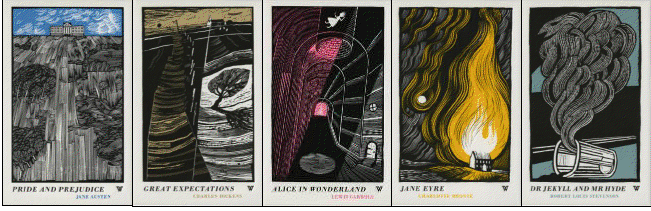
Luckily, I received just the impetus I needed to read Jane Eyre again in the form of a lovely publicist, who let me know about a new series of pocket classic editions from White’s Books. All of them have new, lovely art and introductions commissioned just for them. I couldn’t resist the opportunity to receive a gorgeous new edition of this book, especially when it’s so lovely. And the edition is nice; the front and back of the book have appropriate, evocative art and the book fit right in my hands for easy reading. There’s even a little ribbon to mark my page. The font did happen to be a bit small, but I expected that out of something called a “pocket” edition. The publisher also sells more expensive, normal size versions; here’s their website for more. Here are a few of the book covers for this edition:
Anyway, as the book itself went, I loved it just as much this time. Mostly, I adore Jane herself; she’s such a passionate person even when she’s determined to hide it in herself. She doesn’t let people push her around and sticks by her morals even when she would rather do otherwise, to the point of turning aside from her own love. She lives on her own terms even as she relies on others for employment, as a woman in her position at the time had to do, and she actively seeks people who appreciate her for who she is, the people who don’t dismiss her for being a governess, teacher, poor relation, or younger student.
I’d forgotten so much of the Gothic atmosphere as well, with creepy, dark Thornfield, Jane’s many dreams, and how much the book has to say about religion – what is true faith and what is twisting Christianity to suit one’s own goals. I’m not surprised, but reading it now after four years of English literature classes and lots of classics read on my own, it really sticks out as a Victorian novel. The new introduction by Jacqueline Wilson was also a pleasure to read and picked out many points about the book’s treatment of Jane that I wouldn’t have considered on my own – just right for someone who’d read the book multiple times before.
Have you read Jane Eyre? What did you think of it? I know not everyone agrees with me and I’d love to hear your thoughts.
I received this edition free from a publicist.
 5 year old Jack and his Ma live in one room. Jack has never known anything different; he adheres closely to their daily rituals and truly believes that the world doesn’t extend outside the one room. His only view of the outside world is a skylight and he thinks everything that happens there is really just in the TV. He dreads visits from “Old Nick”, the man who visits his mother, and has to hide in the wardrobe every time he comes to visit. When Jack turns five, his mother starts trying to tell him about the world, but Jack isn’t sure he’s ready to face it. 5 year old Jack and his Ma live in one room. Jack has never known anything different; he adheres closely to their daily rituals and truly believes that the world doesn’t extend outside the one room. His only view of the outside world is a skylight and he thinks everything that happens there is really just in the TV. He dreads visits from “Old Nick”, the man who visits his mother, and has to hide in the wardrobe every time he comes to visit. When Jack turns five, his mother starts trying to tell him about the world, but Jack isn’t sure he’s ready to face it.
Just a quick warning, this book is best going into it knowing nothing more than that, and I will be including spoilers in my review.
I had two reactions to this book. I struggled with the beginning. Unlike Jack, I knew what was going on. I knew “Old Nick” had kidnapped and raped his mother, and that Jack was the product of that rape; it seemed incredibly sad to me how he simply got on with his life as though it were normal. I doubt any mother could have chosen to do anything else, there certainly isn’t any sense in raising a child to be miserable, but it was hard to take. I felt stifled just thinking about the life of Jack’s Ma. I must admit that I was also quite disgusted at the continuation of breast feeding, though I could see why there was no reason to actually stop.
And then they escape, and I started to appreciate the book more. For me, their integration into the real world was the interesting part. Seeing how much Jack hadn’t experienced and how poorly equipped he was for the actual world was, again, heartbreaking. One of the more interesting parts of it, though, was the fact that Jack completely misses out on societal stigmas. He doesn’t think it’s weird that he has long hair like a girl, or that Dora is his favorite television character. He carries a pink Dora backpack and thinks nothing of it – an interesting, and I think accurate, view on how society teaches us about the differences between boys and girls.
When they emerge into the real world, it’s also apparent that Jack has the adaptive ability of his age, while Ma struggles desperately to cope. Despite his confusion over separation from her, he continues to learn about the world and find his own place in it, which in contrast to the rest of the book is heartwarming and gives us hope. I loved the sections when he’s with his grandparents and learning little things about the world that he likes. It’s really a testimony to the power of childhood. He struggles at first, but he does realize that the outside world is a nice place – and that he can still be with his Ma in it.
Room has garnered quite a bit of attention in the press and on blogs due to its recent Booker prize nomination, so I don’t think I’m adding anything new to the discussion; regardless, I would definitely recommend this book. It’s dark, but not without its strands of hope.
I am an Amazon Associate. I received this book for review for free from Amazon Vine.
 Another retelling of a Mabinogion story, The Meat Tree starts off with two people in space, exploring an abandoned ship. There were meant to be three people on it, but none yet exist. Communicating entirely through their minds, the two navigators discover a virtual reality system with a place for three people – outdated technology to them, but worth exploring to see if they can find out what happened to the ship’s inhabitants. They find themselves transplanted back to medieval Wales, where they proceed to re-enact a tale of old and struggle to maintain themselves in the face of these new characters. Another retelling of a Mabinogion story, The Meat Tree starts off with two people in space, exploring an abandoned ship. There were meant to be three people on it, but none yet exist. Communicating entirely through their minds, the two navigators discover a virtual reality system with a place for three people – outdated technology to them, but worth exploring to see if they can find out what happened to the ship’s inhabitants. They find themselves transplanted back to medieval Wales, where they proceed to re-enact a tale of old and struggle to maintain themselves in the face of these new characters.
This was such an interesting approach to a retelling of a medieval Welsh story! When the book opened with two people out in space, one teaching the other to use her mind to communicate, I had no idea how it was going to relate to the actual story the author was retelling. Using virtual reality to tell the tale was fascinating and a very clever approach. For a while there I had no idea how Lewis was going to work in an actual retelling. I love the idea of using predictions for the future to shed light on the past like this – and loved even more that the story still retained a very human feel. Despite living in the future, these are people like us, and the characters they play are also, surprisingly, people, despite the myths swelling up around them.
Amusingly, the part I didn’t like about the story was the myth itself. I’ll confess to never having read the original, despite having heard it bandied about (it’s the one about Math with the quarrelling brothers). I was surprised, although I shouldn’t have been, at the bestiality of the tale, and I found the descriptions somewhat disturbing. While I can’t really hold this against the modern author, the fact remains that I didn’t really like it.
Overall, though, this was quite an interesting retelling, done in an interesting way. It’s completely different from the last I read, The Dreams of Max and Ronnie, and so far I remain fascinated with these modern interpretations of centuries-old stories. I’m looking forward to reading more of them as they are published, and the ones before the two that I’ve read.
I am an Amazon Associate. I received this book for free for review from a publicist.
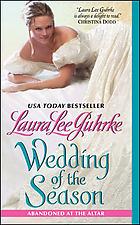 Beatrix’s fiance, Will, skipped out just days before their wedding to become an archaeologist. While he was digging for King Tut, convinced Beatrix didn’t love him enough to go to Egypt with him, she was nursing a broken heart and trying to recover a sense of normalcy. Six years on, she’s finally managed it. She’s engaged to another man, she’s spent a delightful last summer as a single woman, and she finally thinks she’s moved on. Then Will comes back, in search of money for his dig, but winds up sidetracked by the fact that he still hasn’t gotten over Beatrix. As he slowly begins to destroy the facade of a life she’s built for herself, she has to wonder whether she’ll have anything left when Will chases his dreams back to Egypt again. Beatrix’s fiance, Will, skipped out just days before their wedding to become an archaeologist. While he was digging for King Tut, convinced Beatrix didn’t love him enough to go to Egypt with him, she was nursing a broken heart and trying to recover a sense of normalcy. Six years on, she’s finally managed it. She’s engaged to another man, she’s spent a delightful last summer as a single woman, and she finally thinks she’s moved on. Then Will comes back, in search of money for his dig, but winds up sidetracked by the fact that he still hasn’t gotten over Beatrix. As he slowly begins to destroy the facade of a life she’s built for herself, she has to wonder whether she’ll have anything left when Will chases his dreams back to Egypt again.
This was such a sweet book. I’d never read a romance by Laura Lee Guhrke before, but I was sure I’d heard she was good, and whoever said so was clearly correct. This was a light, easy read that still managed to tug on my heartstrings as I followed the unexpected second romance that blossomed between Will and Beatrix. I seem to like these romances that focus on old loves; I think it’s easier to feel a couple’s relationship is likely when you know they have a lot of history together. Guhrke does a great job of showing it here, mixing a lifetime of memories in with the present to make a fully rounded love story.
Beatrix’s true problem is that she’s been raised to be slightly too cautious. Her father was extremely overprotective, but because she loved him, she followed his rules without complaint. Her fear has held her back from getting much of what she wanted. Her struggle to overcome those barriers, to take risks and seize what she wants, was I thought a surprisingly inspiring theme. It’s not just her desire for Will that motivates her, it’s everything she’s dreamed about in life that she never thought she could have. It’s such a different theme than the prevailing trend of sweeping passion and dangerous boys – which isn’t exclusive to novels labeled with “romance”. There’s passion, yep, but also more.
I also liked the setting, which seemed unusual in the current world of historical romances. I mostly stick with Regency England, although admittedly I don’t read very much romance these days. This is set at the beginning of the twentieth century, before World War I and the death of the aristocracy. Beatrix has a car and goes “motoring”; parts where her fiance warned her about going 40 miles an hour made me laugh out loud. It’s those little touches that brought the world to life for me. Even though there are balls and princesses and fancy dresses, the world is changing, and it’s rare to find that sort of feel in a romance, at least it has been for me.
Wedding of the Season was a surprisingly satisfying romance novel, and I’d eagerly recommend it to any other romance reader, especially if they’re looking for something a little out of the ordinary.
I am an Amazon Associate. I downloaded this book for free from Netgalley for review.
 The Mabinogion, a collection of medieval stories about Arthurian legend and a few other bits and pieces, is a landmark in Welsh literature. Most Welsh literature isn’t particularly well known, as the country has been dominated by English rule for centuries; as a result, these stories take on a special significance. In honor of them, the publisher Seren has commissioned new stories that weave the legend together with contemporary life. The Dreams of Max and Ronnie is the third novel in the series and, with its poetic prose and simultaneously gritty realism, is a fitting tribute to the original stories. The Mabinogion, a collection of medieval stories about Arthurian legend and a few other bits and pieces, is a landmark in Welsh literature. Most Welsh literature isn’t particularly well known, as the country has been dominated by English rule for centuries; as a result, these stories take on a special significance. In honor of them, the publisher Seren has commissioned new stories that weave the legend together with contemporary life. The Dreams of Max and Ronnie is the third novel in the series and, with its poetic prose and simultaneously gritty realism, is a fitting tribute to the original stories.
The book is comprised of two novellas. We start off with Ronnie’s dream. Ronnie and two of his friends, we quickly learn, are about to set off for to fight for their country in Iraq. I say for their country, but the book is in reality a protest against the war as well as a statement against many of the things that have come to have a disproportionate amount of meaning in our lives. Ronnie and his friends visit a woman called Red Helen in search of a hit before their tour. Said hit is so powerful that it knocks Ronnie out for three days, during which he has a strange dream. That dream is the closest remnant of the original tale; it’s interspersed with reflections on the modern day situation. Griffiths protests the lack of meaning in modern day British life; chapels are turned into holiday homes, people fight in wars without knowing or caring about them, traditional community standbys are overwhelmed by consumerism and celebrity imitations.
One of the parts I noted as particularly striking about this story was a section about tattoos. Essentially, whenever someone famous gets a tattoo that others think is cool or individual or unique, everyone else feels compelled to copy them – therefore making very little cool or individual or unique. I found this quite disturbing actually; it’s hard to express and develop your own identity when much about the world is the same. I’ve never understood the cult of celebrity, but people very close to me always seem interested in the goings-on of these people who have no real relevance to their lives. This is just one of the things about modern society that Griffiths appears to be against. I wouldn’t say my own views are quite so firm.
As a result, this isn’t an easy novella to read. It not only illustrates how terrified and unwilling Ronnie and his friends are about the war, it also is a very powerful expression of one particular viewpoint. If you don’t agree with what Griffiths has to say, I’m not sure you’ll be able to get past that and enjoy the book because it’s simply so overpowering and angry.
The second novella, comprising Max’s dream, was not nearly so clear in terms of theme for me. In this one, gangster Max has a dream about a beautiful woman, and decides he needs a companion. He proceeds to send out his cronies on a search for the perfect woman while he languishes in his dreams, becoming steadily more disgusting and less likely to be appealing to said dream woman. When they do find his ideal woman, she turns out to be completely different from his expectations, which naturally leads to issues.
For me, it was difficult to tease out precisely what this story was about. It is definitely not as powerful as Ronnie’s dream, which in some ways makes it easier to read. It also means that it doesn’t work as well in the many ways that Ronnie’s dream does; I found it quite crude at times, although I was pleased with how the story ended.
I think I would recommend The Dreams of Max and Ronnie as a whole, especially to British readers. Reading The Mabinogion and then branching out into these stories would be an excellent way to compare the Britain of the past with the Britain of today. I also think they won’t work as well for someone who isn’t as aware of British culture, current events, and celebrities in general. I suspect Griffiths’ views will also dovetail with general public opinion, so it’s well worth reading the book now while it’s all fresh in our minds and we can relate to it.
I am an Amazon Associate. I received this book for free for review.
|
|



Recent Comments