|
|
 When this book was very kindly sent to me for review, I knew my mom would love it. When I didn’t have a chance to review it for the blog tour myself, she generously stepped in to write a review for me. When this book was very kindly sent to me for review, I knew my mom would love it. When I didn’t have a chance to review it for the blog tour myself, she generously stepped in to write a review for me.
Saving CeeCee Honeycutt is a novel about a twelve year old girl who goes to live with her great Aunt Tootie Caldwell when her mother dies. After a terrible start to her childhood, Ceecee definitely needs saving. Is her aunt up to the task?
Most of all, this book reminded me of The Secret Life of Bees, which was also a book about a troubled girl who goes to live with middle aged women in the south. The beginning of the book when CeeCee is living with her mentally ill mother and her father was very troubling to me because of how negative her home life was. Instead of CeeCee’s father trying to help the situation, he chooses to spend most of his time out of the house at work. His work included traveling, so he was not home very often. Rather than helping his daughter he leaves her to take care of herself and her mentally ill mother. As a mother myself I was so angry at her father. How could he not want to protect his daughter? I wanted to jump in the book and try to help CeeCee.
After CeeCee’s mother is killed, CeeCee goes to live with her great Aunt Tootie in Savannah. I was glad that now CeeCee might be able to have a normal life. Aunt CeeCee is a wealthy middle aged woman with a housekeeper, Oletta. CeeCee meets other women in the neighborhood, Miz Hobbs and Miz Goodpepper. This is a very different life for CeeCee instead of having to take care of herself, she has someone to take care of her. I really liked the eccentricity of the women in the book. I think it added a lot to the story.
The part in the book about discrimination I thought was very important. This was part of life at that time and I am glad it was included since it’s something we must never forget.
Overall, I enjoyed this book and would recommend it. It is an emotional and touching story. My only criticism of this book was the predictability of the story; the plot could have done with some twists. Still, I think Saving CeeCee Honeycutt would appeal to women of all ages; I think we would all be able to relate to this story.
I am an Amazon Associate. This book was sent to us by the publisher for free.
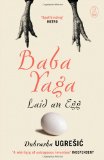 This is a novel in three parts, all about women. The first part is the story of a woman and her elderly mother, whose faculties are starting to flee in the face of age. The second delves into the lives of three older women on a once-in-a-lifetime trip to a spa in a totally different country. The last section embarks on a fictional literary analysis of the first two stories and ties them in with the traditional Baba Yaga myth. This is a novel in three parts, all about women. The first part is the story of a woman and her elderly mother, whose faculties are starting to flee in the face of age. The second delves into the lives of three older women on a once-in-a-lifetime trip to a spa in a totally different country. The last section embarks on a fictional literary analysis of the first two stories and ties them in with the traditional Baba Yaga myth.
This book was really difficult to get into. I have never actually read any of the Canongate Myths series despite intending to for a good long time now. This was to be my introduction, and unfortunately the fact that the first two segments had almost nothing to do with Baba Yaga put me off to a certain extent. They were all about older women and while I could see how they tied into the myth slightly, it was often frustrated to feel like I just didn’t know enough to “get” the book the way I wanted to get it.
I’ve said before that I’m not a short story fan and that hindered my appreciation of the book as well. Just when I got interested in the first story, it switched over, and the second story was a bit peculiar. I actually found the literary analysis section quite interesting because while I knew a little about the myth from learning Russian, I didn’t know anywhere near what the book told me. It was all really fascinating. And then to my surprise, I found the last five pages amazingly powerful. The end is almost brutally about women’s rights – about how wrong it is that women are so often the witches and the subjects while men who wear fancy hats decide our lives for us – and I almost wanted to stand up and cheer for Ugresic.
The last section also cast the book in a whole new light. I’d almost like to read it again just to pick up what I knew I was missing the first time, but the analysis was so good I’m not sure I need to – I was reminded of literature classes, but in a good way. It was a bit slower going but it really made the whole book an intriguing intellectual exercise that I felt was rewarding despite the initial frustration.
In short, if you enjoy the idea of myths and literary analysis, I think Baba Yaga Laid an Egg will work for you. It also would be a fantastic choice for feminists, just for those five pages alone.
Anyone out there have a suggestion for another Canongate Myth for me to try? I have a PDF of The Good Man Jesus and the Scoundrel Christ, I just need to figure out how to get it on my phone for easy reading.
I am an Amazon Associate. I received this book for free from the publisher for review.
 Kevin Khatchadourian, famously known as “KK”, killed nine people in his high school gym, in the process earning a long jail sentence and infamy – for him and his mother Eva. In a series of letters to her husband, Eva lays out the fabric of their lives from the beginning of their love story to Kevin’s fateful day in the gymnasium. Confronting difficult questions, such as who is to blame for a child’s violence, Eva lays her heart out for her husband and the reader. Kevin Khatchadourian, famously known as “KK”, killed nine people in his high school gym, in the process earning a long jail sentence and infamy – for him and his mother Eva. In a series of letters to her husband, Eva lays out the fabric of their lives from the beginning of their love story to Kevin’s fateful day in the gymnasium. Confronting difficult questions, such as who is to blame for a child’s violence, Eva lays her heart out for her husband and the reader.
I have heard so very much about this book since its publication date. It’s easy to know what it’s about; it’s revealed on the first few pages. Even then, though, it’s absolutely devastating as it continues to its inexorable end. It’s only as the book goes on do we realize how much Eva’s life changes because of an act her son committed. He’s gone to jail, but she’s lost her company, her house, her social life. She’s gone from traveling the world to write guidebooks for her highly successful company to staying in mostly to avoid acts of revenge.
The most important question the novel asks is whether or not a child’s crime can be the parents’ fault. Much as she tried, Eva struggled to love Kevin. She felt that he was malevolent when he was a baby and almost everything he did encouraged her suspicions. But Eva is wrong a time or two, which causes us to question just how evil Kevin really was, and what really drove him to kill like that. I think the saddest part is that even early on we realize that Eva does love Kevin even if she resented him from the start. She had him mainly to keep the husband she loved so desperately happy, which is always a mistake, but I thought she recognized more of herself in him than she ever wanted to admit.
As for my own experience, I recognized almost too much of my own self in Eva (how horrible is that?). She often comments on how she’s really too selfish to be a mother, she still wants to have her own life and somewhat resents her children for becoming more important than she is. I think every mother must have selfish moments – otherwise she wouldn’t be human – but I have to say it made me worry. And, of course, the fact that your kid could turn out to be a murderer is scary, but it happens to millions of mothers.
Despite its often difficult subject matter, I had a hard time putting We Need To Talk About Kevin down. I found myself thinking about it when I wasn’t reading and talking about it to everyone who had an ear to listen. It truly was fascinating and I found it completely deserving of its Orange Prize.
I am an Amazon Associate. I received this book for free from the publisher for review, but I already had a copy. Expect a giveaway soon!
 Gwenni Morgan is caught between childhood and adolescence. She reads voraciously despite her mother’s disapproval, flies in her sleep, and wants to be a real detective. When one of the men from her small Welsh town goes missing, Gwenni decides that she’s going to try and find him. Her investigation leads to unwelcome truths about Gwenni’s town, family, and life. Those discoveries catapult her into an adulthood she may not be ready for. Gwenni Morgan is caught between childhood and adolescence. She reads voraciously despite her mother’s disapproval, flies in her sleep, and wants to be a real detective. When one of the men from her small Welsh town goes missing, Gwenni decides that she’s going to try and find him. Her investigation leads to unwelcome truths about Gwenni’s town, family, and life. Those discoveries catapult her into an adulthood she may not be ready for.
This is a totally stunning coming-of-age story. I was surprised by how very much I enjoyed it. I loved Gwenni as a narrator. She was completely charming in her naivete about her small town life. I could see why the cover described it as heartbreaking though – with every coming-of-age, some innocence is lost, and it genuinely hurts to see this girl suffer even though it strengthens her in the end. Though her discoveries and the past make some sense, it’s still painful to discover it – and witness the consequences – right along with her. I loved the way she became a big sister figure to another character, a real manifestation of her growing maturity. It’s whimsical but realistic at the exact same time.
The way that Mari Strachan portrayed post-World War II life in Wales was absolutely fascinating. These regions are still feeling the effects of the war, as are the people. Gwenni’s father carries a limp from his own service and there are a variety of other consequences that are discovered as time goes on. It’s over but not forgotten. The conflict between England and Wales was very interesting as well; one of Gwenni’s friends doesn’t speak Welsh and there is some tension over what language the characters choose and when. I’m fascinated by this idea of Welsh pride in the face of continuous English dominance over the years. It perfectly fits with the image of a small town resisting and at the same time embracing change – Gwenni’s mother longs for new appliances but is downright superstitious about her own child.
This book is written so well, too. For me it was perfectly evocative of a twelve-year-old’s thought process while still retaining beauty and grace with some really charming passages. One particularly memorable scene here that had me longing for toast with butter:
The toast is crunchy at the edges and hot, and the butter is yellow and salty and so cold I can see the marks my teeth make in it although it’s melting by the time I’m on the last two bits and drips down my chin. I wipe my chin with my handkerchief and put a slice of bread on the fork to toast for Nain.
– p 226-7.
Doesn’t that sound surprisingly appealing?
I’m amazed that this was Mari Strachan’s debut novel. I can’t wait to see what she comes up with next. I’ll definitely be recommending The Earth Hums in B Flat to anyone who is interested in the many topics it deals with, or even just after a plain great read.
I am an Amazon Associate. I received this book for free from the publisher for review.
 The Nameless One is stirring, gathering huge armies that are going to threaten the city of Avendoom. It’s up to Shadow Harold to stop them, because only he is talented enough to steal something which could change the course of history. But first he has to thwart the demons he created out of his own curiosity, explore the forbidden interiors of his own city, and prepare to save everything he knows. The Nameless One is stirring, gathering huge armies that are going to threaten the city of Avendoom. It’s up to Shadow Harold to stop them, because only he is talented enough to steal something which could change the course of history. But first he has to thwart the demons he created out of his own curiosity, explore the forbidden interiors of his own city, and prepare to save everything he knows.
I so wanted to like Shadow Prowler! I’ve seen positive reviews of it elsewhere and as I mentioned on Sunday, I’ve really been looking for the book that will make me crave epic fantasy like I used to. Unfortunately, this book is not it. I thought the story itself was fairly interesting. I like epic quests to save the world. In this case, it was the execution rather than the plot which really let me down.
First off, it takes so long for Harold to actually leave. We learn about his mission and the issues in the first few pages of the book, so my summary isn’t giving anything away. It opens well, with a theft in progress. But after that the book just seems to drag painfully because it takes so long for him to get going on the quest. By the time the little party set out, I already had lost interest and forgotten what happened in the beginning.
I also just plain didn’t like the way the story is told. This is actually quite strange because initially I thought it felt very Russian and I liked that, just in the way Harold approached his life. My appreciation diminished quickly because I got tired of the main character’s stupid jokes and info dumping. Moreover, there was absolutely no build-up of suspense. In short, it didn’t feel epic, even though it’s meant to be. Nothing was serious even when Harold’s life was in danger. I want to be moved, not roll my eyes. I just never cared about what was happening.
I also had the nagging feeling that this book had been done before. A hero quest is absolutely nothing new, the different races are nothing new, but I think it can be done in interesting and exciting ways. Sadly not much about this book feels fresh. I love that Russian fantasy is now being translated into English – I’ve had my eye on the Night Watch trilogy for a while now – but not if it’s just more of the same with a different attitude.
I honestly couldn’t tell you if I’ll continue to read this trilogy or not. I did enjoy some of the flashbacks and I think the past and present could merge in interesting ways in the next couple of books. But it will most definitely be a library choice, not a purchase.
I am an Amazon Associate. I received this book for free from the publisher for review.
 Isserley spends almost all of her days driving. She drives up and down the A9 in Scotland, looking for hitchhikers. Not just any hitchhikers, though. She’s looking for muscled men, alone in the world and without any ties. Sometimes she’ll drive past them three times just to make sure that they’re right. But why? Isserley spends almost all of her days driving. She drives up and down the A9 in Scotland, looking for hitchhikers. Not just any hitchhikers, though. She’s looking for muscled men, alone in the world and without any ties. Sometimes she’ll drive past them three times just to make sure that they’re right. But why?
This is a book that was not at all what I’d expected. Your idea of the book from reading just that synopsis is probably the same as mine was, especially when we become aware in the opening pages that Isserley is wearing a low-cut top and checks herself in the mirror before pulling over. It’s not what you think it is. I’m actually surprised by the depth of Michel Faber’s talent, that he can turn out novels so different in style and genre; all they have in common are his beautiful prose style and talent for fantastic storytelling. It’s interesting because you might like all of them, or perhaps you might just like one. So far I have enjoyed all of them.
I don’t want to give away much about this one because so much of it is built on suspense and unpredictability. I had no idea what was coming and I think the book was better for it; it wouldn’t have had the same effect if I knew what was happening. I was left guessing up until the very end. I will say, however, that it could easily be classed as science fiction but it’s another one that could be easily appreciated by anyone who is looking to think a little more deeply about the issues presented. I was astonished as each layer of the story peeled away and I was confronted with some uncomfortable truths even as I was stuck to the page wondering what was going to happen next.
The whole book is ultimately an allegory for something we think very little about. It’s disturbing and makes you rethink certain things. It’s also, however, a very good story. I find it hard to believe that this was Faber’s first novel because it feels like he’s already a master of the craft. His writing is already well polished and really drew me into the story.
Under the Skin was an intensely compelling, thoughtful mystery. I have a feeling I’ll be thinking about it for some time to come.
I am an Amazon Associate. I received this book from the publisher for review.
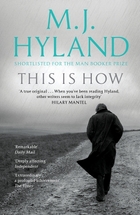 Patrick’s life could rightly be called a disaster. He failed out of university, his fiancee dumped him, and he’s severely lacking focus. He decides that he needs a break and takes a job in a seaside town. Patrick has hopes for his new place and sometimes even gets along with the widowed owner of his boardinghouse. But for the most part, he struggles to fit in and feels misunderstood almost constantly. Eventually, the misunderstandings become insurmountable and Patrick accidentally commits an act he’ll regret for the rest of his life. Patrick’s life could rightly be called a disaster. He failed out of university, his fiancee dumped him, and he’s severely lacking focus. He decides that he needs a break and takes a job in a seaside town. Patrick has hopes for his new place and sometimes even gets along with the widowed owner of his boardinghouse. But for the most part, he struggles to fit in and feels misunderstood almost constantly. Eventually, the misunderstandings become insurmountable and Patrick accidentally commits an act he’ll regret for the rest of his life.
I read this book a week ago now and it still hasn’t left my consciousness. Sometimes I find myself really connecting with bleak books that expose the grittiness of a harsh life I hope never to live personally (and trust me, I won’t be living this one). And this book is very, very bleak. Patrick’s life is never easy and he never gets a break. Not once. But somehow there was still so much that was great about it, perhaps because I went into it with incredibly low expectations – I’ll try to explain.
First off, the atmosphere. I could palpably sense the desperate feel of the town, down on its luck, and the setting was perfect for this type of book. I was amazed to find that I couldn’t put the book down and I found it amazingly easy to read no matter what else was going on. It was that absorbing. I remember actively avoiding other books that treated characters this badly, so this was truly unusual. I did keep hoping for Patrick, hope that wasn’t realized, but I thought it quite remarkable that Hyland could create sympathy for such a disturbed character.
And he is disturbed; it isn’t all his fault, of course, that he’s always felt second best and rejected. He’s intelligent but never manages to make good on that intelligence. Instead he is awkward, unsure of the correct course of action most of the time, completely unable to judge what’s appropriate and what isn’t in social situations. He tries, but he often tries too hard. I was left wondering if he had an undiagnosed mental disorder and I felt for him because I wanted him to succeed, have people see past the creepy exterior.
One of the biggest criticisms I’ve seen of This is How is that it’s too dark, that the ending doesn’t offer any hope, just continued suffering. I don’t know if I agree. I thought that most of the second half of the book was Patrick’s struggle to accept his crime, and I thought that at the end he did – that he finally began making the best of one of life’s worst situations even though he is still suffering. No, nothing in this book is cheery or happy – but somehow I was completely drawn into it and it was arguably one of the more compelling books I’ve read this year. I’m not going to list it one of my favorite books of all time, but I do think it earns its spot on the Orange Prize longlist.
I am an Amazon Associate. I received this book for free from the publisher for review.
 These two novellas are bound in one volume for me. The summaries are short because the stories are; I don’t want spoilers! These two novellas are bound in one volume for me. The summaries are short because the stories are; I don’t want spoilers!
In The Hundred and Ninety-nine Steps, Sian is working on an archaeology dig at Whitby Abbey, working to bury her dark dreams even as she exposes history to the light. By accident one day she meets a man with a charming dog who gives her a bottle. Inside is a century-old manuscript with the link to a hidden murder.
I really enjoyed this novella, but I have to admit that I think the cover sold it as a little more exciting than it actually was. I wouldn’t call it a thriller – more a woman’s discovery about herself and about the world after it had brutally betrayed her. There is some mystery too, but I wasn’t precisely on the edge of my seat waiting to find the truth. That’s not a bad thing – I was fine with it the way it was. The book is also something of a love story – but whether it’s between Sian and Mack, the man she meets, or between her and the dog Hadrian (who could not love a dog named Hadrian?) is a choice left up to the reader! I loved the descriptions of the archaeology and I wanted to be there digging in Whitby Abbey; Michel Faber is a fantastic writer.
The Courage Consort is about a group of singers, through the eyes of Kate Consort, and their week in a remote European retreat. Away from everyone else, they attempt to learn a new and revolutionary piece of music, but what they learn instead is about their relationships with each other.
Even though this one takes a less prominent place on the cover of the book, I loved it and it was by far my favorite of the two. Kate was just such an interesting heroine. Similarly to Sian, she goes on a journey of self-discovery, from paranoia and depression to a surprising peace with herself and the world. She steps out from her husband’s shadow and I really love reading about women who discover their own independence, when it’s okay to rely on someone and when it’s not.
And as anyone reading my blog should know by now, I love stories based around relationships and that’s exactly what this was. The characters all really came to life for me and their interactions felt real and true. There isn’t much of an actual plot, but everything does come to something of a conclusion at the end and a surprising one at that. I can’t say much more than that, but it was really great and I was totally caught up in these people’s lives.
Both of these novellas come highly recommended by me, but if you choose one, choose The Courage Consort.
I am an Amazon Associate. I received this book for free from the publisher for review.
 Celia’s mother died giving birth to her, so Celia grew up under the eye of her Aunt Tassi and, unfortunately, her Uncle Roman in Black Rock, Tobago. Roman is Tassi’s second husband and a sly alcoholic, planting lies about Celia and getting uncomfortably close to her on a constant basis. Celia is a clever girl and wants one day to go to university, but after her uncle proves his horrible nature correct, Celia can’t stay to be in the same room with him. So she flees to Trinidad, to her aunt Sula, to get away from the horror that had previously been her life. Celia’s mother died giving birth to her, so Celia grew up under the eye of her Aunt Tassi and, unfortunately, her Uncle Roman in Black Rock, Tobago. Roman is Tassi’s second husband and a sly alcoholic, planting lies about Celia and getting uncomfortably close to her on a constant basis. Celia is a clever girl and wants one day to go to university, but after her uncle proves his horrible nature correct, Celia can’t stay to be in the same room with him. So she flees to Trinidad, to her aunt Sula, to get away from the horror that had previously been her life.
I was actually amazed by how very much I enjoyed this book. It sounded good but the beginning was very dark. I knew what was coming almost from page one, and I truly skimmed that particular section as much as possible. But then Celia escapes to Trinidad, and even though her life wasn’t wonderful, I just completely fell in love with the book. I loved the way that the author made this country I’d hardly ever heard of come to life for me through her descriptions. I adored Celia’s voice and even as I longed for the best for her I could completely understand her choices, even when they weren’t choices I would have made myself.
I think what really got me about this book was that even though there is a lot of bad in Celia’s life, there is also hope. She is vividly alive from page one and she almost constantly is fighting for that life, retaining her spark even when she thinks she’s lost it. She made the book for me. I also loved the tensions between all the characters in the novel, at least after that beginning; how love and desire develop, for example, and how they don’t, and Celia’s relationship with her Aunt Sula, who she barely knows. It prodded at the stigma of the relationship between the white English master and the black servant girl in England’s colonies, as well, and how easy it was for the master to blatantly use his beautiful young employees. It may be a familiar theme, and we all know how wrong it was, but it doesn’t make this story any less affecting. Celia’s slow rediscovery of herself and what she wants to be is magnificently done, too, and I loved the ending. It made perfect sense.
Honestly, Black Rock was a fantastic read. I am so pleased that I read it and I definitely recommend it.
I am an Amazon Associate. I received this book for free from the publisher for review.
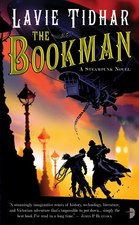 Orphan is just that – an orphan. But he loves his girlfriend, Lucy, and he has his mentor, Gilgamesh, to guide him through his Victorian world. But when Gilgamesh disappears and Lucy is killed in a terrorist attack, supposedly committed by the Bookman, Orphan longs for revenge and a way to get Lucy back. The Bookman offers him this, but soon Orphan realizes that nothing is as simple as he thinks, and that perhaps everyone is lying to him. Orphan is just that – an orphan. But he loves his girlfriend, Lucy, and he has his mentor, Gilgamesh, to guide him through his Victorian world. But when Gilgamesh disappears and Lucy is killed in a terrorist attack, supposedly committed by the Bookman, Orphan longs for revenge and a way to get Lucy back. The Bookman offers him this, but soon Orphan realizes that nothing is as simple as he thinks, and that perhaps everyone is lying to him.
This was a very interesting read. It’s set in a steampunk world where the ruling family of Britain are Les Lezards, in short not human at all, and there are automatons and other various mechanical elements sprinkled about. It made sense to me internally, which was good, and I liked seeing how the author chose to mix actual British history with fictional history. I really liked the origins of the mechanics, how the author used real historical figures as inventors. I also liked when they popped up in the narrative. Jules Verne makes a nice lengthy appearance.
As far as the story was concerned, I was less engaged than I should have been. Whether this was the book’s fault or mine I’m not entirely sure, but I had trouble really immersing myself in the book. I was mildly interested in Orphan’s plight but I think it was all just a little too much to take in. Orphan was constantly learning new things and going new places – there is no time for a reader’s brain to rest. Plus, part of it took place on a ship, which we all know doesn’t really work all that well for me. I struggled to really care about Orphan. I felt like I didn’t have much of a chance to know him before his life got chaotic and the plot took the story away. The story had a lot of twists and turns and I actually didn’t predict the big surprise, but I think someone who is more accustomed to actually guessing the ends of books would have more luck!
The Bookman is definitely a good read for anyone who is interested in trying steampunk or has a lot of experience with it. For the rest of us, I think it’s best to take it a bit more slowly than I did and let the world sink in even though you want to race through and see what happens next.
I am an Amazon Associate. I received this book for free from the publisher for review.
|
|



Recent Comments