|
|
 This is the final book in the Pendragon’s Banner trilogy. See my reviews for The Kingmaking and Pendragon’s Banner. This is the final book in the Pendragon’s Banner trilogy. See my reviews for The Kingmaking and Pendragon’s Banner.
Arthur has had an incredibly successful career overall, triumphing over adversity to become the Pendragon, virtually king of Britain. His vassals are kept in line by their fear of the Artoriani, Arthur’s supreme mounted force. But all is not perfect in his kingdom. Arthur’s uncle, Aurelianus Ambrosius, and the Roman faction are sure that they’d be happier under a renewed Roman government. Arthur’s former wife, Winifred, never stops her meddling, and her son Cedric grows to become a real threat. Worst of all, Arthur has to overcome the fear of defeat for the first time in his long career, and must question truths he has always held dear.
I’ve enjoyed all of Hollick’s works so far and this conclusion to a great trilogy is no exception. I really like a lot of these characters, even the sometimes-villains, although I think anyone would struggle to like Winifred or Cedric, who is so governed by his violent impulses. I think he’s today’s serial killer. But I did in a fashion like Ambrosius, who has doubts about taking the kingdom, and I really liked his son and daughter-in-law. Arthur and Gwenhwyfar are still favorites and their relationship stays strong.
The conclusion to this trilogy is fairly obvious for anyone who knows anything about the Arthurian legends, but Hollick twists it a bit to give her characters the ending that they’ve gained, good or bad. So while it’s predictable, there are aspects of it that are outside the typical Arthurian box.
I will say that Hollick’s prose is a bit unconventional and I found at times that the story required a lot of concentration. I couldn’t keep track of what was going on while the TV was on, for example, but I normally prefer reading in silence with no distractions, so this wasn’t a hindrance for me. I think that patience will certainly be rewarded in this case, and I’m happy to recommend Shadow of the King, and the entire trilogy, to historical fiction fans.
I am an Amazon Associate. I received this book for free from the publisher for review.
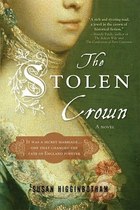 When her sister Elizabeth Woodville secretly marries the King of England, Katherine Woodville’s future changes irrevocably. In the rush to marry off the many Woodville siblings, Kate becomes a duchess when Henry Stafford, duke of Buckingham, is chosen for her. Kate and Harry are children when they marry, but as they grow together they fall in love easily. But always in the way is Richard, duke of Gloucester, Harry’s idol from childhood. When Richard’s ambition leads him to sanction unspeakable deeds, Harry must choose whether to maintain his blind loyalty or strike out against his closest friend. When her sister Elizabeth Woodville secretly marries the King of England, Katherine Woodville’s future changes irrevocably. In the rush to marry off the many Woodville siblings, Kate becomes a duchess when Henry Stafford, duke of Buckingham, is chosen for her. Kate and Harry are children when they marry, but as they grow together they fall in love easily. But always in the way is Richard, duke of Gloucester, Harry’s idol from childhood. When Richard’s ambition leads him to sanction unspeakable deeds, Harry must choose whether to maintain his blind loyalty or strike out against his closest friend.
I’ve enjoyed both of Susan Higginbotham’s previous works and I’m happy to say that I enjoyed this one, too. I will admit that I found the beginning slightly tedious; a lot of it is recounting of history I already knew, so it might be perfectly fine for a reader who isn’t quite so familiar with late fifteenth century England. Once Kate and Henry start to grow, however, the book becomes really enjoyable. Their love story and affection for one another are often sweet and I liked watching them grow up together and move into maturity.
I also liked that Higginbotham actually made me like the duke of Buckingham. I might have thought that impossible, but she does it successfully. I even liked her version of Richard III here; he does horrendous things, but he never seems like an evil villain. Just an ambitious, somewhat foolish, man, happy to bend the course of history in his direction when he can. The author also blends facts in liberally. I recognized so much from my own research and I have to admit that I smiled whenever I found a particular tidbit that only someone who had done some digging would know. I read her blog, so I also know that she seeks out original sources whenever possible, which I always appreciate. She includes a bibliography in the back for anyone who has a desire to read yet more about the Wars of the Roses, as well as a detailed author’s note for those who want to know what is fact and what is fiction. If you like historical accuracy in with your fiction, look no further than Ms. Higginbotham.
The Stolen Crown is a great addition to the many works of fiction about the Wars of the Roses in England. It’s refreshing to read about characters who tread the middle ground – there are no villains or saints here, just people. I really liked it.
I am an Amazon Associate. I received this book for free from the publisher for review.
 As at the close of the Liveship Traders trilogy, the serpents have finally made it to Cassarick, where they are meant to hatch into dragons, but something is wrong. None of the serpents emerge as fully grown dragons, and none of them are capable of taking care of themselves. The dragons grow sick of waiting around, and the city grows sick of feeding them, so they agree to head north and try to find the ancient city of Kelsingra. With them goes Thymara, a girl heavily touched by the Rain Wilds and resented by her mother since birth, as well as other Rain Wilds children chosen to care for the dragons. Meanwhile, Alise, a Bingtown Trader’s wife deeply unhappy with her marriage, makes herself into a scholar of dragons and decides to go speak with them for herself. As at the close of the Liveship Traders trilogy, the serpents have finally made it to Cassarick, where they are meant to hatch into dragons, but something is wrong. None of the serpents emerge as fully grown dragons, and none of them are capable of taking care of themselves. The dragons grow sick of waiting around, and the city grows sick of feeding them, so they agree to head north and try to find the ancient city of Kelsingra. With them goes Thymara, a girl heavily touched by the Rain Wilds and resented by her mother since birth, as well as other Rain Wilds children chosen to care for the dragons. Meanwhile, Alise, a Bingtown Trader’s wife deeply unhappy with her marriage, makes herself into a scholar of dragons and decides to go speak with them for herself.
Robin Hobb is one of my favorite fantasy authors and her worlds never cease to draw me in. We’re back in a familiar place here and I loved hearing more about it and the people in the Rain Wilds. She also draws fantastic characters. I felt so much for Alise and her struggles with her husband. There are many secrets floating around and she is clearly the most hurt by them. I wanted her to reassert her independence and remember who she was over the course of her journey. Thymara is hurt in different ways; she’s younger but has had to deal with parental and societal rejection throughout her entire life. Her father loves her and saved her from exposure as a baby, but her mother has always resented her for being so heavily touched by the Rain Wilds, unable to think of marriage or a normal life. As she embarks on this journey, she’s forced to confront the fact that her preconceptions about life may be wrong.
And there are the dragons, who have personalities of their own. Readers of previous series will be familiar with Tintaglia, but the stunted dragons are very interesting characters in their own right. They remember what it’s like to be dragons from their ancestral memories, but are incapable of behaving the way they know they should. That conflict is fantastically done.
The problem, however, is that not really all that much happens here. There is a whole lot of building up but not a lot of moving, and I fear fans of other fantasy novels might consider this one boring. Plus, it has no real plot of its own, no arc contained in this book, not even a cliffhanger at the end to mark the close. I can see why the second book is being released only a few months after, instead of the normal year, because to be honest readers would probably forget to buy the next one otherwise. It’s obviously only half a book for all its length and I have to admit that I hope the second volume will be a little more exciting. I’d suggest waiting and reading both of them together.
Robin Hobb is still an amazing author, though, and her works draw me in like almost nothing else. I’m very much looking forward to the next book in this duology. Fans of the series will love Dragon Keeper, but I think newcomers would be better starting off with her Six Duchies books.
I am an Amazon Associate. I received this book for free from the Amazon Vine program.
 Nine-year-old Michele Amitrano and his friends have little to do one very hot summer besides explore the Italian countryside around them. When the leader of their little gang, Skull, forces Michele to go off on his own in an abandoned house after a forfeit, he makes a discovery that is destined to change his perception of his friends, family, and life itself. Nine-year-old Michele Amitrano and his friends have little to do one very hot summer besides explore the Italian countryside around them. When the leader of their little gang, Skull, forces Michele to go off on his own in an abandoned house after a forfeit, he makes a discovery that is destined to change his perception of his friends, family, and life itself.
The outside of this book promised that it would be scary, but it wasn’t at all in the way that I’d expected, and to be honest I vastly preferred what I got to what I expected. Rather than a scary book in superficial ways, this is a book about human nature, about a boy discovering what adults can do to other little boys just like him. Michele’s loss of his childhood innocence is totally heartbreaking, but riveting. I can understand why this book kept others up all night to find out what happens next. I myself read it in just one day. It’s a very absorbing read.
This is also a beautifully written book. I don’t know whether to give credit to the author or the translator, but I could feel the heat of that Italian summer, see the wheat fields and the abandoned farmhouse, just as I could see inside Michele’s realistically wrought child mind. Michele is almost unbelievably genuine, which of course only adds to the emotional impact of the book, especially the ending. He watches as the people he trusted turn out to be fallible, which everyone realizes eventually, but hardly in this way. And of course it isn’t only the adults he’s already wary of, but those he loves and trusts.
From the adults’ perspective, I think the novel shows the desperation people have to make their lives better. Apparently crimes of this type (I’m being vague, but I think it’s worth not knowing) are still commonplace, and that only makes it all sadder. They want to move to northern Italy, which is richer, but it seems they’ll do almost anything to achieve it. I was left wondering if it was worth the sacrifice, and perhaps glad that at least one of the adults may have finally realized the amount of harm he was doing.
I would definitely recommend I’m Not Scared to anyone with an interest in thoughtful thrillers. It’s a gripping read with strong emotional impact that will leave you considering what happened for days afterwards. I’m looking forward to my next book by Ammaniti.
I am an Amazon Associate. This book was sent to me for free by the publisher for review.
 The last white family on her street in Zimbabwe lives next to Lindiwe Bishop’s family. One night, the house catches on fire, killing one woman and badly injuring another. The culprit, teenager Ian McKenzie, is sent to prison for a year. Lindiwe is still fascinated by him, and astonished when, on his return a year later, he begins inviting her along for car rides. Spanning the 1980s and 90s, this is not only a book about Zimbabwe in transition, but about love that is surprisingly realistic. The last white family on her street in Zimbabwe lives next to Lindiwe Bishop’s family. One night, the house catches on fire, killing one woman and badly injuring another. The culprit, teenager Ian McKenzie, is sent to prison for a year. Lindiwe is still fascinated by him, and astonished when, on his return a year later, he begins inviting her along for car rides. Spanning the 1980s and 90s, this is not only a book about Zimbabwe in transition, but about love that is surprisingly realistic.
At first, I found it surprisingly difficult to get into this book. I’m not very familiar with Zimbabwe’s history and apparently they just changed over from Zimbabwe-Rhodesia, and the characters carry a lot of angst about Independence and the fate of their country. I recognized the name of Robert Mugabe, but I couldn’t remember why. I was unfamiliar with all of the slang, too. So I had a few pages of wading through something I thought I was bound to dislike. But, of course, then I got used to the slang and figured out what everything meant, the characters stopped complaining so much about history and instead the history was described in the book so I could understand, and Lindiwe met Ian.
Typically the love story was what made this book for me. I don’t want to give too much away but it’s obvious that something is going to Happen between Lindiwe and Ian from the very start of the book when she keeps his picture from a newspaper clipping. It does, and it is really beautiful, but it’s also realistic. Sometimes love isn’t good enough, and they have struggles, but they had me cheering for them from the very beginning. Their relationship takes work, as does their relationship with another person who comes into the story a little later.
The transformation of Zimbabwe was also fascinating. Wikipedia told me what was going to happen in that respect, but seeing it through the characters’ eyes was totally different. The city of Lindiwe’s girlhood, with the rich houses well-kept and the main street full of delicious restaurants and places to play, becomes a poor ghost town by the time she becomes an adult. White people were once welcomed and then become scarce. Reading through the book gave me a real sense of the change that was happening and the frustration that the people of Zimbabwe felt.
I must also admit that I was quite pleased to see that Little, Brown chose to put Lindiwe on the cover instead of Ian. I know books for adults are probably less white-washed but it’s undeniably pleasing to see at least part of a gorgeous black woman when they could have chosen the white guy.
In the end, The Boy Next Door was a great book and I’m so glad I read it. I learned a little (the author grew up in Zimbabwe so I felt she probably knew what she was talking about) and I loved the story. I think knowing a little about Zimbabwe before starting is a good idea, though!
I am an Amazon Associate. I received this book from the publisher for free.
 Miss Beatrice Corning has lived a very proper life in the household of her uncle, the Earl of Blanchard. That is until a sick, crazy man bursts into their home, demanding to see his father. This man is Reynaud St. Aubin, the true Earl of Blanchard, long thought dead. Even though he is determined to take his inheritance back from her uncle, who has always loved her, Beatrice can’t help but be attracted to Reynaud, particularly since his youthful portrait has ensnared her imagination every time she walks by it. The man she discovers now is no longer a carefree youth but a hardened man who has suffered through unimaginable atrocities, yet her heart is captured before she even knows it. Miss Beatrice Corning has lived a very proper life in the household of her uncle, the Earl of Blanchard. That is until a sick, crazy man bursts into their home, demanding to see his father. This man is Reynaud St. Aubin, the true Earl of Blanchard, long thought dead. Even though he is determined to take his inheritance back from her uncle, who has always loved her, Beatrice can’t help but be attracted to Reynaud, particularly since his youthful portrait has ensnared her imagination every time she walks by it. The man she discovers now is no longer a carefree youth but a hardened man who has suffered through unimaginable atrocities, yet her heart is captured before she even knows it.
I really enjoyed the first book I read by Elizabeth Hoyt, To Beguile a Beast. I liked that it was different, that the hero and heroine weren’t what I expected. Unfortunately I found the opposite in To Desire a Devil, and am left wondering just what happened here.
This quartet of novels centers around a massacre that happened while all four of the heroes were fighting in the Colonies. The one who betrayed them all supposedly had a French mother, and the only man there with a French mother was Reynaud. They know he didn’t do it, but they have to figure out who did. And that’s all wrapped up in this installment, as it’s the last of the quartet. It’s clear that this overarching story is secondary to the romance plot, but they do fit together, so that part worked out well. I also still really liked the fairy tale excerpts at the beginning and how the concept was woven into the rest of the story. And I loved that Beatrice was a bookbinder, even if she seemed a little too bland the rest of the time.
Honestly, it was the romance that bugged me about this book. This is, for me, a classic case of the lust = love problem. I can’t figure out anything that the hero and heroine have really in common and I didn’t believe in them. Maybe men fall in love with their nurses, but most of their interaction in the book seemed to consist of Beatrice asking Reynaud to tell her about how he was tortured, and the intimate parts. There were too many intimate parts for my liking, let me just say that. Outside of those, there wasn’t really any chemistry in their conversation and nothing to indicate that they were going to last. I just felt disappointed, which is sad, because there was a lot of potential here.
I have another book in this series and I do intend to read and review it, but let’s just say my expectations are very, very lowered.
I am an Amazon Associate. This book was sent to me for free by the publisher for review.
 As a young girl, Jane Maxwell was in love with Thomas Fraser, and they go so far as to declare their engagement. But Thomas goes to war and is reported dead, to Jane’s dismay and her mother’s glee. In his absence, encouraged by family and friends, she marries Alexander, Duke of Gordon, and goes on to become a famous patroness of the arts and a political activist. Thomas, however, is not dead, and Jane spends her life torn between the man she has always loved and the man with whom she has a family. As a young girl, Jane Maxwell was in love with Thomas Fraser, and they go so far as to declare their engagement. But Thomas goes to war and is reported dead, to Jane’s dismay and her mother’s glee. In his absence, encouraged by family and friends, she marries Alexander, Duke of Gordon, and goes on to become a famous patroness of the arts and a political activist. Thomas, however, is not dead, and Jane spends her life torn between the man she has always loved and the man with whom she has a family.
This is quite an ambitious work of historical fiction. I so appreciated the depth and complexity of it and the historical picture that Ciji Ware creates here. Jane travels between England and Scotland and I really got a feel for both of them in the late eighteenth century. Jane herself is a powerful woman and I really liked her. For all that she had trouble choosing between men, she was a figure to be reckoned with in politics and consistently knew her own mind in many respects. The book is long, but I was sucked in after fifty pages and really enjoyed it. It has a nice sweeping, epic feel to it, like these characters are important and usually doing important things.
I similarly appreciated the author’s research. I liked knowing that she’d read Jane’s letters and tried to find the mysterious man that she references as her childhood love. She filled in the missing pieces, but it’s nice to know that the real life Jane struggled with the same issues that the fictional Jane did. I also appreciated the variety of historical characters that poke their heads into the story, like Georgiana, the Duchess of Devonshire and Robert Burns, the Scottish poet.
It’s not a perfect read, though. It is very bawdy; it seems like all the characters are featured in at least one sex scene with a variety of different people. Some of it furthers the plot, but a lot of it feels unnecessary, and leaves me wondering if this sort of explicit writing was in favor in historical fiction when the book was originally published. I was often frustrated with the misunderstandings that the characters had, but I could recognize where their difficulties came from even if I wanted Alex to open up and Jane to stop mooning constantly over Thomas.
In the end, I really enjoyed Island of the Swans. It has its faults, but there is a great story here with well-developed characters and dilemmas. I would definitely recommend it to other historical fiction lovers.
I am an Amazon Associate. I received this book for free from the publisher for review.
 Newly married Viktor and Liesel Landauer want to build a house for themselves, but not just any house. Viktor is the head of a huge car company in their newly created Czechoslovakia of the 1920’s, and they want a completely modern, free building, sparing them from the confines of heavy castles and palaces. In that house, the centerpiece is the Glass Room, a space filled with windows, light, and purity. Those windows, however, cannot restore light to the souls of the people who live and eventually work within the house, setting their darkness of spirit in sharp contrast with the beauty of the room itself. Newly married Viktor and Liesel Landauer want to build a house for themselves, but not just any house. Viktor is the head of a huge car company in their newly created Czechoslovakia of the 1920’s, and they want a completely modern, free building, sparing them from the confines of heavy castles and palaces. In that house, the centerpiece is the Glass Room, a space filled with windows, light, and purity. Those windows, however, cannot restore light to the souls of the people who live and eventually work within the house, setting their darkness of spirit in sharp contrast with the beauty of the room itself.
Everything fits perfectly together in this book. The language is beautiful, the plot is interesting and ends perfectly, and the characters are multi-faceted and interesting. It highlights an obviously important period in history but from the slightly different viewpoint of the various ethnic groups in Czechoslovakia, living in a country constructed by a treaty and consistently struck with severe issues. There’s a lot of fiction (and, obviously, non-fiction) about World War II and its aftermath out there and I think this book took another angle to distinguish itself, and it worked.
It was interesting that eventually, while their house is occupied by others, Viktor and Liesel lead the strange life of exiles from Nazi Germany and the countries they’ve taken over. I can’t recall if I ever read a book about where the rich went when they fled, but it was interesting, especially when they tried to move again to a more permanent home and had to deal with other countries’ stupid prejudice. As we know in the beginning, they make it through. It isn’t all sunshine and roses for the characters, though, as those left behind endure the incredibly difficult experiences forced upon them by Nazi occupation and imprisonment in concentration camps.
I also really liked that the house itself was almost a character in the book. It’s used for different purposes throughout, but everyone has their own relationship with it. It makes them feel certain ways, reminds them of their lives – in certain ways, the house’s open spaces tempt them to do what they might not do otherwise. It’s an interesting dynamic.
I can definitely see why The Glass Room was nominated for the Booker Prize. It exposes the darkness and the light within people, while exploring an interesting and slightly different aspect of a war that impacted so much of our culture. Very worth reading.
I am an Amazon Associate. I received this book for free from a publicist for review.
 Daniel Rooke’s childhood is miserable; as a smart boy born to poor parents in eighteenth century England, doors eventually open for him but he constantly struggles to fit in. In 1788 he seizes the chance to go on a mission to New South Wales as an astronomer, hoping to finally break out of his position in the lowly marines and become a scientist. That doesn’t quite happen; instead, in his solitary makeshift observatory, Rooke forges a friendship with the Aborigines, one in particular, that has an astonishing effect on his worldview and brings into sharp focus the issues with British imperialism. Daniel Rooke’s childhood is miserable; as a smart boy born to poor parents in eighteenth century England, doors eventually open for him but he constantly struggles to fit in. In 1788 he seizes the chance to go on a mission to New South Wales as an astronomer, hoping to finally break out of his position in the lowly marines and become a scientist. That doesn’t quite happen; instead, in his solitary makeshift observatory, Rooke forges a friendship with the Aborigines, one in particular, that has an astonishing effect on his worldview and brings into sharp focus the issues with British imperialism.
The Lieutenant is a short, quick read, but no less affecting for all that. The book is written in third person and the beginning went very quickly, which made me feel somewhat detached and a bit frustrated, but as soon as Rooke is in the war, I was immensely wrapped up in his story. His journey to Australia was outright fascinating. More than anything, it showed the arrogance of the British soldiers, convinced that the natives would immediately like what they had to bring, want to hang around them, and be grateful for their company even after they were forcibly captured! I was astonished. I knew this sort of thing happened in the Americas but it still made me so angry.
Luckily, Rooke shared my feelings, and I loved the friendship he shared with the native girl and his diligent attempts to learn their language for the sake of speaking to them, not to become famous like one of the other crew members. I really felt that he was trying to understand them and he treated them like the people that they were. He was just a really admirable, clever man, and even though I couldn’t entirely get inside his head, I got enough of his intentions to really like him, and his actions were above reproach as long as he knew what he was doing.
I did think the beginning and the end were brief and sort of disappointing and detached, but in my opinion the entire book was worth it for that great middle section when Rooke tries to learn about another culture without imposing his own Britishness on it. He’s clearly rebuked when he does. I was happy to learn that it was based on a true story and a soldier did attempt to learn the language from a young native girl, although the author says clearly it’s fiction and should not be taken as history. Even so, knowing that at least one man attempted to understand, rather than oppress and change, makes for a great story and reminds us that some people do buck the trend of history.
I am an Amazon Associate. I received this book for free from the publishers for review.
 What happens when we make a choice? How do we decide which brand of jam we want in the supermarket, or what to do when we’re piloting a crashing plane and have no instructions on how to save the day? Jonah Lehrer takes a look at how we make decisions. He examines which parts of our brains do what and how we fall into traps based on how our brains are constructed. Using clear examples and fascinating, well-documented facts, Lehrer examines how we can use all of our instincts as well as our rational minds to make the best choices for ourselves. What happens when we make a choice? How do we decide which brand of jam we want in the supermarket, or what to do when we’re piloting a crashing plane and have no instructions on how to save the day? Jonah Lehrer takes a look at how we make decisions. He examines which parts of our brains do what and how we fall into traps based on how our brains are constructed. Using clear examples and fascinating, well-documented facts, Lehrer examines how we can use all of our instincts as well as our rational minds to make the best choices for ourselves.
This book was totally and completely fascinating. I didn’t really know what to expect from it except that I’d like to know more about how my brain works. Lehrer seriously delivers on his promise. His book is not too heavy on the science and I’m sure real brain function is a lot more complicated, but he distilled it down into a series of examples and explanations that I could understand and relate to what he was saying. I kept exclaiming over how true various parts were and had to read them aloud to my husband so he could get them too. I also made him read it right after I did because I just found it all so fascinating.
Let me take an example that relates directly to me. In one of the chapters, Lehrer discusses how children are taught and how the education system has it somewhat backwards. Kids are praised for their intelligence, not for their efforts. He cites studies that show that children who are praised for working hard do consistently work hard and take on tougher challenges, while kids who are praised for being smart are so afraid of failing and proving that praise wrong that they choose to do easier tasks in order to maintain their projection of intelligence. Lehrer says that this is wrong because our brain learns by making mistakes – screw up once or twice, and you’ve learned something. If you don’t screw up, you don’t improve. This is so true because all my life, I’d been praised for my intelligence, and once my intelligence didn’t cut it, I felt like a failure, just as he describes. Working hard solved the problem, but I didn’t think that I had to – after all, I was smart. Mistakes are important and that’s not something we learn.
He also explains why gambling is so addictive, why Deal or No Deal is actually a fascinating insight into how the brain works, why political pundits are often wrong (and how some of them manage to be correct), and even helps to explain the credit card debt problem, as apparently our brains have a smaller sense of loss when using plastic than when using cash, so the reward of buying something seems proportionally more important. The endnotes provide plenty of references to the studies he cites, and he looks at real life examples of decision makers who rely on both instinct (their emotional brain) and conscious thought to make choices. He examines when each are important and emphasizes the importance of taking time out to mull on important decisions, as your unconscious brain will be busily figuring out the problem for you.
Mostly, Lehrer encourages us to think, to question our beliefs, understand when we make mistakes, and try to consider everything from all angles. Sometimes it’s best to rely on your feelings, like when you’re choosing jam or playing football, and sometimes it’s best to consider why you feel that way, like when you’re choosing a political party or faced with an out of control forest fire. Overall, The Decisive Moment was compelling reading. I learned so much and I can’t imagine anyone not gaining from this book.
This title is known as How We Decide in the USA. I am an Amazon Associate. I received this book for free for review from the publisher.
|
|



Recent Comments