|
|
 On the West Coast of this alternate United States, vampires reign supreme, but Marius Dumont has a problem. He’s in love with Jillian Cooper and always has been, but he must marry Tatiana Asprey, a New York werewolf, in order to maintain peace between their races against the humans. He’s determined to put his love aside for politics until a deadly virus hits the vampire population, and he and Jillian must team up to discover a cause and a cure before it’s too late. Interspersed with their gripping story is the Victorian tale of Edward Vaughan and Charlotte Paxton, an uneven match that proves the basis for everything Jillian and Marius deal with in the present day. On the West Coast of this alternate United States, vampires reign supreme, but Marius Dumont has a problem. He’s in love with Jillian Cooper and always has been, but he must marry Tatiana Asprey, a New York werewolf, in order to maintain peace between their races against the humans. He’s determined to put his love aside for politics until a deadly virus hits the vampire population, and he and Jillian must team up to discover a cause and a cure before it’s too late. Interspersed with their gripping story is the Victorian tale of Edward Vaughan and Charlotte Paxton, an uneven match that proves the basis for everything Jillian and Marius deal with in the present day.
Even though Crimson & Steam is apparently the eighth novel set in this universe, I had no trouble at all quickly picking up on the story and surprisingly falling in love with it. It will shock no one that the Victorian sections were my favorite part. When it comes to romance, generally the only kind I like is historical, and Edward and Charlotte have a very sweet story that is totally relevant to the modern day part.
What is surprising is how much I liked that modern day part. Jillian and Marius don’t really have a romance exactly; they are soul mates and Marius is capable of hearing Jillian’s thoughts and sensing her emotions no matter where she is. It’s established that they’ve had this connection for a good long while. At first, I had Jill pegged as a very weak and whiny heroine, incapable of facing the world without a man she’d come to rely on. She got stronger in the end, but ultimately I still preferred Charlotte, the Victorian heroine. Marius could have been annoying himself, given his clear love for Jillian yet insistence on marrying someone else, but I thought the political situation was well played out and I understood his motives.
I liked it all so much, I think, because there was a clever plot behind it and the focus was on that, rather than what was happening between Marius and Jillian. The side characters of Tatiana and Hayden, Jillian’s ex-boyfriend with some back story issues of his own, really livened up the story. There is just the right amount of suspense and because it doesn’t feel much like a romance novel, I wasn’t sure the happy ending was guaranteed in either of the storylines. I found I was much more engaged and interested as a result. Plus, I loved the steampunk world and reading about it in the present day and then back to its Victorian origins was a lot of fun.
Crimson & Steam was a great light read that I’d recommend to romance or urban fantasy fans. An intriguing world, a clever plotline, and a few great characters make this a very enjoyable book.
I am an Amazon Associate. I received this book from the author for free as an ebook.
 Since he is such a socially awkward person, Will is astonished when Alice spontaneously makes her interest in him clear. She’s Will’s first girlfriend, as well as beautiful and smart. He can’t stop obsessing over her and worrying what’s going to go wrong. As always happens in such situations, his obsession begins to drive Alice away, and it’s only then that Will’s passion displays its most damaging consequences. Since he is such a socially awkward person, Will is astonished when Alice spontaneously makes her interest in him clear. She’s Will’s first girlfriend, as well as beautiful and smart. He can’t stop obsessing over her and worrying what’s going to go wrong. As always happens in such situations, his obsession begins to drive Alice away, and it’s only then that Will’s passion displays its most damaging consequences.
I wasn’t sure what to expect from this book and I was surprised, in a pleasant way, by what I found. This book reads partly like an example of how not to conduct a relationship. The situations are occasionally as sad as they are hilarious, but it’s impossible not to laugh. The author has taken obsessive love to an extreme which is difficult to believe in, but which provides uneasy entertainment nonetheless. We know there is something sad and wrong with these people, but at the same time they are mocking themselves.
The book alternates narration, using first person only when Will has the viewpoint perspective and third person for the other character. This gives the reader an insight into his uncomfortable and obsessive mind, since otherwise we’d have no reason as to why he behaves the way he does, but at the same time contrasts his inner thoughts with his outer appearance and behavior.
The Bird Room doesn’t flinch in describing any aspect of these relationships. A lot of the novel is obsessed with sex, as young people in new relationships generally are. One of the characters is an actress using her body to get by and to erase her previous school persona, so there really is a fair amount of graphic content. The book feels edgy, using the characters’ sexuality to portray the other happenings in their lives. Helen, always lacking confidence, feels beautiful when a man wants her enough to sleep with her. Will needs Viagra to encourage him along when his obsession with Alice takes control of his life.
A darkly comic tale about the extremes of obsession, The Bird Room manages to finish with hope and provides some very provoking thoughts to consider. This little book is worth a read for those who enjoy character studies.
I am an Amazon Associate. I received this book for free from the publisher for review.
 Leopard Bloom King is an awkward, ugly 18-year-old with few friends. His life has been a mess ever since his brother, Stephen, killed himself at only ten years old. After spending years in mental institutions and later caught with cocaine in his pocket, Leo’s life has been anything but normal. In the summer before his senior year of high school, he meets the people who will influence the rest of his life, forming friendships and bonds that will prove stronger than anything Leo has known previously. Years later, their friendship will remain of primary importance to Leo as he and they must endure extraordinary hardships brought on by nature, the human mind, and a terrible disease. Leopard Bloom King is an awkward, ugly 18-year-old with few friends. His life has been a mess ever since his brother, Stephen, killed himself at only ten years old. After spending years in mental institutions and later caught with cocaine in his pocket, Leo’s life has been anything but normal. In the summer before his senior year of high school, he meets the people who will influence the rest of his life, forming friendships and bonds that will prove stronger than anything Leo has known previously. Years later, their friendship will remain of primary importance to Leo as he and they must endure extraordinary hardships brought on by nature, the human mind, and a terrible disease.
My only previous experience with Pat Conroy was The Water Is Wide, a memoir that I just adored in high school, and I’ve meant to read more by him ever since. So when I opened this book, it was with a great deal of anticipation. And I enjoyed this story; the beginning feels slow and meandering, accustoming readers to the feel and the flow of South Carolina and the beginning of teenage friendships that are meant to last. The second section is more exciting and begins to encompass the troubles that these friendships have wrought even as they have brought blessings. The third section gives us another peek into the origin of the group, and the final section includes their pivotal struggle against a madman and a hurricane.
The story is indeed big and sprawling as the back cover promises, but I still wanted more. Largely, I wanted more of the origins of these friendships. I still found it hard to understand why they all coped with Chad, a member of the arrogant Southern aristocracy determined to put everyone down, or some of the other members of the group. I saw how they came together, but I suppose I didn’t understand how it lasted for all of the members of this group. Their conversations were entertaining, but rang somewhat untrue for me, and I just couldn’t believe anyone like Sheba Poe actually existed. Who stage manages their entry into a house party of close friends? The later sections were powerful, but without that essential basis, at times I couldn’t believe in the story.
And that’s a shame, because the story is quite a wild ride through almost every issue you can name. The friends go in search of a missing member of the group and have to deal with death, rape, adultery, and murder among their ranks. They even have a natural disaster pitted against them. The book resonates with the strength and feel of Charleston, a place I’ve never been to but would quite like to visit now. Conroy is an excellent writer and can make the words on the page simply come alive, even as he packs the story full with almost too much trauma.
South of Broad is a good book that, I think, has unfortunately missed being great. Still, I am encouraged to read more of Conroy’s works, as I think he is an excellent writer and is still worth my time.
I am an Amazon Associate. I received this book for free from the publisher for review here.
 The first crusade is one of history’s most peculiar moments. Inspired by a speech that will probably never be known in its entirety, hoards of western Europeans embarked on a crusade to “save” their fellow Christians, the Greeks, from Muslims and recapture Jerusalem. Against all the odds, the crusaders succeeded in a way that was never repeated, and changed relations between religions in ways that still affect behavior to this day. Thomas Asbridge takes this familiar story and recasts it, considering again the evidence that historians have always relied upon and offering up new ideas for consideration. The first crusade is one of history’s most peculiar moments. Inspired by a speech that will probably never be known in its entirety, hoards of western Europeans embarked on a crusade to “save” their fellow Christians, the Greeks, from Muslims and recapture Jerusalem. Against all the odds, the crusaders succeeded in a way that was never repeated, and changed relations between religions in ways that still affect behavior to this day. Thomas Asbridge takes this familiar story and recasts it, considering again the evidence that historians have always relied upon and offering up new ideas for consideration.
I really enjoyed this detailed look at the first crusade. I’ve read a number of books on the crusades, but they largely covered the whole of the crusading movement. This narrative brought my favorite professor’s voice right back to me while still questioning some of the theories that historians have relied upon. Perhaps my favorite of these was the way Asbridge explored, in detail, the motives behind the crusade. He postulates that Pope Urban wasn’t the first to come up with the idea of a papal army and that the papacy desperately needed a way to assert their own strength in an age of weakness and poor communication. He could not have truly expected the vast response to his call for a crusade.
More interesting is the way in which Muslims actually treated Christians fairly before the crusade. There is no record of any of the cruelties Urban accused them of (according to witnesses after the crusade had already happened; the speech itself has been lost), but rather fairness and freedom of worship. The crusaders abolished this, but he goes on in later chapters to write about dealings between Christians and Muslims, making it clear that eradicating Islam was not the crusaders’ goal, even if they succeeded in earning enmity from all Muslims because of their barbaric cruelty. Asbridge doesn’t spare the details.
For a history which was clearly done with effective scholarship in mind, this book is not at all dry, and the action sequences can be quite exciting. I often found myself feeling strong emotions towards the crusaders, generally disgust and irritation at their behavior towards the Muslims. Mostly, I was amazed that this happened, and reading the history again only confirmed that for me. This is the sort of history that is almost unbelievable, but it happened, and it’s very worth reading about. Not only does it make for a fascinating story, but it even sheds light on the complex issues which Christians and Muslims still struggle with today in regards to their relations with one another. This is an essential part of the development of the world and Asbridge’s book is a wonderful place to start thinking about it.
I highly recommend The First Crusade and I’m very much looking forward to Asbridge’s overall look at the crusades, which is publishing next year. I will be reviewing that in 2010, so if this review has interested you at all, stay tuned.
I am an Amazon Associate. I received this book from the publisher free for review here.
 One snowy night, a small girl named Norah appears outside Margaret Quinn’s door. Margaret’s daughter Erica ran away ten years ago to join a cult with her boyfriend, and in the meantime Margaret has lost her husband to illness and now lives alone. Unwilling to lose the girl that God seems to have given to her in response to her prayers, Margaret decides to pass Norah off as her granddaughter. A mysterious and magical child, Norah tells people that she is an angel, and that her mission is about to begin. One snowy night, a small girl named Norah appears outside Margaret Quinn’s door. Margaret’s daughter Erica ran away ten years ago to join a cult with her boyfriend, and in the meantime Margaret has lost her husband to illness and now lives alone. Unwilling to lose the girl that God seems to have given to her in response to her prayers, Margaret decides to pass Norah off as her granddaughter. A mysterious and magical child, Norah tells people that she is an angel, and that her mission is about to begin.
Angels of Destruction is not a book that is immediately appealing. The first third or so focuses on Norah, who is very difficult to tack down and label. The following third goes back in time to witness Erica’s viewpoint when she left her parents, and the end constitutes an interweaving of these two narratives, seemingly brought about by Norah’s actions. This is a book that could epitomize winter; whenever I think of it I imagine that cold snowy night when Norah entered Margaret’s life, and the grief that pervades the book easily adds to its slightly melancholy feel.
While I enjoyed the way the book was plotted and I liked its final message of hope, I have to conclude that this isn’t really a book for me. It’s woven through with this concept of angels and faith, but it’s hard to tell whether or not Norah actually is one, or if she’s just a crazy little girl. I’d like to think that it was a message of faith, but I wish the author had been a little more concrete with what she was, rather than having her just up and vanish. I feel like it could have been more powerful that way, if the knowledge was there rather than just the wondering. As it was, however, I was left wanting.
Overall, I’d have to say that Angels of Destruction was mostly fine. I enjoyed reading it, particularly the section about Erica, I wanted to find out what happened at the end, and I was occasionally touched by its beautiful prose and family connections. I was left with questions, though, and I never felt that I really was loving it or was compelled to go back to it. It’s hard to describe why I feel so lukewarm about this book, but unfortunately the fact remains.
I am an Amazon Associate. I received this book for free from the publisher for review.
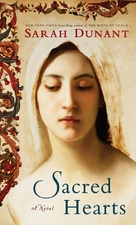 When young novice Serafina enters the convent at Santa Caterina, she is desperately unhappy and makes sure all the other nuns and novices know about it. Dowry prices for Italian aristocrats have risen so high that families with more than one daughter were forced to send the others to a convent. The convents were not as strict as they could be and girls were allowed to see their families, receive gifts, and make their lives easier, but there was no question that they were wed to God, and Serafina wants to be wed to someone else. Madonna Chiara sends the dispensary sister, Suora Zuana, to Serafina to calm her with her medical skills. The women form a friendship, but Serafina’s determination and zeal will not be quenched. When young novice Serafina enters the convent at Santa Caterina, she is desperately unhappy and makes sure all the other nuns and novices know about it. Dowry prices for Italian aristocrats have risen so high that families with more than one daughter were forced to send the others to a convent. The convents were not as strict as they could be and girls were allowed to see their families, receive gifts, and make their lives easier, but there was no question that they were wed to God, and Serafina wants to be wed to someone else. Madonna Chiara sends the dispensary sister, Suora Zuana, to Serafina to calm her with her medical skills. The women form a friendship, but Serafina’s determination and zeal will not be quenched.
I enjoyed this book a surprisingly large amount. I loved the detailed peek into Italian convent life in particular. The pace of the book is occasionally slow, but it seems to match perfectly the pace of convent life, with the hours specifically devoted to work and prayer and not much in between. I was never bored, but actually spellbound by the entire book. The politics in the convent were fascinating; some sisters are in favor of new reforms that threaten to close off all convent life from the outside, even though this violates the understanding by which most women entered the convent in the first place. Others can’t imagine losing close contact with families, friends, and occasional luxuries, much less the prospect of losing the ability to hold concerts and plays. The drama and the manipulation that goes on to swing the convent one way or the other was fascinating to me, and these elements form the basis for part of the plot.
The characters were very interesting too. I’d never wondered much about women who were forced to take the veil. Serafina, however, proves just how frustrating this must be. Her determination and ingenuity make her very attractive as a character even as she complains that she’s been separated from the man she wanted to marry. I found her whole story to be uplifting and very moving. Moreover, Zuana’s interaction with Serafina makes her think about everything that she accepts, and her life is similarly fascinating and saddening. These women are at very different stages in life and as a result Zuana reflects on how she wound up in the convent and what she suffered. It isn’t romance, but these two women combined give a very interesting picture of Italian life.
In the end, I loved Sacred Hearts. I think it’s my favorite novel by Sarah Dunant, and I wasn’t expecting that at all. Highly recommended.
I am an Amazon Associate. I received this book from the publisher for review here.
 Thomas Cromwell’s star is ascending. From the docks of Putney, where his father beats him, to the grandest palaces in England, Cromwell’s rise is nothing short of amazing. A clever politician, hardened by years abroad, Cromwell knows when to leave Wolsey’s sinking ship and head to the king’s side, where he is the one who most helps him divorce his wife so that he can marry Anne Boleyn. Through both personal tragedy and public glory, Cromwell is an enigmatic character, and Hilary Mantel has given him the story he deserves. Thomas Cromwell’s star is ascending. From the docks of Putney, where his father beats him, to the grandest palaces in England, Cromwell’s rise is nothing short of amazing. A clever politician, hardened by years abroad, Cromwell knows when to leave Wolsey’s sinking ship and head to the king’s side, where he is the one who most helps him divorce his wife so that he can marry Anne Boleyn. Through both personal tragedy and public glory, Cromwell is an enigmatic character, and Hilary Mantel has given him the story he deserves.
I’m not sure how I feel about this Booker Prize winner. It has both its good and its bad points. I do think it was written well. I was forewarned about the excessive use of “he” and whenever I couldn’t track the direct reference, I assumed that the author was talking about Cromwell, so that didn’t bother me. I didn’t like that it was written in present tense, though, because it kept jumping out at me and reminding me how much I dislike present tense. Moreover, the book was often boring, and dragged on excessively, especially for someone who knows the Tudor period far too well. It follows the history, but that doesn’t always make for a particularly exciting story.
On the other hand, this is possibly the best picture of Tudor England I have ever read. For some reason, Mantel could transport me there better than anyone has before. I loved that she focused on Cromwell, someone who is often in the background or villainized, and made him into a genuine person. He had such a varied background that Mantel could write about the poor as well as the rich. She could write about the middle class, which Cromwell occupies for a while. She gives us a picture of all levels of society, and we can greater see the contrast of the elegant man in the king’s glittering court to the poor boy with his beaten face pressed into the mud. The detail in this book is astounding, and admittedly is part of the reason it dragged, but creates a whole picture of a world that could easily be foreign.
I also really liked Cromwell, surprisingly. His character was well-rounded and I felt like he was a person I could relate to in a world that I couldn’t. He’s a very clever man, but he also experiences grief and joy just like the rest of us. I think many people could see themselves in his character because he feels like a human being, not a character on the page. Cromwell’s character is, in my opinion, what makes this book great, despite the fact that the plot is so very meandering.
So I’m unsure as to whether or not I can recommend Wolf Hall. If you’re in the mood for a fast read, stay away. I suggest instead taking it slowly and appreciating the world that Mantel creates. I hear Mantel is writing a sequel and I know I still want to read it.
I am an Amazon Associate. I received this book from the publisher for review.
 The Duke of Sale, a fragile child, has never known his parents. Instead, his life had mostly been run by his well-meaning uncle and servants, who are convinced that if he deviates from their instructions, disastrous consequences will ensue. Tired of being managed and determined to find out if he’s a man or a mouse, Sale ventures off to prove himself. Conveniently, two young people emerge as needing his protection, and after a variety of hijinks, Sale begins to discover who he is and what he values in his life. The Duke of Sale, a fragile child, has never known his parents. Instead, his life had mostly been run by his well-meaning uncle and servants, who are convinced that if he deviates from their instructions, disastrous consequences will ensue. Tired of being managed and determined to find out if he’s a man or a mouse, Sale ventures off to prove himself. Conveniently, two young people emerge as needing his protection, and after a variety of hijinks, Sale begins to discover who he is and what he values in his life.
I love Georgette Heyer’s books. This one was, as I expected, just delightful. It is primarily a journey of discovery for the Duke of Sale, who is a charming character. His relatives ignore his wishes and mollycoddle him, annoying him just as much as they annoy us. As a reader, I was thrilled for him when he broke their bonds and went out into the world to see what it was like.
I love how funny Heyer is, too. She’s renowned for writing romances, but this is so much more than that. Sale’s adventures are genuinely entertaining and I read this book with a smile on my face. Tom, a young boy he somewhat rescues, is such a character. He acts just like a boy of that age and even though he annoys everyone around him, he’s so true to life. Belinda, as a contrast, is too silly for words, but even as she is unrealistic, she is also absolutely hilarious. She’s neatly countered by Sale’s fiancee, Harriet, a charming and sensible woman that I wanted Sale to fall in love with as soon as possible. Sale and Harriet are engaged due to an arrangement between their families, but I immediately wanted it to be something more as soon as they encountered one another in the book.
Heyer’s language would probably give someone new to her pause, because it’s quite old-fashioned, but I find it charming. Once I’m reading, I almost don’t want to go back to modern language. After a few pages, I’m sure anyone would get past their qualms and settle in to enjoy the story and characters for themselves.
I definitely recommend The Foundling. This is such an enchanting book. I really can’t wait to read more by Georgette Heyer.
I am an Amazon Associate. I received this book from the publisher for review.
 Despite an assumed match between herself and her cousin Sir James Martin, Miss Susan Martin chose to marry Sir Frederick Vernon, and was very happy for her choice. Though she was courted by Sir Frederick’s younger brother, Mr. Charles Vernon, Lady Vernon disregarded this as soon as she was married. Her union was blessed with a daughter, Frederica, and all three lived happily until a hunting accident laid Sir Frederick low with a life-threatening illness. Frederica had seen her uncle very near her father at the time of his accident, Mr. Vernon seemingly inactive until he spotted her. Worse, her father died in the understanding that his brother would provide for his wife and daughter as he’d stipulated, but Mr. Vernon had no such scruples, and Lady Vernon and her daughter are left to make their own way in society. Despite an assumed match between herself and her cousin Sir James Martin, Miss Susan Martin chose to marry Sir Frederick Vernon, and was very happy for her choice. Though she was courted by Sir Frederick’s younger brother, Mr. Charles Vernon, Lady Vernon disregarded this as soon as she was married. Her union was blessed with a daughter, Frederica, and all three lived happily until a hunting accident laid Sir Frederick low with a life-threatening illness. Frederica had seen her uncle very near her father at the time of his accident, Mr. Vernon seemingly inactive until he spotted her. Worse, her father died in the understanding that his brother would provide for his wife and daughter as he’d stipulated, but Mr. Vernon had no such scruples, and Lady Vernon and her daughter are left to make their own way in society.
I have never read the Jane Austen novella on which this novel was based and I think that helped me enjoy it more. I did in fact very much like it. It deals in very typical Austen themes but it doesn’t quite match the feel of her work. Since I hadn’t read the original novella to compare it against, my expectations weren’t very high, and I ended up genuinely liking the characters and looking forward to seeing what happened and how it all wound up.
My favorite part of the novel was all the misunderstandings that arose based on gossip. At first the gossip was harmful, and I wasn’t fond of that, but soon enough I realized in what direction the story was going and it became very funny. It’s easy to see how such things could arise when the only communication long distance was letters, and anyone could say anything they liked in a letter with no other contact for contradiction in the country. There is also the gap of time, and anything could happen between receipt of a letter and the next. In any case, I thought this was all demonstrated very well, and I got quite a kick out of it.
I also felt that the novel kept very much to a Austen-like propriety. In modern sequels, there is often an over-emphasis on romance, which I like in modern novels, but which I don’t really feel is appropriate for anyone imitating Austen. I enjoy the way Austen’s characters express their feelings for one another, and I think these authors pull off a very credible, discrete imitation, which gives the impression of full feelings with nothing beyond words.
So, when not compared to Jane Austen herself, Lady Vernon and Her Daughter is a wonderful diversion. It was short and pleasant and I enjoyed my time with it. I would definitely recommend it to fans of historical fiction.
I am an Amazon Associate. I received this book from the Amazon Vine program for review.
 Aisling’s grief at her mother’s death was strong, but nothing compared to how she felt when her father also fell ill, shortly after taking a new wife. Ash, connected deeply with the forest, was forced to move to the city for her father’s care. When he died, her stepmother declared that Ash’s fathers debts had been so numerous that Ash would have to work as a servant for the rest of her life to pay them off. Ash’s unhappiness leads her to the forest, where she meets the fairy Sidhean and begins to hope that he’ll steal her away from her mortal life. But then she meets Kaisa, the king’s huntress, and Ash’s wishes begin to change. Aisling’s grief at her mother’s death was strong, but nothing compared to how she felt when her father also fell ill, shortly after taking a new wife. Ash, connected deeply with the forest, was forced to move to the city for her father’s care. When he died, her stepmother declared that Ash’s fathers debts had been so numerous that Ash would have to work as a servant for the rest of her life to pay them off. Ash’s unhappiness leads her to the forest, where she meets the fairy Sidhean and begins to hope that he’ll steal her away from her mortal life. But then she meets Kaisa, the king’s huntress, and Ash’s wishes begin to change.
My expectations for this book were severely lowered thanks to Nymeth’s review. She also adores fairy tale retellings, and in case you couldn’t tell, this is a version of Cinderella. So when she didn’t like it, I thought there wasn’t all that much hope for me to like it, and I started the book thinking that. Imagine my complete surprise when I sat down and read the entire book in one sitting, staying up late just to finish it. I enjoyed it that much. Maybe it was the fact that it was a Cinderella story, a fairy tale I have always loved*, or the fact that I was craving fantasy at the time, but this book worked out beautifully for me.
Ash has been publicized as the book where Cinderella falls in love with a woman, but it’s more than that. It’s also not nearly as big a deal in the book as it has been in the publicity. Same sex relationships are normal in Ash’s world, which was a refreshing viewpoint. It surprised me how completely normal it felt and made me wish that I lived in a world where the same was true.
Malinda Lo creates a whole world and a mythology here, and I felt that frame was absolutely perfect for the story that unfolded. While the introduction of all the lore at the beginning was fairly slow, it did help as the book went along. The depiction of Ash’s grief at the loss of her parents felt real, and, though not the best I’ve read, really was moving. I thought at first that the part of the story with Sidhean was going to take away from her relationship with Kaisa, which only begins in the second half of the book, but I enjoyed the way it was developed and wrapped up in the end. I really loved Ash’s romance with Kaisa. I felt that it was so organically written and so natural; they really became friends and then realized what they had. The whole storyline left me breathless, and for me that’s unusual but cherished.
I also really liked Ash as a character. As time passed, she grew as a person and as a woman, and her love led her to take a step back into having a life, not just wishing the fairies could whisk her away. She likes to read, which automatically endeared her to me. So I wanted her to escape her life of servitude and I relished every step on the way. If someone was brave enough to be her friend, I liked them too. I was not fond of the evil stepmother and her daughters, but I still appreciated the fact that Lo built credible family dynamics into their relationships. They’re all human beings, even if they are very selfish.
I know how the Cinderella story goes, but I was still captivated by Ash, still reading until the very end. To me, that’s the mark of a good retelling.
*Some useless knowledge about me: I watched the movie Ever After at the perfect age and I have basically adored Cinderella stories since. I don’t know what it is about that movie, but I still love it.
Also, I received this book from review from the Amazon Vine program and I am an Amazon Associate.
|
|



Recent Comments