|
|
 In 2020, John Boone sets foot on Mars for the first time. Seven year later, 100 colonists arrive, a mix of Earth’s most intelligent people best suited to create a new world in order to deal with the ever-more-crowded Earth. The new colony has been completely prepared for them, with large deposits of materials dropped on the planet over the course of several years, and it’s up to the colonists to set everything up and determine the future course of Mars. As ever, divisions appear almost immediately, between those who aim to preserve the beauty of the planet, those who would like to turn it into another Earth, and those who serve a corporate agenda, among many others. Kim Stanley Robinson’s novel is an epic journey into precisely what it might be like to create an entirely new civilization in the face of pressures from many varied directions. In 2020, John Boone sets foot on Mars for the first time. Seven year later, 100 colonists arrive, a mix of Earth’s most intelligent people best suited to create a new world in order to deal with the ever-more-crowded Earth. The new colony has been completely prepared for them, with large deposits of materials dropped on the planet over the course of several years, and it’s up to the colonists to set everything up and determine the future course of Mars. As ever, divisions appear almost immediately, between those who aim to preserve the beauty of the planet, those who would like to turn it into another Earth, and those who serve a corporate agenda, among many others. Kim Stanley Robinson’s novel is an epic journey into precisely what it might be like to create an entirely new civilization in the face of pressures from many varied directions.
I took a leap into a new territory with this book and I’m very glad I did. Red Mars is an example of so-called “hard” science fiction, the sort that actually makes plausible sense and has been thought through from a scientific perspective. I chose to buy it because I really wanted to read 2312, but thought I should probably go for a cheaper paperback before I decided I knew I wanted to read the newer release. Red Mars is one of Robinson’s best known books and has garnered a huge amount of high ratings – and that choir is one I’m about to add my voice to.
That’s because I really loved this book. It took me a very long time to read, about a week and a half, which is intense for me, but I was really savouring it and getting involved deeply into the world that Robinson creates around the new Mars. I loved some of his descriptions so much that I even marked out pages, something that I virtually never do. Here is one of my favourites:
She recalled vaulted ruins she had seen years ago on Crete, at a site called Aptera; underground Roman cisterns, barrel-vaulted and make of bricks, buried in a hillside. They had been almost the same size as these chambers. Their exact purpose was unknown; storage for olive oil, some said, though it would have been a n awful lot of oil. Those vaults were intact two thousand years after their construction, and in earthquake country. As Nadia put her boots back on she grinned to think of it. Two thousand years from now, their descendants might walk into this chamber, no doubt a museum by then, if it still existed – the first human dwelling built on Mars! And she had done it. Suddenly she felt the eyes of the future on her, and shivered. They were like Cro-Magnons in a cave, living a life that was certain to be pored over by the archaeologists of subsequent generations; people like her who would wonder, and wonder, and never quite understand. (145)
That passage sums up a lot, to me, about why this book is such a wonderful read. It really is a civilization, but it isn’t exactly created from scratch; instead it’s created from our culture, that which is already all around us, and it’s an incredibly intriguing vision of a future that might yet be. This is science fiction’s purpose, to make us consider what might happen in the future, and I was hypnotized by Robinson’s version of that future.
That’s not to say that the characters aren’t brilliant in their own ways, too. We only spend time with a few of the first 100, but by getting to know them, we experience a whole range of pure human emotion. The span of the book is fairly lengthy, and by the end, most of the first hundred have grown older, old enough to see the civilization they essentially birthed take on a life of its own. But while they are celebrities for that, they are also just people, with all of the little struggles and drama that all of this entails. Despite their intelligence, they suffer grief and loss and experience love and joy in equal measure; they might all be clever but they completely disagree in many ways, and the fabric of civilization stretches and tears to accommodate their dynamic personalities.
It’s all just plain fascinating. There is a small amount of science in this book; they do build various things to help keep them alive, after all, but I never felt particularly overwhelmed or frustrated by any of it. Instead, it just seemed plausible, that the author had considered all sorts of odds and ends that others don’t, and the pure logic behind it made the entire book that much more credible.
In short, a fantastic read, and highly recommended if you’ve ever wanted to try science fiction, or are looking for an addition to your speculative fiction library.
And just to round this post off, two more quotes:
He was losing the crowd. How to say it? How to say that they alone in all that rocky world were alive, their faces glowing like paper lanterns in the light? How to say that even if living creatures were no more than carriers for ruthless genes, this was still, somehow, better than the blank mineral nothingness of everything else? (17)
“The beauty of Mars exists in the human mind … Without the human presence it is just a collection of atoms, no different from any other random speck of matter in the universe. It’s we who understand it, and we who give it meaning. All our centuries of looking up at the night sky and watching it wander through the stars. All those nights of watching it through the telescopes, looking at a tiny disk trying to see canals in the albedo changes. All those dumb sci-fi novels with their monsters and maidens and dying civilizations. And all the scientists who studied the data, or got us here. That’s what makes Mars beautiful. Not the basalt and the oxides.” (212)

One side of beautiful 14th century Charles Bridge in Prague, Czech Republic.
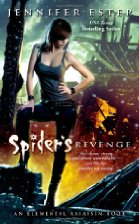
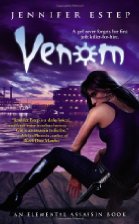 These are my thoughts up to the fifth book of this series. It does continue to a currently available sixth and soon to be released seventh book, but the first five fill a natural plot arch, and seemed a good time to jot down my thoughts on the series. I have reviewed the first book, Spider’s Bite, in with some other mini reviews. These are my thoughts up to the fifth book of this series. It does continue to a currently available sixth and soon to be released seventh book, but the first five fill a natural plot arch, and seemed a good time to jot down my thoughts on the series. I have reviewed the first book, Spider’s Bite, in with some other mini reviews.
All the books focus on Gin Blanco, who begins the series as The Spider, so named for the silverstone runes that were embedded in her flesh during an attack on her family when she was just thirteen years old. The attack destroyed her family home, orphaned her, and landed her in the street, where she was saved by Fletcher Lane, the man who turned her into the assassin that she is. We learn that the culprit, incredibly powerful Fire Elemental Mab Monroe, is the leader of the gang that effectively runs Gin’s town of Ashland, and that Mab would certainly kill Gin if she connected her with her real identity, Genevieve Snow. Throughout, Gin has to deal with a number of lesser criminals, love affairs, and the complications inherent in most urban fantasy series.

I’ve had a lot of fun with this series, and around the third book, became so addicted that I had to acquire the next two immediately in order to keep going. I’ve read most of it within the space of a couple of months, and have become attached to the characters and very curious about what’s going to happen next. I’m reasonably satisfied with the conclusion of this particular plot arc, but I’m also intending to follow it through to the actual conclusion.
One of the highlights of the series, for me, is Gin’s intense relationships with the people she cares about. She didn’t really need her shell to break down for her to care about people, as she’s been connected closely with Fletcher and Finnegan Lane, Fletcher’s son, since before the book’s beginning. But as the series progresses, we really get to know all of these characters, and to an extent understand why Gin feels the way she does. Her family is full of many different types of people, but all of those are interesting, from Jo-Jo and Sophia, the dwarf sisters, to the flirtatious Finnegan.
 The book also has a number of detailed descriptions of food; Gin is a cook and a baker, and she’ll often prepare a dessert for her friends while discussing some important plot point. This will make you hungry and longing for the various things she’s cooking, whether it’s steak-cut fries (one of her favourites) or some sort of chocolate brownie and ice cream. I did enjoy these and wish I was eating what she was talking about as soon as she started. The book also has a number of detailed descriptions of food; Gin is a cook and a baker, and she’ll often prepare a dessert for her friends while discussing some important plot point. This will make you hungry and longing for the various things she’s cooking, whether it’s steak-cut fries (one of her favourites) or some sort of chocolate brownie and ice cream. I did enjoy these and wish I was eating what she was talking about as soon as she started.
One of the big negatives of the series for me, though, is the repetition. The same things are described in every single book at the beginning. Mab is always the Fire Elemental. I learned how Gin got those silverstone runes in her hands, and about the silverstone knives she carries secreted in various places around her body, multiple times per book, I think. I’m not sure if the author assumes we have an impossibly tiny attention span or is simply trying to get new readers into the groove, especially with the plot summaries at the beginnings of each book, but for someone addicted enough to read them right after each other, I will admit that this did get annoying. Gin also has a habit of describing her boyfriends and saying “Mmm” at the end, like she was eyeing a tasty dessert, which put me off as well.
Regardless, this is a series I’ve enjoyed greatly, and would certainly recommend to someone looking for another light urban fantasy read. It’s been a lot of fun, and I’m looking forward to continuing Gin’s adventures.
 Good evening Sunday Saloners! I’m a bit late today; we’ve had a busy weekend, as we went camping up in the Yorkshire Dales on Friday, and then came home and decided to be gardeners just today. Good evening Sunday Saloners! I’m a bit late today; we’ve had a busy weekend, as we went camping up in the Yorkshire Dales on Friday, and then came home and decided to be gardeners just today.
First, camping. This promised to be the first really nice weekend in a very long time, so we thought we’d take advantage of it. It’s been raining on and off in the UK this summer more than any other I’ve experienced here, with temperatures remaining disappointingly cool the whole time. I’m sure some of you in the United States would love relief from the heat, but I’d give almost anything just for a little bit of it one of these days.
Saturday morning, we woke up to clear skies, reasonable warmth, and went out to spend the day at Barnard Castle, which is both a castle and a delightful little town that grew up around it. Lovely visit to the castle, a reasonable walk in the sunshine, an abbey, and an amazing curry for dinner rounded out a really nice day.

Today wasn’t as nice to start out with, as we returned to clouds in the morning. But by the time we headed home, the weather had cleared up, and I was inspired to start some gardening with a lot of sales in our local garden centre – somewhere we hardly ever go, but felt compelled to this afternoon. As a result, we ended up taking home a standalone greenhouse, four vegetable plants (tomatoes, cucumbers, aubergines, and bell peppers) and three herbs (sage, oregano, and mint).

None of this has been particularly good for reading. I haven’t even finished a book since returning from my trip to Europe last Sunday, let alone found time to blog. I’m reading an excellent non-fiction book, How to Survive the Titanic: The Sinking of J. Bruce Ismay by Frances Wilson, but I’ve just been doing too much else around the house and catching up to really devote enough time to it. I have an hour or so now and am going to aim to get some posts up this week and breathe a little life back into this blog. I hope to find some time to come visit you, too – let me know what I’ve missed in the last couple of weeks and I’d love to come say hi.
Have a great week!

Perspective: Things can almost always get worse.
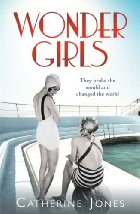 Determined to defy expectations, 16-year-old Ida Gaze sets out to be the first person to swim the Bristol Channel in 1928. Beside her, always encouraging her, is her best friend Freda Voyle, and in her mind, her idol, Amelia Earhart. Many years later, Cecily Stirling, an old woman, is comforted by the presence of a young, vivacious girl Sarah, who points towards a photo of a woman in bathing costume that Cecily’s partner Freda left behind after her death. This isn’t just a book about Ida’s goal; it’s a book about finding yourself, achieving your dreams, and discovering who and what really matters to you. Determined to defy expectations, 16-year-old Ida Gaze sets out to be the first person to swim the Bristol Channel in 1928. Beside her, always encouraging her, is her best friend Freda Voyle, and in her mind, her idol, Amelia Earhart. Many years later, Cecily Stirling, an old woman, is comforted by the presence of a young, vivacious girl Sarah, who points towards a photo of a woman in bathing costume that Cecily’s partner Freda left behind after her death. This isn’t just a book about Ida’s goal; it’s a book about finding yourself, achieving your dreams, and discovering who and what really matters to you.
I received Wonder Girls unsolicited for review, but I was so immediately drawn into the idea of the story that I couldn’t help but pick it up almost right away. This is a book that is almost entirely about women, what drives them, and even how much things have changed (and not) over the years that the book spans. During Ida’s youth, women are making strides, campaigning for freedom, determining the course of the future for themselves. Her swim, while fictional, reflects the real-life goal setting of two women around the same time period across the Bristol Channel and is thus perfectly true to life. At the same time, when she’s finished, her drive to go to London and make something of herself, which she persuades her friend Freda to do as well, is similarly characteristic of her drive.
But then the big city happens to both of the girls in different ways, and it’s only through Cecily’s story that we discover where they ended up after the dust settled, though Cecily herself has also been affected by their journeys.
I liked the way this book explored all of the relationships within it; Ida and Freda’s close friendship, Cecily and Freda’s years-long romance as well as their relationship with a character who enters into the story later, and Cecily’s budding friendship with young Sarah. I liked that Jones treated the relationships between women, romantic or friendship, as normal love, just as valid as any other kind, and just as moving. I was swept up in these characters’ lives and grew to care for each of them in their own way.
We also see how much people change when their circumstances do. Ida, for instance, is blindsided when she moves to London, intoxicated by her effect on men, but losing sight of who she truly is and what her goals in life are in the swirl of rather frivolous consumerism that her new position grants her. The book, to a large extent, shines a huge spotlight on how shallow our lives can turn when we get too distracted by possessions and positions and forget to focus on what we love.
But truly, Wonder Girls is a fascinating book, set in different eras of change for women, with fantastic characters that will keep you turning the pages. Great first effort from Catherine Jones.
All external book links are affiliate links. I received this book for free for review.
We are now officially halfway through 2012 and well on our way to 2013. I’m already not 100% sure where the first half of the year has gone, but it’s been a busy one for me. Lots of work, lots of travelling for work (or so it felt to me), and even a trip to the United States to see my parents and their array of parrots. In 2012 I gave up my second, self-employed job, to give myself more free time, I got a computer that I can call my own again, and I got promoted at work. I’ve got my provisional driver’s license, and I’m planning to achieve my full UK driver’s license before 2012 is up. I’m about to go on what I hope is the first of two trips exploring a little bit more of the world this year, as well, which I cannot wait to do. Next weekend I’ll be heading to Munich to meet two of my friends from home, and we’ll be going through Munich, Berlin, and Prague before I have to return to the UK.
All this going on means I’ve not read nearly as much as I have in years previous. I’m up to 67 books for the year. This is, interestingly enough, about how many books I thought I’d be reading when I started working over 2 years ago. So I slowed down to my expectations eventually. Unfortunately, I’m still terrible at keeping up with reviews. Since I stopped reviewing urban fantasy except in large series reviews (expect one for the Elemental Assassin books shortly), there haven’t been as many to review, regardless.
This month, I read 11 books:
Fiction
- Fifty Shades of Grey, E. L. James
- The Sense of an Ending, Julian Barnes
- Venom, Jennifer Estep
- The Sister Queens, Sophie Perinot
- Deadline, Mira Grant
- Tangled Threads, Jennifer Estep
- Proven Guilty, Jim Butcher
- The Ugly Duchess, Eloisa James
- Spider’s Revenge, Jennifer Estep
- Wonder Girls, Catherine Jones
Non-fiction
Favorite of the Month
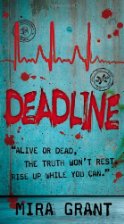 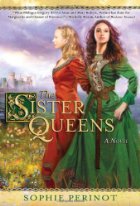
Much as I had my gripes with Deadline, I still had a fantastic time with it, and The Sister Queens was a terrific historical fiction read that reminded me just why I love the genre.
I also posted reviews for:
Right now, I’m reading 3 books. The first, which I’ve been reading the longest, is The War on Heresy: Faith and Power in Medieval Europe, by Professor R.I. Moore, which is very interesting but slow going on my fragmented brain. I also started Red Mars by Kim Stanley Robinson, my very first venture in “hard” science fiction as opposed to the space opera types I normally love. I’m close to halfway through this and I’m surprising myself by intensely enjoying it, to the degree of marking out passages of surprising beauty and meaning, something I hardly ever do. I made it a condition that I like the Mars trilogy before I purchased Robinson’s newest, 2312, but I think I’ll be getting that too. Finally, when I can’t really process either of those, I’m reading The Way to a Duke’s Heart by Caroline Linden. In short, a microcosm of my incredibly eclectic taste in books.
I’m also continuing with Babylon 5 and Battlestar Galactica, so I’m seriously indulging my science fiction obsession. We’ve just finished the first season of Babylon 5 and we’re very close to saying the same for BG, and I’m still loving both of them.
Have a fantastic July, all!
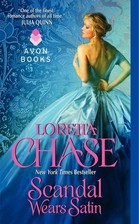 Sophia Noirot has her hands full, between acting as saleswoman for the shop that she and her two sisters run by day and by night as a writer for the scandal sheets of London. She makes her sisters’ dresses sound incredible by burying their descriptions inside the salacious stories that London’s gossips spread around town each and every day. But Sophy’s mission to make her shop a success keeps getting interrupted by the Earl of Longmore, who can’t get her big blue eyes out of his mind. When Longmore’s sister, the shop’s biggest patron, makes a monumental mistake and creates a scandal of her own, though, Sophy can’t abandon either of them to their fate. Sophia Noirot has her hands full, between acting as saleswoman for the shop that she and her two sisters run by day and by night as a writer for the scandal sheets of London. She makes her sisters’ dresses sound incredible by burying their descriptions inside the salacious stories that London’s gossips spread around town each and every day. But Sophy’s mission to make her shop a success keeps getting interrupted by the Earl of Longmore, who can’t get her big blue eyes out of his mind. When Longmore’s sister, the shop’s biggest patron, makes a monumental mistake and creates a scandal of her own, though, Sophy can’t abandon either of them to their fate.
I have a strange relationship with Loretta Chase’s writing. I didn’t really fall in love with several of her earlier books, like Not Quite a Lady. I flat out disliked Don’t Tempt Me. I liked Captives of the Night, but still haven’t managed to read Lord of Scoundrels. But one of her books that I did read was Silk is for Seduction, and I enjoyed that far more than any of the others, to the extent that I still remember it fairly well. So when I was offered the opportunity to continue reading that series, I didn’t say no.
I unfortunately can’t say I absolutely loved the emotions in this book like I did with the last, but Scandal Wears Satin is still a very satisfying and heart-warming read at the core of it. In this case, I loved Sophy, and Chase’s way of speaking in all capitals to indicate her slightly melodramatic tendencies. I found it honestly very amusing, and I could really see why Longmore was completely enchanted with her. I didn’t find one of the world’s most compelling heroes, though, to be honest; I could understand his worries about his sister, but nothing about him has particularly landed in my mind as a notable feature.
As usual, some of the plot here was more or less ridiculous. I had to roll my eyes at Clara running away on her engagement and where she actually ended up; it just seemed a little bit overdone, a clever way of throwing the hero and the heroine together. I was also very disappointed in Clara herself; after actually throwing off a duke in the last book, saying that she deserved better, and coming into her own, I’d never have anticipating that she’d immediately end up in a compromising situation with a fortune hunter and ruin it all.
There are also the standard barriers to an earl marrying a simple commoner which have to be overcome at the same time; bad enough that the duke who was supposed to marry Clara married a commoner himself, but for Longmore to do it creates an even bigger obstacle in society’s minds. I had to remind myself that I’m not actually reading this for a realistic portrayal of society.
In spite of all that, I did genuinely enjoy reading this book. While I can see its faults fairly clearly, the romance between the main characters somehow works, and works well. I’m definitely looking forward to reading about the third of the Noirot sisters, and I’m certainly hoping that Clara gets her happy ending. Maybe she’ll rediscover that woman she found in Silk is for Seduction.
All external book links are affiliate links. I received this book for free for review.
This review will contain spoilers for Feed, the first in the Newsflesh trilogy. Please go to my review and read the book before you read this review!
After the heart-breaking conclusion to Feed, where he lost his sister and best friend Georgia to Kellis-Amberlee, Shaun is lost. He knows he should follow through on some of the things his sister was so passionate about, including the site they ran together, but his heart’s not in his position as an Irwin any longer. But Georgia hasn’t quite left him; her voice in his head drives him forward to solve some of the ever-eerier mysteries that she only began unearthing during the Ryman campaign.
I knew this book was going to have a hard time living up to Feed, the first book in this series, which I simply found amazing. I worried when I started this; would it have the same relatively slow build-up before I got engaged in it again? How would I adjust to the shift to Shaun’s narrative voice? Would he be distinguishable from Georgia at all? And so on. My worries were, for the most part, unfounded, and I was completely wrapped up in this book while reading it, speeding through its many pages in a single weekend.
What about those worries? First of all, there wasn’t a slow build-up. I still felt as emotionally attached to the new characters as I had to the old. I didn’t love them the way I really loved Georgia, not even Shaun, but I did find myself getting fond of him by the end of the book. There are some fairly tense events close to the start of the book that get the action going, and one moment that I suspect was intended to be as jaw-dropping as the first death in the first book was. (It wasn’t, but it was still pretty good). I could easily distinguish Shaun from Georgia, and his persistent melancholy didn’t bother me very much at all.
I did, however, have a few reservations with this book that I didn’t have while reading the first one. I didn’t like that Shaun spent the book talking to Georgia and hearing her in his head. Maybe he couldn’t cope without her; but it felt cheap, like she’d cheated death, unlike the absolute complete absence that took place when Buffy died. They still haven’t caught up without her, after all. Georgia may not have been conventionally alive, but the fact that her character still lives on bugged me, in a way.
I also noticed some repetitive writing here which I hadn’t in the first one; in Deadline’s defense, my “repetition” sensors were on full blast after Fifty Shades of Grey, and I’m not sure I’d have noticed otherwise. One character is constantly paling and the rest of them often start swearing on a very frequent basis. And they continue swearing for what should be minutes; I can understand uttering an expletive, but surely stringing many swear words together is not entirely a necessity when in a life-or-death situation. I suppose I don’t know; I’ve never been in one. But it happened very, very often.
Anyway, all that aside, I did actually genuinely enjoy Deadline, and I was happy that I’d already preordered Blackout so I could continue with the story right away. I’ll definitely recommend these as absorbing reads that are still very thoughtful in their own way, and I’m looking forward to wrapping up the trilogy in the very near future.
Marguerite and Eleanor of Provence, close friends as well as sisters, are separated when their husbands are chosen. Marguerite is destined to marry the French King, Louis IX, while Eleanor is sent to England to wed Henry III. At first, quiet and malleable Marguerite seems the luckiest sister, for her husband is handsome and with him she finds what she believes to be love. Eleanor’s husband, Henry, is older and shorter than she is, but she soon gets to know him and falls in love herself, while Marguerite realises that her husband is ruled by his mother and his piety. These two women from the powerful family of Savoy never forget one another, and their bond changes medieval Europe as they begin to wield the only power available to women of their day.
The Sister Queens is precisely the kind of historical fiction I love, and which swiftly absorbed me within its pages. Marguerite and Eleanor haven’t been written to death already; in fact, Henry III and Louis IX are fairly absent from the historical fiction scene themselves, even though massive changes are taking place in both countries through the narrative, laying the ground for history to come which does have more conventional attention. The medieval atmosphere is very appealing, with plenty of smaller details sprinkled throughout the narrative.
Plenty happens, too; the sisters’ husbands go to war, sometimes with the sisters alongside them. Marguerite in particular spends years on Crusade with her husband, at one point making a stand of her own against the enemy with very little on her side at all. Henry III struggles, famously, with his barons, as his poor political judgement leads to problem after problem in the ruling of his kingdom. There are the inevitable lulls as both women have multiple children and time must pass by fairly quickly to excuse their pregnancies, but I found it very easy to carry on reading without feeling like the story bogged down at all.
It’s in part the relationships between the sisters, though, that makes this an excellent book. Yes, they have their children and their husbands, but they also always have one another, and it’s the sort of heartwarming female relationship that doesn’t always dominate mainstream fiction in quite the way it should. The mere fact that it was true, that these sisters really did bring about a peace between their two countries that lasted until Edward III shook things up again, added authenticity to the relationship and made the entire book more absorbing. This truly was a fascinating period in history (although if you listen to me I seem to think all of the Middle Ages is fascinating) and Perinot does it great justice here.
Finally, I must confess that I absolutely love that Perinot used Jean de Joinville’s chronicle as the basis of certain happenings around Marguerite’s court. I immediately had a strong desire to read de Joinville’s work for myself, and it’s an amazing way to fill in the historical blanks without stepping on the toes of what’s already been established.
In short, an excellent work of historical fiction that makes me think again about not remaining in love with the genre. Certainly the best I’ve read this year set in the Middle Ages. Highly recommended.
|
|








Recent Comments