|
|
 For a few hundred years, the London Season began with a new crop of debutantes making their curtsey before the monarch – in short, being presented and coming out to society for the first time. Afterwards, a wave of balls took place, introducing each of these young women to the people with whom they were meant to socialise for the rest of their lives. The goal was always to find a husband, preferably a rich or titled one, and settle down nicely in the countryside, preferably in your husband’s mansion. For a few hundred years, the London Season began with a new crop of debutantes making their curtsey before the monarch – in short, being presented and coming out to society for the first time. Afterwards, a wave of balls took place, introducing each of these young women to the people with whom they were meant to socialise for the rest of their lives. The goal was always to find a husband, preferably a rich or titled one, and settle down nicely in the countryside, preferably in your husband’s mansion.
Fiona MacCarthy made her curtsey to the queen in 1958, the last year that any girls made their debut, and effectively the last year of the London Season as it had been known. Times were changing; women could do more than simply get married. The prospect of a career for women was not far off, and women like MacCarthy could be and increasingly were educated at England’s best universities. They learned quickly that talents gained while preparing to be a wife and run a great house could in fact be applied to trades, granting women more independence than ever before. Besides, the old landed families increasingly were pressed hard for the funds to present a girl properly. Old, inherited London townhouses were increasingly sold off and turned into flats, meaning that presentation balls and dinners took place in hotels while families rented expensive rooms for the duration of the season. After the two World Wars, Seasons and debutantes became a joke, and the aristocratic world shifted fundamentally.
This book piqued my interest immediately; as a long-time reader of romance novels, I’ve always been well aware of the London Season in the generally anachronistic way that it’s portrayed there. When you’re reading a romance novel anyway, there simply isn’t a better time for the heroine to find someone to fall in love with, especially when the same set of people get thrown together night after night. But the Season in real life hasn’t been something that I’ve personally researched. With this book, I seized a chance to change that and find out about the reality.
Because MacCarthy’s Season takes place at the very end, the book is half about social change and half about what actually happened during the Season itself. She notes the differences between her mother’s coming out years before and her sister’s two years later; at the former, balls still took place in old aristocratic houses, but by her sister’s (and much of hers) the balls were fewer and smaller. The actual narration of the Season was interesting as well; there were plenty of parties for her to attend, and she spends some time denoting who was who during those few months and what happened to them afterwards.
My only criticism, really, is that the book felt sort of disjointed; there wasn’t that strong a narrative running through it, no real point made at the end. It follows a rough chronological timeline, with elements explained where necessary, but it sometimes makes diversions from this and adds in bits and pieces that aren’t really necessary. It was an enjoyable read, yes, but I personally wanted it to go further and examine more social history, too. But given I knew nothing about the real London Season – much less that it was continuing right up to when my parents were born – I found that Last Curtsey expanded my knowledge and provided me with some intriguing food for thought.
 Good morning Saloners! It feels like a very long time since I last wrote a Sunday Salon post, and that’s because I last wrote one over a month ago. I’m at one of those points in life where time seems to simultaneously fly by and slow down, depending on where I am or what I’m doing. I haven’t been travelling too much recently, which has been a nice break, although my wanderlust has become overwhelming at times now that I’m used to being out and about. Good morning Saloners! It feels like a very long time since I last wrote a Sunday Salon post, and that’s because I last wrote one over a month ago. I’m at one of those points in life where time seems to simultaneously fly by and slow down, depending on where I am or what I’m doing. I haven’t been travelling too much recently, which has been a nice break, although my wanderlust has become overwhelming at times now that I’m used to being out and about.
Fortunately, I’m not going to stay bound at home for too long; next month I’ll be travelling with a couple of friends from college through Munich, Berlin, and Prague over the course of a week. I’m looking forward to adding on more cities to my ever-growing list of places I’ve visited, and I hope that I’m not finished for the year yet. I’d love to go to either Scotland, camping around various parts with my husband, or Istanbul later this year. But we’ll see how our financial situation pans out over the next couple of months first.
At home, I’ve applied for my provisional driving license; I can drive in the US, but I’ve never been licensed to drive in the UK, mainly because I don’t know how to drive a manual car. I’m about to change that, I just need the provisional license to come back to me first. I’m apprehensive about it, but at the same time driving myself will give me a lot more freedom and save my husband the tedium of taking me everywhere that’s not within walking distance.
I’m also catching up on my science fiction TV shows. Ever since I discovered that I actually enjoy science fiction, I’ve been addicted to it. Right now, we’re just starting both Battlestar Galactica and Babylon 5, and I’m really looking forward to watching both of them. I haven’t seen enough of either to comment just yet, but I will soon.
I’ve even been reading a considerable amount – some of which actually won’t get reviewed here. But I’ve been addicted to Jennifer Estep’s Elemental Assassin books in particular. I’ve read four of them and while I don’t think I can give each an individual review, they are perfect after I’ve spent a long, stressful day at work. I also just finished the eighth Dresden Files book and am already clamoring for more. Hopefully, things at work should calm down in the next few weeks, and I’ll be able to devote more brain power to non-fiction. I’m obviously trying; I’ve got what looks to be a fascinating book on heresy in the Middle Ages ready for me to read it, but I’m a bit wary of how long it will take given the current mood. We’ll see!
What’s new with all of you? Have fantastic weeks!
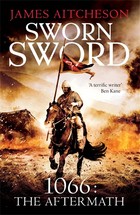 Tancred a Dinant has followed his liege lord, Robert de Commines, since the tender age of fourteen. Now that King William the Conqueror has taken England, Tancred finds himself in the north defending against the Anglo-Saxons who would prefer not to bow to the Norman lord. After a disastrous battle, Tancred barely escapes with his life; one of the men lost is his lord. Anchorless, Tancred ends up in the service of another Frenchman, Malet, heading to London to protect Malet’s wife and daughter in the face of overwhelming odds. But on the way, he must escort an English priest to a nunnery, where he discovers a curious plot that indicates treachery from within Malet’s household. Tancred a Dinant has followed his liege lord, Robert de Commines, since the tender age of fourteen. Now that King William the Conqueror has taken England, Tancred finds himself in the north defending against the Anglo-Saxons who would prefer not to bow to the Norman lord. After a disastrous battle, Tancred barely escapes with his life; one of the men lost is his lord. Anchorless, Tancred ends up in the service of another Frenchman, Malet, heading to London to protect Malet’s wife and daughter in the face of overwhelming odds. But on the way, he must escort an English priest to a nunnery, where he discovers a curious plot that indicates treachery from within Malet’s household.
Sworn Sword promises to be the first in a new series of historical fiction focusing on England just after the conquest. Starting out in January 1069, this series is going to focus on the difficulty that William the Conqueror had in keeping his throne through the eyes of Tancred. It’s a book very much in the vein of Bernard Cornwell, though; battle-focused fiction with a slight element of suspense and mystery.
The opening has a fair share of Tancred’s grief; he’s injured and he’s lost two important people in his life, his lord and his “woman”. In the latter case, he was just beginning to develop feelings for her, and he spends a lot of time beating himself up mentally for not protecting her, for trusting that she’d be safe. He outright mourns his lord, who he respected and cared for, and particularly now that he’s without someone to fight for. When he’s gravely injured and can barely raise his head, the situation is much worse.
Fortunately for Tancred, and for those reading this book, he quickly recovers and is on his way, and that’s when the book starts to get a little bit more interesting. A mystery unfolds in between a number of battles, and there is a fledgling romance slipped in at the same time. It’s a solid read, if you enjoy this sort of book, and I enjoyed the atmosphere. Aitcheson has done enough research to make most of his choice fit smoothly into the historical world, and a lengthy author’s note at the end explains what did and didn’t happen in the real timeline. That’s one part of a historical novel I always appreciate; I like to know where the author has drawn from the historical record and where they’ve filled in with their imagination.
Sworn Sword is a solid read, well worth it for fans who like their historical fiction somewhat bloody and atmospheric, particularly those who have already developed a taste for it via Bernard Cornwell or Ben Kane.
All external book links are affiliate links. I received this book for free for review.
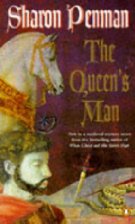 Justin de Quincey has received an excellent education for 12th century England, despite the fact that he’s never known either of his parents. Finally at an age to set off on his own, Justin discovers that his father is actually the benefactor he’d already been familiar with, Aubrey de Quincey, nothing less than the Bishop of Coventry. When leaving, his thoughts clouded with anger and betrayal, he stumbles upon a murder scene, and receives a letter meant for Queen Eleanor of Aquitaine. The Angevin Empire is in a bad place, as King Richard has gone missing on his return from the Crusades. Justin’s successful delivery of the letter to the queen leads to his assignment – discovering who had this man killed, why, and who might know what’s happened to King Richard. Justin de Quincey has received an excellent education for 12th century England, despite the fact that he’s never known either of his parents. Finally at an age to set off on his own, Justin discovers that his father is actually the benefactor he’d already been familiar with, Aubrey de Quincey, nothing less than the Bishop of Coventry. When leaving, his thoughts clouded with anger and betrayal, he stumbles upon a murder scene, and receives a letter meant for Queen Eleanor of Aquitaine. The Angevin Empire is in a bad place, as King Richard has gone missing on his return from the Crusades. Justin’s successful delivery of the letter to the queen leads to his assignment – discovering who had this man killed, why, and who might know what’s happened to King Richard.
Despite having read and adored most of Sharon Kay Penman’s books, I’d never actually read any of her medieval mysteries before this one. I bought all four – because, of course, I knew I would probably enjoy them once I read them – but I’ve had this one sitting on the shelf for almost four years. Historical mysteries have been keeping my interest in the overall historical fiction genre keen, so I decided at long last to see what one of my favourite authors had in store.
The Queen’s Man combines Penman’s exceptional talent for evoking the medieval atmosphere with a mystery that was satisfactory. While I’d never really put this on par with one of her epics, not least for the fact that it doesn’t contain the huge range of pure human emotion and historical detail as those do, her skills are still very obvious in this shorter, faster paced format. The main character, Justin, is sometimes a little bit too obtuse, even for a reader that is as bad at guessing mysteries as I am. He’s obviously inexperienced, but he doesn’t always draw conclusions as quickly as I felt he should. The mystery itself isn’t really one that had my heart racing, but it was interesting enough to keep me reading.
I suppose that “satisfactory” really is the best word for the book; it was a nice way to spend the afternoon, a quick read that sent me back to medieval England which is something I always enjoy. If I’d started here with Penman’s works, I’m not sure I’d have fallen in love with her writing as much as I did with The Sunne in Splendour or Here Be Dragons, but as a fan already, I can tell you that I’ll finish the next three, and I expect I will like them as much as I liked this book. Don’t go in expecting another breathtaking historical epic and you’ll enjoy The Queen’s Man - although it looks like the only place you can currently buy the book is used or on Kindle in the US.
 Every book I’ve ever read by China Mieville has started with me feeling off-balance and uncomfortable. He has an utterly unique, in my experience, talent for feats of imagination in science fiction that are so completely unlike anything familiar but that manage to make a point about the world that we live in at the very same time. To some extent, his books require the reader to just let go, assume that we aren’t going to understand every detail of the worlds that pour out of his amazing brain, and to simply absorb the story he’s trying to tell. Every book I’ve ever read by China Mieville has started with me feeling off-balance and uncomfortable. He has an utterly unique, in my experience, talent for feats of imagination in science fiction that are so completely unlike anything familiar but that manage to make a point about the world that we live in at the very same time. To some extent, his books require the reader to just let go, assume that we aren’t going to understand every detail of the worlds that pour out of his amazing brain, and to simply absorb the story he’s trying to tell.
Such is the case with Embassytown. We begin with our narrator, Avice, half telling the story as a small child and half as a grown woman facing the consequences of a diplomatic assignment in Embassytown. I felt like it took a while for me to actually grasp the world, but once I did, I fell right into it. Now that I’m a little more accustomed to reading science fiction, I noticed that either this took less than time in some of the previous books of his I’ve read, or that this one is more accessible, but there was still that period of confusion that slowed the start.
In the world he’s created, or rather in the world that contains a city called Embassytown, ordinary humans rely on the native alien race, the Ariekei, to construct their world using their biotech skills. Buildings, power, even replacement body parts are built using Ariekei technology. But communicating with the Ariekei is a challenge, as they can only speak absolute truth, and they have two voices which speak at the same time. To say something, they must witness it happening, and those who are chosen to act out these bits of language are special. Those who actually speak with the Ariekei are called Ambassadors, and are two people chosen and made to be exactly the same, so that their voices will resonate in a way that the Ariekei can understand.
The primary thing I loved about this book was the way that Mieville plays with language. I’ll keep quiet on the reasons why this becomes important, but he highlights the different aspects of language and the subtle ways we shift into metaphors to express what we’re trying to say, and how we can morph those all the way into lies. I found that aspect particularly fascinating.
Like other Mieville books, I didn’t really fall in love with any of the characters, not even Avice, but I found myself wrapped up in their story once I knew what was going on, and the book to be satisfying read afterwards which kept me thinking about it once I’d finished.
I wouldn’t recommend Embassytown to someone who wasn’t comfortable being tossed in and working out what was happening as the book went on, but for those who do enjoy speculative fiction, Mieville is a must-read.
All external book links are affiliate links. I received this book for free for review.
 The last thing Ana Steele wants to do is interview the wealthy, young businessman Christian Grey. She’s shy, klutzy, and completely inexperienced around men. But her friend Kate Kavanaugh is sick and has spent a huge amount of effort securing this interview, and so she goes to meet him. Within minutes, she finds that she’s fascinated with him, and he with her, to her utter shock. But when she starts to get involved with him, she discovers that there are many sides to Christian Grey, and some of them are sides that she’s not sure she’s ready for. The last thing Ana Steele wants to do is interview the wealthy, young businessman Christian Grey. She’s shy, klutzy, and completely inexperienced around men. But her friend Kate Kavanaugh is sick and has spent a huge amount of effort securing this interview, and so she goes to meet him. Within minutes, she finds that she’s fascinated with him, and he with her, to her utter shock. But when she starts to get involved with him, she discovers that there are many sides to Christian Grey, and some of them are sides that she’s not sure she’s ready for.
The buzz around this book is huge. It’s everywhere, on nearly every bestseller list you can imagine. Even my mother mentioned it to me, that she was curious about everyone loving it. And from what I’d read online, I knew that it was a variety of romance in a trilogy. So when a colleague offered to lend it to me when I expressed my own curiosity, I decided to give it a try. After all, I like romances, as readers of this blog will know.
I did not like this book.
Several caveats here, I suppose; I mainly read historical romance and I don’t really get that into contemporary romances, although there are exceptions. Jennifer Crusie springs to mind as one author who does it successfully. I’m not into reading erotica, although I’m not opposed to a good sex scene in a book I’m reading at all. And I didn’t like Twilight. I also don’t like being called “baby” or “babe” or any of that sort of endearment, which these characters do, and that always puts me off. Finally, I like nice men; I married one, after all, and it was the best decision I ever made.
That said, there are too many things wrong here beyond that for me to ever recommend this book to anyone, really. The writing style irritated me. It’s incredibly mundane, there are very few descriptions, and the ones that are there are repetitive. If I had to hear about Grey’s long-fingered hands or the way his pants hung off his hips again, I would have screamed. I didn’t need to hear every single detail of Ana’s existence; I can assume she’s shaved her legs and under her arms before a date, thanks. Some sequences just didn’t need to be there. The constant swearing irritated me; the amount of times she says “holy” something or other, or “oh, my”, really started to get to me. Swearing is not something I mind usually; I find it adds grittiness and realism to some books, but here, I just felt like the author should have showed those emotions some other way. Let’s not mention the constant gasping and squirming, often in the presence of other people, who don’t seem to notice.
Then there were the characters, neither of whom I actually liked. Christian is, to be perfectly honest, a controlling freak, and there is nothing I like less than a truly controlling person. I would have run in the other direction as fast as possible if I’d ever come close to someone like him in real life, and honestly I would have hoped the same of other women too. He wants to dictate how much she sleeps, when she eats, and he keeps turning up when she’s trying to get away from him. He traces her cell phone to work out where she is, looks up her mother’s address and where she’s having cocktails to see her, and buys her a computer and a second mobile phone to make sure she can email him whenever he asks. Ana herself isn’t any better; she tries to be independent, but she seems to have zero spine whenever Christian is actually with her, and she barely has an existence outside of his regard for her. I didn’t like her for falling so easily for a guy with a pretty face, for returning to him even when he’s made her cry, for ignoring her friends and their warnings for someone like that.
And I haven’t even talked about the sex scenes yet, and there are a lot of them, starting around page 100. They are disturbing, unrealistic, and written in such a way that I rolled my eyes at them rather than being interested. This couple seems to do it four or five times a day, occasionally one time right after the other, then again twenty minutes later. I didn’t need to read about every single one of these sex scenes; they do not further the story and they get, frankly, boring.
I have zero desire to read any of the rest of this trilogy and I am honestly depressed by the fact that so many people have chosen THIS series as the one that’s caused a public craze. I have read so many romance novels that respect and empower women by showing them that it’s their desires that matter, that they are worthy of love and attention, and instead women just seem to choose the novels where the female characters are spineless in the face of a dominating man.
Instead of reading this, please try Jennifer Crusie, Courtney Milan, or Eloisa James (links go to favourites of their books), or another of the fantastic historical romances I’ve reviewed on this blog. I think you’ll enjoy them far more.
Happy June everyone! I love this time of year, especially when we actually get nice weather. It was glorious and sunny over one recent weekend and as such I’ve really been in the mood for summer, even though functionally summer is the same as winter for me. Still, there’s something about sunlight until nearly 10 pm that makes me feel like the days are longer and I have more of a life outside of work.
May was not the world’s most spectacular reading month, for me – I read 10 books. As I briefly mentioned in a post last week, I’ve spent a slightly ridiculous amount of time playing Crusader Kings II. I thought I’d write more reviews when I got my own PC – instead I’ve been gaming!
Here’s what I read:
Fiction
Non-fiction
Favourite of the Month
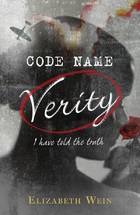
I haven’t even managed to write a review for this book yet – I’m not sure how I will, in fact, especially when others have reviewed it so much better than I can. But let me tell you, you should read it, and I will soon tell you why I think so.
Have a wonderful month and a great start to summer!
Taking a little break from blogging over the bank holiday weekend. I’ve recently become obsessed with a PC game (Crusader Kings 2 – essentially my perfect medieval game come to life), and whenever I’m not playing, I feel like I have a million different things to do, most of which is unfortunately work.
When I do have free time, I’ve spent it outside in the recent brilliant sunshine:

It’s cloudy again now, but I’m using the upcoming Jubilee weekend to recharge, and as such I’m waiting until afterwards to come back. I’ll see you all on June 6th!
 Tamar, princess of Georgia, can’t imagine her big, intimidating father ever losing a battle. But when an army attacks her country’s capital, Tamar is sent away to relative safety. Rebellious as she is, Tamar doesn’t stay hidden for long, and returns to the capital only to receive her father’s blessing as his heir, leaving her a female queen of Georgia when he dies. But in the countryside, Tamar met a boy that she can’t forget, even when she is forced to make a diplomatic match for her country’s strength. When the choice comes between the boy she loves and the country she would die for, which will Tamar choose? Tamar, princess of Georgia, can’t imagine her big, intimidating father ever losing a battle. But when an army attacks her country’s capital, Tamar is sent away to relative safety. Rebellious as she is, Tamar doesn’t stay hidden for long, and returns to the capital only to receive her father’s blessing as his heir, leaving her a female queen of Georgia when he dies. But in the countryside, Tamar met a boy that she can’t forget, even when she is forced to make a diplomatic match for her country’s strength. When the choice comes between the boy she loves and the country she would die for, which will Tamar choose?
I’d never read much about Georgia; to be honest, the only reason I even knew there was a country called Georgia is because it was part of the former Soviet Union, which I learned about when I studied Russian in school. But this book immediately took my interest; it’s set during the Middle Ages, and it’s about a woman who struggles with power. Queen Tamar genuinely existed and is a legend for current Georgians, with some buildings associated with her still standing. But from reading this book about the early part of her youth and her eventual reign, it’s obvious that a long and peaceful rule was by no means guaranteed, or even likely.
Told alternately between Tamar and her second husband, Lord Soslan, the book explores her struggles as the kingdom adapted to a woman on the throne. Tamar often demonstrates her intelligence, wilfulness, and determination to retain her throne and do her job properly. There are, as expected, a few uncertain first steps for her, particularly with a difficult aunt who comes to “advise” her on how to become a powerful queen, but her journey is an inspiring and compelling one. It’s really a coming of age tale, but that coming of age is one that an entire kingdom relies on.
I was completely fascinated by the history of this country I’d never read about before; the author includes touches of other parts of the world, particularly the Byzantine Empire, as Tamar’s sister goes to marry there and finds herself embroiled in, as usual, a succession crisis. This provides some essential context for the time period, but overall I loved reading about somewhere completely different. With deft touches, she shapes great characters in the space of a relatively short novel, making for a very pleasurable read over the course of an afternoon.
The Girl King is definitely recommended for other readers of historical fiction; if you’ve had enough of the Tudors and the Plantagenets, why not let Tamar take you back to 12th century Georgia?
All external book links are affiliate links. I received this book for free for review.
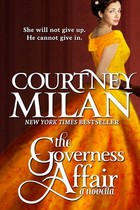 Miss Serena Barton demands justice. She demands it by standing outside the home of the Duke of Clermont in London through all the vagaries of English weather, attracting the attention of Hugo Marshall. As the duke’s secretary, Hugo plans to restore his riches and thus earn his own, fulfilling his ambition to make it in the world. But Serena’s plight attracts his attention and he quickly grows fond of this fierce, determined, protective woman. Miss Serena Barton demands justice. She demands it by standing outside the home of the Duke of Clermont in London through all the vagaries of English weather, attracting the attention of Hugo Marshall. As the duke’s secretary, Hugo plans to restore his riches and thus earn his own, fulfilling his ambition to make it in the world. But Serena’s plight attracts his attention and he quickly grows fond of this fierce, determined, protective woman.
Courtney Milan has fast become one of my very favourite romance authors. Her books are consistently beautifully written, with characters that truly tug at the heart and add in just that emotional intensity that sometimes lacks in other romances. This novella starts off another series of hers, and while it’s not as amazing as Unlocked was, it’s still a really wonderful read and a fantastic way to spend an hour or two. Also, it still only costs 99 cents, so it’s impossible to resist.
It is in part because this novella sets up a new series that it lacks a little bit. This is a bit more clearly a background story, and while Hugo and Serena are both wonderful characters as usual, there isn’t quite the same self-contained feel, particularly because of how the ending actually introduces the characters which will continue on the series. But this was still delightful; in particular, I loved the way the hero and heroine flirted with each other through little notes, as they started to get to know each other in their rather peculiar circumstances.
Even though this was a novella, and necessarily short, I again didn’t feel the story was particularly rushed, but rather enjoyed the way it played out. Serena was a wonderful woman who did clearly have a few things to learn, but whose determination was admirable to behold, and who deserved a better lot in life than she starts out with. Hugo’s own justification for his behaviour made perfect sense. I still felt like I got to know these two characters, although the rest of them remain as necessary shadows, and to get behind their happy ending.
The Governess Affair is another great novella for romance readers and I for once can’t wait for the rest of this series to come out!
|
|



Recent Comments