|
|
 The state of publicly reported science in our world is, according to Ben Goldacre, very grim indeed. With the details of newspaper reporters who aren’t trained scientists misinterpreting releases, pharmaceutical companies funding and rigging studies, and widely lauded ‘experts’ who are anything but, Goldacre works to put power back into the hands of his readers. Explaining carefully and patiently what’s gone wrong and how to judge whether or not we should believe what we hear on the news (short answer: no), he clearly and often humorously elucidates the problems facing modern science and the many injustices continually perpetuated on the public by those who are aiming for money and fame, rather than the welfare of human beings. The state of publicly reported science in our world is, according to Ben Goldacre, very grim indeed. With the details of newspaper reporters who aren’t trained scientists misinterpreting releases, pharmaceutical companies funding and rigging studies, and widely lauded ‘experts’ who are anything but, Goldacre works to put power back into the hands of his readers. Explaining carefully and patiently what’s gone wrong and how to judge whether or not we should believe what we hear on the news (short answer: no), he clearly and often humorously elucidates the problems facing modern science and the many injustices continually perpetuated on the public by those who are aiming for money and fame, rather than the welfare of human beings.
Unquestionably, my favorite part of this book is the fact that Goldacre is honestly showing us how to judge the science reported to us. He takes science down off its pedestal and displays it for everyone to learn about. As a child in an American school, I did learn about the scientific method, and I have performed experiments and examined the results of them myself. Unfortunately it’s been so many years since I did so that I’d forgotten nearly everything (which is something they don’t teach in school!). Goldacre’s book served as an entirely welcome reminder, especially in the world of constant health scares that we live in. Every other day, something else is discovered to raise your risk of cancer or make you magically healthy. He brings us a hearty dose of skepticism and several ways to measure results for ourselves.
Health is probably the biggest issue covered in the book, largely because Goldacre is himself a doctor and can most clearly talk about this issue. He doesn’t shy away from the big ones, either, targeting everything from the absurd things children are taught in school right up to the big MMR scare and the many ways people in Africa are misled about treatments that can genuinely save their lives. He does name people in the industry who practice bad science, but throughout he makes it clear that we can escape this ourselves. He doesn’t villainize any particular person so much as the entire industries that have grown on false studies. He does, however, target humanities graduates a little too enthusiastically at times for me. Since I am one of them who is trying to understand better (why else would I be reading this book?), I wasn’t entirely thrilled to find myself so obviously stereotyped. But the rest of the book was worth it.
There is so much covered in this book that I can hardly scrape the surface. It occurred to me, as I was reading, that this book actually would go quite well with In Defense of Food by Michael Pollan, especially given that the latter discusses some bad science in the nutrition industry too. Both authors encourage their readers to use reason, not to blindly trust in the media or people who are trying to make money off of our problems, even non-existent ones. Goldacre advises against the medicalization of society, this idea that we can take a pill and be cured of ills which would otherwise require an attitude change. Pollan does the same thing, but in terms of food; why rely on supplements and unproven nutritional vitamins when you can just vary your diet and achieve greater benefits? Questioning the world around us and making up our own minds is, in my opinion, one of the best things we can do, and both of these authors give us back the power to do precisely that.
Bad Science is a book I’d highly recommend to anyone, particularly those who like me have forgotten the little science they knew to start with. It’s informative, empowering, and well worth the time spent reading it.
I am an Amazon Associate. I purchased this book.
 The first of my epic rereads of 2011 is Anne of Green Gables. Rather than going for a stricter review format, I thought it would be more fun and more likely to succeed if I just wrote my thoughts down. Luckily, this book fits that perfectly and has had my little brain working since I finished it. I can also completely spoil the suspense by telling you right now that I adored this book, one of my ultimate childhood favorites, just as much as an adult. The first of my epic rereads of 2011 is Anne of Green Gables. Rather than going for a stricter review format, I thought it would be more fun and more likely to succeed if I just wrote my thoughts down. Luckily, this book fits that perfectly and has had my little brain working since I finished it. I can also completely spoil the suspense by telling you right now that I adored this book, one of my ultimate childhood favorites, just as much as an adult.
Almost every little girl who loved to read knows this story; orphan red-headed Anne is sent to Marilla and Matthew Cuthbert by accident. They wanted a boy to help out on the farm, but found themselves with a talkative, dreamy wisp of a child instead. After a day’s acquaintance, and knowing Anne’s dim future prospects, neither Marilla nor Matthew can bear to send her back, so they decide to keep her, leaving Marilla, an old maid, to raise a girl child on her own.
I must have read this book countless times as a child. It’s always been one of my favorites, but I haven’t read it in at least ten years. The number just went up and up as I got older. I’m not sure what drove me away from reading this one as a teenager; I suspect it may have been my early high school love affair with romance novels. Regardless, it was certainly high time for a reread, and the combination of my new Kindle and the excellent Gutenberg project meant I could have the entire series at my disposal whenever I wanted. I never owned the whole series as a kid, though I always longed to, and it’s nice to finally have that sense of completion. Since I don’t have to haul the entire series over the pond to read it, this is much more convenient for me.
Anyway, on to the book. As I mentioned earlier, I completely and unreservedly adored it all over again. There are so many reasons to love it, but naturally the foremost is Anne herself. Vivacious, dreamy, and incredibly intelligent, I think every little girl can see something of themselves in her. She is not only all of us, but she becomes all that we’d like to be, something I never really picked up on reading the book as a kid. She may not be beautiful, she may make mistakes, she may use big over-dramatic words, but she is incredibly loveable and no one can resist her copious amounts of charm. I know I wished to have so many friends at that age; I had some, but never the situation where my best friend was right next door and available to play every day. Anne is so very girlish, longing to have lovely dark hair, dresses with puffed sleeves, and an absence of freckles. She’s easy to relate to because most of us feel like ugly ducklings at 12 and 13; they are such awkward ages. Anne’s trials can help young girls who are similarly not allowed to wear the latest fashions accept that this is a simple reality, and that such rewards will come in time.
What was most interesting was how I remembered the book. I knew some of the big events that were going to happen, but I managed to mix up part of this one with the next, so I kept expecting a few things to happen only to find that they didn’t! Obviously I read Anne of Avonlea more than I thought I did. But even as I remembered where the story was going and what pitfalls were along the way, I also rediscovered so many things and found myself enjoying the journey far more than I would have expected. The entire book is something of an idyll and gives the reader a feeling that the past was a wonderful place. Even though, as I mentioned, Anne has her faults and makes mistakes that cause her to suffer bitterly, most of the book has a rosy glow about it. Life has issues, but they are never insurmountable so long as one is good and honest and does her best. There are always friends, and dreams, and hard work can make these dreams come true. Even that irritating boy you thought you’d always hate can turn out to be a friend. In this respect, it really is the perfect book for a little girl, and I know if I ever have one of my own, my own paper copy will be hers to hopefully cherish as much as I did.
 Fans of the Pink Carnation series will recognize Turnip Fitzhugh, the well-meaning but very dim – and very rich – member of society. Miss Arabella Dempsey, however, is a wallflower, so much so that I barely remembered her appearances in earlier books. In this installment, she’s taken up a job as a schoolteacher, intent on making life a little easier for her sisters. But her plans go awry when the elder brother of one of her charges, Turnip, gets involved in her life, with the very clever intervention of a Christmas pudding. Arabella never imagined she’d earn the attentions of such a man, much less that she’d get involved in a spy plot like something out of a novel, but she’s about to find that her teaching career will not be the plain sailing she’d planned on. Fans of the Pink Carnation series will recognize Turnip Fitzhugh, the well-meaning but very dim – and very rich – member of society. Miss Arabella Dempsey, however, is a wallflower, so much so that I barely remembered her appearances in earlier books. In this installment, she’s taken up a job as a schoolteacher, intent on making life a little easier for her sisters. But her plans go awry when the elder brother of one of her charges, Turnip, gets involved in her life, with the very clever intervention of a Christmas pudding. Arabella never imagined she’d earn the attentions of such a man, much less that she’d get involved in a spy plot like something out of a novel, but she’s about to find that her teaching career will not be the plain sailing she’d planned on.
I’ve made no secret of the fact that the Pink Carnation series is one of my shameless pleasures. I can’t at all resist a great historical cross between romance and mystery, mixed in with an ongoing contemporary story, topped off with Willig’s witty and light style. They’re just perfect for winter evenings, which is when I read this particular book. It’s actually missing the contemporary story, but this one by itself was so enchanting that I genuinely didn’t notice. Turnip has been a recurring character throughout the books. I never managed him as a romantic hero, but his bumbling sweetness just made the entire book that much more delightful. He’s so well-meaning and well-intentioned that his lack of intelligence doesn’t make a difference. In fact, he reminded me most of Bertie Wooster here, and I did wonder if Willig used that character as inspiration.
The book itself is something of a flip flop from The Temptation of the Night Jasmine, which I reviewed back when it came out two years ago (I can’t believe it’s been that long). As such, a lot of the events are somewhat repeated, but in reverse, when it comes to a Christmas party Arabella and Turnip, along with some other Pink Carnation veterans, attend. We know what’s going on with Charlotte and Henrietta, but the focus is solely on Arabella and Turnip. It’s very light-hearted, like much of the series, but the Christmas theme has really been taken to heart here. The mystery takes very, very little priority and the focus is solely on the romance. Without the frame story, it’s clear that a romance is exactly what this book is; while some of the previous ones have felt heavier on the historical fiction, this is certainly not one of them. So if you’re going in with that frame of mind, you may not enjoy this quite as much as I did. It feels like a treat for me, because I do enjoy the series very much, but I would recommend reading the others before getting to this one.
If you’re looking for a light, frothy fun read, especially in the winter, The Mischief of the Mistletoe is definitely it. Highly recommended – especially to other fans of the series!
I am an Amazon Associate. I purchased this book.
 Isabelle is leaving her husband. She’s found out that he’s been cheating on her and she can’t wait to get away. Three hours from home in Cape Cod, she sees a car stopped in the middle of the road, facing the wrong direction. It’s so foggy that she doesn’t see the car until it’s too late, and she’s struck it, killing the woman inside. Her young son survived, too far out from the wreck, but his and his father Charlie’s lives are irrevocably changed. Isabelle can’t help running into them when they both return to their lives in Cape Cod, and she finds herself drawn to this widower and his adorable, asthmatic son Sam, despite the role she’s played in their grief. Isabelle is leaving her husband. She’s found out that he’s been cheating on her and she can’t wait to get away. Three hours from home in Cape Cod, she sees a car stopped in the middle of the road, facing the wrong direction. It’s so foggy that she doesn’t see the car until it’s too late, and she’s struck it, killing the woman inside. Her young son survived, too far out from the wreck, but his and his father Charlie’s lives are irrevocably changed. Isabelle can’t help running into them when they both return to their lives in Cape Cod, and she finds herself drawn to this widower and his adorable, asthmatic son Sam, despite the role she’s played in their grief.
I am so glad my Skype book club chose this for our February read because I would never have read it otherwise – and I truly enjoyed it, finding that it surpassed my expectations by far. Before I even got into the story, I found that the writing instantly swept me away, evoking perfectly Isabelle’s feelings as she fled her husband and then encountered April’s car in the midst of the fog. I was drawn instantly in and looked forward to returning to it whenever I had to go do something else.
One of the most interesting parts of the novel was actually April’s backstory. Though she dies in the first few pages of the novel, she is one of the most compelling characters. Clearly mentally ill in some way, she is the classic overprotective mother in some respects but incredibly negligent in others. She needs someone else to need her and this seems to motivate almost all of her choices in life. Meanwhile, her husband Charlie has always been desperately in love with her. Discovering that she may have been leaving him – with their son in tow – is devastating for him, and he is obsessed with finding out why.
Sam’s relationship with Isabelle is another really well-done aspect of the novel. Having caught just a glimpse of her at the accident scene, Sam believes that Isabelle is an angel, and when he seeks something to hold onto in the absence of his mother, she turns into it. Isabelle herself is looking to refresh her life, away from her ex-husband and his girlfriend’s baby, but no longer has a place in the community where she’s ostracised as the woman who killed a young mother. Her desire to recover lead to some very difficult choices, but I felt she always handles them in an appropriate way.
The only unrealistic aspect of the novel, in my view, was the way Isabelle was treated after the accident. How could she be ostracised so completely for an accident which really wasn’t her fault? I don’t think any woman would experience this kind of backlash when she ran into another car, facing the wrong direction, lights off, in a thick fog. The rest of the novel drew me in so much that I managed to ignore this but it did strike the single odd note.
My book club really enjoyed this book and found tons to discuss in it, only some of which I have touched on here. This would be a great selection for other book clubs too – there is a lot to pull out of this one and talk about!
Pictures of You was a sparkling read, chock full of interesting, multi faceted characters, strong relationship development, and beautiful prose. The mystery within it. about just why April ran, made a strong book that much more appealing. Highly recommended.
I am an Amazon Associate. I bought this book.
 Andi is a young girl from an upper class Southern family. Years ago, she would have been a proper Southern belle, but for the moment she’s struggling to get over her brother’s death from drugs and the realization that her father is sleeping with her best friend’s stepmother. With all the awkwardness of an early teenage girl, Andi imagines herself to be in love with a number of boys, struggles through difficult issues she’s too young for, fights against wearing a child’s dress for her big sister’s wedding, and charms everyone in sight with her genuine kindness and good will. Andi is a young girl from an upper class Southern family. Years ago, she would have been a proper Southern belle, but for the moment she’s struggling to get over her brother’s death from drugs and the realization that her father is sleeping with her best friend’s stepmother. With all the awkwardness of an early teenage girl, Andi imagines herself to be in love with a number of boys, struggles through difficult issues she’s too young for, fights against wearing a child’s dress for her big sister’s wedding, and charms everyone in sight with her genuine kindness and good will.
This is such an incredibly sweet coming of age story. Andi visibly matures as the novel goes on. She’s faced with tough dilemma after dilemma – her brother’s death, her father’s infidelity, her mother’s alcoholism, even her best friend heading to boarding school. But she handles it all, even when she thinks she’s not able to, and is an absolutely adorable character. Her voice is so true to teenagerhood that some of her thoughts could easily have come out of my own head at that age, even though not nearly so many atrocious things happened in my early teenage years. She’s a drama queen and overimagines everything, but don’t all teenagers?
The best, and most adorable, example of this is her habit of imagining herself in love with a few boys and men throughout the course of the novel. In one particularly charming situation, she’s convinced herself that she’s in love with a soldier who is off at war. She writes him letter after letter, not really noticing that he’s not writing back – and then his mother comes over with the news. He’s been injured, not fatally, but in his hands. Andi is devastated and blurts out that he and she were going together, only to be told that he’s actually engaged. What a mortifying and devastating moment for a thirteen year old!
Something else I sincerely appreciated about this book was Andi’s faith. It’s never pushed on the reader, it’s simply presented as a component of her personality. It underlines quite a bit of what she does, like volunteering at a soup kitchen and reading to elderly people, and her faith remains a lodestone for her. It seemed refreshingly real to me, without the author preaching to us in any way. It’s another part of Andi’s life, not everything to her. She even complains about being an altar server, just like I did when I had to be one as a child.
All That’s True is a great, engaging read about a teenager coming into her own. As she comes to realize things about her life and develop her personality fully, we can’t help but fall in love with her and eagerly go along for the ride. I would definitely recommend this book to teenagers and adults everywhere.
I am an Amazon Associate. I received this book for free for review from the publisher.
 After the collapse of the Soviet Union, many Russians struggled with identity and with their ever-changing nation. Susan Richards has been to Russia before and goes back just to see how the people she knows are doing, hoping to see what’s happened in modern day Russia. Over the course of 16 years, she visits a variety of towns and cities around Russia, catching up with friends and investigating cults and other Russian legends. After the collapse of the Soviet Union, many Russians struggled with identity and with their ever-changing nation. Susan Richards has been to Russia before and goes back just to see how the people she knows are doing, hoping to see what’s happened in modern day Russia. Over the course of 16 years, she visits a variety of towns and cities around Russia, catching up with friends and investigating cults and other Russian legends.
I really wanted to like this book. Really, really wanted to like it. I’m fascinated by Russia (and Russians) – I spent five years learning Russian, picking up plenty of Russian history through both the language and various classes, and only by a sad quirk of fate haven’t visited yet. It’s still a goal. So, this book seemed like it would be perfect. Unfortunately, it really wasn’t, and largely because it didn’t really tell me all that much about modern day Russia. There were a few interesting segments, such as when Susan visits Orthodox communities hidden deep within the Siberian forest, but for the most part, she spends the entire book doing just one thing: visiting her Russian friends.
At the start of the book, it is her mission to travel to one town, Marx, and throughout the book she keeps on returning. She makes friends with people there and spends quite a bit of the book visiting them and getting updates on their progress (or setbacks). In doing so, she does take a peek into modern Russian society – exposing Russians to be just as uncertain as Westerners, ever-uneasy in a world without regulations. Regulations, when they return, are sometimes embraced and sometimes detested. What’s certain is that the levels of freedom have been restricted and the Russian lifestyle is still very volatile. It’s clear to them that anything could happen with their government and they act accordingly.
The problem for me was that I wasn’t necessarily interested in the lives of the same people, over and over again. It was useful for contrast, but I never came to care about any of the people Susan befriended. I found some of their lives much more interesting than others. By far the best parts were when she ventured out of Marx and saw how things were in other parts of Russia; though we can see the changes in Russia through the eyes of those people in Marx, the country is immense. Different perspectives were, for me, very important and helped to round out the overall picture.
What really made me more or less dislike the book was the way it ended. The author doesn’t really sum up her experiences or her thoughts. It just ends. I can see the point of this – after all, life goes on, and these lives are doing just that – but I can’t help but feel I’d have preferred an actual end of some sort. It’s as though she’s going back to visit tomorrow, but this time, we won’t be along with her, seeing things through her eyes.
I’ve read a few varying opinions on Lost and Found in Russia, but while it left me with some lingering things to think about, I overall felt disappointed. I couldn’t recommend it unless you’re very interested in post-Soviet Russia.
I am an Amazon Associate. I received this book for free for review from Netgalley.
 Gypsy Rose Lee is America’s best known burlesque dancer. What’s less known about her is the life of Rose Louise, the reasons she was driven to burlesque, and how she really thought about herself and her life. This is as much due to her own cultivation of her personal myth as anything else; taking her sister’s legacy in vaudeville and making it her own, Gypsy became a legend even in her own time, the master of the strip tease. Karen Abbott has done research into Gypsy’s early life, while she was still Rose Louise, and attempted to work out the true story of the woman behind the myth. Gypsy Rose Lee is America’s best known burlesque dancer. What’s less known about her is the life of Rose Louise, the reasons she was driven to burlesque, and how she really thought about herself and her life. This is as much due to her own cultivation of her personal myth as anything else; taking her sister’s legacy in vaudeville and making it her own, Gypsy became a legend even in her own time, the master of the strip tease. Karen Abbott has done research into Gypsy’s early life, while she was still Rose Louise, and attempted to work out the true story of the woman behind the myth.
Gypsy Rose Lee was certainly a fascinating woman. I didn’t know much about her before reading this book, just her name and that she was a famous burlesque dancer. The story within this book was, for me, fascinating. I took a class in American musical theatre back in college and it was easily one of the more interesting courses outside of my majors. Of course, it started right at the beginning, with the origins of vaudeville and burlesque – both of which feature largely here.
As a child, Gypsy was in vaudeville, and hugely successful, with her sister June as the lead performer. An awkward child, Gypsy, then known as Rose Louise, could often be mistaken for one of the boys, while her ethereal baby sister stole the show. It was only when June ran off at the age of fifteen that Rose transformed herself into Gypsy Rose Lee, joining burlesque shows out of desperation and eventually becoming a true master of the racy performances. Behind the scenes was a difficult mother and some very difficult family relationships, all of which made for compelling reading. At times it was hard to believe that Gypsy and her family actually lived these lives – they are so outside the norm. I was simultaneously fascinating and drawn to pity Gypsy and June for completely missing out on normal childhoods – they didn’t go to school, they didn’t make friends, and they lived just to make their mother more money.
Despite the incredibly compelling life of Gypsy, I didn’t really feel that the book lived up to its full potential. That’s because it switches around quite drastically in time. This could have been a useful device for contrasting the older Gypsy with the child Rose Louise, but in the end it flipped around too much for my liking. I wouldn’t have minded Gypsy’s biography alternated with interviews and the author’s research (presuming the latter took a secondary role) but switching through multiple time periods was just distracting. I wound up feeling the book would have been better as a straightforward biography, told in chronological order. Gypsy’s story doesn’t need these devices to be captivating.
Bar the flaw of alternating periods of history, American Rose was an incredibly addictive, compelling read. I was drawn to read more and more of Gypsy’s life, reading this non-fiction book as easily as I would read any novel. If you don’t mind the switching around, I’d highly recommend this book.
I am an Amazon Associate. I received this book for free for review from Amazon Vine.
 Honestly, I had a really great idea for what to write about in this week’s Sunday Salon; unfortunately, I’ve completely forgotten it in the midst of a busy week. Stress at work generally means that when I get home, I just want to sit around and vegetate. You can even tell by my reading yesterday. I sat down and just read Some Girls Are by Courtney Summers and Love in the Afternoon by Lisa Kleypas, having my own mini-read-a-thon in the midst of a Saturday afternoon! Honestly, I had a really great idea for what to write about in this week’s Sunday Salon; unfortunately, I’ve completely forgotten it in the midst of a busy week. Stress at work generally means that when I get home, I just want to sit around and vegetate. You can even tell by my reading yesterday. I sat down and just read Some Girls Are by Courtney Summers and Love in the Afternoon by Lisa Kleypas, having my own mini-read-a-thon in the midst of a Saturday afternoon!
It doesn’t help that I’ve been on a bad reading streak. I’ve abandoned two library books and forced myself to finish two review copies in just two weeks. Looking back at my reading, there was a fifth book I didn’t like in the week before those as well. I can’t even remember the last time this has happened to me. I’ve gotten so spoiled by knowing what I like so well that it genuinely throws me off when I start to read a book which sounded great when I requested it or checked it out, but turns out to be really terrible. Even my husband noticed that I was dissatisfied with everything I was reading. Hence my reading spree yesterday – I knew I would love both those books, and it was an absolute relief to find out I was correct! Now I’m comfortably ensconced in Icons of England, a collection edited by Bill Bryson of all the things others love about England and, more specifically, the English countryside. Unfortunately I’m now wary of all the other books on my shelf – what if I don’t like another one of them?
So, the plan for this Sunday is more comfort reading, and more Assassin’s Creed II, my latest gaming obsession, before heading back to work tomorrow. Hopefully I’ll also manage a few reviews – I have six to write. This brings up another point; as I mentioned, I have two DNF library books to return tomorrow, and I’m not sure whether to write about them a bit or not. Since I so rarely abandon books, I’ve never really thought about it before. Would you be interested in knowing why I haven’t finished a book?
What do you do to get yourself out of a bad reading streak?
 Genevieve, a gently born girl growing up in sixteenth century France, has been raised with the belief that her parents are dead, thanks to the French King Francois, and that her true loyalties lie with the English King Henry VIII. Her mission in life has always been to eradicate him, leaving the way open for Henry to reclaim France as his ancestors tried so many times. But when Genevieve is sent to the French court, she finds that things are not at all what she expected. Court intrigue is rife, true, but she begins to make friends and, worse, to get to know the king who has been turned into a villain by her aunt throughout her life. When the time comes to fulfill her mission, will she follow through? Genevieve, a gently born girl growing up in sixteenth century France, has been raised with the belief that her parents are dead, thanks to the French King Francois, and that her true loyalties lie with the English King Henry VIII. Her mission in life has always been to eradicate him, leaving the way open for Henry to reclaim France as his ancestors tried so many times. But when Genevieve is sent to the French court, she finds that things are not at all what she expected. Court intrigue is rife, true, but she begins to make friends and, worse, to get to know the king who has been turned into a villain by her aunt throughout her life. When the time comes to fulfill her mission, will she follow through?
Quite a few factors contributed to my enjoyment of this novel. To be honest, I was a bit wary of it before beginning; these days, there is far too much fiction centering on this period in history, but I immediately was drawn to the fact that it took place in France, not England, and that the heroine found herself with very torn loyalties. It’s always fascinating for me when a character in a book has cause to question beliefs she’s been indoctrinated with; I firmly believe that we should all question and learn things for ourselves, so I very nearly felt like applauding when she started to realize that things were not as they’d been portrayed.
Plus, I genuinely liked Genevieve as a heroine. She’s an attractive character who draws others in despite herself; she’s thoughtful, intelligent, but still prone to the foibles any teenager would suffer. She’s not all golden-hearted, either, because she can’t stand her ‘rival’ in the court and has some very dark thoughts. Her relationships with others are continually developing as they get to know her in ways that kept me turning the pages – I couldn’t wait to see how she’d react to the latest bit of knowledge. She also gets to know some very influential French figures, including not only the King as aforementioned but his mistress, Anne d’Heuilly, and encounters the prince Henri, his wife Catherine de Medicine, and his respective mistress, Diane de Poitiers. There were also a few heartrending moments in the book – they were towards the end, so I can’t elaborate, but have stayed with me since I finished reading.
Finally, the French court is magnificently depicted in this book. It’s full of descriptions of clothing, food, and behaviour that had me riveted and transported me to the period. Ever since I went to France, I have felt much more interested in fiction and non-fiction set in the country, and To Serve a King satisfied this craving on many fronts. It not only delivered that wonderful atmosphere, but an engaging story with a few twists, lively and sparkling characters, and very solid writing. I highly recommend this to historical fiction lovers everywhere.
I am an Amazon Associate. I received this book for free from the author for review.
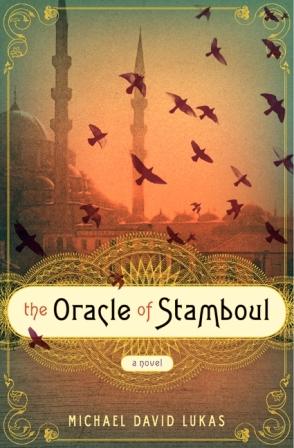 Eleanora Cohen is born on a day of omens. A flock of purple and white hoopoes take over her house in Constanta, two midwives mysteriously appear to assist in her birth, and unfortunately her mother dies, leaving her and her father alone in the world. Eleanora’s father asks his late wife’s sister, Ruxandra, to help raise the child, and so she grows up for a few years, long enough to display a precocious intelligence and to alienate her aunt with that extraordinary cleverness. When Eleanora’s father makes plans to travel to Stamboul, Eleanora decides to stow away on his ship rather than be left behind with her aunt, a decision that has unforeseen consequences. Eleanora Cohen is born on a day of omens. A flock of purple and white hoopoes take over her house in Constanta, two midwives mysteriously appear to assist in her birth, and unfortunately her mother dies, leaving her and her father alone in the world. Eleanora’s father asks his late wife’s sister, Ruxandra, to help raise the child, and so she grows up for a few years, long enough to display a precocious intelligence and to alienate her aunt with that extraordinary cleverness. When Eleanora’s father makes plans to travel to Stamboul, Eleanora decides to stow away on his ship rather than be left behind with her aunt, a decision that has unforeseen consequences.
The Oracle of Stamboul lies in that peculiar area of magical realism. It’s set in a firmly historical basis, but includes just a few touches of fantasy to keep us on our toes. Eleanora’s incredible intelligence for me might as well have been fantasy, and of course the flock of hoopoes as well as the myth surrounding Eleanora’s birth just adds to the book’s overall touch of mysticism. It’s something that I’m not always comfortable with, but which worked very well in this particular book. It’s appropriate to the slightly distant, slightly magical atmosphere that pervades the novel and Eleanora’s perception of the world around her.
Eleanora herself I found immensely appealing. Despite her cleverness, she has a fragility about her that makes it clear she’s just a girl trying to cope in the wider world. One incident earlier in the book displayed this perfectly for me; in a shop with her aunt, Eleanora discovers an error in their bill and says so quite loudly. She thinks she’s saving money, but her aunt hustles her out of the shop, scolds her, and puts a stop to her lessons. She doesn’t understand the world the way adults do, not yet, and it’s this alternating combination of intelligence and vulnerability which make her such an appealing heroine.
The story itself wasn’t quite as strong as I’d expected. While it goes along smoothly, the climax wasn’t what I’d hoped it to be, and to some extent that soured my reaction to the rest of the book. I felt slightly misled by the cover copy, which indicated that Eleanora would have a great impact on the Ottoman Empire – I think I was expecting more of an alternate history than I actually got. I don’t know very much about the fall of the Ottoman Empire, and personally I would have liked more. I didn’t feel as solidly grounded in the period as I would ideally have done. Perhaps the details would have weighed the book down for others, but not for me – I kept wanting to know more, looking up things on Wikipedia to try and connect the dots. The book had the right atmosphere and a good story, but lacked the historical substance and basis for me to really fall in love with it. For someone who knows more about this period and place in history, this particular concern would be irrelevant, but I genuinely was made curious by the story and characters. I wanted more from not only the history, but from the story itself.
Nevertheless, The Oracle of Stamboul was a thoughtful, especially well-written piece of historical fiction, with just the right touch of magic to set it apart from its fellows. Recommended.
 Want to read others’ reviews? Check out a few other stops on this TLC book tour: Want to read others’ reviews? Check out a few other stops on this TLC book tour:
Tuesday, February 8th: The Bodacious Pen
Tuesday, February 8th: The Reading Date
Tuesday, February 8th: Katie’s Nesting Spot
Wednesday, February 9th: Bibliophibian
Thursday, February 10th: One Girl Collecting
Thursday, February 10th: Confessions of a Rambling Mind
I am an Amazon Associate. I received this book for free for review from the publisher.
|
|



Recent Comments