|
|
 Laura Grey is a plant in Andre Jaouen’s household, acting as a governess to his children but sent by the Pink Carnation to find out more about his allegiances. Laura, originally a Frenchwoman, does have the experience to teach the children at the same time, since she’s spent half her 32 years as a governess. The surprise is that Jaouen has much more in common with Laura’s side than anyone initially thought, and the challenge will be to keep everyone safe as certain members of the French government begin to suspect him. In the modern world, Eloise and Colin head to Paris to meet his mother, but her husband (who is actually of Colin’s generation) has some nasty plans in store to prove his position as the new head of the family. Laura Grey is a plant in Andre Jaouen’s household, acting as a governess to his children but sent by the Pink Carnation to find out more about his allegiances. Laura, originally a Frenchwoman, does have the experience to teach the children at the same time, since she’s spent half her 32 years as a governess. The surprise is that Jaouen has much more in common with Laura’s side than anyone initially thought, and the challenge will be to keep everyone safe as certain members of the French government begin to suspect him. In the modern world, Eloise and Colin head to Paris to meet his mother, but her husband (who is actually of Colin’s generation) has some nasty plans in store to prove his position as the new head of the family.
After the light-hearted fun that was The Mischief of the Mistletoe, we’re right back in the thick of Napoleonic France with The Orchid Affair. Things are not easy or delightful for Laura and Andre. The dark side of the series and the espionage factor have come back in force, as Laura is immediately aware of the danger around her when she presents herself as a governess, right at the start of the book. Things simply escalate as the story continues. The modern day story doesn’t lighten things up here either; instead, Colin and Eloise are hit with some unpleasant bombshells of their own of varying severity. Willig’s writing is still as witty and polished as ever, but we’re much more aware that things can and sometimes do go wrong.
Regardless, it was nice to be transported back to the feel the books had at the beginning of the series, to be reminded that these books are about spies and that post-Revolutionary France was still a ridiculously dangerous place to be. Certainly some of the last few have run the risk of letting us slip into a delightful idyll of romance, but this book isn’t like that. Even the inevitable relationship between Laura and Andre, when it comes, isn’t like that. Instead, it’s a meeting of minds and a love borne almost out of necessity. They’re attracted from the start, but I got the feeling that neither of them would have acted on it without some external pushes. I can’t say I’m as fond of this couple as I have been of previous couples, but overall the storyline works very well and flows completely naturally – I was able to speed right through this book.
The Pink Carnation series is still an auto-buy for me; I continue to enjoy each and every installment of the series. I would definitely recommend them to anyone looking for delightful, romantic, and sometimes suspenseful reads centered around spies in Napoleonic France and eighteenth century England.
I am an Amazon Associate. I purchased this book.
 I know I meant myself to space out my rereads over the course of each month, but I honestly just couldn’t wait to read the next in the Anne series! I was very tempted to start Anne of Avonlea immediately after finishing Anne of Green Gables a couple of weeks ago, but I managed to make myself wait until the 2nd of March. I’m not sure I’ll make it until April before I read Anne of the Island but I’m not sure that’s a bad thing either! I know I meant myself to space out my rereads over the course of each month, but I honestly just couldn’t wait to read the next in the Anne series! I was very tempted to start Anne of Avonlea immediately after finishing Anne of Green Gables a couple of weeks ago, but I managed to make myself wait until the 2nd of March. I’m not sure I’ll make it until April before I read Anne of the Island but I’m not sure that’s a bad thing either!
Anyway, in this installment, Anne and Marilla set about their relatively peaceful life in Avonlea. Anne has become the teacher at the school, which poses its own unique challenges. She wants her students to love her, but at times it seems as though Anthony Pye will never oblige. Meanwhile, Marilla’s third cousin finds himself with two twins that he can no longer take care of, and so the two ladies find themselves with Davy and Dora. Dora is a perfect princess, but Davy is mischievous and a ridiculously lovable handful.
As Anne gets a little older, she starts to enter the world of womanhood. As a result, this book focuses a lot more on romance. It’s hard to believe a seventeen year old young woman would completely fail to have any interest in the men around her, but somehow for Anne it works – she’s still busy being imaginative even as her friends start to fall in love. She recognizes that this stage in her life is very much the next one, but instead of developing crushes herself reflects on the fact that her childhood is really over.
It’s a funny juxtaposition because she’s now treated as an adult by everyone around her – she’s the teacher at the Avonlea school, responsible for instilling education and virtue in the minds of a classroom full of young people. She’s very much in charge of Davy and Dora at times as she and Marilla share responsibility for them. Her bringing up is clearly over because she’s automatically entrusted with bringing up the next generation of young kids, even at sixteen and seventeen.
Like the last one, this book is divided into a series of episodes in Anne’s life. She has a variety of adventures, but they aren’t quite as fun as they were when she was a child; instead, the incidents are more adult in nature. She works to gain the affection of the children in the school; Davy nearly loses Dora and she has to find her; and she plays a part in befriending an older, single woman and trying to reunite her with her long-lost love. Because Anne is mostly done growing up, the book holds together a little less cohesively around these incidents, but it’s still a delightful and overall comforting read.
I had half-forgotten a lot of this book, with my memory fixated on bits and pieces throughout rather than specific episodes, like in the last. I do think I liked it better than I did as a child, though, mainly because I have a much greater appreciation for more adult activities. At 12, I didn’t really care about Anne’s society or the efforts she undertook to teach children. It’s more interesting to me now, especially because I can appreciate the book in more ways. As with the first, finishing this book made me want to pick up the next in the series right away, which is always an encouraging sign when you do intend to read an entire series!
I am an Amazon Associate. I purchased this book.
February was a bit of a mixed bag for me in many ways. In the “real world”, very little actually happened! It was mainly just more of the same; I’ve started an exercise routine in earnest, have been working as usual, and am in general modestly busy. Nothing to complain about but nothing to get excited about either. I did manage to finish an Xbox game I’d got for my birthday, Assassin’s Creed II, so I’m doing a decent job of keeping up my other hobbies as well.
The month was also mixed in terms of reading. I managed to keep up with part of my re-reading goal. I finished Anne of Green Gables and have just sneaked in the start of The Eye of the World by Robert Jordan. I’ll count that as being mostly on track. I’m still failing pretty hard at writing reviews on time, but I think I’d best just accept that and keep trying to write a full week’s reviews each weekend. The quality of the books I read varied – I had more duds than usual, but as always some good ones as well. In total I read 18 books this month.
Fiction
- To Serve a King, Donna Russo Morin
- Pictures of You, Caroline Leavitt
- The Mischief of the Mistletoe, Lauren Willig
- All That’s True, Jackie Lee Miles
- The Mistress of Abha, William Newton
- Love in the Afternoon, Lisa Kleypas
- Some Girls Are, Courtney Summers
- A Fatal Waltz, Tasha Alexander
- Dracula, My Love, Syrie James
- The Orchid Affair, Lauren Willig
- Tears of Pearl, Tasha Alexander
- Snapped, Pamela Klauffke
- When Beauty Tamed the Beast, Eloisa James
- West of Here, Jonathan Evison
Nonfiction
- Bad Science, Ben Goldacre
- Flow, Elissa Stein and Susan Kim
- She-Wolves, Helen Castor
- A Computer Called Leo, Georgina Ferry
In March, I’m looking forward to reading two more Wheel of Time books. I think this may be the year of fantasy re-reads, however, because George R.R. Martin has just confirmed that July 12th is the release date for A Dance with Dragons, the next in A Song of Ice and Fire.
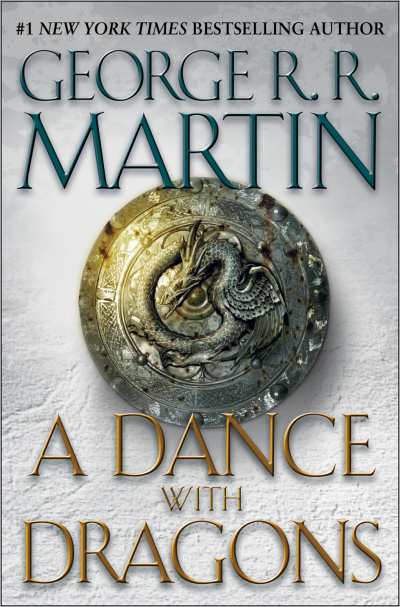
I flat out loved the first three and enjoyed the fourth, so this is a must read – but I’ve been waiting five years for it to come out. That means I’ll have to read those four books as well, before July, because no way am I having that spoiled for me. And then there’s The Wise Man’s Fear, Patrick Rothfuss’s new book, which came out two days ago, and necessitates re-reading The Name of the Wind. Looks like I’ll be busy … but in a very good way.
How was your reading month?
 What would Dracula look like from Mina’s point of view? Syrie James takes this question and twists it, causing Mina to fall in love with Dracula before she knows he’s Dracula. Just as in the original book, she goes to visit her friend Lucy and her mother in Whitby, but what we don’t see are her secret meetings with a mysterious and attractive man, because she doesn’t mention them. And when she discovers that his true identity is Dracula, the story changes, to accommodate Mina’s new truth. What would Dracula look like from Mina’s point of view? Syrie James takes this question and twists it, causing Mina to fall in love with Dracula before she knows he’s Dracula. Just as in the original book, she goes to visit her friend Lucy and her mother in Whitby, but what we don’t see are her secret meetings with a mysterious and attractive man, because she doesn’t mention them. And when she discovers that his true identity is Dracula, the story changes, to accommodate Mina’s new truth.
The original Dracula is one of my favorite books, and as a result I seem to have a lot of trouble with any book that modifies the story in any way. And so it happened here, for a variety of reasons. Some things made sense told James’s way – like how the four men actually killed Lucy because of the danger of blood transfusions – but some don’t.
First of all, I felt like there was too much explaining on Dracula’s part. Every single move in the original novel is carefully explained and turned around by Dracula himself when Mina starts to ask questions. It happens every time the men discover something and, though I know it’s a novel, I honestly had just had enough of his excuses. If I were Mina I’d have chucked him out immediately, simply because there comes a point when you get tired of hearing the same story. Plus, I found it crazy that she’d trust the word of a mysterious stranger over that of the husband she’d known and loved her entire life. Maybe passion makes people crazy, but I often wanted to smack her around. And even though she and Dracula have plenty of intelligent conversations, none of these are actually explicit in the text – we just learn about all the things they had in common. I didn’t feel the connection or the spark between them.
Other than that, the book mainly follows the original’s plot, with some diversions explaining more of Mina’s backstory. These did give the book an interesting angle, going into more detail about how she and Jonathan met and the origins of her parents, but overall weren’t really enough to justify the whole basis of the book as a love story between Mina and Dracula. It didn’t help that I felt Mina was a surprisingly weak character. Her intelligence, for me, was belied by the fact that she never really questioned Dracula. She just went along with his explanations and continued to fall in love with him – she never considers that he might be manipulating her, as she knows he can do. She starts to wake up in some respects by the end of the book, but for the most part I just didn’t like her, which is a disappointment given how fond I am of the original.
In all honesty, I do think my fondness for the original has stopped me enjoying more modern takes on it as much as I might had I never read it. As a result, I just didn’t really connect with this book.
Plenty of others have felt differently about Dracula, My Love. If one of them is you, please let me know in the comments and I’ll feature your review here.
I am an Amazon Associate. I received this book for free for review from LibraryThing Early Reviewers.
 Periods are touchy subjects for both men and women. But, given that more than half the population either gets them, will get them, or has had them in the past, this is a fairly silly state of affairs, and Elissa Stein and Susan Kim aren’t afraid to call it just that. This is a history of menstruation and everything to do with it, from uncomfortable symptoms to advertising to the pill to just what women did before pads or tampons ever existed. Periods are touchy subjects for both men and women. But, given that more than half the population either gets them, will get them, or has had them in the past, this is a fairly silly state of affairs, and Elissa Stein and Susan Kim aren’t afraid to call it just that. This is a history of menstruation and everything to do with it, from uncomfortable symptoms to advertising to the pill to just what women did before pads or tampons ever existed.
I first came across this book when Rebecca at the Book Lady’s Blog raved about it nearly a year ago. After it failed to show up in local bookstores or in my library, I finally got a copy of my own for Christmas. I was surprised to find that it’s textbook-sized and bound, but on opening it, it’s fairly obvious why because the inside has lots of old ads and paraphernalia devoted to periods. These were oddly delightful as well as worrying; the authors poke at the problems with them and the misconceptions they delivered, especially the earlier ones, but I had fun imagining my grandma and my mom looking at them when they were brand new.
As for the actual content of the book, I had a sort of mixed reaction to it, simply because I can’t really understand empowerment around periods. I’ll spare you the details, but I’ll certainly never love my own period, and encouragement to do so never sits quite right with me. The authors take this fully into account as they do discuss the many reasons women struggle with this aspect of their lives, and though they blame a lot of the stigma on advertising, there is not really much question that periods can be painful and unpleasant.
One of the most valuable chapters for me was the amount they question PMS and other familiar medicalizations of classic “female” symptoms. Yes, it’s a serious problem for some women, but it’s honestly frustrating when someone else (usually a man) dismisses a genuine complaint by asking if a woman is about to have her period. When surveyed, a large percentage of people agreed that men had cyclical mood swings too – so a lot of what is simply our nature as human beings can be happily ignored by people who think we’re just complaining because we’re about to start bleeding. This is a worthwhile thing to mention; it frustrates me and no doubt many women to be dismissed because of bodily functions, and is something straight out of the nineteenth century that annoyingly persists.
My favorite sections were also those that dealt with history, as you might expect. I was appalled to learn what women did before pads and tampons, which is why I mentioned it in the summary, and am now actively relieved that I live in a time when they are readily available. But the way the whole advertising business built up around feminine products and feminine hygiene is quite a fascinating look into what happens when you have a product half of the population must buy at one time or another, and how you can use that condition to make them buy even more of your brand and not another. All very interesting, if not a little off-putting. I was also very surprised to learn that a huge percentage of women stick to the same brand throughout their lives, which explains why the industry works so hard at advertising. And this is true, so I don’t know why I was surprised – no matter where the sale is, at the risk of TMI, I go for the same brand, which always perplexes my husband who thinks I should just get the cheapest kind.
Flow is a great, chatty book that encourages women to open up about their periods, providing essential knowledge for today as well as a look back at where we’ve been. Highly recommended – for both genders, although I don’t think too many men will be brave enough to whip this one out in public!
I am an Amazon Associate. I purchased this book.
 This is the remarkable true story of General Tom Thumb, in actuality Charles Sherwood Stratton, a small man who became one of P.T. Barnum’s most successful actors and exhibits. Stratton, an average sized baby, virtually stopped growing when he was six months old to become one of the smallest men in the world. Barnum discovered him at the age of only six, but put his age up so he’d look even tinier. Tom traveled the world, married a beautiful fellow tiny lady, and became a world sensation. It’s a shame that he’s been forgotten, as this tiny man’s fame in his day was only matched by modern celebrities. This is the remarkable true story of General Tom Thumb, in actuality Charles Sherwood Stratton, a small man who became one of P.T. Barnum’s most successful actors and exhibits. Stratton, an average sized baby, virtually stopped growing when he was six months old to become one of the smallest men in the world. Barnum discovered him at the age of only six, but put his age up so he’d look even tinier. Tom traveled the world, married a beautiful fellow tiny lady, and became a world sensation. It’s a shame that he’s been forgotten, as this tiny man’s fame in his day was only matched by modern celebrities.
This was a great book; it’s designed for younger audiences and is a fantastic non-fiction introduction to the world of the early circus. To some extent, Tom Thumb was exploited, but he was made very rich in the process, and as the author says, genuinely enjoyed acting parts for most of his life. When he became an adult, he seized upon traditional wealthy male pursuits like yachting, which his fame allowed him to do. He even managed to marry fellow dwarf Lavinia, who outlived him and achieved some fame of her own. The book really made me question how exploited Tom was; he was a small man, but it appeared to be his choice to continue touring or to take his wife touring, and he seemed to genuinely enjoy acting. He was pushed into it as a child but it was his choice to continue. As for his wife, she had a normal childhood and chose the career which exploited herself. Clearly gawking at little people is wrong, but Tom and Lavinia thought of themselves as performers and lived the high life due to their careers.
A few highlights of the book; number one were the pictures, which were plenty. It was fascinating to look at Tom in his various guises and see real life evidence that he actually existed. The pictures really put the narrative in perspective. The author also included newspaper clippings and photos of related acts and people, so I was never left wondering about what something looked like.
I also really loved Tom’s trips around the world. Barnum’s marketing talents in an age before marketing became a proper profession were simply amazing. He got Tom, who was at first unknown in Europe, in front of kings and queens the world over by the end. He became so famous that they actually asked to see him and his carriage was mobbed in all corners of the globe. That’s celebrity for you, and Tom had it in spades.
Naturally, I also loved the historical picture of the time that the author depicted. Things like Tom’s terrifying railroad journey to California because of Native Americans, the fact that Barnum collected curiosities and put them in something he called a museum, the elaborate fanfare of Tom’s wedding, all put his story into perspective beautifully and gave me an amazing mental map of the time period. Tom’s dwarfism was likely caused by the fact that his paternal and maternal grandmothers were twins; if so, it’s possible that he could have grown to a normal height today, which made me sad for him.
This was a wonderful book about a person who doesn’t get enough attention these days; I’d never heard of Tom Thumb until I read this book, but now I’m glad I have. Tom Thumb is recommended for older and younger readers alike.
I am an Amazon Associate. I received this book for free for review via Netgalley.
 With books and with plenty of other things, I often feel like I’m still a poor student. But as I’m nearing the finish of my first year of working (and marking it by attending my very first marketing event AND giving my first presentation on SEO with my boss), I’m very quickly realizing that I’m not, and that my money has power because I can decide what I do with it. With books and with plenty of other things, I often feel like I’m still a poor student. But as I’m nearing the finish of my first year of working (and marking it by attending my very first marketing event AND giving my first presentation on SEO with my boss), I’m very quickly realizing that I’m not, and that my money has power because I can decide what I do with it.
I’m in a relatively good position; my husband and I are both employed and we make enough money together to pay all of our bills, all the time, as well as eat and drive a car, and then we even manage to have some left over for both savings and leisure money. I know we’re not particularly rich, and a hefty bill still has the power to push us over the edge, but we’re both enjoying not having to stretch any pennies in any directions they don’t want to go and working on never having to do that again.
As evidence of our affluence, we’ve even managed to save up for a shiny new desktop computer, and I am now buying books on a regular basis. Rather than going for limiting the TBR or number of books purchased, I’ve just given myself a certain amount of money for books every month, so I’m relatively free to get whatever I want, even if it’s stupidly expensive.
This brings up, naturally, questions of just where to spend that money. How can I make it work hardest for the things I believe in? And this is where the biggest change has come in for me. I used to frequent charity shops and used bookstores all the time, hoping to acquire some wishlist books as well as those that just look interesting. I don’t do this any more, simply because if I’m buying books I want that money to go where it’s most valuable. I can go to the library for random finds, which I want to do to support them as well anyway. I donate to charities of my own free will, without depleting their book collections (and in fact bring them my discards).
For the most part, I buy new books, and I love feeling able to make that decision. It’s probably the one thing that has really signaled to me that I’m an adult now (that, and the fact that I can buy clothes from any section of the store I want, just because I like them – I never expected to enjoy that so much!) Books are my one hobby that costs money, so I take care to spend that money wisely. I do buy books online – I can buy more that way, and I want a LOT of books that my only local bricks and mortar bookstore, a puny W.H. Smith, doesn’t carry. There are no independents around that sell new books, so I’m limited in that respect, but I do try to buy from the actual bookstore especially now, even if the staff seems mainly employed to ask me if I want to buy chocolate with my books. To be fair, the local used bookstore isn’t any better – I’ve never seen the two employees even speak to a customer who isn’t actively buying something, but that isn’t really the point.
Anyway, the process by which I’m becoming a consumer, rather than someone who pinches every penny, has been quite fascinating to me. I love the privilege of deciding what I support and where I want my money to go. We never know what the future will bring, especially those of us who intend to return to academia at some point, so I’m going to enjoy making these decisions while I have the ability to do so – and I think considering where our money goes, especially on something we treasure as much as books, is a thought that everyone who is in a similar position should have.
 Now engaged to Colin Hargreaves, Lady Emily Ashton finds herself with fiance in tow at a house party given by the mentor of her best friend Ivy’s husband Robert. Emily isn’t fond of Lord Fortescue but knows she needs to support her friend. Unfortunately, she discovers a new nemesis at the party in the form of Kristiana von Lange, an Austrian countess who clearly has previously been enamored with Emily’s fiance. Even worse, the host of the party is murdered, and Ivy’s husband is arrested for the crime. In a quest to rescue her newly pregnant friend’s husband, Emily finds herself travelling to Vienna in search of a murderer. Now engaged to Colin Hargreaves, Lady Emily Ashton finds herself with fiance in tow at a house party given by the mentor of her best friend Ivy’s husband Robert. Emily isn’t fond of Lord Fortescue but knows she needs to support her friend. Unfortunately, she discovers a new nemesis at the party in the form of Kristiana von Lange, an Austrian countess who clearly has previously been enamored with Emily’s fiance. Even worse, the host of the party is murdered, and Ivy’s husband is arrested for the crime. In a quest to rescue her newly pregnant friend’s husband, Emily finds herself travelling to Vienna in search of a murderer.
It had been too long since I read the last Emily Ashton mystery when I picked this one up, and as a result the details in my head were a bit foggy. I couldn’t really remember what happened in the last one, A Poisoned Season. Lucky for me, these mysteries each stand fairly well on their own two feet, and I found myself slipping into the story effortlessly as I became reacquainted with Emily’s world.
Emily remains something of an unconventional heroine at this point in the series. She may be engaged to a respectable man, but she’s still more inclined to drink port and get herself involved in her society and solving its crimes than a respectable lady of her time might, as Emily’s mother often notes. As a result, she remains somewhat anachronistic, at least to this reader, but her character is so delightful and believes so deeply in the way women should be treated – as equals – that it’s impossible for a modern girl not to appreciate and like her. Her romance with Colin is still breathtaking despite their engagement; in this at least, the author stays true to Victorian mores as Emily behaves properly for once and completely resists even touching Colin in the presence of others. They do exchange kisses, but that’s as far as it goes, and this creates a really nice and unusual sense of both restraint and excitement. We can feel how eager they are to be married and the waiting makes it almost better – especially when Emily gets jealous of Kristiana. She starts to feel very human in this one.
The plot itself didn’t honestly do all that much to capture my attention, especially at the start. I was more enjoying the atmosphere and character development. I wasn’t racing through to get to the end, but as the book is 300 pages long and I read it on a Saturday, I finished it in one sitting. I loved the part of the novel that was set in Vienna. I do love England, but it’s just wonderful to have a change of scene, and this brooding, snow-covered city suited the mood of the book perfectly. Emily’s investigations frequently led to a few twists and turns with the mystery itself, with some tense scenes particularly towards the end. I have two more of these books, so I knew nothing was really going to happen to Emily, but there were no guarantees about anyone else.
A Fatal Waltz served its purpose well; it is a diverting, very romantic historical mystery that has plenty for modern readers to get involved in. I actually really enjoyed it and cracked open the next Emily Ashton book just a week later. I don’t think I’ll be letting the rest of the series sit as long as I left this one!
I am an Amazon Associate. I purchased this book.
 Being the best friend of the most popular girl in high school means a lot, and for years Regina has held that coveted position. She and Anna have played a leading role in the game of high school popularity for years, naming and shaming at will. One evening, however, changes everything; Anna’s boyfriend nearly rapes Regina and she goes to the wrong person for help. Kara advises Regina to keep quiet and promises that she’ll keep the attempted rape a secret. Kara has always wanted to be Anna’s best friend, so what better way to achieve that than telling Anna that Regina slept with him instead? With that one stroke Regina’s popularity is destroyed and she becomes an instant outcast. Full of rage, Regina strikes back at her former friends, but in the process realizes she has quite a bit to learn about the type of person she wants to be and life beyond high school cliques. Being the best friend of the most popular girl in high school means a lot, and for years Regina has held that coveted position. She and Anna have played a leading role in the game of high school popularity for years, naming and shaming at will. One evening, however, changes everything; Anna’s boyfriend nearly rapes Regina and she goes to the wrong person for help. Kara advises Regina to keep quiet and promises that she’ll keep the attempted rape a secret. Kara has always wanted to be Anna’s best friend, so what better way to achieve that than telling Anna that Regina slept with him instead? With that one stroke Regina’s popularity is destroyed and she becomes an instant outcast. Full of rage, Regina strikes back at her former friends, but in the process realizes she has quite a bit to learn about the type of person she wants to be and life beyond high school cliques.
I bought this book right away after reading Fall for Anything, which completely swept me away. I was not at all disappointed in Some Girls Are, which transported me instantly back to that peculiar high school world, so unlike real life, so incredibly unimportant after it’s over, but absolutely critical while you’re living in it. My own high school was not nearly this vicious, thankfully, but it did have its share of socially segregated people, and there were always rumors floating around about someone or other. It’s a world I wouldn’t like to return to and so I genuinely felt for Regina when her world started to tip on its axis, especially after the horror that happened to her with the attempted rape.
For me, the book was all the more affecting because Regina herself is definitely a mean girl. She has formerly made other girls feel bad about themselves, even leading to a suicide attempt. While she does occasionally feel guilty over it, she’s more concerned with her own situation. It sounds like she’s easy to hate, but she surprisingly isn’t, and I’d definitely chalk this up to Summers’s writing skills. Regina knows she’s been awful, and as she gets to know the people she’s been awful to, she regrets it. Her choices are to destroy someone else or be destroyed – and knowing how terrible that destruction is, her choices start to make a sick sort of sense. As a result, I felt very sympathetic towards her despite her behavior, and I genuinely felt hopeful for her by the end of the book. She starts to realize that she cares about people and that they matter more to her than her reputation or the horrible things her former friends do to her.
Some Girls Are was another fantastic read from Courtney Summers. I now can’t wait to read her first book, Cracked Up to Be, and I will be eagerly waiting for future releases. Highly recommended.
I am an Amazon Associate. I purchased this book.
 Ivor Willoughby’s father has been a non-existent presence in his life. Apart from a couple of weeks when Ivor was a boy, his father has spent the entirety of his life in Arabia, soldiering and having adventures. The Willoughby family have always been warriors, so when Ivor grows to manhood he realizes that he, too, longs to travel to Arabia. He aims primarily to find his father, but when he arrives in Abha he discovers that the people are not as forthcoming as he would have liked. Instead, he hears stories of a woman called Na’ema, and as he searches further wonders just how this warrior woman is tied to his father. Ivor Willoughby’s father has been a non-existent presence in his life. Apart from a couple of weeks when Ivor was a boy, his father has spent the entirety of his life in Arabia, soldiering and having adventures. The Willoughby family have always been warriors, so when Ivor grows to manhood he realizes that he, too, longs to travel to Arabia. He aims primarily to find his father, but when he arrives in Abha he discovers that the people are not as forthcoming as he would have liked. Instead, he hears stories of a woman called Na’ema, and as he searches further wonders just how this warrior woman is tied to his father.
I very rarely outright dislike books that I choose to read these days, but unfortunately this book just did not sit right with me and I did not enjoy reading it. If I hadn’t received it from LibraryThing Early Reviewers, I can guarantee it would have been a DNF. Unfortunately I did feel obliged to review it, and so I trudged onward and managed to get the whole thing read.
At first glance, the book looks very appealing. Lately, my aim in historical fiction and history has been to experience places and stories that are new to me, that I haven’t read twenty times before. Saudi Arabia is most definitely new to me, and I loved the idea of a mysterious warrior woman. Ivor’s search for his father is clearly meant to be very epic, with lots of adventure, or at least that’s how I interpreted the premise.
Unfortunately, the book fails on these levels. The story itself is, frankly, not interesting. There is a great deal of set-up at the beginning, but when Ivor actually gets to Arabia he does very little but listen to other people tell him stories about his father. The book cover promises whispers of Na’ema’s story, but in reality her story is shouted from the rooftops and all he has to do is find her. She’s not particularly mysterious except in one aspect, which I won’t spoil but which was not actually that exciting. I couldn’t help but think the story would have been far more compelling from Ivor’s father Robert’s point of view. All the action happens around him, so why not just tell it from his perspective? The characters would surely have been more fleshed out if the reader had actually met them.
Moreover, I struggled to get along with the actual history of the book. Newton more or less drops us in it and doesn’t really explain the wider context of the story. I felt I would have liked to know which bits were true, if any, and which weren’t; this would have made it more valuable as historical fiction at least. Instead, I just feel confused, like I’ve wasted the time I spent reading it. To make matters worse, the writing isn’t even particularly good, and at times Ivor’s interjections to the reader are clunky and irritating. There is absolutely no suspense and nothing to keep the reader going through the pages of telling.
I had high hopes for The Mistress of Abha, but I was let down. As a result, I regrettably would not recommend this book.
I am an Amazon Associate. I received this book for free from LibraryThing Early Reviewers for review.
|
|


Recent Comments