|
|
 Elena Deveraux is the best vampire hunter out there, but she begins to regret it when the angels come to her for help. Archangel Raphael, who has control over the United States, hires her to track a rogue Archangel, and in the process sets about seducing her. Despite her insistence that she can’t smell angels the way she can vampires, Elena is trapped in a dangerous mission, probably destined to die either on the impossible job or afterwards when she discovers too many of the angels’ secrets. Elena Deveraux is the best vampire hunter out there, but she begins to regret it when the angels come to her for help. Archangel Raphael, who has control over the United States, hires her to track a rogue Archangel, and in the process sets about seducing her. Despite her insistence that she can’t smell angels the way she can vampires, Elena is trapped in a dangerous mission, probably destined to die either on the impossible job or afterwards when she discovers too many of the angels’ secrets.
I actually really enjoyed this book and I feel like I’m getting a hint as to why Nalini Singh is so popular. I really liked Elena for the most part. She’s an interesting character with a backstory that relates to this novel and I loved her snarky, risk-taking attitude. I have to say her decision to sleep with Raphael made little sense, though; she’s frustrated so she appears to decide that she wants to sleep with him just to relieve stress. Yes, that is a great idea when your chosen lover is so powerful he can kill you with a thought, and probably would when the relationship was over.
Minor point, though, because for the most part I found their relationship sweet, a bright point in a darker book, and I suppose women are often drawn to power, especially when wrapped in an extremely attractive package, so maybe it shouldn’t have been a surprise. Plus the romance often took a backseat to the more exciting plot, and I was happy for that a romance, the ending was not what I predicted! And the characters’ stories are carried on in the next book! I think that this might actually qualify the book as urban fantasy, but I’ll have to see where the series goes to decide which way it leans.
I loved the world, too, and I thought it was a fair amount darker than most of what’s out there in urban fantasy or paranormal romance. There is a lot of brutal killing and the characters themselves don’t escape the savagery. A lot of Elena’s growth is based upon the horrors in her past and her determination to stick up for herself and what’s right even when that means death. There isn’t all that much humor when people’s hearts are being ripped out of their chests. It all feels very serious. There are some gaps in the world-building, mostly because we know very little about what angels do. They control vampires and they fly around with pretty wings, and they obviously are in charge of the world, but aside from the councils of the most important angels we just don’t see that much. I suspect this will be elaborated on in the next one, though, given how this wraps up, and so I’m willing to let the gaps rest for the moment. The angels seem to have no connection to any modern day religious faith, which was appreciated.
Overall, I enjoyed Angels’ Blood. I’m glad that this series has been picked up by a UK publisher so I can follow it in a more timely fashion. And many thanks to Tasha for sending this book to me. I think I liked it more than she did!
I’m still an Amazon Associate.
At the beginning of Classics Month, Tasha at Truth, Beauty, Freedom, and Books and I challenged each other to read a book from our specialities. For her I chose Gawain and the Green Knight, a fairly well-known classic of medieval literature. To check out my review of Nadja by Andre Breton, head on over to her blog.

The Hunt in the Forest by Paolo Uccello, c. 1470
I
Gather all and put much thought
to a tale of noble Camelot.
On New Year’s Eve the court did gather
With wine and beer and much blather
Ladies fair and knights bold
Plus Gweneviere and Arthur, we are told
When all at once, what should they see
But a walking, talking Christmas tree!
(Actually it’s a man)
Yes, ’twas a man, but green
hair green, skin green, tongue green
Of great stature and much mass
Even his horse was the color of grass
Everything green, but eyes that were red
Even an idiot could guess where this led
But not Arthur and his patriotic knights
Who thought the green man rather nice
(How stupid are they?)
The Christmas Tree spoke, and offered a game
To anyone brave enough to issue his name
Strike a blow against the green man, and when the time came
A year from the next day, the green man would do the same.
What’s in it for the knights, one might wonder
But Sir Gawain this did not ponder.
He accepted the ax, and the green man knelt
Then to his neck, a fatal blow Wawain dealt.
(He chopped the Christmas Tree’s head off)
The head rolled about, the court watching whence it should land
Dismissing the Green Man, and thinking the matter at an end
Green blood spurted out from the tree
And Gawain anticipated congratulations there’d be
But the Christmas Tree rose from where he sat
And calmly collected his body’s hat
Holding his head, he told Gawain the way to his home
To meet a year from then, and to come alone
After which he left.
II
Despite that Gawain was not too bright,
Even he knew to do what was right
Honor and chivalry demanded
He meet the Christmas Tree and be beheaded
Thus he set out in the morning
Uncertain about where he was going
A year later, and with much apprehension
For a view of reaching the Green Man’s mansion
(Which I’m guessing is in a forest)
But alas our knight knew not left from right
(re: none too bright)
Far and wide our hero did bumble
Searching for Green Man’s Green Chapel.
He was cold, and hungry, and sad to boot
When what should he spy: a moat!
Connected to a grand castle with turrets and flags
And the friendliest host Gawain’d ever had.
Almost TOO friendly.
The man himself was handsome and wealthy
With two others in residence: an old woman quite stealthy,
And a wife so beautiful she left Gawain nonplussed;
They took one look at each other and fell into lust.
Then with Gawain, a bargain the host assayed
That he would go hunting during the day
Upon his return, his catch he would giveth
And Gawain his daily claims would returneth.
Sounds like another sketchy deal to me.
But Gawain, like an idiot, pronounced his agreement
And into more trouble our hero descendeth.
But I shall say no more of Wawain’s toil
For fear that his tale I will spoil
At first I thought this story difficult to read
I did not comprehend the why of the characters’ deeds
But then Gawain met the lady, sorely tempting
And things got MUCH more entertaining.
But who doesn’t like a little romance, right?
Tis clear that this tale is all about pursuit:
of animals, women, and bravery to salute.
For while the host was hunting game,
The hostess was chasing down Gawain
Quite a dilemma for him to be thinking about
But of course not much thinking is done by that clout
Still, there’s a twist that I thought was grand
For in everything, a famous woman has a hand.
Highly recommended!
 Communist China’s Long March is famed throughout the country. Children, like the author Sun Shuyun, are taught the story over and over again in school and there are plays and films about it. The author decides to do her own version of the Long March, following in the footsteps of the Red Army and visiting the few remaining veterans along the route, with some diversions for research purposes. Through her journey, she attempts to uncover the truth of what these people endured, and of the Long March itself. Communist China’s Long March is famed throughout the country. Children, like the author Sun Shuyun, are taught the story over and over again in school and there are plays and films about it. The author decides to do her own version of the Long March, following in the footsteps of the Red Army and visiting the few remaining veterans along the route, with some diversions for research purposes. Through her journey, she attempts to uncover the truth of what these people endured, and of the Long March itself.
Recently, and somewhat unexpectedly, I have become very interested in China, and this book seemed like a good choice to continue with non-fiction. And it was; I liked it and I learned a surprising amount about The Long March. The author’s experience on her own Long March took a definite backseat to her exploration of the experiences of those she met and her explanations of the historical background. I was pleased with that because this could easily have become about how difficult the trip was for the author, given that it was, but she often emphasized the fact that if she was struggling, how much harder must it have been walking the whole time with threadbare clothes, no food, and no help?
I was most interested in the veterans’ stories, and how even though almost all of them endured horrifying hardships and were later targeted during the Cultural Revolution, most of them were still devoted Communists. I found this hard to believe, given all they suffered in the name of communism, and did wonder if they were genuine, but it’s impossible not to admire their devotion, courage, and resilience, so it’s hard to come out of the book without feeling the same. I felt like each of them were individuals and their stories were each fascinating and sometimes just horrifying. The women’s stories in particular were so affecting and hard to read.
What came out clearly was how difficult the Long March was, and the author did find a kind of truth in comparing the words of the survivors with official records. As she says, definitive answers are hard because documentation was destroyed, and Mao’s version of the Long March has become Chinese history. This is disturbing to me and I was glad she was driven to reveal some of the truth. The author’s surprise at her discoveries is palpable throughout the book. At one point she sees a filmmaker who is also interviewing people about this subject, and he quite blatantly tells her what they’ll have to cut out because it doesn’t fit the official version, even if the stories are true.
Overall, I found The Long March a really fascinating memoir/historical investigation. I would definitely recommend it to those who are interested in learning more about Chinese history.
I am an Amazon Associate. I borrowed this book from my local library.
 This book is about two women who come into contact in a rather terrible way. One, Sarah, goes on to continue with her ordinary privileged life, while the other, Little Bee, runs in order to save her life, and ends up a detained asylum seeker. Two years later, they come into contact again, where this story begins. This book is about two women who come into contact in a rather terrible way. One, Sarah, goes on to continue with her ordinary privileged life, while the other, Little Bee, runs in order to save her life, and ends up a detained asylum seeker. Two years later, they come into contact again, where this story begins.
I have no idea how to review this book without spoiling it. I mostly just want to tell you to go buy it and read it now, but I like to be more detailed than that.
So first, I will say, I had my doubts about the author. Chris Cleave is a white male reporter, and the narrators of the book are women. One of them is an illegal immigrant from Nigeria, and I had no idea how the author was going to make her believable. But he did, and I honestly forgot that the author of the book was a white guy. Little Bee was an incredibly compelling character and I just loved her voice. It seemed perfect to me as she drew me into this story that is half horrific and half hopeful. My heart broke and then I smiled two pages later. She’s an amazing character, and both she and Sarah, the other woman, are so fantastically well drawn.
Even when finishing I had my doubts about the authenticity of the narrative. Even though the story was beyond powerful, I didn’t know if this sort of thing actually happened. And then I saw that Little Bee’s character was based on interviews of real women, and many of the incidents described especially in the beginning were taken from reality, even though this story itself and the locations mentioned are largely fictional. I can’t even describe how sad this made me.
It also made me angry. This is a book that will make you want to change the world. It’s a book about how many people are wrong, and even though we like to think we’re doing things right, maybe we’re not. But maybe we are – and maybe we can do better if we try. It’s about the strength that individual people have, and how seeing and loving makes a difference. It left me with tears on my face (a rare occurrence) but I still had hope. I hope that people like this can actually exist. These characters spoke to me so deeply that I wanted to be like them, I wanted to know I would make the sacrifices that they did.
I loved The Other Hand and right now, it’s my favorite book of the year.
I am an Amazon Associate. This book is known as Little Bee in the US. I purchased this book.
 Miss Alexia Tarrabotti, a half-Italian spinster, also happens to be soulless. Unfortunately for the vampire who tries to attack her, this means that she negates supernatural powers, and his fangs effectively vanish when he touches her. But the vampire’s death by wooden hairpin sparks a whole investigation – why doesn’t he know what she is? Why doesn’t he belong to one of the hives, and if not why isn’t he registered anyway? When Queen Victoria sends in werewolf Lord Maccon to help the investigation, Alexia is caught up in a whirlwind of mystery and attraction. Miss Alexia Tarrabotti, a half-Italian spinster, also happens to be soulless. Unfortunately for the vampire who tries to attack her, this means that she negates supernatural powers, and his fangs effectively vanish when he touches her. But the vampire’s death by wooden hairpin sparks a whole investigation – why doesn’t he know what she is? Why doesn’t he belong to one of the hives, and if not why isn’t he registered anyway? When Queen Victoria sends in werewolf Lord Maccon to help the investigation, Alexia is caught up in a whirlwind of mystery and attraction.
I’m a little bummed that I didn’t like Soulless. It’s received so very many rave reviews, and it sounded perfect from the description. Since the second book is suddenly appearing on everyone’s wishlists, I figured it was time to read it. Unfortunately I found that the style felt contrived from the very first page. Normally I enjoy authors who write as if they were living in the time period, but it just grated on my nerves here. I also got annoyed at the author’s tendency to put a sentence about how the characters were feeling right before they spoke, because it was obvious that she didn’t need to tell us about it. The characters are often nodding or smiling as they speak – there must be a lot of sore necks in this world. And the repetition got to me, too. We hear often about how horrible it is that Alexia is half-Italian and has darker skin and a larger-than-average nose and curves and how terrible it is that her Italian father is dead. I guess it’s good that she’s a little bit different, but I got that at the beginning. In general because the prose was so odd and repetitive I found it impossible to lose myself in it and enjoy the story. It just all felt like it was done to mask a lack somewhere else, to make it stand out from the current crowd of paranormal romances. Others enjoyed this, so I’d suggest this was just me.
The mystery story was mostly okay, at least as historical urban fantasy goes, and I was interested to see what happened next. I’m not the most demanding in terms of plotlines, but I was entertained. I also really liked the world. It’s mainly a Victorian urban fantasy with some small steampunk elements, which I did think set it a little apart from the pack in a good way. This is one aspect I’d really like to see further developed. I really like all the genres contained in this book and an author who can combine them well is talented.
The romance, however, made zero sense. I could not figure out why the couple liked one another. Lord Maccon was interested in Alexia because she smelled good, mostly, or at least that’s all I can remember from what defined their relationship. I couldn’t honestly figure out why she was drawn to him. They didn’t seem to have any chemistry and their romantic interludes included a startling amount of biting, which I could have done without.
Anyway, the next book in the series, Changeless, is apparently going to include more of the mystery and less of the romance, which for once I actually think I will prefer. I’m not sure I’ll go out and buy it, but I will probably try and find it in the library. The author seems like she’s full of clever ideas and I would like to give the series another shot.
I am an Amazon Associate. I bought this book.
 Please welcome Nicole from Linus’s Blanket today as she shares a few of the classics that she loves, and why you can enjoy them too! Please welcome Nicole from Linus’s Blanket today as she shares a few of the classics that she loves, and why you can enjoy them too!
When Meghan mentioned that she was going to be delving into the classics this month with Tasha from Heidenkind’s Hideaway, I was very excited. Classics are often pushed as bearing a standard among books. They can be used in order to judge whether a person is well-read, and as a means of learning life lessons, problem solving and being able to navigate in the world. I didn’t feel like it helped me accomplish any of those things when I read them as a teen. After having mixed results reading classics in high school and in college, I have been dipping into them a little bit more over the past couple of years.
I have grappled with the issues of whether I find them pleasurable to read, and worthwhile in the sense that they pose relevant thoughts on issues still being examined and debated today, and if they shed any light into issues that I have encountered in my life. While some classics have threads of relevant social issues, others were a far cry from interesting me or readily accessible to read (Frankenstein, Silas Marner, The Scarlett Letter – I’m looking at you). In my search for the good ones, I have found a few that have hit the trifecta for me in terms of being readable, relatable and just plain enjoyable.
Lady Audley’s Secret, by Mary Elizabeth Braddon – Lady Audley’s Secret made quite a splash by exploring the idea that a woman could be a serious threat to domesticity and a happy home. Lady Audley has secrets from her husband, and his son Robert Audley suspects her of being a murderess, which was unheard of for women of her social standing at the time. I found this book to be very easy to get into, and I loved the whole who dunnit aspect of the novel. Lady Audley is invested in her happiness and seizes the life that she wants by her own power, even if by nefarious means. It was an interesting to see a plausible rendition of a woman doing this in Victorian times, and even more so being that it was penned by a female author. There is more that I could say about this wonderful novel, but I don’t want to spoil it for anyone who wants to read it.
The Great Gatsby – I remember reading this in high school, and even with the teacher giving his spiel, I still really had no idea what it was about. The most that I remembered about it was that we watched the movie in class and everyone wore that crazy flapper gear. Reading Gatsby as an adult, I was really able to appreciate the intricacies of the storyline- the class distinctions, the recklessness of the wealthy, and the love that fuels one man’s goals to become wealthy and powerful not understanding that he can never be as his beloved would wish. Even though there were no innocents in this timely story, I have to admit that I felt for Gatsby and the fact that no matter what he did he already wasn’t good enough and would never belong. He went to great lengths to get the love of his life, and it pretty much wrecked his life. This is a great read and it’s easy to relate to unrequited love, and past traumas providing the drive for great achievement.
Pride & Prejudice – I almost didn’t put this on my list because it is such an obvious choice for me (and for many!), but I also felt that to have left it off would be disingenuous. I don’t think that I have read any other book as much as I have read this one. Over the years my readings have changed and whom my sympathies lie with now are different than what they once were (right now I seem to be in Darcy’s camp, and think that Elizabeth was too hard him), but the conversational tone of the novel is so engaging and the themes so absolutely timeless that it is hard to not come back to this again and again. Who can’t sympathize with an overbearing mother, insufferable relatives, and falling in love with someone who doesn’t fit with all of your expectations, much less your families? I think it’s fortunate that in this lovely novel, everything works out in the end (as we all hope that it might in our own lives when we are facing similar situations). Pride and Prejudice is so good, that each time I read it it, I get all caught up again, even though I know exactly what will happen. Isn’t that a riot?
So how about you? Do you agree with any of my choices? What classics do you find to be readable, relatable and enjoyable?
 Four days in, I have finished my first classic for Classics Month! Four days in, I have finished my first classic for Classics Month!
Peaceful Barchester is thrown into turmoil when the state of affairs at the warden’s hospital is called into question. Several hundred years before, a notable aristocrat made provision for unfit working men in his will, that a hospital be built for them and a warden appointed to oversee them. Since then, however, the land from which the hospital derives its funds has grown in profits, and one man, John Bold, decides that the warden, kindly Mr. Harding, is earning far too much money. He and the majority of the 12 hospital patients sign a petition and take the matter to Parliament, but hadn’t counted on the warden’s reaction to their protest.
This was quite an interesting book. I’d heard before that it wasn’t as good as later books in the Chronicles of Barsetshire series, but I found a lot to like about it. Almost immediately I knew I liked the way Trollope wrote, so almost as soon as I began I knew that I’d have no problems there. Trollope is a talented writer and it’s easy to sink into his story. The characters are well-drawn and opinionated, and I found myself hoping that they would show up in the later books of the series.
The book demonstrates the strangeness of Victorian society, particularly with the warden’s son-in-law, Archdeacon Grantly, who is a firm man in public but in private is ruled by his wife. She is obviously wise and intelligent in many ways, and he often takes her advice to heart, but in public she sits quietly by his side, letting him talk about the conclusions they come to together. Trollope lightly mocks this situation and I liked that he was giving voice to the women, even if they weren’t given a voice in society itself.
There is a very strong ideological underpinning behind the story of this novel. Dr. Bold intends to do good by giving the men their extra £100 per year, rather than having the warden receive all the funds. But the men don’t really need £100 extra per year; apparently all their needs are satisfied by the hospital, and because he was aware that there was a question before he took the wardenship, Mr. Harding had already given them slightly extra out of his own allotment, which no other warden had done before. The men were perfectly happy before they realized that they were owed this money, but their desire for it slowly destroys all that they had previously enjoyed. Trollope criticizes the newspaper scandals of the day by damaging the characters with them and questions whether something that seems morally right is always the right choice when considering the feelings and situation of the people in question. This is especially so given Mr. Harding’s choices, as he has to decide whether or not to continue doing something that is now regarded as wrong by almost everyone he knows, and quite a bit of the book is dedicated to his own moral dilemma. Trollope doesn’t explicitly mark any of the characters out as right or wrong, but rather allows the reader to draw his/her own conclusions about who is right and who is wrong, or whether it’s really that concrete in the first place.
The Warden was a fascinating little book. I’m really looking forward to reading more by Anthony Trollope. I would definitely suggest this if you have an interest in Victorian society.
I am an Amazon Associate. I borrowed this book from my local library.
 Cristiano’s life with his father may not be the best, but he’s not prepared to give it up. At thirteen, he knows he’s leaving school to work with his father, and all that’s important is keeping his social worker happy so that he doesn’t get taken away. Cristiano’s father, Rino, and his two friends Quattro Formaggi and Danilo Aprea are not as happy with their lives, especially when their manual labor jobs are given over to foreign workers. So Danilo decides to launch the perfect crime, and on one stormy night, the men attempt to put the plan into action. None of them foresee the consequences. Cristiano’s life with his father may not be the best, but he’s not prepared to give it up. At thirteen, he knows he’s leaving school to work with his father, and all that’s important is keeping his social worker happy so that he doesn’t get taken away. Cristiano’s father, Rino, and his two friends Quattro Formaggi and Danilo Aprea are not as happy with their lives, especially when their manual labor jobs are given over to foreign workers. So Danilo decides to launch the perfect crime, and on one stormy night, the men attempt to put the plan into action. None of them foresee the consequences.
At first, I will admit that I wasn’t as drawn into this book as I was with I’m Not Scared. At one point Cristiano writes an essay about how Hitler was good and how foreigners are bad, and I wasn’t sure at all I was going to like this book. That, however, soon ended, and about halfway through the crime was attempted, and then I couldn’t put this book down. What happened after that was completely unpredictable and totally gripping, and I had to read on to see what happened.
Despite Cristiano’s and Rino’s attitudes, too, I could see the bitterness that drove them. They’re not educated enough to understand why certain things are wrong, so even though I didn’t always like them or agree with them at all, at least I knew where they were coming from and how they came to have the wrong ideas. I could blame the system, rather than the people, for their ignorant and terrifying attitudes. And the father-son relationship was incredibly heartwarming and realistic. They don’t always know what they’re doing or why they’re doing it, but they really love each other in the midst of all their hardships.
Really, this book is all about the failure of “the system”. Hardworking respectable men are unable to work because foreigners will work for less, and of course the companies don’t care if they have to lay off the men they’ve employed for 20 years. Mentally ill people get poor care and aren’t acknowledged at all, given no help despite the fact that they’ve become incapable of work. The social worker in the book doesn’t even look at Cristiano’s bedroom, and when he does, he’s beyond caring. I don’t think that he should have separated Cristiano from his father, although perhaps others would disagree, but the facade these two are capable of putting on for him, plus what he thinks makes a family, is almost laughable.
So, once again, Ammaniti has delivered a thriller that really causes his readers to think. His writing is crude at times – he spares no details in certain matters – and often violent, but he’s talented nonetheless. I do feel that I have to warn readers that a sexual crime is attempted in this book and it made me very uncomfortable, so it may do the same to you. Regardless, though, The Crossroads is a great read, and I can definitely recommend it as an addictive, thrilling book that will keep you up all night just to finish it.
I am an Amazon Associate. I received this book for free from the publisher for review.
 This is the final book in the Pendragon’s Banner trilogy. See my reviews for The Kingmaking and Pendragon’s Banner. This is the final book in the Pendragon’s Banner trilogy. See my reviews for The Kingmaking and Pendragon’s Banner.
Arthur has had an incredibly successful career overall, triumphing over adversity to become the Pendragon, virtually king of Britain. His vassals are kept in line by their fear of the Artoriani, Arthur’s supreme mounted force. But all is not perfect in his kingdom. Arthur’s uncle, Aurelianus Ambrosius, and the Roman faction are sure that they’d be happier under a renewed Roman government. Arthur’s former wife, Winifred, never stops her meddling, and her son Cedric grows to become a real threat. Worst of all, Arthur has to overcome the fear of defeat for the first time in his long career, and must question truths he has always held dear.
I’ve enjoyed all of Hollick’s works so far and this conclusion to a great trilogy is no exception. I really like a lot of these characters, even the sometimes-villains, although I think anyone would struggle to like Winifred or Cedric, who is so governed by his violent impulses. I think he’s today’s serial killer. But I did in a fashion like Ambrosius, who has doubts about taking the kingdom, and I really liked his son and daughter-in-law. Arthur and Gwenhwyfar are still favorites and their relationship stays strong.
The conclusion to this trilogy is fairly obvious for anyone who knows anything about the Arthurian legends, but Hollick twists it a bit to give her characters the ending that they’ve gained, good or bad. So while it’s predictable, there are aspects of it that are outside the typical Arthurian box.
I will say that Hollick’s prose is a bit unconventional and I found at times that the story required a lot of concentration. I couldn’t keep track of what was going on while the TV was on, for example, but I normally prefer reading in silence with no distractions, so this wasn’t a hindrance for me. I think that patience will certainly be rewarded in this case, and I’m happy to recommend Shadow of the King, and the entire trilogy, to historical fiction fans.
I am an Amazon Associate. I received this book for free from the publisher for review.
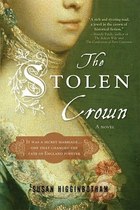 When her sister Elizabeth Woodville secretly marries the King of England, Katherine Woodville’s future changes irrevocably. In the rush to marry off the many Woodville siblings, Kate becomes a duchess when Henry Stafford, duke of Buckingham, is chosen for her. Kate and Harry are children when they marry, but as they grow together they fall in love easily. But always in the way is Richard, duke of Gloucester, Harry’s idol from childhood. When Richard’s ambition leads him to sanction unspeakable deeds, Harry must choose whether to maintain his blind loyalty or strike out against his closest friend. When her sister Elizabeth Woodville secretly marries the King of England, Katherine Woodville’s future changes irrevocably. In the rush to marry off the many Woodville siblings, Kate becomes a duchess when Henry Stafford, duke of Buckingham, is chosen for her. Kate and Harry are children when they marry, but as they grow together they fall in love easily. But always in the way is Richard, duke of Gloucester, Harry’s idol from childhood. When Richard’s ambition leads him to sanction unspeakable deeds, Harry must choose whether to maintain his blind loyalty or strike out against his closest friend.
I’ve enjoyed both of Susan Higginbotham’s previous works and I’m happy to say that I enjoyed this one, too. I will admit that I found the beginning slightly tedious; a lot of it is recounting of history I already knew, so it might be perfectly fine for a reader who isn’t quite so familiar with late fifteenth century England. Once Kate and Henry start to grow, however, the book becomes really enjoyable. Their love story and affection for one another are often sweet and I liked watching them grow up together and move into maturity.
I also liked that Higginbotham actually made me like the duke of Buckingham. I might have thought that impossible, but she does it successfully. I even liked her version of Richard III here; he does horrendous things, but he never seems like an evil villain. Just an ambitious, somewhat foolish, man, happy to bend the course of history in his direction when he can. The author also blends facts in liberally. I recognized so much from my own research and I have to admit that I smiled whenever I found a particular tidbit that only someone who had done some digging would know. I read her blog, so I also know that she seeks out original sources whenever possible, which I always appreciate. She includes a bibliography in the back for anyone who has a desire to read yet more about the Wars of the Roses, as well as a detailed author’s note for those who want to know what is fact and what is fiction. If you like historical accuracy in with your fiction, look no further than Ms. Higginbotham.
The Stolen Crown is a great addition to the many works of fiction about the Wars of the Roses in England. It’s refreshing to read about characters who tread the middle ground – there are no villains or saints here, just people. I really liked it.
I am an Amazon Associate. I received this book for free from the publisher for review.
|
|


Recent Comments