|
|
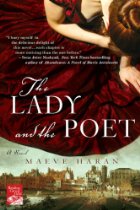 Many of the most famous love poems were inspired by a real life love story. This is certainly the case with John Donne, whose romance with Lady Ann More led to some of the most beautiful, and sometimes risque, poetry in the English language. Though living in relatively stringent Elizabethan England, where societal rules and status were carefully enforced, the relatively high-born Ann falls deeply in love with John, a man who could not properly support a wife at the time. Free-spirited, devoted Ann isn’t willing to let that stand in the way; this is a story of courtship, of frustration, and of literary genius. Many of the most famous love poems were inspired by a real life love story. This is certainly the case with John Donne, whose romance with Lady Ann More led to some of the most beautiful, and sometimes risque, poetry in the English language. Though living in relatively stringent Elizabethan England, where societal rules and status were carefully enforced, the relatively high-born Ann falls deeply in love with John, a man who could not properly support a wife at the time. Free-spirited, devoted Ann isn’t willing to let that stand in the way; this is a story of courtship, of frustration, and of literary genius.
I can’t remember where I got this book; I think it got sent to me for review a while ago, and ultimately that was the reason I finally gave in and picked it up. I haven’t been properly in the mood for historical fiction for some time now, but The Lady and the Poet is such a beautiful, deep, provoking book that it held and indeed rewarded my attention once I finally began reading it.
First of all, let me say that this particular book truly feels historic. It doesn’t just throw relatively modern characters into a setting with fancy dresses, but instead has characters who fit seamlessly into their environment and give us a thorough idea of what an Elizabethan couple might have had to deal with. Ann and John’s love story is actually documented, and the sacrifices they made for one another are firmly rooted in history, which makes this book all the more enchanting, at least for someone like me. I loved the re-imagining of the lives of these two people. The Lady and the Poet reminded me why I enjoy historical fiction so much in the first place.
Secondly, the literary appeal can’t be overstated. Donne wrote a lot of poetry; I even managed to study some of it during my English major days. Haran doesn’t let all that richness fall to the wayside, instead incorporating Donne’s work into the plot, into the love story, and strengthening the story as a whole by using what probably was inspired by Ann in the first place within the book. Much of his work rings true, and knowing that it was written by the man himself adds that extra layer of authenticity and emotion to the book which just doesn’t exist otherwise.
Finally, the book is both gorgeously written and seamlessly plotted, stringing the reader’s attention along the years and the struggles, providing details and descriptions enough but never overwhelming the reader with useless historical detail (although I’ll be the first to admit that I would be happy with more than most). We feel as though we’re in Tudor England, but we’re in the expert hands of a guide we can trust.
The Lady and the Poet is a quiet book, a love story, but one that will worm its way into your mind and heart and refuse to leave. An exceptional choice for those who love historical fiction.
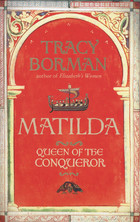 William the Conqueror is one of the most well-known figures in English history, and for good reason; with a single battle, he ended the Anglo-Saxon rule of England and changed many aspects of governance, aristocracy, and even language. That’s simplifying things just a bit, but the impact of the Norman invasion on England can’t be overstated. Left behind in the traditional story of great-men-doing-great-things is Queen Matilda, William’s wife and a power in her own right. What influence did she have on William? On the conquest of England? On her children, who went on to rule the country themselves? That is the story Borman aspires to tell in this biography. William the Conqueror is one of the most well-known figures in English history, and for good reason; with a single battle, he ended the Anglo-Saxon rule of England and changed many aspects of governance, aristocracy, and even language. That’s simplifying things just a bit, but the impact of the Norman invasion on England can’t be overstated. Left behind in the traditional story of great-men-doing-great-things is Queen Matilda, William’s wife and a power in her own right. What influence did she have on William? On the conquest of England? On her children, who went on to rule the country themselves? That is the story Borman aspires to tell in this biography.
I’m not unfamiliar with Matilda; not only have I read about her in fiction, I learned quite a bit about the actual history of her life, too. This book regardless had a lot new to offer and a lot of fodder for thought, especially when it comes to the role of the woman in the medieval world. Borman posits that Matilda’s strong leadership role was preceded and followed by women who expected the same, and that truly there was more of a step backwards after her reign.
For instance, one of Matilda’s namesakes, “Empress” Matilda or Maude, is the prime example. Henry I made her his heir and asked his people to swear loyalty to her – so while he clearly had worries about it, he didn’t pass over her to choose a male heir. Was this the influence of his mother? It’s a fascinating question, and makes the social dynamics that followed Henry I’s death even more intriguing.
Borman also takes a relatively in-depth look at the myths surrounding Matilda and the motivations behind what other people said about her. This is always fascinating stuff for me – I love thinking about how various chroniclers and historians have twisted and portrayed things in ways that suit them best. Matilda suffers this quite a bit and it’s interesting to see Borman’s perspective on which bits are more or less correct. She puts to bed some of the more outlandish tales, like William beating Matilda to a pulp for her to agree to marry him – the world was different then, but probably not THAT different, and Borman’s logic is reasonable.
I also loved that Borman asserted Matilda’s power and influence as both duchess and queen. She witnessed a large number of charters and was personally responsible for ruling in her husband’s absence, something most of us don’t really associate with the Middle Ages. For a piece of chattel, she made and helped with many decisions, and it’s a mark of her influence that she was deeply mourned upon her death. Borman does the usual speculation, pondering what effects Matilda’s “softening” influence may have had while she was alive, as she vividly contrasts William’s rule after her death with those years before.
Overall, Matilda: Queen of the Conqueror is a truly fascinating book for anyone who is interested in female power just before the High Middle Ages. Matilda presents a thoughtful contrast to those who came after; this book would actually fit in wonderfully with Helen Castor’s She-Wolves. Highly recommended.
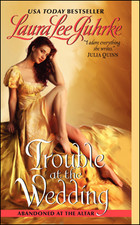 Annabel simply cannot wait to marry her fiance, even though she doesn’t really love him. Why? Because he’s an earl and he can finally confer upon her family the respectability she knows they deserve. Growing up in a Mississippi backwater and learning that love doesn’t lead to anything other than heartbreak has taught her that status and contentment matter above all else. But that’s not enough for Annabel’s family, none of whom likes her fiance, and in act of desperation, her uncle pays Christian du Quesne, the duke of Scarborough, to persuade her to call off the wedding. Annabel simply cannot wait to marry her fiance, even though she doesn’t really love him. Why? Because he’s an earl and he can finally confer upon her family the respectability she knows they deserve. Growing up in a Mississippi backwater and learning that love doesn’t lead to anything other than heartbreak has taught her that status and contentment matter above all else. But that’s not enough for Annabel’s family, none of whom likes her fiance, and in act of desperation, her uncle pays Christian du Quesne, the duke of Scarborough, to persuade her to call off the wedding.
Christian can’t turn down an offer like that, not with his estate in ruins and his refusal to marry an heiress himself. He needs the cash to start investing and making money back. So he agrees, but finds himself longing for more than the money once he meets Annabel and realizes that she really belongs with someone better than Rumsford – himself.
I can’t believe I only discovered Laura Lee Guhrke with this series. How could such an awesome author have been writing books for longer than I’ve been reading romance without me noticing? It doesn’t matter anyway; I’ve discovered her now, and I’m quickly learning that I am going to simply inhale anything she writes. As with the first two in this trilogy of books about being abandoned (or doing the abandoning) at the altar, I just loved the emotional journey of this book and I’m thrilled I had a chance to read it.
On a shallow note, just look how gorgeous that cover is. I’m so pleased that yellow seems to have taken over historical romance covers temporarily, as it’s my favorite color and it suits them well.
Anyway, this book ticked all the right boxes for a wonderful romance. Annabel is a heroine who has been hurt before, suffering from a man who took serious advantage of her and then left her to fend for herself. With a little sister to look after, Annabel’s mission ever since has been to ensure that nothing like that ever happens again. A fortunate endowment from her long-absent and now-dead father means that she can buy her way into the nobility, and so she settles for a man who will provide her with the firm position in society that all poor girls dream of.
Enter Christian, a man who is hell-bent against marrying after the disaster that happened to his first wife. He falls head over heels with Annabel almost at first glimpse; he’s then fixed on helping her avoid her no-good fiance at all costs. But Rumsford, the fiance, isn’t really a villain, just a fairly typical aristocrat with a bit on the side; he’s a foil to get Christian and Annabel together. Once he does so, the book simply sparkles, and had me riveted to the Kindle’s screen as these two come together with, in the end, everything they have.
Trouble at the Wedding is a wonderful, emotional, sometimes funny book that will win the heart of any romance reader. Highly recommended.
All external links are affiliate links. I received this book for free for review from the publisher through Netgalley.
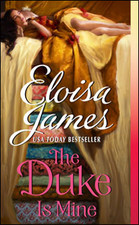 Carrying on with her series inspired by fairy tales, The Duke Is Mine puts a twist on the tale of the Princess and the Pea with this historical romance. Tarquin, the Duke of Sconce, is seeking the perfect bride – or at least his mother is on his behalf. Miss Olivia Lytton – not even a lady – is hardly the perfect choice, particularly as she’s been betrothed to another duke since her birth. While Olivia’s sister Georgiana fits the bill, Tarquin can’t take his eyes from curvy, funny Olivia – but how can they surmount her betrothal and his mother’s expectations in order to be together? Carrying on with her series inspired by fairy tales, The Duke Is Mine puts a twist on the tale of the Princess and the Pea with this historical romance. Tarquin, the Duke of Sconce, is seeking the perfect bride – or at least his mother is on his behalf. Miss Olivia Lytton – not even a lady – is hardly the perfect choice, particularly as she’s been betrothed to another duke since her birth. While Olivia’s sister Georgiana fits the bill, Tarquin can’t take his eyes from curvy, funny Olivia – but how can they surmount her betrothal and his mother’s expectations in order to be together?
I liked the concept behind this book a lot, but it was one of those where too many obstacles fell away from the couple’s feet almost effortlessly so they could be together. In fact, I think it may be the first romance by Eloisa James I’ve had problems with, because I ordinarily love her books.
Let me explain; it’s not that I didn’t have a good time with this book. In fact, I flat out loved the first two thirds. It’s impossible not to feel for Olivia, a girl who describes herself as fat and loud and who tries to suck in her stomach so she doesn’t offend anyone, simply because she doesn’t fit the willow-thin, mouth-shut society-dictated stereotype. To make things worse, she’s not particularly fond of her future husband, but she considers herself resigned to her fate. In Tarquin’s eyes, she is curvy, hilarious, and immediately attractive. She’s a breath of fresh air amidst a crowd of stick-thin debutantes, one of the only romance heroines I’ve read about who does actually have a healthy amount on her bones and is decidedly not a wallflower.
After the couple do fall in love and all secrets are revealed, though, I really started to get frustrated with it. I felt as though all the romantic layers had fallen away so the couple could be together with an incredibly contrived situation to remove any problems. Obviously, many romance novels do this, but good ones shouldn’t make it so obvious. It’s the case of a perfectly good romance spoiled by the addition of a subplot that does incorporate the fairy tale but otherwise seems far, far too convenient. I wanted the couple to face what they’d done and come out stronger, not just escape without anyone ever actually realizing what had happened.
Anyway, if that’s what you go in expecting, I know you’ll enjoy this book; and for what it’s worth, it may have been my mood that made this so irritating to me at the time. But for a book that started out so well, I ended up disappointed. I’d recommend the other two fairy tale books instead, or at least to start, before you venture into reading The Duke Is Mine. Eloisa James really is a fantastic author, and it would be a shame to miss out on the rest of her work.
All book links to external sites are affiliate links. I received this book for free for review from Netgalley.
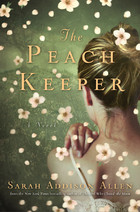 The tiny town of Walls of Water, North Carolina, has been home to logging wealth for generations. But Willa Jackson, the only remaining member of one of the most prominent families, now makes a living for herself running a sporting goods store, and has no desire to be associated with her past. Meanwhile, Paxton Osgood, another scion of the famous families, buries herself in family and town lore, ignoring her personal problems to become an image of a perfect society daughter. Their grandmothers were – and in some ways are – best friends, but these two women couldn’t be further apart. Enter the restoration of the Blue Ridge Madam, Willa’s family’s hereditary house, and Paxton’s pet project. When a skeleton is dug up underneath the peach tree, the women can no longer avoid each other in their mutual quest for their family’s histories. The tiny town of Walls of Water, North Carolina, has been home to logging wealth for generations. But Willa Jackson, the only remaining member of one of the most prominent families, now makes a living for herself running a sporting goods store, and has no desire to be associated with her past. Meanwhile, Paxton Osgood, another scion of the famous families, buries herself in family and town lore, ignoring her personal problems to become an image of a perfect society daughter. Their grandmothers were – and in some ways are – best friends, but these two women couldn’t be further apart. Enter the restoration of the Blue Ridge Madam, Willa’s family’s hereditary house, and Paxton’s pet project. When a skeleton is dug up underneath the peach tree, the women can no longer avoid each other in their mutual quest for their family’s histories.
I’ve made a point of reading all of Sarah Addison Allen’s books since her first one, Garden Spells, captivated me many moons ago. Unfortunately, either I’m changing or her books are – I just wasn’t really feeling the magic on this one. Her prose is still delicious and the touches of fantasy she adds to every day life as charming as always, but the characters in this particular book didn’t strike a chord with me. While the story’s plot is made to sound somewhat exciting, I actually found most of it rather predictable bar one small bit at the end, and the way the characters would end up from the start is obvious.
That isn’t something that normally bothers me; you are hearing from a girl who regularly enjoys romance novels right now, after all. I’m perfectly fine with a generally predictable ending. I suppose what bugged me here is that the entire book is that way, from the plot to the friendships to the romances. And those romances, I had a hard time believing in; they happen too quickly, and one is especially absurd, at least from my perspective. I didn’t find the heartwarming book I was seeking here.
It was a fast read, with a nice atmosphere, as I would expect from one of her books, and I had a fine time reading it, but I was ultimately disappointed in The Peach Keeper. I hope Allen’s next book will be a bigger hit with me.
All external links are affiliate links. I received this book for free for review from Amazon Vine.
 Most of us, especially those of us who are literary, have a cozy image of a typical English village in our minds. Mine has definitely been imparted through reading, but has only been strengthened over the time I’ve lived in England. Uneven rows of thatched roof cottages, wide expanses of farmland, the rectory, and maybe even the manor house on the hill – it depends what historical period your mind works best in. Our ideal of the English village is more myth than any kind of reality, but that doesn’t mean you can’t still love them, and that is the contradiction that Wainwright explores in The English Village. Most of us, especially those of us who are literary, have a cozy image of a typical English village in our minds. Mine has definitely been imparted through reading, but has only been strengthened over the time I’ve lived in England. Uneven rows of thatched roof cottages, wide expanses of farmland, the rectory, and maybe even the manor house on the hill – it depends what historical period your mind works best in. Our ideal of the English village is more myth than any kind of reality, but that doesn’t mean you can’t still love them, and that is the contradiction that Wainwright explores in The English Village.
It’s clear from the start that Wainwright loves the ideal of England as much as the rest of us do. The book is broken down into chapters concerning different aspects of the village, from those cottages I mentioned to the festivals that the villagers used to celebrate. The book concludes with a chapter on the potential future of the English village and the changes that have happened recently, namely a revival in village life and a determination to conserve the bits we have left for the future. Each chapter also contains black and white drawings of, usually, buildings mentioned in the text to give us a good idea of what we’re reading about.
At the core this was really a delightful book. I loved the way that Wainwright pulled history into the idyllic vision that so many of us cherish – not to remove the dream, but to add a layer of realism to it. One of my favorite parts was when he mentioned that some cottages which are now valued at over one million pounds used to be houses for the poor. It’s this dichotomy which sums up that contradiction; the now pretty villages had an underside which has mostly moved to the cities, leaving much of the countryside for the wealthy.
The English Village naturally also covers the history of the village and how it has evolved through time, starting with the Norman Conquest and ending with the people who are keeping the dream alive, either through pubs or restoration. The industrial revolution effectively ended the need to live in cottages scattered across the countryside, but that way of life was common throughout our history until that point. The shift was monumental, although also incremental, and given that I am always a person who is fascinated with those fundamental changes, I was hooked by this in particular.
For anyone who has ever imagined having a little house in the countryside – perhaps a timber-framed, plastered house with a thatch roof, as I’ve wished – The English Village is truly the perfect read. And it would make a great Christmas gift, too; if you’re in poking around the shops this weekend looking for last minute presents, look no further.
All external book links are affiliate links. I received this book for free for review from Amazon Vine.
 When her best friend Kitty decides to leave to be a nurse on Bora Bora at the start of World War II, Anne throws her entire life to the side – temporarily of course – to join her. After all, her previous existence was a little bit mundane and uninspiring, including her engagement to her fiance, and nothing says excitement like a nursing post in the South Pacific. But Anne isn’t entirely prepared for what Bora Bora will bring to her; a murder mystery, a forbidden love affair, and secrets that may tear her from her best friend forever. When her best friend Kitty decides to leave to be a nurse on Bora Bora at the start of World War II, Anne throws her entire life to the side – temporarily of course – to join her. After all, her previous existence was a little bit mundane and uninspiring, including her engagement to her fiance, and nothing says excitement like a nursing post in the South Pacific. But Anne isn’t entirely prepared for what Bora Bora will bring to her; a murder mystery, a forbidden love affair, and secrets that may tear her from her best friend forever.
I’d heard a lot of praise for Sarah Jio’s first novel, The Violets of March, so when she gave me a chance to review The Bungalow, I leapt at it, and I’ve been looking forward to the book ever since. I wasn’t disappointed; this is a solid love story and all-around good read. It’s a short one, so perfect for zipping through over the course of an afternoon or evening while you can get fully wrapped up in the book.
The book’s setting, on a lush tropical island in the midst of World War II, seems absolutely designed for romance – especially since I have done work with a travel company in the midst of my old job, and I’m very familiar with the idea of Bora Bora even if I haven’t been there myself. It’s an inspired setting, creating the urgency of war while still allowing a couple to fall in love outside the actual warzone. That threat of danger is always hanging over their heads.
The plot was also an incredibly compelling aspect of the book for me and kept the pages turning (or me clicking the button on the Kindle). The characters, particularly Westry, weren’t as well defined as I think I’d like in a proper romance, but because so much else was going on in a relatively short period of space, I could understand the relative shadowy dimensions and enjoy the rest of the story as it happened. And I really related to Anne, the star of the show, who has so much going on in her life that she can’t contain it all and ends up torn before she decides what she really wants. I found myself captivated and swept into her world.
As a result, I found The Bungalow to be a fast, very enjoyable read; with its evocative setting, I actually think it would be an excellent choice for a beach read with a little bit more depth. A fantastic book for historical fiction and romance fans alike. Recommended.
This book was provided to me for free by the author for review.
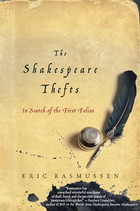 Shakespeare First Folios are rare objects and highly prized by the libraries and collections which manage to hold them. The First Folio was the very first collection of Shakespeare’s plays ever printed – there were individually printed editions previously but never a large set like this. Eric Rasmussen and his team of researchers have been seeking out First Folios around the world for years. Through their searches and investigations, he presents this collection of stories about individual First Folios, some lost and some found, which are and will continue to fascinate researchers for hundreds of years to come. Shakespeare First Folios are rare objects and highly prized by the libraries and collections which manage to hold them. The First Folio was the very first collection of Shakespeare’s plays ever printed – there were individually printed editions previously but never a large set like this. Eric Rasmussen and his team of researchers have been seeking out First Folios around the world for years. Through their searches and investigations, he presents this collection of stories about individual First Folios, some lost and some found, which are and will continue to fascinate researchers for hundreds of years to come.
This was a very interesting little book about the First Folios. I like Shakespeare well enough but have never really paid that much attention to the enduring physical legacy of his work, although I have been to Stratford-upon-Avon. But I love books and the marginalia that resides in older ones, so there was plenty to like in this book for me, and there certainly would be for anyone who loves physical books.
One thing I found odd, though, was that the book seemed almost as though it had been composed for a magazine or newspaper column previously; for a very short book, there is a lot of repetitiveness, and I thought that the author would have been a bit better assuming people would remember what had happened chapter to chapter. I had a look and couldn’t find anything, but I really wouldn’t be surprised. While there is continuity, it would be easy to pick up in the middle without any problems – perhaps the author expects his readers to dip in and out as they please rather than just read straight through as I did. There is, for instance, a whole lot about the author unable to access the manuscripts in Japanese libraries, and he reintroduces the painting he purchased in a subsequent chapter after he’d already bought it.
Still, this was an enjoyable book on a topic I like very much. Even though many of the Folios that Rasmussen discussed hadn’t actually been seen by him or his team, the stories are fascinating and I enjoyed heading through history with him. Because that’s really what this book is, a trip through history with books in tow. If that sounds like your cup of tea (and I think for many of you reading this, it will), The Shakespeare Thefts is a great choice.
All external book links are affiliate links. I received this book for free for review from Amazon Vine.
Macro and Cato are a pair of Roman soldiers who have saved the Empire again and again over the course of 10 different novels together. In this installment, they are embroiled in the intrigue that is commonplace in the capital city itself; as they learn, even the mighty Roman empire is just a few days from rebellion when the imperial stash of grain runs out. Macro and Cato are tasked with infiltrating the Emperor’s own Praetorian guard and discovering who wishes to topple the Emperor and cause chaos in the city before it’s too late to stop.
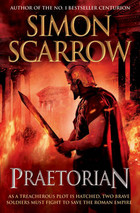 I’m new to Scarrow’s series about Macro and Cato set across the Roman Empire, currently in the time of Claudius’s rule, but I am a big fan of Bernard Cornwell and this series is considered similar enough to grab my interest. You know the kind of historical fiction I’m talking about; usually that concerned with the grittier realities of battle and intrigue rather than any sort of courtly or royal high life. This is much more firmly on the gritty side, with a fair share of battle, swearing, and conspiracy. I’m new to Scarrow’s series about Macro and Cato set across the Roman Empire, currently in the time of Claudius’s rule, but I am a big fan of Bernard Cornwell and this series is considered similar enough to grab my interest. You know the kind of historical fiction I’m talking about; usually that concerned with the grittier realities of battle and intrigue rather than any sort of courtly or royal high life. This is much more firmly on the gritty side, with a fair share of battle, swearing, and conspiracy.
I was curious from the first few pages; a large amount of silver bullion is stolen from underneath the Empire’s nose, leading into a complete scheme to kill the Emperor Claudius. What happens next differs depending who you talk to, but what matters is the Emperor’s life, and so Macro and Cato, who have proved themselves in so many other ways, are set in disguise and placed in wait to discover who is dissatisfied with the Emperor.
I wasn’t sure what to expect, jumping in without having read any of the preceding series, but I found I really didn’t need much prior experience with the characters to get into the story. There is a bit of the backstory between them revealed, mostly as and when it becomes relevant, but it seemed the perfect balance alongside the more fast-paced sections of the plot.
I also loved the touches of research that Scarrow threw into the book. I’ve never really studied the Roman Empire at all, but I have studied classical Latin, and I picked it up immediately when he included the famous phrase that gladiators said to the Emperor before a battle – “We who are about to die salute you” – which is known to have been genuinely said at least once, during the very battle that happens in this book. It was also a new and richer experience for me to read a book set in Rome now that I’ve been there; and Macro and Cato even take trips to Ostia, the port town that I visited which is still so complete. I could envision them walking down those streets, admittedly with a bit more flesh and plaster on the buildings, but the book itself did very well in giving me a mental portrait of Rome and the surrounding countryside.
Praetorian easily stands alone, then, and all by itself had me keen to look into reading the other ten volumes of the series. I’m very curious to see how the relationship between Macro and Cato has grown throughout the series, even if most of them aren’t set in Rome itself, and to pick up on the threads of backstory that were mentioned here. If you’re looking for historical fiction set in the Roman Empire, you can hardly go wrong with this one.
All external links are affiliate links. I received this book for free for review from the publisher.
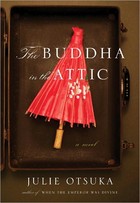 The Buddha in the Attic is the collective story of Japanese “mail-order” brides who came to the United States before World War II. They arrived to husbands they didn’t know, lives they didn’t expect, and a country that refused to accept them. And just when the Japanese finally began to grow a toehold in the community, the accusation and racism that defined World War II took effect and eradicated them from a visible role in the country for years. The Buddha in the Attic is the collective story of Japanese “mail-order” brides who came to the United States before World War II. They arrived to husbands they didn’t know, lives they didn’t expect, and a country that refused to accept them. And just when the Japanese finally began to grow a toehold in the community, the accusation and racism that defined World War II took effect and eradicated them from a visible role in the country for years.
When I saw that this was a finalist for the 2011 National Book Award, I immediately knew I had to read it. I’ve been longing to read Otsuka’s first book, When the Emperor was Divine, for a long time now, but since this was short and available on Netgalley, I seized the opportunity to finally experience this wonderful author for myself. I’m very pleased with the choice I made because this was an excellent book and I enjoyed each and every heartbreaking moment.
Because this is a collective story, it isn’t presented the way you would expect. There are no individual characters. There are Japanese brides, seasick on a boat, leaving behind a multitude of struggles, hardships, and even a scandal or two. There are men awaiting those brides, who may or may not live up to the photos and descriptions they sent across, who may exceed their wives’ expectations or who may disappoint them immeasurably. In less than 200 pages, we’re treated to an extensive range of what may have happened to these Japanese women; even though their experiences can be very different, they start out at the same point and unfortunately all of their stories in this volume end at the same point, with sorrow, heartbreak, and detention camps.
I loved this approach because even though it clearly depicts the difference between individuals, it also highlights the absolute universality of their experiences. It didn’t matter if the women were married to farmers or businessmen or shop owners. The end point for all of them was the same, a camp. And while many women got out of the camps eventually, the experience and suffering was universal. And because they are marked out as individuals in the middle – not by name, but by experience – it’s easy to sympathize with the women and feel that they are human beings, not the “Other” that allowed their fellow human beings to sweep them from their lives and shove them all in one place as “dangers.”
In short, The Buddha in the Attic is an incredibly powerful book, and one that in my opinion is certainly award-worthy. The description on the publishers’ website states that it is a book about the American Dream, and I think that is a particularly apt description – but it’s more about the elusiveness of that dream, and how easily it can be taken away, than anything else. Highly, highly recommended.
|
|


Recent Comments