|
|
 Lady Vivienne Bancroft and her husband Miles have been estranged ever since he embarrassed her and left her alone while he went off with a prostitute after a party. She fled to New York to be with her adopted family, while he continued to languish in London. The series is set around Vivienne and her three siblings, each of whom is sent to a different part of the world to take over one aspect of their father’s business after his death. Vivienne is left with part of his business to develop in South Africa – not exactly the safest place for a woman alone at this point in history. Miles meanwhile has been in despair without his wife, and vows to go to South Africa to prepare the way for her and persuade her to give him half of the million dollars her father has promised her. Once together, though, they both realize that perhaps they should be working together as a team instead of standing at cross ends. Lady Vivienne Bancroft and her husband Miles have been estranged ever since he embarrassed her and left her alone while he went off with a prostitute after a party. She fled to New York to be with her adopted family, while he continued to languish in London. The series is set around Vivienne and her three siblings, each of whom is sent to a different part of the world to take over one aspect of their father’s business after his death. Vivienne is left with part of his business to develop in South Africa – not exactly the safest place for a woman alone at this point in history. Miles meanwhile has been in despair without his wife, and vows to go to South Africa to prepare the way for her and persuade her to give him half of the million dollars her father has promised her. Once together, though, they both realize that perhaps they should be working together as a team instead of standing at cross ends.
This was a book that I had trouble buying into at the start, but wound up feeling won over by the end. Primarily, I had a lot of trouble liking Miles, or believing that Vivienne would ever really fall for him again. Vivienne very obviously thinks of him as a frustrating wastrel, and the fact that he at first attempts to win her over because he wants the payout from her success at her father’s business meant I didn’t like him on my own, either.
But what I discovered as I went along is that while Miles tried to appear like he didn’t care and only wanted the money, he actually did care for Vivienne. He’d missed her. And he hid it from her, and to some extent from himself, mainly because he felt guilty. He’s a classic example of a person who needs genuine work to keep him out of trouble; once he’s given an actual purpose, he transforms. It’s not Vivienne who does it; she already tried. It’s simply the concept of a life outside the ordinary interactions of Victorian London.
I also liked the fact that, as the book developed, Vivienne and Miles became a team. It wasn’t that one of them could rescue the other. They both had their strengths and they learned to use them together rather than against one another as they had previously. Working towards a common goal instead of cross-purposes draws them together and helps them see how their relationship could be different. This focus was an excellent choice for me; instead of an indolent life with a multitude of servants and a lack of real effort, the characters realize that they can do and be more in the world. It was an inspiring turn and added something more to the book beyond the romance.
Not that there was anything at all wrong with the romance, which I enjoyed. But it was nice to have two powerful facets to the book, and Flawless is certainly one I would recommend to others who appreciate a good historical romance set outside the tired world of the ton.
All external links are affiliate links and I received this book for free for review from the author.
 Celia’s parents are superheroes, but she has never been anything more than normal. Eking out a standard existence on a single salary, renting her own apartment, taking the bus to work; this is Celia West’s life. Her parents Captain Olympus and Spark keep the city safe, while operating a huge and successful business, but never seemed to have enough time for their daughter. When it was discovered who they were, Celia’s life was guaranteed to be abnormal, but she does her best. Unfortunately, when danger erupts in the city, it’s Celia who has the power to understand what’s going on and, ultimately, prove that regular humans can accomplish just as much as those granted special powers. Celia’s parents are superheroes, but she has never been anything more than normal. Eking out a standard existence on a single salary, renting her own apartment, taking the bus to work; this is Celia West’s life. Her parents Captain Olympus and Spark keep the city safe, while operating a huge and successful business, but never seemed to have enough time for their daughter. When it was discovered who they were, Celia’s life was guaranteed to be abnormal, but she does her best. Unfortunately, when danger erupts in the city, it’s Celia who has the power to understand what’s going on and, ultimately, prove that regular humans can accomplish just as much as those granted special powers.
This is another Read-a-thon choice and in that context it was a fun, easy choice of read. Superheroes are everywhere these days, and the concept of a normal person getting mixed up in the fray isn’t really strange either, so it’s pretty easy to determine whether or not this book is a choice that will appeal to you. It tries at times to deal with more complex issues, but given that Celia is behind her teenage-rebel days, I think it actually mostly fails at this – she comes off as whiny rather than strong, even when she’s actually the one going behind the scenes to make things happen. I didn’t actually dislike her in the present day, but I definitely would have if this were a YA novel and she was carrying out some of the behavior she did in her younger years.
The other bizarre part of the book for me was the romance, which I felt came out of left field. I had a certain character pegged as an older mentor, only to find out he’s actually a romantic interest, which just didn’t work. I can see how it would work sometimes, but here I just wasn’t feel any sort of spark between them. Overall, disappointing for someone who actually likes romance on the side.
Still, the superhero world was interesting, and I certainly found After the Golden Age captivating enough to read it over a couple of hours straight during the Read-a-thon. I’d recommend it for a bit of fun and for a fast read, but not for a memorable one.
All book links to external sites are affiliate links. I received this book for free for review from Amazon Vine.
 The Bauers are a prosperous, middle class family living in Czechoslovakia. They are patriotic, they celebrate Christmas, and while they’ve suffered their fair share of joys and sorrows, they don’t consider themselves too different from their neighbors. Unfortunately, they are Jews, and even if they haven’t practiced their religion seriously for years, that makes their lives impossibly difficult once the Nazis occupy the Sudetenland. Marta, their son Pepik’s nanny, has no idea what her background is, but her fate is inextricably tied with the Bauers’. It is little Pepik who has far to go, as the family weighs carefully their plan to put him in the Kindertransport system and send him to Great Britain, where they hope he will be free of the Nazi grasp forever. The Bauers are a prosperous, middle class family living in Czechoslovakia. They are patriotic, they celebrate Christmas, and while they’ve suffered their fair share of joys and sorrows, they don’t consider themselves too different from their neighbors. Unfortunately, they are Jews, and even if they haven’t practiced their religion seriously for years, that makes their lives impossibly difficult once the Nazis occupy the Sudetenland. Marta, their son Pepik’s nanny, has no idea what her background is, but her fate is inextricably tied with the Bauers’. It is little Pepik who has far to go, as the family weighs carefully their plan to put him in the Kindertransport system and send him to Great Britain, where they hope he will be free of the Nazi grasp forever.
This novel is presented in three different intertwining parts. The first is the past, the story of the Bauers told through Marta’s voice. The second is in the present, told by an unknown woman seeking a sibling. And the last is a series of letters which are related to the story’s characters and slowly reveal to us their fates as we go along. (The book is about Jews in the area we all know Hitler expanded into in World War II – we know what will happen to at least some of the characters). This was an excellent method for me of telling the story. It added a degree of uncertainty to the past segments, which feels frighteningly straightforward as far as these books go, and had me very curious about the outcome. I did find it a little bit disconcerting to switch around so quickly at the beginning of the book, but I got used to the alternate viewpoints quickly.
One of the most fascinating facets of the book for me was its thoughts on memory. How different was our childhood actually from the way we recall it? How much have we modified history within our own heads? This is so interesting because, as I grow older, I’m often wondering if everything happened as I thought it did. And, in the novel, this of course brings up the question of identity – who are we if we’ve misremembered our past? Without a past, how can we have a future? The book handles this in terms of individuals, but the question works on a much wider scale, especially given the period that this book is about and the essential remembrances we all must take from the Holocaust.
Anyway, I was really surprised by how much I got wrapped up in this book and how much it made me think. Within just a few pages – it’s a short book, roughly 300 pages in my version but with huge font and margins – I grew incredibly attached to some of the characters and interested in their well-being, particularly Marta and Pepik.
In those short chapters, the book conveys so very much – about motherhood, about prejudice, about human nature – that I’d find it impossible not to recommend. Combined with a compelling story, Far to Go is a fantastic choice for anyone interested in the Holocaust. You may start out thinking it’s just another World War II book, but I recommend you let it prove you wrong.
All book links to external sites are affiliate links. I received this book for free for review from Amazon Vine.
 Diminutive Mercy Lavinia Bump, just 32 inches tall, has never been content with her life as a girl in the country. Even when she’s appointed a teacher despite her size, she longs for more. So when her “cousin” arrives offering to put her on display for her singing talents – in reality to exhibit her in a circus – she actually jumps at the chance to escape and see the world. Little does she expect the fame and devastation that will come of her choices when she meets P.T. Barnum and becomes one of the most famous “little people” in the world. Diminutive Mercy Lavinia Bump, just 32 inches tall, has never been content with her life as a girl in the country. Even when she’s appointed a teacher despite her size, she longs for more. So when her “cousin” arrives offering to put her on display for her singing talents – in reality to exhibit her in a circus – she actually jumps at the chance to escape and see the world. Little does she expect the fame and devastation that will come of her choices when she meets P.T. Barnum and becomes one of the most famous “little people” in the world.
I read a book designed for younger readers about Tom Thumb earlier this year and ever since then I’ve been fascinated by these people, who were clearly exploited but who also seem to have had a role in their own exploitation. After hearing boatloads of praise for Melanie Benjamin after Alice I Have Been, a book I still unfortunately haven’t read, I knew that this was one I really needed to get to. I’m very glad that it lived up to my high hopes and provided the story of a woman who simultaneously takes advantage of her size to get what she wants even as she hates that she is reduced to it; a fascinating practical person who sees the world through very clear eyes, most of the time.
After all, Vinnie, as she’s known to her friends, seems to have very distinctly made her own choices in real life, as she does in this book, and they were at least partly inspired by her desire to see more of the world. She may not have expected to be as exploited as she was, but here she is given a clear opportunity to go home and live out her life, probably as a childless spinster. Is it any surprise that she does take the chance, even if it means exploitation? It’s a fascinating thought process.
I have to admit that I didn’t like Vinnie throughout the entire book. At times, I think she actually makes the same mistake looking at others as she does when others look at her. She looks at her husband and doesn’t see that he’s a person, too; instead she measures his faults and pushes him aside. When she looks at her sister, she can’t see anything but her baby sister, smaller even than she is, even though Minnie is probably one of the strongest characters in the book. Vinnie is a stubborn woman and even as she frustrated me, I appreciated the roundedness of her character, and the fact that she really doesn’t let her size stop her from achieving her dreams.
The Autobiography of Mrs. Tom Thumb is the perfect choice for those who enjoy historical fiction, particularly about the complicated world of circus-style shows in the nineteenth century, and is certainly recommended by me. I look forward to reading Benjamin’s first book and any others she has planned.
All book links to external sites are affiliate links. I received this book for free for review from Amazon Vine.
 Jacquetta of Luxembourg is a woman who, according to Philippa Gregory, history has neglected, mainly for lack of information; married first to the Duke of Bedford and then rather scandalously to Richard Woodville, a commoner, Jacquetta was an observer of many of the most important events during the Wars of the Roses, indeed outliving most of the primary players. Her daughter Elizabeth married the English king Edward IV, catapulting her family even more into the spotlight than ever before. Jacquetta of Luxembourg is a woman who, according to Philippa Gregory, history has neglected, mainly for lack of information; married first to the Duke of Bedford and then rather scandalously to Richard Woodville, a commoner, Jacquetta was an observer of many of the most important events during the Wars of the Roses, indeed outliving most of the primary players. Her daughter Elizabeth married the English king Edward IV, catapulting her family even more into the spotlight than ever before.
We start off with Jacquetta as a young girl, where she meets Joan of Arc and learns first-hand what can happen to a woman in English hands who is accused of being a witch. Joan, obviously, had a lot more behind her death sentence than supposed witchcraft, but if that’s what they used to have her killed, it’s a threat to a girl who was supposedly descended from Melusina as well. At this stage, however, Jacquetta and the Duke of Bedford get married, and as it turns out, Bedford is only interested in her because she is a virgin and is supposed to have magical powers. Meanwhile, while trying desperately to see the future, Jacquetta is also busy falling in love with her husband’s squire.
While I actually liked both Jacquetta and Richard, and I enjoyed the alternate perspective on the Woodvilles, portraying them as not grasping social climbers but people, there were still too many flaws with this book for me to enjoy it thoroughly. Jacquetta’s constant foreboding and feelings about the future hindered the book and made her a much flatter character; she knew what was coming too often to have an authentic reaction when these things actually happened.
This also contributed to the massive slowdown in the middle of the book. Jacquetta alternates between court and having babies, and while I know having children should be a joyful experience, I really got bored here. Nothing else actually happens to Jacquetta, and the entire war happens outside of her purview. Her husband gets sent off, and then her son, and she frets about their safety, what feels like over and over again. Since I knew what happened to Richard Woodville, as will many people who’ve read anything else about the Wars of the Roses, this got old fast.
Honestly, part of the reason for this is that Jacquetta just isn’t a compelling enough character on her own, for me, to have a fantastic novel written about her. She would have worked much better as an alternate narrator paired with someone on the sidelines than having a book all to herself. There is too much telling and not enough first-hand witnessing. The beginning was interesting, especially the witchcraft element with Joan of Arc and Eleanor Cobham, but the book loses speed after that and peters out to an ultimately disappointing, though predictable, ending.
Philippa Gregory fans will probably want to add The Lady of the Rivers to their collection, but personally I much preferred both earlier books in this series and would recommend in particular The White Queen.
All book links to external sites are affiliate links. I received this book for free from the publisher.
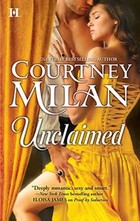 Sir Mark Turner is the nineteenth century’s version of a rock star; he’s written a book about chastity that has spawned not only his own fan club but also has inspired legions of women to decide to take his virginity. It doesn’t hurt that he’s stunning, of course. Jessica Fairleigh is a courtesan who wants nothing more than to retire, and she sees seducing Mark as her way out. Securing his virginity will earn her the money she needs to get away from London and live quietly in the country for the rest of her life, even if she has to set aside her remaining morals to do it. Sir Mark Turner is the nineteenth century’s version of a rock star; he’s written a book about chastity that has spawned not only his own fan club but also has inspired legions of women to decide to take his virginity. It doesn’t hurt that he’s stunning, of course. Jessica Fairleigh is a courtesan who wants nothing more than to retire, and she sees seducing Mark as her way out. Securing his virginity will earn her the money she needs to get away from London and live quietly in the country for the rest of her life, even if she has to set aside her remaining morals to do it.
What a fabulous book this was. I read the entire book on a train to London, and I can tell you it was more than a little embarrassing when tears came to my eyes as I was standing in a crowded coach with a bunch of businessmen. I’m still hoping they didn’t notice, but that should give you an indication of how wonderful this book really was. My heart broke again and again for Jessica, who truly has been unfairly treated by life and the people in her life.
And Mark’s stance on chastity may have been slightly anachronistic, but I adored it. Mainly this is because he turns the question of chastity back on the men, just as we still need to today. Mark is well aware of the sexual double standard and, rather than deciding that women should be treated the same as men, he decides that men should be treated the same as women. In other words, chaste until marriage, which I think actually makes more sense for this time period. Lust itself isn’t wrong; it’s what you do with it that counts, and often that means restraining it. This is what Mark tries to espouse, and what his followers misunderstand completely. The story of how Mark came to believe this is also a good one.
Though Mark is that rare example of a romance novel virgin (although not the first I’ve come across), he’s not willing to let his virginity define himself. He just wants to make sure he’s doing it with the right woman, a woman he respects and loves and who feels the same way towards him. He knows he isn’t a saint, in short. Watching Jessica slowly recover her sense of romance and ownership of her sexual identity – sex is about her too, not just about the man – while Mark discovers everything for the first time is a surprisingly incredible experience, and for once uses the more promiscuous scenes to develop the characters amazingly well.
The only flaw in the novel was towards the end, where some irritating obstacles get in the way of the characters’ getting together. There is one particular instance which truly feels unnecessary. I also felt like Mark’s family was a wee bit too happy with a courtesan for a sister-in-law, especially given Jessica’s previous experience. A little too much fairy tale.
In short, though, Unclaimed is a stunning book that, for the most part, really blew me away. Courtney Milan is a romance author to watch, and definitely an addition to my auto-buy list.
All book links to external sites are affiliate links. I downloaded this book for free from Netgalley.
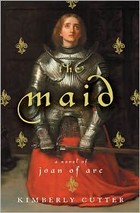 Joan of Arc – Jehanne the Maid – is the legendary virgin who heard the voices of the angels and led the French Dauphin to victory, finally, over the English. This book portrays her journey, from the first time she heard the voices of the angels and struggled with what to do up until her capture by the English and untimely execution. All of twelve when she first hears the voices, Jehanne struggles with her mission, her destiny, and with the people around her as she vows to do God’s will and save the French from the English. Joan of Arc – Jehanne the Maid – is the legendary virgin who heard the voices of the angels and led the French Dauphin to victory, finally, over the English. This book portrays her journey, from the first time she heard the voices of the angels and struggled with what to do up until her capture by the English and untimely execution. All of twelve when she first hears the voices, Jehanne struggles with her mission, her destiny, and with the people around her as she vows to do God’s will and save the French from the English.
I was really looking forward to this book. For me, like for many people obsessed with the Middle Ages, Joan of Arc is a fascinating person. This is more so because if she appeared in the present day, I’m pretty sure she would be sent to a psychiatrist and / or mental hospital, as most people who have visions and hear voices are. In this book, Jehanne (as it is spelled in the French) is also doubted and mistrusted. She must persuade people to believe her and let her lead an army, even though she is only a teenager. It’s a hard struggle, and the book portrays it as such.
But unfortunately, there were just some aspects of it I didn’t like. Jehanne is incredibly introspective for a teenager; even though she recounts the story from the moments before her death, she is almost unbelievably knowledgeable about the people around her. She knows the priests won’t believe her, for example, even though their lives are about religion and surely they would rejoice in her visions, as most of France does eventually.
She’s also puffed up with self-importance, which makes her hard to like as a character. She is The Maid, and people must bow to her as she is in the right. In part, though, I felt that could easily be true to life, because if you had the Archangel Michael whispering in your ear that you would lead the French to victory, I’m pretty sure you’d be self-important too, especially as a teen. It makes Jehanne more human, one aspect that I thought Cutter did extremely well. She is definitely a teenager, even if that concept was foreign to medieval people. None of the other characters really stood out, but they didn’t need to really because the star of the show is genuinely the star.
What I suppose didn’t work very well for me was the atmosphere. I never quite felt like I was in the middle of the Hundred Years’ War. Part of this is down to a lack of detail; not much is actually explained about the history of the conflict or what is actually going on. There is one scene where the tale of Agincourt is told around the campfire, but other than that I didn’t think the scene had been set particularly well. For people who actually don’t know the history of the war, I’m not sure whether they would learn much or feel confused. But then I am a glutton for historical detail, so perhaps this one is just me. I know the author did her research and her author’s note is very thorough, so I didn’t have any problems there; the book just never clicked with me and I didn’t fall in love with it like I wanted to.
I’m not sure what I wanted from this book, but it isn’t quite what I got. What it did give, though, was a very realistic, human portrayal of Joan of Arc, so if you’re looking for that, The Maid is for you.
All book links to external sites are affiliate links. I received this book as a gift from Kathy.
 Ling Suyin was the Emperor’s favorite concubine, renowned across China for her seductive ways. But now the Emperor has passed on, and Suyin hopes for a quiet life of retirement. Suyin isn’t destined for peace, though, as her life is in danger from assassins. She’s rescued by the warlord Li Tao, a harsh man who knows he’s trapped in a world of relentless politics and fighting but isn’t sure how to get out of it. The empire is starting to fracture. The threats to Suyin make him a pawn and put him at risk, but he’s still compelled to protect her, especially as they start to fall in love. Ling Suyin was the Emperor’s favorite concubine, renowned across China for her seductive ways. But now the Emperor has passed on, and Suyin hopes for a quiet life of retirement. Suyin isn’t destined for peace, though, as her life is in danger from assassins. She’s rescued by the warlord Li Tao, a harsh man who knows he’s trapped in a world of relentless politics and fighting but isn’t sure how to get out of it. The empire is starting to fracture. The threats to Suyin make him a pawn and put him at risk, but he’s still compelled to protect her, especially as they start to fall in love.
Jeannie Lin’s historical romance novels are so refreshing. I love Regency England as much as the next romance reader, but it is so nice to escape and focus on somewhere else for a change. Tang dynasty China is certainly a drastic change, and Lin’s ability to weave historical detail in with a genuinely romantic love story makes me incredibly hopeful that other readers seek them out and appreciate them as much as I do. I am not personally well acquainted with the period, but these books give a very different feel that I find refreshing and enjoyable – they certainly make me curious to learn more.
It was difficult to imagine, going into this particular book, how Lin was going to redeem Li Tao, who was actually the villain of her previous book, Butterfly Swords. Amazingly, she manages it, and quite well too, as we get a peek inside his head and start to process the many motivations that drive him. Suyin and Tao don’t start out trusting each other; in fact, Suyin mostly wants to be free, and views herself as a prisoner. She really does want that peace and quiet, and even as she starts to fall for Tao, she isn’t sure she’s actually going to get it. The last thing she wants is to remain in the political spotlight as she has for most of her life.
In fact, as I approached the end of the book, I started really wondering how on earth these two were actually going to end up happily together. I knew they had to, but the number of obstacles stacked up against them becomes truly forbidding. The ending, however, wraps up neatly – if a little bit too much – but left this reader satisfied with the romance and looking forward to much more from a talented author who is still relatively new. I’d recommend The Dragon and the Pearl to any historical romance reader – but start with Butterfly Swords to better understand the backstory.
All book links to external sites are affiliate links. I received this book for free for review from Netgalley.
 I know what you’re thinking – this book is a completely out-of-the-ordinary read for me. And it is, I’ve read very few books like this in my life. But I became curious about wheat when my mother was advised to eat much less of it by her doctor because of the sugar content, even in whole wheat bread, and when I saw this book on Netgalley I decided I had to know more. I know what you’re thinking – this book is a completely out-of-the-ordinary read for me. And it is, I’ve read very few books like this in my life. But I became curious about wheat when my mother was advised to eat much less of it by her doctor because of the sugar content, even in whole wheat bread, and when I saw this book on Netgalley I decided I had to know more.
Dr. Davis believes that genetically modified wheat is the scourge of modern society. He has seen hundreds of patients whose health has improved and weight has dropped simply by reducing or, better, completely eliminating wheat from their diets. It’s not the only solution, and he doesn’t say so; some people aren’t actually sensitive to wheat. But for those whom medicine has ultimately failed, whose health problems are unexplained, eliminating wheat may help. Not in all cases, but in many.
This is an intriguing book, although I’m ever wary of faulty science, but a lot of it seems logical to me. Bread, these days, is not really bread, something that other food writers have mentioned countless times. Look at the ingredients – there’s all sorts of stuff in there to produce it quickly and to prevent it from going moldy. No one can afford to buy bread daily, and no one really eats enough bread to justify it, so we’re in a new situation which has uncertain effects on health. Knowing in particular that wheat products contain a ton of sugar that shoots up blood sugar and creates lows can’t really be a good thing. Most notably, as in the title, Dr. Davis tries to connect the prevalence of genetically modified wheat to the size of American bellies – in that people who have never had beer now sport “beer bellies”.
It helps that Davis includes references to medical studies, so he does have some justification for what he’s saying beyond personal experience. He also includes a helpful week of a wheat-free diet plan, because that’s about how long it will take for someone to end the cravings and enjoy the benefits he says he feels – less hunger, fewer mood swings, and so on. While I think at times the author goes a little bit too far in his comparisons of wheat as evil, overall I really appreciated the message, and his plan is to change your lifestyle rather than force you into a diet you’ll never accomplish. I’ve even thought about trying his plan myself, but I love bread (I’m unquestionably one of his wheat addicts), so I doubt I’d stick to it!
More than anything, I appreciated that Davis made me think about what I’m eating and what’s in the packaged foods I buy, and renew my commitment to make more fresh food rather than relying on something a machine has processed. Wheat Belly
an interesting read for anyone who, like me, has been curious about the effects of wheat, or thinks a wheat-free diet may help improve their health.
All book links to external sites are affiliate links. I downloaded this book for free from Netgalley.
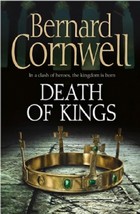 This is the sixth book in the Saxon Chronicles series, focusing on Uhtred of Bebbanburg, by Bernard Cornwell. Read my review (one of the first on this blog) of the first book if you haven’t read this series before and want to avoid spoilers! This is the sixth book in the Saxon Chronicles series, focusing on Uhtred of Bebbanburg, by Bernard Cornwell. Read my review (one of the first on this blog) of the first book if you haven’t read this series before and want to avoid spoilers!
The great King Alfred is on his deathbed, and with that thought in mind, chaos is ready to strike the country that would become England. The Vikings still haven’t been completely vanquished and are a constant threat, but worse are the factions that threaten to split the fledgling kingdom up from within. After nearly being killed up North, Uhtred returns to his king to pay his final homage and to do his best to keep the realm from falling to pieces without a strong leader.
Uhtred remains true to his warrior roots in this novel, more or less constantly fighting to secure his kingdom. It wouldn’t be a book about him without a battle in the shield wall and the adrenaline of a fight well won. But though the battles are well written, they’re not all this series has to offer, and as in other installments, this sixth one has the power to keep us drawn to Uhtred and those he remains close to.
One of these is Aethelflaed, Alfred’s daughter, a true leader of her people. As soon as she appeared in this series, as a young girl, I was thrilled, and I’ve only been more pleased with her development as the series carries on. Naturally, she and Uhtred have become a couple, and very much contrary to the way Cornwell sometimes treats his women, Aethelflaed is developed as the strong, leading woman that history tells us she was, with a bit of loving to round out her character in fiction. I can’t wait to read more about her, and Uhtred’s devotion to her, as the series carries on.
As always, Cornwell successfully delivers a number of other fascinating encounters and adventures for Uhtred. One that sticks in my mind here is his encounter with a mysterious witch and “earth goddess”, a potent reminder that while Alfred’s kingdom is becoming increasingly Christian, the religious landscape of the time was far from black-and-white, even beyond Uhtred’s own Norse beliefs. It also adds a creepy interlude for Uhtred as he’s forced to contemplate the future of this realm he’s committed to defending.
For those who want an adrenaline-filled look into early England, with a fantastic main character who feels like he belongs in that time period, you simply can’t go wrong with this series. Death of Kings is an installment that will keep fans like me very happy and eagerly anticipating the next volume. This is a much grittier variety of historical fiction, perfectly suited to a society based around battle, and provides an excellent change if you’re a bit tired of reading about the same old Tudors.
All book links to external sites are affiliate links. I received this book for free for review from the publisher.
|
|


Recent Comments