|
|
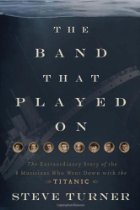 Everyone who has heard about the tragedy of the Titanic, or watched the film, probably remembers that the band kept on playing even as the ship sank into the ocean. They gave their lives so that people would remain calm and get on the boats in an orderly fashion. Nearly everyone who survived remembered the band, and we know that none of them survived, so the story certainly seems plausible. In this book, Turner looks at the men in the band – W. Hartley, C. Krins, R. Bricoux, W.T. Brailey, J. Woodward, J.F. Clarke, J.L. Hume, and P.C. Taylor – and considers both their lives before the disaster and the role they may have played in the final moments of the ship’s sinking. Everyone who has heard about the tragedy of the Titanic, or watched the film, probably remembers that the band kept on playing even as the ship sank into the ocean. They gave their lives so that people would remain calm and get on the boats in an orderly fashion. Nearly everyone who survived remembered the band, and we know that none of them survived, so the story certainly seems plausible. In this book, Turner looks at the men in the band – W. Hartley, C. Krins, R. Bricoux, W.T. Brailey, J. Woodward, J.F. Clarke, J.L. Hume, and P.C. Taylor – and considers both their lives before the disaster and the role they may have played in the final moments of the ship’s sinking.
I’ve never heard anything much about the musicians on the Titanic beyond the fact that they died playing. Like everyone else of my age, I’ve seen the film (twice in theaters) and their story is certainly a sad and noble one. Turner takes us behind the scenes with this book and looks at how exactly each man got on the Titanic. Who was waiting for them when they returned from the ship? How did each man become a musician? Were they career musicians or were they just building experience for greater things? These are all questions he seeks to answer.
He also considers the day of the sinking itself, thinking about what songs the men played, how two bands fit together into one for the final moments, and why they might have chosen to play. They could have been ordered to by the bandmaster, or they might have decided to carry on as one, knowing that they were unlikely to have a priority place on the available lifeboats anyway.
Lastly, Turner also looks at the aftermath of the disaster, and how these particular men’s deaths affected their families. The White Star Line, who owned the ship, did have to pay money out to the employees’ families, but who it went to was a matter up for debate in many of the men’s families.
Overall, The Band that Played On was a worthy, deeper look at these eight men, and a very good choice of read for people who are interested in further information about the Titanic and the people who actually ran the boat.
All book links to external sites are affiliate links. I received this book for free for review.
 In her early twenties, Soo-Ja makes a decision that many young women make; she decides which man she will marry. Bound by her family’s traditional values in Korea after the war, she finds herself with no choice but marriage. Her family will not countenance her becoming a diplomat, so when a young man who appears wealthy and influential makes her promises, she chooses him, even though she is in love with another. Once she realizes her mistake, it is too late, and Soo-Ja must come to terms with her life and make the best of what she has left. In her early twenties, Soo-Ja makes a decision that many young women make; she decides which man she will marry. Bound by her family’s traditional values in Korea after the war, she finds herself with no choice but marriage. Her family will not countenance her becoming a diplomat, so when a young man who appears wealthy and influential makes her promises, she chooses him, even though she is in love with another. Once she realizes her mistake, it is too late, and Soo-Ja must come to terms with her life and make the best of what she has left.
This novel made a big impact on me when I read it. Soo-Ja’s despair at her choice, the lies that pile up around her, and her lost ambition all made me feel for her even as I recognized (as many readers will I think) that she makes the wrong choice before she knows why it’s wrong. She loves Yul, a young doctor, but by the time she knows she is wrong, she’s already sinned with Min, and her marriage to him goes forward. It’s only years later when Soo-Ja is run down from paying the bills, caring for her daughter, and pandering to guests that she meets Yul again and longs for him.
But if Soo-Ja were to simply feel sorry for herself, this wouldn’t be the book it is. Instead, she makes the best of everything. She handles the fact that her new family is poor, that her husband won’t work, and that her dreams are gone as best she can and soldiers on. She works to give her daughter a better life, even as she knows that her efforts mean that the young girl favors Min, who spoils her rotten. She takes everything and simply becomes a better person, rather than turning to the bitterness that would have been much easier in that situation. After all, her dreams have been lost to her, and she will probably never get them back.
Park’s writing also does the book a lot of credit. It’s well-done and moves smoothly, and it’s so easy to understand the complexities of the characters while still enjoying the setting, which was new to me. His deft characterizations had me a big fan of Soo-Ja and Yul before I would have thought; after they met again I was firmly behind them getting together again, even as I wondered how it would ever happen with both characters married.
This Burns My Heart is a beautiful love story tinged with sadness and hope, peopled with fantastic characters and underpinned by pitch-perfect writing. Highly recommended.
All book links to external sites are affiliate links. I received this book as a gift from Kathy.
 For as long as men have been writing history, important women have been lost from its pages. Restoring all of them would be an impossible, lifetimes-consuming feat, but that doesn’t mean some historians can’t try. Building on the success of Philippa Gregory’s novels set during the Wars of the Roses (which she calls “The Cousins’ War”), she and two historians have written a book spotlighting three of the most important women during the war – The Duchess, Jacquetta, her daughter Elizabeth Woodville, the Queen, and Henry VII’s mother, Margaret Beaufort, The Queen’s Mother. For as long as men have been writing history, important women have been lost from its pages. Restoring all of them would be an impossible, lifetimes-consuming feat, but that doesn’t mean some historians can’t try. Building on the success of Philippa Gregory’s novels set during the Wars of the Roses (which she calls “The Cousins’ War”), she and two historians have written a book spotlighting three of the most important women during the war – The Duchess, Jacquetta, her daughter Elizabeth Woodville, the Queen, and Henry VII’s mother, Margaret Beaufort, The Queen’s Mother.
While reading this review, it’s probably worth keeping in mind that I know a lot about the Wars of the Roses, even counting what I’ve forgotten since I actually finished studying it intensively, and have read many many books and articles on the subject, both popular and academic history. I have also been trained to write history myself. My experience may not match yours.
I love the idea of The Women of the Cousins’ War in theory, but I’m ever so wary of it in actual historical practice. Unfortunately, this book actually justified my wariness. The introduction, written by Gregory, is very appealing. Starting off first with the difference, in her mind, between history and historical fiction, and followed up by why she chooses to write fiction, was actually a fascinating glimpse into her head. I didn’t agree with everything she said about the writing of history itself, but I appreciated such a bold introduction that really argued her case. It had me looking forward to the book.
At that point, unfortunately, I began to be disappointed. None of the essays use footnotes OR endnotes, which left me wondering where on earth they’d actually got their information from. There is a list of sources and a messy list of acknowledgements and quotes at the end of each, but this is frustrating to wade through when looking for the source of any quote. Without knowing where each got information from, I hesitated to trust anything I was reading.
It didn’t help that it started off with Gregory’s essay about Jacquetta, the Duchess of Bedford who married a lower-class Woodville seemingly out of love and gave birth to the future queen of England, Elizabeth Woodville. To be perfectly fair to Gregory, she has very, very little to work with, but this is one of the fundamental flaws in this sort of “restoration” of some historical women. There just isn’t much there. It’s incredibly difficult to prise out anything about Jacquetta herself besides speculation. Gregory does a decent job of that speculating, but since I didn’t know where any particular bit of information came from, whether it was an original source or not, I had no way to judge for myself what I thought about what she was saying. This particular bit reads, as you would imagine, as a factual tale about the more recorded people in Jacquetta’s life without much genuine insight into who she actually was.
I also was frustrated by the fact that there is no engagement with the sources, particularly the primary sources. Instead of hearing “some say”, I want to know who said it and what their motivation was. I wanted this book to further historical study, to make some sort of impact, not to just flatly tell me what happened. Gregory says she consulted the original sources, but aside from a few notes in the end, they don’t feature.
The second essay didn’t improve much on the situation. Enough is known about Elizabeth Woodville to actually make for an interesting biography, and some biographies have been already written about her, including one by this particular author. She also features heavily in other books about this subject, naturally. The essay was fair, and does include more information about the sources, and would be appropriate for someone who knows almost nothing about the subject. For me, it didn’t help that this essay was the least well-written and I found it very difficult to keep my attention on the page, which is probably why I have little to say either way about it.
The last essay, however, was excellent. Michael Jones very obviously knows his subject, knows his sources, and is a wonderful writer. He rescues the whole book by actually backing up his speculation, thinking about where his information comes from, and considering Margaret’s family history as well as the present. There still aren’t any actual notes, but he amazingly separates the primary sources from the books in his source list (which neither of the others do) and makes it relatively easy to figure out what came from where, particularly since he’s actually engaging with the historical record.
In fact, I feel like the third essay justifies my criticisms of the other two, because it did a whole lot more of everything I wanted without unnecessary length and certainly without becoming as dry as academic history can be. Yes, the book is intended to familiarize readers with these women, not as an academic study for other historians, but certainly they can do so while also writing worthy history. He provided a much fuller, more comprehensive picture of Margaret herself, backed up by everything he knows, and had me eager to read his full-length book on the subject.
I don’t think I would recommend this book for anyone who has some knowledge of the period, as they’ll know most of what’s in it, but for newcomers and those who are looking for more information and a “popular” history this would suit. If you see it in your library and enjoy Philippa Gregory’s books, I’d certainly recommend you read at least the introduction, as I feel it’s really added to my understanding of the way she writes and considers historical fiction.
All book links to external sites are affiliate links. I received this book for free for review from the publisher.
 World War II wreaked havoc on men’s and women’s lives, changing them in ways they never could have anticipated. Next to Love takes us on a journey through the war and the following twenty years of aftermath, as characters learn to live with themselves and try and regain who they once were. The novel follows three women, Babe, Grace, and Millie, who were best friends and whose husbands and boyfriends went to serve in the war. Feldman examines the problems women on the home front faced and the devastation of war away from the battlefields – and the way it never quite lets go of its victims. World War II wreaked havoc on men’s and women’s lives, changing them in ways they never could have anticipated. Next to Love takes us on a journey through the war and the following twenty years of aftermath, as characters learn to live with themselves and try and regain who they once were. The novel follows three women, Babe, Grace, and Millie, who were best friends and whose husbands and boyfriends went to serve in the war. Feldman examines the problems women on the home front faced and the devastation of war away from the battlefields – and the way it never quite lets go of its victims.
I knew I was going to like this book, but I never expected it to love it as much as I actually did. I read it in what felt like a flash, completely enthralled by the stories of these three women and the struggles they have to endure. While they mainly saw themselves as getting on with it, they were really witnessing a pivotal period for women and for the family; their growing strength speaks to the stronger women’s movement that was approaching.
Feldman doesn’t skimp on difficult subjects. Babe’s husband, for example, returns from war changed in ways Babe isn’t sure she liked. We hear about the joyful reunion often; what about the one that is fraught with anxiety? The husband that can’t sleep and suffers from post-traumatic stress disorder? That night before your husband goes to war and you might never see him again? Each woman deals with difficult issues directly related to the war, and then related to moving forward with lives that are irrevocably changed.
The world changes, too. Characters in the book are determined to fight racism. They witness huge changes in status as the American world fundamentally shifts around them. It’s the story of a generation, told through characters that really steal your heart and make you wish that you could keep them with you forever. Babe was my favorite character by far; she just seemed the strongest, the most capable of handling everything that got thrown at her. And there is a lot for her to handle. That isn’t to say I didn’t like the other women; I certainly did and I was invested in their stories, too.
A gorgeous novel, I’d recommend Next to Love to anyone who enjoys historical fiction, especially that set around World War II with amazing, strong women at its heart. This is an excellent book and I am so glad I read it.
All book links to external sites are affiliate links. I received this book for free from Netgalley.
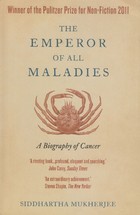 The struggle to understand and to cure cancer has consumed medical researchers throughout the twentieth and beginning of the twenty-first centuries. Mukherjee takes a thorough in-depth look at cancer throughout history in this biography of an illness, where the disease is often visualized as a crab scurrying and burrowing away from all reach of therapy. The author adds his own experience to a years-long study of cancer to provide a definitive, insightful book on the way this illness has gripped our modern day lives. The struggle to understand and to cure cancer has consumed medical researchers throughout the twentieth and beginning of the twenty-first centuries. Mukherjee takes a thorough in-depth look at cancer throughout history in this biography of an illness, where the disease is often visualized as a crab scurrying and burrowing away from all reach of therapy. The author adds his own experience to a years-long study of cancer to provide a definitive, insightful book on the way this illness has gripped our modern day lives.
I think almost everyone I know has lost someone near and dear to them to cancer. I have; my brother died at only eighteen from non-Hodgkin’s lymphoma. If anything, the fact that we’ve all been touched by this horrible illness in its many incarnations makes a book like The Emperor of All Maladies an even more important read. Reading this book was always going to be difficult, but it is on a subject I wanted to understand. After it won the Pulitzer Prize, and unending praise from many of my favorite bloggers, I simply had to read it, no matter how uncomfortable the subject matter.
I’m really glad I made that choice, because this book was excellent in so many ways. Mukherjee skilfully weaves together his own years treating cancer patients, ensuring that we get an up close and personal view of what it’s like to fight cancer today, with a thorough history of the illness, including its ancient manifestations, early treatments, and continuing right up to the medicines and techniques used to treat various kinds of cancer today. I learned so much from this book, certainly things I never even thought about, like how the War on Cancer got started in the first place, what the Jimmy Fund is, and so on.
I’d also never really understood anything about the biology of cancer. I knew the disease was basically uncontrollable cell division, but Mukherjee goes into depth without becoming confusing or using any jargon that an ordinary reader can’t understand.
While doing all this, he also succeeds in matching the struggle against cancer alongside current events, explaining how certain developments happened and why. I felt like I was getting the full story from all possible angles, which I so appreciated, and so thorough a look that I don’t think I really need to read another book. Adding in the perspectives of his modern patients just demonstrated the strength of the human spirit and the difficulties of treatment.
This truly is a biography; in many ways Mukherjee makes cancer itself a visible part of the book. Cancer is our normal body functions turned inside out and made virulent – and immortal. It’s a surprisingly fascinating read which has really enhanced my understanding of everything to do with cancer. I’d highly recommend The Emperor of All Maladies to almost anyone.
All book links to external sites are affiliate links. I received this book for free for review from Amazon Vine.
 The affair between Adele Hugo, Victor Hugo’s wife, and Charles Saint-Beuve has gone down in history as a mistake made by everyone; a doomed love affair that simply never should have started. Chock full of details that only history can make believeable, like Saint-Beuve’s hermaphroditism and cross-dressing, and the intoxicating world of 19th century France, the book is really a love story about two people who have made mistakes but have never ceased longing for one another. The affair between Adele Hugo, Victor Hugo’s wife, and Charles Saint-Beuve has gone down in history as a mistake made by everyone; a doomed love affair that simply never should have started. Chock full of details that only history can make believeable, like Saint-Beuve’s hermaphroditism and cross-dressing, and the intoxicating world of 19th century France, the book is really a love story about two people who have made mistakes but have never ceased longing for one another.
I knew I wanted to read another book by Humphreys after Coventry and she certainly hasn’t let me down here. The book is short, but it covers thirty years of the couple’s affair, even after one of them has passed on. We alternate between Adele’s and Saint-Beuve’s voices, witnessing their struggles to be together from both sides. Adele, obviously, cannot leave her husband, who grows increasingly famous, particularly because of her children, while Saint-Beuve struggles to become the man he longs to be in Victor’s ever-present shadow.
I had actually never heard of the affair between Saint-Beuve and Adele, but since reading this book have really come to realize that it was well known in its time and almost universally derided. Saint-Beuve in particular has borne the brunt of the ridicule, possibly because he was actually a hermaphrodite.
This makes for a very interesting book, but instead of making it seem at all vulgar or strange, Humphreys weaves it into his personality and makes his cross-dressing and his confusion sexually just another aspect of him, just like his desire to write is a part of him but does not define him. I thought this was an incredibly sensitive way to handle the subject and Humphreys does an extraordinary job, both with his personality and the way that Adele sees him and falls in love with him and is physically attracted to him despite things like cross-dressing which would immediately put off many straight women in the present.
Another aspect of the book that I really enjoyed, which I briefly alluded to above, is Saint-Beuve’s struggle to define himself. He virtually lives in Victor’s shadow – struggling to surpass Victor’s writing skills, falling in love with his wife, and even at times coveting Victor’s children. He tries so hard to set himself apart, but is all he really wants to be Victor. It’s a real struggle with individuality.
Humphreys is a beautiful writer and her words set nineteenth-century Paris alight. The atmosphere, especially when the couple are together, is wonderful and immediately grants us a sense of place.
A lovely, tender but sad read, The Reinvention of Love is the perfect choice for those who prefer their literary fiction set in the past with a whole heap of doomed romance.
All book links to external sites are affiliate links. I received this book for free from Amazon Vine.
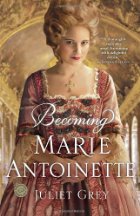 Maria Antonia is only a young girl when she’s informed that she is to be the bride of the future King of France – if she can get up to scratch, that is. She quite distinctly must become Marie Antoinette, a woman capable of being Queen of France, with the bearing, appearance, accent, and knowledge that any queen needs. She is melded to progress her family’s agenda, then sent to a brand new country to meet a completely new family, as though her life in Austria never existed. This first installment of a new trilogy fictionalizing Marie Antoinette’s life truly does describe how she became the queen remembered throughout history. Maria Antonia is only a young girl when she’s informed that she is to be the bride of the future King of France – if she can get up to scratch, that is. She quite distinctly must become Marie Antoinette, a woman capable of being Queen of France, with the bearing, appearance, accent, and knowledge that any queen needs. She is melded to progress her family’s agenda, then sent to a brand new country to meet a completely new family, as though her life in Austria never existed. This first installment of a new trilogy fictionalizing Marie Antoinette’s life truly does describe how she became the queen remembered throughout history.
Grey’s novel takes on the life of Marie Antoinette somewhat earlier than other books do and appears to be really taking an exhaustive look at her. I’d never before read about her struggles to actually be accepted as the appropriate wife of the Dauphin; it must have been hard for any young girl to be judged wanting so very much by her future family. She endures extra lessons, surgery on her teeth, and is constantly inspected for improvements.
As you might expect, then, Grey’s Marie Antoinette is a very sympathetic girl. She’s used to the relative flexibility of the Austrian court, even with her strict mother, and the laxness of her tutors who will falsify her results rather than force her to actually learn. Preparing to enter the French court – and then actually doing so – is a rather unpleasant revelation, and we can feel for the girl who has lost everything familiar to her.
Marie Antoinette’s relative innocence navigating the court in France continues, even as she is forced to seduce her own husband by order of her mother. She must become pregnant to solidify her family’s position and to provide an heir to the throne, but her husband is reticent for reasons mysterious to her. The poor girl is not only in an unfamiliar court, confused by the immorality around her, but is also rejected by the one she hoped would treat her well.
If you’re looking at a very sympathetic look at Marie Antoinette, you could hardly go wrong with this one. It’s also very well written, with fantastic descriptions of life in Vienna and Versailles. Grey has done quite a bit of research, as she explains in her author’s note, and almost everything she uses is true to history. She does an excellent job of matching the personalities of Marie Antoinette and Louis XVI, who both mainly just wanted to escape from their duties and be normal – a tragic story for those who know what is coming.
While I’ve read the story of Marie Antoinette’s life before, I found myself very much enjoying Becoming Marie Antoinette and looking forward to the next volumes. The author’s treatment of a familiar story is well done, and will have the most reluctant reader feeling very much for a young girl cast adrift in an unfamiliar world.
All book links to external sites are affiliate links. I received this book for free for review from Netgalley.
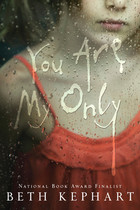 It only takes a minute for Emmy’s life to flip upside down; her baby, the spot of joy in her life, stolen, her husband accusing her of the crime. After she goes on a frantic search, Emmy ends up in a mental hospital, longing for her stolen daughter and for justice. In the present day, fourteen-year-old Sophie is hidden from the world, forbidden to do so much as leave her house. She and her mother have constantly been hiding, but Sophie has never understood why. When she befriends her neighbor, a boy called Joey, Sophie begins to put the pieces of her life together and wonder. Told in alternating chapters between the two women, You Are My Only is the story of a mother’s love and a daughter’s longing. It only takes a minute for Emmy’s life to flip upside down; her baby, the spot of joy in her life, stolen, her husband accusing her of the crime. After she goes on a frantic search, Emmy ends up in a mental hospital, longing for her stolen daughter and for justice. In the present day, fourteen-year-old Sophie is hidden from the world, forbidden to do so much as leave her house. She and her mother have constantly been hiding, but Sophie has never understood why. When she befriends her neighbor, a boy called Joey, Sophie begins to put the pieces of her life together and wonder. Told in alternating chapters between the two women, You Are My Only is the story of a mother’s love and a daughter’s longing.
Beth Kephart is a beautiful writer; I first experienced her wonderful style in Nothing But Ghosts and I’ve been looking forward to another read since. She has the incredible talent of getting right to the heart of human emotion and expressing it through her prose while telling a story. Some of the imagery is simply stunning, causing me to go back and read over again just to savor the beauty of the words. As you might expect, then, the point of this book is not the plot, though; it’s easy to see from the outset what exactly has happened.
Instead the book is a slow discovery, watching the characters, especially Sophie, work out what’s happened and how their lives have become like this. It’s also very much a tale about motherhood. Each of the adult women is a mother in different ways – Emmy, whose daughter has been stolen; Sophie’s mother, who craved a child; Joey’s aunts, who are perhaps the most traditionally “motherly” characters in the book despite their somewhat unconventional life. And in the center is Sophie, seeking a vision of motherhood she hasn’t had, and an opportunity to escape the stifling confines of her house and enjoy the life of an ordinary young girl. All of the characters are seeking something, and the heart of the book lies in whether or not they find it, and how they go about looking for it.
I do believe Kephart’s works should be read much more widely, and this wouldn’t be a bad place to start for any reader. Her books are lovely, evocative and full of pure emotion. I’d recommend both this and Nothing But Ghosts, and I’m very much looking forward to reading more of her work.
All book links to external sites are affiliate links. I received this book for free for review from Netgalley.
 Edward de Lacey’s father reveals, on his deathbed, that he and his two brothers may be without an inheritance after all. That’s because, unknown to everyone, the duke was married – and not divorced – before he married their mother. The heir, Charles, is a wastrel and may now be without any money to waste; Gerard, the youngest, solves his problems with force. That leaves Edward, the middle son and always the one in charge of the estate, to hire a solicitor and get the de Lacey family back to its rightful position. Unfortunately, he snatches London’s top solicitor out from under the nose of Lady Francesca Gordon, who wants to win custody of her niece from the girl’s stepmother, who won’t allow Francesca to even see the girl. As recompense, Francesca demands he help her find another solicitor, in exchange for silencing the tabloid rumors about the brothers’ illegitimacy. Edward de Lacey’s father reveals, on his deathbed, that he and his two brothers may be without an inheritance after all. That’s because, unknown to everyone, the duke was married – and not divorced – before he married their mother. The heir, Charles, is a wastrel and may now be without any money to waste; Gerard, the youngest, solves his problems with force. That leaves Edward, the middle son and always the one in charge of the estate, to hire a solicitor and get the de Lacey family back to its rightful position. Unfortunately, he snatches London’s top solicitor out from under the nose of Lady Francesca Gordon, who wants to win custody of her niece from the girl’s stepmother, who won’t allow Francesca to even see the girl. As recompense, Francesca demands he help her find another solicitor, in exchange for silencing the tabloid rumors about the brothers’ illegitimacy.
As Francesca and Edward’s partnership develops and their cases progress, they grow closer, but at what cost to both of them?
This was a sweet, endearing romance; I really liked both of the main characters, particularly Edward. I think most women are fond of the strong, silent type; Edward certainly has emotions, but he’s good at hiding them behind a more reserved exterior. When the scandal breaks out, his fiance leaves him, and it’s his own fault for telling her. What makes it even sadder was that he was convinced he loved her, at least until he meets fiery Francesca.
It’s pretty obvious from the start that these characters actually work quite well together, as they become invested in one another’s problems and truly develop a partnership as well as a romance. One Night in London is a sweet story that many romance lovers will enjoy – although I’m really not sure about that cover. Don’t let it stop you from enjoying this one!
All book links to external sites are affiliate links. I received this book for review from Netgalley.
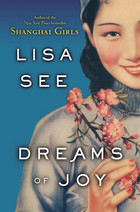 This review contains spoilers for Shanghai Girls. This is the sequel to that book. This review contains spoilers for Shanghai Girls. This is the sequel to that book.
Joy has just learned that her entire life is a lie. Her parents aren’t really her birth parents and she believe she’s caused her father’s suicide. Unable to bear the consequences and taught the ideals of Mao’s China, Joy flees to Shanghai, convinced she’ll find the life she’s always wanted in the arms of Communism. Pearl, her mother in love if not in body, immediately goes after her daughter. She knows how bad China is, while Joy has no idea. Getting into China is easy; getting out of China is very difficult. As Pearl searches for Joy and Joy searches for meaning, both women end up learning more about who they are and what they treasure most in their lives.
Lisa See’s books have always been great reads, full of the detail and culture of the times they portray and rich with realistic characters. This book is no exception. While we saw the collapse of Shanghai in the last book, in this one we’re witness to how it has changed. I went through a minor obsession with books about China a while ago and this book was a return to a culture that still fascinates me even as it is horrifying. In this book, we’re in the midst of the ‘Great Leap Forward’. American teenager Joy has to accept that the ideals she’d been taught about life in China were wrong, and that life could be immensely harder for her than it had ever been previously. She also has to learn – the hard way – that she isn’t always right, and that stubbornness can lead to huge mistakes.
Meanwhile, it’s Pearl who can see how much the China of her youth has changed, how some things are the same but others are incredibly different. I found all of this fascinating and particularly well done, evoking memories from reading Shanghai Girls a while ago while providing a new, refreshing storyline that breathed different life into characters I already knew. Only May is on the edge of this book; it’s about mother and daughter, here, not about sisters, and the difficulty of parenthood on both sides of the equation.
If you’ve enjoyed other books by Lisa See, you will definitely enjoy this one too. I wouldn’t recommend reading it prior to Shanghai Girls, but it does fill in the gaps reasonably well so I don’t think a newcomer would be lost. Dreams of Joy definitely earns its spot next to her others as a moving story with well-developed characters and thoughtful questions set in a fascinating country.
All book links to external sites are affiliate links. I received this book for free for review from LibraryThing Early Reviewers.
|
|



Recent Comments