|
|
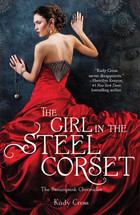 Finley Jayne would have just been an ordinary servant girl in this steampunk version of London if she wasn’t two personalities in one body. Her dark side gives her supernatural strength and an incredible amount of anger, while her normal personality is sweet and unthreatening. When she flees from one of the numerous houses in which she’s attempted service, after (rightly) beating an aristocrat for sexually accosting her, she runs into Griffin King, a young duke who promptly takes her home to his relatively ragtag bunch of odd personalities. Each has a special talent, but they’ve also been targeted by a mysterious villain, The Machinist, who has it out for Queen Victoria. Finley Jayne would have just been an ordinary servant girl in this steampunk version of London if she wasn’t two personalities in one body. Her dark side gives her supernatural strength and an incredible amount of anger, while her normal personality is sweet and unthreatening. When she flees from one of the numerous houses in which she’s attempted service, after (rightly) beating an aristocrat for sexually accosting her, she runs into Griffin King, a young duke who promptly takes her home to his relatively ragtag bunch of odd personalities. Each has a special talent, but they’ve also been targeted by a mysterious villain, The Machinist, who has it out for Queen Victoria.
This was an incredibly entertaining read that I just couldn’t put down. I loved the atmosphere of steampunk London and the special skills that each of the characters had. It felt almost like I was reading a classic superhero comic book set in Victorian London, with some vicious automatons added in. It’s a atmosphere at once familiar and different, so I could fit right in while still taking some time to learn about the world.
The book is pretty clearly a YA novel with a bit of an emphasis on Finley’s romantic relationships and her seesawing between Jack Dandy and Griff. It’s very much about her personal growth from a girl with two personalities into a girl who can control herself and unleash her feelings when it’s more appropriate. She changes quite a bit over the course of the novel; at times it’s difficult to get a grasp on who she is due to her separate personalities, but overall I certainly liked her as a heroine and felt I could understand her issues and hope for her to do better.
I did feel the book was a bit predictable; I figured one part out well before the characters managed it, and while I was probably meant to, I would have preferred that extra suspense towards the end. Plus I felt by the end that I hadn’t got to know many of the other characters particularly well; it was enough to like them, but not the same degree as I felt for Finley after her journey of self-discovery.
Still, though, I really enjoyed The Girl in the Steel Corset. I looked forward to reading it whenever I had a chance and I was very invested in the story’s outcome. It’s not perfect, but I will most definitely be looking forward to further volumes in the series.
All book links to external sites are affiliate links. I received this book for free for review from Netgalley.
 As an adult, Heather Sellers discovers that she suffers from a condition called prosopagnosia, commonly known as face blindness. She is unable to recognize people by their faces; while she can usually identify them by features such as hair, ears, and clothing, it’s never reliable and she runs into her own husband thinking he’s a stranger. With her condition as a guide, Heather can start to process her difficult childhood and her relationship with her parents, both of whom have issues of their own. More importantly, Heather’s diagnosis comes to provide more clarity for her life, giving her a better understanding of who she is and how she can deal with her condition. As an adult, Heather Sellers discovers that she suffers from a condition called prosopagnosia, commonly known as face blindness. She is unable to recognize people by their faces; while she can usually identify them by features such as hair, ears, and clothing, it’s never reliable and she runs into her own husband thinking he’s a stranger. With her condition as a guide, Heather can start to process her difficult childhood and her relationship with her parents, both of whom have issues of their own. More importantly, Heather’s diagnosis comes to provide more clarity for her life, giving her a better understanding of who she is and how she can deal with her condition.
I’d never heard of prosopagnosia before reading this book, but it sounds very difficult. I couldn’t imagine what it would be like not to recognize people I knew walking down the street, or introduce myself to someone I already knew at a party – it’s just automatic for me and, clearly, for the many people who told Heather, “Oh, I’m really bad with names too”, ignoring her very real condition. I could feel her frustration and her certainty that she genuinely had this problem and I was relieved when she finally got a diagnosis and could begin to deal with what she did have. There is currently no cure for face blindness, but letting others know about the situation seems to help.
Tied in with Heather’s modern day story is the depiction of her childhood, which was far from ordinary. Her mother appears to be a paranoid schizophrenic, while Heather’s father has issues that are never fully understood throughout the narrative. Her parents live separately and as a child Heather lives with one and then the other and back again, switching schools on a yearly basis and struggling to make many friends. Her success to PhD level and eventual professorship at a university is simply astounding coming out of that and she deserves a lot of credit for sticking to her education, even when her mother handed her job listings for secretaries and cleaning women.
I did find the stories of her childhood very hard to take, simply because her life was so difficult. I felt very bad for her but to be honest, I was also just more interested in her modern day struggles with her condition, her marriage, and the fallout from her childhood rather than the events itself. As a result the second section of the book, which moves more away from childhood, struck a deeper chord with me and had me much more eager to read to the end. I think that Heather’s childhood is essential to understand her problems as an adult, but personally, I wouldn’t have minded an entire book on face blindness.
You Don’t Look Like Anyone I Know is a moving memoir on a condition very few people are familiar with. The author is a strong woman with a difficult past to overcome that readers will come to empathize with and even admire. Recommended.
All book links to external sites are affiliate links. I received this book for free for review from the publisher.
 Eleanor of Aquitaine is just fifteen years old when her father dies and she marries Louis, the future king of France. They’ve not even reached Paris before the crises in Eleanor’s marriage become apparent; her husband has no interest in consummating their union, despite his physical attractiveness, is ruled by several members of his government, and has ascended to the throne without knowing anything about what he is doing. Taking us through Eleanor’s life from this moment through her journey on Crusade and second marriage, Devil’s Consort (Queen Defiant in the US) explores what might have really happened to one of history’s most well known royal women. Eleanor of Aquitaine is just fifteen years old when her father dies and she marries Louis, the future king of France. They’ve not even reached Paris before the crises in Eleanor’s marriage become apparent; her husband has no interest in consummating their union, despite his physical attractiveness, is ruled by several members of his government, and has ascended to the throne without knowing anything about what he is doing. Taking us through Eleanor’s life from this moment through her journey on Crusade and second marriage, Devil’s Consort (Queen Defiant in the US) explores what might have really happened to one of history’s most well known royal women.
Historical fiction and Eleanor of Aquitaine are not strangers to one another; in fact, I feel like she’s been the subject of more and more books lately, both fiction and non-fiction. She’s a character that’s hard to resist, after all, a strong woman who broke free of convention, possibly had several affairs, and was the queen of two rival countries in the High Middle Ages, also known as the part of the Middle Ages that best represents our imaginings of it. She divorced her French husband and almost immediately dashed off to marry the future Henry II – so quick we can’t help but think she planned it – but also represents a woman who was easily capable of ruling, even if she did have to do it under her husband’s and son’s names.
Devil’s Consort is a hugely enjoyable book; it doesn’t precisely challenge any of the leading ideas about Eleanor, which means she does have those affairs I mentioned, one in particular with a crusading knight, and she does get very frustrated with her first husband Louis. Naturally he adores her, in a puppyish way, as he completely ignores her and goes off to pray instead of make heirs. At times I did wish the book reached beyond conventional ideas, but for someone who is a bit less read in Eleanor’s life and times, I don’t think this would at all be a problem. One thing I did think was that, outside of Eleanor and Henry, a few of the characters were more cardboard than flesh, in particular Louis. This doesn’t at all mean that history is neglected; I particularly enjoyed the mention of a particular rock crystal vase, the only item that we know Eleanor actually possessed (and can see for ourselves).
Overall, it’s a fast-reading, entertaining romp through medieval England and the thoughts and struggles of a woman who clearly knows who she is and often what she wants as well. I enjoyed in particular the bits when Eleanor herself goes on crusade; obviously she didn’t participate in the fighting and I was very curious to see how O’Brien depicted her time in the holy land. Devil’s Consort is a book well suited for others who love historical fiction and should stand firmly on the shelf next to other works about her. I’d recommend it!
All book links to external sites are affiliate links. I received this book for free for review from a publicist.
 Sarah McConnell’s husband has been dead for three months, lost in a boating accident. But then she sees him in the grocery store, in her home, at the cabin they once shared. She’s convinced that he’s real, more so when he speaks to her. When she tries to tell the women at her widow’s group, they all smile and reassure her, because they have all seen their husbands at one point or another. Sarah’s grief confuses her so much that she isn’t sure whether her husband is still alive, whether her experiences are real, or whether it’s all just the wishful thinking of a widow who wasn’t sure about anything beforehand either. Sarah McConnell’s husband has been dead for three months, lost in a boating accident. But then she sees him in the grocery store, in her home, at the cabin they once shared. She’s convinced that he’s real, more so when he speaks to her. When she tries to tell the women at her widow’s group, they all smile and reassure her, because they have all seen their husbands at one point or another. Sarah’s grief confuses her so much that she isn’t sure whether her husband is still alive, whether her experiences are real, or whether it’s all just the wishful thinking of a widow who wasn’t sure about anything beforehand either.
This book starts out with the perfect set-up. We instantly know Sarah is a widow and that she’s still seeing her husband as if he were alive. We speedily find out that he’s been lost in a boating accident, and though some of his personal items have been found, his body is still missing. So he might be alive, and missing, or he might truly be dead – it’s a mystery and Sarah is just as confused as the reader is. Throw in a bit of angst left over from their previous marriage and a whole lot of learning to be alone and it’s easy to understand how Sarah can struggle so much while doing her best to appear fairly normal.
Somehow, though, while I liked this book well enough, I never really crossed the line into loving it or feeling like I wanted to pick it up after I’d put it down. I did finish it, but it didn’t stand out in any way, and I felt there was a reason I’d had it for review for a while without considering reading it yet. I think a degree of this is personal; I generally struggle with books like this, which are about women and feelings, mainly I think because I am a woman and have feelings and get enough of that in my own life.
Still, I appreciated the way the book was put together, the slow unveiling of the mystery, confusing at first but with a twist at the end that helps it all make sense and coalesce. It’s a story about coping with grief and making sense of what is left, however possible. Whether David is still alive or not, and we spend most of the novel unsure, Sarah still has to manage her grief because her life will never be the same either way. I can appreciate that The Widow’s Season a very good book and I suspect someone who is the right target audience for this will just love it.
All book links to external sites are affiliate links. I received this book for free to review.
 Famous for her battle to win the English throne as rightful heir from her cousin Stephen, Matilda ‘the Empress’ is still young when her husband, the Emperor of Germany, passes away, leaving her childless and off to be reunited with her father Henry I. Matilda is Henry’s only living child, which means that she is his heir unless his young wife Adeliza can get pregnant. The two women become fast friends but are separated when Matilda is married once again to Geoffrey of Anjou, a man much younger than her and not at all to her taste. Matilda’s marriage becomes a smaller problem in the wider scheme of English and French politics, however, when her father dies and her cousin Stephen grabs the throne before Matilda can even get to England. Matilda’s fight for the throne for herself and then for her son Henry is juxtaposed with Adeliza’s rediscovery of herself and her possibilities through a second marriage. Famous for her battle to win the English throne as rightful heir from her cousin Stephen, Matilda ‘the Empress’ is still young when her husband, the Emperor of Germany, passes away, leaving her childless and off to be reunited with her father Henry I. Matilda is Henry’s only living child, which means that she is his heir unless his young wife Adeliza can get pregnant. The two women become fast friends but are separated when Matilda is married once again to Geoffrey of Anjou, a man much younger than her and not at all to her taste. Matilda’s marriage becomes a smaller problem in the wider scheme of English and French politics, however, when her father dies and her cousin Stephen grabs the throne before Matilda can even get to England. Matilda’s fight for the throne for herself and then for her son Henry is juxtaposed with Adeliza’s rediscovery of herself and her possibilities through a second marriage.
Every single time I read a book by Elizabeth Chadwick, I find myself wondering why I haven’t devoured her entire backlist by now (trust me, that day will come). Each book is a treasure to savor and Lady of the English is no exception. Even knowing the history and the outcome of the book, I found myself captivated throughout, spellbound by Chadwick’s well told version of a tale I’ve read before. I loved many, many things about this book, not least its realistic portrayal of historical figures as complex human beings that can’t be summed up in a chronicle.
Matilda, Adeliza, Geoffrey, and Henry all walked and breathed in my mind at least. Matilda in particular stole the show for me. Chadwick’s depiction of her genuine struggle between showing authority as the rightful monarch and being womanly as required was just fabulous and I got a real sense of how frustrating this must have been for her. The very idea of a king was completely at odds with the concept of femininity and Matilda really has nowhere to go.
I also found the friendship between her and Adeliza to be a inspired way to tell this story. Their lives become very different, but they can represent two paths while still remaining connected. Matilda is ambitious and determined to get what is hers by right, turns off her emotions in public as best she can, and is fundamentally a leader, even as she rages against her own powerlessness. Adeliza is more submissive, using more traditional female power tactics to get her way from her husbands, and seems content in the domestic sphere even at the highest levels. The contrast brings more life to the book and I think women who read this book will find a little bit of themselves in both Adeliza and Matilda.
Lady of the English is an excellent read, with a lot in it for both people who like to read historical fiction and those who like to read about relationships. It’s a fascinating story grounded with very real people. Very highly recommended.
For a little more about the book from the author, check out my interview with Elizabeth Chadwick.
All book links to external sites are affiliate links. I received this book for free for review from the publisher.
 In Moonwalking with Einstein, Joshua Foer digs deep into the concept of memorisation and how our lack of it as a society has affected us. He goes so far as to compete in a memory championships, sharing his tips along the way, as we learn just what it takes to be a memory professional. He doesn’t memorise just the shopping list or the US Presidents; he memorises poems, playing cards, and people, with easy tips for us to learn how to memorise as well. In Moonwalking with Einstein, Joshua Foer digs deep into the concept of memorisation and how our lack of it as a society has affected us. He goes so far as to compete in a memory championships, sharing his tips along the way, as we learn just what it takes to be a memory professional. He doesn’t memorise just the shopping list or the US Presidents; he memorises poems, playing cards, and people, with easy tips for us to learn how to memorise as well.
I have a memory that is simultaneously atrocious and very efficient, so I was incredibly curious about recognised memory techniques. Foer mainly describes the memory palace idea that I’d seen used previously, although I can’t remember where. It’s surprisingly effective; I managed to do his little exercise and actually found it very successful, to the point where I can still remember it a few weeks later. There are a couple of other hints and tricks throughout as he goes through the process of learning to be a memory champion.
That wasn’t the most interesting part for me, though, as I was much more interested in the history of memory and his investigation into the top minds in the world, including those with mental illnesses whose memories are somehow naturally more effective than the rest of us. He goes in two directions with the latter, interviewing a man who has no memory and a man who has unnatural memory abilities. It’s absolutely fascinating to see how the mind is affected at different stages of memory recall. Foer also talks to memory professionals – people who help you remember – and gets a wide range of perspectives on the subject. All of it was quite interesting.
I’m sure it helped that I am firmly in Foer’s camp in that I believe memory is very important. I am partially blessed with a good memory; I can stick things in my memory with relative ease when I try, and sometimes I find random dates and facts stuck in my head without real effort (my new mobile number popped into my head one day and hasn’t left yet!). But if I’m not paying attention, I forget very easily, and I’ve never been good at using memory devices to remember things like the planets. I usually just remember the sentence and forget which planet is which word!
But I do believe memory is important, largely for the reasons Foer mentions; we need to have a lodestone to attach future knowledge on. As a practical example, I know a lot more history than the average person who has never really cared for it, like my husband. When we go to a museum, I love it partly because I can usually relate what I’m seeing to the store of memory in my head (partly because I love history). He loses interest pretty quickly and forgets what he’s seen because nothing has meaning to him, but when he sees something he can relate to, he’s much more interested. We need to have some firm grounding of facts in our heads to relate to the world around us – this is why a lot of older literature is harder to read, because we’ve lost the intimate knowledge of things like classical literature and the Bible to attach allusions to.
Although I enjoyed parts of this book more than others, I would still highly recommend it to anyone who is at all interested in memory, whether you’d like to remember better or are simply curious about the history of memorisation.
All book links to external sites are affiliate links. I received this book for free from Amazon Vine.
 Museums that focus on the antiquities have to get art from somewhere, and for much of history, it’s been done through regrettable looting. Starting with imperialism and carrying right on down to the present day, many astonishingly renowned museums have continued to populate their collections with looted art, stolen in particular from Italy and Greece. This hasn’t stopped despite a number of laws and international sanctions passed against the destruction of archaeological sites and the theft of priceless art. The Getty Museum is one such offender; a museum that sped to fame largely on the basis of looted art, but which then positioned itself against the practice, led by curator Marion True. When the scandal was exposed, the Getty’s reputation fell with it. This is the expose of the museum, the result of years of investigative reporting, and a true insight into the practice of purchasing looted art in the United States. Museums that focus on the antiquities have to get art from somewhere, and for much of history, it’s been done through regrettable looting. Starting with imperialism and carrying right on down to the present day, many astonishingly renowned museums have continued to populate their collections with looted art, stolen in particular from Italy and Greece. This hasn’t stopped despite a number of laws and international sanctions passed against the destruction of archaeological sites and the theft of priceless art. The Getty Museum is one such offender; a museum that sped to fame largely on the basis of looted art, but which then positioned itself against the practice, led by curator Marion True. When the scandal was exposed, the Getty’s reputation fell with it. This is the expose of the museum, the result of years of investigative reporting, and a true insight into the practice of purchasing looted art in the United States.
I love museums and history, but I thought that looting was a practice that had ceased long ago. About the only thing I’d heard about recently was Greece’s requests for the Elgin Marbles from the British Museum, and even that doesn’t seem to be an urgent matter. I have been appalled at the carelessness with which archaeological artifacts were treated, but largely in the context of the past – mainly the Victorians destroying archaeology in search of the good stuff, most of which I’ve probably seen in the British Museum. I had no idea that this still happened, and worse that it was happening in Italy and Greece, probably the most archaeologically rich countries in Europe. This book really laid that all out for me, not only what damage the looters were doing with descriptions of art dirty, in pieces, and broken, but also how much history is lost. We have no idea why so many statues existed simply because they were wrenched from their context with no way of returning them.
The trade in stolen art had significant consequences for the Getty, which appears to have considered itself free of any laws virtually from its founding. The original curator regularly helped “donors” cheat on their tax returns, getting back millions for art that was often worth just a few thousands. He, of course, willingly acquired stolen objects. Through the ensuing years we can see pretty clearly the difficulties that museums were in. If they weren’t acquiring new and exciting antiquities, they fell from the limelight – but all the new and exciting antiquities were obviously stolen. Curators regularly had to choose between their morals and their career, if they even considered their morals at all. The curator who finally did, Marion True, still couldn’t resist purchasing looted art when it called to her, which ultimately led to the destruction of her career and positioned the Getty as a hypocritical institution.
What I liked was that even though the Getty is at the center of the book, the conclusions drawn clearly apply to other museums as well. This book deals solely with American museums, so it depicts which other museums caused scandals in their time and which ones ended up returning stolen items just like the Getty. It was a widespread crime, and we can imagine similar discussions happening in other institutions as happened in the Getty. The book also shows how attitudes in America changed; the top museums do now have policies against looted art and have begun returning stolen artifacts to Italy and Greece, starting off partnerships that will enrich museums across all the countries. The Getty is the focus, with documented conversations and interviews, but its fate was pivotal in the role of all such institutions in the country.
If you’re at all interested in museums and their history in the US, Chasing Aphrodite is definitely a book for you. I found it utterly fascinating; I thought about it while I wasn’t reading about it and even went so far as to tell others about it (even though they were clearly uninterested). I was appalled by what happened, but I feel I now have a better idea about the workings of museums and I’m much more confident that they’re moving in the right direction. We’ll never know quite how much knowledge is lost, but we can hope that more is left to discover in the future.
I am an Amazon Associate. I received this book for free from Netgalley for review.
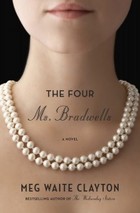 In one life-altering law school class, four women of different backgrounds and beliefs were christened Bradwells, and afterwards became friends for years. Though life has taken each of them down different paths, of success and of failure, Mia, Betts, Laney, and Ginger have remained loyal to one another and to their friendship since that day. Now, with Betts about to be appointed to the Supreme Court, investigators have dug up the memories of one summer where a man committed suicide. All four women flee from the truth and end up on the island where it happened, where Ginger’s family lived in the summers, to try and face the facts of their past and work out how to grow from here as women and as friends. In one life-altering law school class, four women of different backgrounds and beliefs were christened Bradwells, and afterwards became friends for years. Though life has taken each of them down different paths, of success and of failure, Mia, Betts, Laney, and Ginger have remained loyal to one another and to their friendship since that day. Now, with Betts about to be appointed to the Supreme Court, investigators have dug up the memories of one summer where a man committed suicide. All four women flee from the truth and end up on the island where it happened, where Ginger’s family lived in the summers, to try and face the facts of their past and work out how to grow from here as women and as friends.
The Wednesday Sisters by Meg Waite Clayton was released to favorable reviews nearly everywhere, so even though I hadn’t managed to read that one yet, I still jumped to get my hands on The Four Ms. Bradwells. I wasn’t quite sure what I expected from it when I started, but what I got was a tale about four strong women who have to face demons from their past – demons that many women face in their own private lives without the spotlight placed on these four. As such, it was a compelling and meaningful read with a lot of relevance for women’s lives.
The story is told mainly through flashbacks. All of the friends are together on the island trying to face what they’ve kept from the world for so long. As they experience the familiar scenery, they are reminded of the past and forced to reflect upon their lives. I liked how the novel touched deeply on the nature of female friendships, relationships, and family, how the women can love one another yet cause each other to suffer. We’re only given the past through these flashbacks, so at the beginning I had no idea what had happened. The actual events weren’t earth-shattering but were certainly moving and I felt for these characters and the pain they’d endured over the years.
There were things I didn’t like about the book as well, unfortunately. For one thing, I found it really hard to distinguish the women’s separate voices. I never take note of chapter headings and I more than once experienced the phenomenon of confusion as it turned out the perspective had switched and I hadn’t noticed. Ginger’s poetry and Laney’s Latin helped with this some but also got old as the novel wore on. I’d find someone who quoted Latin phrases or any poetry endlessly to be annoying in real life, too, so no surprise that happened here. And, finally, I understood that the said event was a terrible event for these women and their families, but I didn’t really see it as ‘dirt’ that would interest anyone about Betts’s nomination to the Supreme Court. Is it really that bad if you’re simply at a weekend party where a suicide happens? I know I wouldn’t have thought anything of it.
Overall, though, I did enjoy The Four Ms. Bradwells and it’s certainly a worthy read for other women. I also still intend to read The Wednesday Sisters as I have for at least a year now – soon I hope!
All book links to external sites are affiliate links. I received this book for free for review.
 Hadley is on the edge of spinsterhood with few prospects when she meets young Ernest Hemingway in Chicago at a friend’s party. She is instantly smitten despite warnings from close friends about his unreliability and winds up marrying him with no regrets, vowing to support his writing at the expense of all else. Newly married Hadley and Ernest head to Paris, where he can hobnob with the most exciting writers of his day, but where Hadley struggles to fit in with socialites and snobs. As the couple travel the world, the tensions of society, of Hadley’s desire for family life, and Ernest’s burgeoning fame and importance start to drive a wedge between them, leaving Hadley to be forever known as the Paris wife. Hadley is on the edge of spinsterhood with few prospects when she meets young Ernest Hemingway in Chicago at a friend’s party. She is instantly smitten despite warnings from close friends about his unreliability and winds up marrying him with no regrets, vowing to support his writing at the expense of all else. Newly married Hadley and Ernest head to Paris, where he can hobnob with the most exciting writers of his day, but where Hadley struggles to fit in with socialites and snobs. As the couple travel the world, the tensions of society, of Hadley’s desire for family life, and Ernest’s burgeoning fame and importance start to drive a wedge between them, leaving Hadley to be forever known as the Paris wife.
I surprised myself by how much I enjoyed this book. I was predisposed to like it, shallow as this is, by the beautiful condition it arrived to me as an ARC complete with two picture postcards:

They really helped when envisioning the characters and helped me remember that these people really lived. I have only ever read The Old Man and the Sea by Hemingway, so didn’t really have any preconceived notions about him or his life other than I wasn’t his biggest fan. This book made me incredibly interested in his life and gave me a new historical figure to fixate on in the person of his wife Hadley.
To me this novel illustrated very clearly one of the peculiarities of the writer’s life at the time. Hadley and Ernest are throughout almost constantly struggling for money, pinching pennies and living in unpleasant places, but they are also free to do more or less as they wish. Ernest writes for newspapers and is sent off on excursions, but has days free to work on his fiction and Hadley of course does not work, first keeping house and then taking care of their baby. It’s hard to imagine living such a life as these early twentieth century authors, just breathing in relaxation or going off to party after a few hours’ writing work. Things ease as Hemingway gets more famous, but Hadley is mainly there at the start, when everything is uncertain, when he needs her as an anchor.
The novel also very clearly illustrated how the cracks can grow in a marriage that seems perfectly happy to others. Little disagreements become big disagreements and the magic is lost because neither half works at maintaining their relationship. Even when one tries, both are needed, and there is a clear point of no return here for them. It’s easy to feel for Hadley, who is often thrust in an uncomfortable world and loses friends due to her husband’s moods, and to hope she gets something a bit better in the end. Hemingway is mercurial, needing Hadley’s reassurance, but almost from the start we can see that his success and his selfishness will replace her in the end.
While I never had much interest in the Hemingways before, this work of historical fiction has made me very curious and provided an exceptional story besides of marriage, love, and the writer’s life in the early twentieth century. Highly recommended.
I am an Amazon Associate. I received this book for free for review from Amazon Vine.
 Nina Revskaya, now an old woman, was once a prima ballerina in Moscow at the height of the Soviet Union. Her life revolved around ballet even after she fled the country, when she first danced and then taught others. Nina is now wheelchair bound and finds it incredibly difficult to face her past; still, she decides to auction off all her jewelry, including an amber set that she says belonged to her late husband’s family. Grigory, a professor of Russian literature, has devoted his life to the study of her husband’s work, and has somehow donated the missing piece of the amber set, a gorgeous necklace, to the auction. Will Nina ever be able to face her past and explore the connection that she and Grigory share? Nina Revskaya, now an old woman, was once a prima ballerina in Moscow at the height of the Soviet Union. Her life revolved around ballet even after she fled the country, when she first danced and then taught others. Nina is now wheelchair bound and finds it incredibly difficult to face her past; still, she decides to auction off all her jewelry, including an amber set that she says belonged to her late husband’s family. Grigory, a professor of Russian literature, has devoted his life to the study of her husband’s work, and has somehow donated the missing piece of the amber set, a gorgeous necklace, to the auction. Will Nina ever be able to face her past and explore the connection that she and Grigory share?
I went into Russian Winter with a mind full of positive reviews; I have heard many amazing things about this book, so it had a lot to live up to. Moreover, I have been in love with Russia for over 10 years now, which means I’m automatically excited whenever a book comes my way set there. Perhaps unsurprisingly, then, this book did live up to all of my expectations, because I just loved it and I was completely absorbed in it. I found myself thinking about it when I wasn’t reading and completely caught up in Kalotay’s words when I was. This is a book that is certainly worth your time.
One of my favorite aspects of the book was the way that Kalotay delved deep into Soviet society to examine just how harmful it was, even to its biggest stars. Nina and many of her friends are prima ballerinas, but their families are far from immune. Her husband, worse, is a writer, and they are constantly walking on eggshells. The threat is always there. At one point Nina and her two friends accidentally venture into west Berlin and are shocked at what they see and the freedoms others experience, which is heartbreaking, but they return because of the threats.
I also really loved the way everything was carefully woven together. We are transported between roughly four stories, three of which are in the present and just one in the past, but each is distinctive and adds substantially to the narrative. I loved modern-day Drew and Grigory’s storylines and their own very twenty-first century battles, illustrating perfectly that even though the world around us has changed, people really haven’t. Grief and longing are still very real emotions and I cared for each and every one of the characters in the book.
Finally, to wrap everything up, there is even a little mystery involved, because it takes a substantial proportion of the book to figure out what actually happened to Nina’s life. We know her husband was killed and she fled the Soviet Union from the start of the book, but the details about the jewelry and her connection to Grigory – why he has the necklace – are only slowly revealed. Tied in with the incredibly evocative writing set in two different winters, this storyline kept me glued to the page and genuinely curious about the lives herein.
Russian Winter is an incredible book, beautifully written with a gripping yet poignant storyline. Highly recommended.
I am an Amazon Associate. I received this book for free for review from the publisher.
|
|



Recent Comments