|
|
 Heretics: The Creation of Christianity from the Gnostics to the Modern Church is precisely what it says on the cover; Wright describes how heresy has helped to shape the Western Christian church and delves into the history of individual heretics and how their treatment has varied across history. In many ways, heretics forced Christian thinking in certain directions, causing them to explain a bit more clearly what were appropriate beliefs and how Christians should worship their God. Wright examines the stories of all of the well-known heretics, including those that inspired the break to Protestantism, and how heresy became a crime, up to today, when heretics may not be burned at the stake but exist nevertheless. Heretics: The Creation of Christianity from the Gnostics to the Modern Church is precisely what it says on the cover; Wright describes how heresy has helped to shape the Western Christian church and delves into the history of individual heretics and how their treatment has varied across history. In many ways, heretics forced Christian thinking in certain directions, causing them to explain a bit more clearly what were appropriate beliefs and how Christians should worship their God. Wright examines the stories of all of the well-known heretics, including those that inspired the break to Protestantism, and how heresy became a crime, up to today, when heretics may not be burned at the stake but exist nevertheless.
I loved this book so much that there is no way I will ever be able to do justice to it in a review. Wright is precisely the sort of historian that I completely adore. He doesn’t dumb down his subject, but explains it in ways that everyone can understand, complete with asides that made me laugh and had the people around me doubting I was actually reading non-fiction about religion.Theological issues are almost always very complex, and often boring for many (he isn’t afraid to say so outright), but I always felt like Wright explained them well and I could actually understand the development of the religion as the book went on. It never felt disrespectful, just completely open, and often the little humorous bits felt aimed at people who just love history, like me. I adore books that feel like they were written just for me and this is certainly one of those.
Wright starts us off with the actual original definition of heresy – it’s derived from a Greek word meaning ‘to choose’. In essence, heretics chose to believe something other than the mainstream, and still do. They haven’t always been persecuted for their beliefs, especially in early Christianity, as they more nudged the consensus in a general direction and forced people to actually clarify what they believed in. Sometimes people who had been greatly respected in Christianity became heretics for various reasons, but there is never much of a logic to it; in the Middle Ages one man was condemned as a heretic and the other as a saint for doing the same thing. It was all very circumstantial. In many cases, heresy became a tool for rulers to use in order to cow their subjects and demonstrate what a great job they were doing, for example. Wright also takes care to emphasize and demonstrate that usually, the Church wanted to reform heretics, not condemn and kill them. They did die in horrendous and gruesome ways, but that was not the idea, it’s just the part that sticks in modern heads the most (and the part that made an example to their contemporaries).
One of my very favorite aspects of this book was how Wright clearly delineates that historical societies were fundamentally different from ours. Many people did not have a concept of rights or freedoms that we take for granted; that doesn’t mean that no one ever thought of them, or even wrote about them, but quite simply things were different. We have a level of tolerance that we never had before (though he does probe at this as well – imagine a US President that isn’t a Christian). We can feel sorry for heretics and we can acknowledge that what was done to them was very often wrong, but we can never fully step into the shoes of a Puritan in Massachusetts persecuting a witch. He also takes particular care to note that this is his viewpoint, in the context of the twenty-first century, and that someone fifty or a hundred years from now will probably view these earlier times (and our own) in a completely different light.
Regardless, I found his text convincingly and logically argued; it does seem clear that heretics had a large role in shaping the present church and it’s certainly true that they’ve existed throughout history. I’m afraid I won’t be providing the violent disagreement he declares he craves! Instead I want to push Heretics in the hands of everyone I know now. It was such a fascinating read, such a wide scope of history, on such a difficult subject without any hint of judgement, and on an issue that still remains with us today. I adored this book and it will unquestionably be one of my favorite reads of 2011.
I am an Amazon Associate. I received this book for free for review from Netgalley.
 Trevor Stratton finds a peculiar box in his office one day; naturally, he can hardly resist opening it, though he has no idea where it has come from. Inside he finds the memorabilia of the life of Louise Brunet, a Frenchwoman who lived much of her life stifled by a boring marriage and the staid affairs of a housewife. But Louise is innately passionate, having loved her young cousin, a soldier killed in World War I, and later developing illicit feelings for her neighbor. As Trevor unravels Louise’s story, he finds that one of his own is just beginning. Trevor Stratton finds a peculiar box in his office one day; naturally, he can hardly resist opening it, though he has no idea where it has come from. Inside he finds the memorabilia of the life of Louise Brunet, a Frenchwoman who lived much of her life stifled by a boring marriage and the staid affairs of a housewife. But Louise is innately passionate, having loved her young cousin, a soldier killed in World War I, and later developing illicit feelings for her neighbor. As Trevor unravels Louise’s story, he finds that one of his own is just beginning.
This was quite an odd book to start out with. Much of the beginning is actually written in second person and I can’t recall the last time I read a book that had such a strong component written like that. I must confess it threw me and I wasn’t sure I would like it, simply because it was so confusing. I wanted to have concrete facts, not have this peculiar vagueness. Lucky for me, and for the book, it all settles after the first quarter of the book or so. I figured out who all of the characters were and understood what the book was trying to do. After that, I enjoyed it a lot more. The book is composed of several different types of writing, between normal prose, letters, and the second person explorations of what’s inside the box.
One of my very favourite aspects of this book was the way that Trevor crafts Louise’s story from her memorabilia. I don’t know about you, but I do sometimes think about what I keep and what it says about me; this story is that writ large, an attempt to derive a woman’s life simply from the objects and letters she kept over the course of her life. There are pictures of all of the objects and I had a lot of fun puzzling over the photographs and examining each object in detail. It’s certainly fun for those of us who hoard to think that someday, someone might make something of all of those little treasures.
Another very appealing part of the book is Louise’s story itself. It’s impossible not to feel for her, even in contemplating adultery, because she is a vibrant person. I felt as though she’d been cheated by life, robbed of her love, and then had much of her spirit taken out of her. But she still leaps off the page with her strong character. I had the feeling that if life had treated her a little differently, she could have been a wonderful woman.
13, Rue Therese is an imaginative look back at the life of a Frenchwoman who survived much of nineteenth century history. Though confusing at first, it swiftly resolves and becomes a pleasant story of discovery and passion. Recommended.
I am an Amazon Associate. I received this book for free for review from Amazon Vine.
 Look around you and attempt to count how many objects of plastic are nearby. If you’re on the computer, you’re probably touching some right now. Besides my laptop, I can see my cell phone, which is plastic, the plastic on the cushion I’m sitting on, the plastic on my pen, and there are even some synthetic fibers in the clothes I am wearing. And I’ve gone no further than an inch. When Susan Frienkel attempted to categorize the plastic in her life, she became overwhelmed, and set about writing a book on plastic. Focusing on eight key items that have shaped plastic’s history and our own, she examines the effect the plastic industry is having on our bodies, on the environment, and on the economy, going down to what we can do about it and even whether or not we should. Look around you and attempt to count how many objects of plastic are nearby. If you’re on the computer, you’re probably touching some right now. Besides my laptop, I can see my cell phone, which is plastic, the plastic on the cushion I’m sitting on, the plastic on my pen, and there are even some synthetic fibers in the clothes I am wearing. And I’ve gone no further than an inch. When Susan Frienkel attempted to categorize the plastic in her life, she became overwhelmed, and set about writing a book on plastic. Focusing on eight key items that have shaped plastic’s history and our own, she examines the effect the plastic industry is having on our bodies, on the environment, and on the economy, going down to what we can do about it and even whether or not we should.
I’ll confess right here and say that I’m not a huge anti-plastic person. I do bring reusable bags to the grocery store and I recycle the plastic that’s accepted at my local dump, but I don’t really think about it much more than that. Reading this book suddenly made me realize how much of our lives seriously are based on plastic and how little of it is reused. People are far more likely to recycle glass or cardboard or paper, even though plastic is what’s cluttering up the earth, and every attempt at minimising waste or implementing “better” plastic is generally stymied because it costs money. This, while animals are dying and the sea is covered in little tiny bits of plastic, while some plastics are having unknown effects on our bodies, and while we continue to accept the dominance of it in our lives.
Frienkel doesn’t say plastic is all bad, far from that. She even talks to experts, and most of them say that they don’t put plastic in the microwave (whoops, I do this) and do recycle, but they’re not really worried about it in any other sense. Some are damaging, but more research will enable us to sort out the dangerous plastics from the safe ones. Some have already been banned and it’s a matter of paying greater attention as opposed to outright expulsion of plastics. She accepts that we have a reliance on plastic, so in addition to the historical parts on each plastic product, she is more pragmatic about going forward while continuing to keep plastic in our lives. It’s fairly obvious that she leans more towards the side of less plastic is more, but then ideally so do I, and she does treat both sides equally.
Naturally for me, the historical parts were the most interesting. Susan delves into eight items, among them the comb, the lighter, the plastic bag, the plastic chair (who hasn’t spent their childhood sat on a tiny plastic chair?), and IV tubing. With the comb, for example, she looks at how the comb was made before plastic, and how sustainable that practice was. Combs were expensive, generally made from tortoiseshell, ivory, or even wood – they’re something that’s found in virtually all layers of human history, and used to be a high status value item. Those of us who read historical novels probably know that already. Now, obviously, using a tortoiseshell or ivory to make a comb is considered atrocious, and wasn’t exactly sustainable then, so in this respect plastic, if treated properly, has actually improved things. Plastic combs are cheap, easy to use, and hardly ever get damaged, unlike the other types. It’s very, very interesting reading, and gave me a lot to think about that I’d never actually considered before.
Of course, Frienkel also stresses the need for more research, more recycling and investment, and more consideration of our choices. Implementing things like bottle charges are proven to work, yet have been shot down since 1986 because people don’t want to pay and don’t want to be obliged to return to the store to get their five cents per bottle. Thinking about the wider impact, though, makes it obvious that we should go that extra step. It’s not hard to round up all your bottles and cans and take them with you when you next grocery shop, and it’s those little steps, combined with larger measures of research and safety standards across plastic manufacturers, that will make the world a safer place for our children.
Plastic is a flat out fantastic book, well worth reading for everyone, because let’s face it: plastic is a huge part of our lives and it’s a part that’s going to stay. Isn’t it worth educating ourselves? This book is a great first step in that direction.
I am an Amazon Associate. I received this book for free for review from netgalley.com.
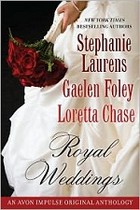 In celebration of the Royal Wedding coming up later this month, Avon commissioned this romance anthology from three of the genre’s best authors. Stephanie Laurens, Gaelen Foley, and Loretta Chase are all household names in the romance world. Each of these stories revolves around a royal wedding but has the characters finding a bit of love themselves along the way (naturally!). In celebration of the Royal Wedding coming up later this month, Avon commissioned this romance anthology from three of the genre’s best authors. Stephanie Laurens, Gaelen Foley, and Loretta Chase are all household names in the romance world. Each of these stories revolves around a royal wedding but has the characters finding a bit of love themselves along the way (naturally!).
The first one is “The Wedding Planner” by Stephanie Laurens. In it, Lady Margaret Dawlish is called upon to plan a royal wedding; with her exceptional planning skills, surely such a big event is well within her grasp. Throwing a wrench in her neat plans is the new Duc de Perigord, a man she’d met years ago while still engaged. Now, Meg’s fiance has been killed in the line of duty and Gaston has come to seize her heart for himself.
I quite liked this story; it’s the longest in the book but still very short. Gaston has a few obstacles in his way to winning Meg over finally which make for an engaging read, plus I liked that Meg had a sort of career of her own. It’s a bit rarer in historical novels to find a woman who is actually busy doing something other than waiting for a husband – and she’s good at her job, too. It’s probably not the most memorable story I’ve ever read but was lovely nonetheless.
The second story is “Ever After” by Gaelen Foley. Surprisingly, given my recent history with Gaelen Foley’s novels, I loved this one. It’s about a husband and wife who have grown apart over the years. Eleanor feels that her husband always puts his work first and has recently become convinced that he’s acquired a mistress, while he struggles with post-traumatic stress disorder and is perplexed at his wife’s coldness. It was so sweet to watch these two come back to loving one another after an obviously painful separation for both of them and it did a stand-out job of portraying the way misunderstandings can mushroom in a marriage. I really felt like Foley got some of her passionate storytelling back with this novella and I can only hope it comes back to her novels soon, too.
The final story, and my favorite, is “The Jilting of Lord Rothwick” by Loretta Chase. In this very short tale, heiress Barbara has decided that she and her fiance, Lord Rothwick, simply won’t suit, and writes him a letter to that effect. Inspired by the imminent loving nuptials between Queen Victoria and Prince Albert, Barbara craves a loving relationship and is convinced that Rothwick is only marrying her for her money. But Rothwick has simply been behaving as society expects him to; in reality, he’s head over heels in love.
Much like the last story, this is about a misunderstanding that has completely magnified; it’s obviously an overused trick but here it is also done very well. I have to admit that this story captured me with the sheer romantic appeal of it; the characters’ personalities and emotions just leapt off the page and into my head. Chase has the perfect opportunity to really work this situation and she does a fantastic job – further proof that I should be reading more of her novels. Luckily, I have three in my possession and I suspect it will not be long before I read them now!
This is a lovely anthology celebrating the upcoming royal wedding. If you’re craving a bit of romance, it’s ideal, and at the bargain basement prices of $1.99 and £0.49, there is no reason to resist!
I am an Amazon Associate. I received this book for free for review from Netgalley.
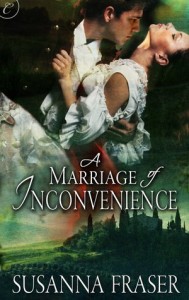 Miss Lucy Jones has little hope to marry. Orphaned as a child, almost consigned to the workhouse, she and her brothers now live on the charity of their aunt and uncle. Lucy has learned to curb all of her emotions in order to perfectly please her aunt and give her brothers the best chance possible for success in life; she knows she’s destined to be a companion for the rest of her days. At a house party for the marriage of one of her cousins, Lucy accidentally runs into James Wright-Gordon, Lord Selsley, and his sister. She’s immediately drawn to Lord Selsley, but her cousin has just asked her to marry him, throwing all of her expectations to the wind. When she’s accidentally compromised by Lord Selsley, she finds herself as the lady of consequence, a position she’d never foreseen, with a husband she isn’t sure how to deal with. Miss Lucy Jones has little hope to marry. Orphaned as a child, almost consigned to the workhouse, she and her brothers now live on the charity of their aunt and uncle. Lucy has learned to curb all of her emotions in order to perfectly please her aunt and give her brothers the best chance possible for success in life; she knows she’s destined to be a companion for the rest of her days. At a house party for the marriage of one of her cousins, Lucy accidentally runs into James Wright-Gordon, Lord Selsley, and his sister. She’s immediately drawn to Lord Selsley, but her cousin has just asked her to marry him, throwing all of her expectations to the wind. When she’s accidentally compromised by Lord Selsley, she finds herself as the lady of consequence, a position she’d never foreseen, with a husband she isn’t sure how to deal with.
There were so many things I liked about A Marriage of Inconvenience! I was surprised by how delightful it was. The writing was fairly simplistic, but the story itself was a really fun read. It actually kept me up past my bedtime, for once making use of my lighted Kindle case, as I kept on reading to try and get to the end of the story. It wasn’t that I didn’t know how it would end, as all romance novels end more or less the same, but I genuinely was enjoying myself.
Carina Press is meant to be experimental and so far I’m really liking what I’m reading, in that a lot of times the characters behave in ways they never would in a ‘traditional’ romance. I’m going to risk the spam bots and say that one of these was the couple’s approach to the bedroom. Unlike in a normal romance, where everything is hunky dory, this couple has a bit of trouble. Naturally it’s unrelated to their actual physical compatibility, but I can’t remember if I’ve ever actually read a romance where things didn’t go smoothly (when both of the people involved wanted them to). Refreshing!
Lucy is a wallflower, like many romance heroines; she fades away into the background next to James’s sister and her own beautiful cousin. Still, she obviously has appeal of her own, and just needs to gain the confidence to seize her position in the spotlight. James, in contrast, is already a powerful man, with a fast-track political career and a lot of influence where it counts. He needs an assured wife, not a wealthy one, but he isn’t really looking when the book starts. He doesn’t have the immediate need to possess Lucy forever and ever. Instead, their marriage is truly inconvenient – he doesn’t get the wife he thinks he needs and Lucy is thrown into a situation she isn’t entirely ready for. They’re both ill prepared, not at all madly in love, but are forced to reconcile with each other and actually grow fond of each other in the end.
There were a couple of downsides – as I mentioned earlier, the writing is fairly simplistic. It’s just a vehicle to move the story along. And there was a plot twist towards the end that I found more or less unnecessary; it was obviously foreshadowed and made James and Lucy realize some things about their relationship, but their reactions to it didn’t really fit with their characters.
Overall, though, A Marriage of Inconvenience was a truly delightful read and would be a great way to spend an afternoon or evening. Recommended.
I am an Amazon Associate. I received this book for free for review from Netgalley.
 Allison Glenn has done her best to hide what happened the night she was arrested, but people always find out. Five years later, she’s out of prison, but she isn’t sure she’s happy about it; in prison she had peace for the first time in her life. Though everyone knew what she’d done, they’d done heinous things themselves. Out in the world, though, she is judged and condemned without an opportunity to speak up for herself. Her sister has been open to the criticisms for five long years, dealing with the stigma of that night, and wants nothing to do with Allison ever again. But Allison won’t give up and her perseverance will have consequences not only for herself and her sister, but for an innocent little boy and his family as well. Allison Glenn has done her best to hide what happened the night she was arrested, but people always find out. Five years later, she’s out of prison, but she isn’t sure she’s happy about it; in prison she had peace for the first time in her life. Though everyone knew what she’d done, they’d done heinous things themselves. Out in the world, though, she is judged and condemned without an opportunity to speak up for herself. Her sister has been open to the criticisms for five long years, dealing with the stigma of that night, and wants nothing to do with Allison ever again. But Allison won’t give up and her perseverance will have consequences not only for herself and her sister, but for an innocent little boy and his family as well.
These Things Hidden is a book that starts out fairly slow but more than makes up for its drawn out beginning. Because it’s only a short book, I was surprised at how many characters were introduced over the course of the first fifty pages; there are four perspectives and each have their own supporting characters. I suspect it felt longer than it was because I was most drawn to Allison’s story and I wanted to get back to her immediately! Lucky for me (and the book’s momentum), the individual stories began to be interwoven almost immediately and all of them are necessary for the central mystery of the book.
Essentially, finding out what exactly happened that night, when Allison got arrested and destroyed her family’s life, is the underpinning of the entire book. Bits and pieces are made clear as the story goes along, but it doesn’t all wrap up until the end of the book. It’s an important driver for the rest of the book, which is a more emotional look at family love all around. Each character has a completely different relationship with her immediate family. Claire and her husband have been unable to conceive and have been able to adopt Joshua. Charm loves her stepfather, but has a difficult relationship with every other member of her family. And obviously, Allison and Brynn’s relationships with their families have changed drastically since that night and continue to evolve. They’re all very different structures, but the women are connected.
One thing I really appreciated about the book as well was how different each of the women’s voices were. I don’t know about you, but often when I’m reading a book with multiple narrators, they start to blend together. I hardly ever notice chapter divisions and there have definitely been times when I’ve sped through a book, the perspective has changed, and I haven’t realized that I’m in someone else’s head. That doesn’t happen here; each woman is distinct, with her own story to tell. The only one I struggled to relate to was Brynn. While I couldn’t understand all of their actions, I understood hers the least, but I think if I had gotten further inside her head it would have been a bit worrying.
These Things Hidden is a compelling novel that explores the relationships between women and their families in real depth while providing enough plot to keep the pages turning. Recommended.
I am an Amazon Associate. I received this book for free for review from a publicist.
 The marriage of Monsieur Montespan and his wife, Francoise de Mortemart, was an accident, but at first a fortuitous one. Montespan’s brother, Francoise’s fiance, was killed in a duel, leaving him free to claim the beautiful lady. They begin their marriage deeply in love with one another and have children together. Francoise, however, starts to chafe at their poor lifestyle and the couple becomes mired in debt. To make up for it, Montespan heads off to a series of wars, while his wife enters the court, taking on the name “Athenais”. She is so beautiful, charming, and accomplished that she attracts the eye of legendary Louis XIV. What is a loving husband to do? The marriage of Monsieur Montespan and his wife, Francoise de Mortemart, was an accident, but at first a fortuitous one. Montespan’s brother, Francoise’s fiance, was killed in a duel, leaving him free to claim the beautiful lady. They begin their marriage deeply in love with one another and have children together. Francoise, however, starts to chafe at their poor lifestyle and the couple becomes mired in debt. To make up for it, Montespan heads off to a series of wars, while his wife enters the court, taking on the name “Athenais”. She is so beautiful, charming, and accomplished that she attracts the eye of legendary Louis XIV. What is a loving husband to do?
I’ve only recently become interested in the reign of Louis XIV; in high school, I had a history teacher who was fascinated by him, which led to a bit of an overdose. After I visited Versailles last October, though, I couldn’t help but be intrigued by the man who had built the palace, the “Sun King”. As a result, I snapped this book up for review and have really been looking forward to reading it. I was particularly attracted by the fact that it was written by a Frenchman; I’ve read plenty of Americans and Brits writing fiction about French history but rarely a French novel in translation. I was not disappointed, especially given that the book is written in a much grimmer style than most historical fiction I’ve read.
By this I mean Teule doesn’t miss portraying history as it really was, at least as far as a modern novel can, including all the excesses that to us seem rather vile; nobles stuffing their rotting teeth with butter, the horrors of the duel, even the fact that the king visited with people while on his chamber pot, which I’ve heard before from multiple sources. He’s also quite happy to describe the pleasures that Montespan took with his wife, but given Teule is French, this is no surprise; even when I went to Paris I could tell things were a lot freer in this respect. This is no romantic, sanitized version of history. I questioned at times whether things were that disgusting, but given what I’ve actually learned about the past, it wouldn’t surprise me to learn that it was all true.
The rest of the book is very accurate, at least as far as I can check. It seems excessive, but yes, Montespan did actually protest the fact that his wife was the King’s mistress, reject his offerings, and set up mourning for their love while she was still alive. Even Athenais’s new hairstyle is as described. It’s sensational, but the best kind of sensational because it actually happened. I felt incredibly sorry for the poor man but at the same time wanted to give him a push into getting over his wife. I’ve since learned that poor Montespan has been ridiculed throughout history for refusing to sit back and let the King take his wife while he enjoyed the spoils of it, so I’m glad Teule has at least done his part to turn this around and show the court as a darker and more sinful place than normally portrayed.
If you’re interested in historical fiction that portrays a version of Louis XIV’s court without thick rose-colored glasses on, Monsieur Montespan is an excellent choice. Moreover, it gives us a perspective outside the glittering world of court and Versailles, which I for one quite appreciated. Recommended.
I am an Amazon Associate. I received this book for free for review.
 The US Civil War is a topic that more or less everyone on both sides of the pond has learned at least a little something about. For us Americans, this is almost certainly more; I know in my school we covered the big battles and perhaps more importantly the many issues underpinning the war’s start and continuation. A World on Fire isn’t just a summary of those things. Instead, it is a history of the Civil War and at the same time a reflection of British and American relations during the war from the perspective of the people who lived through it. Foreman quotes extensively from personal records, letters, and other correspondence in her massive effort to tell the story of the war from different sides. The US Civil War is a topic that more or less everyone on both sides of the pond has learned at least a little something about. For us Americans, this is almost certainly more; I know in my school we covered the big battles and perhaps more importantly the many issues underpinning the war’s start and continuation. A World on Fire isn’t just a summary of those things. Instead, it is a history of the Civil War and at the same time a reflection of British and American relations during the war from the perspective of the people who lived through it. Foreman quotes extensively from personal records, letters, and other correspondence in her massive effort to tell the story of the war from different sides.
My edition of this book is subtitled “An Epic History of Two Nations Divided” and it is certainly epic. Coming in at over 800 pages long, in hardcover, reading this book is an undertaking (not least because it’s hard to hold!), but I at least found it a worthy one. Foreman is known very well for her earlier book, Georgiana, the Duchess of Devonshire, which I read and enjoyed well before blogging, so before I even knew what her next book would be about I already suspected I’d be reading it. This is a total change of pace, but it stands up very well in its own right. American history has never been my favorite subject, but I enjoyed reading this and felt like I got a ton out of it, as well as another perspective on a war that still persists strongly in our culture.
Depicting just how closely relations between America and Britain still were is incredibly complex. British men fought for both sides in the war, British ships were involved in blockades, and both sides remained convinced that Britain would play a big part in determining the outcome of the war. All this despite the British government’s continued attempts at neutrality. It is epic in its scope, covering all events of the time in equal measure – Foreman can tell the story of a battle costing thousands of lives alongside a drawing room conversation or dinner that could have as much or as little effect on the war.
To write this book, Foreman draws from an unbelievable amount of sources and quotes from a variety of people. Some of them stick in the mind a bit better than others; Frank Vizetelly was one of my personal favorites. Even though he’s generally on the Confederate side, I loved that his pictures of the war were sprinkled liberally throughout the book. It made him a bit more human, especially when the images of the time are simply stiffly posed photographs. I was saddened to discover the poor guy doesn’t even have a Wikipedia page, but his drawings are around on the internet. Here’s one of the Federal retreat from Bull Run:
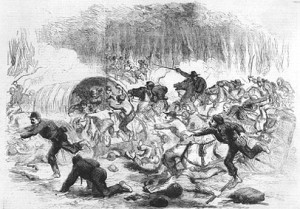 Source Source
Of course, Foreman also includes the big names who ran the governments in all of the countries concerned, as well as the generals and a huge host of lesser soldiers whose letters have survived. We get the perspective of men in England, like Charles Francis Adams, who was ambassador to London during the war, and men in Parliament who were split between the North and the South. I’d learned nothing about this ever previously, aside from the fact that the lack of southern cotton was bad for England, so I was completely fascinated by this side of the story. Canada also plays a part I’d never suspected; at the time it was British North America and thus an obvious front for England. I didn’t even know that anyone in the US had ever hoped to annex Canada, although that should have been obvious. To top it off, the book doesn’t just focus on the men; there are women here, too, both the women loved by the men fighting and women who were passionate about their causes themselves.
In short, this was a book fascinating on many fronts, full of information, both on a small and wide scale. In terms of its mission to depict the the truth of the relations between two countries and how the people of the time felt about them, it succeeds hugely, depicting the events of the war with depth, thought, and consideration. Those who are not history buffs may find it dry and lengthy at times, but those who are obsessed like me will undoubtedly adore A World on Fire. Highly recommended.
I am an Amazon Associate. I received this book for free for review from Amazon Vine.
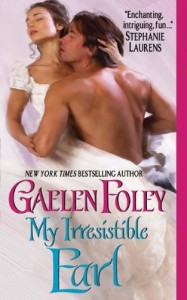 Jordan Lennox is a member of the Inferno Club, a group of spies for the government masquerading as reckless, scandalous noblemen. His work caused him to leave Mara Bryce without explanation, without promises, twelve years ago, but he’s been pining after her ever since. On Mara’s side, things are largely the same, except she has endured a hateful marriage in the meantime. Her husband passed away, leaving her with a little boy, who is unquestionably the light of her life. When Jordan returns to England, neither he nor Mara can resist one another, no matter what’s happened over the years. In the meantime, the exchange for Drake’s return, carried on from previous books, has been completed, but none of the men are prepared for his complete memory loss or shocking switch of allegiance. Jordan Lennox is a member of the Inferno Club, a group of spies for the government masquerading as reckless, scandalous noblemen. His work caused him to leave Mara Bryce without explanation, without promises, twelve years ago, but he’s been pining after her ever since. On Mara’s side, things are largely the same, except she has endured a hateful marriage in the meantime. Her husband passed away, leaving her with a little boy, who is unquestionably the light of her life. When Jordan returns to England, neither he nor Mara can resist one another, no matter what’s happened over the years. In the meantime, the exchange for Drake’s return, carried on from previous books, has been completed, but none of the men are prepared for his complete memory loss or shocking switch of allegiance.
When it comes to Gaelen Foley, hope springs eternal. I requested this book from Netgalley on the back of positive early reviews, fingers crossed that the Gaelen Foley I used to know and love would finally be back. Someday, I will stop trying. There are good parts about this book, but there are also bad parts, and the whole thing feels rushed.
First, the good. I found the spy story genuinely interesting for much of this time around, which is strange because I hadn’t enjoyed it previously. I would have loved an entire book devoted to Drake at this point, especially after they return him to his parents’ house and he encounters the servant girl from his past, Emily. There was an enticing story there, I think, and while it is followed up a little bit throughout this one, it’s definitely put off for the next one, again. I like the overall idea of a story that spans an entire series, but I’m struggling with these. I just feel like not enough time is devoted to either thing. It’s a problem I had with Eloisa James’s Desperate Duchesses series in the beginning, with too many characters and not enough time devoted to any of them, but that series wrapped up spectacularly well. This one hasn’t given me the same indications.
I liked the idea of the romance as well, but too often it felt like the modern appeal was simply piggybacking on the past flashbacks, especially in the beginning. Their hatred and anger about the past twelve years dissolved in about an instant, even without explanations. It didn’t really help that I didn’t like them, mainly because the book was split in two, but also because their characters were inconsistent. The quick flash from hatred to adoration is part of that, but Mara goes from enjoying her hard-earned widowhood to ridiculously eager to be with Jordan in another five seconds flat. There was very little actual romance, mostly just stilted conversations and a quick hop into bed. I like the idea of childhood sweethearts reuniting as older and wiser people, but there has to be some substance there.
In short, My Irresistible Earl was disappointing. I’m beginning to think I’ll never have another Prince Charming! But didn’t I say that with the last one in this series?
If you’re looking for a fabulous romance, why not try Sarah MacLean? I loved Nine Rules to Break when Romancing a Rake.
I am an Amazon Associate. I received this book for review from Netgalley.com.
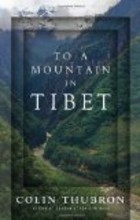 In 2009, Colin Thubron journeyed to Tibet to climb the impressive Mount Kailas. Scaled by very few, usually approached and gone around by the path that Thubron takes, the mountain is sacred to Buddhists and Hindus, as well as a number of minor religions and sects that have sprung up around it. Thubron visits several of these as he journeys, as well as staying at very basic camps and experiencing life in Tibet with his two comrades, a cook and a guide. His journey isn’t just physical, as he pulls in his own mental and spiritual experiences to make a fully rounded trip for both the mind and body. In 2009, Colin Thubron journeyed to Tibet to climb the impressive Mount Kailas. Scaled by very few, usually approached and gone around by the path that Thubron takes, the mountain is sacred to Buddhists and Hindus, as well as a number of minor religions and sects that have sprung up around it. Thubron visits several of these as he journeys, as well as staying at very basic camps and experiencing life in Tibet with his two comrades, a cook and a guide. His journey isn’t just physical, as he pulls in his own mental and spiritual experiences to make a fully rounded trip for both the mind and body.
This was a travelogue unlike anything I’d read before. They are a bit of a new genre for me, so I was excited to try out another new author. I ended up getting a lot more than I expected.
The first thing that really astonished me about the book was Thubron’s writing. Not that the other books I’ve read have been written poorly, but his writing is almost poetic in its beauty. He really delves deep and describes the scenery and the people in ways that are almost transcendent. I kept getting lost in the imagery and thoughtfulness of his observations – he’s obviously one of those people who just sees and feels things more deeply, and has the ability to put all that into words. At times, I felt as though the stark loveliness of the writing kept me from really getting to know Thubron, but then he would share an insight from his life, about the loved ones he’d lost and the fact that he was the last remaining member of his family, that made me feel sympathy for him once again, and regain interest in his journey.
I’m not particularly familiar with Tibet. It’s one of those places that I know is far away but is off of my personal map, simply because I’ve never had cause to learn about it. Thubron’s book is interesting in this respect, particularly because he does delve a bit into the history of the places and the many spiritualities that worship the mountain. Considering it’s a place I’d never even heard of before picking up this book, I was quite surprised to discover just how revered it is, even more that people go on pilgrimage there and actually sometimes die because it’s hard going and tour operators don’t always monitor the people who go on their trips.
It’s a short book, but it is quite deep, and I suspect you’ll find it takes you longer to read than you expect, as it did with me. It isn’t perfect – sometimes the many names of religious sectors and gods, for example, gets overwhelming and adds up to too much. But take a little time to really appreciate the beauty of Thubron’s words and I think you’ll find that To a Mountain in Tibet is a rewarding read.
I am an Amazon Associate. I received this book for free for review from the publisher.
|
|


Recent Comments