|
|
 In the midst of Nazi Germany, passions can become more important than ever. Young Daniel had a promising career as a luthier, a violin maker, before he was seized from his home and incarcerated in a concentration camp. He volunteered as a carpenter, knowing it was one of the better “jobs” he could have in the camp. One day he hears a violin playing in the camp, but there’s something wrong with it. He volunteers to fix it and suddenly finds himself creating a violin for the commander, his success quite possibly a situation of life or death, his work a reminder of the life he lived before the Nazis. In the midst of Nazi Germany, passions can become more important than ever. Young Daniel had a promising career as a luthier, a violin maker, before he was seized from his home and incarcerated in a concentration camp. He volunteered as a carpenter, knowing it was one of the better “jobs” he could have in the camp. One day he hears a violin playing in the camp, but there’s something wrong with it. He volunteers to fix it and suddenly finds himself creating a violin for the commander, his success quite possibly a situation of life or death, his work a reminder of the life he lived before the Nazis.
Though this book started off slow, it was rewarding in the end. It begins in the present day with the story of a woman with an incredible violin. Only after we realize that this violin must have been created by Daniel in the camp does it become interesting and moving. Daniel’s appreciation for his life and his music, juxtaposed with the struggles of the prisoners, is touching and hands down the best part of the book. He’s a truly passionate character and his story is inspiring.
On the other hand, I did feel this book was just a little too short to develop the connections I personally needed to really fall in love with the book. It’s less than two hundred pages long, which for me is not really enough time to develop many feelings about a book. I felt like the author also held back a little with the horrors of the Holocaust, though whether that was her or the translator I couldn’t honestly tell you. I can’t say I need more horror in my life, but it made it somewhat hard to connect and feel the sympathy that other books have inspired, if that makes sense. Still terrible, still gruesome things going on, but there’s a level of detachment here that isn’t necessarily present in other books. It may be because the only character we ever get to know is Daniel – so I liked him, but I had no idea about what other characters might be thinking or feeling.
While The Auschwitz Violin is good at what it does, it wound up being too short for me – and as a result I don’t even have much more to say about it! It’s a touching and inspiring story about passion beating oppression, but it never really captured my emotions the way I expected it to. I would still definitely recommend it to someone looking for a relatively simple story that gets its point across very well.
I am an Amazon Associate. I received this book for free from the publisher for review.
Lucien de Malheur has it out for the Rohan family. He’s determined to make their lives miserable, and he decides to enact his revenge through the only girl in the family, Miranda. He arranges for an accomplice of his to seduce Miranda, abduct her, and marry her. In the event, he ends up raping her and ruining her forever, rather than marrying her, which is not good enough for Lucien. Several years later, once Miranda has gained her independence and feels more comfortable as a forever-single woman, Lucien decides the time is right and seeks to seduce her himself.
This is one of those books that, while I rather enjoyed reading it, caused some serious ideological issues for me. I could not fathom why Miranda would ever stay with Lucien, for one thing. Love is NOT unconditional, certainly not to the extent that he challenges her, and I can’t imagine any self-respecting woman clinging to a man who clearly didn’t care very much about her. Simply the fact that he’d arranged for her rape would have been enough to drive me up the wall; it’s stranger because she seems to suffer no ill effects from being raped, I expected at least something when she first slept with Lucien but it’s as if it didn’t happen. This seems so unrealistic to me; I would contrast it with Gaelen Foley’s depiction of Bel’s recovery in The Duke for a novel that felt more in the realm of possibility in this regard. Miranda is even determined not to call it rape, which I suppose could be a coping mechanism, but it was. She did not consent, therefore it is rape, and to imply otherwise is wrong.
I also was quite dissatisfied with the ending, mainly because I couldn’t understand how the problem was going to be resolved. I didn’t get how someone like Miranda, who clearly can think for herself throughout the book and is quite a spirited character, would end up just settling for this horrid man. We can see that he’s not as horrid as he claims, but the things that he does completely bely what we see going on in his head. And sometimes he has even thoughts that make him seem truly evil, such as when he expresses relief that Miranda is not a virgin (due to him) because he doesn’t like virgins. Ugh. It just seemed so insensitive, so much the opposite of a man who is supposed to be falling in love. I would have expected jealousy at that point in the story.
Then there was a secondary romance, which was quite sweet overall except it was a love at first sight type deal. I struggle with those as well; I generally didn’t see enough of the couple to really believe they’d fallen in love. I liked the couple, don’t get me wrong, but it just felt a bit too hasty.
It’s kind of a shame, because I think Breathless could have been a decent romance otherwise. Anne Stuart is a fine writer and has a great ability to carry a narrative along; I kept reading even with all my “WTF” moments and I was convinced she’d find a way to wrap it all up in the end. I usually like the bad boy redeemed stories, but Lucien just never seemed like he was actually redeemed, not until he’d gone too far. Unfortunately, that meant it didn’t wrap up nicely, but I’d still read another book by Stuart. I would just hope that it wasn’t full of so many romance cliches, soulless heroes, and willfully blind heroines.
I am an Amazon associate. I received this book for free through Netgalley for review.
 Emmett Conn has lived a long, normal, and moderately happy life. A veteran of the First World War, he’s now 92 years old and regrettably suffering from a brain tumor which has a strong chance of ending his life. An injury in battle erased his memory from before the war, but thanks to a combination of drugs and the tumor, flashbacks emerge, where Emmett (then known as Ahmet Khan) was a gendarme during the Armenian genocide in the Ottoman Empire during the very beginning of World War I. None of this fits with Emmett’s knowledge of his past, but as the scenes continue to play out in his head, he begins to believe that he was that man and question the entire basis of his American life. Emmett Conn has lived a long, normal, and moderately happy life. A veteran of the First World War, he’s now 92 years old and regrettably suffering from a brain tumor which has a strong chance of ending his life. An injury in battle erased his memory from before the war, but thanks to a combination of drugs and the tumor, flashbacks emerge, where Emmett (then known as Ahmet Khan) was a gendarme during the Armenian genocide in the Ottoman Empire during the very beginning of World War I. None of this fits with Emmett’s knowledge of his past, but as the scenes continue to play out in his head, he begins to believe that he was that man and question the entire basis of his American life.
This was such a powerful book. I thought the reflections were the perfect way to tell the story; it’s an amazing contrast between Emmett’s settled US life and his job forcing the Armenians out of the country. It’s impossible to like him at first, and I’d say it remains difficult throughout the book, simply because he is brutal. He, like so many young impulsive people, seems almost addicted to the feeling of power. The Armenians become faceless evil to him, an “other” that has committed crimes against his people; thus he can commit crimes against them without thinking. It’s a tale that you can find throughout history, still going on in the present day; if we can dehumanize our enemies, it appears easier to watch them suffer or even kill them, for most people. I knew (and know) virtually nothing about the Armenian genocide, regrettably, but it is surely this type of thinking which allows such unspeakable crimes to happen. Even now, we can happily stereotype people based on their age, their race, their gender, their religion, but if you know anyone at all you’ll realize that each and every person is different.
So Emmett discovers when he gets to know Araxie. He finds himself drawn to her without realizing why, and then when he comes to know her, he struggles more with the atrocities he’s committed. He knows they’re wrong. He knows he doesn’t want to hurt her, feels guilty for killing people she knows and loves. He learns precisely that lesson; that each person, no matter where they come from or what they look like, is still just a person. That’s why this book, for me, was so powerful and moving. It was not just an incredible story, but it had that anti-prejudice theme running through it so strongly. I can’t stand people who discriminate against others for any reason; so I struggled to like Emmett. Sure, he doesn’t look evil in the present day, but then how many murderers astonish their family and friends with the crimes they’ve committed? But then he started to realize what he’d done, and I appreciated him more along with the book as the story continued.
Make no mistake, at times this is a violent and disturbing book, but these things happened. Turks did rape, assault, and murder Armenians as they deported them. Mustian doesn’t really shield us from the atrocities committed and at times, the parts in the present come as a relief because the parts in the past are hard to take. It wouldn’t be as meaningful without this, though, and in the end I think a more accurate and detailed depiction is necessary.
The Gendarme is a powerful portrait of and a cry against prejudice. It’s also a really good, gripping story, as Emmett’s past is revealed through his memories and has an increasing impact on his future. Highly recommended.
I am an Amazon Associate. Many many thanks to Candace at Beth Fish Reads for sending this to me for our book club!
 In the county of Basque, in northern Spain, three men stop at a bar before a wedding. In the bar resides Maria Antonia Etxarri, a teenager whose life is due to be intimately, if reluctantly, intertwined with the bride’s, Isabel Cruces. Told alternately through flashbacks to the past, including the war which occurred shortly after the wedding, and from a doctor’s viewpoint in the present day, The Wrong Blood slowly reveals to us a story of love and need. Two women, lives irrevocably altered by the war, find something that they need in one another, and find some degree of fulfilment even if their lives don’t turn out as they’d originally planned. In the county of Basque, in northern Spain, three men stop at a bar before a wedding. In the bar resides Maria Antonia Etxarri, a teenager whose life is due to be intimately, if reluctantly, intertwined with the bride’s, Isabel Cruces. Told alternately through flashbacks to the past, including the war which occurred shortly after the wedding, and from a doctor’s viewpoint in the present day, The Wrong Blood slowly reveals to us a story of love and need. Two women, lives irrevocably altered by the war, find something that they need in one another, and find some degree of fulfilment even if their lives don’t turn out as they’d originally planned.
This is one book that demonstrates beautifully the reason I rarely stop reading books – I almost always finish them, and whether you agree that’s a good idea or not, it does mean I discover some gems I’d otherwise have stuck on the DNF pile. I have a history of disliking historical fiction set in Spain, but this sounded so appealing I just had to give it a try. At first I thought this was going to be another book I didn’t really like that much – I didn’t really understand what the three men were doing in the bar, the language felt distant and peculiar, and I just didn’t like the doctor. While I never really liked the doctor, I eventually grew to find the language poetic as I got further into the story and treasured the connections made in the rather strange beginning, as it all came together amazingly well by the end.
It was when the war began that things got interesting, because those events set off the huge changes that beset Maria Antonia and Isabel. When the novel starts, we know that Maria Antonia has inherited Isabel’s house in the present, even though Isabel has a grandson who is coming to stay there and Maria Antonia appears to have been the housekeeper. This immediately made me wonder what had happened, what connection bound these two women that Maria Antonia would be favored over Isabel’s own progeny? It took the whole novel to get there, but I finally found out, and it all made sense in the end, even the title. And along the way we’re treated to lovely prose (the translator did an excellent job here) and a very atmospheric story. I even loved that the time flipped from the past to the present because the contrast between the earlier Spain and the current Spain was marked and fascinating.
This particular novel fits perfectly the type of historical fiction that’s occupying me these days; set in a slightly unusual (for me) location and time with a compelling story to tell and great writing to back it up. It was such a wonderful read that I’m still thinking about it, and I am enthusiastically recommending The Wrong Blood to anyone who enjoys historical fiction. I don’t think you’ll be sorry if you give it a shot.
I am an Amazon Associate. I received this book for free through Netgalley for review.
 Bartholomew Fortuno is one of several regular acts at P T Barnum’s American Museum in New York City. He is the stereotypical thin man; he eats virtually nothing to the point where his bones and organs are clearly delineated beneath his skin. He doesn’t see his act as mere human fascination with the grotesque; instead he hopes to connect with those in the audience by showing them their true nature. When a mysterious new act, a woman with a beard, arrives at the museum, Bartholomew finds himself enthralled and abandons his old friends in favor of the new woman. When he discovers that she isn’t what she seems, he’s forced to reevaluate his entire life and career. Bartholomew Fortuno is one of several regular acts at P T Barnum’s American Museum in New York City. He is the stereotypical thin man; he eats virtually nothing to the point where his bones and organs are clearly delineated beneath his skin. He doesn’t see his act as mere human fascination with the grotesque; instead he hopes to connect with those in the audience by showing them their true nature. When a mysterious new act, a woman with a beard, arrives at the museum, Bartholomew finds himself enthralled and abandons his old friends in favor of the new woman. When he discovers that she isn’t what she seems, he’s forced to reevaluate his entire life and career.
Unfortunately this is a book I just felt rather “meh” about. It’s made it very difficult to write this review. I was quite excited by the prospect of it at first. I’m really interested in the history of the circus and just read quite an interesting non-fiction YA book on Tom Thumb, who was a figure at the American Museum, so I was eager to enjoy this exciting era through fiction. I wasn’t quite as enthralled as I’d hoped, but I did enjoy the book overall.
In some ways, it did live up to what I expected of it. I was fascinated by the way that Bartholomew defines himself through his physical self, the way his thinness and unnatural lack of hunger has changed the way he’s lived his life. He almost gets arrogant about his body, convinced that he’s truly something special, rather than a man who starves himself to become a freak that is gawked at by countless people every day. It led me to wonder if that was how I’d cope, should this have been my life. Would I too ascribe such importance to my physical dimensions and give myself airs because I exposed some part of human nature others couldn’t see in themselves? I don’t know, but it was quite fascinating.
As a result of his arrogance, though, I didn’t really ever come to like Fortuno. I hated his fixation with the bearded lady, his refusal to see the world as it really was. He truly gets airs about himself and neglects his friends – people who genuinely care about him – in favor of this woman who really doesn’t care what happens to him. He is completely out of touch with reality, which is an essential facet of his character but made him so hard to like.
There isn’t much else to this novel beyond Fortuno’s slow reevaluation of the world around him, which makes it a bit of a slow read, but it is nevertheless interesting. I particularly enjoyed the thorough imagining of the American Museum. It really helped me picture what it might have been to live there, especially as one of the exhibits. I felt for many of those who weren’t Bartholomew, and I wished for their lives to get better and for them to escape the exploitation.
Though I think The Transformation of Bartholomew Fortuno could have been more, it was still an enjoyable read. I would recommend it to anyone else who is interested in thinking about the origins of the circus or New York City in the mid 19th century.
I am an Amazon Associate. I received this book for free from the publisher for review.
 Shen Ai Li is the daughter of the Emperor of China, though it’s never a position either she or her father wanted. On her way to her assigned marriage, she discovers that her future husband had a hand in her brother’s death, among other things; she immediately does her best to flee despite knowing she will have brought dishonor to her family. With butterfly swords in hand, she seeks to rescue herself, but she is greatly aided by the help of a strange white man, Ryam. Realizing that this barbarian stranger is probably the only person she can trust right now, she lies to him about her identity in a bid to get him to return her to her family. Amidst the challenges of the road ahead and her betrothed’s constant attempts to get her back, Ai Li and Ryam start to feel more for each other, but such a relationship is well outside society’s expectations of them. Shen Ai Li is the daughter of the Emperor of China, though it’s never a position either she or her father wanted. On her way to her assigned marriage, she discovers that her future husband had a hand in her brother’s death, among other things; she immediately does her best to flee despite knowing she will have brought dishonor to her family. With butterfly swords in hand, she seeks to rescue herself, but she is greatly aided by the help of a strange white man, Ryam. Realizing that this barbarian stranger is probably the only person she can trust right now, she lies to him about her identity in a bid to get him to return her to her family. Amidst the challenges of the road ahead and her betrothed’s constant attempts to get her back, Ai Li and Ryam start to feel more for each other, but such a relationship is well outside society’s expectations of them.
I’m sure I’m not the only one who is thrilled that a romance set outside of England or the US has managed to take hold like this one, which is set in Tang dynasty China, and the hype it’s already received is genuinely well deserved. Plus, check out that lovely Chinese girl on the cover! This is the kind of book that I want to champion, that I want to see more of. It helps that this is a thoroughly enjoyable romance. I loved that the white man was turned around and made the minority, something I think we get too little (if any) of in romance literature these days, so even though Ai Li falls in love with him fairly quickly they still have to deal with not only the stigma of his different race but the issues of honor which bind her so strongly.
Of course, I adored Ai Li, how she was equally capable of being tough and being fragile; she can fight, though she’s never had to use those skills, but she can also be very, very feminine. It’s a nice juxtaposition in a world where I think girls are often judged to be either one or the other. Ai Li is strong and honorable, particularly loyal to her family and her values, but she’s not afraid to acknowledge her love for Ryam and face the consequences of her actions.
If I did ask more of this book, I’d probably wish for it to be a bit richer in its historical detail. The setting is phenomenal and I suppose I’d just like to see more of it and have more detail. In a romance that’s less than 300 pages long, however, I think that’s probably too much to ask, and may have taken away from the main plot for some readers. I also didn’t like that Ai Li was often referred to as Ailey, which was Ryam’s version of her name, even when from her own perspective. Since I don’t know much about the Tang dynasty, I couldn’t judge this book’s historical accuracy for myself, but Jeannie Lin has a section on her website devoted to the historical accuracy in her books – which she calls historical fantasies – for which I am grateful. I rarely expect any real accuracy from historical romance, which has a tendency to plop modern day heroines in Regency settings, but I like when it’s noted!
If you enjoy romance and are looking for a change in your historicals, look no further. Butterfly Swords delivers a compelling story with wonderful characters and a thoroughly exciting setting.
I am an Amazon Associate. I received this book for free for review through Netgalley.
 Hal Montgomery is alive and at war on the Christmas truce during the first World War in 1914. The British and the Germans laid aside their arms for one day and met halfway across No Man’s Land, exchanging gifts and conversation as though they hadn’t just been trying to kill one another and didn’t intend to do so again in a matter of hours. Hal finds himself chatting with a German officer named Wilhelm who is engaged to a British girl. He’d formerly lived in Stratford-upon-Avon and met a schoolteacher, Sam, with whom he fell deeply in love. Wilhelm gives Hal a picture of himself and asks him to let Sam know that he’s alive, still loves her, and still wants to marry her if he ever gets the opportunity. Hal Montgomery is alive and at war on the Christmas truce during the first World War in 1914. The British and the Germans laid aside their arms for one day and met halfway across No Man’s Land, exchanging gifts and conversation as though they hadn’t just been trying to kill one another and didn’t intend to do so again in a matter of hours. Hal finds himself chatting with a German officer named Wilhelm who is engaged to a British girl. He’d formerly lived in Stratford-upon-Avon and met a schoolteacher, Sam, with whom he fell deeply in love. Wilhelm gives Hal a picture of himself and asks him to let Sam know that he’s alive, still loves her, and still wants to marry her if he ever gets the opportunity.
Shortly afterwards, Hal is shot and crippled in a way that he means he’ll probably never return to the front and may always walk with a limp. This actually gives him the perfect opportunity to find Sam, with whom he’s developed an obsession, and deliver Wilhelm’s picture to her. Instead of honorably fulfilling that request, Hal himself falls in love with Sam and determines to spend the rest of his life loving her, regardless of how she feels about him.
Initially, I really enjoyed this book, and it definitely made me reconsider all the other ARCs on my shelf in which I’ve lost interest. I’m trying to get through them now and this one seemed to declare itself a winner right away. It has a fascinating story, starting with that legendary Christmas truce, and ending up dealing with difficult questions for people living in the early twentieth century. Sam has borne a child out of wedlock, for example, and the scrutiny and discrimination towards her is immense, even leading towards her potential expulsion as a schoolteacher. Her relationship with Hal is frowned upon by all of society and they pretend to be married to escape censure. These are all issues that we no longer have to deal with and the book made me deeply consider how profoundly life has changed.
Throughout the novel, the war goes on, and it ends at about the same time as the book ends. As a result, many of the people Hal knows and loves are off at the front even when he can no longer be there himself. His perspective gives us an insight into the daily stress that people were under but also contrasts the scene of the war with the surprisingly ordinary daily life in Britain. It’s too easy for people to forget that war is happening, even when their lives are consumed with spying and reading intelligence daily as Hal’s is. Still, his losses hit hard, and I found myself regretting all of the deaths that happened.
I had a few disappointments with the book, despite the fact that I did enjoy it and thought it was well-written. First of all, Hal is almost unbearably selfish. I could not believe he didn’t give Sam Wilhelm’s picture, lied to her about meeting him, and then did his very best to make her fall in love with him, mainly because he was so attracted to her. I hated him at times for that. Sam herself wasn’t a particularly standout character and I found her to often be cold and to use Hal in her own ways to get what she wanted. In that respect they deserved each other. My favorite character was probably the child Will, who just doesn’t understand what is going on and wants what a child wants, his parents to be together and happy with him. The ending was also completely unsatisfying. I’m not going to lie, it fit in with the characters’ personalities, but it was not what I wanted out of it, and so I was disappointed even if I should have seen it coming.
So, Gifts of War. It was well-written and interesting, but lacked the spark that would have connected me better to the characters and the story, and I ended up unsatisfied with it as a whole. If Mackenzie Ford were to write another book, I would probably read it, but I would lower my expectations accordingly.
I am an Amazon Associate. I received this book for free for review from the publisher a shamefully long time ago.
 Sabine’s life hasn’t been easy since she fled from her career as a cushy opera star. She’s gone as far as offering sex for food; she ends up in a saloon sleeping with the proprietor and hiring other prostitutes to dance and sell drinks as well as sell themselves. When she was seventeen, however, her life was full of bright lights, scandal, and music she thought she couldn’t live without. When a little bit of that music comes back into her life, Sabine has to choose between the life she thought she’d left behind, and all its complications, and shutting away that life forever, if she still can. Sabine’s life hasn’t been easy since she fled from her career as a cushy opera star. She’s gone as far as offering sex for food; she ends up in a saloon sleeping with the proprietor and hiring other prostitutes to dance and sell drinks as well as sell themselves. When she was seventeen, however, her life was full of bright lights, scandal, and music she thought she couldn’t live without. When a little bit of that music comes back into her life, Sabine has to choose between the life she thought she’d left behind, and all its complications, and shutting away that life forever, if she still can.
Sabine’s story is told through alternating viewpoints; her adult life serves as the current narrative, while her more youthful diary regularly fills us in on the backstory behind her career and her more youthful life. At first, I had a really difficult time reconciling the two. The older Sabine, known as Marguerite to hide her past, is cynical and has closed off much of her personality. In vivid contrast, youthful Sabine is full of hope at the start, can’t imagine a life without music, and is almost unbearably teenage in her thoughts and emotions. She’s ridiculously self-centred, almost certain that the stage has an empty slot just waiting for her voice to fill it, and is prone to vivid imagination and silly delusions of love. I couldn’t help but like the older, more mature version better, even as I admired Chance’s skill in creating a teenager that recalled a little too clearly what it feels like to have everything be so brightly colored and full of drama.
The atmospheres of each location really drew me in. Seattle feels damp and grim, full of people who are mainly at the end of their ropes. It perfectly matches Sabine’s attitude at the same, where her own life has lot all of its former glitter. As she begins to open up again to music, so does Seattle; the first musical lands in town and Sabine begins to make a friend who tries her best to lighten up her life, when Sabine isn’t busy lying about her past. In vivid contrast is the soap opera-esque world of the stage, where Sabine is universally adored on stage but confused, in love, yet often very alone off stage. Everyone is sleeping with everyone else and the diary entries from this period are as high strung as Sabine herself. While I liked the back stage peek of the historical opera, I didn’t like the vast amounts of scandal that seemingly dripped from these pages; Sabine made choices I couldn’t condone and the entire world there was foreign and not particularly appealing to me. When Sabine herself grew uncomfortable with it, I felt I had judged it all rightly and wasn’t surprised that eventually she was driven to flee as she does in the beginning of the book.
The last thing that I didn’t like about the book – I liked most of it, honest – was the ending. I felt Sabine made the wrong choice. I couldn’t understand the logic behind it and while I liked that she was human and thus fallible, I suppose I hoped she would have learned in the way that I would have. But she didn’t, and so the whole book left me feeling a bit disappointed. The writing was beautiful and the story was well done, but I just couldn’t connect in that essential way with the characters or even truly understand their decisions. It’s wonderful for a backstage peek at opera houses of the period, and an atmospheric glimpse into a very youthful Seattle, but Prima Donna wasn’t the stand out historical fiction novel I hoped it would be.
I am an Amazon Associate. I received this book for free from a publicist for review.
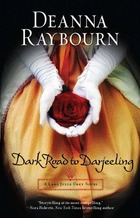 Lady Julia and Brisbane may have tied the knot, but that doesn’t mean intrigue has absented itself from their lives. No, even on their honeymoon, there is a mystery which they are compelled to solve. When Julia’s siblings Portia and Plum turn up, asking Julia and Brisbane to come to see Portia’s former lover, Jane, who is pregnant and suspects her husband has been killed, the new couple simply cannot say no. When Brisbane stays behind and doesn’t immediately go to the estate with Julia, she is distressed but resolves to try and find the murderer out for herself. What she does find is a strange mix of people both old and new and a mystery she cannot begin to guess how to solve, if there even is one at all. Lady Julia and Brisbane may have tied the knot, but that doesn’t mean intrigue has absented itself from their lives. No, even on their honeymoon, there is a mystery which they are compelled to solve. When Julia’s siblings Portia and Plum turn up, asking Julia and Brisbane to come to see Portia’s former lover, Jane, who is pregnant and suspects her husband has been killed, the new couple simply cannot say no. When Brisbane stays behind and doesn’t immediately go to the estate with Julia, she is distressed but resolves to try and find the murderer out for herself. What she does find is a strange mix of people both old and new and a mystery she cannot begin to guess how to solve, if there even is one at all.
It’s not a secret that I’m a big fan of this series, so I was thrilled when I found it on Netgalley, saving me the cost of importing the book just to see what happened (although this is one I do intend to purchase a paper copy of). I was a little worried about how it would go once Julia and Brisbane were actually married. Although none of the books’ plots have revolved around their romance, it has been a big part of the series and the tension between them has been a main linking factor of all the books; no matter what they’re trying to figure out, these two people have been drawn to one another. As it turns out, they still are very attracted to each other, although Raybourn fades to black so we never witness any of their more intimate scenes, for which I was grateful. They have their arguments, but they are still very in love throughout this particular novel, and I didn’t feel the lack of their courtship too keenly.
The mystery itself in the book was an interesting one, with pieces I didn’t put together until the end, but I’m not sure I was meant to. I often could tell that the real culprit wasn’t any of the people Julia actually suspected but I didn’t guess who it was; I did assume there was a murderer or the book would have ended without any sort of climax. As it stood, however, quite a few things did happen at the end of the book, few of which were particularly happy, and Raybourn drops us off with a nice cliffhanger that has me ready for the next in the series immediately.
What I liked the most about this book, as I often do in series that earn themselves a place on my favorites list, was the fact that the relationships within the series continue to grow and change with each installment. I also love that we learn bits about each character as the series progresses. Bits and pieces of the past come back to haunt them and play a role in each new storyline, so we’re always tied neatly in to the past. The books themselves have storylines but the whole series is an arc as we learn more and more about each individual character.
I still love this series and I am already anxious for number five! Dark Road to Darjeeling is a fantastic installment in a series that is just pure pleasure. If you enjoy historical fiction and mysteries, you will enjoy this series.
I am an Amazon Associate. I received this book for review through Netgalley.
 In the kingdom of Eltaria, the Tradition reigns supreme. So it’s virtually inevitable that young princess Rosamund will lose her lovely kind mother Celeste, and that she’ll have a fairy godmother, and that her father will marry an evil Stepmother to send a Hunter after her. The Tradition will always try to bend fate in the direction of a fairy tale – but it can be subverted. So when Rosa’s father does die, her fairy godmother disguises herself as an evil sorceress and makes a deal with Rosa’s father – but Rosa still flees and is captured by dwarves who are far from the kindly ones described in Snow White. This time, however, there are two princes wandering the forest; which way will the Tradition bend Rosa’s life next? In the kingdom of Eltaria, the Tradition reigns supreme. So it’s virtually inevitable that young princess Rosamund will lose her lovely kind mother Celeste, and that she’ll have a fairy godmother, and that her father will marry an evil Stepmother to send a Hunter after her. The Tradition will always try to bend fate in the direction of a fairy tale – but it can be subverted. So when Rosa’s father does die, her fairy godmother disguises herself as an evil sorceress and makes a deal with Rosa’s father – but Rosa still flees and is captured by dwarves who are far from the kindly ones described in Snow White. This time, however, there are two princes wandering the forest; which way will the Tradition bend Rosa’s life next?
This was quite a clever and entertaining twist on traditional fairy tales. The author starts off, rather obviously, with Snow White, but also makes space for Sleeping Beauty which can also suit Rosa’s situation. I really liked the idea of a world which tries to obey the dictates of fairy tales – no matter which fairy tale – and each different kingdom in the world draws from different mythologies. Siegfried, who is pretty obviously Rosa’s main love interest as he’s the only male narrator, is haunted by a shield-maiden in a ring of fire straight out of traditional Nordic myths, as he is from the North.
The characters themselves were enchanting in their own ways. Rosa started off a little too whiny; she insists that she’s self-sufficient but requires rescuing from the evil dwarves nonetheless. However, as soon as she’s woken up with a kiss which she decidedly does not want, she gets a bit feistier which makes her easier to relate to. I felt the story was a bit less cohesive after the Snow White part ended, as it doesn’t really imitate any other fairy tales (that I know about) in so much detail, but it was still very much a fun book. People fall in love, fight battles, and solve riddles trying to win the princess’s hand in marriage; it’s all good stuff.
This is the fifth book in a series of similar fairy tale themed stories set in this world. This is the first that I’ve read and I had no trouble following along; I probably wouldn’t even have known it was a series if LibraryThing hadn’t told me so. I liked The Sleeping Beauty enough that I plan to seek out the earlier books in the series. It’s an intriguing world, and since I like fairy tales, I’m looking forward to see which other ones she’s played with so well.
I am an Amazon Associate. I received this book for review for free through Netgalley.
|
|



Recent Comments