|
|
 In the late twelfth century, Jerusalem falls to the Muslim world once again, to the shock of a Christian community used to claiming much of the holy land. Richard the Lionheart decides that the throne of England just isn’t enough for him and heads off with a large party of men to save the Christian kingdom and, perhaps, to crown himself King of Jerusalem. Meanwhile, in the holy city itself, sultan and chivalrous warrior Saladin worries about the oncoming Christian threat, especially when Richard starts to win. In the mix is thrown Miriam, a Jewish girl who lost nearly everything to the savagery of the Christians, and whose uncle is one of Saladin’s most trusted advisors. Will she bridge the gap between cultures? In the late twelfth century, Jerusalem falls to the Muslim world once again, to the shock of a Christian community used to claiming much of the holy land. Richard the Lionheart decides that the throne of England just isn’t enough for him and heads off with a large party of men to save the Christian kingdom and, perhaps, to crown himself King of Jerusalem. Meanwhile, in the holy city itself, sultan and chivalrous warrior Saladin worries about the oncoming Christian threat, especially when Richard starts to win. In the mix is thrown Miriam, a Jewish girl who lost nearly everything to the savagery of the Christians, and whose uncle is one of Saladin’s most trusted advisors. Will she bridge the gap between cultures?
Here is yet another book that has me torn in two. My first problem with it is historical inaccuracy, and I mean historical inaccuracy in a ridiculously large way. First of all, Pasha has the king’s children Richard, John, and Joanna at Henry II’s deathbed, with nary a mention of the man who was actually there, which was Henry’s bastard son Geoffrey. He conveniently neglects to mention that Henry was in fact at war with Richard at the time. Then, Richard claims that he wants the kingdom of England above all, which is clearly not true – it’s widely accepted that Richard was groomed to take Eleanor’s place as Duke of Aquitaine, a land with which he was better acquainted and mostly fought for. England was not a very important kingdom in comparison with France, and it’s only the dominance of England from Elizabeth’s reign onwards that made it of any real importance to the rest of the world. Secondly, the crusade Richard goes on is almost ridiculously simplified, with many of the major characters sidelined because they didn’t suit the story. For example, there is no Berengaria, Richard’s wife, and Guy of Lusignan is conveniently forgotten as soon as Jerusalem is captured. The story was originally a film script and the historical inaccuracy makes that pretty obvious, as it’s simplified to suit a movie time span and a novel could have been much more complex and accurate. The crusade is pretty exciting by itself; it doesn’t need all this editing. It also bothered me that Richard was constantly referred to as a boy and inexperienced when in reality, he was 32 and had been leading armies since he was 16 years old. 32 year olds aren’t even boys in the modern world; in the medieval world, this struck me as very out of place.
You can argue that this book is fiction, but I honestly just don’t see a reason to change so much of history in a historical novel.
On the other hand, this is one of the few books about the crusades that I can remember reading by a Muslim, and Pasha highlights many of the important aspects of Muslim culture which are so conveniently forgotten in the modern world. First and foremost, this is the fact that Muslims are peaceful people. They co-existed happily with all other religions, including Christians, until the Christians themselves decided to kill them to gain back Jerusalem – and even then, after the treaty was signed, the existing Christians were generally allowed to live in peace. The same is true of Jews, by the way, who were systematically persecuted by Christians everywhere but were mainly left alone by Muslims. This was also true in Muslim Spain. Saladin himself, as Pasha writes in his author’s note, was in fact an incredibly honorable man, and many of these bits that Pasha included were in fact accurate. He really emphasizes the fact that the crusades are the background of the conflicts we’re still experiencing today; the fact that Jews and Muslims used to live together peacefully seems almost remarkable to us today given current conflicts in the Middle East. He also provides an excellent list of follow-up reading for those who are interested in the crusades and this crusade in particular.
As a result, for all my complaints about its inaccuracy, Shadow of the Swords is a book that has something to say for those who’d like to look more closely at it. Unfortunately, I think its over-simplifying and changing of history will cause those who read it to also question the reality of the situation between Muslims, Jews, and Christians. As a result, I recommend it with reservations, and highly suggest that readers of this book also seek out an excellent non-fiction book written from a Muslim perspective, The Crusades Through Arab Eyes by Amin Maalouf.
I am an Amazon Associate. I received this book for free for review from the publisher.
 Known worldwide as “Bridezilla”, Chloe Turner just wants to get away from it all. Her former fiance faked his death to get away from her – meaning that she not only grieved for him but was forced to face the extremes to which he’d go to cancel their wedding. So her friend Jenn takes her to Virginia for a much needed beach holiday, where they meet the Sullivan brothers. Max Sullivan is afraid of almost everything and has a need to keep everyone safe; he’s drawn to Chloe and finds himself sharing his secrets with her almost immediately. Will he be pleased when he learns that the infamous Bridezilla is keeping secrets from him? Known worldwide as “Bridezilla”, Chloe Turner just wants to get away from it all. Her former fiance faked his death to get away from her – meaning that she not only grieved for him but was forced to face the extremes to which he’d go to cancel their wedding. So her friend Jenn takes her to Virginia for a much needed beach holiday, where they meet the Sullivan brothers. Max Sullivan is afraid of almost everything and has a need to keep everyone safe; he’s drawn to Chloe and finds himself sharing his secrets with her almost immediately. Will he be pleased when he learns that the infamous Bridezilla is keeping secrets from him?
This was a fun, fast read that would be perfect for the beach or a lazy afternoon. Though the characters are somewhat tortured in various ways, their dialogue is snappy and it’s very easy to care for them. There are simultaneous love stories running in the book, but it’s really much more about Chloe and Max; the secondary love story provides a foil and another angle to the main romance.
I liked especially that Chloe and Max were both a little crazy, which I felt meant that they’d suit each other quite well. Max is a control freak, convinced that someone is going to die under his watch. He’s been responsible since his father left when he was very young and he just can’t turn off that responsibility. He stresses about diving, driving, fires, and even night time swimming, which is apparently very dangerous. I think he would have driven me mad, but his extra attention is perfect for Chloe, who seems mostly normal. It’s the paparazzi that have driven her mad and made her paranoid, and Max provides an oasis of calm in the middle of the storm her life becomes.
If there was anything I didn’t like about the book, it would have to be the in detail love scenes; Dahl’s books seem to be on the racier side, so it’s worth warning potential readers. You may like that, but I am not the biggest fan, especially when the hero and heroine hop into bed without much preamble. I did feel that their relationship grew over the course of the book, and would have done so anyway without these particular scenes.
Overall, I enjoyed this more than I did Victoria Dahl’s last effort, and I went forth and purchased a historical by her on my Kindle almost immediately after finishing this. So Crazy for Love was a success for me, and if you like contemporary romance, it may be with you as well.
I am an Amazon Associate. I received this book for free for review through Netgalley.
 The late seventeenth and early eighteenth century are considered the beginning of the Age of Enlightenment in the western world, but it was certainly not so for women. Because Eleanor Goodricke is taught science from a young age and loves the natural world, she’s looked down on by her neighbors and even ostracized at times. Her life is full of austerity due to her father’s Puritan roots and her love of science replaces any girlish indulgences. When her father dies, she’s alone in the world with Tickenham Court and a guardian who views her as strange, just like the rest of the townspeople do. When Eleanor meets Edmund Ashfield, she falls immediately in love, but she’s destined for larger passion with his best friend Richard Glanville. She also furthers the scientific study of butterflies and becomes a female entomologist no matter how strange others consider her. The late seventeenth and early eighteenth century are considered the beginning of the Age of Enlightenment in the western world, but it was certainly not so for women. Because Eleanor Goodricke is taught science from a young age and loves the natural world, she’s looked down on by her neighbors and even ostracized at times. Her life is full of austerity due to her father’s Puritan roots and her love of science replaces any girlish indulgences. When her father dies, she’s alone in the world with Tickenham Court and a guardian who views her as strange, just like the rest of the townspeople do. When Eleanor meets Edmund Ashfield, she falls immediately in love, but she’s destined for larger passion with his best friend Richard Glanville. She also furthers the scientific study of butterflies and becomes a female entomologist no matter how strange others consider her.
If there was any doubt that I have revived my interest in historical fiction, this book casts it all aside. It took me five days to read but it was worth each and every one of those days. This was a fascinating book and I was completely drawn into Eleanor’s life and loves, both of men and of butterflies. I thought about it when I wasn’t reading it and I longed to get back to it in order to find out what was happening. Even though some of the story is immediately apparent just from reading Eleanor’s name on the back cover, I didn’t feel spoiled at all and instead wondered what would happen and how it would happen.
As with much of the historical fiction I’ve been reading lately, I have read few books set in this time period and I was fascinated by the changing cultures of the times. The Puritans’ reign has waned, but Eleanor still endures a stark childhood and bears the prejudices of the daughter of a man who fought for Oliver Cromwell. This, despite the fact that she is so often prejudiced against herself, reveals the fragility of human prejudice and the ultimately unsubstantial reasons we have for setting ourselves against others. It’s that prejudice which proves her undoing in this novel and perhaps in life, even when she discovers some of her long-held beliefs are blatantly untrue and harmful.
Reading this book is a bit like riding a roller coaster. I wanted, just for a minute, for Eleanor’s life to be peaceful and calm, for her to spend time with her butterflies and her eventual children and just be. Of course, that must have happened in her actual life, but the book skips to the most eventful periods in order to keep the pace up throughout nearly six hundred pages. It certainly succeds, because despite the time I took to read this book, I was never once bored and never even thought that I wished it was going faster. Trust me, that never happens; usually I become impatient with books after two days!
Mountain freely admits that she’s played a little bit with the facts, but it’s hard to blame her; Eleanor Glanville did have a thrilling life in reality and she deserves more credit for her scientific study in particular. Mountain has really crafted a wonderful book here, with a gorgeous setting (I could picture the marshes and why Eleanor loved them) and a heroine who is simultaneously a representation of her time and a woman that is perfectly recognizable. Lady of the Butterflies is a fantastic historical fiction read and one that comes highly recommended by me.
I am an Amazon Associate. I received this book for free through the LibraryThing Early Reviewers program.
 Tragedy strikes one summer day in Maine. What is meant to be a happy day for two families instead turns into a day of mourning and despair, with consequences set to echo across their entire lives. The Copaken family, despite living in New York City most of the year, consider themselves native Maine residents, while the Tetherlys, significantly poorer, do in fact live there all year. Due to two deaths, the families find themselves linked closer than ever as they all struggle to deal with their own grief and suffering. Tragedy strikes one summer day in Maine. What is meant to be a happy day for two families instead turns into a day of mourning and despair, with consequences set to echo across their entire lives. The Copaken family, despite living in New York City most of the year, consider themselves native Maine residents, while the Tetherlys, significantly poorer, do in fact live there all year. Due to two deaths, the families find themselves linked closer than ever as they all struggle to deal with their own grief and suffering.
A few people have expressed some distaste for the way this book’s prologue was written, but I found that I quite liked it. It’s written from the perspective of an outsider looking in with plenty of detail about the day. No one is named; it could be just any wedding, which is exactly what I liked about it. I thought it perfectly captured a typical wedding day, with the perfect photos and elaborate ceremony neatly masking the real conflicts between people and the difficulties of human relationships. Everyone feels something about a wedding and it’s not always pure joy.
Of course, the book drastically changes once the accident happens, and instead of joy, both families are left with incredible sorrow. The book is really about how individual people deal with it, how it can pull people together and push them apart, sometimes both at once. It’s poignant because the Tetherlys and the Copakens have always had something of a relationship, if only because Jane Tetherly cleans the Copakens’ house year-round. Later on, of course, the two women are meant to be united by the relationship between their children, but are left in a curious midway point. They have things in common, but they’re also complete opposites, incapable of truly understanding anything about one another except the shared pain of mothers who have lost their children much too early.
I liked how many of the characters strove to achieve things for the people that they’d lost, learning eventually that they should really be following their own lives rather than the blueprint they had planned. They have to think more deeply about their assumptions when faced with the fragility of human existence; their desperation to maintain that existence is heartbreaking.
Overall I found there was a lot to admire in Red Hook Road. The relationships are pitch perfect to the real experience of grieving families. Each character is carefully delineated and even when I didn’t like them or agree with them, I could understand how they worked. Since the book is set over the course of four summers, it’s easy to see the way that time changes perception and does manage to place scars over fresh wounds. I was glad that I could follow the families through their lives and closed the book satisfied with the way it wrapped up. Red Hook Road is a wonderful choice for those who enjoy literary fiction, realistic depictions of grief, and family relationships.
I am an Amazon Associate. I received this book for free for review.
 Mina Murray thinks she’s a lucky woman. She has a fiance who some may have considered out of her reach, a pair of best friends, and enjoys her time teaching before she’s married. But she has dreams about a man she can’t identify, dreams that go beyond what a proper lady should be capable of imagining, and her friend Lucy appears to be in serious trouble with the men who wish to court her. Worst of all, Mina’s fiance goes on a trip to Romania and doesn’t write her, finally emerging seriously ill on the border, making Mina question the future she’s planned for herself and long for the man of her dreams to appear in the flesh. Mina Murray thinks she’s a lucky woman. She has a fiance who some may have considered out of her reach, a pair of best friends, and enjoys her time teaching before she’s married. But she has dreams about a man she can’t identify, dreams that go beyond what a proper lady should be capable of imagining, and her friend Lucy appears to be in serious trouble with the men who wish to court her. Worst of all, Mina’s fiance goes on a trip to Romania and doesn’t write her, finally emerging seriously ill on the border, making Mina question the future she’s planned for herself and long for the man of her dreams to appear in the flesh.
I’m not sure if this is another case of me being far too fond of the original, but I just didn’t seem to love this one as much as everyone else did. It was definitely engaging and drew me in, but it kept reminding me of the original Dracula and making me long to read that one instead of continuing to read this story that turned it all upside down. I appear to have a soft spot for certain favorite books and I don’t always like other authors popping in and changing things. I have enjoyed Essex’s other books, but this one just didn’t have the same effect on me.
Setting my partiality aside, I did like how Essex turned the sexual stereotypes in Dracula on their head. Instead of women sitting in the background, having brains like men and not brains in their own right, Mina takes the forefront here, and has perfectly normal feelings and desires that all women share. Instead of being ashamed of her sexuality, Mina learns to appreciate it and to acknowledge her feelings. The scenes in the asylum are just heartbreaking; perfectly ordinary women are consigned to terrible lives simply because men decided they were too lustful, something that sadly did happen at the time.
I’ve seen a few complaints floating around about the novel’s sexuality; this isn’t really something I had a problem with. The thing about vampires is that they have always been sexual – seriously, think about it – we’re just a little more comfortable about admitting it these days. Saying that, I would definitely not recommend this book if you don’t want any of that in your books, because it is fairly frequent and a major part of the story.
Unfortunately, all the book really inspired me to do was start reading Dracula again. Dracula in Love may work better for you if you’re not so attached to the original (seriously, a friend and I nicknamed ourselves Mina and Lucy in high school), but I would still recommend Stealing Athena and Leonardo’s Swans first.
I am an Amazon Associate. I received this book for free from the publisher for review.
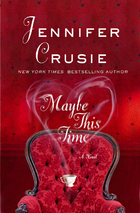 Andie Miller is finally over her ex-husband, North Archer. She’s getting married to someone else, and heads to his office to symbolically return ten years’ worth of alimony checks. As it turns out, though, North still needs her help; he has two young wards in a supposedly haunted house. Three nannies have fled from the kids, and North is pretty desperate. So he offers Andie a ridiculous amount of money to take care of them for just a month, convinced that she’s the one – not ready to let her go. She can’t turn that down, not just to take care of two kids, but it turns out that the house truly is haunted – and the ghosts don’t want to let the kids go. Andie Miller is finally over her ex-husband, North Archer. She’s getting married to someone else, and heads to his office to symbolically return ten years’ worth of alimony checks. As it turns out, though, North still needs her help; he has two young wards in a supposedly haunted house. Three nannies have fled from the kids, and North is pretty desperate. So he offers Andie a ridiculous amount of money to take care of them for just a month, convinced that she’s the one – not ready to let her go. She can’t turn that down, not just to take care of two kids, but it turns out that the house truly is haunted – and the ghosts don’t want to let the kids go.
Jennifer Crusie is the only contemporary romance author I like and she’s proved herself yet again here. This isn’t a romance, because the romance isn’t driving the plot, but it is one fantastic book no matter what genre you put it in. I picked this book up and I did not put it back down. I ignored basically everything else going on and absolutely inhaled this book because I just completely loved it. I loved it so much that I’m not sure I can even articulate why but I will completely agree with Crusie’s editor – your weekend might be shot because of this book, but you won’t be sorry.
First of all, the plot. Most of the book takes place in the haunted house with the kids and their skeezy housekeeper. I knew there were ghosts involved, but for a while there is some suspense around who they are, why the kids won’t leave the house, and what everyone’s so nervous about. Andie not only has to win the kids’ affection and, you know, educate them, but has to contend with ghosts who will not let the kids leave. The pace quickly ratchets up and is part of the reason I sped through the book. I had to know what happened and I couldn’t let the story go long enough to set the book down. And, to my surprise, it was genuinely creepy. There was a definite gothic feel to the book. I was afraid for Andie, Alice, and Carter, and I wasn’t sure how it would all end.
The relationships in this book are most definitely its strongest point. There’s so much growing and changing that it’s almost incredible, between Andie and the kids, Andie and the ghosts, Andie and North, even between all the eventual houseguests, who all have their own distinctive and wonderful personalities. They feel like real people and they react like real people and I was desperate for most of them to be okay and happy. I could believe in everything happening here, and at times their interactions just brought tears to my eyes. It was that good.
And, of course, the romance is just spectacular. Crusie’s words are magic. Andie and North have a history that’s slowly revealed and better yet, they’ve made mistakes. They’ve changed. They’re adults now in ways they weren’t really before, but they can still feel the romance of their youth and bring it back. I loved how their memories intertwined with what was happening now to create a completely new relationship based on the foundations of the old.
Honestly, Maybe This Time was just great. I think it could appeal to many people outside of Crusie’s normal audience, who are bored by a normal romance but would definitely enjoy the suspense and quirky characters of this one. It was absolutely perfect for me and I suspect I will go on recommending it to everyone I see for a long, long time.
I am an Amazon Associate. I received this book for free from the Amazon Vine program.
 In order to win the hand of his sweetheart Anna, Dutch Jacob de Zoet must make his fortune, and that is how he finds himself bound for the Japanese port city Dejima. Immediately on arrival he frets about his family Bible, worrying it will be censored in a place where he isn’t permitted to practice his own religions, but as he begins to experience life at the port he realizes he has larger problems to contend with. Even when he attempts to expose injustice, he is himself punished for not colluding in various schemes to get rich quick, and he finds himself disturbingly attracted to a young midwife that couldn’t be further in character from his intended. In order to win the hand of his sweetheart Anna, Dutch Jacob de Zoet must make his fortune, and that is how he finds himself bound for the Japanese port city Dejima. Immediately on arrival he frets about his family Bible, worrying it will be censored in a place where he isn’t permitted to practice his own religions, but as he begins to experience life at the port he realizes he has larger problems to contend with. Even when he attempts to expose injustice, he is himself punished for not colluding in various schemes to get rich quick, and he finds himself disturbingly attracted to a young midwife that couldn’t be further in character from his intended.
I am probably the only person in the entire English-speaking world that hasn’t fallen in love with this book. It’s my first read by David Mitchell and I wonder if my expectations were too high. There were things I enjoyed about it and things I didn’t; I could see its merit but I’m afraid I’m forced to conclude that this really just wasn’t perfect for me.
My main problem really was that I just didn’t get on particularly well with Mitchell’s writing style. It felt weighty and elaborate, in that it actively slowed my reading down in ways I didn’t appreciate. His writing has been praised up and down for its beauty, but I only felt like there were moments of brilliance amidst a whole lot of muck. I didn’t appreciate the clipped sentences, short paragraphs, broken dialect – all of it just genuinely frustrated me. But then he’d go off onto something else, and immediately I’d be startled out of my annoyance by a lovely passage. I especially appreciated the ones about language and thought, so much that I’ve even managed to put a bookmark in (very rare, I assure you):
The word ‘my’ brings pleasure. The word ‘my’ brings pain. These are true words for masters as well as slaves. When they are drunk, we become invisible to them. Their talk turns to owning, to profit, or loss, or buying, or selling, or stealing, or hiring, or renting, or swindling. For White men, to live is to own, or to try to own more, or to die trying to own more. Their appetites are astonishing! They own wardrobes, slaves, carriages, houses, warehouses and ships. They own ports, cities, plantations, valleys, mountains, chains of islands. They own this world, its jungles, its skies, and its seas. Yet they complain that Dejima is a prison. They complain they are not free.
When I read that, I wonder if I should have just spent more time trying to read it instead of getting annoyed that the book would not be read at my pace.
Anyway, I liked other parts of the book too, such as Jacob’s overall honesty and faith. I thought he was a wonderful character; I liked the other Dutch characters considerably less and as a result I wasn’t crazy about the sections set on the port. What I really did enjoy was Orito’s narrative in the middle, in actual Japan. This was the first and last part of the book that I was actually compelled by and genuinely enjoyed reading.
And then I got to the end, and suddenly had a strange nostalgic fondness for the whole journey. I thought the end was really well done and got across not only the epic nature of Jacob’s life but also the very fleeting nature of it. Who is going to care what we’ve done, what we’ve stood for, after we’re dead? Unless we are very famous – and even then only sometimes – no one is going to remember.
So I closed the book feeling a lot more gracious towards it than I did when I started, and that’s why this review is so conflicted. Because I genuinely did not like parts of it, felt they were a slog, wished I didn’t have to read the book. Then I loved other parts of it and wished the whole book could have made me feel that way. I can certainly see why The Thousand Autumns of Jacob de Zoet has been nominated for the Booker prize, and I have decided I will try some of Mitchell’s other work to see if I like it better. This one was an effort, but I do think it was worth it, and I’m glad I read it.
I am an Amazon Associate. I received this book for free for review from the publisher.
 Ten year old Margaret Beaufort wants to devote her life to prayer, perhaps becoming an abbess in the process, since she can’t ride to the glory of her country like Joan of Arc. As she grows and gives birth to a son at the age of 13, though, Margaret realizes that she is called to a different purpose, to put her son on the throne of England. Through three marriages and countless smiles of false loyalty, Margaret never loses sight of her goal, even when it drives away all the people who might once have loved her. Ten year old Margaret Beaufort wants to devote her life to prayer, perhaps becoming an abbess in the process, since she can’t ride to the glory of her country like Joan of Arc. As she grows and gives birth to a son at the age of 13, though, Margaret realizes that she is called to a different purpose, to put her son on the throne of England. Through three marriages and countless smiles of false loyalty, Margaret never loses sight of her goal, even when it drives away all the people who might once have loved her.
Once again, Philippa Gregory has written a book which has me a little bit torn. It didn’t start off well. I didn’t believe Margaret Beaufort would idolize Joan of Arc. As far as I’m aware, English people at the time merely thought of Joan as an heretic, when they thought of her at all. I severely doubt a ten year old girl would have ever even heard of her, let alone decided she wanted to be her. And it got worse when she believed her pregnancy was of paramount importance to England. The wars were starting, yes, but the king had a son, and even if he didn’t the Yorkists had a better claim since they weren’t descended from a line specifically NOT allowed to take the throne. Henry did become the Lancastrian claimant, but only because literally every other choice was dead.
Perhaps those are not on the strict factual side like dates, but they stuck out and annoyed me, so I figured I’d include them; they both do enhance the story, so I can’t really blame her. After that, the plot improved significantly and I didn’t land on anything else that had me really irritated. I seriously cannot read a book about the Wars of the Roses without picking something out that I don’t like or think is inaccurate – so others are free to ignore my complaints and/or dispute me as they like.
Secondly, Margaret annoyed me beyond belief. Her stance of declaring her whole life preordained by God, her coldness and selfishness – not at all in line with a woman who truly deserved to be called by God – had me pretty much crossing my fingers that Gregory would change history just so Henry could not become king of England. I wanted to smack her so she would show some sort of emotion besides cold-hearted ambition. The author did not succeed in making her a sympathetic character in any way.
Negativity aside, though, this was actually quite an enjoyable book to read. It read quickly and was surprisingly exciting, especially since Margaret saw hardly any action herself. She’s also a bit of a rare subject for a novel, so I actually enjoyed seeing things from her point of view even if I did want to punch her most of the time. In fact, she fit my previous perceptions of her pretty closely. Much as I wanted her to become sympathetic, it’s hard to imagine that woman who had some sort of kindness in her could turn into the Margaret Beaufort who later moved into the palace with Henry VII. The fact that I could actually enjoy reading a book about such an irritating woman is perhaps a testament to the fact that Gregory can tell a story well.
If you enjoy historical fiction, I do believe you will enjoy The Red Queen. Gregory does a good job bringing history alive and even the changes she makes that have me annoyed do fit the context of the story. I wouldn’t say I enjoyed this one quite as much as The White Queen, but I would recommend both.
In conjunction with the Simon & Schuster UK blog tour, I have five copies of this book to give away to UK and Ireland residents! If you’d like to enter, please fill out the form below. The giveaway is open until midnight UK time Monday August 16th.
I am an Amazon Associate. I received this book for free for review from the publisher.
 Lenah Beaudonte can’t stand the cruelty and sadness of being a vampire; she longs to be human again. With the sacrifice of her lifetime love, Rhode, Lenah’s dream comes true, and she awakens a sixteen-year-old human who, like every other teenager, must go to school and make friends. Lenah has been asleep for 100 years and as a result, needs to learn quite a few things about the twenty-first century; she has never listened to a CD, seen a vehicle, or used a computer. She’s also in danger, as her coven will be looking for her just one month after she awakens. Can she become human enough in that time to avoid their detection? Lenah Beaudonte can’t stand the cruelty and sadness of being a vampire; she longs to be human again. With the sacrifice of her lifetime love, Rhode, Lenah’s dream comes true, and she awakens a sixteen-year-old human who, like every other teenager, must go to school and make friends. Lenah has been asleep for 100 years and as a result, needs to learn quite a few things about the twenty-first century; she has never listened to a CD, seen a vehicle, or used a computer. She’s also in danger, as her coven will be looking for her just one month after she awakens. Can she become human enough in that time to avoid their detection?
I liked the concept of this book a lot better than I liked its execution. The vampires in Maizel’s world all long to be human, and when they cease longing for it, they go mad and must be killed. People are rarely turned of their own free will for this reason, and are instead enraptured by a vampire’s charm, which isn’t always the case in other paranormal books I’ve read recently. While vampires have supernatural senses, they lose a lot of their human feelings and become angry, vicious creatures; they’re seductive but they won’t be having relationships with human beings any time soon.
I think in large part the reason I didn’t enjoy this book as much as I might have is that it felt a little too melodramatic for my mood. It’s somewhat deservedly melodramatic; life is actually at stake quite a lot of the time, and Lenah has reasons to feel that way. It just felt very teenage to me in a way I didn’t like; in fact, I’m beginning to wonder if a lot of this vampire-y romance-y YA isn’t for me just because it does feel teenage, and I’d prefer not to remember feeling like everything was the end of the world. It may make romance seem more breath-taking, but I think I prefer relationships that don’t feel like they’re about to end any second – in life and in reading.
It also bugged me just a little bit that of course Lenah falls in love with the big, blond jock, who only likes her because she’s beautiful. Perhaps he learns later on, but I never really felt like he did, and actually never liked him much at all; how much sweeter would the book have been if she’d instead chosen Tony, her Japanese friend? Once again, the minority ended up the sidekick and the heroine fell in love with the hunky white guy. I have to confess I was disappointed, even though I read it would happen right on the back cover.
Also, I must admit that I was wondering where on earth the name Lenah came from in fifteenth century England. Let’s not mention Rhode. I’ve never seen anyone with those names in any of the reading I’ve done, and no medieval English person would get an award for baby name creativity. I had to tell myself they’d changed their names when they became vampires, because in real life they would probably have been Anne and Edward. I’d love to know if the author got these names from somewhere and if so, where, just for my own edification.
I am just about the only person who didn’t fall in love with Infinite Days. It was a good story, but I just didn’t manage to enjoy it as much as I thought I should have. Here are a few more reviews so you can form your own opinion:
I am an Amazon Associate. I received this book for free for review from the publisher.
 Shoko, a young Japanese girl, is uncertain of her future in Japan; she is clever, but she can’t get very far without marrying someone of her class. She and her father eventually decide that she should marry an American, so when she starts dating Charlie, the decision to marry is an easy one. Years later, Shoko suffers from the same ailment that killed her sister, an enlarged heart. Uncertain of how long she has left, Shoko longs to return to Japan and make amends with her family, but the doctor deems her too unwell. Instead, her daughter Sue, with whom she has always had difficulties, heads off to find them for her, learning much more than she would have expected about her mother in the process. Shoko, a young Japanese girl, is uncertain of her future in Japan; she is clever, but she can’t get very far without marrying someone of her class. She and her father eventually decide that she should marry an American, so when she starts dating Charlie, the decision to marry is an easy one. Years later, Shoko suffers from the same ailment that killed her sister, an enlarged heart. Uncertain of how long she has left, Shoko longs to return to Japan and make amends with her family, but the doctor deems her too unwell. Instead, her daughter Sue, with whom she has always had difficulties, heads off to find them for her, learning much more than she would have expected about her mother in the process.
I was a little wary of this book when I started, simply because I wasn’t sure if it was for me. Similar books have ended up with me disliking them, and despite near universal praise I thought I might not like this one either. I was completely wrong, though; the power of Dilloway’s storytelling swept me away and I got completely caught up in Sue and Shoko’s individual stories.
As always, though, my favorite part was that set in Japan during Shoko’s youth. I always prefer the historical fiction over the modern day part of stories. It frustrated me that her intelligence couldn’t get her anywhere, that she had to marry because that was simply what young girls did. She worked, but it was clear there was no path for her. I was also fascinated by her motivations in marrying Charlie – overall, I thought this section was just really well done.
I also found the relationship between Shoko and Sue to be completely believable. I could easily understand how Sue resented her mother and the way her childhood had been different from everyone else’s, but saw how much she still cared for her. Their relationship felt very real to me and though I haven’t experienced that particular one, I think any pair of mothers and daughters could see something of themselves in their bond. Sue’s discovery of her mother’s past in detail – things that they’d never discussed – was also a fantastic journey of discovery, made even better by the fact that her daughter went along, too.
This was also a quick, delightful read, with nice even turns of phrase and nothing to really distract the reader from its central mother-daughter storyline. I did find that it even had a bit of suspense, as after Shoko’s heart surgery the book switches to Sue’s perspective and we have no idea what’s happened to Shoko. It added tension to her discoveries and gave the book an edge of unpredictability when the rest of it was fairly straightforward.
How to Be an American Housewife was a speedy read that really engaged all of my emotions. I would highly recommend it to anyone who enjoys women’s fiction or historical fiction on post-World War II Japan.
I am an Amazon Associate. I received this book for free from the LibraryThing Early Reviewers program.
|
|



Recent Comments