|
|
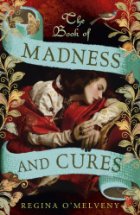 Dottoressa Gabriella Mondini’s father left ten years ago in search of more exotic cures for his book of medicine. Since then, Gabriella, who he trained as a doctor himself, has seen to her round of patients and rattled around in her house with only her mother for company. Her father’s letters have become increasingly vague, without locations, and she’s begun to worry that he’ll never return. When she’s informed that she is no longer allowed to practice medicine in her home city of Venice, Gabriella feels her ties to her home fall away, and sets off on a journey in search of her lost father and the secrets he’d discovered. Dottoressa Gabriella Mondini’s father left ten years ago in search of more exotic cures for his book of medicine. Since then, Gabriella, who he trained as a doctor himself, has seen to her round of patients and rattled around in her house with only her mother for company. Her father’s letters have become increasingly vague, without locations, and she’s begun to worry that he’ll never return. When she’s informed that she is no longer allowed to practice medicine in her home city of Venice, Gabriella feels her ties to her home fall away, and sets off on a journey in search of her lost father and the secrets he’d discovered.
From the very start of this book, Gabriella is in opposition against everyone around her, and she spends quite a large portion of the book fighting against expectations or, when she’s not able to safely, hiding from those who would do her harm. She spends parts of the book dressed as a boy, or pretending she isn’t actually a doctor, but mostly she is proud of and enjoys her calling, so she shares it with those around her.
This does, however, make for a book that feels kind of exhausting as you’re reading it. Gabriella’s journey takes her from Venice up to Edinburgh and down to Northern Africa; it feels as though she travels forever and that things never get easier. And, every time I thought they just might, she decides to keep moving on and ignore the fact that happiness might be around the corner. I could understand that she hadn’t found her father yet, but she sacrifices a considerable amount in the pursuit of him.
It’s because her search isn’t really about finding her father; it’s about finding who she actually is on her own, without him. Just being a doctor in her native Venice isn’t enough, not when she’s just resting on her father’s laurels, and she somehow believes that in finding him, she’ll settle a part of her heart that’s been lost since he left. It’s a very readable journey, but in all honesty, I did actually find it exhausting and frustrating as she turns down several opportunities to find that something.
Otherwise, I enjoyed this book; it portrays a huge swathe of Europe through a foreigner’s eyes. It’s a relatively easy read, yet remains heartfelt throughout the novel as Gabriella sorts through all of her feelings about the world around her and the people who inhabit that world.
The Book of Madness and Cures is a solid read, though not without its flaws; I’d probably only recommend it to someone else who already enjoys historical fiction or a book about a woman who seeks to discover herself.
All external book links are affiliate links. I received this book for free from the publisher.
 Emil Larsson is a Swedish tax inspector of sorts at the close of the 18th century, responsible for ensuring that shipping to and from Stockholm’s port is run properly. A frequent gambler and relatively happy singleton, he is dismayed when his employer demands that he acquire a wife in order to appear more respectable. While waiting to get his own cards read in order to help him find this wife, Larsson discovers that Mrs Sparrow, who runs his favorite gaming house, is actually very close to the Swedish king, and that his own fortune is a small part of the overall scheme taking control of Swedish politics. Emil Larsson is a Swedish tax inspector of sorts at the close of the 18th century, responsible for ensuring that shipping to and from Stockholm’s port is run properly. A frequent gambler and relatively happy singleton, he is dismayed when his employer demands that he acquire a wife in order to appear more respectable. While waiting to get his own cards read in order to help him find this wife, Larsson discovers that Mrs Sparrow, who runs his favorite gaming house, is actually very close to the Swedish king, and that his own fortune is a small part of the overall scheme taking control of Swedish politics.
Those who have read about the French Revolution may recognize that this time period was dramatic for Sweden, too; Count Axel von Fersen, one of Marie Antoinette’s rumored lovers and a key component in their failed escape plan, was Swedish and closely connected to the royal family there. France’s royal family aren’t the only ones in danger, as Sweden’s monarchy is fragile too, with a revolution brewing. Framed through this series of octavos, Emil has to work out the eight influential people around him and understand just how those people influence others in order to help change the fate of the Swedish nation – if he possibly can.
I wasn’t really sure about this book while I was reading it and I’m still not really sure about it as I’m reviewing it. Just looking at it heightens expectations; the British hardcover version of the book is truly beautiful, an elegant hardcover without a dust jacket and with a solid feel to the pages. The story is told through alternating viewpoints and as a result I found it surprisingly difficult to get at all interested in any of the characters, even Emil. He, for one, seems very mercenary and self-serving; once told he has to get married, he just chooses pretty girls without making any real attempt to get to know them or relate to them. I don’t think I’m someone who really needs to fall in love with a character in order to enjoy a book, but I certainly think it would have helped this one.
In addition, it’s a book that starts out slowly and really needs an initial element to help draw readers in. Purported to be a mix of romance, history, intrigue, and card-playing, it sounds more exciting than it actually is. There were some parts I found fascinating; the sections around fan-making and the fan language, for instance, and the little bits of history about the Swedish royal family and the history. The book is well written and very descriptive, bringing this frostier part of the world to life; but I felt while I was reading that there was something missing, a spark that would bring it all together and move this from being a good book into a great one.
A book I’d probably hesitate to recommend to any but a fellow historical fiction reader, The Stockholm Octavo is a decent read but not one that lives up to its promise, for me at least.
I am an Amazon Associate. I received this book for free for review.
 The western world, particularly England where this book focuses, hasn’t always been as free in its sexual attitudes as it is now; indeed, for most of recorded history, all of the world has been more or less the same as the Taliban is now, with little concept of individual sexual freedoms or privacy. Adulterers, homosexuals, and prostitutes are among those who were deeply stigmatized as there was no real conception of individual privacy or the idea that your sexual history might be only your own business. The western world, particularly England where this book focuses, hasn’t always been as free in its sexual attitudes as it is now; indeed, for most of recorded history, all of the world has been more or less the same as the Taliban is now, with little concept of individual sexual freedoms or privacy. Adulterers, homosexuals, and prostitutes are among those who were deeply stigmatized as there was no real conception of individual privacy or the idea that your sexual history might be only your own business.
When did this change? Beginning in the late 17th and moving into the 18th century, a series of fundamental shifts happened in the understanding of privacy, sexuality, and even celebrity that resulted in concrete changes to the way people in Europe viewed their lives and those of the people around them. Dabhoiwala tracks this cultural shift, which has echoes running straight to the modern day, through its origins in a variety of different spheres to understand how and why it happened and how the attitudes creates are actually still being rewritten into the present day.
I found much of this book to be absolutely fascinating. The Enlightenment isn’t really my period of particular interest, so I knew very little about this subject. Coming into it from a medieval background, though, with a comprehensive knowledge of medieval attitudes towards sexuality and an idea of what happened in the Renaissance, I could recognize easily that this was actually a very significant shift. While medieval people weren’t necessarily as brutal or as hard on women as we necessarily think, that doesn’t mean that their society was particularly free. Sexuality outside marriage – sometimes even inside marriage – was routinely targeted as something to avoid wherever possible.
I also liked the approach that the author took here. Rather than strictly chronologically laying out exactly what was happening, he instead takes several themes and explores those and how each of them changed understanding in its own particular way. A chronological approach could have easily gotten confused; separating out particular themes and segments of history, like the rise of sexual celebrity with Charles II’s numerous mistresses, helped give the book focus and lend weight to the author’s arguments.
One section I particularly liked was the emphasis on the change in attitudes towards prostitution. Prostitutes were reviled in the period before this one, often viewed as tempting men into adultery and causing them to sin with their alluring ways. By the eighteenth century, the pendulum swung completely the other way, and prostitutes were viewed with extreme pity as fallen women who had fallen into impossible circumstances. The Victorians created workhouses where these women were rescued from their immoral lives, given religious training and isolated from all aspects of their former lives, and essentially forced to work for their upkeep. While this approach worked for some, with women emerging into the Victorian version of success with marriage and children, it failed monumentally for others, and the success rate really wasn’t high – nor did these workhouses make much money.
A truly fascinating look into a society that radically changed the way people thought, The Origins of Sex is a work of history that is well worth your time.
All external book links are affiliate links. I received this book for free for review.
 The second book in the Chattan Curse series, The Scottish Witch focuses on Harry Chattan, who is desperate to find a cure for the sickness which has overtaken his brother. Two hundred years ago, the Chattan family was cursed when Charles Chattan broke his handfasting to a Scottish girl called Rose. When Rose killed herself, her mother Fenella cursed the family forever; whenever a Chattan man fell in love, they would die shortly thereafter, after getting a wife pregnant with yet another Chattan male. Harry’s brother has fallen in love with his wife, and as a result, Harry searches for a way to cure his illness. While in the small village of Glenfinnan, where the curse originated, Harry meets Portia Maclean, a woman who is decidedly not a witch but has enchanted him nonetheless. The second book in the Chattan Curse series, The Scottish Witch focuses on Harry Chattan, who is desperate to find a cure for the sickness which has overtaken his brother. Two hundred years ago, the Chattan family was cursed when Charles Chattan broke his handfasting to a Scottish girl called Rose. When Rose killed herself, her mother Fenella cursed the family forever; whenever a Chattan man fell in love, they would die shortly thereafter, after getting a wife pregnant with yet another Chattan male. Harry’s brother has fallen in love with his wife, and as a result, Harry searches for a way to cure his illness. While in the small village of Glenfinnan, where the curse originated, Harry meets Portia Maclean, a woman who is decidedly not a witch but has enchanted him nonetheless.
Portia is a twenty seven year old spinster, firmly on the shelf; she doesn’t mind that as much as she minds being responsible for her family. They’re behind on rent, her mother is determined to stop her sister marrying for love, and Portia hasn’t been admired in far too long. When she discovers that Harry is willing to pay to find a cure, and coincidentally finds a book of spells with the name “Fenella” written inside, she can’t resist the opportunity to pay rent and buy financial security for a short time by pretending to be Fenella. But Portia hasn’t counted on the way she might feel towards Harry herself; not as a witch, but as a lonely woman.
The premise to this book was intriguing; Harry and Portia are thrown together because of a spell that really doesn’t have much to do with either of them, given it’s hundreds of years previous to the book’s events. Once they meet, though, it’s fairly clear that they are a great match, and the book follows their story in a fairly logical and enjoyable progression as they try to resist the curse but, of course, end up falling in love anyway. This is, after all, a romance novel.
While I didn’t completely fall head-over-heels in love with it, the book was a good solid read. I appreciated that Portia was a spinster, not a diamond of the first water or anything of the like, although Harry’s wastrel reputation is really not evident in this particular book at all. There is also quite a humorous interlude with Portia’s mother and an adoring military man who learns that the key to a woman’s heart is to ask her questions and actually make conversation with her – who would have thought! It adds up to a charming way to spend a few hours in the afternoon.
One note; I didn’t realise that it was the middle book of a trilogy and that the curse would continue through this book and into the next. This means that, even though this book has a traditional happy-ever-after with the couple ending up together, we don’t get a resolution to the curse plotline. That lack of a solid ending was really the only downside to a story that was otherwise romantic with a touch of magic.
The Scottish Witch is appropriately released today on October 30th, the day before Halloween, so if you’re looking for magic that isn’t scary, this could be the romance choice for you. The magic element is very light, so if you’ve enjoyed Maxwell’s romances before, don’t let it put you off, either. Recommended for romance readers.
All external book links are affiliate links. I received this book for free for review.
 Rinette Leslie, a girl who can read truth in flowers, is entrusted with a casket by Scotland’s dying queen. Destined for Mary, known to history as Queen of Scots, the casket contains predictions made by Nostradamus, meant to protect her from the folly in her future. But foolishly, Rinette shows the casket to her young husband, the man she loves with all her heart, and decides not to go back to Edinburgh to put it in its secret hiding place or give the casket to Mary. After all, she’s happy in her seaside castle, and she trusts him. But when the secret of the casket gets out, the lives of Rinette, her husband, and her young child are in grave danger. Rinette Leslie, a girl who can read truth in flowers, is entrusted with a casket by Scotland’s dying queen. Destined for Mary, known to history as Queen of Scots, the casket contains predictions made by Nostradamus, meant to protect her from the folly in her future. But foolishly, Rinette shows the casket to her young husband, the man she loves with all her heart, and decides not to go back to Edinburgh to put it in its secret hiding place or give the casket to Mary. After all, she’s happy in her seaside castle, and she trusts him. But when the secret of the casket gets out, the lives of Rinette, her husband, and her young child are in grave danger.
I’ve never heard of the art of “floromancy” before, but it’s an art that makes sense and has a grounding in history. Rinette can read flowers, by which I mean she can apply the meanings of flowers to the future. It kind of goes along with the idea that a certain color rose means passion, a different one love, a different one grief, and so on, but Rinette can see meanings in all different kinds of flowers, as though they speak to her. It’s an intriguing premise and adds an element of magic to what could have been a relatively standard historical thriller.
It is a thriller, this book; it’s full of twists and turns and death and mystery. Rinette is put through agonies on multiple occasions, her spirit crushed, buried in mourning and regret and sorrows, all due to a casket that she didn’t even want anything to do with. All she wants is to live quietly in Granmuir by the sea, and it’s a desire that grows with time as her life spins out of control, forced to the whims of the court and the royalty around her. Loupas did a great job creating such a sympathetic character who suffers much too severely for the faults of youth that many of us will recognize in ourselves. Her mistake in trusting the husband she adores, a man who clearly isn’t trustworthy, haunts her even as she seeks to find his murderer and exact revenge.
I also loved the refreshing take that this sort of book gave on sixteenth-century Scotland; we’re right at the start of Mary’s reign, and even at her court, many of the more controversial elements of her later life are only just beginning. The future is still completely open to her, but she’s not an admirable character, and it’s very clear that we’re not meant to like her or her mother. Instead, Rinette gets all of our sympathy, and she certainly deserves it.
I would definitely recommend The Flower Reader to a reader who is generally interested in historical fiction, particularly those who love Tudor era fiction but are tired of Henry VIII and his antics. It’s a well-paced, well-written read with a good basis in history but enough of a fantasy touch to make it feel fresh.
All external book links are affiliate links. I received this book for free for review.
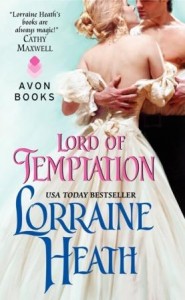 Lord Tristan Easton has been known as Jack Crimson since the tender age of fourteen, when his uncle plotted his death and that of his two brothers and he was forced to flee home for years on end. Now accustomed to the sea, he can’t imagine settling anywhere or with anyone, until Lady Anne requests the private use of his ship to visit her fiance in the Crimea. Though he knows she’s taken, Tristan can’t resist Anne, and asks for just one kiss in payment for her passage, envisioning much more. But what he doesn’t know is that Anne’s fiance is dead and buried, and the lovely lady has been lost in mourning herself for two years. Lord Tristan Easton has been known as Jack Crimson since the tender age of fourteen, when his uncle plotted his death and that of his two brothers and he was forced to flee home for years on end. Now accustomed to the sea, he can’t imagine settling anywhere or with anyone, until Lady Anne requests the private use of his ship to visit her fiance in the Crimea. Though he knows she’s taken, Tristan can’t resist Anne, and asks for just one kiss in payment for her passage, envisioning much more. But what he doesn’t know is that Anne’s fiance is dead and buried, and the lovely lady has been lost in mourning herself for two years.
I’ve never read a historical romance by Lorraine Heath before, but I’ve seen her books around and the synopsis of this one intrigued me. As usual, it’s not particularly appropriate for its time, and did suffer from a fairly typical romance novel flaw, but it was an absorbing, entertaining read nonetheless. It has elements that go along with a standard sea-faring dangerous captain story and other elements that fit more in a story that takes place entirely in society ballrooms, making for an intriguing mix and a book that kept me up late reading.
One thing that immediately caught my attention as I began reading was that Anne regretted not giving herself to Walter, her dead fiance, prior to his death. He asked, but being a proper lady, she refused until they were married. This regret, even though it would have ostracized her from society, is one of the drives that she has to say goodbye, and to avoid regretting anything that she does with Tristan as she discovers this new passion for him. She knew she loved Walter and how rare that was in contemporary society; she has no expectations of feeling quite that way again. So when she does discover a new passion, she embraces it with open arms.
Tristan, on the other hand, has obvious issues with loving anyone; having everyone he loved taken away from him at the tender age of fourteen, he hasn’t really recovered. His recovery is actually quite heart-warming to watch; even though this book does have its share of sex scenes, they’re also backed up by the couple’s discovery of one another and the reveal of their emotions for one another.
That brings me neatly to the stereotype the book falls into. It’s one of those where the hero / heroine don’t decide they love the other themselves. Instead, it’s up to someone else to tell them, only at which point do they realize it is actually true. This happens very frequently in this type of book and always kind of annoys me, I guess because it was obvious to me when I fell in love and certainly no one could have told me so. That aside, I can give these characters a bit of allowance because, actually, there is a reason for both of them not to want to admit that love to themselves. As a result, in this case I didn’t mind, except that it reminded me of all those times when I found it irritating.
There was another stereotype that the book just narrowly skirted, but which I was quite pleased about, so I have to give the author a lot of credit for neutralizing a potential issue and making a really great ending instead of an ending that caused me roll my eyes and disbelieve. I won’t say – because though we all know the couple gets together, part of the fun is how they make it there. But I was very pleased with this particular ending and I finished the book with a smile on my face.
Lord of Temptation certainly won’t be the last novel I read by Lorraine Heath – I just went and bought the first of this series, and I am most certainly looking forward to the third. Highly recommended for those who enjoy romance novels.
All external book links are affiliate links. I received this book for free for review.
 Newly crowned queen, Marie Antoinette and her husband Louis XVI represent a return to glory for France and new hope for the future – for a short while, at least. Unfortunately, the disaffection that the French feel towards their monarchy only grows, and Marie Antoinette, guilty or not, is the focal point of their unhappiness. Everything from her expenditure to her origin is put into question, whether right or wrong, and her struggle to have a child isn’t a help either. Throughout these difficult years of Louis’s reign, Marie Antoinette faces daily struggles in all areas of her life, from deceitful subjects to a secret affair to growing discontent among the French people. Newly crowned queen, Marie Antoinette and her husband Louis XVI represent a return to glory for France and new hope for the future – for a short while, at least. Unfortunately, the disaffection that the French feel towards their monarchy only grows, and Marie Antoinette, guilty or not, is the focal point of their unhappiness. Everything from her expenditure to her origin is put into question, whether right or wrong, and her struggle to have a child isn’t a help either. Throughout these difficult years of Louis’s reign, Marie Antoinette faces daily struggles in all areas of her life, from deceitful subjects to a secret affair to growing discontent among the French people.
Juliet Grey’s first book in the Marie Antoinette trilogy was incredibly captivating; the detail rich story of a young girl taken to a foreign court and specifically groomed to be a queen worked perfectly under her control. Days of Splendor, Days of Sorrow is much the same, while portraying the middle years of Marie Antoinette’s life and the start of her reign.
It’s easy to forget that this queen was just a teenager when her husband came to the throne; a lot of eighteen and nineteen-year-olds are completely incapable of acting like adults, and here she is expected to bear a child, settle down, and behave respectably. Forced into an incredibly awkward situation where she is unable to actually serve the purpose of getting France an heir through no fault of her own, she has nowhere to go but seek pleasure and distraction elsewhere.
Juliet Grey does an exceptional job of helping the reader understand Marie Antoinette’s faults and the reasons for them, especially when it comes to feeling sympathetic for her. That was definitely one of the highlights of the book for me; I felt so strongly for this particular character that I really wanted history to change. And even as it charged down its pre-set track, I still felt for her and wanted things to improve somehow, some way.
There were actually elements of the history that I’d forgotten but which were clearly pivotal in Marie Antoinette’s life and which play a big role in this book. I also really liked the way the author re-integrated some of the aspects of the previous book into the beginning of this one, so I was reminded of how much I appreciated the little details of her transition to a princess of France. It puts the book into its proper context.
It’s also a reminder of how welcome this trilogy is, as it does such a better job of portraying an entire life than a single book could. Marie Antoinette’s life is complex and changing. Even in this book, a considerable amount of time is skipped, but these years are very eventful ones and they set the scene for the inevitable, which we all know is coming.
This whole trilogy is a very well-done, evocative portrait of the French court during the reign of Louis XVI and Marie Antoinette, and does a fantastic job of getting inside the famous queen’s head and positing what might have motivated her to act as she did. Days of Splendor, Days of Sorrow is highly recommended – but I do suggest you start with the first in the trilogy. I’m simultaneously dreading and anticipating the last installment, as I’m sure it will be an excellent read, though incredibly heart-rending.
All external book links are affiliate links. I received this book for free for review as part of the Historical Fiction Virtual Book Tour.
 Thomas of Hookton and his men, familiar to readers of Bernard Cornwell after the events of his Grail Quest series, are still in the middle of France, seeking to help Edward III and his son Edward, the Prince of Wales, called the Black Prince but not in his own time, to win the Hundred Years’ War. Focusing on the Battle of Poitiers, a true historic battle fought by the Black Prince, Cornwell takes Thomas around the lead-up to the battle where he must seek another holy relic, protect his wife and his men, and face down corruption from the Church’s most inner circles. Thomas of Hookton and his men, familiar to readers of Bernard Cornwell after the events of his Grail Quest series, are still in the middle of France, seeking to help Edward III and his son Edward, the Prince of Wales, called the Black Prince but not in his own time, to win the Hundred Years’ War. Focusing on the Battle of Poitiers, a true historic battle fought by the Black Prince, Cornwell takes Thomas around the lead-up to the battle where he must seek another holy relic, protect his wife and his men, and face down corruption from the Church’s most inner circles.
I love reading Bernard Cornwell’s medieval historical fiction; when I’m reading one of his books, I feel I’m actually getting fairly close to the way things would have been in a battle, at least as close as fiction can bring me at present. Cornwell does sometimes like to introduce slight supernatural elements which do serve to remind me that actually, I’m not in the *real* 1356. In context, though, knowing that people of this era believed that they had holy relics and deeply in the power of their religion, this works surprisingly well, and doesn’t ruin the feel of the book for me at all. In this book, Thomas is after a sword; in his previous trilogy, he sought the Holy Grail.
Throughout 1356, the characters do move around the countryside, and we learn about many of the things that made the Black Prince and the Hundred Years’ War relatively famous. The chevauchées throughout the countryside, weakening the French significantly, the practice of tournaments, and the strength of the English archers and the significant advantage they represented all feature majorly in the book. Chivalry is demonstrated most eloquently through a particular character, Roland, who believes himself to be a knight without reproach, convinced by romances that he was meant to always fight honorably and in a certain way. He learns, over the course of the book, that actually, it’s about winning, not really so much about remaining honorable at this stage in history. Chivalry is a fascinating subject and one that I spent some time studying, and I loved that Cornwell featured a small tournament on the outskirts of the battle, as did genuinely happen, as part of Roland’s learning process.
As usual, Cornwell’s battle scenes are gripping and his writing kept me very interested as I progressed through the book. I really like his down-to-earth style. I generally don’t feel too attached to his characters, but I felt like this set of them was very well-rounded, as though they could have been real people, helped by the fact that I’ve read books featuring them before. Even the new additions stand out in my memory, though, and I liked how they faced individual challenges, yet all had a part to play in the massive battle that came at the end.
Overall, another excellent addition to Cornwell’s impressive collection of historical fiction works. You needn’t read the Grail Quest series to enjoy this book, although I do think it adds to it – all you need is a keen interest in history. Recommended.
All external book links are affiliate links. I received this book for free for review from the publisher.
 In this second volume of Ben Kane’s Spartacus duology (read my review of the first), Spartacus has already been acknowledged as a serious threat to the Roman people. While he and his pregnant wife Ariadne are keen to return his army to Thrace and re-take his homeland, his army, made up of slaves from across the empire, is more interested in plundering Rome’s heartland and establishing a base where the land is rich. Spartacus has to choose whether to retake his homeland, but lose his army in the process, or stay in Rome and attempt to subvert the incredible power of the Roman state. In this second volume of Ben Kane’s Spartacus duology (read my review of the first), Spartacus has already been acknowledged as a serious threat to the Roman people. While he and his pregnant wife Ariadne are keen to return his army to Thrace and re-take his homeland, his army, made up of slaves from across the empire, is more interested in plundering Rome’s heartland and establishing a base where the land is rich. Spartacus has to choose whether to retake his homeland, but lose his army in the process, or stay in Rome and attempt to subvert the incredible power of the Roman state.
As with Spartacus: The Gladiator, Ben Kane delivers an action-paced historical fiction novel with Spartacus: Rebellion. Their release relatively close together means that we can seamlessly pick up the story from one to the other, and that’s really the way these books are meant to be read. They are two halves of one story that really belongs in one, and neither book will really stand alone particularly well without the other, especially not this one. It picks up right after the events of the first book and all of the tensions between the characters already exist and intensify over the course of the book.
This might come as a surprise to you, but I actually didn’t know what happened to Spartacus at the end of the book. I won’t spoil it, but this made the book far more gripping than normal historical fiction fare is. Spartacus and all of the people around him really do have to fight for their lives, as the Roman state out in force is determined to kill them and eradicate any threat that they represent to the orderly Roman way of life, slaves and all. It made for a surprisingly exciting book, and I really enjoyed feeling like I had no idea what was going to happen next.
As I’ve mentioned for the previous book in this set of two, Ben Kane writes historical fiction in what I tend to call the “gritty” way. There is no court here, no fancy trappings or much political intrigue; there is battle, and blood, and death, and deception. It’s a refreshing change when you read quite a bit of historical fiction focused on royalty and the people at the top, and though Spartacus is certainly a leader of his men, he doesn’t get puffed up with ego and remains very much an inspiring character, for both the men in the book and for the reader.
This duology is an excellent choice for anyone who prefers the “grittier” historical fiction with all of the violence that entails, or those who are interested in fiction set during the Roman Republic. Definitely recommended.
All external book links are affiliate links. I received this book for free for review.
 Bobby Dollar – or the Angel Doloriel – helps guide souls to Heaven once they’ve passed on. It’s his job as an advocate to battle the minions of Hell in a courtroom for each soul’s afterlife, fighting to save as many souls as possible, even when they have to spend some time in Purgatory first. But when a soul disappears, right underneath his nose, without ever having appeared to himself or Hell’s advocate, and then keeps happening, normality is uprooted and both sides are in crisis. Dollar feels compelled to investigate, but as he gets closer to the truth, he finds himself accused of theft, chased by an ancient monster, and madly in lust with Hell’s most attractive demon. Bobby Dollar – or the Angel Doloriel – helps guide souls to Heaven once they’ve passed on. It’s his job as an advocate to battle the minions of Hell in a courtroom for each soul’s afterlife, fighting to save as many souls as possible, even when they have to spend some time in Purgatory first. But when a soul disappears, right underneath his nose, without ever having appeared to himself or Hell’s advocate, and then keeps happening, normality is uprooted and both sides are in crisis. Dollar feels compelled to investigate, but as he gets closer to the truth, he finds himself accused of theft, chased by an ancient monster, and madly in lust with Hell’s most attractive demon.
Compared to Tad Williams’ epic fantasies, this book is a speedy, exciting read, a cross between a thriller and a detective novel with a whole lot of fantasy mixed in. The concepts behind the novel are actually quite epic in themselves; we get a full description of his version of Heaven and Hell, and Bobby frequently tries to describe what Heaven’s like (since he is an angel). He might be in an improvised courtroom, but he does in fact help determine the eternal fate of people, which is not a small-town job in the slightest.
As an angel, Bobby is naturally somewhat tougher than a normal human, even though he wears a human body; he can still be killed, but usually angels reincarnate in new bodies. He’s done it before, but it’s never a guarantee, which means he is relatively careful and does try not to get too badly beaten up in the pursuit of answers. It’s really common in practically all urban fantasy novels for the main character to not sleep and suffer severe injuries that would probably kill another character, so this little caveat is very handy.
I didn’t love this book as much as I’d hoped, unfortunately; compared to the pace of a normal urban fantasy, I actually found parts of it moved slowly, and there was a lot of description as the world was built. Bobby is a good character, with a snarky attitude, but I wasn’t really drawn into his feelings towards Casimira, the demon, or his attitude towards women in general. I felt as though the book had a huge amount of potential, but never really swept me up and carried me away as a good book should. I’m hoping that subsequent books in the series stop with so much description and make me feel more attached to the characters in general. It’s been known to happen and I certainly hope it happens here.
The Dirty Streets of Heaven would be a good choice for a reader who already enjoys Tad Williams’ work and is looking for something a little less like a doorstopper, but it’s not quite up there with some of the other fantastic urban fantasy series. It could be, but he’s not quite there yet.
All external book links are affiliate links. I received this book for free for review.
|
|



Recent Comments