|
|
 Hannah Levi is renowned as the best midwife Venice has to offer. She delivers babies that no other midwife can manage, aided by her set of birthing spoons that enable her to pull reluctant babies from their mother’s wombs, saving both of them. But Hannah is Jewish, which means that she can’t practice on Christian mothers and babies, until a nobleman enters her house and begs for her help to save his wife. Hannah’s initial reluctance vanishes when the count offers her enough money to ransom her husband, who has been captured at sea and enslaved for months. Her choice to try and save mother and baby creates an intense rivalry amongst the count’s family that endangers everything she strove to save and may leave her husband trapped on Malta forever. Hannah Levi is renowned as the best midwife Venice has to offer. She delivers babies that no other midwife can manage, aided by her set of birthing spoons that enable her to pull reluctant babies from their mother’s wombs, saving both of them. But Hannah is Jewish, which means that she can’t practice on Christian mothers and babies, until a nobleman enters her house and begs for her help to save his wife. Hannah’s initial reluctance vanishes when the count offers her enough money to ransom her husband, who has been captured at sea and enslaved for months. Her choice to try and save mother and baby creates an intense rivalry amongst the count’s family that endangers everything she strove to save and may leave her husband trapped on Malta forever.
I wasn’t really sure what to expect from The Midwife of Venice; even though I had it for review, it spent a bit too long on the shelf before I finally persuaded myself to pick it up and give it a try. Compared to The Red Tent and People of the Book – both books I loved – it did sound like something I would like, but I simply don’t crave historical fiction these days. With this book, I was initially reluctant and it took me a few pages to get into it, but before long I became invested in Hannah and Isaac and eager to find out what happened to each of them next.
The story is told through alternating viewpoints, with Hannah in Venice and Isaac stranded in Malta. Each of them deal with completely different difficulties, but one of the constants of the book is their longing to be back together, though they’ve been separated for months and fear the other dead. It’s a story about an established love, which doesn’t occur quite as often as new romance in a book like this one.
In addition, Hannah’s half of the story revolves around the uniquely female sphere of childhood and, in that time, child-rearing. Many of the people she deals with are women, and in fact the only kind character who is male on her side of the story is the count himself. His wife, the previous midwife, and Hannah’s sister all have a role to play in her quest to get her husband back, making the female relationships in this novel intriguing even as we note how precarious their positions are. Hannah, as a Jewish midwife, is intensely vulnerable when delivering a Christian child, as she could be accused of killing the baby and its mother in a heartbeat. Her sister, a converted Christian prostitute, also faces the very severe difficulties of her position, especially when we discover exactly how she ended up that way.
I found Isaac’s side of the story somewhat less compelling, as he battles against people trying to enslave him and stays faithful to his religion despite the temptation of nourishment and safety. I’m not entirely sure why; I know that slave stories are important, but Isaac’s didn’t have much to add, and people in general just seemed too keen to help him. I know this sounds like me saying “he isn’t suffering enough!” but it just felt somewhat unrealistic that he’d have multiple helpers devoted to rescuing him when undoubtedly most captured slaves had a very difficult time of it.
Reservations aside, The Midwife of Venice is a book that I enjoyed very much, and would be a perfect fit for someone looking for historical fiction outside the standard templates of Great Britain, monarchy, or Rome.
All external book links are affiliate links. I received this book for free for review.
 Theodora Saxby and James Ryburn, the future Duke of Ashbrook, have been friends for their entire lives. When James proposes to his “Daisy”, as he affectionately calls Theo, hardly anyone can believe it. After all, Theo is no beauty, and everyone has expected him to aim somewhat higher. But Theo and James discover happiness almost immediately, when they realize that the friendly affection they’ve always harbored for one another does in fact run deeper. That’s until Theo hears the real reason for their marriage; that James’s duchy is deeply in debt, and in reality he needed her money to stay afloat. Dismayed and heartbroken, the couple separate for years. After he nearly loses his life in battle as a pirate, James returns to London, determined to persuade his transformed duchess to give him her heart once again. Theodora Saxby and James Ryburn, the future Duke of Ashbrook, have been friends for their entire lives. When James proposes to his “Daisy”, as he affectionately calls Theo, hardly anyone can believe it. After all, Theo is no beauty, and everyone has expected him to aim somewhat higher. But Theo and James discover happiness almost immediately, when they realize that the friendly affection they’ve always harbored for one another does in fact run deeper. That’s until Theo hears the real reason for their marriage; that James’s duchy is deeply in debt, and in reality he needed her money to stay afloat. Dismayed and heartbroken, the couple separate for years. After he nearly loses his life in battle as a pirate, James returns to London, determined to persuade his transformed duchess to give him her heart once again.
I loved the way that Eloisa James immediately drew me into this book with the incredibly sweet way that Theo and James immediately fall for each other. It’s the perfect friendship turned love story, until she tears it apart. What better way to make you truly care for these two characters before their story really even begins? Even though I knew what was going to happen, in that James was going to leave Theo at her own request, I really didn’t want it to happen. I wanted them to continue being happy. But if that had occurred, we wouldn’t have had much of a book.
Unfortunately, I didn’t really like the rest of the book as much as I liked the sweet beginning. Theo’s transformation from ugly duckling to graceful swan takes place while her husband is far, far away, learning how to be a pirate. Her marriage, though it turns into a sham, is the perfect catalyst to free her from the usually dominating parents and allows her to exercise her rather obviously excellent taste in clothing and style. What I didn’t like was the relationship with the press, although it was certainly very realistic; it’s Theo who has driven off her husband, Theo who is at fault for everything; it made my heart break more for her, but I didn’t like it regardless. The couple spend the middle section of the book apart, then reunite for the last third.
As usual, Eloisa James delivers a very enjoyable, thoughtful romance. Though I still don’t think this is a match for the amazing Desperate Duchesses series, it also didn’t bother me the way that her last did. Not entirely my favorite, but The Ugly Duchess is a good read for a historical romance reader.
All external book links are affiliate links. I received this book for free for review.
 Standing on the edge of the Peninsular War and the true beginning of her adult life, newly married Harriet Raven moves to London, restless and discontented. Her husband, James, is posted to Spain as a Captain of the 9th Regiment, under the command of Lord Wellington. While Harriet befriends Lady Wellington in London, witnessing progress firsthand and trying to work out what she should do with herself, James is thrust for the most part into the thick of battle. Over the course of three years, lives change, and married couples form in isolation of each other, unprepared for what life intends to throw at them. Standing on the edge of the Peninsular War and the true beginning of her adult life, newly married Harriet Raven moves to London, restless and discontented. Her husband, James, is posted to Spain as a Captain of the 9th Regiment, under the command of Lord Wellington. While Harriet befriends Lady Wellington in London, witnessing progress firsthand and trying to work out what she should do with herself, James is thrust for the most part into the thick of battle. Over the course of three years, lives change, and married couples form in isolation of each other, unprepared for what life intends to throw at them.
This is a complicated story that is incredibly difficult to describe. There is a host of historical characters, from Lord and Lady Wellington to the Prince Regent and Frederick Winsor, the man who introduced gas lighting to Britain. Harriet, her husband, and most of the people we are more closely involved with are fictional, seemingly designed to set in contrast the difference between war and home and as always the way society changes. There are many threads to this novel, from the enticing prospect of blood transfusions, to marital infidelity, to war and the endless human need to wage war with one another. Painters, writers, businessmen, scientists, doctors; we get a huge swathe of society in just over 350 pages.
As you might expect, then, this book is something of a challenge; the third person narration switches between characters who are together sometimes within the same paragraph, leaving me feeling somewhat on edge and careful to check that I understood what was happening. The Peninsular War is a conflict that was new to me and in this case Tillyard’s view as a historian ensures that the book contains all the small details that make such a war fleshed out and understandable for her readers. There are many historical events taking place here, changing the very face of London with gas lighting, changing healthcare with experiments on blood transfusion, changing the lives of workers with the introductions of mills and factories.
It’s perhaps too many issues for a single book, and the large cast of characters and huge number of causes limits the author’s ability to simply tell a good story. It’s beautifully written with a number of passages that caught my attention, but there is almost too much happening for any single focus, which means that the book isn’t really all that compelling. It never called to me from its place on the bedside table, although I certainly felt that it should. I just never particularly liked any of the characters, barring perhaps one, but he doesn’t really appear in the narrative quite often enough to draw me in, and I didn’t feel that there was anything about the plot (if there really was one) to keep me going.
Ultimately, I found Tides of War disappointing, even as someone who loves history.
All external book links are affiliate links. I received this book for free for review from Amazon Vine.
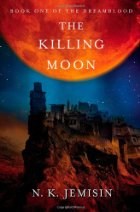 In Gujaareh, it is the Gatherers’ job to shelter innocent civilians and lead them to a peaceful death once their time has come. Their tithes allow the city to run smoothly and peacefully, while the remains of their dreams are given to the sick who deserve healing and longer lives. Gatherer Ehiru has Gathered souls under the Dreaming Moon for most of his life when he slips and makes his first mistake. Already doubting himself, Ehiru soon finds himself in an even deeper conspiracy, as a woman he was sent to kill instead reveals damaging truths about his world. Now Ehiru must protect Sunandi in order to prevent the war which threatens all he’s spent his life working towards. In Gujaareh, it is the Gatherers’ job to shelter innocent civilians and lead them to a peaceful death once their time has come. Their tithes allow the city to run smoothly and peacefully, while the remains of their dreams are given to the sick who deserve healing and longer lives. Gatherer Ehiru has Gathered souls under the Dreaming Moon for most of his life when he slips and makes his first mistake. Already doubting himself, Ehiru soon finds himself in an even deeper conspiracy, as a woman he was sent to kill instead reveals damaging truths about his world. Now Ehiru must protect Sunandi in order to prevent the war which threatens all he’s spent his life working towards.
N.K. Jemisin’s debut, the Inheritance Trilogy, was a fantastic set of books that explored concepts of godhood in serious depth. Once again, with The Killing Moon, Jemisin has written an engaging book that looks closely at religion, and what the differences between religions are, in a setting reminiscent of ancient Egypt. Her book is centred on two city-states, Gujaareh and Kisua. Ehiru and his apprentice Nijiri are Gatherers from Gujaareh, while Kisuan Sunandi is fundamentally opposed to them due to her inherent and insistent hatred of their religious practices, a hatred and disgust shared by her people. Yet this trio finds common ground as they try to prevent their homes from flying headlong into war.
Because Jemisin always aims to do something a little bit different (she explains in an interview in the back of my edition why she eschews more typical medieval based fantasy tropes), her books come with a little bit of a learning curve. She likes to throw her readers right into her books, which means there is some learning to be done about the world and culture. Even though this is based on Egypt, it didn’t really *feel* to me like ancient Egypt. It certainly didn’t feel typical, but nothing about it was shouting “Egypt” – instead, it felt like a new fantasy world, and one which intrigued me as I settled deeper into the book.
What I always like about Jemisin’s books are the relationships between characters and how well they work. All of them feel very natural; Nijiri’s love for Ehiru, for example, is something that would bother many people in our culture, as a young man in love with one who is much older, but it is something here that is viewed as completely natural. And I liked the way they both interacted with Sunandi, and she with them, as they all struggle to get over their prejudice and accept each other as human beings.
Jemisin delivers another wonderful epic fantasy with The Killing Moon. I’m now looking forward to reading The Shadowed Sun and finishing this duology!
I received this book for free for review from Amazon Vine.
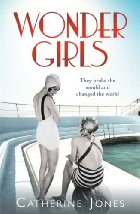 Determined to defy expectations, 16-year-old Ida Gaze sets out to be the first person to swim the Bristol Channel in 1928. Beside her, always encouraging her, is her best friend Freda Voyle, and in her mind, her idol, Amelia Earhart. Many years later, Cecily Stirling, an old woman, is comforted by the presence of a young, vivacious girl Sarah, who points towards a photo of a woman in bathing costume that Cecily’s partner Freda left behind after her death. This isn’t just a book about Ida’s goal; it’s a book about finding yourself, achieving your dreams, and discovering who and what really matters to you. Determined to defy expectations, 16-year-old Ida Gaze sets out to be the first person to swim the Bristol Channel in 1928. Beside her, always encouraging her, is her best friend Freda Voyle, and in her mind, her idol, Amelia Earhart. Many years later, Cecily Stirling, an old woman, is comforted by the presence of a young, vivacious girl Sarah, who points towards a photo of a woman in bathing costume that Cecily’s partner Freda left behind after her death. This isn’t just a book about Ida’s goal; it’s a book about finding yourself, achieving your dreams, and discovering who and what really matters to you.
I received Wonder Girls unsolicited for review, but I was so immediately drawn into the idea of the story that I couldn’t help but pick it up almost right away. This is a book that is almost entirely about women, what drives them, and even how much things have changed (and not) over the years that the book spans. During Ida’s youth, women are making strides, campaigning for freedom, determining the course of the future for themselves. Her swim, while fictional, reflects the real-life goal setting of two women around the same time period across the Bristol Channel and is thus perfectly true to life. At the same time, when she’s finished, her drive to go to London and make something of herself, which she persuades her friend Freda to do as well, is similarly characteristic of her drive.
But then the big city happens to both of the girls in different ways, and it’s only through Cecily’s story that we discover where they ended up after the dust settled, though Cecily herself has also been affected by their journeys.
I liked the way this book explored all of the relationships within it; Ida and Freda’s close friendship, Cecily and Freda’s years-long romance as well as their relationship with a character who enters into the story later, and Cecily’s budding friendship with young Sarah. I liked that Jones treated the relationships between women, romantic or friendship, as normal love, just as valid as any other kind, and just as moving. I was swept up in these characters’ lives and grew to care for each of them in their own way.
We also see how much people change when their circumstances do. Ida, for instance, is blindsided when she moves to London, intoxicated by her effect on men, but losing sight of who she truly is and what her goals in life are in the swirl of rather frivolous consumerism that her new position grants her. The book, to a large extent, shines a huge spotlight on how shallow our lives can turn when we get too distracted by possessions and positions and forget to focus on what we love.
But truly, Wonder Girls is a fascinating book, set in different eras of change for women, with fantastic characters that will keep you turning the pages. Great first effort from Catherine Jones.
All external book links are affiliate links. I received this book for free for review.
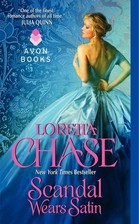 Sophia Noirot has her hands full, between acting as saleswoman for the shop that she and her two sisters run by day and by night as a writer for the scandal sheets of London. She makes her sisters’ dresses sound incredible by burying their descriptions inside the salacious stories that London’s gossips spread around town each and every day. But Sophy’s mission to make her shop a success keeps getting interrupted by the Earl of Longmore, who can’t get her big blue eyes out of his mind. When Longmore’s sister, the shop’s biggest patron, makes a monumental mistake and creates a scandal of her own, though, Sophy can’t abandon either of them to their fate. Sophia Noirot has her hands full, between acting as saleswoman for the shop that she and her two sisters run by day and by night as a writer for the scandal sheets of London. She makes her sisters’ dresses sound incredible by burying their descriptions inside the salacious stories that London’s gossips spread around town each and every day. But Sophy’s mission to make her shop a success keeps getting interrupted by the Earl of Longmore, who can’t get her big blue eyes out of his mind. When Longmore’s sister, the shop’s biggest patron, makes a monumental mistake and creates a scandal of her own, though, Sophy can’t abandon either of them to their fate.
I have a strange relationship with Loretta Chase’s writing. I didn’t really fall in love with several of her earlier books, like Not Quite a Lady. I flat out disliked Don’t Tempt Me. I liked Captives of the Night, but still haven’t managed to read Lord of Scoundrels. But one of her books that I did read was Silk is for Seduction, and I enjoyed that far more than any of the others, to the extent that I still remember it fairly well. So when I was offered the opportunity to continue reading that series, I didn’t say no.
I unfortunately can’t say I absolutely loved the emotions in this book like I did with the last, but Scandal Wears Satin is still a very satisfying and heart-warming read at the core of it. In this case, I loved Sophy, and Chase’s way of speaking in all capitals to indicate her slightly melodramatic tendencies. I found it honestly very amusing, and I could really see why Longmore was completely enchanted with her. I didn’t find one of the world’s most compelling heroes, though, to be honest; I could understand his worries about his sister, but nothing about him has particularly landed in my mind as a notable feature.
As usual, some of the plot here was more or less ridiculous. I had to roll my eyes at Clara running away on her engagement and where she actually ended up; it just seemed a little bit overdone, a clever way of throwing the hero and the heroine together. I was also very disappointed in Clara herself; after actually throwing off a duke in the last book, saying that she deserved better, and coming into her own, I’d never have anticipating that she’d immediately end up in a compromising situation with a fortune hunter and ruin it all.
There are also the standard barriers to an earl marrying a simple commoner which have to be overcome at the same time; bad enough that the duke who was supposed to marry Clara married a commoner himself, but for Longmore to do it creates an even bigger obstacle in society’s minds. I had to remind myself that I’m not actually reading this for a realistic portrayal of society.
In spite of all that, I did genuinely enjoy reading this book. While I can see its faults fairly clearly, the romance between the main characters somehow works, and works well. I’m definitely looking forward to reading about the third of the Noirot sisters, and I’m certainly hoping that Clara gets her happy ending. Maybe she’ll rediscover that woman she found in Silk is for Seduction.
All external book links are affiliate links. I received this book for free for review.
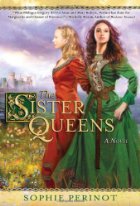 Marguerite and Eleanor of Provence, close friends as well as sisters, are separated when their husbands are chosen. Marguerite is destined to marry the French King, Louis IX, while Eleanor is sent to England to wed Henry III. At first, quiet and malleable Marguerite seems the luckiest sister, for her husband is handsome and with him she finds what she believes to be love. Eleanor’s husband, Henry, is older and shorter than she is, but she soon gets to know him and falls in love herself, while Marguerite realises that her husband is ruled by his mother and his piety. These two women from the powerful family of Savoy never forget one another, and their bond changes medieval Europe as they begin to wield the only power available to women of their day. Marguerite and Eleanor of Provence, close friends as well as sisters, are separated when their husbands are chosen. Marguerite is destined to marry the French King, Louis IX, while Eleanor is sent to England to wed Henry III. At first, quiet and malleable Marguerite seems the luckiest sister, for her husband is handsome and with him she finds what she believes to be love. Eleanor’s husband, Henry, is older and shorter than she is, but she soon gets to know him and falls in love herself, while Marguerite realises that her husband is ruled by his mother and his piety. These two women from the powerful family of Savoy never forget one another, and their bond changes medieval Europe as they begin to wield the only power available to women of their day.
The Sister Queens is precisely the kind of historical fiction I love, and which swiftly absorbed me within its pages. Marguerite and Eleanor haven’t been written to death already; in fact, Henry III and Louis IX are fairly absent from the historical fiction scene themselves, even though massive changes are taking place in both countries through the narrative, laying the ground for history to come which does have more conventional attention. The medieval atmosphere is very appealing, with plenty of smaller details sprinkled throughout the narrative.
Plenty happens, too; the sisters’ husbands go to war, sometimes with the sisters alongside them. Marguerite in particular spends years on Crusade with her husband, at one point making a stand of her own against the enemy with very little on her side at all. Henry III struggles, famously, with his barons, as his poor political judgement leads to problem after problem in the ruling of his kingdom. There are the inevitable lulls as both women have multiple children and time must pass by fairly quickly to excuse their pregnancies, but I found it very easy to carry on reading without feeling like the story bogged down at all.
It’s in part the relationships between the sisters, though, that makes this an excellent book. Yes, they have their children and their husbands, but they also always have one another, and it’s the sort of heartwarming female relationship that doesn’t always dominate mainstream fiction in quite the way it should. The mere fact that it was true, that these sisters really did bring about a peace between their two countries that lasted until Edward III shook things up again, added authenticity to the relationship and made the entire book more absorbing. This truly was a fascinating period in history (although if you listen to me I seem to think all of the Middle Ages is fascinating) and Perinot does it great justice here.
Finally, I must confess that I absolutely love that Perinot used Jean de Joinville’s chronicle as the basis of certain happenings around Marguerite’s court. I immediately had a strong desire to read de Joinville’s work for myself, and it’s an amazing way to fill in the historical blanks without stepping on the toes of what’s already been established.
In short, an excellent work of historical fiction that makes me think again about not remaining in love with the genre. Certainly the best I’ve read this year set in the Middle Ages. Highly recommended.
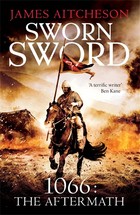 Tancred a Dinant has followed his liege lord, Robert de Commines, since the tender age of fourteen. Now that King William the Conqueror has taken England, Tancred finds himself in the north defending against the Anglo-Saxons who would prefer not to bow to the Norman lord. After a disastrous battle, Tancred barely escapes with his life; one of the men lost is his lord. Anchorless, Tancred ends up in the service of another Frenchman, Malet, heading to London to protect Malet’s wife and daughter in the face of overwhelming odds. But on the way, he must escort an English priest to a nunnery, where he discovers a curious plot that indicates treachery from within Malet’s household. Tancred a Dinant has followed his liege lord, Robert de Commines, since the tender age of fourteen. Now that King William the Conqueror has taken England, Tancred finds himself in the north defending against the Anglo-Saxons who would prefer not to bow to the Norman lord. After a disastrous battle, Tancred barely escapes with his life; one of the men lost is his lord. Anchorless, Tancred ends up in the service of another Frenchman, Malet, heading to London to protect Malet’s wife and daughter in the face of overwhelming odds. But on the way, he must escort an English priest to a nunnery, where he discovers a curious plot that indicates treachery from within Malet’s household.
Sworn Sword promises to be the first in a new series of historical fiction focusing on England just after the conquest. Starting out in January 1069, this series is going to focus on the difficulty that William the Conqueror had in keeping his throne through the eyes of Tancred. It’s a book very much in the vein of Bernard Cornwell, though; battle-focused fiction with a slight element of suspense and mystery.
The opening has a fair share of Tancred’s grief; he’s injured and he’s lost two important people in his life, his lord and his “woman”. In the latter case, he was just beginning to develop feelings for her, and he spends a lot of time beating himself up mentally for not protecting her, for trusting that she’d be safe. He outright mourns his lord, who he respected and cared for, and particularly now that he’s without someone to fight for. When he’s gravely injured and can barely raise his head, the situation is much worse.
Fortunately for Tancred, and for those reading this book, he quickly recovers and is on his way, and that’s when the book starts to get a little bit more interesting. A mystery unfolds in between a number of battles, and there is a fledgling romance slipped in at the same time. It’s a solid read, if you enjoy this sort of book, and I enjoyed the atmosphere. Aitcheson has done enough research to make most of his choice fit smoothly into the historical world, and a lengthy author’s note at the end explains what did and didn’t happen in the real timeline. That’s one part of a historical novel I always appreciate; I like to know where the author has drawn from the historical record and where they’ve filled in with their imagination.
Sworn Sword is a solid read, well worth it for fans who like their historical fiction somewhat bloody and atmospheric, particularly those who have already developed a taste for it via Bernard Cornwell or Ben Kane.
All external book links are affiliate links. I received this book for free for review.
 Every book I’ve ever read by China Mieville has started with me feeling off-balance and uncomfortable. He has an utterly unique, in my experience, talent for feats of imagination in science fiction that are so completely unlike anything familiar but that manage to make a point about the world that we live in at the very same time. To some extent, his books require the reader to just let go, assume that we aren’t going to understand every detail of the worlds that pour out of his amazing brain, and to simply absorb the story he’s trying to tell. Every book I’ve ever read by China Mieville has started with me feeling off-balance and uncomfortable. He has an utterly unique, in my experience, talent for feats of imagination in science fiction that are so completely unlike anything familiar but that manage to make a point about the world that we live in at the very same time. To some extent, his books require the reader to just let go, assume that we aren’t going to understand every detail of the worlds that pour out of his amazing brain, and to simply absorb the story he’s trying to tell.
Such is the case with Embassytown. We begin with our narrator, Avice, half telling the story as a small child and half as a grown woman facing the consequences of a diplomatic assignment in Embassytown. I felt like it took a while for me to actually grasp the world, but once I did, I fell right into it. Now that I’m a little more accustomed to reading science fiction, I noticed that either this took less than time in some of the previous books of his I’ve read, or that this one is more accessible, but there was still that period of confusion that slowed the start.
In the world he’s created, or rather in the world that contains a city called Embassytown, ordinary humans rely on the native alien race, the Ariekei, to construct their world using their biotech skills. Buildings, power, even replacement body parts are built using Ariekei technology. But communicating with the Ariekei is a challenge, as they can only speak absolute truth, and they have two voices which speak at the same time. To say something, they must witness it happening, and those who are chosen to act out these bits of language are special. Those who actually speak with the Ariekei are called Ambassadors, and are two people chosen and made to be exactly the same, so that their voices will resonate in a way that the Ariekei can understand.
The primary thing I loved about this book was the way that Mieville plays with language. I’ll keep quiet on the reasons why this becomes important, but he highlights the different aspects of language and the subtle ways we shift into metaphors to express what we’re trying to say, and how we can morph those all the way into lies. I found that aspect particularly fascinating.
Like other Mieville books, I didn’t really fall in love with any of the characters, not even Avice, but I found myself wrapped up in their story once I knew what was going on, and the book to be satisfying read afterwards which kept me thinking about it once I’d finished.
I wouldn’t recommend Embassytown to someone who wasn’t comfortable being tossed in and working out what was happening as the book went on, but for those who do enjoy speculative fiction, Mieville is a must-read.
All external book links are affiliate links. I received this book for free for review.
 Tamar, princess of Georgia, can’t imagine her big, intimidating father ever losing a battle. But when an army attacks her country’s capital, Tamar is sent away to relative safety. Rebellious as she is, Tamar doesn’t stay hidden for long, and returns to the capital only to receive her father’s blessing as his heir, leaving her a female queen of Georgia when he dies. But in the countryside, Tamar met a boy that she can’t forget, even when she is forced to make a diplomatic match for her country’s strength. When the choice comes between the boy she loves and the country she would die for, which will Tamar choose? Tamar, princess of Georgia, can’t imagine her big, intimidating father ever losing a battle. But when an army attacks her country’s capital, Tamar is sent away to relative safety. Rebellious as she is, Tamar doesn’t stay hidden for long, and returns to the capital only to receive her father’s blessing as his heir, leaving her a female queen of Georgia when he dies. But in the countryside, Tamar met a boy that she can’t forget, even when she is forced to make a diplomatic match for her country’s strength. When the choice comes between the boy she loves and the country she would die for, which will Tamar choose?
I’d never read much about Georgia; to be honest, the only reason I even knew there was a country called Georgia is because it was part of the former Soviet Union, which I learned about when I studied Russian in school. But this book immediately took my interest; it’s set during the Middle Ages, and it’s about a woman who struggles with power. Queen Tamar genuinely existed and is a legend for current Georgians, with some buildings associated with her still standing. But from reading this book about the early part of her youth and her eventual reign, it’s obvious that a long and peaceful rule was by no means guaranteed, or even likely.
Told alternately between Tamar and her second husband, Lord Soslan, the book explores her struggles as the kingdom adapted to a woman on the throne. Tamar often demonstrates her intelligence, wilfulness, and determination to retain her throne and do her job properly. There are, as expected, a few uncertain first steps for her, particularly with a difficult aunt who comes to “advise” her on how to become a powerful queen, but her journey is an inspiring and compelling one. It’s really a coming of age tale, but that coming of age is one that an entire kingdom relies on.
I was completely fascinated by the history of this country I’d never read about before; the author includes touches of other parts of the world, particularly the Byzantine Empire, as Tamar’s sister goes to marry there and finds herself embroiled in, as usual, a succession crisis. This provides some essential context for the time period, but overall I loved reading about somewhere completely different. With deft touches, she shapes great characters in the space of a relatively short novel, making for a very pleasurable read over the course of an afternoon.
The Girl King is definitely recommended for other readers of historical fiction; if you’ve had enough of the Tudors and the Plantagenets, why not let Tamar take you back to 12th century Georgia?
All external book links are affiliate links. I received this book for free for review.
|
|



Recent Comments