|
|
 Henry Skrimshander is an outstanding shortstop and it’s that which draws Mike Schwartz to recruit him to Westish College in Wisconsin. Within a very short space of time, Henry has revitalized the Westish team and brought them victories that had been vastly beyond their reach. But with one missed throw, Henry’s entire life is thrown off balance. Who is he, if he can’t always throw perfectly? And what is the team without him? Surrounding Henry are all of the dramas of closed-in literary college life; affairs with professors, mature students, deadly dull jobs, and even a bit of studying every now and again. Henry Skrimshander is an outstanding shortstop and it’s that which draws Mike Schwartz to recruit him to Westish College in Wisconsin. Within a very short space of time, Henry has revitalized the Westish team and brought them victories that had been vastly beyond their reach. But with one missed throw, Henry’s entire life is thrown off balance. Who is he, if he can’t always throw perfectly? And what is the team without him? Surrounding Henry are all of the dramas of closed-in literary college life; affairs with professors, mature students, deadly dull jobs, and even a bit of studying every now and again.
It’s taken me a while to review this book, which I’m not sure is entirely positive; I loved it and I felt like I had a lot to say about it once I’d finished, but I left it a long while to actually sit down and write. The Art of Fielding is a book that, without question, has received an enormous amount of hype. Even before Kathy brought it across an ocean for me, she told me that it was going to be one of the big releases of 2011, and I’ve watched it receive review after review. I managed to keep myself away from spoilers of all kinds and experience the book for myself, though, when I was ready for it.
I made the right decision, because I loved this book. I felt as though it tapped right down into a deep sense of American nostalgia, a story about being the best you can be and what happens when you’re not sure you can achieve that any longer. Where do we go once we’ve hit our peak? Not only does Henry experience this, but each of the other characters are faced with periods of monumental change and the fact that their lives simply can’t be the same again. It reminded me of my own leaving college; I loved my time there and even now when I look at the pictures I’m blasted with a ton of nostalgia. But I’ve moved on, and these characters have to move on, too, regardless of whether their stardom is behind them or right in front of them.
At times, I did feel the book was a little bit long; there was one particular spot in the latter middle where I felt the story was dragging. But for the most part, I got completely swept up into this world. I’m not a fan of baseball, although I certainly know my way around a field mostly because I grew up amongst Yankee fans and went to a public high school. That may have helped, but I think the book is deeper than that and touches something universal – it might apply to baseball, but it might equally apply to a writer who isn’t sure he or she can ever write a novel as good as their first, or a musician who fears becoming a one-hit wonder. If that should happen, when do we let go? Or do we carry on trying?
I know this review is not really a review – it’s very obscure, instead. But I think The Art of Fielding is a book that is well worth your time. It was a surprisingly fast read, for its size, and it swept me up in its simultaneously grandiose and personal story. I recommend it.
All external book links are affiliate links. I received this book for free – thanks again Kathy!
 I felt like January was an exceptional reading month. It was good in other respects, too; I received my Indefinite Leave to Remain visa for the UK and celebrated my birthday on the 12th. I’ve made peace with the fact that I’m never going to resume a review every weekday, I don’t read enough or have time to write 5 reviews, and have aimed for 3 instead, which I’ve been managing pretty well. I haven’t decided if I’m going to fill the other two days with something or not, we’ll see where the mood takes me! I felt like January was an exceptional reading month. It was good in other respects, too; I received my Indefinite Leave to Remain visa for the UK and celebrated my birthday on the 12th. I’ve made peace with the fact that I’m never going to resume a review every weekday, I don’t read enough or have time to write 5 reviews, and have aimed for 3 instead, which I’ve been managing pretty well. I haven’t decided if I’m going to fill the other two days with something or not, we’ll see where the mood takes me!
In terms of actual reading, I finished sixteen books and most of them were excellent. I typically haven’t found the time to review them all yet, not even close, but if you stick around, I’ll be sharing some absolute gems with you later on this month!
Here’s what I read:
Fiction
- Arthur & George, Julian Barnes
- Castle in the Air, Diana Wynne Jones
- Death Masks, Jim Butcher
- The Art of Fielding, Chad Harbach
- If Jack’s in Love, Stephen Wetta
- A Lady’s Lesson in Scandal, Meredith Duran
- Miles, Mutants, and Microbes, Lois McMaster Bujold
- Full Dark, No Stars, Stephen King
- A Rogue by Any Other Name, Sarah Maclean
- Spartacus, Ben Kane
- Affinity, Sarah Waters
- The Winter Palace, Eva Stachniak
- Blood Rites, Jim Butcher
- Agent to the Stars, John Scalzi
Non-fiction
- The Etymologicon, Mark Forsyth
Though I didn’t do so well with the non-fiction, it’s partly because I’ve been reading an absolutely massive history in the background with all of these books. The fiction I read was incredible. In many ways it was typical of the latter half of last year, but better – there’s a ton of variety in there, and I feel as though I’ve read some meaningful stories that are going to stick with me. Isn’t that what all readers are looking for?
Favorite of the Month
 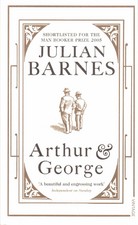
I can’t pick just one, so have both! I loved both of these and recommend them whole-heartedly. It’s early now, but I’m confident they will end up on my best of 2012 list.
Ahead for February
There are so many books I wish I could be reading now that it’s difficult to choose! I’ve just started World War Z and I’ve been reading The History of the World in 100 Objects, which covers the history of the whole world through various objects at the British Museum. It’s a fascinating book – I love how much the author can pull from just one object, and I’m looking forward to seeing some of the objects in person (most for the 2nd or 3rd time) when I head to London towards the end of February.
Other books I’d just love to get to:
- Leviathan Wakes, James S.A. Corey
- A Discovery of Witches, Deborah Harkness
- The Hare with Amber Eyes, Edmund de Waal
- The Kingdom of the Gods, N.K. Jemisin
How was your January reading month?
 After falling in love with Jack Hampton during the course of The Tory Widow, Anne Merrick has fully devoted herself to the Patriot cause – but because she’s still known as a Tory, she’s infiltrated their camp with her loyal maid, Sally. Anne and Sally have the dangerous job of not only discovering information, but passing it on to the men without being spotted. Naturally, this means tensions are constantly running high, but never higher than when the Patriots and Redcoats clash in battle, and Anne and Sally fear for all of their lives as they try to win the day for their cause. After falling in love with Jack Hampton during the course of The Tory Widow, Anne Merrick has fully devoted herself to the Patriot cause – but because she’s still known as a Tory, she’s infiltrated their camp with her loyal maid, Sally. Anne and Sally have the dangerous job of not only discovering information, but passing it on to the men without being spotted. Naturally, this means tensions are constantly running high, but never higher than when the Patriots and Redcoats clash in battle, and Anne and Sally fear for all of their lives as they try to win the day for their cause.
I’ve enjoyed all of Christine Blevins’s books so far, and this one isn’t an exception. It takes a slightly different approach than the first two; because it isn’t a romance at all really, since Jack and Anne are together at the start and remain in love throughout the book. It’s a direct continuation of the first book. In all, the sole thing that confused me was the title – Anne already turned, and I didn’t really see her going back to the Tory cause after falling in love with Jack. I’ll forgive the book that, though, as I quite enjoyed the story as it progressed onwards.
Like in the last book, Anne is a strong, independent woman with a taste for the world. She and Sally are very successful in what they do; the book demonstrates this effectively by opening with the two of them accidentally killing a massive snake. They’ve made themselves indispensable to the Tories, but all that means is that Anne can see both sides of the war. She firmly believes in independence, but that doesn’t mean she doesn’t find herself befriending various other people in the camp and witnessing the horrors of war for herself. Since she’s not directly in battle, these don’t come about too often, but Jack’s often in the thick of things himself.
I also enjoyed the atmosphere that permeates the book. There’s a real sense of desperation, hope, and upheaval among the patriots. Blevins has set the book right at the turning point of the war, as she explains in her author’s note, which makes for an exciting read. Having those little trinkets that she sent really helped, too – as soon as a character mentioned a bayberry candle, I knew what it was going to smell like, and I could fall a little bit deeper into the world she created. This is a great book to read with a cup of tea by your side anyway, not only to help with the atmosphere – we’re still right in the midst of the American Revolution, after all, and the characters are often drinking tea when they can.
I would definitely recommend these books to historical fiction fans – The Turning of Anne Merrick has less romance than the previous two, so if that was putting you off, don’t let it stop you here. I would however recommend you read The Tory Widow first; the backstory becomes more valuable as the novel progresses. I’m looking forward to seeing what Christine Blevins writes next!
This review is part of the Historical Fiction Virtual Book Tour – here’s the full schedule and information for more reviews!

All external book links are affiliate links. I received this book for free for review as part of the tour.

Good evening all! I’m not here today; instead, you can find me discussing The Broken Kingdoms by N.K. Jemisin with Jodie over at Lady Business! We had a fantastic although spoilerrific discussion, so don’t miss it.
 Subtitled “The Power of Introverts in a World That Can’t Stop Talking”, Susan Cain’s Quiet takes us on a journey through history and into the present, understanding why exactly introverts and the skills that they have are devalued in present day American culture. We also take a look into the brains of introverts and whether it’s nature or nurture that turns some of us inward and others outward. She then offers helpful hints on how introverts can deal with modern careers and find space for themselves in a world that demands meetings and presentations as indicators of business success. Rounding out the book with interviews and advice for parents with introverted children, Cain has provided an interesting study of many different aspects of “sensitive” personality types. Subtitled “The Power of Introverts in a World That Can’t Stop Talking”, Susan Cain’s Quiet takes us on a journey through history and into the present, understanding why exactly introverts and the skills that they have are devalued in present day American culture. We also take a look into the brains of introverts and whether it’s nature or nurture that turns some of us inward and others outward. She then offers helpful hints on how introverts can deal with modern careers and find space for themselves in a world that demands meetings and presentations as indicators of business success. Rounding out the book with interviews and advice for parents with introverted children, Cain has provided an interesting study of many different aspects of “sensitive” personality types.
I am decidedly an introvert, and I imagine most people reading this blog are too – in general, we are people who need space away from the world to recharge our batteries, people for whom speaking in public is a struggle, and who essentially work best on our own. Cain offers a lot of definitions and also provides a little list towards the start of the book to help readers identify if they are actually introverts – she also takes pains to stress throughout that many people actually have aspects of both introversion and extroversion. This is not a black-and-white science.
I found it quite inspiring to read about how many introverts have changed the world. As an introvert who has learned to cope surprisingly well (I’m always shocked when someone doesn’t think I’m shy, and it happens more often than you’d think), I definitely felt refreshed by the knowledge that lots of other people do better with space to contemplate. The history of the subject was also interesting, especially the ways different cultures handle these personality types. It’s not surprising that more Americans count themselves extroverts than Chinese – part of it is definitely culture emphasizing ideals. But the other part is genetics, and even though we can learn to cope quite well, her strategies gleaned from interviews and personal experience are thoughtful.
I did feel a little bit at times that she swung a little too far in the direction of introverts – but given this is a book attempting to empower us, I can’t be too surprised at that. The other part I (obviously) did not find useful as a childless woman was the advice for children, and having read it I’m not sure it would have helped me as a kid. But I’ll leave that up to parents to decide – life isn’t easy for shy children, and helping them accept their personalities while giving them the skills to succeed can never be a bad thing to attempt.
Quiet is a worthwhile read for both introverts and extroverts – so the former can feel much more at home in their own skin and so extroverts can learn more about life on the other side of the divide. And if you’re in between, even better.
All book links to external sites are affiliate links. I received this book for free for review from Netgalley.
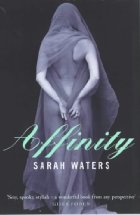 Margaret Prior’s spinsterhood is about to be thrown into glaring relief. Her sister is getting married and her brother has long been wed to Margaret’s friend Helen. As a lady, living in Victorian London, it’s considered an excellent idea for her to devote her time to charitable works. She’d once hoped to spend that time helping her father with his studies, but on his death, her choices have narrowed. She chooses to become a Lady Visitor to Millbank Prison, hoping that her visits will cheer up the inmates. At the prison, she meets Selina Dawes, a spiritualist medium who captivates Margaret almost immediately. As Margaret’s fixation with Selina grows stronger, she begins to fantasize about freeing her, and experiencing a life she’d thought long beyond her reach. Margaret Prior’s spinsterhood is about to be thrown into glaring relief. Her sister is getting married and her brother has long been wed to Margaret’s friend Helen. As a lady, living in Victorian London, it’s considered an excellent idea for her to devote her time to charitable works. She’d once hoped to spend that time helping her father with his studies, but on his death, her choices have narrowed. She chooses to become a Lady Visitor to Millbank Prison, hoping that her visits will cheer up the inmates. At the prison, she meets Selina Dawes, a spiritualist medium who captivates Margaret almost immediately. As Margaret’s fixation with Selina grows stronger, she begins to fantasize about freeing her, and experiencing a life she’d thought long beyond her reach.
I’ve been thinking about this book ever since I read it – it’s wrapped its way into my head and hasn’t left yet. Sarah Waters never fails to disappoint me with thoughtful, intense books that provide excellent stories, well-rounded characters, and real issues that hover about in my head.
Let’s start with the spiritualist nature of the book, and of Selina herself. Victorians were incredibly keen on ghosts and talking with people who had passed on. In the book I just reviewed, Arthur and George, Julian Barnes also sees Sir Arthur Conan Doyle in this light, a little bit, but Affinity naturally goes into much more depth. Like Waters’s later book, The Little Stranger, this novel plays with the extent to which we can believe in characters who experience phenomena that is beyond their understanding. Selina sends Margaret flowers and locks of her hair, and seems to know far more about Margaret than is possible. Nurtured in that atmosphere, it’s easy for Margaret to believe in everything Selina tells her, which I think reflects the relatively common Victorian attitude to acceptance of the supernatural in their everyday lives.
Margaret also has to deal with the difficult reality of being a lesbian in a world that doesn’t really acknowledge their existence. I mean – we have trouble with this today, and over 100 years ago, the situation was much worse. Her first love, Helen, rejected her for the more traditional route of marriage to man – Margaret’s own brother. Now, Margaret is bereft, between the loss of her beloved father and her lover, leaving a massive gap that a girl like Selina could much more easily enter. After all Margaret’s been through, she’s longing for that love, that acceptance.
The story also alternates with Selina’s life before the prison, so we can learn a little bit about how she got there in the first place. Together with Margaret’s story, these two halves combine to make the final twist come to life as we understand it. That twist is something I sort of anticipated, given I’d been warned by Ana that the book was sad, but I didn’t understand what was going to happen until, finally, it did. It is incredibly effective and well done, regardless. I loved the way the book came together with everything making perfect sense – I don’t mind open endings, but there is something satisfying about a book that tells you where you stand.
Well-constructed, with excellent characters and spectacular atmosphere, this is a book that is well worth your time.
This Sunday finds me relaxing after a long, difficult week at work. I’ve been so wiped out that I’ve had a hard time focusing on anything, let alone blogging – fortunately, I had a decent stock of blog posts available for the week, so I’ve kept things nice and lively here.
Friday brought me good news at last, however; my application for Indefinite Leave to Remain in the UK was successful, and now I don’t have any further visa worries! This is such a relief, as it took 2 1/2 months to process and my old visa expired in early December. My passport is back, so I can leave the country again to visit home, too, as it’s been over six months. I’m not sure when that will be, but I’m happy to have options once again.
I also decided to celebrate my new status with the purchase of an iPhone. I had a very old Android which was nearing the end of its 2 year contract and really was on its last legs. The hardware had never been able to keep up with the Android software and it only got a single update, keeping me stuck on an old version for over a year. It randomly dropped signal, leaving me unable to call or text at random times without a restart, which would then kill the battery. I watched others go on to play games together and download new apps I simply couldn’t use. I know it wasn’t Android’s fault, but I had really had enough, and decided to go for a phone I could guarantee would be supported for upgrades over its lifetime.
So, iPhone! I haven’t been able to put it down for the whole day I’ve had it, and let me just tell you I’m in love. I can actually type emails on it without an error in every other word! I’ve been playing games, including the massively popular Words with Friends! (Add me, I’m mbookworm there, I’d love to play with you!) It syncs my personal Kindle documents, so I can read Netgalley books on the go! I’m overwhelmed by all of the apps available, so I’d love your recommendations as I try to sort the wheat from the chaff.
I’ve also been taking some pictures and playing with Instagram – here’s my immediate TBR pile:
 In the meantime I’ve been reading The Turning of Anne Merrick by Christine Blevins for an upcoming blog tour this week, and dipping my way through A History of the World in 100 Objects by Dr Neil MacGregor. I’m hoping to finish the first in what’s left of today as well as writing some more reviews. In the meantime I’ve been reading The Turning of Anne Merrick by Christine Blevins for an upcoming blog tour this week, and dipping my way through A History of the World in 100 Objects by Dr Neil MacGregor. I’m hoping to finish the first in what’s left of today as well as writing some more reviews.
What are you up to this Sunday? Wishing you all amazing weeks!
As a result of an unfortunate accident with another boy, young Prince Patroclus is exiled from his homeland and sent to grow up in a foreign land with a set of strangers. In Phithia, his new home, he is merely one of many boys growing up under the shadow of the king and his half-god son, Achilles. Almost immediately, Achilles takes Patroclus under his wing and draws him into a new, mythical world, where Achilles is destined to become the world’s greatest warrior and Patroclus his steadfast, fervent lover.
I can’t do justice to this book with my review. It is simply incredible – moving, emotional, mythical, and simultaneously epic and close in scope at the exact same time. If I had to say one thing to you about it, I would say, please read it, it is incredible.
Let’s start with the setting. The Trojan War is relatively familiar for people versed in mythology and literature; if not, I’m sure you’ve heard of the Trojan horse and the face that launched a thousand ships. This takes place around that war, primarily because it is there that Achilles will become a legend. This is The Iliad, but personal, close, and loving; for the first time I felt like I could understand Achilles and Patroclus’s relationship and just how they got to that final, brutal, excruciating point of both their lives.
This is truly a fantastic retelling, one that manages to be both timeless and relevant. Achilles and Patroclus have existed for thousands of years in readers’ minds, but in our society today, many people wish that a relationship like theirs would not exist – a travesty, if you ask me – but a book like this demonstrates just how beautiful that relationship can be, and moreover, how appropriate. It’s partly a romance, writ large on the world stage as these two players tangle with gods and the most powerful of men.
Speaking of gods, there are plenty here, and they walk the world right alongside the characters. Patroclus and Achilles encounter figures of their own legend, like those who trained Hercules, and Achilles’s mother Thetis is a goddess. Their power is appropriately terrifying, especially for Patroclus, who has the dubious role of keeping Achilles from fathering further children, and thus earns his mother’s wrath.
For anyone who may have the slightest interest in a literary, romantic take on The Iliad – The Song of Achilles is a book for you. Very highly recommended.
All external book links are affiliate links. I received this book for free for review.
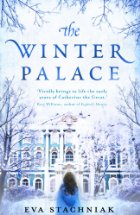 Barbara is a young Polish orphan when she enters the Russian royal palace seeking the assistance of Empress Elizabeth, who once vowed to help her. Barbara, called Varvara by the Russians, is taken on as a spy, trained by the Chancellor in hearing careless remarks, sneaking down passages, deciphering facial expressions, and making love. When young Sophie comes to court as a bride for the Empress’s heir, Varvara is placed near her, urged to watch her every move. Sophie is not merely a docile bride for the future Tsar; she is the future Catherine the Great, and every disappointment she endures as a young woman is merely fuel for the great reign she will have over Russia. Barbara is a young Polish orphan when she enters the Russian royal palace seeking the assistance of Empress Elizabeth, who once vowed to help her. Barbara, called Varvara by the Russians, is taken on as a spy, trained by the Chancellor in hearing careless remarks, sneaking down passages, deciphering facial expressions, and making love. When young Sophie comes to court as a bride for the Empress’s heir, Varvara is placed near her, urged to watch her every move. Sophie is not merely a docile bride for the future Tsar; she is the future Catherine the Great, and every disappointment she endures as a young woman is merely fuel for the great reign she will have over Russia.
Russia has always enchanted me, and lately it seems that it has enchanted many readers, too; after the popularity of Robert K. Massie’s newly released biography of Catherine the Great, The Winter Palace has arrived as an excellent fictional retelling of Catherine the Great’s life, capturing another tier of readers with the enthralling story of this Empress of All the Russias. This is the first of two halves, covering the period from Catherine’s arrival to the Russian court as Sophie, an obscure German princess, to her triumph as Empress Catherine the second.
Stachniak’s approach, showing us Catherine through the eyes of a woman who was her friend, is a very clever one, because it not only introduces us to a character we can care about, who is aware of all of the secrets in all aspects of Russian courtly life, but it also lets us view Catherine’s development through another pair of eyes. Varvara could have become a mute vehicle for Catherine, but instead she is a fully fleshed out character in her own right, with her own mistakes, successes, and loves outside of Catherine’s sphere. Her position makes her vulnerable and powerful simultaneously; as a bookbinder’s daughter with access to the most powerful people in Russia, she suffers from this odd dichotomy more than once. It’s easy to feel for her, especially when she uses the agency she has to make the wrong decisions, the repercussions of which she only comes to understand later on.
Of course, it’s probably Catherine who should be considered the star of the show here; from a young girl studying relentlessly in her room to understand Russian language and culture to a woman conscious of her power, she undergoes radical change in the course of this book. But because Varvara is close to her, it’s never hard to understand how that change has happened. We can almost witness her hardening, her learning, her ferocity growing as the politics begin to change and warp her innocence. The end of the book confirms that, perhaps, it happens sooner than we’d like to think, but it is a fascinating journey nonetheless.
All of this excellent character development is wrapped up in the gorgeous settings of the Russian court, beautiful trappings for a scheming court. It’s easy to get lost in Stachniak’s writing and her evocative descriptions. The story is smoothly crafted, too; there were a few moments towards the middle of the book where I got impatient, mainly because I knew what was going to happen and I didn’t like waiting, but looking back, I think everything was necessary for the plot to wrap up completely. My mood matched that of the characters.
An excellent choice for historical fiction readers, especially those who are eager to learn about Russia or Catherine the Great. Highly recommended.
All external book links are affiliate links. I received this book free for review from Amazon Vine.
Today I’m thrilled to welcome Eva Stachniak, the author of The Winter Palace, to Medieval Bookworm, on the little things that make history come alive for novelists.
Once in a while one comes across a sentence that makes history alive in ways one hasn’t anticipated. As a writer, I find such instances priceless, for they allow me to imagine aspects of my characters’ lives in ways I might have overlooked.
In her Memoirs, which she attempted to write a few times, thus giving the posterity several versions of her early life, Catherine the Great describes a palace fire she witnessed from the safety of her carriage when she was still the Grand Duchess of Russia. The description is quite conventional at first: the burning balustrade, the furniture being hastily carried out, the servants’ desperate attempts to salvage as much as possible, the heat of the burning building becoming more and more impossible to bear. But for me the whole scene becomes truly alive at the moment Catherine writes: “Then I saw a singular thing. It was the astonishing number of rats and mice that descended the staircase in a line, without even really hurrying.”
The image of rodents in single file leaving the burning palace made me think of life in these mice-infested dwellings. What would I see if I were there? Droppings everywhere? Mice scurrying along the walls? Hiding in shoes? Among fire logs? Rats drowning in jugs of cream? I started researching ways people tried to protect themselves from vermin: placing dried rosemary sprigs in their linen drawers, covering food in the pantry with heavy lids, placing bed legs in basins of water.
After a little bit of such digging, I was not surprised to find out that the Winter Palace was a home to over a hundred of palace cats. Catherine’s predecessor, Empress Elizabeth Petrovna, I discovered, loved cats and encouraged them to settle in the palace. Some travelers report seeing Elizabeth’s cats dressed in velvet suits, lolling about on her bed. Others complain that the imperial felines were so well-fed that they didn’t even try to catch mice. Soon I collected enough references to the palace cats to begin imagining their traces. There must have been hair on the furniture, smudges left by their whiskers on the window panes. There must have been endearing antics in their favourite spots: by the fireplaces, in the laundry room where fresh linen was kept. They must have claimed their spots on Elizabeth Petrovna’s shoes, or on her bed.
The cats made the Winter Palace vivid in my mind.
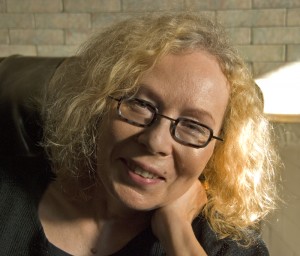 A little more about the author: Eva Stachniak was born in Wroclaw, Poland, and came to Canada in 1981. She has been a radio broadcaster and college English and Humanities lecturer. Her debut novel, Necessary Lies, won the Amazon.com/Books in Canada First Novel Award, and her second novel, Garden of Venus, has been translated into seven languages. Her third novel, The Winter Palace, has been published in Canada (Doubleday), US (Bantam) and the UK (Transworld). She lives in Toronto, where she is working on her second historical novel about Catherine the Great, The Empire of the Night. A little more about the author: Eva Stachniak was born in Wroclaw, Poland, and came to Canada in 1981. She has been a radio broadcaster and college English and Humanities lecturer. Her debut novel, Necessary Lies, won the Amazon.com/Books in Canada First Novel Award, and her second novel, Garden of Venus, has been translated into seven languages. Her third novel, The Winter Palace, has been published in Canada (Doubleday), US (Bantam) and the UK (Transworld). She lives in Toronto, where she is working on her second historical novel about Catherine the Great, The Empire of the Night.
Don’t forget to come back tomorrow for my review of the book!
|
|


Recent Comments