|
|
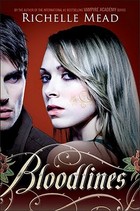 Richelle Mead’s Vampire Academy series is one of the few YA series I’ve actually kept up with over the past year or so; as a result, I immediately latched on to this book as soon as it was released. I was curious to know more about the minor characters from the first series, and Bloodlines follows on seamlessly from those with a change in characters. This means the review will contain spoilers for the Vampire Academy series, but I’ll try and keep them to a minimum. Richelle Mead’s Vampire Academy series is one of the few YA series I’ve actually kept up with over the past year or so; as a result, I immediately latched on to this book as soon as it was released. I was curious to know more about the minor characters from the first series, and Bloodlines follows on seamlessly from those with a change in characters. This means the review will contain spoilers for the Vampire Academy series, but I’ll try and keep them to a minimum.
Sydney Sage worked together with Rose to help save the Moroi world from catastrophe, but her close association with vampires and dhampirs has gotten her into trouble with her fellow Alchemists. After all, the goal of the Alchemists is to keep vampires and other supernatural races from discovery, not to associate with them personally, and as a result Sydney’s motivations have been called into question. But when Lissa’s sister Jill needs cover and a protector, Sydney goes in the place of her sister, who is judged too young for the responsibilities. Living life as a normal high school student, Sydney, along with series regulars Eddie and Adrian, must keep Jill out of harm – but there’s something strange going on at the school, and Sydney decides that finding out might just be worth the risk to her reputation.
Like the rest of the VA series, this was a light read that provided a lot of page-turning entertainment. I’ve always liked Sydney – I’m immediately attracted to fellow nerds and Sydney knows a lot – and I was happy that Mead chose to turn this new series around her story. At the same time, it also feels like we’ve set up a larger story for the rest of the series, which didn’t bother me but might with someone who was looking for a book without a cliffhanger ending.
Also, because it follows on directly from the Vampire Academy series, I feel it’s well worth having read the previous books before digging into this one – you’ll feel immediately familiar with the world and the issues contained in the novel. Otherwise, I feel as though you’ll miss out on the purpose for protecting Jill – the book says, but unless you’ve experienced the rest of the series, the importance may be diminished – and won’t understand the severity of Sydney’s plight.
Overall, another solid, enjoyable entry in this series, worth the read if you’re already invested.
I purchased this book.
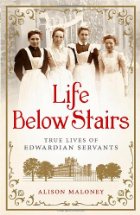 As I’m trying to catch up on my reviews from 2011, and now my As I’m trying to catch up on my reviews from 2011, and now my five six reviews from 2012, I thought I’d better start putting together some mini reviews for those books I can get out of the way quickly! Here are the two short, lighter non-fiction books I read at the end of 2011.
Life Below Stairs, Alison Maloney
Inspired by the success of Downton Abbey, Alison Maloney has composed a brief, easily digestible book about the lives of servants in Edwardian England, around when the period drama is set. The book covers a huge variety of topics and, for me, actually made some of the show’s choices more understandable. For instance, I now understand the purpose and history behind the difference between Miss O’Brien’s clothing and the rest of the maids’, the servant’s ball, and even why Mrs Hughes is a “Mrs” even though she’s not a married woman.
It also highlighted a few of the differences between the show and real life, and the genuine struggles and difficulties that servants had. Life was definitely not as rosy for these folks as it is for the below-stairs servants at Downton. The book has plenty of quotes illustrating this, including one of a poor girl who missed her day off because she was so exhausted from work that she slept through it!
Life Below Stairs also has a few illustrative photos and is a brief overview that will suit fans of the show perfectly, but it’s probably too shallow for anyone who has previously read about the Edwardian period.
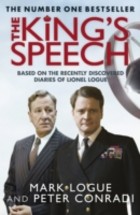 The King’s Speech, Mark Logue and Peter Conradi The King’s Speech, Mark Logue and Peter Conradi
Like almost everyone else who has an interest in English history, I saw The King’s Speech in film form last year and absolutely adored it, so it was a no-brainer for me to pick up its written counterpart. Pleasantly, the book contains a few surprises even for those who have seen the film, particularly because it tells the story of Lionel Logue chronologically and includes plenty of background. Naturally, no one could or desires to fit all of this into a biopic framed around a speech, but I delighted in the extra details and in particular the genuine letters and photographs that accompanied the text.
One thing that struck me was that, even though this was less than 100 years ago, the social gap between Logue and George VI was massive. Just reading their letters to one another makes that clear – and also emphasizes how unusual and important their intimacy was. I found the book almost more valuable for that, in my mind, than for the extra details about that particular case. It’s a window into a world that hasn’t been gone for very long, but which is still utterly fascinating.
Highly recommended for those who enjoyed the movie and who are interested in social history.
 Ashima and Ashoke Ganguli begin their lives together with an arranged marriage and a move to the United States from India. Ashoke is still a student, with ambitions to become a professor, while Ashima stays home to take care of their son, Gogol, who is born shortly after their marriage. The Namesake is really about Gogol, who sits between the generations, watching the effect his life has on his immigrant parents even as he tries to sort out his own culture, to reconcile his Bengali roots with his American present. Ashima and Ashoke Ganguli begin their lives together with an arranged marriage and a move to the United States from India. Ashoke is still a student, with ambitions to become a professor, while Ashima stays home to take care of their son, Gogol, who is born shortly after their marriage. The Namesake is really about Gogol, who sits between the generations, watching the effect his life has on his immigrant parents even as he tries to sort out his own culture, to reconcile his Bengali roots with his American present.
I’ve been hearing about Jhumpa Lahiri for years, and actually I’ve owned this book since 2008. Shameful, I know, especially because once I got started reading this I completely fell in love. It wasn’t a hard task to win me over; Lahiri managed it almost immediately by tying Gogol, the Russian author, to the story in the form of Gogol, the character, adding in a whole range of meaning for me as a reader of that particular author. I loved how the author followed the character throughout his life, subtly reminding him of his parents, and simultaneously making him confused and guilty and a little bit wistful.
I’m an immigrant myself, and though not nearly as isolated as Ashoke and Ashima, I still sympathised with the feeling of being in a foreign land, lacking friends simply because you have no basis for knowing people, and essentially feeling isolated. The couple eventually make themselves at home, but there’s always something there that is lacking, even once you realize that you’ve lived in a foreign place for long enough that you’ll never quite fit in at home, either.
The contrast between the experience of the parents and the children when they visit India, for instance, is striking. Though Ashoke and Ashima are happy enough in the United States, they come back to themselves in India. In vivid contrast, their children feel irritated at the absence from home and confused by a different way of life. They don’t enjoy the visits, but their parents relish them and despair at leaving.
This is also a novel about identity, about the confusion between who you individually are and where you’ve come from. Gogol, in typical young adult fashion, seems to discard everything about his culture, including his own name, in a search to figure out who he truly is. It takes a powerful shock to remind him that there’s more to his background, that there are essential threads of his life that he just missed while he was busy asserting that identity. But he quickly swings back the other way. It’s not a simple thing, working out who you are and entangling it from the mess created of your life up to that point, and Lahiri not only recognizes this but pulls it off beautifully.
A quiet but powerful book about identity and heritage, The Namesake struck every chord correctly with me, catapulting itself onto my 2011 favorites list at the tail end of the year. Very highly recommended.
 I named Courtney Milan as one of my top discoveries of 2011 and books like this one are exactly why she ended up on that list. I named Courtney Milan as one of my top discoveries of 2011 and books like this one are exactly why she ended up on that list.
Smite Turner isn’t a normal hero. Traumatised by his mentally ill mother throughout his childhood, in a time when treatment was more harmful than helpful, he’s grown into a conscientious magistrate fixated on justice who nevertheless sets people apart from him. He knows that they’re unlikely to understand just how he ticks, and as such he’d simply rather be alone – or with his dog. Miranda Darling, in contrast, does just about everything for someone else – under the protection of a figure of the underworld in which she lives, she puts on numerous fake identities to mislead the law. Until she encounters Smite, who never forgets a face, and somehow can’t get hers out of his head.
I feel as though every Courtney Milan book I read is better than the last, and Unraveled was no exception. Treading dangerous waters with a mentally damaged hero, a heroine turned into a mistress, and seedy crime, Milan never puts a foot – or a word – down wrong. Instead, she has created a fantastic, heart-wrenching love story that I simply couldn’t put down. (She even manages to stick a perfectly happy gay couple in there, who helped raise Miranda and gave her a ton of happy memories.)
What I loved most about this book, I think, was that Miranda didn’t “cure” Smite. He is still damaged by his past, and he’s always going to be uncomfortable with certain aspects of intimacy and behavior. That doesn’t change. What does change is that she loves him for who he is, and she understands which of his gestures mean “I love you” when he can’t say the words. In real life, we all know that if we go into a relationship looking to change someone, we’re virtually guaranteed to fail. Why should the world of romance novels be any different? That is why her characters are so appealing, so human, so easily able to sneak their way in and tug at your heartstrings.
At the end of the book, Milan explains the historical context behind the book and her inspiration for setting it in Bristol and amongst those who walk a careful line between breaking the law and staying alive. I loved this – so often romance novels in particular are simply modern day characters dressed up in fancy old-fashioned outfits who go to balls, and while I accept them for that and still enjoy them, I can’t help but love an author who goes out and tells me that she was inspired by actual history.
Just writing about this book has made me wish I could go and read it all over again. It’s such an addicting, romantic read, with characters so appealing that you genuinely won’t want to leave them until you’ve finished. Highly recommended for any romance readers.
I purchased this book. All book links are affiliate links.
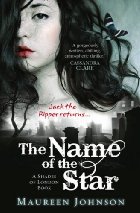 I’m atrocious at keeping up with reviews these days, so I thought more mini reviews could only be a good idea! For this purpose, I am completely skipping plot summaries and just sharing with you my own thoughts on the books below. Some of the reason I blog is to keep books straight in my mind later on, after all, so I wanted to share at least a few thoughts. I’m atrocious at keeping up with reviews these days, so I thought more mini reviews could only be a good idea! For this purpose, I am completely skipping plot summaries and just sharing with you my own thoughts on the books below. Some of the reason I blog is to keep books straight in my mind later on, after all, so I wanted to share at least a few thoughts.
The Name of the Star, Maureen Johnson
I had no idea that this was about Jack the Ripper, which led to an eerie night as I discovered that while reading in bed! This is my first read by Maureen Johnson and I definitely enjoyed it, though; I loved the edge of creepiness the whole book had, the boarding school rivalries, the London atmosphere, and the engaging plot. Really looking forward to more of these.
A Moveable Feast, Ernest Hemingway
This book deserves way more than it’s going to get in these few sentences, but suffice it to say that I found it an insightful glimpse into Hemingway’s early life as a writer. Excellent paired with The Paris Wife, which is why I read it in the first place. Anyone struggling with Hemingway will be pleasantly surprised by how easy this is to read, as well.
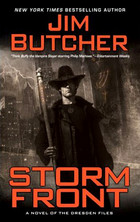 Storm Front, Jim Butcher Storm Front, Jim Butcher
Ah, urban fantasy. I perpetually love it and find myself going back to it, so I’m always finding new series to read. This was my latest choice, and the first installment was enough to keep me reading. Harry Dresden is your average urban fantasy main character, always kicking butt and getting severely injured for good. If you like the genre, give this a go.
Fool Moon, Jim Butcher
In the same vein as the last, but just that extra touch deeper with the backstory from the first book. Things get more exciting and more dangerous, a villainous character reveals another side, and Harry gets himself nearly killed. All good. I have books 3 and 4 of this series and will probably be reading them very soon – hopefully at least for one of those I’ll manage a full review.
 Ten Ways to Be Adored When Landing a Lord, Sarah MacLean Ten Ways to Be Adored When Landing a Lord, Sarah MacLean
I myself adored MacLean’s first book in this series, Nine Rules to Break When Romancing a Rake, so it was kind of inevitable that I’d be disappointed by this one. I actually liked both main characters, but the spark struggled to appear and I couldn’t really get into their relationship. I am definitely going to continue reading MacLean, though, as I already have her next book lined up on my TBR shelf!
 In this ballad turned modern novel set in the 1970’s, clever bookish Janet heads off to college to expand her mind, earn her degree, and perhaps meet some people along the way. Blackstock is immediately full of strange occurrences; a Classics department that rides through the woods, a ghost that throws books out of windows, and boys that look twice at her. Janet not only has to cope with the strange realities of college life, but also supernatural curiosities that she’s never quite sure she’s seeing. As her senior year approaches, Janet realizes she will have to fight for the one she holds most dear against an enemy she’s never been sure exists. In this ballad turned modern novel set in the 1970’s, clever bookish Janet heads off to college to expand her mind, earn her degree, and perhaps meet some people along the way. Blackstock is immediately full of strange occurrences; a Classics department that rides through the woods, a ghost that throws books out of windows, and boys that look twice at her. Janet not only has to cope with the strange realities of college life, but also supernatural curiosities that she’s never quite sure she’s seeing. As her senior year approaches, Janet realizes she will have to fight for the one she holds most dear against an enemy she’s never been sure exists.
Tam Lin is a book that has called to me for quite some time, and whenI saw it for the first time in real life in Forbidden Planet this past summer, I was fortunate enough to be with Ana who told me how much she enjoyed it. After that, I didn’t look back, and I bought it; it’s taken me until now to read it, but it was very worth that purchase.
For those of us who are very bookish, who majored in English and loved it (or wish we had), who love a touch of fantasy in our fiction, it would be very very hard to go wrong with this book. Janet and her friends obviously adore literature, and it would be a bit trying, I think, to follow along if you hadn’t been in love with it yourself. They are often quoting from poems and plays, and while I wasn’t totally with it on the poems, I could recognize a lot of their other quotes. How can you not love a main character who takes all of her favorite books to her dorm and is dismissed by one of her roommates for her tastes? I was defensive for her and it was only the start.
The fantasy touch is definitely a light one; in fact, this is probably the strangest aspect of the book, because it’s very uneven. The first year of Janet’s college career takes up what seems like more than half the book, while the next three speed by. There really isn’t that much fantasy here, until the very end; it could easily have just been Janet imagining things (and a very peculiar classics department). But we all know it’s going to have some fantasy; I was sneaky and read the ballad first, because it’s right in the back of this edition and I wanted to know what I was getting into so I could pick up the story better, which meant I knew what the last 20 or so pages would comprise of before I’d read 100.
I did adore the atmosphere. I love books set on school campuses (and house parties, and the like) because anything that confined makes for almost guaranteed excellent character building and interactions. Blackstock is almost a physical being in this particular book, with much of it described and Janet’s love for her chosen college, where she’s also grown up, comes out clear through the pages. The mysterious events that occur just add to the overall appeal.
So, for the impatient, this might not be a perfect choice. But for me, an odd little literary person who likes to think too much about things, and who loves character development above all else most of the time, this was a truly excellent read. Not perfect, but Tam Lin is a book I can see myself returning to as the years go by, to see what new insights it has to offer me in time.
All external links are affiliate links. I purchased this book.
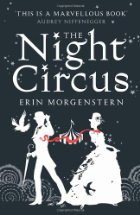 The circus appears overnight without any warning; the next morning, a field that was empty is strewn with magical black-and-white tents that hold wonders of which thousands have only ever dreamed. But at the center of this magical paradise are two magicians, Celia and Marco, whose competition gives life to the circus and keeps it growing and moving across the world. At the center of their rivalry, though, is a love that won’t let them carry out their competition to the bitter end. Who will take their place at the core of the circus as it slowly rots from the inside out? The circus appears overnight without any warning; the next morning, a field that was empty is strewn with magical black-and-white tents that hold wonders of which thousands have only ever dreamed. But at the center of this magical paradise are two magicians, Celia and Marco, whose competition gives life to the circus and keeps it growing and moving across the world. At the center of their rivalry, though, is a love that won’t let them carry out their competition to the bitter end. Who will take their place at the core of the circus as it slowly rots from the inside out?
I can almost guarantee you’ve heard about this book before. I have seen it on many, many different blogs in my feed reader and in fact that buzz is one of the reasons I went ahead and purchased it. Whenever there is a fantasy title that has people talking, I usually try and read it, simply because I love fantasy and I want to keep current and in touch with the conversation. This has gone well and not-so-well previously. Luckily, it went well with this one, which nicely justified my purchase and added up to a very pleasant week of reading.
One of my favorite aspects of The Night Circus straight off was the atmosphere. The way the circus is set up is so mysterious, the characters so quirky, that I was instantly intrigued by the entire situation. We start off with both magicians very young. Celia’s father didn’t even realize he had a daughter, and it is only her emergence as a player that leads Marco to be chosen as her counterpart. The circus comes about slightly differently, through a variety of players, all of whom are quite shadowy characters; merely sketches, not fully fleshed out.
But despite the oft-bemoaned lack of character and plot development, I really enjoyed this book. Maybe I wasn’t convinced by Celia and Marco’s love story, but I could taste the caramel apples and experience the magic of the tents for myself. As Jenny says, this is an atmosphere book. If you can approach it with that in mind and take it for what it is, rather than what it isn’t, I think you’ll enjoy it a lot more. It’s an excellent read for curling up with some tea by your side and taking it slowly – this isn’t a book you want to rush, it’s instead to be savored.
I’m very glad that I picked up The Night Circus, as it suited me perfectly when I am in the depths of my own writing efforts and allowed me to simply relax and sink in. Recommended.
 Rome, the Eternal City; a place where Roman emperors have paraded, painters have worshipped God with their art, and ordinary people have lived. Robert Hughes touches on all of these aspects with his massive book on Rome, which is a mish-mash of history, art, and politics that spans the thousands of years that the city has stood upon its seven hills. Rome, the Eternal City; a place where Roman emperors have paraded, painters have worshipped God with their art, and ordinary people have lived. Robert Hughes touches on all of these aspects with his massive book on Rome, which is a mish-mash of history, art, and politics that spans the thousands of years that the city has stood upon its seven hills.
It’s non-fiction heavily filtered through Hughes’s own lens; he doesn’t provide any footnotes or endnotes, so I decided not to take anything he said for absolute truth and just enjoy the ride – although there is a lengthy bibliography for those who would like to learn more (as I would).
The book follows the history of Rome in chronological order, but it switches around between different areas of focus. It shifts around mostly with what was happening in the city at the time. So, while it takes place during the Roman empire, the focus is mostly on the history and the emperors, because for the most part we know a good amount about that. There’s less about individual artists, simply because there is less about them. The book moves on to the Middle Ages and devotes a lot of time, naturally, to Renaissance artists, and then straight up to the present day. In the 20th century, though, we move away from art and back into history and politics with Mussolini.
It also seems as though Hughes focuses less on art when he’s less interested in the art – he is an art historian after all – so when Rome is mostly influenced by Greece, and when Rome is in the modern period, there is far less art history and more just ordinary history.
Unsurprisingly, the narrative is actually most interesting when Hughes is talking about art. He’s clearly an expert and reading his opinions and views on the many different works of art that I actually saw was enlightening. It also made me really want to go back, but in the meantime my hardcover edition had a lot of photos inside so I could get an idea of what he was talking about in the parts of Rome I didn’t see. Reading more about Michelangelo, Raphael, Caraveggio, and Bernini, just to name four, was fascinating for me. If nothing else, this book will make you crave a really good art museum like little I’ve ever read before.
Unfortunately, I do think the book fell down somewhat in areas that aren’t Hughes’s expertise. He also gets very pessimistic about modern Rome and mass tourism – and given that I just engaged in mass tourism, I know that it is ridiculously overcrowded, but still felt a bit insulted that he could wish to deprive everyone of the sights he so gloriously describes – which was off-putting, and right at the end of the book as well. But Rome is the Eternal City, and even if we can’t see where it’s going, it’s hard to criticise modern Romans. After all, their ancestors took pleasure in watching lions tear humans apart; you can’t really get much worse than that, in my view. People throughout history have decided that their era is the worst of all of them; this sort of tired attitude was quite frustrating, in the end.
Still, Rome was a fascinating if uneven work – it really shines when Hughes is talking about his clear expertise. I’d recommend it for anyone who is particularly interested in the art of the city, but be aware that it isn’t a perfect book, and certainly can’t fit the whole of Rome’s history, art and political, in the space of a 500-page hardcover. You’ll find it hard to resist a trip after this read.
All external links to book sites are affiliate links. I bought this book.
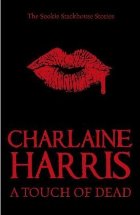 A Touch of Dead is a collection of Sookie Stackhouse stories from in between various novels of the series. This means they (and this review) contain spoilers for those who haven’t read the books. Since it’s an incredibly short book at less than 200 pages long, this is definitely going to fall in mini review territory, but I thought it would be appropriate for Halloween! A Touch of Dead is a collection of Sookie Stackhouse stories from in between various novels of the series. This means they (and this review) contain spoilers for those who haven’t read the books. Since it’s an incredibly short book at less than 200 pages long, this is definitely going to fall in mini review territory, but I thought it would be appropriate for Halloween!
These are all really short stories. So short that I probably would have felt cheated if I’d bought this in hardcover – there just isn’t very much there, unlike most collections of novellas. The margins and font were both huge, so each story sped by in just a few minutes. It was a great choice for the Read-a-thon, though, because I felt I’d accomplished a lot and the stories were very easy reads.
The introduction fortunately gives us a timeline for the stories, explaining where each fits into the overall canon. I’m almost up to date on the series, so none of them spoiled anything for me, though they may for others who are not quite as far in the series. We get to discover how Sookie discovered her cousin Hadley was dead, for example, which I remember confusing me when I first read that particular book in the series. We also get to see Eric ridiculously excited over the possibility of Dracula coming to Fangtasia, which was a light-hearted change. We even get to witness Sookie’s grandfather’s idea of a Christmas gift.
These stories are a nice way to dip into the Sookie universe without getting involved in a complete book, but I’d probably only recommend them for those who are already fans. Otherwise, you’ll get spoiled for the series, and I find it unlikely that you would enjoy them as much as someone who is already versed in the world would.
 On Christmas Eve, 1800, three men conspire to assassinate Napoleon as he rides by on his way to the theatre. The plot is foiled and Napoleon lives to rule another day – but it’s up to Chief Inspector Roch Miquel to find the culprits. Under pressure from his boss, the famous Minister of Police Fouche, Roch has to weed fact from fiction on a heart-stopping deadline even as the lives of the ones he loves the most are at stake. On Christmas Eve, 1800, three men conspire to assassinate Napoleon as he rides by on his way to the theatre. The plot is foiled and Napoleon lives to rule another day – but it’s up to Chief Inspector Roch Miquel to find the culprits. Under pressure from his boss, the famous Minister of Police Fouche, Roch has to weed fact from fiction on a heart-stopping deadline even as the lives of the ones he loves the most are at stake.
This was my first Read-a-thon choice, which generally means I sped through it and actually won’t have much long-term memory of the book. Still: a few impressions that will hopefully guide the curious into deciding whether or not they would choose to read it themselves.
First of all, this is actually a perfect historical fiction read for the Read-a-thon. It’s nicely short, so it can be finished in a speedy amount of time, and the story has enough tension and mystery to help keep those pages turning even later at night, I suspect. Roch is under a lot of pressure as the story progresses, and I really do mean a lot, with his loved ones carted off to jail and his professional expertise called into question even when he doesn’t deserve it.
The story is split between several different viewpoints, although they vary when they appear and generally Roch’s search drives the plot. The beginning of the book is brilliant – I felt immediately drawn into Napoleonic Paris’s dirty streets, fully aware of the hustle and bustle around the Emperor’s path as people jostled to see him. Then, the aftermath of the explosion, which didn’t kill him but did affect many others, was an excellent way to draw readers into the story and keep them wondering about these strange men who so clearly want to kill Napoleon. Not that many people didn’t want to kill Napoleon – but it becomes immediately personal.
Surprisingly, the book even manages to squeeze in a little bit of romance amongst all of this investigating, and some treachery too. It’s very well-rounded with quite a lot going on. I’d definitely recommend For the King as a fast yet absorbing and atmospheric historical read.
All book links to external sites are affiliate links. I bought this book.
|
|



Recent Comments