At only nine years old, Liesel Meminger witnesses the death of her brother and is sent away by her mother to live with another family. Liesel doesn’t really understand what’s going on or why she has to leave her mother. Hitler’s domination of Germany increases as Liesel grows up, comforted by her adoptive father and loved but scolded in ways by her adopted mother. Narrated by Death himself, a character with a completely different and novel perspective, Liesel’s story is a powerful one about love, war, and childhood.
I don’t give many books a five star rating on LibraryThing (I don’t rate books at all here on the blog, but I still do there). It’s incredibly rare that I find a book which works for me on all levels – that touches me, that makes me think, that gives me a new perspective on life. The Book Thiefis one such book, and somehow I waited nearly two full years to actually open it for the first time. What a mistake – I hope it’s one you won’t make, if you do have this one waiting on your TBR shelf.
It’s difficult to pinpoint precisely what makes this book so special. There are vast numbers of books written in or about World War II that are very good; there is plenty of fiction in particular and it’s a number that seems to rise regularly. It’s one of those books that makes things you’ve always known somehow become real, even through fiction. Liesel’s feelings towards Max, the Jew that her family hides in their basement, do precisely this. Their relationship, so tenuous to start, expressed through books and words, becomes magical and real as the novel progresses.
The entire book revolves around the power of words. Liesel is the titular book thief; she adores books, but they’re hard to come by for a poor family in Nazi Germany. Censorship means millions of books are burned or changed, so Liesel’s treasures become fewer and far between. Simultaneously, it is words that allow Hitler and his party to take power, to persuade people that those who believe in other religions are not people, to cause the deaths of millions around the globe. This power of words is demonstrated in so many ways throughout the book; as a reader and a writer, I found so much to connect with and a vast amount of truth in this particular theme.
The book also demonstrates the merciless nature of war. It’s a hard thing to take, especially when you become so very attached to certain characters, but it makes me think of real life as well. More than anything, strangely, this part of the book reminded me of The Children’s Book by A.S. Byatt, because it is another that demonstrates how war can take away people we desperately love. Like many of my generation, I’ve never had anyone I loved taken from me due to a war, despite the fact that we are fighting one and I know a number of soldiers, and I think this faint shadow of that grief is entirely necessary to remind all of us who are not involved ourselves how evil a thing these wars actually are.
I would highly recommend The Book Thiefto almost anyone at all; it’s a book that is beautifully written with a number of powerful themes, yet still surprisingly different from many of the books about World War II out there. If you already own it, don’t let it sit on your shelf any longer.
I am an Amazon Associate. I received this book as a gift.
The time has come for Tiffany Aching to become a witch. She leaves behind her beloved Chalk to help another witch, Miss Level, becoming an apprentice of sorts as she attempts to learn her new craft. Tiffany is frequently frustrated by her attempts to learn magic, especially her inability to ride a broomstick without being ill and her complete failure at making a shamble. But what she can do is step in and out of her body at will, which she does from time to time. She doesn’t realize, however, that leaving her body unoccupied is dangerous, especially when there’s something just around the corner waiting to seize it.
Following up on my earlier gushing over The Wee Free Men, I’m prepared to gush again about this book. If anything, this was actually better, which, I know, I sort of didn’t think could happen either. Tiffany’s out into the wider world of witches now, which threw a few more wrenches into this tale. She meets a number of other apprentice witches her own age, so we have all the rivalry and jealousy of the early teenage years to contend with, including one nasty witch who is convinced of her own importance and is happiest bullying everyone else around. It was a heartbreaking moment when Tiffany talked about her hat, which Granny Weatherwax gave to her in the previous volume, and no one believed her. I was so hopeful that she’d prove herself in the end and show off what she really could do.
As in the last, there were plenty of moments that were both funny and wise. Pratchett’s brand of humor can almost always coax a smirk out of me if nothing else. In this book the Nac Mac Feegle get a new kelda, but that also means that they lose sight of Tiffany for a short while – typically, just long enough for her to get possessed, at which point they must race to save her, if even they can do so.
What I think I actually preferred about this book was the fact that the plot was much tighter and seemed to have more purpose. There are still sidetracks, and I wouldn’t want it any other way, but there was certainly more tension here, more sense of progression. Tiffany is indeed growing as a witch. It’s incredibly difficult to resist completely falling in love with her and the entire book – and truly there is no point in doing so. I was reminded again and again that, like in many of my favorite stories, Tiffany is an ordinary girl whom extraordinary things happen to. She deals with them as she has to, but she feels like a real person in a variety of charming, human ways that truly seal this book’s appeal for me. I would definitely recommend A Hat Full of Skyto all fantasy fans – but make sure you read The Wee Free Menfirst.
Cleopatra is a legend. Her name is synonymous with sex appeal, with beauty, with Egyptian history. But we know so little about who she was and what she was like – the only verifiable image we have of her is on coins. So much of Egyptian history has been overlaid with Roman interpretations, with medieval interpretations, and even with Victorian and twentieth century interpretations that it’s nearly impossible to tell how things might actually have happened. With her new biography of this historical icon, Stacy Schiff attempts to peel back the layers – not to pass judgement or say decisively how things may have been, but to give us an idea of what Cleopatra’s world was like without our many different lenses of bias.
Like many people, I’ve known for my entire life it seems who Cleopatra was and who she slept with. I’ve read books about her, about Julius Caesar, and even one about her children, who never attained her level of incredible fame and renown. But Schiff is right in that all of those have layers upon layers of bias stacked on top of them. It is nearly an impossible task for a modern person to separate out who Cleopatra genuinely was from who we believe her to be. There are so many alternate stories and, as with all history, nothing is set in stone anyway. Schiff uses contemporary sources to tease out the truth in many cases and to explain where we don’t actually know the truth (quite a frequent occurrence) in others. We don’t know what she looks like. We have virtually nothing she wrote. As a person, Cleopatra is all smoke and mirrors, especially when you consider that many of the people who wrote about her were judgemental Romans.
What I’d have to say I most liked was that Schiff confidently dispelled the notion that Cleopatra got all of her power, wealth, and fame from pure sex appeal. It’s common to dismiss Cleopatra; we are far too quick to assume that she was simply a phenomenal lover, to ignore her own deeds in favor of those of the men she associated with. It’s true that she seems to have been charismatic and people were drawn to her; Julius Caesar and Mark Antony are only the two most famous examples. But she was powerful and she did rule over a largely peaceful kingdom. She may well have had feminine appeal, but just because she used that to her advantage in many cases didn’t mean she cold-heartedly seduced men. She killed her brothers, but virtually all of the Egyptian pharaohs before her killed parents, siblings, and even children. Why is it different for a woman, particularly such a famous one?
I also genuinely loved the historical background that Schiff included. In order to elucidate parts of Cleopatra’s life that are undocumented, she inserts historical facts to provide incredibly descriptive pictures that brought Rome, Egypt, and particularly Alexandria to vivid, brilliant life. I’ve never been the world’s biggest fan of ancient history, but Schiff made me doubt myself and wonder why I didn’t like it before. More than anything I was amazed by how much was the same then as now; we tend to think that people in history lacked so much that we presently have but this book proves that it just isn’t true.
For those who aren’t quite as excited by history as I am, I think this book may move quite slowly. I read it for an online book club and I don’t think many of the other members were loving it as much as I was while I was reading it (we haven’t discussed it yet, so I may be wrong). Since Cleopatra has left so few remnants of herself, it’s hard to empathize with her and feel for the woman she was, which may make this a difficult choice for those who are used to biographies full of quotes and intimate details. However, as someone who simply can’t get enough of history, I can say that Cleopatra was a wonderful book and I devoured it. If you’re at all interested in Cleopatra, I highly recommend this book to you.
I am an Amazon Associate. I received this book for free to review from Amazon Vine.
Good morning, Saloners! You may (or may not) have noticed that it’s been a bit quieter around here for a while. It’s not because I’m reading less – in fact, I have a large backlog of reviews to get written. It’s because my laptop seems to have died an untimely death. As most Dells seem to, it’s died after just about three years of use. It’s had issues with crashing practically the entire time I’ve had it, but it’s now at the point where it will crash after about an hour, so I can’t spend any real time on it. When it ceased turning on every time I pushed the button last weekend, I knew it was time for it to go. It’s just too frustrating to start writing a review on a PC that will inevitably die before I’ve finished, so I’ve been mostly leaving the blog quiet until I can afford to buy a new laptop – hopefully shortly after the New Year and my birthday in January. My husband has a PC (I’m on it now) but he does usually want to use it himself and it’s overall less convenient to just turn on quickly and write. Unfortunately this also means I’ve been missing out on Twitter for a week and my world has been a lot less bookish, so I really want that new computer as soon as possible!
In other news, we’ve been busily preparing for Christmas. This is a quick post because we’re off to go shopping for a few gifts. We’re also hosting Christmas for the first time, as I believe I’ve mentioned, so we’ve been planning out our meal and what we’re planning on doing for the past couple of weeks. This weekend we also went to the wedding of one of my husband’s cousins, which has made everything feel a bit more rushed! It was a lovely wedding, but I’ve never done well in the company of other people’s extended families, and I hadn’t met most of the people there.
I’ve spent most of this week reading the wonderful Brandon Sanderson’s Warbreaker, a chunky epic fantasy that managed to occupy me for a good few days. You’ll recall that I listed it as one of the books I was sure I’d read this year a few weeks ago, so I’m glad that I both finished it and really enjoyed it. I’ve been kicking myself for not reading it earlier! I aim to review it and a few other books this week, but it’s an uncertain prospect. At least I’m still managing to get my goals accomplished – reading so many chunksters is time consuming but when I’m not on the computer, I do have more time! Today I’m reading Moon Tiger by Penelope Lively, which is due back at the library tomorrow. I’m halfway through and still not sure how I feel about it. Hopefully I’ll have sorted it out by the time I’ve finished.
What are you up to this Sunday? Preparing for Christmas? Reading a good book? Let me know!
After the showdown with the Master, in which they failed to kill him, Ephraim Goodweather and Abraham Setrakian are left clutching at straws in their attempt to vanquish the vampires and save the human race. Worse, Eph is now discredited from his organization and must hide at all times, his ex-wife has now been turned and is trying to capture his son, and in all respects it’s clear that the good guys are running out of time. Abraham is left racing to get his hands on a book that will help them, a book that the Master wants, and must use all of the abilities he has left to get it before the vampires do.
This is going to be a difficult review to write, simply because I did not like this book. I did like The Strain, which I think set me up for disappointment here. Like many second books in trilogies, this one just falls flat, limp with a total lack of plot, too many unnecessary plot strands, and for me at least, a complete and total lack of suspense and fear. Mainly, I read my way through the book feeling bored, disgusted, and uncaring, which means that I at least will not be reading the third installment of this trilogy, even if it lands on my doorstep for free.
If I found any part of the book interesting, it had to be Abraham Setrakian’s backstory. I quite enjoyed reading about his past, horrific as it was, because I felt it cast some much-needed light on the main story. In fact, I could quite easily have stripped out everything else and solely had a book about how the vampires rose from World War II to the present; unfortunately, that isn’t what I got. Perhaps it’s just personal preference talking, but I have no real desire for a book that seems solely about killing, without a plot to hang on, that relies on disgust for its shock factor and leaves character relationships and development to the wayside as a result. And no, it’s not just because I like my vampires sparkly, because I don’t. I just grow tired of fight after fight with gushy white blood for what felt, to me, no purpose. It read more like a horror movie than a book exploring the takeover of vampires.
I’m not sure I can still recommend this series. I know quite a few other people enjoyed The Fall, my own husband among them. For me, however, I’m drawing the line here, and will not be reading the next book.
If your opinion differs, I’d love to hear about it.
I am an Amazon Associate. I received this book for review through Amazon Vine.
Tiffany Aching is a girl who lives on the Chalk. She’s good at making cheese, she misses and loved her Granny Aching, and she’s also a witch. When her brother – who is a sticky, whiny baby – is stolen by the queen of another world, Tiffany takes it upon herself to go and save him. Armed with only a frying pan and a group of tiny men with Scottish accents, the Nac Mac Feegle, Tiffany sets off to save her brother and to embrace her newly discovered witchy heritage.
I’ve never been the world’s biggest fan of Terry Pratchett. There, I’ve said it; I have set out no less than three times before this to read the Discworld books and never quite caught on. I started at the beginning first, which I was assured was a mistake, though I thought the first two books were okay. Then a lovely friend, intent on correcting my error, sent me Mort which I liked well enough but which didn’t inspire me to read more. A couple of years later another generous friend sent me the Susan books, which again I enjoyed but didn’t inspire me to keep reading. As ever a glutton for punishment, I decided to give Discworld one last try; this time I was inspired by Nymeth who mentioned I Shall Wear Midnight with enough enthusiasm that I chose to give this last arc a chance. I was further encouraged by a number of others’ reviews, so I bought all three paperback Tiffany Aching books in one go and sat down to read this a couple of weeks ago. And, finally, on the fourth try, I was enchanted.
It’s hard to pin down just why this particular book was different. I recognized Pratchett’s sense of humor, which is always mildly amusing but never laugh-out-loud funny, so it wasn’t like this book was a vast step outside of the others. It could simply be that I’m older, that I’ve got a better handle on British culture after living here for over two years. Or, as I’m leaning towards, it’s Tiffany herself, a wonderful female character if I’ve ever encountered one. She’s clever, gutsy, strong, wise, but still human, still a little girl, still prone to confusion. She’s annoyed by her little brother, doesn’t want to take care of him, but she loves him and recognizes his importance all the same.
So much of this book struck a chord with me and I found I couldn’t stop reading. Tiffany’s feelings about her grandmother, the amusing Wee Free Men, the little ways in which Tiffany knows she’s a witch; I loved the series of thoughts in particular on this. She has thoughts about her thoughts, and then thoughts about those thoughts, which apparently only witches can do, and which somehow Pratchett manages to make not at all confusing but rather humorous. Tiffany is a heroine I think everyone girl could embrace; I kind of want to give them this instead of books like Twilight and the vampire romances that are so popular these days. All I know is, when I finished this book, the first thing I wanted to do was read A Hat Full of Sky, which I promptly did, and the only reason I’m writing this review instead of reading Wintersmith is because I didn’t want the stories to run out. I haven’t felt this way in a long time, and I missed it.
So anyway, now that I’ve gushed away, if you like fantasy or young adult literature at all, I highly recommend you read The Wee Free Men.
Until he was 12, Ishmael Beah lived with his mother and brothers in Mattru Jong, Sierra Leone. Then the war came to his hometown with the arrival of the rebels and he was forced to flee for his life, losing his entire family in the process. Because he then proceeds to hang around with a group of boys, his friends, he is kicked out of towns, starved, and forced to run again and again until he is finally drafted into the army. Force fed drugs and given an AK-47, Ishmael is turned into a mini killing machine, hardly aware of what he’s doing, until he is chosen for a rehabilitation program and begins the slow process of re-acclimatizing into civilian life. Eventually, he becomes a spokesman against putting children in war, and has written his memoirs in a bid to stop this horrible practice.
This is a difficult book to read, not only because Beah’s childhood and teenage years are so horrific but because this drafting of children into warfare is something that still happens around the globe. Beah never wanted to be a soldier; he spends most of the book actually running away from them, while at the same time regularly condemned simply for his age. He and his friends nearly starve and are nearly killed a number of times by the very same forces they end up fighting for. Once they’re caught, there is simply no choice.
In terms of prose style, Beah’s book is plainly written but descriptive enough to get his point across; more and I think some of the things he describes would have been almost too graphic, even if they did happen. His time as a child soldier was easily the hardest to take. He describes how he was turned from a regular boy into a violence machine. The army used drugs and persuasion to make the children kill with a vengeance; these same acts make Beah’s rehabilitation all the more difficult when it does happen. One of the most heartbreaking parts of the book occurs when Freetown, the capital of Sierra Leone, is retaken by soldiers, and many of the rehabilitated children wind up back in the army. Beah is saved this fate and indeed turns out incredibly fortunate as he finds a new life in the United States, but he doesn’t fail to remind us that his case is unusual and is the very reason he can write his book.
Personally, I knew very little about child soldiers before reading this book, and I’ve been reminded once again how fortunate I am to have grown up in a peaceful society. I never had to worry that a gang of rebel soldiers was going to invade my town, evict me from my home, and kill everyone I’d ever known. Beah did, and these things are still happening around the world. This is one of those books that I believe everyone should read; it’s important to know what’s going on in the world and to find out ways we can help. I can’t recommend A Long Way Gone enough.
I am an Amazon Associate. I borrowed this book from my local library.
Louis Auchincloss’s family wasn’t among the very richest in New York City at the start of the twentieth century, but they certainly did well enough for themselves. As a result, his family was astonishingly well connected and rubbed shoulders with many of the most privileged figures of the twentieth century world; he is related to quite a few people and he drops names like Vanderbilt and Kennedy on a fairly consistent basis. Since New York society has changed drastically over the course of his life, he takes us back to the beginning and explores his life as a child of privilege and takes us through his quest to find his life’s goal, which turned out to be writing, and the way he got there.
I’d never heard of Louis Auchincloss before but I absolutely could not resist a memoir set amongst New York City’s highest levels of society. My maternal grandparents both grew up in New York City (they are both slightly younger than Auchincloss, although also very much poorer and from immigrant stock) and I’ve spent quite a few happy times looking at their old photographs, imagining what it might have been like. What better way than to hear it from someone who lived it? I wasn’t disappointed; in fact, I could sort of imagine an Auchincloss character, especially when young, acquainting himself with a few of the characters from the Luxe series, especially when he describes debutante balls. Even when he was heading to college, women from the highest classes still didn’t always choose to go, but instead had that money spent on elaborate coming out balls to catch a wealthy, handsome husband.
What really comes through brilliantly in this memoir is the character of the writer himself. I felt like I was having a chat with him from beyond the grave, as he’s now regrettably passed on. His voice comes through so strongly and I began to regret that I hadn’t read any of his novels – something I’d like to rectify ASAP. He seems like he was quite a character; I at times felt that he was looking at the world from a position of too much privilege, but when he acknowledges that readily himself it’s hard to blame him for something so beyond his control. He does say society wasn’t as exciting as everyone must have thought, but I thought that was only something an experienced socialite could say! Many of his friends are wealthy, but for me that was all a bit of the excitement as I felt I was getting a peek into a lost world. There isn’t much of the dissipation that exists among the current day wealthy; rather he’s surprisingly tame, and after he marries ceases going out at night or even meeting up with other famous writers.
I found A Voice from Old New Yorkto be an endlessly fascinating memoir. I loved Auchincloss’s descriptions of society, colleagues, and contemporary schools. His experience is so outside mine that I just couldn’t get enough of it and I ended up only wishing the memoir were longer. It’s humorous, interesting, and above all very distinctive. Highly recommended.
I am an Amazon Associate. I received this book for free from Netgalley for review.
Happy December everyone! It’s hard to believe we’re already in the swing of the Christmas season. Since it’s been snowing regularly for the past three days, I’m feeling more in the mood for the season than I have for a good few years. We haven’t set up our Christmas tree or anything yet, but we’re having Christmas at home this year so I’m excited to host it for the first time in my entire life, though I will be missing my Italian American family’s wonderful cooking (and, of course, my parents).
I read 16 books this month. I’ll chalk the slightly lower than normal count up to a few chunksters and a few unfinished books, as well as the fact that I finished another Xbox game, but honestly, I’m still very happy with that count. It does mean I acquired a lot more books this month than I read, but that’s okay. I’ll make up for it before Christmas – I’m on a book buying ban until then!
As always, quite a few of my reviews are still in progress. There aren’t too many here, so unless they’ve been scheduled well ahead, you should see them popping up next week.
Far and away my fiction favorites for this month were The Wee Free Men and A Hat Full of Sky. For once I remembered who influenced me to read these, and this time it was Nymeth. I can guarantee you I’ll be reading Wintersmith and I Shall Wear Midnight next month. I’ve only held back so far because I don’t want to run out of books just yet! In non-fiction I just adored Chasing Aphrodite. The other two were good, worthy reads, but this was on a subject close to my heart and completely fascinating. My review is held back until the book’s release, but trust me, when that day comes, there will be gushing.
In December, I’m committing to read those books I mentioned a couple weeks ago that I intended to read this year. I have a week off for Christmas, so if they’re not read by then, I plan on hunkering down over a couple of days and just reading the hours away. I can’t wait! This month I’d also like to reread one of my favorites, Jane Eyre, as I’ve just received a lovely new edition from a publicist, and if we’re going crazy, I’d like to fit in Room by Emma Donoghue and Wedlock by Wendy Moore as well.
How was your reading month in November? Any reads to look forward to in December?
Starring a number of notable faces, including Donald Sutherland and Matthew Macfayden, The Pillars of the Earthis a TV miniseries set during the Anarchy in England based on the novel of the same name by Ken Follett. Tom Builder, a master builder, dreams of building a cathedral, but has to put first the concerns of feeding his pregnant wife and two children. While searching for work, they wind up stranded and taken in by a so-called witch, Ellen, and her bastard son Jack. Shortly after, Tom’s wife goes into labor but dies in childbirth, fostering resentment between Tom’s son Alfred and Ellen and Jack. But Tom takes Ellen and Jack with him to Kingsbridge, where the prior wants a cathedral but has no money to pay. Jack seizes an opportunity and makes it so a cathedral is necessary – but the church is still penniless without the help of Bishop Waleran, a ambitious but corrupt churchman. Throughout the Anarchy, as Maud and Stephen fight for the throne of England, the building of a cathedral consumes the lives and loves of these people, alongside a quagmire of difficult politics, secrets, and murder.
I normally don’t review films or mini-series here, but I read The Pillars of the Earth back in high school and couldn’t resist the opportunity to watch it recreated on screen. When a lovely publicist contacted me and offered me the DVDs for a review, I had to accept, and I’m glad I did. The mini-series started off slowly with an almost unceasing number of character introductions – never a good sign when you have seven hours in front of you – but quickly picked up the pace and became a consuming epic in its own right.
A few things struck me most notably about the mini-series. Number one, it’s absolutely gorgeous, and I loved watching so much of the medieval world come to life. The building of the cathedral was a particularly moving set. I’m not religious but I love cathedrals; it astounds me that people built these immense, beautiful buildings for worship and standing in them is still awe-inspiring. In almost every cathedral I’ve ever visited, there is a little model of how the cathedral was built. I never genuinely visualised that until I saw this show. The character dress, which clearly showed their status, was also really well done, and I felt overall the visual style felt quite authentic.
That was good, because not much else was. I don’t hold TV or film adaptations to any sort of historical standards the way I do with most books, and I think this show perfectly demonstrates why. It makes me very glad I checked my inner historian at the door because the actual history would have been difficult to swallow. For instance, Matilda is portrayed as a little girl when her brother dies though she was already married, and then appears young and virginal while fighting Stephen when she was actually 35 and had had three children. Her husband also mysteriously vanishes, though I suppose there are so many characters that one more might have been too many. As a narrative, though, I thought the series held together. I’ve forgotten most of the book so I was still very curious as to what was going to happen next and I found myself watching most of the series over the course of a few evenings.
Like most historical epics seem to be these days, The Pillars of the Earthis very graphic. There is a lot of killing, which is a bit more uncomfortable visually than on paper, and there is also a lot of sex. There was also a rape scene which was very difficult to watch, though regrettably necessary to the story. I wouldn’t let it put me off watching the series but it’s worth noting beforehand to be prepared.
Overall, I found The Pillars of the Earthto be an engrossing mini-series that, while not perfect, certainly entertained me and kept me watching throughout. If you think you might be interested, here’s the trailer:
I am an Amazon Associate. I received these DVDs for free for review.


 At only nine years old, Liesel Meminger witnesses the death of her brother and is sent away by her mother to live with another family. Liesel doesn’t really understand what’s going on or why she has to leave her mother. Hitler’s domination of Germany increases as Liesel grows up, comforted by her adoptive father and loved but scolded in ways by her adopted mother. Narrated by Death himself, a character with a completely different and novel perspective, Liesel’s story is a powerful one about love, war, and childhood.


 Good morning, Saloners! You may (or may not) have noticed that it’s been a bit quieter around here for a while. It’s not because I’m reading less – in fact, I have a large backlog of reviews to get written. It’s because my laptop seems to have died an untimely death. As most Dells seem to, it’s died after just about three years of use. It’s had issues with crashing practically the entire time I’ve had it, but it’s now at the point where it will crash after about an hour, so I can’t spend any real time on it. When it ceased turning on every time I pushed the button last weekend, I knew it was time for it to go. It’s just too frustrating to start writing a review on a PC that will inevitably die before I’ve finished, so I’ve been mostly leaving the blog quiet until I can afford to buy a new laptop – hopefully shortly after the New Year and my birthday in January. My husband has a PC (I’m on it now) but he does usually want to use it himself and it’s overall less convenient to just turn on quickly and write. Unfortunately this also means I’ve been missing out on Twitter for a week and my world has been a lot less bookish, so I really want that new computer as soon as possible!


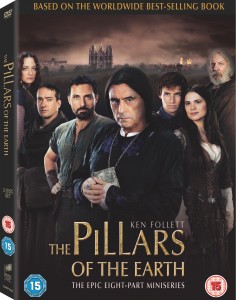 Starring a number of notable faces, including Donald Sutherland and Matthew Macfayden,


Recent Comments