|
|
Happy New Year everyone!
To be honest, I was relatively pleased with my reading in 2010. I read mainly what I wanted to read, when I wanted to read it. I started a new system of rotating different kinds of books, so for the last few months of the year I evenly read from my own books, library books, and review books. So really I have only a few goals.
1. Read 25% non-fiction. I think this should actually be fairly easy for me, as I was approaching this at the end of last year. I’ve found lots of fantastic non-fiction this past year and I really want to continue learning in all different subjects.
2. Read more of my own books. I know this is a problem everyone seems to have, but I’m definitely reading out of proportion these days. I have shelves and shelves of my own books, but only one shelf of review books. When I get through those, I want to continue accepting fewer review books and start reading 2 of my own books for every 1 review book.
3. Review books more promptly. I want to get into a system where I review the last book I read before I start a new one. Right now I’m about two weeks behind and I just don’t like it; I start to forget things. It gets so overwhelming that I then don’t review anything and just read more! I’d just like to be more punctual.
4. Most importantly, don’t feel guilty! I aimed for this last year, but I don’t think I succeeded (and to be honest I doubt I will this year). I want blogging to be less stressful; to not worry if I don’t post for a week or if I want to do something that isn’t reading a book for a while.
Do you have any reading or blogging goals for the new year?
The last day of 2010 is upon us; that means I have ahead of me the very difficult task of choosing my favorite books for the year. I’ve seen others’ lists going up since at least late November, but I hesitated, because for me that next gem could always be around the corner. I didn’t want to post my list before the year was nearly up. And while I may finish another book before midnight tonight, I doubt it will be as worthy as the ones that follow. I’ve chosen ten fiction and five non-fiction, which I think works for the proportions I read them in. There is no way I could whittle the fiction list down to five!
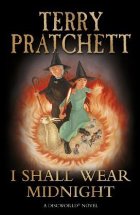 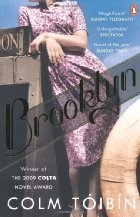 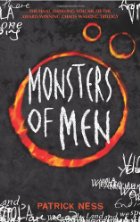 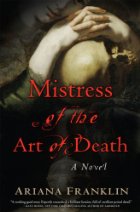
Fiction
- The Children’s Book, A.S. Byatt
- Speak, Laurie Halse Anderson
- The Kate Daniels series by Ilona Andrews; this year I read Magic Burns, Magic Strikes, and Magic Bleeds.
- The Sparrow, Mary Doria Russell
- Under Heaven, Guy Gavriel Kay
- Brooklyn, Colm Toibin
- Monsters of Men, Patrick Ness
- Mistress of the Art of Death, Ariana Franklin
- The Tiffany Aching quartet by Terry Pratchett (The Wee Free Men, A Hat Full of Sky, Wintersmith, and I Shall Wear Midnight)
- Delirium, Lauren Oliver
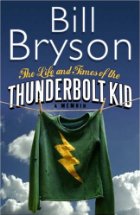 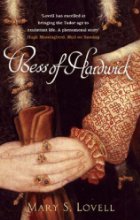 
Non-fiction
I wholeheartedly recommend each and every one of these books to you; they are simply incredible each in their own way.
In terms of statistics, I read:
- 253 books in total by 198 different authors
- 89,895 pages (may be inaccurate – some were ebooks)
- 101 books for review, 98 books of my own, and 54 library books
- 43 non-fiction books (17%)
- 170 books by women (67%)
- 19 were ebooks (7.5%)
The authors I read the most by this year were Anchee Min and Ilona Andrews with 5 books each.
Overall, I think it’s been a good year. I aimed to read deliberately and for the most part, I feel I truly did. Tomorrow, I’ll be back with a few of my goals for 2011. I’ll still be reading deliberately, I can tell you that.
How was your reading year in 2010?
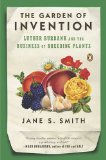 In his own time, Luther Burbank was a living legend, as well known in his own field as Henry Ford was for automobiles. Starting out with hardly any land and even less money bar what he’d earned breeding a new kind of potato, Burbank headed west for greener, California pastures, where he could make his name. There he could work his magic, combining varieties of plants to create perfect specimens, which have now become so ubiquitous that we would no longer recognize the originals he tampered with. But due to the nature of the botanical market, Burbank could never be assured of his position, and his eccentricity ensured that he would struggle to be accepted amongst scientists. Regardless, he changed the nature of plant breeding and introduced new ideas about plants that continue to resonate in the American psyche today. In his own time, Luther Burbank was a living legend, as well known in his own field as Henry Ford was for automobiles. Starting out with hardly any land and even less money bar what he’d earned breeding a new kind of potato, Burbank headed west for greener, California pastures, where he could make his name. There he could work his magic, combining varieties of plants to create perfect specimens, which have now become so ubiquitous that we would no longer recognize the originals he tampered with. But due to the nature of the botanical market, Burbank could never be assured of his position, and his eccentricity ensured that he would struggle to be accepted amongst scientists. Regardless, he changed the nature of plant breeding and introduced new ideas about plants that continue to resonate in the American psyche today.
I’d only ever heard of vague echoes about Luther Burbank before winning this book on Twitter from the publisher, at least a year ago now. I had no idea that he was regarded as such a great man or that his name could sell plants just by being attached to them. It’s a bit of a joke amongst those who know me that I have a “black thumb” – everything I’ve ever tried to grow has, unfortunately, died pretty quickly no matter what I do. So, I was purely interested in this book from a historical perspective; whatever information about gardening I took from it would surely never be put to good use. It was fortunately very satisfying from that historical perspective.
Smith takes us through a journey of Burbank’s life, from his relatively lowly origins to his path to fame and stardom. Quite a few of his own problems reflected the problems of the day; for example, none of his plants could ever be patented. As a result, men who “invented” things and were in the same class as him became wildly wealthy without needing to do much else, while Burbank had to continually innovate throughout his life in order to achieve results and deliver the next best thing. Tossed into the mix were bits about early twentieth century marketing, which was also quite interesting to me now that I work in marketing, and plenty about Burbank’s personal life and his various attempts to expand into other markets depending on how he felt at the time.
One of the more interesting aspects of the book was Burbank himself, which shouldn’t really have been a surprise. Such an eccentric man must have been a delight to write about. No one knows how to replicate some of his creations because he hardly ever documented what he did and he stymied every attempt to follow him and write about his methods. Instead he’d say it all depended on emotions and visitors to the farm would catch him talking to his plants as he went about the day’s work.
I didn’t really know what to expect from The Garden of Invention but I got an interesting little book about gardens, history, and a US that was rapidly legalizing. If any of those subjects interest you, give this one a try.
I am an Amazon Associate. I won this book in a giveaway.
 Hi everyone! I know I’ve been a bit quiet about my challenge, which I apologize for. My URL has even changed from the button! Regardless, I thought it would be a good idea to wrap up my own participation and to leave a space for you all to wrap up your own challenges, if you’d like. As a reminder, the different levels of participation were: Hi everyone! I know I’ve been a bit quiet about my challenge, which I apologize for. My URL has even changed from the button! Regardless, I thought it would be a good idea to wrap up my own participation and to leave a space for you all to wrap up your own challenges, if you’d like. As a reminder, the different levels of participation were:
Challenge genres include history, medieval literature, and historical fiction. Medieval, for simplicity of definition, will be from 500-1500, and literature from all over the world is welcome, not just western Europe. There are 3 levels:
- Peasant – Read 3 medieval books of any kind.
- Lord – Read 6 medieval books, at least one of each kind.
- King – Read 9 medieval books, at least two of each kind.
I personally aimed for King level, but I failed pretty hard. The medieval books I read this year were:
- Eleanor the Queen, Norah Lofts
- Company of Liars, Karen Maitland
- Mistress of the Art of Death, Ariana Franklin
- Butterfly Swords, Jeannie Lin
- Shadow of the Swords, Kamran Pasha
- Katherine Swynford, Alison Weir
- The Burning Land, Bernard Cornwell
- Virgin Widow, Anne O’Brien
- The Tale of Murasaki, Liza Dalby
- The Lute Player, Norah Lofts
- Shadow of the King, Helen Hollick
- The Dark Rose, Cynthia Harrod-Eagles
- Scoundrel’s Kiss, Carrie Lofty
- The Stolen Crown, Susan Higginbotham
While I did manage to read 14 books (which is pretty paltry out of over 200 books so far this year) only one of them was history and none of them were actually medieval literature. I’m pretty ashamed and actually very surprised. Lots of the books I read were historical, so clearly I misnamed my blog, but never mind – I’m sure I’ll continue reading medieval books into 2011. I’ll consider this a partial failure.
How did you do with the challenge? Either stick your wrap-up link in the MckLinky below or just let me know in the comments.
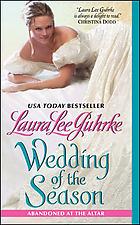 Beatrix’s fiance, Will, skipped out just days before their wedding to become an archaeologist. While he was digging for King Tut, convinced Beatrix didn’t love him enough to go to Egypt with him, she was nursing a broken heart and trying to recover a sense of normalcy. Six years on, she’s finally managed it. She’s engaged to another man, she’s spent a delightful last summer as a single woman, and she finally thinks she’s moved on. Then Will comes back, in search of money for his dig, but winds up sidetracked by the fact that he still hasn’t gotten over Beatrix. As he slowly begins to destroy the facade of a life she’s built for herself, she has to wonder whether she’ll have anything left when Will chases his dreams back to Egypt again. Beatrix’s fiance, Will, skipped out just days before their wedding to become an archaeologist. While he was digging for King Tut, convinced Beatrix didn’t love him enough to go to Egypt with him, she was nursing a broken heart and trying to recover a sense of normalcy. Six years on, she’s finally managed it. She’s engaged to another man, she’s spent a delightful last summer as a single woman, and she finally thinks she’s moved on. Then Will comes back, in search of money for his dig, but winds up sidetracked by the fact that he still hasn’t gotten over Beatrix. As he slowly begins to destroy the facade of a life she’s built for herself, she has to wonder whether she’ll have anything left when Will chases his dreams back to Egypt again.
This was such a sweet book. I’d never read a romance by Laura Lee Guhrke before, but I was sure I’d heard she was good, and whoever said so was clearly correct. This was a light, easy read that still managed to tug on my heartstrings as I followed the unexpected second romance that blossomed between Will and Beatrix. I seem to like these romances that focus on old loves; I think it’s easier to feel a couple’s relationship is likely when you know they have a lot of history together. Guhrke does a great job of showing it here, mixing a lifetime of memories in with the present to make a fully rounded love story.
Beatrix’s true problem is that she’s been raised to be slightly too cautious. Her father was extremely overprotective, but because she loved him, she followed his rules without complaint. Her fear has held her back from getting much of what she wanted. Her struggle to overcome those barriers, to take risks and seize what she wants, was I thought a surprisingly inspiring theme. It’s not just her desire for Will that motivates her, it’s everything she’s dreamed about in life that she never thought she could have. It’s such a different theme than the prevailing trend of sweeping passion and dangerous boys – which isn’t exclusive to novels labeled with “romance”. There’s passion, yep, but also more.
I also liked the setting, which seemed unusual in the current world of historical romances. I mostly stick with Regency England, although admittedly I don’t read very much romance these days. This is set at the beginning of the twentieth century, before World War I and the death of the aristocracy. Beatrix has a car and goes “motoring”; parts where her fiance warned her about going 40 miles an hour made me laugh out loud. It’s those little touches that brought the world to life for me. Even though there are balls and princesses and fancy dresses, the world is changing, and it’s rare to find that sort of feel in a romance, at least it has been for me.
Wedding of the Season was a surprisingly satisfying romance novel, and I’d eagerly recommend it to any other romance reader, especially if they’re looking for something a little out of the ordinary.
I am an Amazon Associate. I downloaded this book for free from Netgalley for review.
 It’s become apparent that I won’t be posting again until after Christmas, so I’d just like to wish you all a wonderful few days with family and friends! I will be back next week with end of the year lists, my reading list for the week off, and hopefully even some reviews one of these days. It’s become apparent that I won’t be posting again until after Christmas, so I’d just like to wish you all a wonderful few days with family and friends! I will be back next week with end of the year lists, my reading list for the week off, and hopefully even some reviews one of these days.
(Image brought to you by my husband and his new obsession, Minecraft)
 Siri and Vivenna, princesses of Idris, have lived in wary fear of nearby kingdom Hallandren for their entire lives. Their line originally ruled in Hallandren and now mainly exist on the larger kingdom’s sufference. Vivenna has been betrothed to the God-king of Hallandren, Susebron, since birth in an attempt to stave off war. At the last second, the princesses’ father sends Siri, his younger daughter, instead, knowing that war is coming and making the difficult decision of saving his elder daughter over his younger. Siri has been raised in a relatively colorless world and is shocked – and intrigued – by vivid Hallandren, with its strong use of magic, and her life as queen, or “Vessel”, as her sole duty is to bear an heir to the throne. Her sister Vivenna goes after her, determined to save her, but finds herself wrapped up in intrigue after intrigue instead, particularly with a mysterious swordsman whose seems to stalk her every step. Siri and Vivenna, princesses of Idris, have lived in wary fear of nearby kingdom Hallandren for their entire lives. Their line originally ruled in Hallandren and now mainly exist on the larger kingdom’s sufference. Vivenna has been betrothed to the God-king of Hallandren, Susebron, since birth in an attempt to stave off war. At the last second, the princesses’ father sends Siri, his younger daughter, instead, knowing that war is coming and making the difficult decision of saving his elder daughter over his younger. Siri has been raised in a relatively colorless world and is shocked – and intrigued – by vivid Hallandren, with its strong use of magic, and her life as queen, or “Vessel”, as her sole duty is to bear an heir to the throne. Her sister Vivenna goes after her, determined to save her, but finds herself wrapped up in intrigue after intrigue instead, particularly with a mysterious swordsman whose seems to stalk her every step.
Warbreaker was the first of my list of books I must get read in 2010, and as I expect with pretty much all of them, I found myself wondering why I hadn’t started it sooner. It is long, but it’s a satisfying lengthy read, with excellent world-building and magic systems. This is precisely what I’ve come to expect from Sanderson; he creates fantasy that is out of the ordinary, not just a rehash of the apprentice’s quest with elves and wizards. While breaking out of the mold, he manages to retain a certain sense of wonder in his characters, a certain ability that makes it easy for us to relate to them even though their worlds are completely foreign. It’s never hard to slip into his books; there is no adjustment period, even when the world is completely new. Enough is always still familiar.
In this novel, magic is invested in objects through Breath. Each person is born with a single Breath. They can acquire more from others and, once they have enough, can bring certain things to life with commands or simply store their Breaths in inanimate objects. Gods in Hallendren are those who are mystically revived after death with a special kind of Breath. They need one each week to survive; those who give their sole breath to a God are rewarded though their lives are guaranteed to be drab afterwards. This sort of magic is blasphemous to the Idrians.
Sanderson doesn’t shy away from the tough questions in his books – another thing I really enjoy about him. In this particular book there is a God who just isn’t certain about his Godhood. He doesn’t feel special. He doesn’t think he acts special. In fact, he’s not sure any of his fellow Gods are actually anything but fortunate schemers, except of course for Susebron, who is so godlike that no one is even allowed to speak of him. He asks difficult questions of himself throughout the narrative and, I think, winds up proving himself in ways that we could learn from in our own world.
There was something about this book, though, that didn’t quite match up to Elantris or the Mistborn trilogy for me. Strange as it is, I think that in the end it just didn’t feel epic. I can’t really put a value on it, but it’s that certain extra that makes me fall truly in love with a fantasy novel, where it really, genuinely feels that the world is at stake and the characters are truly desperate. The plot, of course, does actually ramp up quite a bit towards the end, but it just failed to give me that breathless, must-read-more feeling. It was enjoyable and I had a great time reading it, but it remains in the “like” camp rather than the “love” camp.
Regardless, Warbreaker is a well-written fantasy novel with an intriguing, well-developed world. If you enjoy fantasy, Sanderson is an author you should definitely be reading. Now that I’ve finished off this one, I can go purchase The Way of Kings – and I don’t intend for this one to sit on the shelf for a year and a half.
I am an Amazon Associate. I purchased this book.
 The written word is a powerful thing, and every once in a while, a book comes along that hits the mood of the times perfectly and influences history. Because there are very many of these books, Bragg limits his selection to books published by British authors, and includes a single fiction title in his list. His aim is to present the measurable affects of these books – and while fiction touches us deeply, it’s nearly impossible to gauge reactions to fiction titles in the same way. His list consists of: The written word is a powerful thing, and every once in a while, a book comes along that hits the mood of the times perfectly and influences history. Because there are very many of these books, Bragg limits his selection to books published by British authors, and includes a single fiction title in his list. His aim is to present the measurable affects of these books – and while fiction touches us deeply, it’s nearly impossible to gauge reactions to fiction titles in the same way. His list consists of:
- Principia Mathematica (1687) by Isaac Newton
- Married Love (1918) by Marie Stopes
- Magna Carta (1215) by members of the English ruling classes
- Book of Rules of Association Football (1863) by a group of former English public-school men
- On the Origin of Species (1859) by Charles Darwin
- On the Abolition of the Slave Trade (1789) by William Wilberforce in Parliament, immediately printed in several versions
- A Vindication of the Rights of Woman (1792) by Mary Wollstonecraft
- Experimental Researches in Electricity (three volumes, 1839, 1844, 1855) by Michael Faraday
- Patent Specification for Arkwright’s Spinning Machine (1769) by Richard Arkwright
- The King James Bible (1611) by William Tyndale and 54 scholars appointed by the king
- An Inquiry into the Nature and Causes of the Wealth of Nations (1776) by Adam Smith
- The First Folio (1623) by William Shakespeare
While I thought this book was very interesting for what it covered, there was a lot it didn’t cover, and sometimes I didn’t agree with his choices. For one thing, a couple of the choices aren’t actually books. One is a patent and one is a speech later made into a pamphlet. Bragg argues that because they were so influential, they should still count, but I wasn’t sure I agreed with him. The book is also quite Anglo-focused, but he explains that clearly in the introduction so it’s not really a fault – it’s just something I didn’t consider when initially browsing in the library and picking up the book.
The books are described in much the way they’re ordered and I thought Bragg did a great job of explaining the period of the times and how, in many cases, the book more or less guided public consciousness along the way it was prepared to go. The same book wouldn’t have had such an effect 50 years earlier or 50 years after – the world might in fact have been an entirely different place by that point. He doesn’t dig deeply into any of the books, but when he has so many books to get through in so few pages, what’s there is still very interesting and, I thought, makes a good cause for it being there.
The exception, for me, was football. Personally, I’m not the world’s biggest fan of football. I have a difficult time understanding why anyone really cares and particularly why fans get so militant about their teams. My philosophy is, generally, you go ahead and watch it as long as you don’t make me watch it, too, so I was never going to really like that section. Plus, Bragg explains that football is a game that had been played in some form or another for centuries, and which has continued to evolve since then. Even if football has an effect on nations, for once I wasn’t convinced that the book itself had actually influenced anything besides rules. The game would have continued.
Again unsurprisingly, my favorite chapter was the final one on Shakespeare. It’s pretty clear that Bragg loves literature himself, and I felt Shakespeare was the perfect person to end the book with. It may be difficult to pinpoint what effect other novels have had on the public consciousness, but it’s easy enough with Shakespeare, and this is one section Bragg excels in.
So, if you’re interested in a very Anglo-centred vision of world-changing books, 12 Books That Changed the World might be a good choice. But it’s not quite what it says on the cover and I wouldn’t have minded the inclusion of more fiction and a more solid definition of “book”. It was interesting, but had quite a bit of missed potential.
I am an Amazon Associate. I borrowed this book from my local library.
 The Mabinogion, a collection of medieval stories about Arthurian legend and a few other bits and pieces, is a landmark in Welsh literature. Most Welsh literature isn’t particularly well known, as the country has been dominated by English rule for centuries; as a result, these stories take on a special significance. In honor of them, the publisher Seren has commissioned new stories that weave the legend together with contemporary life. The Dreams of Max and Ronnie is the third novel in the series and, with its poetic prose and simultaneously gritty realism, is a fitting tribute to the original stories. The Mabinogion, a collection of medieval stories about Arthurian legend and a few other bits and pieces, is a landmark in Welsh literature. Most Welsh literature isn’t particularly well known, as the country has been dominated by English rule for centuries; as a result, these stories take on a special significance. In honor of them, the publisher Seren has commissioned new stories that weave the legend together with contemporary life. The Dreams of Max and Ronnie is the third novel in the series and, with its poetic prose and simultaneously gritty realism, is a fitting tribute to the original stories.
The book is comprised of two novellas. We start off with Ronnie’s dream. Ronnie and two of his friends, we quickly learn, are about to set off for to fight for their country in Iraq. I say for their country, but the book is in reality a protest against the war as well as a statement against many of the things that have come to have a disproportionate amount of meaning in our lives. Ronnie and his friends visit a woman called Red Helen in search of a hit before their tour. Said hit is so powerful that it knocks Ronnie out for three days, during which he has a strange dream. That dream is the closest remnant of the original tale; it’s interspersed with reflections on the modern day situation. Griffiths protests the lack of meaning in modern day British life; chapels are turned into holiday homes, people fight in wars without knowing or caring about them, traditional community standbys are overwhelmed by consumerism and celebrity imitations.
One of the parts I noted as particularly striking about this story was a section about tattoos. Essentially, whenever someone famous gets a tattoo that others think is cool or individual or unique, everyone else feels compelled to copy them – therefore making very little cool or individual or unique. I found this quite disturbing actually; it’s hard to express and develop your own identity when much about the world is the same. I’ve never understood the cult of celebrity, but people very close to me always seem interested in the goings-on of these people who have no real relevance to their lives. This is just one of the things about modern society that Griffiths appears to be against. I wouldn’t say my own views are quite so firm.
As a result, this isn’t an easy novella to read. It not only illustrates how terrified and unwilling Ronnie and his friends are about the war, it also is a very powerful expression of one particular viewpoint. If you don’t agree with what Griffiths has to say, I’m not sure you’ll be able to get past that and enjoy the book because it’s simply so overpowering and angry.
The second novella, comprising Max’s dream, was not nearly so clear in terms of theme for me. In this one, gangster Max has a dream about a beautiful woman, and decides he needs a companion. He proceeds to send out his cronies on a search for the perfect woman while he languishes in his dreams, becoming steadily more disgusting and less likely to be appealing to said dream woman. When they do find his ideal woman, she turns out to be completely different from his expectations, which naturally leads to issues.
For me, it was difficult to tease out precisely what this story was about. It is definitely not as powerful as Ronnie’s dream, which in some ways makes it easier to read. It also means that it doesn’t work as well in the many ways that Ronnie’s dream does; I found it quite crude at times, although I was pleased with how the story ended.
I think I would recommend The Dreams of Max and Ronnie as a whole, especially to British readers. Reading The Mabinogion and then branching out into these stories would be an excellent way to compare the Britain of the past with the Britain of today. I also think they won’t work as well for someone who isn’t as aware of British culture, current events, and celebrities in general. I suspect Griffiths’ views will also dovetail with general public opinion, so it’s well worth reading the book now while it’s all fresh in our minds and we can relate to it.
I am an Amazon Associate. I received this book for free for review.
 William Wolf hasn’t had an easy life. As a changeling, he’s been an outcast from birth. His parents both abandoned him and he grew up in a strict school where he learned to be nothing but a warrior. He sees things partly through a wolf’s eyes and much about his perception is black and white. When he meets Cerise, she’s dressed as a hobo and he’s not sure what to make of her. He doesn’t expect a world-weary girl from the Mire, trying desperately to find her vanished parents before they’re killed. In the Edge, almost anything goes, and as William and Cerise find themselves a common enemy, so do they find they have a few more romantic feelings in common as well. William Wolf hasn’t had an easy life. As a changeling, he’s been an outcast from birth. His parents both abandoned him and he grew up in a strict school where he learned to be nothing but a warrior. He sees things partly through a wolf’s eyes and much about his perception is black and white. When he meets Cerise, she’s dressed as a hobo and he’s not sure what to make of her. He doesn’t expect a world-weary girl from the Mire, trying desperately to find her vanished parents before they’re killed. In the Edge, almost anything goes, and as William and Cerise find themselves a common enemy, so do they find they have a few more romantic feelings in common as well.
While I still couldn’t say I’m as in love with this series as I am with the Kate Daniels series, Bayou Moon was a satisfying, well-written and plotted paranormal romance that had quite a bit to it. It’s hard at first to get to grips with William and Cerise; they are both very strong, almost polarizing characters, and while they’re immediately attracted to each other (well, once Cerise cleans up), they’re also immediately at odds. When they realize they are after the same person, they team up, and the true attraction begins to reveal itself. I was very eager to read more about William after encountering him in the first book of this series, On the Edge. Cerise isn’t mentioned in that book, so we have a little more to learn about her character and how she interacts with those around her.
Overall this book was quite a bit darker than On the Edge. The Mire, where Cerise lives, seems to be a harsher place than the rest of the Edge. Her family has been in a feud for her entire life. Overall, we get the impression that the Mire is dirty, muddy, and deadly, which perfectly suits the grimmer nature of the storyline itself. A book about a changeling raised without love and a fierce woman that scares those around her was never going to be a cheerful one. What matters is what Cerise and William can do to salvage their lives and eradicate the world from one particular deadly presence – and if they fall in love along the way, I’m certainly not going to complain.
With a gripping, atmospheric story and a sweet romance, Bayou Moon was a very good paranormal romance. It’s not quite set apart as brilliantly as the Kate Daniels series is just yet, but I’ll happily continue reading future installments (and anything else the husband and wife writing team of Ilona Andrews comes up with!).
I am an Amazon Associate. I purchased this book.
|
|


Recent Comments