|
|

This is the sixth and final book in the current Vampire Academy series, and this review WILL contain spoilers for the first five. If you’re new to the series, read my review of Vampire Academy.
The stakes have never been higher for Rose and her friends. Rose is in prison, accused of murdered Queen Tatiana, and with the evidence against her, will almost undoubtedly be convicted and sentenced to death. The court itself is in turmoil over Tatiana’s death, still over Dimitri’s restoration to Moroi from Strigoi, and over turning dhampirs into guardian at just sixteen, instead of eighteen. A new monarch must be chosen for the Moroi world and the choices aren’t stellar. Rose must escape and find the real murderer before it’s too late.
While I enjoyed this final installment in the series, I have to say that it wasn’t as satisfying as I’d expected it to be. In large part, I suspect this is because the Vampire Academy universe will be continued in the future. Rose’s story is wrapped up, but the author has a lot of loose threads to tie together at the end. I wasn’t particularly pleased with how things went with Lissa and Jill, for example, and especially not with what happened with Adrian. We’re just left with a lot of questions and not as many answers as I’d have expected. What did happen was mostly what I expected to happen, regardless of what I actually wanted. Suffice it to say that this was enjoyable, but not my favorite of the lot. Okay, I’ll be including spoilers now, as I just can’t hold back!
What’s worse is that I wasn’t entirely sure I liked Rose at the end of the book. At one point, Adrian tells her that she’s hurt a lot of feelings and used a lot of people to get to the end, and I had to agree with him. She does use people, she gets them into trouble, and she has the ability to ruin lives. I actually would have been happier had the ending gone a different way – I hated how she treated Adrian, who I thought was actually a much better match for her in Dimitri. Sure, I was caught in that romance at the beginning, but that just wasn’t a sensible choice. I didn’t feel that he was the one for her. I wanted to believe that she was getting past it and that she’d find a new future with Adrian, but she didn’t.
After all her talk of best friendship, I thought she ended up using Lissa the most. By making her friend queen – she didn’t make it happen entirely but she certainly got into the idea and made it so it COULD happen – she took away Lissa’s young adulthood and freedom, something she’d obviously longer for in previous books. Maybe Lissa was the best choice, but primarily the goal was to delay the Moroi election, and to buy Rose time. It was selfish, although in some respects she made up for it in the end.
This was a good series, even if it didn’t end precisely how I wanted with Last Sacrifice. Recommended for fans of YA fantasy and vampires.
I am an Amazon Associate. I purchased this book.
 In this alternate history world, a steampunk version of Victorian England has just defeated the Horde, a barbarous group of people who controlled English citizens by means of nanobots. The nanobots could force people to do their will, until the Iron Duke, Rhys, takes down the controlling tower in a mad, suicidal act. Mina, half-Horde and a product of the Frenzy, is also a detective inspector, and finds herself on a collision course with the duke when a dead body is dropped on his doorstep without warning. Unexpectedly they find themselves on a quest together to save Mina’s brother and, eventually, England, but all Rhys really longs for is to possess and protect Mina for the rest of his life. In this alternate history world, a steampunk version of Victorian England has just defeated the Horde, a barbarous group of people who controlled English citizens by means of nanobots. The nanobots could force people to do their will, until the Iron Duke, Rhys, takes down the controlling tower in a mad, suicidal act. Mina, half-Horde and a product of the Frenzy, is also a detective inspector, and finds herself on a collision course with the duke when a dead body is dropped on his doorstep without warning. Unexpectedly they find themselves on a quest together to save Mina’s brother and, eventually, England, but all Rhys really longs for is to possess and protect Mina for the rest of his life.
I am in two minds about this book. The world was indescribably awesome. It’s fantastic and logical at the same time and I just loved spending time in it, uncovering the little bits and pieces about it, and I really can’t wait to learn even more about it in future books. I found it a little confusing at first but soon figured out everything that was happening; it’s just the perfect combination of Victorian society, technology, and Brook’s own imagining.
Unfortunately, the romance fell flat for me, and when I say flat, I mean really flat. I didn’t like Rhys. I hated that his sole objective in life was to possess Mina and he’s bound and determined to do it regardless of what she says, feels, or actually wants. He does some things to her that made me uncomfortable and I couldn’t forgive him. The rest of him was fine, it was just his behavior towards Mina and this attitude of possession that I really didn’t appreciate. I know some women like that, but I am very much my own person and this sort of thing turns me off a book quite a bit. (I’m thinking of Twilight and how Edward creeps me out but everyone else loves him.)
Mina, on the other hand, was fantastic. She’s nuanced, she’s clever, she kicks butt but she’s vulnerable – basically, she’s everything I like in a heroine. She’s also not stereotypically beautiful, but is instead the very picture of society’s oppression. She’s had a lot to deal with and it’s not men falling over her in the normal way, either. I loved that the world Brook created had a place for determined, ambitious women and doesn’t relegate them to the sole duties of marrying and having children. In fact, Mina doesn’t think she’ll have either of those things, so instead of mooning over men, she’s busy filling her life on her own. She wouldn’t even have mooned over Rhys if he wasn’t so determined, at least I don’t think so.
The Iron Duke is not my favorite romance, but it does have a great world and a nice, twisty plot alongside the romantic one. For those two reasons, I’d still recommend it, and I’m looking forward to seeing how the next one stacks up. Meljean Brook is very popular in the romance world, so I am more than eager to try her books again and see how we get on.
I am an Amazon Associate. I purchased this book.
 This review contains spoilers for the first three Tiffany Aching books – start with The Wee Free Men. This review contains spoilers for the first three Tiffany Aching books – start with The Wee Free Men.
Tiffany Aching is finally a witch and on the Chalk, the land where she grew up and which she deeply loves. Being a witch, unfortunately, means that she’s overworked and constantly trying to do the best for everyone, even if they don’t like it. It also means that she’s ostracized, even from the people she once held dear. This includes Roland, the boy she saved in The Wee Free Men and who she thought would be her boyfriend, someday. Instead, as his father lies on his deathbed, Roland must assume the Baron’s responsibilities. But there are bigger problems afoot, namely the Cunning Man, who nudges thoughts against witches wherever he goes, and makes Tiffany endure far more hardships than otherwise would be necessary.
I loved this book. I think it’s my favorite of the series (which makes it appropriate to review today, on my birthday). It was everything that I loved about the rest, with added maturity, romance, and a feeling of completion. I’m content to leave the series here, and in a world where far too many series go on unending, I like that a lot. It could continue, but it doesn’t have to. It’s a book about Tiffany growing up, growing into the inheritance we’ve known about since the start, and even if it’s difficult and she gets into tough situations, she embraces it with all her heart. At the end she has grown and learned. She’s not only a better witch but a better person, an adult ready to face the world.
And, of course, probably half the reason I loved this book best was the fact that it does center on more mature issues; namely, romance, one of my obvious favorite types of plot. I must admit that I was quite sad to discover that Roland and Tiffany weren’t going to end up together, but the explanation was simultaneously so sad and wise at the same time that I couldn’t disagree with it. The way it ends up, of course, is just perfect for Tiffany and hit precisely the right note. I found it even more satisfying than what I had thought was going to happen throughout the first three.
The rest of the book is also substantially darker. Tiffany is now dealing with issues that closely mirror problems in the real world, such as when she rescues a young woman from her abusive father, who has beaten her so badly that she has miscarried a child. There is still humor, but the fact remains that Tiffany is no longer a little girl and the issues she faces are genuine and difficult. I don’t think it’s any coincidence that she also finds herself in the city in this book; it’s more closely intertwined with the adult Discworld books, which reflects on its place as a more mature story than the earlier, more enclosed novels.
I Shall Wear Midnight is a wonderful conclusion to this series, if it is the conclusion; it’s unquestionably my favorite and I know I can’t wait to read this series over again. Highly, highly recommended.
I am an Amazon Associate. I purchased this book.
 Mary Katherine Blackwood, nicknamed “Merricat” by those who love her, hates going into town. She’s convinced everyone is against her and all she really wants is to go back to her cozy life with her sister Constance and her uncle Julian. No one in town likes her, but she still has to buy the supplies twice a week and exchange library books for new ones. The townspeople have reason to be suspicious, though; the entire rest of the Blackwood family was killed by arsenic in the sugar, and Constance was accused, though later acquitted, of the crime. Merricat herself is a very peculiar girl, who is convinced that by nailing books to trees and burying various items of treasure she can keep Constance safe. Her methods don’t succeed when a cousin, Charles, comes to visit, and proceeds to shake up her careful existence. Mary Katherine Blackwood, nicknamed “Merricat” by those who love her, hates going into town. She’s convinced everyone is against her and all she really wants is to go back to her cozy life with her sister Constance and her uncle Julian. No one in town likes her, but she still has to buy the supplies twice a week and exchange library books for new ones. The townspeople have reason to be suspicious, though; the entire rest of the Blackwood family was killed by arsenic in the sugar, and Constance was accused, though later acquitted, of the crime. Merricat herself is a very peculiar girl, who is convinced that by nailing books to trees and burying various items of treasure she can keep Constance safe. Her methods don’t succeed when a cousin, Charles, comes to visit, and proceeds to shake up her careful existence.
I originally intended to read this for Carl’s RIP challenge last fall; I didn’t get to it then but I was in the mood for a creepy book over the holidays so I picked this up anyway. It isn’t a horror novel at all, which is what I expected, but more of a psychological story, focusing for me on the innate peculiarity that is Merricat herself. It’s very eerie – Merricat’s first scene in the town has a masterful atmosphere, especially with her dark thoughts towards all of the townspeople – but it isn’t particularly scary, which I’ll admit was something of a let down. Still, it has plenty of merit, and I did like it.
What was most interesting for me was the peek inside Merricat’s obviously very disturbed mind. At times I felt sorry for her sister, Constance; when Charles arrived I could almost feel her straining for a more normal life. He had the potential for that, and undoubtedly she would have enjoyed meeting a man, falling in love, cooking for her children. But she at the same time has a lot of affection for her disturbed little sister; she sees that things aren’t right, but she seems to have no idea how to fix them, or even the will to do so. After a time she sees her folly in leaning on Charles, who Merricat decided was a demon straightaway, and when she and Merricat begin to construct their own life together, she seems content to stay in her kitchen and keep with the status quo.
Indeed, by the end of the novel, the sisters have become a creepy legend, a pair of spirits that the villagers leave offerings to in forgiveness for their sins. It’s a very peculiar, creepy, atmospheric little novel. Some of the scenes towards the end are so evocatively described that I could see them in my head, which is a rare occurrence for me, and I think I’ll be rereading We Have Always Lived in the Castle with the right set of expectations this time, just to see what I get out of it. Maybe for next fall’s RIP challenge!
I am an Amazon Associate. I purchased this book.
 The third book of the Tiffany Aching series, part of the larger Discworld series, finds Tiffany accidentally taking place in a Morris dance. She can’t help herself; she’s simply drawn in. Unfortunately, due to her folly, she finds that the Wintersmith is in love with her because she has taken the place of the Summer Goddess. Since Tiffany is in the mortal world, unlike the Goddess, the Wintersmith can follow her every move, and she must kill him if Spring is ever to arrive for her people. As always, there are plenty of sideplots in the mix, including a witch who sees her own death and the misadventures of the arrogant Annagramma, who finds that she needs quite a bit of help to actually be a witch. The third book of the Tiffany Aching series, part of the larger Discworld series, finds Tiffany accidentally taking place in a Morris dance. She can’t help herself; she’s simply drawn in. Unfortunately, due to her folly, she finds that the Wintersmith is in love with her because she has taken the place of the Summer Goddess. Since Tiffany is in the mortal world, unlike the Goddess, the Wintersmith can follow her every move, and she must kill him if Spring is ever to arrive for her people. As always, there are plenty of sideplots in the mix, including a witch who sees her own death and the misadventures of the arrogant Annagramma, who finds that she needs quite a bit of help to actually be a witch.
Wintersmith was another enchanting book in the Tiffany Aching series – and a perfect read for when the world is covered in snow, as Tiffany’s is too. It’s full of the same insights and little wisdoms as the first two books were, although I would argue that it’s probably the weakest. Tiffany has much to distract her from the Wintersmith and after the beginning, which throws us into the mix of things, much of the rest of the book feels a bit slow (despite its short length). I still appreciated it all, but the plot definitely felt a bit looser than the previous ones. I did especially love the ending, though.
I probably mentioned it in my last review, but one of the things I appreciate the most about these books is how incredible wonderful all of the characters are. Pratchett doesn’t cut corners on any of them; even Annagramma, the witch who doesn’t really know what she’s doing, has several layers to her personality. She could have been a stereotype so easily, but Pratchett doesn’t take the easy route – he makes her a witch who is uncertain, who covers that up with arrogance, but who truly does want to do well. And, of course, there is Tiffany, who always has that edge of reality to her, as though she could just be a twelve-year-old I’d meet on the street. Plus, it’s impossible to not love the Nac Mac Feegles; the addition of Horace the cheese makes for some hilarious moments throughout this book.
I really enjoyed Wintersmith; it had me so eager to read I Shall Wear Midnight that I didn’t actually wait more than two days, although most of me was saying I should let the series last a bit longer. I would definitely recommend it to all fans of fantasy, but as always I think the series is best begun at the beginning (of this arc anyway) with The Wee Free Men.
I am an Amazon Associate. I purchased this book.
 Fiona Finnegan may be a poor tea worker in London, but she and her boyfriend Joe have big dreams. They want to own their own shop rather than work for other people and they know exactly how to do it. But while their dreams are big in their heads, and their love consumes their hearts, other factors are working against them. For one thing, Jack the Ripper is wreaking his vengeance on London whores, but no one knows when he’ll strike other women instead. And another woman has her sights set on Joe, a woman who can offer him more than Fiona in terms of wealth and prospects. Everything collides against her and Fiona finds herself en route to the United States, where she’ll finally learn to run her own shop and eventually confront the ghosts of her past. Fiona Finnegan may be a poor tea worker in London, but she and her boyfriend Joe have big dreams. They want to own their own shop rather than work for other people and they know exactly how to do it. But while their dreams are big in their heads, and their love consumes their hearts, other factors are working against them. For one thing, Jack the Ripper is wreaking his vengeance on London whores, but no one knows when he’ll strike other women instead. And another woman has her sights set on Joe, a woman who can offer him more than Fiona in terms of wealth and prospects. Everything collides against her and Fiona finds herself en route to the United States, where she’ll finally learn to run her own shop and eventually confront the ghosts of her past.
After I so enjoyed both A Northern Light and Revolution, I knew I wanted to read more by Jennifer Donnelly, and all recommendations coming in told me that The Tea Rose was the book to read. Luckily, I already had it – so if you’ll recall, I made it one of the books I aimed to read by the end of 2010, and I succeeded. I think reading the other two books first was a bit of an injustice to it, but it was good and absorbing in its own way.
For a start, this is an epic saga of Fiona’s life, which is fairly obvious from its length. We follow her from her teenage years, which are hard-working but relatively peaceful and full of dreams, into the turmoil of her twenties, and then into her accomplished thirties – at which point she has to go back and face her demons. There’s no question that it was an absorbing story and that I was eager to find out what happened next to Fiona – it didn’t drop my attention once over the course of its 550 (large) pages.
At the same time, it feels a bit less polished than Donnelly’s other works. It’s the kind of book where Fiona is responsible for all great inventions, in that way reminding me a bit of that series by Jean M. Auel (but without the constant caveman porn), where Ayla even manages to invent a sewing needle. Fiona constantly has ideas that set her apart from everyone else, and while I enjoyed the core story, I felt it was just a bit too much. I didn’t think one woman revolutionized the store, and then went on to revolutionize tea, in quite the same way, and it almost made it more difficult to relate to Fiona because she was just too extraordinary. Joe is similarly just too perfect; sure he makes mistakes, but his character isn’t really flawed and his genius wins out. In this way it was nothing like Donnelly’s other books, which I did feel had realistic and flawed characters. It is a first book and, having read later work, feels that way.
Still, for a first book, it is very good; the period details is fantastic and it’s immediately absorbing. I’m going to continue reading the series, especially considering I already own The Winter Rose, and I have high hopes for where Donnelly will go next. The Tea Rose is recommended for those who enjoy sagas set in Victorian England and New York City.
I am an Amazon Associate. I purchased this book.
 When Inda hears that his home country is about to be under attack by the Venn, he immediately abandons his piracy to his friend, the Fox, and heads home to warn everyone he knows that danger is imminent. He takes just a few friends with him, unsure of his welcome; little does he know that his close friend is king and he is about to take charge of the army in the face of the Venn’s arrival. The stakes have never been higher as Inda prepares to adapt his sea tactics to a battle on land and in the process sets about winning the hearts and minds of King Evred’s men. When Inda hears that his home country is about to be under attack by the Venn, he immediately abandons his piracy to his friend, the Fox, and heads home to warn everyone he knows that danger is imminent. He takes just a few friends with him, unsure of his welcome; little does he know that his close friend is king and he is about to take charge of the army in the face of the Venn’s arrival. The stakes have never been higher as Inda prepares to adapt his sea tactics to a battle on land and in the process sets about winning the hearts and minds of King Evred’s men.
I am definitely not used to reading fantasy chunksters these days. I really enjoyed this book, but there were times when I wished it was going by just a little faster. In large part, these sentiments occurred when we saw what was happening with Fox and Inda’s former ship crew; it seems I still don’t get on particularly well with books set on boats, for whatever reason. I was much more interested in what was happening on land, with the characters that I’d genuinely come to care about.
Of primary interest to me here, of course, was the tension between Inda and his lifelong fiance, Tdor, and his current lover, a Venn dag (or sorceress). Inda and Tdor have to rediscover one another, which I really enjoyed watching, and decide where their relationship is going to go in the future – whether they will adhere to tradition or choose to go their own way. I won’t tell you what happens; for the very few of you who read this blog who also enjoy epic fantasy, I don’t want to spoil it for you.
I would say that I preferred this book to the last one, because I much preferred the war-like atmosphere and tension this one had to the last one, which if I recall was spent mostly on boats and with Inda engaged in piracy. Inda’s steady growth as a person and a leader, his relationships with those around him, and the perceptiveness of the other Marlovans were all more interesting, for me at least. Quite simply, this book suited the reader I am, and has me looking forward to Treason’s Shore, which I think is the conclusion of this series.
I would recommend King’s Shield, and the rest of the series (starting with Inda) to those who enjoy epic, doorstopper-sized fantasy. It’s a great world with some intriguing characters and I’m looking forward to spending a little more time there.
I am an Amazon Associate. I purchased this book.
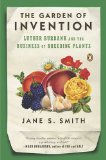 In his own time, Luther Burbank was a living legend, as well known in his own field as Henry Ford was for automobiles. Starting out with hardly any land and even less money bar what he’d earned breeding a new kind of potato, Burbank headed west for greener, California pastures, where he could make his name. There he could work his magic, combining varieties of plants to create perfect specimens, which have now become so ubiquitous that we would no longer recognize the originals he tampered with. But due to the nature of the botanical market, Burbank could never be assured of his position, and his eccentricity ensured that he would struggle to be accepted amongst scientists. Regardless, he changed the nature of plant breeding and introduced new ideas about plants that continue to resonate in the American psyche today. In his own time, Luther Burbank was a living legend, as well known in his own field as Henry Ford was for automobiles. Starting out with hardly any land and even less money bar what he’d earned breeding a new kind of potato, Burbank headed west for greener, California pastures, where he could make his name. There he could work his magic, combining varieties of plants to create perfect specimens, which have now become so ubiquitous that we would no longer recognize the originals he tampered with. But due to the nature of the botanical market, Burbank could never be assured of his position, and his eccentricity ensured that he would struggle to be accepted amongst scientists. Regardless, he changed the nature of plant breeding and introduced new ideas about plants that continue to resonate in the American psyche today.
I’d only ever heard of vague echoes about Luther Burbank before winning this book on Twitter from the publisher, at least a year ago now. I had no idea that he was regarded as such a great man or that his name could sell plants just by being attached to them. It’s a bit of a joke amongst those who know me that I have a “black thumb” – everything I’ve ever tried to grow has, unfortunately, died pretty quickly no matter what I do. So, I was purely interested in this book from a historical perspective; whatever information about gardening I took from it would surely never be put to good use. It was fortunately very satisfying from that historical perspective.
Smith takes us through a journey of Burbank’s life, from his relatively lowly origins to his path to fame and stardom. Quite a few of his own problems reflected the problems of the day; for example, none of his plants could ever be patented. As a result, men who “invented” things and were in the same class as him became wildly wealthy without needing to do much else, while Burbank had to continually innovate throughout his life in order to achieve results and deliver the next best thing. Tossed into the mix were bits about early twentieth century marketing, which was also quite interesting to me now that I work in marketing, and plenty about Burbank’s personal life and his various attempts to expand into other markets depending on how he felt at the time.
One of the more interesting aspects of the book was Burbank himself, which shouldn’t really have been a surprise. Such an eccentric man must have been a delight to write about. No one knows how to replicate some of his creations because he hardly ever documented what he did and he stymied every attempt to follow him and write about his methods. Instead he’d say it all depended on emotions and visitors to the farm would catch him talking to his plants as he went about the day’s work.
I didn’t really know what to expect from The Garden of Invention but I got an interesting little book about gardens, history, and a US that was rapidly legalizing. If any of those subjects interest you, give this one a try.
I am an Amazon Associate. I won this book in a giveaway.
 Siri and Vivenna, princesses of Idris, have lived in wary fear of nearby kingdom Hallandren for their entire lives. Their line originally ruled in Hallandren and now mainly exist on the larger kingdom’s sufference. Vivenna has been betrothed to the God-king of Hallandren, Susebron, since birth in an attempt to stave off war. At the last second, the princesses’ father sends Siri, his younger daughter, instead, knowing that war is coming and making the difficult decision of saving his elder daughter over his younger. Siri has been raised in a relatively colorless world and is shocked – and intrigued – by vivid Hallandren, with its strong use of magic, and her life as queen, or “Vessel”, as her sole duty is to bear an heir to the throne. Her sister Vivenna goes after her, determined to save her, but finds herself wrapped up in intrigue after intrigue instead, particularly with a mysterious swordsman whose seems to stalk her every step. Siri and Vivenna, princesses of Idris, have lived in wary fear of nearby kingdom Hallandren for their entire lives. Their line originally ruled in Hallandren and now mainly exist on the larger kingdom’s sufference. Vivenna has been betrothed to the God-king of Hallandren, Susebron, since birth in an attempt to stave off war. At the last second, the princesses’ father sends Siri, his younger daughter, instead, knowing that war is coming and making the difficult decision of saving his elder daughter over his younger. Siri has been raised in a relatively colorless world and is shocked – and intrigued – by vivid Hallandren, with its strong use of magic, and her life as queen, or “Vessel”, as her sole duty is to bear an heir to the throne. Her sister Vivenna goes after her, determined to save her, but finds herself wrapped up in intrigue after intrigue instead, particularly with a mysterious swordsman whose seems to stalk her every step.
Warbreaker was the first of my list of books I must get read in 2010, and as I expect with pretty much all of them, I found myself wondering why I hadn’t started it sooner. It is long, but it’s a satisfying lengthy read, with excellent world-building and magic systems. This is precisely what I’ve come to expect from Sanderson; he creates fantasy that is out of the ordinary, not just a rehash of the apprentice’s quest with elves and wizards. While breaking out of the mold, he manages to retain a certain sense of wonder in his characters, a certain ability that makes it easy for us to relate to them even though their worlds are completely foreign. It’s never hard to slip into his books; there is no adjustment period, even when the world is completely new. Enough is always still familiar.
In this novel, magic is invested in objects through Breath. Each person is born with a single Breath. They can acquire more from others and, once they have enough, can bring certain things to life with commands or simply store their Breaths in inanimate objects. Gods in Hallendren are those who are mystically revived after death with a special kind of Breath. They need one each week to survive; those who give their sole breath to a God are rewarded though their lives are guaranteed to be drab afterwards. This sort of magic is blasphemous to the Idrians.
Sanderson doesn’t shy away from the tough questions in his books – another thing I really enjoy about him. In this particular book there is a God who just isn’t certain about his Godhood. He doesn’t feel special. He doesn’t think he acts special. In fact, he’s not sure any of his fellow Gods are actually anything but fortunate schemers, except of course for Susebron, who is so godlike that no one is even allowed to speak of him. He asks difficult questions of himself throughout the narrative and, I think, winds up proving himself in ways that we could learn from in our own world.
There was something about this book, though, that didn’t quite match up to Elantris or the Mistborn trilogy for me. Strange as it is, I think that in the end it just didn’t feel epic. I can’t really put a value on it, but it’s that certain extra that makes me fall truly in love with a fantasy novel, where it really, genuinely feels that the world is at stake and the characters are truly desperate. The plot, of course, does actually ramp up quite a bit towards the end, but it just failed to give me that breathless, must-read-more feeling. It was enjoyable and I had a great time reading it, but it remains in the “like” camp rather than the “love” camp.
Regardless, Warbreaker is a well-written fantasy novel with an intriguing, well-developed world. If you enjoy fantasy, Sanderson is an author you should definitely be reading. Now that I’ve finished off this one, I can go purchase The Way of Kings – and I don’t intend for this one to sit on the shelf for a year and a half.
I am an Amazon Associate. I purchased this book.
 William Wolf hasn’t had an easy life. As a changeling, he’s been an outcast from birth. His parents both abandoned him and he grew up in a strict school where he learned to be nothing but a warrior. He sees things partly through a wolf’s eyes and much about his perception is black and white. When he meets Cerise, she’s dressed as a hobo and he’s not sure what to make of her. He doesn’t expect a world-weary girl from the Mire, trying desperately to find her vanished parents before they’re killed. In the Edge, almost anything goes, and as William and Cerise find themselves a common enemy, so do they find they have a few more romantic feelings in common as well. William Wolf hasn’t had an easy life. As a changeling, he’s been an outcast from birth. His parents both abandoned him and he grew up in a strict school where he learned to be nothing but a warrior. He sees things partly through a wolf’s eyes and much about his perception is black and white. When he meets Cerise, she’s dressed as a hobo and he’s not sure what to make of her. He doesn’t expect a world-weary girl from the Mire, trying desperately to find her vanished parents before they’re killed. In the Edge, almost anything goes, and as William and Cerise find themselves a common enemy, so do they find they have a few more romantic feelings in common as well.
While I still couldn’t say I’m as in love with this series as I am with the Kate Daniels series, Bayou Moon was a satisfying, well-written and plotted paranormal romance that had quite a bit to it. It’s hard at first to get to grips with William and Cerise; they are both very strong, almost polarizing characters, and while they’re immediately attracted to each other (well, once Cerise cleans up), they’re also immediately at odds. When they realize they are after the same person, they team up, and the true attraction begins to reveal itself. I was very eager to read more about William after encountering him in the first book of this series, On the Edge. Cerise isn’t mentioned in that book, so we have a little more to learn about her character and how she interacts with those around her.
Overall this book was quite a bit darker than On the Edge. The Mire, where Cerise lives, seems to be a harsher place than the rest of the Edge. Her family has been in a feud for her entire life. Overall, we get the impression that the Mire is dirty, muddy, and deadly, which perfectly suits the grimmer nature of the storyline itself. A book about a changeling raised without love and a fierce woman that scares those around her was never going to be a cheerful one. What matters is what Cerise and William can do to salvage their lives and eradicate the world from one particular deadly presence – and if they fall in love along the way, I’m certainly not going to complain.
With a gripping, atmospheric story and a sweet romance, Bayou Moon was a very good paranormal romance. It’s not quite set apart as brilliantly as the Kate Daniels series is just yet, but I’ll happily continue reading future installments (and anything else the husband and wife writing team of Ilona Andrews comes up with!).
I am an Amazon Associate. I purchased this book.
|
|


Recent Comments