|
|
 Elizabeth Phoenix has always had special powers that she has never wanted. These powers lost her a job in the police force, caused the death of her partner, and made her realize that her first love cheated on her with another woman. When a beloved friend dies, Elizabeth discovers that she must embrace her powers and even acquire new ones to save the world. Elizabeth Phoenix has always had special powers that she has never wanted. These powers lost her a job in the police force, caused the death of her partner, and made her realize that her first love cheated on her with another woman. When a beloved friend dies, Elizabeth discovers that she must embrace her powers and even acquire new ones to save the world.
Nothing wrong with that premise. I thought that there were many problems with this book, though. I did not like Elizabeth. It seemed to me that all she wanted was to have sex, over and over again, and not even exclusive sex. There were far too many scenes of this caliber in this book; roughly half of it seemed to be about Elizabeth’s desire and the fulfillment, or not, of said desire. I don’t know about you, but that’s not usually what I look for in a book; one or two is fine, but this was just too much. I get the feeling that she doesn’t actually care about anyone; she seems to interpret lust as love.
The rest of the book is spent learning about various types of magical creatures, both good and bad. There are way too many of them for one short book. It’s overwhelming and it’s difficult to be entertained when Elizabeth discovers something new constantly and the reader has to remember all that she’s learned, which isn’t made easy here.
For these reasons, I think this book is meant to be largely set-up for the rest of the series. It introduces many of Elizabeth’s enemies and her relationships with these two men, but it doesn’t go very far. It’s a quick read, but I spent a lot of it skimming past the sex and trying to figure out why what I was being told was important. I don’t think I’d recommend this one, and I don’t think I’ll be reading the rest of the series, either.
Still interested? Check this book out on Amazon.
While I was away last weekend, Amy at Passages to the Past tagged me for the Six Quirky Things meme. I already did this meme, but I thought of another quirky thing about me that is very appropriate for the fall.
I hate Halloween.
It started when I was little. I was a very timid child, so I hated the scary masks and costumes that the other kids in school wore. In fact, I was terrified of almost everything in costume, even the Kool-Aid Man that used to wander the grocery store where my mom shopped. Parade day each year in elementary school was a horror.
Obviously, I’m no longer afraid of costumes and I don’t have a real reason to hate Halloween. Regardless, I don’t like ghost stories, in fact I don’t like any scary stories or movies, and I hate even more the mischief that always seems to go around in my parents’ neighborhood. All the trees in our and our neighbors’ yards are regularly toilet papered and we’ve seen cars splattered with eggs. Nothing dangerous, just annoying. And I’m possibly the least creative person in the world, so I never come up with good costumes. Free candy is nice, but it’s not enough to redeem the holiday for me. I love fall, but only after Halloween is over.
So I don’t like Halloween, even though all of my friends love it and encourage me to go out with them. Tell me, do you like Halloween? Why?
 *If you don’t know the history, this review does contain spoilers* *If you don’t know the history, this review does contain spoilers*
Henry II and Eleanor of Aquitaine lead a very hectic life. Between them, they control England and most of France, and in an age of very slow travel, they struggle in many ways, particularly where their children are concerned. Nearly everyone knows of the chaos that these four sons wreaked on the Angevin Empire; they embroiled it in warfare, usually against their father, and wound up losing much of it to the French king, Philip Augustus. In Devil’s Brood, Sharon Kay Penman elucidates the very human struggle of sons against father, husband against wife, and country against country as all control slips out of Henry II’s fingers, bit by bit.
I unequivocally love Sharon Kay Penman. She is the origin of my over-the-top love for everything Richard III and I have eagerly consumed all of her previous historical novels. This book is no exception. Her previous work in this trilogy, Time and Chance, was probably her weakest effort, but I still loved it, and I loved this one more. She allows us to immerse ourselves in a world that is distinctly not our own, but allows us to relate to historical characters that, after all, were just people.
The book does, at times, move slowly. At its length, that is virtually a given. On the other hand, though, this isn’t an action oriented tale. It’s about the people involved as Penman fleshes out historical personas and makes us feel for them as if they’d walked out of the page and into our lives. The struggle between Henry II and his sons could happen to anyone; how many of us know fathers (or mothers) who are hard-headed, children who are determined to rebel and can’t see where they are wrong? What happens when you place that child on the world’s stage with resources at his disposal? English history happens as sons turns against their father.
As always, my favorite character is Eleanor of Aquitaine. She’s fascinating in both history and fiction and Penman certainly gives her what I believe is her due. The other characters are also well developed and fascinating, an exercise in what-might-have-been like all medieval historical fiction, but Eleanor steals the show. Some old friends return, including Penman’s rare fully fictional main characters, Ranulf and his wife Rhiannon. Like I said before, this is definitely a book about characters. Wars and rebellions go on constantly, but it’s all about them and their reactions to those events. There are heart-breaking moments and there are joyful moments for these characters and it’s easy to get sucked in and feel how they feel.
It’s not perfect. It does move slowly and Penman has an odd tendency to toss in “certes” and other medieval-esque words that aren’t entirely necessary. In real life, these people were speaking Norman French usually, so it doesn’t work for me. And she does romanticize history, but she never does it in a way that makes it inaccurate; just makes you feel for people you wouldn’t have otherwise liked.
Would I recommend this? Most definitely. Not if you’re looking for a quick read, but if you want to immerse yourself in a terrific historical novel, live and breathe the Middle Ages as best we’re able, you should be looking for Sharon Kay Penman. Buy this book on Amazon.
 This week’s question: -LibraryThing’s Recently Added feature: do you look at it? Do you use it for ideas? Is there something listed there now that looks interesting to you? What have you added to your LT library recently? This week’s question: -LibraryThing’s Recently Added feature: do you look at it? Do you use it for ideas? Is there something listed there now that looks interesting to you? What have you added to your LT library recently?
I look at it sometimes just to see what’s been added, but I don’t really pay much attention to it. Generally the books are so random that it’s not entirely worth the time to figure out what they all are, but it’s nice to see what others are reading or adding to their TBR piles. It awes me that people are adding books to LT every minute that I’m looking, every day.
I haven’t added anything to my LT library recently. To be honest I’m a little afraid of my TBR piles and occasionally I try to pretend they don’t exist, although right now it’s more a matter of digging the books out of all our packed stuff from camping. I have I think five books to add – The Painted Veil by W. Somerset Maugham, The End of Mr. Y by Scarlett Thomas, The Making of the Middle Ages by R. W. Southern, The Queen’s Man by Sharon Kay Penman, Azincourt by Bernard Cornwell, and The Scarlet Lion by Elizabeth Chadwick. Okay, that’s six, and now I’ve taken them out so I will diligently put them into LT.
My fiance and his mother have both decided that I should stop buying books and use the library. They know I’m not going to listen to them. The library is well and good, but I really prefer to own my books. I love to have them, look at them, and know I can reread them even if I never actually do. Besides, I’ve never been to a library that had all the books I wanted to read and though I can request books for purchase, I’m sure they’d stop after dealing with me for a month or two. On top of that, I always want to own the books I like that I’ve read from the library, so I still buy them when I can. We may not have space in our house for anything else, but having so many books makes me happier. And since I never pay more than $4 (£2) for a book unless it’s a recent release that I must have, I don’t think this is too much of a problem.
What do you think?
 Who was Jack the Ripper? History may never tell us, but in the meantime, James Reese has vividly imagined what might have been. Bram Stoker, author of Dracula, was acquainted with the one of the suspects, Francis Tumblety, and from these beginnings, Reese has spun a suspenseful tale that follows the dark career of Tumblety from its beginning to its gristly end. Who was Jack the Ripper? History may never tell us, but in the meantime, James Reese has vividly imagined what might have been. Bram Stoker, author of Dracula, was acquainted with the one of the suspects, Francis Tumblety, and from these beginnings, Reese has spun a suspenseful tale that follows the dark career of Tumblety from its beginning to its gristly end.
Two words of caution before you go out and read this book. First off, it is written in Stoker’s style. It’s also slow going to start because not only do you have to get in Victorian mode, you also have to wonder what’s going on for a while until the scary bit starts up. And never is it purely terrifying, but it’s very, very creepy.
But is it worth those fifty pages of adjustment? Yes! I’m going to go ahead and say that Reese is very talented. First of all, he must have really studied Dracula to emulate Stoker’s writing so well. It’s almost eerie how this has the feel of a Victorian novel. Secondly, he follows the historical record very closely and somehow manages to weave in horror elements that are “might have beens”. And thirdly, he evokes these ritualistic scenes which also feel straight out of a Victorian imagination, particularly the fascination with Egyptology. Using Egypt and the Egyptian gods and demons makes perfect sense. (Yes, 19th century fiction is my favorite period to study, how did you guess?) He also ties in a lot of Stoker’s fictional experiences with the author’s inspiration for Dracula in a way that links the two books, making me appreciate this one more since I love Dracula so much.
So, not only did I enjoy this book, creeped out as I was (I had to stop reading last night and finish it this morning, convinced I was going to hear my last name whispered like “Sto-ker”), but I feel like I learned a lot about Bram Stoker, Thomas Henry Hall Caine, the Wildes, and the Jack the Ripper investigation, far more than I knew already. And Reese even sticks in one of my favorites, an author’s note explaining what he did and did not invent and even citing his sources. So if I want to go out and learn more, there’s a handy list waiting for me. I love when authors do this, and I was surprised by how much was actual fact.
I’d recommend this especially to readers of historical fiction, people interested in the 19th century, or anyone who enjoyed Dracula. This book will be released tomorrow. Buy it on Amazon.
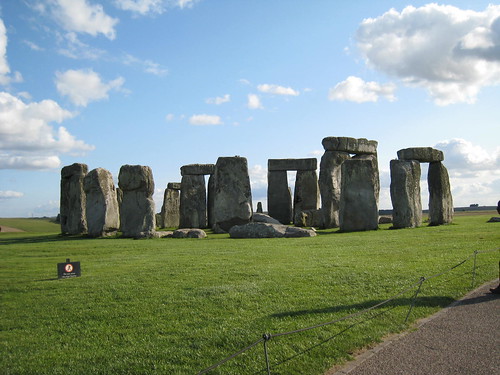
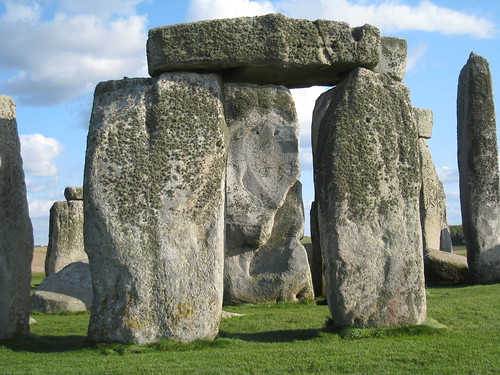
On Thursday, my fiance and I headed down to the more southern parts of England to visit Stonehenge and two medieval cities, Winchester and Salisbury, with a bit of camping in between. Stonehenge was first as it was on our way. I can’t tell you how impressive it is in person. Making the turn off the highway, it appears suddenly on a hill and is simply awe-inspiring. It’s even more so up close. You can’t touch the stones, but they do let you get closer to them than I’d expected.
Afterwards, we were off to the camp site, to set up our new tent. We had a lot of trouble with our tent and ended up with four people helping us put it up. The poles that came were a bit too long and for some reason the straps were not adjustable. Keith knew it was too good to be true, as he got it on sale. We made it work in the end and we have better ideas on what to do next time.

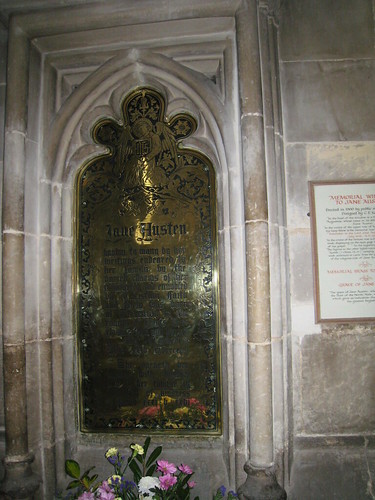
The next day, it was out to Winchester. Jane Austen’s house was fairly near Winchester, but not close enough for us to do everything we could in the city and go out there, so we didn’t. We did visit Winchester Cathedral, where she is buried, and the house in which she died.
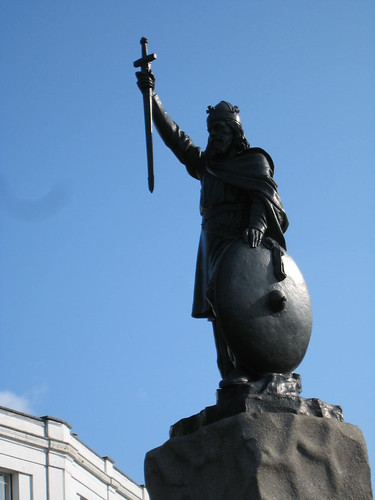
Winchester was the Anglo-Saxon capital of England, so there were many memorials to Alfred the Great scattered about, including this Victorian statue, and the place where his bones may rest. No one knows what actually happened to Alfred’s bones, or those of his wife and son, which were moved at least three times. His grave was looted after Henry VIII’s break with the Catholic church and his bones were either scattered or re-discovered in the 18th century. The bones that were discovered by an amateur archaeologist were buried here, in St. Bartholomew’s Church, in a simple grave marked with a cross.
 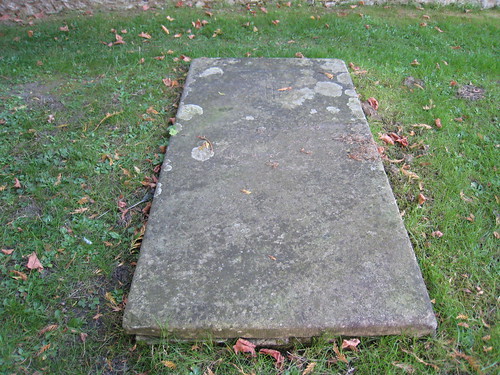
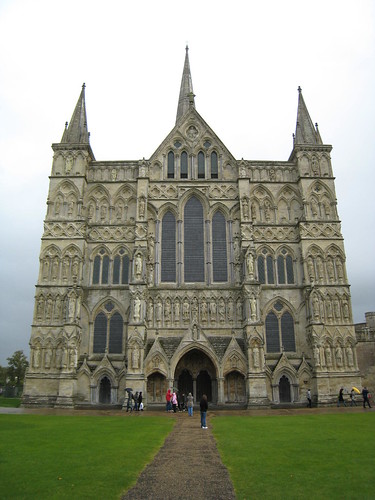
Yesterday, we went to Old Sarum and Salisbury. I’m not sure if any of you have read Sarum by Edward Rutherfurd, but these are the places that he mentioned. The castle is unfortunately in ruins now; in the 18th century, again, the king gave permission for it to be demolished and its stones used as building materials. All that remains is an outline and the rubble that occupied the interior of the walls. And in Salisbury, the best part was definitely the cathedral. It’s a miracle this cathedral is still standing; it has only four feet of foundation, the pillars have bent over from the weight of the tower, and the whole thing sits on a bed of wet gravel. They assume the wet gravel is holding the cathedral and check every day to make sure there’s still enough water beneath it. I’m not sure what they’d do if there wasn’t.
While there, I continued reading The Name of the Wind by Patrick Rothfuss. It’s taking me forever to read this book thanks to being away, but I’m completely loving it. I’m looking forward to sitting down with it and finishing it tomorrow – only to wait until next year for the sequel, and probably 2010 for the third installment! I can tell I’ll be revisiting this book before the rest of the series is out. by Patrick Rothfuss. It’s taking me forever to read this book thanks to being away, but I’m completely loving it. I’m looking forward to sitting down with it and finishing it tomorrow – only to wait until next year for the sequel, and probably 2010 for the third installment! I can tell I’ll be revisiting this book before the rest of the series is out.
Of course, I managed to acquire a few books in Winchester and Salisbury; the camp site had a small shelf of books for 50p each, where I acquired The End of Mr. Y . There was also a sale on in Winchester to support the Deanery associated with the cathedral, so I picked up three more books there, and my fiance bought me Azincourt . There was also a sale on in Winchester to support the Deanery associated with the cathedral, so I picked up three more books there, and my fiance bought me Azincourt , Bernard Cornwell’s newest book, as a gift. , Bernard Cornwell’s newest book, as a gift.
How was your weekend?
 Dr. Jack Eisner is a successful ER doctor who has thrown himself into his work ever since his girlfriend Sophia left him. When one particularly difficult case comes in, he accidentally inserts an IV into an artery. Somehow after the emergency surgery was over, this error wasn’t detected and the patient died. Dr. Eisner is mistakenly blamed for this problem and suspended from the hospital. In despair, Jack takes off on his boat, accidentally traveling into foreign waters. Will he survive long enough to have his name cleared? Dr. Jack Eisner is a successful ER doctor who has thrown himself into his work ever since his girlfriend Sophia left him. When one particularly difficult case comes in, he accidentally inserts an IV into an artery. Somehow after the emergency surgery was over, this error wasn’t detected and the patient died. Dr. Eisner is mistakenly blamed for this problem and suspended from the hospital. In despair, Jack takes off on his boat, accidentally traveling into foreign waters. Will he survive long enough to have his name cleared?
This is quite an interesting story and I think it has a lot of potential. I don’t often read this sort of book, which I’d classify as a medical/legal suspense, and I found it interesting and some of the terminology educational. I also found it entertaining, which is probably my most important consideration, and it was quick, fun read.
On the other hand, while I have never written a novel myself, I do think it could use a bit of improvement, mainly in two areas. First of all, it is not classified correctly, which is part of the reason I hesitate to write this review. It is definitely not romance, and I thought I was getting a romance novel. No one falls in love in this book. There are couples, both separated and together, but none of them are new and the most romance this book contains is the short synopsis giving us background for the relationships. That’s not at all a problem, some of my favorite books contain no romance whatsoever, but I think it could fall into the hands of more appropriate reviewers with a correct classification.
Secondly, the dialogue could be improved. Mr. Lynch can write, there’s no question about that. The novel is entertaining and the prose sections read very smoothly – the words disappear from the page so you can fall into the story, if you understand what I mean. Unfortunately, when characters speak, sometimes their words are very, very awkward. It would be difficult to imagine someone speaking these bits of dialogue out loud. It isn’t all like that and entire chapters passed where I didn’t notice anything, but it could be better.
In short, I’m going to say that if an editor went over this book with Mr. Lynch, it could be fantastic. As it is, the book is an entertaining read with some issues. In its favor, it’s short and it’s interesting and it delves into an area that I haven’t really read much about, medical malpractice. Overall, I enjoyed it. Buy this book on Amazon.
 Pecola Breedlove believes that she is ugly and fervently desires blue eyes, the symbol of loveliness for her. This extraordinary novel examines why she, an innocent little black girl, is convinced that she is ugly and insignificant, while contrasting her situation with the ideal of both white girls and light-skinned black girls. Pecola’s story both begins and ends with her father’s rape of her and the death of her child. Pecola Breedlove believes that she is ugly and fervently desires blue eyes, the symbol of loveliness for her. This extraordinary novel examines why she, an innocent little black girl, is convinced that she is ugly and insignificant, while contrasting her situation with the ideal of both white girls and light-skinned black girls. Pecola’s story both begins and ends with her father’s rape of her and the death of her child.
This novel is stunning. Morrison goes into the heads of five different characters, carefully showing us their effect on Pecola with prose matched to each person’s status in life. The only time we witness Pecola’s own thoughts is when she has gone mad, talking to herself about how blue her new eyes are.
Before I continue, let me explain a little about me: racism has never existed in my life. I am from a very white town but I had always assumed when I was little that it was a foregone conclusion that no matter the color of your skin, you are another person just like me. I had no preference between black and white dolls as a child. I have never witnessed any acts of racism. Ever. The black kids in my school were treated the same way as everyone else, and the same went in my universities, both home and abroad. That may make me naive and sheltered, but most of all it means I need a reminder that racism has existed so recently and still does exist. Every time I read a book like this, or a book like To Kill a Mockingbird, it hurts and I can’t believe that people really think like that, even though I know they must have and do. It’s important to read this and experience just how completely wrong was the idea that only white girls were beautiful – that only white families were perfect and deserving of idealization – that blue eyes were necessary to be lovely.
Of course, Pecola’s family is not every black family by far and there are white families that are just as destructive. Regardless, the racism in this book is deeply moving. Why would every little black girl want a white baby doll? It makes no sense. Why is a light-skinned, rich little girl more valued and more popular than the darker little girls? By writing this from the viewpoint of children, Morrison shows us how the attitudes of adults deeply affect and form racism before the child can understand what he or she is feeling; how black children are automatically put on the defensive when they’ve done nothing wrong.
This is an extremely valuable book and I think it should be very widely read. I believe it is now actually, thanks to Oprah and the Nobel Prize. These are the sort of books that cast essential light on the human experience; what we do to each other and what we do to ourselves, even if we believe this sort of behavior is behind or below us. It has been banned in many places apparently because of the sexual content, the racism, and the incest. I think, however, that it is threatening to many people’s ideals. After all, it is a book at its core about racism and how racism affects a little girl who doesn’t know any better; it threatens by showing what the world once was and what may lay latent in many minds today, or by reminding people of the repercussions that their past actions may have had. I’m going to stop here because my review isn’t doing this book justice, and in fact it doesn’t need my review at all. It should be read; it will speak for itself. Toni Morrison is brilliant; I’m off to read more of hers. Buy this book on Amazon.
 Mau is about to become a man. He has endured his time on the solitary island, made his canoe, and is ready to head back to his own island, Nation. Then, the wave hits, and his home is forever changed. Now alone, Mau copes with his loss by befriending another straggler, Ermintrude (who changes her name to Daphne), the daughter of an English lord, and they start rebuilding their lives Mau is about to become a man. He has endured his time on the solitary island, made his canoe, and is ready to head back to his own island, Nation. Then, the wave hits, and his home is forever changed. Now alone, Mau copes with his loss by befriending another straggler, Ermintrude (who changes her name to Daphne), the daughter of an English lord, and they start rebuilding their lives
This is a charming story. Daphne was my favorite character with her very real life experience and her humorous view of every situation. It’s interesting to watch her cope with an entirely new life on the island. I also loved the relationships between characters Of course, this YA novel isn’t entirely realistic, and is more along the lines of a comic fantasy, but that doesn’t take away from it at all; Pratchett’s humor is the same as in his Discworld series. The story is unrealistic, but ultimately conveys messages beyond the confines of the story.
In the end, I liked it. Maybe not as much as Discworld, but it was an enjoyable read. Buy this book on Amazon.
|
|



Recent Comments