|
|
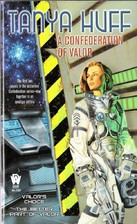 If someone had told me five years ago that I would read a series that was ultimately military science fiction and absolutely love it, I would have laughed at them. Well, maybe not out loud, but I wouldn’t have believed a word. If someone had told me five years ago that I would read a series that was ultimately military science fiction and absolutely love it, I would have laughed at them. Well, maybe not out loud, but I wouldn’t have believed a word.
Enter these books, and my younger self is completely proven wrong.
Staff Sergeant Torin Kerr is the star of these books. She’s a tough Marine who takes her responsibility for her people very seriously, which is one of her most endearing traits. They’re her Marines, and her primary objective (aside from following orders) is always to bring them home.
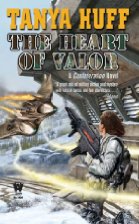 But these aren’t books that are simply full of missions. Though each one is shaped around a particular mission, even in a sense the last one, they’re also very character-focused, especially on Torin. Her essential nature never changes, but she begins to understand a number of aspects of the world around her as the books go on, and she adapts to every circumstance. While she’s clearly in charge, the books also switch viewpoints to focus on the Marines. I’m not in the military, and would prefer to keep it that way, but I couldn’t have imagined a better depiction of what must happen when a trained group of people form for the exclusive purpose of fighting other people. I will admit freely that I often forgot the names of some of these Marines, because they change from book to book (with a few exceptions) but the sense of camaraderie and spirit remains the same. But these aren’t books that are simply full of missions. Though each one is shaped around a particular mission, even in a sense the last one, they’re also very character-focused, especially on Torin. Her essential nature never changes, but she begins to understand a number of aspects of the world around her as the books go on, and she adapts to every circumstance. While she’s clearly in charge, the books also switch viewpoints to focus on the Marines. I’m not in the military, and would prefer to keep it that way, but I couldn’t have imagined a better depiction of what must happen when a trained group of people form for the exclusive purpose of fighting other people. I will admit freely that I often forgot the names of some of these Marines, because they change from book to book (with a few exceptions) but the sense of camaraderie and spirit remains the same.
This is science fiction, and as such, a lot of the books are spent in space or exploring distant worlds. As I am both unfamiliar with the military and with actual space travel, the first book took an investment of time for me to actually sink into the world. The aliens come with particularly defining characteristics that do make their species easy to remember, though, and reminders for these are sprinkled throughout the books without ever becoming overwhelming. I read them in quick succession, and I never felt that I’d read that the Krai ate anything too many times. Usually, Huff works these details into the plot well.
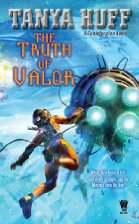 Speaking of plots, they’re very well done. Though each is a mission of sorts, the circumstances around them are entirely different. Each book builds on the overarching plot and takes the opportunity to make a story that spans not only one book but the whole series. While each concludes and doesn’t end on a cliffhanger, I always wanted more, and bought the last two books at once because I knew I wouldn’t want to stop reading. Speaking of plots, they’re very well done. Though each is a mission of sorts, the circumstances around them are entirely different. Each book builds on the overarching plot and takes the opportunity to make a story that spans not only one book but the whole series. While each concludes and doesn’t end on a cliffhanger, I always wanted more, and bought the last two books at once because I knew I wouldn’t want to stop reading.
And, you wouldn’t predict this going in, certainly not until the third book, but there is even some romance in these books, although it’s the subtle, heart-felt kind of romance that I think I love the best of all.
Once you’ve reached Heart of Valor, in my view, the series becomes golden, and I loved every minute of the last three books. The set-up in books 1 and 2 (combined now as the omnibus A Confederation of Valor) is 100% worth it. This is beautifully character-focused science fiction, excellent for both those who like their spaceships and those who need strong, relate-able characters in their books. Very highly recommended.
I bought all of these books.
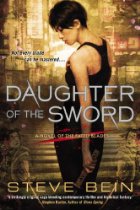 I could sum up this review with just four words: this book was awesome. I could sum up this review with just four words: this book was awesome.
Daughter of the Sword is about a group of swords created by master Japanese craftsman Inazuma. In the present day, only three swords are known, and Mariko Oshiro, the only female detective in the Tokyo Police Department, is about to become acquainted with one. Constantly fighting for her place in the department already, Mariko faces fierce sexism in her determination to prove herself. Instead of a case which is easily solved, she’s sent all the way across town to help an older man, Professor Yamada, in a seemingly inconsequential case. Twined in with her story are those of other sword owners, set in a variety of historic versions of Japan, as we learn more about the swords’ unique personalities and their context throughout history.
This book combined so many fantastic elements to create a beautifully cohesive whole that was simply a pleasure to read. I loved each and every story as we followed the swords throughout history. I’m not all that familiar with Japanese history, but I love the feel of these and I relished in the unfamiliar. I liked getting back to Mariko, but I also felt like each of the smaller stories was surprisingly fleshed out for a relatively short book. They added so much context and history which could have otherwise been lost in big city Tokyo – it’s a clever construction that adds layers of Japanese culture onto a modern day bustling city and police department.
Contrasted with these beautiful bits of history, the yakuza, or Japanese mafia, comes to light through the character of the villain, a man who has and is seduced by one sword but is determined to have two. I’d never even heard of the yakuza before, but having poked around on the internet, it appears to be a real thing, an institutionalized part of Japanese culture. He’s not exactly a pure villain, though; how many villains go and visit their fathers in the hospital in the course of a story?
And then there is Mariko herself, who is a wonderful main character, so determined and stubborn and ambitious. The sexism that she comes up against is so frustrating that I wanted to scream against her superiors myself. She is Japanese, but because she grew up in the United States instead of in Japan, she is determined to fight against the trend and make a name for herself, paving the way for other female detectives in Tokyo, while the establishment is firmly against her. This not only helps this American reader cheer her on, but gives those who are not Japanese an easy way in to start trying to come to grips with a culture that is mostly unfamiliar to us.
The fantasy touches in this book are very very light, mainly around the personalities of the swords and the way they influence their owners. I thought the focus on swords was fantastic, but I have a strange fascination with swords anyway, so your opinion of this may vary. But I love books that take a single element and use them to tie everything together, and in this case, all was beautifully done.
Very highly recommended! I can’t wait for the release of book 2 in December.
All external book links are affiliate links. I purchased this book.
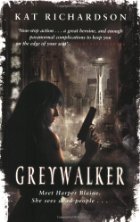 I’ll admit that I am not the world’s pickiest reader. I adore urban fantasy and I am often very willing to overlook faults in one of these books if one of the elements in the book – the world, character development, general plot, etc – stands up to me as worth reading. I have series in the genre that I adore, like the October Daye and Kate Daniel series, and I have some that I generally keep reading because they’re amusing and quick and keep my mind busy. I never know what to expect when I start a new series, and I’d heard some great reviews of Kat Richardson’s books. I’ll admit that I am not the world’s pickiest reader. I adore urban fantasy and I am often very willing to overlook faults in one of these books if one of the elements in the book – the world, character development, general plot, etc – stands up to me as worth reading. I have series in the genre that I adore, like the October Daye and Kate Daniel series, and I have some that I generally keep reading because they’re amusing and quick and keep my mind busy. I never know what to expect when I start a new series, and I’d heard some great reviews of Kat Richardson’s books.
Unfortunately, I completely failed to connect with Greywalker. I just couldn’t become invested or interested in the plot. It seemed like the heroine spent the entire book just talking to people. She’d go to the office, talk to people on the phone, go investigate in the evenings, talk to more people, and so on. It’s a shame because it starts out fantastic. She actually dies for two minutes after being attacked and, when she wakes up, discovers that she can suddenly “see” a whole other dimension of the world which is called the Grey, hence the title of the book. Unfortunately her discovery of the Grey mostly leads to her spending a lot of time talking about it, and when she does experience it, it’s mostly confusing and then needs to be explained. I still don’t really feel like I have a handle on what exactly she can do there or even what it is, probably because she spends most of the book denying that she has this new ability.
There are aspects of it that I should have liked. The setting is a good one. It feels very much like the book was set in the early 90’s. All of the characters have pagers, for one thing, which just seemed odd to me, as I’m mostly too young to have experienced the actual use of pagers in every day life. The book is set in Seattle and has a very rainy, very appropriately grey vibe pervading it. Harper also seems older than a standard urban fantasy heroine, experienced in her job and to a degree set in her ways.
But as a character, she didn’t appeal to me very much. Despite the drastic beginning of the story, she didn’t change very much, and I couldn’t understand why the main love interest was actually attracted to her, especially after a few of the events in the story took place. Not that I liked him much, either; all of the characters felt peculiarly shallow and I didn’t really care what happened to them. Harper is meant to be special, but I couldn’t really figure out why she in particular was special or what purpose she actually served that another person who could see the Grey couldn’t. Maybe my brain was just working too slowly while I was reading, but the details of the story just never fleshed out and became clear.
At this point I’m not sure I want to read the rest of the series. I’ll definitely get it out of the library if I do. Has anyone else continued reading and found it worth persevering?
I purchased this book.
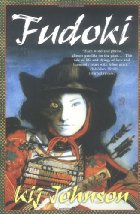 Princess Harueme has lived her life in the shadow of Japanese emperors. In the winter of her years, though, she needs to leave court and head to a convent, where she already knows she will die. Compelled to fill empty notebooks, Harueme begins telling the story of Kagaya-hime, a cat who has lost her family and her fudoki due to a horrible fire in the middle of her city. As the story progresses, Harueme intertwines the tale of her own life with Kagaya-hime’s, and we slowly learn about these two women and their individual struggles. Princess Harueme has lived her life in the shadow of Japanese emperors. In the winter of her years, though, she needs to leave court and head to a convent, where she already knows she will die. Compelled to fill empty notebooks, Harueme begins telling the story of Kagaya-hime, a cat who has lost her family and her fudoki due to a horrible fire in the middle of her city. As the story progresses, Harueme intertwines the tale of her own life with Kagaya-hime’s, and we slowly learn about these two women and their individual struggles.
I never doubt Ana when she recommends a book and this is one I can specifically trace back to her recommendation. I could not resist the idea of this cat-turned-woman story. Even so, as with so many books, it sat on my wishlist until a friend bought it for me, and then I finally read it – and, of course, I loved it. It immediately drew me in with the tale of a tortoiseshell cat who loses her entire family and just barely survives the fire; it’s sad, but poignantly written, and it felt just pitch-perfect. The book remains just that perfectly and magnificently written.
This story of intertwined women shines so brightly and has so many things to say about life that I’m not even sure I can review it properly. It’s one of those books that illuminates things that I hadn’t necessarily thought about, but in a way that stuck me as perfect.
Perhaps some quotes can illustrate this better than I can:
What man, what lost love or deceased kinsman is worth death? The space in my life that my half-brother once filled is now an aching icy pain, like the hole left after a tooth is pulled, and I am dying in weeks or months – and yet I still fight for life, as every mouse does, until the final beak-blow. The grace in tragedy is not to succumb, but to fight on. (87-88)
It’s such a beautiful book. I loved the format with the story of the two women, I loved Kagaya-hime’s cat-like sensibilities, I loved Harueme’s thoughtful reflections on her life gone by. It’s a book to make me wish I was more articulate so I could explain better just why it appealed to me. I haven’t read The Fox Woman which is Johnson’s first book, but I wish that I had, as I’ve read that the books are connected in small ways. In a way, though, I’m glad, because it’s an excuse to read this book again.
Another quote:
Domei once told me that he missed war.
“How can you?” I asked, shocked.
He was drunk and more candid than usual: he slurred as he spoke. ” I have never had such good friends.”
“You are surrounded by people who love you,” I said, “and no one is dying here.” How could war be better than this? Than me?
“We are all dying,” he said. “We just forget that when nothing is trying to kill us.” (233)
Very highly recommended.
 Seraphina has spent much of her life refusing friendships and hiding herself from those who might get close to her. Why? Because she is half dragon, would be considered an abomination by almost everyone she knows, and cherishes her relative freedom from prejudice and prosecution. The love between her parents was forbidden and she has already overstepped her bounds slightly by taking a job in the royal court, helping with the orchestra and giving the Princess Grisselda music lessons. The peace between dragons and humans is an uneasy one, however, particularly when dragons can take human form, indistinguishable from real humans if they fail to wear their bells. Both dragons and humans are wary, and it would take just one powerful rebel to tip the balance. Seraphina has spent much of her life refusing friendships and hiding herself from those who might get close to her. Why? Because she is half dragon, would be considered an abomination by almost everyone she knows, and cherishes her relative freedom from prejudice and prosecution. The love between her parents was forbidden and she has already overstepped her bounds slightly by taking a job in the royal court, helping with the orchestra and giving the Princess Grisselda music lessons. The peace between dragons and humans is an uneasy one, however, particularly when dragons can take human form, indistinguishable from real humans if they fail to wear their bells. Both dragons and humans are wary, and it would take just one powerful rebel to tip the balance.
Seraphina is a book that completely surprised me. I don’t know why – I bought it because I’d seen many praising reviews of it around the blogosphere, so I knew, objectively, that I might like it. But subjectively, it didn’t actually appeal to me that much. I didn’t feel like reading a book about dragons, the cover didn’t broadcast to me that I would like it (although why I’m not sure – on a closer look it’s actually lovely), and YA is not my favorite genre. I bought it when it was on the Kindle Daily Deal, as something that I knew I should try, but had no particular plan to read it. And then I was on the train on Friday, I’d finished the last book I was reading (Widow’s Web by Jennifer Estep), which had ended on a slightly low note, and I just had no idea which book I wanted to read next. For whatever reason, Seraphina called to me then, so I opened it.
It wasn’t even love at first few pages. In fact, I found it difficult to get into, and if I wasn’t sitting on train with nothing else appealing to me much, I might have wandered over to my bookshelves and chosen something else. But I stuck with it, because I had twenty minutes to fill. And then I fell in love with it, and found myself absolutely glued to the Kindle until I finished. I loved it even more because it blind-sided me and I expected not to like it; instead I found an absolute gem. The book has a fantastic, multi-layered world, deep characters, and a plot that races along and managed to surprise me at the end.
I simply adored Seraphina. I loved that the book took prejudice head-on and showed that this tough, brave, sensitive, clever, gifted girl is someone that most of the population around her would hate if they knew her true nature. They adore her, but how easily that could change, and how worried she is despite that affection – this is a worry that is justified but this book is a perfect example of how well fantasy can teach us about our world, too. I even loved how Lucian Kiggs, another significant character in the book, shares some stigma with Seraphina because he’s a bastard, but in a totally different way. We could also talk about how much I loved the romance and how utterly perfect it was, but that really just capped off a book that was already spectacular.
This is the book I wish I’d read instead of all of those disappointing YA fantasy books I did read. Highly, highly recommended.
 Ivan Vorpatril, never regarded as one of the brightest in the Miles Vorkosigan series, gets his own book in the Vorkosigan saga with Captain Vorpatril’s Alliance. Consigned to a relatively minor military governance role, Ivan’s life is relatively peaceful and his job is one that he does well. That is, until his cousin Byerly Vorrutyer appears on the same planet and informs him of a plot against a woman in the same exact city. A gentleman at heart, Ivan goes to investigate and befriend said young woman, and before long finds himself more or less accidentally married. Ivan Vorpatril, never regarded as one of the brightest in the Miles Vorkosigan series, gets his own book in the Vorkosigan saga with Captain Vorpatril’s Alliance. Consigned to a relatively minor military governance role, Ivan’s life is relatively peaceful and his job is one that he does well. That is, until his cousin Byerly Vorrutyer appears on the same planet and informs him of a plot against a woman in the same exact city. A gentleman at heart, Ivan goes to investigate and befriend said young woman, and before long finds himself more or less accidentally married.
I’ve written a lot about how much I love the Vorkosigan Saga and thus it’s no surprise that I actually preordered this book as soon as I discovered its existence. Ivan is mentioned a lot in the saga as Miles’s less intelligent cousin who ends up involved in a great number of the latter’s schemes, and it was a great idea to give him his own story so we could finally see inside his head. Because I actually waited a few months to read this book, I’ve seen a number of reviews and read quite a few opinions already, and I do have to agree that while this particular installment isn’t as amazing as some of the other books in the series, it’s a lot of fun and worth reading.
Captain Vorpatril’s Alliance is a book that is very well-plotted, with events taking place at all turns, and a certain elegance to the way that all of the various schemes by all of the characters play out at the end of the book. It felt a good deal lighter than some of the previous books in the series, though, perhaps because the life-or-death circumstances generally aren’t quite as severe as the situations that have faced Miles. Really, they’re over by the time that Ivan and his surprise bride, Tej, get married, and a lot of the rest of the book has to do with how that particular couple get on both with one another and with some of Tej’s family.
A lot of the ensemble cast from the rest of the series appear, too; some of them only appear for a few pages, but they do add a certain something to help the book fit in with the universe. For this reason, though, I think a new reader of the Vorkosigan saga would end up confused, as there are a number of little in-jokes and references to the world that would simply pass them by. This is definitely one for those who have already read most of the series. Chronologically, it takes place in the years before Cryoburn, and it wouldn’t surprise me if preferred reading order later places this in front.
Overall, though, I had a lot of fun with Captain Vorpatril’s Alliance and it’s certainly worth reading for those who have enjoyed the rest of the saga.
All external book links are affiliate links. I purchased this book.
 Everyone has heard the rumors about Mr. Wright. He’s a notorious rake, and not at all appropriate company for Miss Eliza Cade. While she’s old enough to be out in society, her family is convinced that she’ll bring them all down into scandal; so convinced that her three sisters must marry before she can have her first Season. And so, spending time with the very scandalous Mr. Wright is dangerous, leading her right down the path her family worries about, but somehow Eliza just can’t resist. Everyone has heard the rumors about Mr. Wright. He’s a notorious rake, and not at all appropriate company for Miss Eliza Cade. While she’s old enough to be out in society, her family is convinced that she’ll bring them all down into scandal; so convinced that her three sisters must marry before she can have her first Season. And so, spending time with the very scandalous Mr. Wright is dangerous, leading her right down the path her family worries about, but somehow Eliza just can’t resist.
This novella was simply delightful. I’ll admit to being shallow and mainly buying it because the title was so appealing, but I have read and previously enjoyed a few of Tessa Dare’s full-length novels so it was worth the very small price tag.
Immediately, I was struck by how very clever the writing in this book was. I read it in Kindle format, and the number of “highlighters” – other people marking a passage in a novel as significant – was higher than any I’d ever seen in another romance novel. The author has a habit of sneaking truths in dialogue that catch you off-guard and immediately build character. Take this example that comes from Harry when Eliza suffers grief:
“You’ve seen that all the joy and beauty of the world is fragile. Just bright daubs of paint on the surface of an eggshell. Now you’ll reach for it more cautiously. No more wild grasps at glory. It’s that innocence you’re mourning.”
And from Eliza, at a flirtatious moment:
“It’s a funny thing about suspicions, Mr. Wright. All too often, they’re just vain hopes in disguise.”
Little statements, caught in dialogue, but snatching at truths about life and growing up and understanding these characters.
I loved the way Tessa Dare challenged external assumptions in such a short form. Harry – Mr. Wright – might be deemed scandalous, but why? What does it take to gain that reputation? Similarly, Eliza’s parents are convinced she’ll get into trouble because of something that happened when she was young, but once the reader discovers the reason behind it, we’re compelled to question our assumptions about both characters and revise what we previously thought. They have to do the same with each other throughout the book, and watching them learn one another’s true characters was a real pleasure.
Moreover, the novella format means that we’re focused on just one thing; there aren’t any sideplots and the only other romances are Eliza’s sisters’ in the background. No, here we have a love story between two people who are attracted to one another from the start, but who have to learn a great deal about each other before they can properly fall in love. The Scandalous, Dissolute, No-Good Mr. Wright is wonderful and sigh-worthy, and completely recommended for an evening in. Excuse me while I go gorge on the rest of Tessa Dare’s wonderful books!
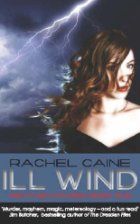 These are the first two books in the Weather Wardens series. I thought it was easiest to review both in one post and share more general thoughts on the series, rather than a specific book review for each. These are the first two books in the Weather Wardens series. I thought it was easiest to review both in one post and share more general thoughts on the series, rather than a specific book review for each.
Joanne Baldwin can control the weather. As one of the Weather Wardens, she’s responsible for maintaining the natural flow of the weather and helping even out major crises. But things aren’t going so well for her, as she’s acquired a Demon Mark and the only person she knows who can help her get rid of it is in hiding. In fact, he’s impossible to find, and Joanne is running out of time. With deceitful Djinn (genies) in her way and secretive friends, Joanne isn’t sure who she can trust to help her get rid of her Demon Mark and return to her job.
Urban fantasy is one of my favorite genres. I have plenty of examples of the genre where the characters are amazing and develop with realistic relationships and death-defying odds and cool magic systems – everything that I look for in a fantasy novel. Unfortunately, these books didn’t deliver on what I wanted, and as a result I think I’ll be leaving this series behind. I’d purchased these books in a 2 for 1 style deal, so I thought I’d keep going, but the second one didn’t really improve on the first.

Primarily, I didn’t connect at all with the main character, Joanne. She’s too focused on fast cars, attractive men, and clothes for me to like her, in perfect honesty. She doesn’t seem all that bright and she doesn’t make the right choices. Or, I should say, the choices I would make in her shoes, nor is she the sort of character that I’d try to understand anyway.
Secondly, maybe I’m not far along enough yet in the series, but there doesn’t seem to be much of a unifying factor. A lot changes in the second book, yes, but then could be completely reversed at the end, which makes me wonder what was the point of reading it at all. The relationships didn’t develop in ways that I believed in, and the characters apart from Joanne felt mostly like cardboard. It’s really an action and emotion novel; you have to get sucked in to follow the ride, and this time I simply wasn’t sucked in at all.
It’s a shame because I really wanted to like this series, and it isn’t as though I minded reading it. I just feel like my standards for this genre have been raised so high by the utterly amazing fantasy that I’ve been reading that these two books weren’t really there. I am afraid I can’t recommend this series.
I purchased these books.
 This review will contain spoilers for Blackout. You should always read that first before you read this book or this review! This review will contain spoilers for Blackout. You should always read that first before you read this book or this review!
Mike, Polly, and Eileen have finally found one another in the midst of the London Blitz in 1941, but they’ve discovered, to their dismay, that none of them can get back to their own time. Oxford in 2060 is several lifetimes away and they may need to resign themselves to living in the Blitz forever. They keep trying, however, sending messages to the future and coding things to let their time travelling cohorts find them more easily, and slowly the pieces of how they got lost in the past start to fall together.
These two books – Blackout and All Clear - have received a lot of criticism for being too long and under-edited. I’ve seen plenty of cynical remarks to the effect that two books sell more copies than one. I am going to say that I never really felt that way. They were long books, yes, but perhaps I read through them so quickly that neither dragged for me. After I finished Blackout, I immediately picked up All Clear so I could get right back into the disrupted lives of these three time-travelling characters.
I was glad that, not too long into this book, the plot threads start to go together and everything begins to make more sense. While the first book was about each character’s realization that they are trapped in an incredibly dangerous historical period, the second book is about how they will get themselves out of that and what actually happened to a few of the other characters mentioned in the previous book. They are still very much required to deal with the situation, but everything actually wraps up. There were a couple of characters introduced in the first book without any real background story and their roles were clarified and we did figure out who they all were.
Everything I loved about the first book is still true; the atmosphere remains fantastic throughout and I appreciated that we continued to get a feel of the different parts of the war, too. The main focus is really on London and precisely what happened, and there are some very tense and dramatic scenes as the characters fight to keep themselves and others alive. Willis really can make you feel as though you’re in the midst of each and every struggle with the characters.
There isn’t much else I have to say about this book that I didn’t say about the first, but rest assured that if you are looking for a dramatic read set during World War II and don’t mind or would love a little time travel in your books, this is a duology well worth reading. Highly recommended.
All external book links are affiliate links. I purchased this book.
 Piscine Patel is the young son of an Indian zookeeper. A deeply religious boy, he loves every sign of God, even in the animals that his father keeps. When Pi’s family is forced to leave their native India and move to Canada, many of the zoo’s animals in tow on a massive industrial boat, Pi is alternately excited and devastated. When the ship sinks, though, and Pi must battle for his life, devastation, survival, and even religion take on new meaning. Piscine Patel is the young son of an Indian zookeeper. A deeply religious boy, he loves every sign of God, even in the animals that his father keeps. When Pi’s family is forced to leave their native India and move to Canada, many of the zoo’s animals in tow on a massive industrial boat, Pi is alternately excited and devastated. When the ship sinks, though, and Pi must battle for his life, devastation, survival, and even religion take on new meaning.
Life of Pi is a book that I had kicking around for more than four years, knowing that other people had loved it but somehow never making the time to read it for myself. The release of the film, and the possibility that I might see a film before I’d read the book that inspired it (gasp), led me to finally pick it up and see for myself what all the fuss was about. What I found was perhaps the first book featuring magical realism that I’ve enjoyed and a striking tale about survival and stories and, in the end, true meaning and whether or not it matters.
I admit that I was a bit perplexed when I first started reading. Nearly a third of the book takes place before Pi has even left India and a surprising chunk of that part of the book is consumed by his religious nature. He decides that he believes in Christianity, Islam, and Hinduism, praying and taking mentors for each religion. He just wants to worship God, and all ways of worshipping God are sacred to him, an idea which I found fascinating but which didn’t seem related to the part of the book that I knew about, which was the part where he is on a lifeboat with a tiger.
It all makes perfect sense in the end, fortunately, and I think what Martel is trying to comment on is really the nature of story. If you read to the end of the book, he offers two explanations for what happened to Pi on the lifeboat, but it doesn’t really matter what truly happened. Either explanation can be true; one just requires more of a leap of faith than the other. In such a way, religions require that leap of faith, that belief, but at the core of them, the stories are human. I’m an atheist myself but I found the whole story and the end fascinating. It wasn’t what I’d expected at all, and I immediately felt that this is a book I’d like to talk about in a lot more depth, which might take on new significance the more it’s considered.
Regardless of how you take the story within this book’s pages, it’s a moving portrayal of Pi’s spirit and will to survive in the face of elements clearly much larger than he is. Definitely a book worth reading – and now I’m looking forward to seeing the film!
All external book links are affiliate links. I purchased this book.
|
|



Recent Comments