|
|
I don’t often take official breaks from blogging, but this week I really need to. I’m fairly certain I’m getting carpal tunnel syndrome in my wrists, which makes typing very painful. Since I have to spend all day on a computer for my job, the blog has to take a rest until I’ve recovered. So, I’ll be staying away from the computer and typing in the evenings all week and I hope to see you back here next Sunday. I’ve got some reading to catch up on, especially MaddAddam by Margaret Atwood, which means I will return with lots to say at least. Plus, these:

Have a wonderful week and an excellent start to October everyone!
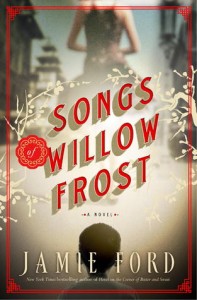 Twelve year old William is an orphan, as far as he knows. From the moment his mother’s limp body was carried away five years ago, he’s been a lost soul at an orphanage in Seattle. He has a few friends, including his blind best friend Charlotte, but he longs for a family. As a Chinese-American, though, his chances for adoption are incredibly slim, and he’s resigned himself to years of the same treatment. On the orphans’ collective, made-up birthday, he’s taken to see a movie. To his shock, William recognizes an actress in the film – his mother! Willow Frost looks and sounds just like the beautiful mother he lost five years ago. William decides that he simply must find her and begins in earnest to seek his family again.
A few years ago I read Jamie Ford’s Hotel on the Corner of Bitter and Sweet, a book that I really liked and which I still think about sometimes. I was very much looking forward to this book, so perhaps a bit of disappointment was inevitable. William’s story just didn’t grab me in the same way, nor did the intertwined tale of his mother. The story is actually considerably depressing, as life was for a Chinese woman left mostly to fend for herself as Willow was. I desperately wanted life to improve for her, but as their stories unfolded, William’s place in the orphanage made the outcome clear.
This was still a very beautifully written book, with a number of evocative scenes. I’m honestly not sure why I personally failed to connect with it when I felt so strongly about Ford’s previous book. Looking back on reading it, most of what I remember is rainy, dreary Seattle and the insurmountable hardships that Willow faced throughout her young life, as well as certain plot events around William that I can’t share. I wanted to reach into the book and fix everything for each of the characters, but sadly that isn’t something actually possible.
Would I still recommend that others read this book? I think so. It’s still a telling portrait of the life of Chinese-Americans in the early twentieth century and the difficult lives they faced. It also paints a picture of early Hollywood. Some of the relationships within are very well written, too. My experience doesn’t seem common, but overall I don’t think this was the book for me. Still, if you would enjoy the elements described above, I suspect you would greatly appreciate Songs of Willow Frost.
All external book links are affiliate links. I received this book for free for review.
 In the seventh installment of Bernard Cornwell’s Warrior Chronicles, Uhtred of Bebbanburg has fallen from the favour of the King of Wessex. Unfortunately, he’s also fallen from the favour of the Mercians. Double dealing drives him from his home and he decides that the time is ripe to take back what is his – Bebbanburg. Leading a small band of loyal retainers north, Uhtred sneaks his way into the home of his ancestors, but capturing what is his may be a goal that eludes him once again. As Danes and Saxons struggle for control of the British isles, where will Uhtred fit in?
By this point in the series, I feel like I’ve grown to know Uhtred very, very well. He’s aged and grown somewhat wiser through the years of the story; when he remembers his younger years, it’s easy for the reader to remember them, too, through the books. It’s a strange position for a series to be in, because we’re intimately acquainted with all the characters and conflicts, but the author has to keep the series fresh and maintain interest. With six books to get through before this one, new readers may be put off. They shouldn’t be, though – Cornwell’s books are amongst the best historical fiction has to offer on the Anglo-Saxon period and I love seeing the kingdom of England rise through his eyes.
Because really, that’s what these books are about. Uhtred’s personal struggles are certainly there, with his strong desire to retake his home castle of Bebbanburg and to be with the people he loves, but central to each is the fact that there is a huge struggle between Danes and Saxons that clearly is going to come to an end. As this is history, we know that the Anglo-Saxons win the day and create a united England, but Uhtred doesn’t know that. Cornwell is excellent at telling the story as it comes, so that Uhtred makes no assumptions about what is going to happen. Instead, he focuses on his own goals and loyalties, sticking to a personal moral code and to the men who have gained his loyalty over the last few years.
This book remains as solidly enjoyable as the rest of the series. I love following Uhtred’s adventures. He’s such a great character and he’s really well defined. The battle scenes are as vivid as ever, putting readers straight into the middle of the action so that I could almost feel what it would be like to stand in the shield wall. This part of Anglo-Saxon history is one of my favorites and it’s fascinating watching England come together through his eyes. As I was reading this book initially, I wondered how long the series would go on, but at this point I think it really has to continue until England is united, and I hope Uhtred is there to see it happen.
I recommend The Pagan Lord as I would with every installment of the series, but I do recommend starting with The Last Kingdom, the first of Uhtred’s adventures. It will put everything in context.
All external book links are affiliate links. I received this book for free for review.
In anticipation of the UK release of The Pagan Lord by Bernard Cornwell, the seventh in the Warrior Chronicles, I’ve got an early excerpt to tempt you for publication date on Thursday! Come back tomorrow for my review.
“None of us knew the country, or which way we should go, so I simply followed the Roman road until it joined another that ran north and south. ‘We keep going west,’ I told Finan.
‘Just west?’
‘We’ll find somewhere we know.’
‘Or ride to the world’s end,’ he said happily.
The fog was lifting and the land rose slowly until we reached a rolling upland where there were fat farms and big halls half hidden by groves of good trees, and though I was sure folk saw us, no one came to enquire what brought us to their land. We were armed men, best left alone. I sent scouts ahead as I always did in hostile country, and this land was certainly hostile. We were either in Cnut’s land or Sigurd’s territory and all the halls would be Danish. The scouts rode either side of the road, using woods or hedgerows for cover and always looking for any sign of an enemy, but we met none. Once, on the second day, five horsemen came towards us from the north, but they saw our numbers and veered away.
We were among higher hills by then. The villages were smaller and more scattered, the halls less wealthy. I sent my Danes to purchase ale and food from the halls and the Saxons to buy provisions from the villages, but there was scarce any spare food because so many armed bands had been this way before us. I went to one hall where an old man greeted me. ‘I am Orlyg Orlygson,’ he said proudly.
‘Wulf Ranulfson,’ I responded.
‘I have not heard of you,’ he said, ‘but you’re welcome.’ He limped because of an old wound in his left leg. ‘And where does Wulf Ranulfson ride?’
‘To join Jarl Cnut.’
‘You’re late,’ he said, ‘the summons was for the moon’s death. She’s growing again.’
‘We’ll find him.’
‘I wish I could go,’ Orlyg patted his injured leg, ‘but what use is an old man?’ He looked at my companions. ‘Just seven of you?’
I gestured vaguely northwards. ‘I’ve got three crews on the road.’
‘Three! I can’t feed that many. But I’ll have my steward find you something. Come inside, come inside!’ He wanted to talk. Like all of us, he welcomed travellers if they brought news, and so I sat in his hall and petted his hounds and invented tales about Frisia. I said the harvest there would be poor.
‘Here too!’ Orlyg said gloomily.
‘But there is good news,’ I went on, ‘I heard that Uhtred Uhtredson attacked Bebbanburg and failed.’
‘Not just failed,’ Orlyg said, ‘he was killed there!’ I just stared at him and he grinned at the surprise on my face. ‘You hadn’t heard?’ he asked.
‘Uhtred Uhtredson was killed?’ I could not keep the astonishment from my voice. ‘I heard that he failed,’ I went on, ‘but he survived.’
‘Oh no,’ Orlyg said confidently, ‘he died. The man who told me was a witness to the fight.’ He pushed his fingers into his tangled white beard to touch the hammer at his neck. ‘He was cut down by the Lord Ælfric. Or maybe it was Ælfric’s son. The man wasn’t sure, but it was one of them.’
‘I heard Ælfric died,’ I said.
‘Then it must have been the son who dealt the blow,’ Orlyg said, ‘but it’s true! Uhtred Uhtredson is dead.’
‘That will make Jarl Cnut’s life easier,’ I said.
They all feared Uhtred,’ Orlyg said, ‘and no wonder. He was a warrior!’ He looked wistful for a moment. ‘I saw him once.’
‘You did?’
‘A big man, tall. He carried an iron shield.’
‘I heard that,’ I said. I had never carried an iron shield in my life.
‘He was fearsome, right enough,’ Orlyg said, ‘but a warrior.’
‘He belongs to the Corpse-Ripper now.’
‘Someone should go to the Lord Ælfric,’ Orlyg suggested, ‘and buy the fiend’s corpse.’
‘Why?’
‘To make the skull into a drinking cup, of course! It would make a fine gift for Jarl Cnut.’
‘The jarl will have drinking cups enough,’ I said, ‘when he’s beaten Æthelred and Edward.’
‘And he will,’ Orlyg said enthusiastically. He smiled. ‘At Yule, my friend, we shall all drink from Edward’s skull and dine in Edward’s hall and use Edward’s wife for pleasure!’
‘I heard Jarl Cnut’s wife was captured by Uhtred,’ I said.
‘A rumour, my friend, a rumour. You can’t believe everything you hear. I’ve learned that much over the years. Men come here and give me news and we celebrate it and then discover it isn’t true at all!’ He chuckled.
‘So perhaps Uhtred lives,’ I suggested mischievously.
‘Oh no! That is true, my friend. He was chopped down in battle, and he still lived, so they tied him to a post and loosed the dogs on him. They tore him to bits!’ He shook his head. ‘I’m glad he’s dead, but that’s no way for a warrior to die.’
I watched as servants carried ale, bread and smoked meat to my men waiting in the orchard. ‘To find the jarl,’ I asked Orlyg, ‘we keep going west?’
‘Cross the hills,’ he said, ‘and just follow the road. The jarl won’t be in any of his halls, he’ll have sailed south by now.’
‘To Wessex?’
‘To wherever he wants!’ Orlyg said. ‘But if you follow the road west you’ll come to Cesterfelda and you can ask there.’ He frowned. ‘I think you go from there to Buchestanes and the jarl has a hall there, a fine hall! One of his favourite halls, and there’ll be men in the hall who’ll tell you where to find him.’ “
 History is written by the victors. It’s a common phrase that nearly everyone has said or heard. Our history books and our world views are shaped by the people who won wars. Europe’s states, particularly those of western Europe, seem fixed in place. Italy, Germany, Spain; these are definite countries, aren’t they?
Well, as it turns out, and as those who study European history might know, not really. The borders, names, and actual existences of states in Europe have shifted dramatically over the course of the last 2,000 years, with many states completely and totally forgotten except by those who once lived in them. There were seven kingdoms and duchies called “Burgundy”, none of which exist now. Spain was historically fragmented into different countries in the middle ages and exists in an uneasy state now with Catalans seeking independence (and simultaneously forgetting states of their own). The united states of Italy and Germany are fairly new and the destruction of Prussia happened in the twentieth century. And Poland? Poland was completely absorbed into other countries for a time, while the Kingdom of Montenegro not only failed to exist after World War I, no one actually seemed to care. The country only gained independence again in 2006.
Unsurprisingly, I absolutely loved this book. It took me a month to read (during which time I read plenty of fiction) but I found it absolutely fascinating. The book is arranged in roughly chronological order from around the dissolution of the Roman Empire to the fall of the Soviet Union, with 15 states that have either vanished or had huge parts of their history forgotten by the popular consciousness. There’s no real connection between the choices except that they’re all in Europe. Each chapter is broken into three parts. The first part looks at what is happening in the region today, to give us context for the history which follows in the second part. The third part then looks at how well the history has been remembered (or misremembered). This structure worked really well for me; I always like having some sort of context to understand history, and I know enough about the bits and pieces around most of the “vanished” kingdoms to understand the history pretty well too. He goes into more detail with some countries than others, which according to some other reviews makes the book a bit dry, but I didn’t find that to be the case at all.
Naturally this is only a surface glance at each of the 15 “kingdoms” – which can also be empires, duchies, republics, etc. – but it’s a starting point to go out and explore more. Unfortunately a few of the places have been forgotten so thoroughly that the remaining documentation is slight or non-existent, or in another language, but Davies has copious notes at the back of the book, although I’d have loved a suggested reading list of sorts for each.
I really enjoyed the way Davies looked at how history is remembered, too. Each country is different, of course, but it’s fascinating to see how countries treat their own pasts. One of the most extensive was, unsurprisingly, at the end of the chapter on Ireland. Ireland is hardly a forgotten country, but its relationship with England and eventually the United Kingdom is very complicated. Davies ruminates at length on the future of the UK, which he doesn’t think is going to last very long.
All in all, Vanished Kingdoms was completely and totally fascinating. I only wished there were more kingdoms to read about! Very highly recommended.
All external book links are affiliate links. I purchased this book.
 In all four corners of the world, people are about to die. Every moment, someone’s struggle comes to an end. But suddenly, death stops. No one can die, even those with mortal wounds. All of the citizens in the Kingdom of Lethe are perplexed and terrified. Battles rage on, assassinations fail spectacularly, and the elderly continue suffering past their time. Then Death himself arrives and asks for his Cobweb Bride. Only once his bride is found will death resume and the kingdom return to normal. But with no sign of the Cobweb Bride and no hints on where to find her, how will the citizens restore normality to their lives?
Cobweb Bride is a crowd-funded phenomenon by the award-winning author Vera Nazarian. This, plus the concept of the story, had me immediately sold, and I was very eager to read this book.
This book feels unlike anything I’ve read that’s been traditionally published at the moment. It reminded me most of books that I used to read as a child, when fantasy was paramount. The descriptions are incredibly evocative and the world described, though derived from medieval Europe, feels different and special. I could picture the thin, sickly Infanta and the rosy group of girls headed off to find out if one of them was the Cobweb Bride. I could feel the cold seeping into the bones of those who should have died. I could see the royal court and the forests. For someone who isn’t a visual reader, I found this remarkable and really well done.
I also loved the concept. Nazarian doesn’t stop at the end of death for humans; animals and plants can’t die, either. This means that even food supplies are threatened, and by the middle of the book people have to rely on food that’s already dead. She envisions what happens in a body that continues working even after all the elements that make us alive have gone. It’s eerie but really thought through. And some of the conflicts that arise within the story are solely based on this, because supposedly dead people are still alive. The relations between an assassin and the person he would have successfully killed were my favorite part of the book.
Where the book falls down a bit is the way the plot is laid out. It’s a very good story, don’t get me wrong, but the beginning seems to last for a long time. Nazarian very carefully sets the scene for the rest of the book, but as a result it feels like it takes a while to get going. We’ve realized that death has stopped coming after the first two stories, so there is no further surprise factor, it’s just setting up the different storylines to interact in the rest of the book. Once those four storylines are set, I felt the book sped up considerably and I remained spellbound by the story.
Cobweb Bride ends with a lot left open, as it’s the first in a trilogy. I for one will definitely be looking forward to the next, Cobweb Empire, which is released next week on September 25th! Recommended to those who really enjoy fantasy.
All external book links are affiliate links. I received this book for free for review.
 Nicked from Jodie at Bookgazing (whose blog and collaborative blog, Lady Business, you should be reading) – I’ve seen this around and thought it would be fun.
Author you’ve read the most books from:
This is tricky because I’m not entirely sure. I read a LOT of series and I have a number of romance authors that I gorged on in high school. Julia Quinn and Stephanie Laurens loom pretty largely in my LibraryThing even though I’ve not read a book from the latter in years. Stephen King is another one, although again I haven’t read his latest books.
Best Sequel Ever:
Magic Burns by Ilona Andrews – possibly not ever but best I can think of. I really fell in love with the Kate Daniels series at the third book, but in the second book I started to feel like I was getting there.
Currently Reading:
Queen Victoria’s Book of Spells edited by Ellen Datlow and Terri Windling. I’m nearly finished with it. Next up is Mrs Lincoln’s Dressmaker by Jennifer Chiaverini.
Drink of Choice While Reading:
I mostly just drink water, sometimes tea in the morning.
E-reader or Physical Book?
I’m happy reading both. I prefer the look, feel, and smell of physical books, but my Kindle is perfect for books I don’t think I want to keep forever in this space-limited house. Plus, commuting. I can’t carry hardcovers on the train, but the Kindle lets me read huge chunksters without worry.
Fictional Character You Probably Would Have Actually Dated In High School:
Reading more YA would help with this question. I am not sure. Boring answer! Maybe Harry Potter. I have always liked geeky boys.
Glad You Gave This Book A Chance:
Young Miles by Lois McMaster Bujold. Hello, science fiction, I actually like you! Well, more specifically, space opera – but this series changed my view of what I did and didn’t like irrevocably.
Hidden Gem Book:
I always think of Guy Gavriel Kay when I think about hidden gems. Now that I’m into book blogging I know I’m not the only one that loves his books, but I still feel like they don’t get enough recognition. I’ve got River of Stars calling my name at this very moment and I can’t wait to read it.
Important Moment in your Reading Life:
The year I discovered LibraryThing, 2006. I had no idea that so many people felt the way I did about books. I’d certainly never met anyone in real life who did and the community there changed everything. It also led to many things, including this blog. Starting the blog was a pretty big deal, too.
Just Finished:
The Iron Queen by Julie Kagawa. The only series I’ve ever read where the heroine shares my name (Meghan) although not my taste in guys, that’s for sure.
Kinds of Books You Won’t Read:
I’m with Jodie, no self-help or diet books. I also don’t tend to like books set in the current, modern US or UK. I’ll read them if they’re valuable and well-reviewed, but they don’t draw me in naturally.
Longest Book You’ve Read:
I have read War and Peace. I don’t remember any of it (this was 8 years ago) and I’m pretty sure I read a poor translation. But I read it.
Major book hangover because of:
The Remains of the Day by Kazuo Ishiguro. That book left its stamp on me fiercely, despite its quiet nature.
Number of Bookcases You Own:
In the UK, two big ones, two small ones. In the US, two big ones and a small section of the wall next to one of them …
One Book You Have Read Multiple Times:
I read Prince Charming by Gaelen Foley 8 times in high school. I’m afraid to read it now since I’ve been so disappointed with what Gaelen Foley has written in the last couple years.
Preferred Place To Read:
On the couch, downstairs, with the sun coming in the windows.
Quote that inspires you/gives you all the feels from a book you’ve read:
I’m going to go with one of the latest quotes on my Kindle from The Girl Who Fell Beneath Fairyland and Led the Revels There by Catherynne M. Valente:
“September had never been betrayed before. She did not even know what to call the feeling in her chest, so bitter and sour. Poor child. There is always a first time, and it is never the last time.”
Reading Regret:
Skipping longer books I’ll probably love in favor of shorter books that I can read faster. Not re-reading my favorite books often enough.
Series You Started And Need To Finish(all books are out in series):
The Wheel of Time. I can’t believe the series has been finished for months and I still haven’t persuaded myself to read the rest.
Three of your All-Time Favorite Books:
Two favorites, Jane Eyre by Charlotte Bronte and The Age of Innocence by Edith Wharton. And a third favorite, mentioned earlier, The Remains of the Day by Kazuo Ishiguro.
Unapologetic Fangirl For:
The Miles Vorkosigan series. I’ve pointed so many people in the direction of those books, in real life as well as online – I hope at least a few have started reading them.
Very Excited For This Release More Than All The Others:
New Sarah Waters just announced!
Worst Bookish Habit:
I share this habit with Jodie – I buy books and am thrilled to have them and then wait years to read them.
X Marks The Spot: Start at the top left of your shelf and pick the 27th book:
The Glass Palace by Amitav Ghosh. Not yet read. Meant to read a long time ago. See above.
Your latest book purchase:
Went to the bookstore yesterday to support the Books Are My Bag promotion and bought these lovelies:
- Spain: A History, Raymond Carr
- Germania, Simon Winder
- The Rough Guide to Andalucia
I also bought Higgs Force by Nicolas Mee for my husband.
ZZZ-snatcher book (last book that kept you up WAY late):
I may be the only book lover that just can’t do this. I fall asleep even when I’m totally in love with a book unless I’ve had a lot of sleep recently. Usually it happens when I’m reading a romance novel as I can get through them in a couple of hours each.
 Chava, a golem only a few days old, is stranded on a boat to New York City in the early twentieth century with no idea who she is, how to live, or where to go. Ahmad is a djinn trapped in a bottle for centuries, unleashed accidentally by a Syrian metalsmith. These two unlikely friends meet and immediately understand what it is to be different from everyone around them. But as those differences force them apart, will they find their way back to one another?
The Golem and the Djinni is a book that I’ve seen all over the Internet in the last few months. It’s received so many positive reviews that I thought it was well worth reading, not to mention the fact that its blurb compared it to Jonathan Strange and Mr Norrell, a book that I adored. The decision was a good one as I greatly enjoyed this tale of turn of the century New York and its two unusual occupants. The book was certainly heavy on the fantasy, but it worked within the story.
One of the aspects of the book that I found very interesting was the way that the two fantasy characters got adopted into different nationalities. Both of them are effectively christened by and welcomed into the Jewish and the Syrian communities in New York, appropriately in both cases. I know life in the city was difficult for immigrants at the time, with so many seeking the American dream and failing to find that the streets were paved in gold. Instead, many of them found prejudice and further poverty. But I love stories about it anyway, particularly the way that immigrants sought familiarity and made their own little communities, and I enjoyed the way these two were still further distanced even from those immigrants. They are a world unto themselves, even while many of their experiences are echoed by others.
The fantasy aspects themselves are well integrated within the novel; I didn’t think the world felt too inconsistent. Both Chava and Ahmad belong distinctly to Old World mythology. They are creatures which have long been consigned to tales, but which truly existed in their own parts of the world. As such, when people close to them realize what they are, they often understand the nature of their beings but have a difficult time imagining that they’re real. They delve into old books and legends to find out the truth, which of course adds just another layer to the book’s appeal.
And, of course, there is the relationship between Chava and Ahmad. It took some time for them to meet, and their initial interactions are tentative, but the way they work together makes sense, even if they aren’t technically human. It was easy for me to relate to both characters and I was very invested in the outcomes of their lives.
I really enjoyed this read – I would definitely recommend The Golem and the Djinni to those who enjoy a mix of fantasy and historical fiction.
All external book links are affiliate links. I received this book for free for review.
Time // A very jetlagged 16:21
Place // Still at my desk – despite attempts to write posts on the iPad, I’ve not been hugely successful yet.
Eating // A chicken salad, slightly earlier.
Drinking // Water
Reading // I finally finished Vanished Kingdoms last week, just before I left for a week at home in the United States. I’ve read a lot since then; I managed to finish The Curse of the Pharaohs by Elizabeth Peters, Songs of Willow Frost by Jamie Ford, and The Golem and the Jinni by Helene Wecker this week! I’m now solely reading Skinwalker by Faith Hunter, which is the start in yet another urban fantasy series that I hope to finish at some point this evening.
Watching // We still haven’t finished either House of Cards or Babylon 5! We should be making some headway into both this week, though.
Cooking // I made Lazy Layered Eggplant a second time and it did indeed turn out better when I added more spices. This week I’m hoping to make my own version of chicken saag (potentially following this recipe) as it’s my favorite curry and it would be lovely to have without resorting to a takeaway.
Learning // I passed my driving test! Now I need to find something new to learn, although I have a feeling I’ll still be learning how to drive our car instead of the instructor’s for some time.
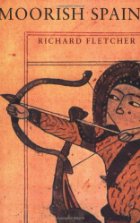
Now that my next trip is to Spain, I’m going to start reading some medieval Spanish history. Starting with this book:
Gaming // I’m installing Rome II: Total War as we speak and can’t wait for it to be ready! It’s received some rave reviews so far and, while I am typically pretty appallingly bad at Total War games, I also completely love them.
Loving/Hating // I love that I have read so many amazing books lately; I kind of hate that I haven’t written any reviews for them yet! It’s been very quiet around here lately.
Anticipating // Our trip to Spain in November; sleeping in my own bed again after a week away; reading Chimes at Midnight by Seanan McGuire!
As usual credit goes to Kim for the Currently format!
Hope you’re all having a wonderful Sunday and have a great week ahead!
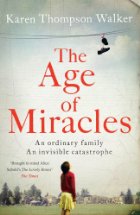 When Julia is eleven years old, the rotation of the earth begins slowing down. Life changes in at first imperceptible ways as days and nights lengthen, but the potential consequences for the planet are huge. As a young girl just coming into her teenage years, though, Julia continues growing up. Plagued by loneliness, introverted Julia discovers things about those she loves, much of which she’d rather not know. She suffers through crushes, choosing what to wear, learning how to flirt, and deciding what she wants to do with her life, while all the while in the background the earth’s rotation starts to narrow the possibilities.
This is a short, intensely thoughtful book, a coming of age for Julia amidst speculation on what would actually happen if an apocalyptic event, no matter how minor at first, took place. When the books starts everything is normal. Julia has a best friend, a crush, piano lessons, soccer, school; over the course of the book, some of these erode away as the fabric of life changes drastically. People suffer from lack of daylight and some crops no longer grow. Animals, and then people, get sick. While there is time to plan, there is never enough time, and the future is consistently uncertain.
Growing up in this climate makes life even more difficult for Julia. She’s shy and has no idea how to act around potential friends or boyfriends. Everyone and everything is changing around her and she feels left behind and as though she’s standing still. It is so easy to feel for her and understand that transition period between girlhood and womanhood, when you’re not quite sure if all of the other girls know what they’re doing but you feel they must be ahead of you. The earth is slowing and, to an extent, so is Julia. This is what makes the book so introspective – we spend the entire time inside Julia’s head, only really understanding her perspective on things and finding what changes her.
I liked this book; I liked the way it made me think about how much we take the world for granted (a lesson everyone needs sometimes) and what would happen if things changed so catastrophically. I wouldn’t have minded if the book pushed this further, though, in the vein of a full science fiction novel. Some of the effects this might have on civilization are explored, but not in that much depth. I also liked Julia, although at times she was too internally focused even for me. Some of the interactions she has with other characters are just uncomfortable, which I suspect is the point. I’d also have liked the book to last longer; at the end we’re told she’s 23 but that skips out a decade of her life, so it feels as though the plot threads aren’t wrapped up properly.
Overall I felt I’d finished The Age of Miracles looking for more; this was a wonderful concept and I enjoyed it, but I really just wanted to spend more time learning about what might happen and where Julia’s life went after that year.
All external links are affiliate links. I received this book for free for review.
|
|


Recent Comments