|
|
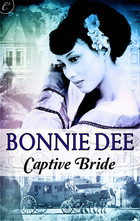 Huiann is far from thrilled about leaving her family and her home in China to marry a wealthy businessman in San Francisco, but she accepts it as her future. In 1870, there is little other choice for her. So on the ship she goes, but when she arrives, she discovers that, far from marrying her, her supposed bridegroom actually wants to sell her off as a high-class prostitute, calling her a princess and letting a huge variety of men bid on her virginity (after they’ve seen what they’re getting). Horrified, Huiann flees, and runs straight into the shop of Alan Sommers, a white man with whom she can’t even speak. She conveys her desperation somehow and he hides her. Through their rudimentary attempts to communicate and Alan’s efforts to keep her safe, the couple begin to form a bond, and wonder what future there is for a Chinese woman and a white man at this period in history. Huiann is far from thrilled about leaving her family and her home in China to marry a wealthy businessman in San Francisco, but she accepts it as her future. In 1870, there is little other choice for her. So on the ship she goes, but when she arrives, she discovers that, far from marrying her, her supposed bridegroom actually wants to sell her off as a high-class prostitute, calling her a princess and letting a huge variety of men bid on her virginity (after they’ve seen what they’re getting). Horrified, Huiann flees, and runs straight into the shop of Alan Sommers, a white man with whom she can’t even speak. She conveys her desperation somehow and he hides her. Through their rudimentary attempts to communicate and Alan’s efforts to keep her safe, the couple begin to form a bond, and wonder what future there is for a Chinese woman and a white man at this period in history.
This is my first Carina Press book and to be honest, I wasn’t too sure what to expect, so I went in with an open mind. Carina Press is the digital branch of Harlequin, and normally I don’t read too many Harlequins – category romances are generally too short for me to believe in them and a bit more stereotypical. Saying that, I really wanted to try Carina Press, which I know is a bit more daring, and this book sounded really appealing, so I requested it.
Rather than being disappointed, I was pleasantly surprised. It’s not a flawless book and does follow the same old conventional formula (with a little too many racy scenes for my liking, which seems to happen very often), but the romance was sweet and believable with efforts on both sides to communicate and understand. Huiann ends up bridging the gap by learning English, but it’s apparent from the start that she’s a bit cleverer than Alan, who comes across as a loyal, hard-working, but not particularly smart man. It’s also true that she wants to strive for independence in her new world and thus needs to learn the language. I loved as well that she doesn’t immediately learn everything – the language barrier remains to some extent throughout the entire narrative, making things a little more realistic as they communicate through gestures, expressions, and pictures as well as words. Alan genuinely tries to understand her culture and give her the tools to make herself a new home, so I couldn’t really fault him for not learning Chinese.
I also found the story followed a nice arc throughout, mainly centering on the historical reality of Chinese prostitution in California. It wasn’t always illegal for Chinese women to simply be brought over as prostitutes. Huiann doesn’t realize that she is, but she does encounter some other women whose fate seems so grim that it isn’t worth living. When she finds herself in the same situation, she takes it upon herself to not only save these women, but to help them thrive. It’s a sweet story in many respects and reminded me a lot of the historical romances I read as a younger girl that tended to range across more time periods and have a little more history in them, as opposed to the completely ton-focused historical romances I find myself reading now.
In short, Captive Bride was a great start for me and Carina Press and I’m very glad I requested it. Recommended for other romance readers who are looking for a nice quick read which may not rock the boat but is satisfying nonetheless.
I am an Amazon Associate. I received this book for free for review from Netgalley.
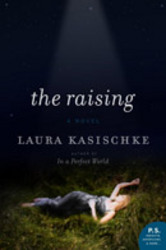 Driving along a road near the college where she is a faculty member, Shelly spots an accident happening right before her eyes. She pulls over and races down, calling 911 as she goes along. When she sees that the couple in the car are both alive, and the ambulance driver arrives, she heads to the hospital herself for stitches and assumes everything will be fine. Then she sees in the newspaper that the girl died – was burned beyond recognition and found in a lake of blood – and that both she and the boyfriend fled the scene before the ambulance even arrived. Shelly is upset and angry, but no one will listen to her account of the truth. We then begin to learn bits and pieces about the relationship between the two college students, Craig and Nicole, what happened afterward and what led to the fateful accident. The Raising is a haunting tale of ghosts, university life, and love. Driving along a road near the college where she is a faculty member, Shelly spots an accident happening right before her eyes. She pulls over and races down, calling 911 as she goes along. When she sees that the couple in the car are both alive, and the ambulance driver arrives, she heads to the hospital herself for stitches and assumes everything will be fine. Then she sees in the newspaper that the girl died – was burned beyond recognition and found in a lake of blood – and that both she and the boyfriend fled the scene before the ambulance even arrived. Shelly is upset and angry, but no one will listen to her account of the truth. We then begin to learn bits and pieces about the relationship between the two college students, Craig and Nicole, what happened afterward and what led to the fateful accident. The Raising is a haunting tale of ghosts, university life, and love.
As soon as I started reading this book, I could not put it down. I sat there with my Kindle on a Saturday morning into afternoon, completely putting off everything I had planned for the day, just so I could continue reading this book. Yes, it is that addictive. It’s well-written, so each scene leads into the next, and as the scandals and the lies start to build up, I just had to know what happened. I predicted a few of the twists along the way, but the emotional investment and slow unveiling of the story made it an absolutely fantastic read.
Much of the suspense in the book comes from the fact that we really don’t know what happened that night. Craig has suffered amnesia and Shelly only knows what she saw – she has no idea how the girl’s body got burned beyond recognition, why the couple swerved when nothing was on the road, or why lies pervade stories in the newspapers and on the internet. The mystery is slowly unveiled as we discover what kind of people Craig, Nicole, and their friends are. We go back in their history, from their first year in college to the second, exploring relationships and how they developed. Naturally, everyone assumes rich boyfriend Craig is the killer, but without actual evidence, he’s returned to college and has to deal with the hole in his memories.
Added in to the mix, just to give the story another dimension, is the discussion of death. One of the characters, Perry, insists on taking a freshman seminar explicitly about death. This leads to a lot of fascinating stories about death throughout the ages and the introduction of the professor, Mira, who has her own thoughts on the subject. I almost wished more was done with this.
The only thing that prevents this from being an absolute perfect book for me were the questions I had shortly after finishing. One part of the conclusion doesn’t make sense – and still doesn’t much – and I think it’s this that has held back my enthusiastic, five star reaction. If you’ve read the book, let me know so we can chat about it.
Nevertheless, The Raising is really an amazing book. It’s so compelling you won’t want to put it down, but it’s not without food for thought either. Highly recommended.
I am an Amazon Associate. I received this book for free from Netgalley for review.
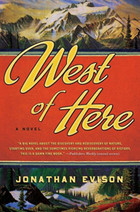 The fictional town of Port Bonita, Washington, has a long history; once a tiny frontier town, full of self-important whites and Native Americans still trying to get by with their native way of life, in the modern day it has become a town trying to move past its history and ready to face the future. Covering a wide span of characters and stories, from explorers doing their very best to conquer the mountains to a new mother striving to make her way under her own steam to a blue collar worker in the clam factory, Evison’s epic attempts to draw a line from the past to the future, to examine what defines our towns and how our history shapes the present. The fictional town of Port Bonita, Washington, has a long history; once a tiny frontier town, full of self-important whites and Native Americans still trying to get by with their native way of life, in the modern day it has become a town trying to move past its history and ready to face the future. Covering a wide span of characters and stories, from explorers doing their very best to conquer the mountains to a new mother striving to make her way under her own steam to a blue collar worker in the clam factory, Evison’s epic attempts to draw a line from the past to the future, to examine what defines our towns and how our history shapes the present.
This is an example of a book that got so much hype it could never live up to it. Don’t get me wrong, I enjoyed it, and I did like reading it, but this review isn’t going to be the love fest that I’ve seen spread around. In some respects, I do wish I’d avoided the praise it’s garnered out there, because then I think I’d have been better able to judge it based on my own experiences. As it stands, though, it was good, but didn’t quite cross the line to great like it has for so many others.
Let’s start with what I did like. I loved what the book tried to do, and in some respects I felt it succeeded. For example, the people in the nineteenth century are in the process of building a dam that, in the twenty-first century, has had a poor effect on nature and has caused the town’s economy to start struggling. This is a perfect illustration of the way that well-meaning people, without armed with the knowledge we have today, started to set things off that have a damaging effect on the present. I love it when books link up the past and the present like this and really show us why where we came from has a huge effect on where we’re going. History is important.
Unfortunately, I simultaneously felt like the book was doing a little too much and that it didn’t all link together like this. There are many storylines, which goes to show just how complex a single town can be, but a lot of them don’t really go anywhere. It’s a series of snapshots of Port Bonita, not precisely an overarching narrative – we have the explorer story, we have the Big Foot story, we have the prisoner attempting to make it on his own, we have a prostitute who is remarkably happy with her employment, and so on. The book is almost too big – and as a lover of epics, that’s a peculiar thing for me to think. As a series of snapshots, I would say it works, but as an entire book, it feels like it’s trying to get somewhere and never quite makes it.
So yes, West of Here is well-written, it is epic, and it has me interested in what Evison is going to write in the future. I liked it and I’m glad I read it. But I really wish I’d fallen head over heels in love with it, and I think it’s that expectation which left me a bit disappointed when I finished.
I am an Amazon Associate. I received an ARC of this book from Candace at Beth Fish Reads (thanks!).
 This week, I finally managed to finish the first in my attempt at a Wheel of Time re-read before the last of the series comes out. The Eye of the World has a lot to live up to, for me; it was my first ever epic fantasy read, after all, and the book that launched my interest in all things fantasy way back in my first year of high school. This week, I finally managed to finish the first in my attempt at a Wheel of Time re-read before the last of the series comes out. The Eye of the World has a lot to live up to, for me; it was my first ever epic fantasy read, after all, and the book that launched my interest in all things fantasy way back in my first year of high school.
A friend recommended it to me and I can still remember that first time I went into the bookstore and held it in my hands. I opened it up and started reading, just to make sure I was interested before I invested my $7, but as soon as I’d read a paragraph I knew I was ready to buy. Fantasy worlds were so new to me, and so appealing, that I inhaled the book when I read it, and then went on to read the rest of the series, up to book 9, in relatively short order. Then, disappointed by book 10 and waiting for what felt like an eternity for book 11, I stopped, and now I’m trying to pick up the pieces.
So, how did my original foray into fantasy hold up, more than ten years later?
Surprisingly, it held up very well. It took me what felt like forever to read (more than a week, which is a long time for me), and I had an unfortunate habit of falling asleep while reading, but it was still a very absorbing and interesting read – I can see exactly what appealed to my fourteen year old self. I was shocked by how little I remembered the story, even though bits and pieces popped up as I read. Mostly I remembered the Trollocs invading Rand’s home, to be honest, and the beginning with Lews Therin Telamon. There were parts of other sections, particularly as I read, but beforehand there was very little in my head from the first time I’d read the book.
What I think struck me the most this time was how very typical a fantasy it is. It so obviously draws from Tolkien and a lot of other fantasy I’ve read draws from it, so it was simultaneously comforting and odd to put together the pieces. I hadn’t read anywhere near enough to pick that up the first time, but here – it’s that farmboy on a journey yet again, that farmboy with a fantastic destiny, who is forced to leave home and who must then go on to save the world. Obviously, it has plenty of its own twists to it, and there is no question in my mind at least that it fills the stereotypes quite well, but it was familiar not only because I’d read it before in this book, but because I’d read it before in others.
Much of the book defies the stereotypes as well, though. Even though it is Rand who is slated to save the world, he is far from the most powerful character at this point, and often reads like a lost puppy who has no idea what to do with himself. There is Lan, who is the most powerful human male we come across, but even he is ruled by the Aes Sedai he serves: Moiraine. Their strengths work together more than they work separately. And that’s what I liked about this book, this time, possibly the most; that the women are the powerful ones. Knowing what comes after does dim that a bit, but I loved that the women are regarded as the ones to keep the party safe, by not only Moiraine but by the people they meet on their journey as well. Yes, the three farmboys are ta’veren, the ones who change fate, not the women, but women hold the men’s destinies in their hands regardless.
You could say as well that the fact that the Aes Sedai are regarded as unnatural, terrifying witches in the country is yet another take on the very real practice of pulling powerful women down – the constant desire to explain away powerful women by turning them into evil is a theme that’s repeated not only here but in the real world as well. For me, this aspect made the book even more interesting, but didn’t really lessen the fact that it genuinely is the women who can protect the men. There are a lot of complex dynamics going on here and I’m looking forward to exploring them as I continue with the series.
The other thing I noticed was that the book is very clearly a first book. There are many little flaws in it that annoyed me; people keep doing the same actions over and over again. Nynaeve chews her braid, for example, while others are always chewing their lips, people blush more often than they ever would in real life, the characters are always throwing their heads back and laughing, and the descriptions of clothes never really flowed properly. It is a great story, and immediately absorbing, but it is not the world’s best written book.
All of that said, of course, I could so easily see what pulled me and so many others into this story. I doubt this is the last time I’ll read this book. My husband decided to read it first and immediately tried to get me to read it because there was so much to discuss, then he immediately moved on to the next book (which he is still reading now). Obviously, The Eye of the World is still very appealing, more than 20 years after its first publication date. I’m looking forward to reading the rest of the series, now.
 Elizabeth I is one of England’s best known reigning queens. Though she was not the first, she set the standard and is widely regarded as a successful ruling monarch. But there were women who ruled, or attempted to rule, England before Elizabeth. There was Matilda, daughter of Henry I, whose cousin got to the throne first; there was Eleanor of Aquitaine, who had plenty of power in her own domains but in many respects is best known for her husbands and sons; there was Isabella, wife of Edward II, who seized a throne for herself in the name of her son; there was Margaret of Anjou, who fought ferociously to maintain her son’s right to the throne; and there were Jane and Mary, Elizabeth’s immediate predecessors. Castor looks at these women and how they ruled and examines the pattern of English thought and how it changed over more than 400 years of history. Elizabeth I is one of England’s best known reigning queens. Though she was not the first, she set the standard and is widely regarded as a successful ruling monarch. But there were women who ruled, or attempted to rule, England before Elizabeth. There was Matilda, daughter of Henry I, whose cousin got to the throne first; there was Eleanor of Aquitaine, who had plenty of power in her own domains but in many respects is best known for her husbands and sons; there was Isabella, wife of Edward II, who seized a throne for herself in the name of her son; there was Margaret of Anjou, who fought ferociously to maintain her son’s right to the throne; and there were Jane and Mary, Elizabeth’s immediate predecessors. Castor looks at these women and how they ruled and examines the pattern of English thought and how it changed over more than 400 years of history.
I loved this book. I didn’t expect anything less; I gushed about Helen Castor’s Blood and Roses a couple of years ago, so it’s no surprise that I couldn’t wait a second to get my hands on this one. None of these women were new to me as a person obsessed with medieval history, but Castor puts their stories together in a way that makes perfect sense. She looks not only at what happened to each woman and how successful she was at ruling, but what people thought about it and how England became a country that could accept a female monarch.
It’s no surprise that they have almost universally been vilified at one point or another. The medieval interpretation of what it meant to be female and the medieval interpretation of what it meant to be king were completely incompatible. As Castor says in the first section, focusing on Matilda, she just could not win. If she exercised the right of a king, the power necessary to be successful, she was an unnatural woman, but if she didn’t, there was simply no way for her to rule. She could not be a success in her contemporaries’ eyes, no matter what she did – at least, not until she started to fight on behalf of her son, Henry.
And the story is the same for many of the women, with incremental changes. Attitudes do take hundreds of years to change, and while the kingdom was changing, the status of women didn’t go very far towards changing with it. All of the royal power women were actually able to hold in England had to be in the name of a man, even if that man was actually a baby. It’s a fascinating exploration of the very different challenges each women faced while at the same time putting together the universality of their condition.
And it’s perfectly appropriate that they lead up to Elizabeth, because she was the game changer, who ruled in her own name, with her own wisdom, and did a fantastic job. There’s no question that women continued to struggle for rights, and they suffered considerably for centuries, in some respects still doing so. But a number of factors contributed towards her doing so, and she must have felt a kinship towards the women who came before and the strides they made to earn power for women in the English kingdom.
Castor treats all of the women with an even hand, taking a steady look at what was expected of them as women rulers, why they got treated the way they did, and even whether or not they deserved it. Isabella, for example, can easily be dismissed as a poor ruler, but we can also understand why she acted the way she did (at least as far as overthrowing her husband) and the results of those actions in a wider context. While there is still a lot about the men in these women’s lives, they were the actual monarchs and thus had a very large role to play in defining the positions of their mothers, daughters, and wives, so it doesn’t feel as though the women have vanished inside the shadows of the better-recorded lives of the men.
In short, She-Wolves is exceptional, inspirational, and endlessly fascinating. If you’re interested in history, especially that of women, this book is unquestionably for you.
I am an Amazon Associate. I received this book for free for review (and then bought a copy so I could have it in hardcover!).
 Sara B. has been the preeminent fashion guru for her entire life. Her column on “Do”s and “Don’t”s is an absolute landmark. She can dictate or destroy a fashion statement more or less at her will. But all of a sudden, everything starts falling apart. She loses her sense of style, slips away from her relationships with friends and coworkers, and wants nothing more than to hide from her life. When she meets Esther and Lila, a pair of elderly ladies, she doesn’t immediately see the connection with her own life until Lila passes away and Sara finds herself remembering a true stylish woman and wondering what’s left of her own life. Sara B. has been the preeminent fashion guru for her entire life. Her column on “Do”s and “Don’t”s is an absolute landmark. She can dictate or destroy a fashion statement more or less at her will. But all of a sudden, everything starts falling apart. She loses her sense of style, slips away from her relationships with friends and coworkers, and wants nothing more than to hide from her life. When she meets Esther and Lila, a pair of elderly ladies, she doesn’t immediately see the connection with her own life until Lila passes away and Sara finds herself remembering a true stylish woman and wondering what’s left of her own life.
I had quite a time with this book – it is definitely a roller coaster ride of emotions and events. I don’t think it’s for everyone, but it’s pretty sensational and at times shocking – the type of book I don’t normally get into, but for once I found that it worked for me. I was in just the right mood for a scandalous, saucy chick lit book – Sara’s whacky narrative combined with her genuine search for meaning worked very well for me.
What I think would probably turn others off is the absolute level of detail she goes into about her life. I had a really hard time believing anyone could live like that. She is constantly drinking, smoking, and even sleeping around – in a variety of graphic ways – and I would never have been comfortable if that was my life. That was the real downside of the book for me, as it’s just very vulgar at times. Sara is lost in many ways and her abuse of her body signals that loud and clear. As a reader, I was cringing for her, and really wanted her to put herself back together. I didn’t like her, but I felt sorry for her.
It’s really the fact that she’s so lost which makes the book so appealing, though. Sara is a woman who was lucky enough to virtually fall into a career related to a silly game she and a friend started out in college. She never had a chance to question whether she wanted that career, and once she starts to lose a piece, she starts to wonder what was holding her together in the first place. Even though her actions wouldn’t mirror my own, and I don’t think I’d be friends with her in real life, I did feel for her, and I found the end to be fantastic. It fit her character just perfectly. Plus, I just adored Esther – what a wonderful woman! She is very much what I’d like to be when I’m her age, except with a husband, because I’ve already got him.
If you’re looking for a contemporary novel focused on the disintegrated life of a fashionista and don’t mind a few graphic scenes, Snapped is a book you should be reading.
I am an Amazon Associate. I received this book for free from a publicist for review.
 The fourth in the Lady Emily Ashton series starts with Colin and Emily married, at long last. They’re off on their honeymoon to Constantinople, intent on spending a lot of time together and only a little bit of time exploring the town. But fate doesn’t leave them alone, as a mystery falls literally into their laps on the train with a man, Sir Richard, falling unconscious at dinner. The plot thickens on arrival in Constantinople as a young English girl, Ceyden, is murdered in the harem, who turns out to be Sir Richard’s daughter. Colin and Emily are immediately off to solve the mystery and figure out who is behind the murder. The fourth in the Lady Emily Ashton series starts with Colin and Emily married, at long last. They’re off on their honeymoon to Constantinople, intent on spending a lot of time together and only a little bit of time exploring the town. But fate doesn’t leave them alone, as a mystery falls literally into their laps on the train with a man, Sir Richard, falling unconscious at dinner. The plot thickens on arrival in Constantinople as a young English girl, Ceyden, is murdered in the harem, who turns out to be Sir Richard’s daughter. Colin and Emily are immediately off to solve the mystery and figure out who is behind the murder.
I knew I couldn’t wait long to read this after finishing A Fatal Waltz and I was glad to immerse myself in Colin and Emily’s world once again. It’s such a thrill to see that they’re finally married; rather than prolonging the suspense, Alexander has just tied the knot and shown that, for once, novels aren’t always dependent on romantic tension. And I was glad the characters could finally release their proper Victorian strongholds – though this novel fades to black, it’s obvious that they enjoy being married a considerable amount!
Other than that, however, I found I wasn’t as interested in this particular mystery as I had been previously. Though the atmosphere is very interesting and well done, the plot itself wasn’t what drew me along. It didn’t help that Colin was actually away for what felt like half the book, leaving Emily to solve things on her own. In some ways, I felt this dragged the story on a bit longer than it would have otherwise. There also isn’t the continuing tension that sprinkled through the last installment, with the bullets left everywhere, which meant that the plot moved a little less quickly. Until the end, that is, when everything gets very exciting.
What did work, however, was the emotional intensity of the novel. As a Victorian lady, Emily is forced to deal with the reality of marriage and its consequences. She hardly knew her first husband and had very little time with him, so the risk of pregnancy was not particularly high. Here, though, it’s obvious that marital relations result in pregnancies and Emily is terrified. Her friend Ivy is pregnant and very delicate back in England, which is a huge weight on her mind, and it doesn’t help that she too could wind up pregnant at almost any time. I felt like this was an incredible insight into the mind of a true Victorian woman; so often books are still written as though babies are always wonderful miracles, particularly in more romantic genres, because that’s the reality of today, when the vast majority of women and babies in western countries survive. What’s so often ignored is that children were far more likely to lead to death a hundred years ago, both for their mothers and themselves. This book presents Emily’s fear in a very realistic way that was easy to relate to.
Tears of Pearl was another excellent addition to the Lady Emily Ashton series. Possibly not enough to persuade those who weren’t enamored with the first or second to continue, but it worked very well for this fan of the series. It won’t be long until I continue with the next!
I am an Amazon Associate. I purchased this book.
 Laura Grey is a plant in Andre Jaouen’s household, acting as a governess to his children but sent by the Pink Carnation to find out more about his allegiances. Laura, originally a Frenchwoman, does have the experience to teach the children at the same time, since she’s spent half her 32 years as a governess. The surprise is that Jaouen has much more in common with Laura’s side than anyone initially thought, and the challenge will be to keep everyone safe as certain members of the French government begin to suspect him. In the modern world, Eloise and Colin head to Paris to meet his mother, but her husband (who is actually of Colin’s generation) has some nasty plans in store to prove his position as the new head of the family. Laura Grey is a plant in Andre Jaouen’s household, acting as a governess to his children but sent by the Pink Carnation to find out more about his allegiances. Laura, originally a Frenchwoman, does have the experience to teach the children at the same time, since she’s spent half her 32 years as a governess. The surprise is that Jaouen has much more in common with Laura’s side than anyone initially thought, and the challenge will be to keep everyone safe as certain members of the French government begin to suspect him. In the modern world, Eloise and Colin head to Paris to meet his mother, but her husband (who is actually of Colin’s generation) has some nasty plans in store to prove his position as the new head of the family.
After the light-hearted fun that was The Mischief of the Mistletoe, we’re right back in the thick of Napoleonic France with The Orchid Affair. Things are not easy or delightful for Laura and Andre. The dark side of the series and the espionage factor have come back in force, as Laura is immediately aware of the danger around her when she presents herself as a governess, right at the start of the book. Things simply escalate as the story continues. The modern day story doesn’t lighten things up here either; instead, Colin and Eloise are hit with some unpleasant bombshells of their own of varying severity. Willig’s writing is still as witty and polished as ever, but we’re much more aware that things can and sometimes do go wrong.
Regardless, it was nice to be transported back to the feel the books had at the beginning of the series, to be reminded that these books are about spies and that post-Revolutionary France was still a ridiculously dangerous place to be. Certainly some of the last few have run the risk of letting us slip into a delightful idyll of romance, but this book isn’t like that. Even the inevitable relationship between Laura and Andre, when it comes, isn’t like that. Instead, it’s a meeting of minds and a love borne almost out of necessity. They’re attracted from the start, but I got the feeling that neither of them would have acted on it without some external pushes. I can’t say I’m as fond of this couple as I have been of previous couples, but overall the storyline works very well and flows completely naturally – I was able to speed right through this book.
The Pink Carnation series is still an auto-buy for me; I continue to enjoy each and every installment of the series. I would definitely recommend them to anyone looking for delightful, romantic, and sometimes suspenseful reads centered around spies in Napoleonic France and eighteenth century England.
I am an Amazon Associate. I purchased this book.
 I know I meant myself to space out my rereads over the course of each month, but I honestly just couldn’t wait to read the next in the Anne series! I was very tempted to start Anne of Avonlea immediately after finishing Anne of Green Gables a couple of weeks ago, but I managed to make myself wait until the 2nd of March. I’m not sure I’ll make it until April before I read Anne of the Island but I’m not sure that’s a bad thing either! I know I meant myself to space out my rereads over the course of each month, but I honestly just couldn’t wait to read the next in the Anne series! I was very tempted to start Anne of Avonlea immediately after finishing Anne of Green Gables a couple of weeks ago, but I managed to make myself wait until the 2nd of March. I’m not sure I’ll make it until April before I read Anne of the Island but I’m not sure that’s a bad thing either!
Anyway, in this installment, Anne and Marilla set about their relatively peaceful life in Avonlea. Anne has become the teacher at the school, which poses its own unique challenges. She wants her students to love her, but at times it seems as though Anthony Pye will never oblige. Meanwhile, Marilla’s third cousin finds himself with two twins that he can no longer take care of, and so the two ladies find themselves with Davy and Dora. Dora is a perfect princess, but Davy is mischievous and a ridiculously lovable handful.
As Anne gets a little older, she starts to enter the world of womanhood. As a result, this book focuses a lot more on romance. It’s hard to believe a seventeen year old young woman would completely fail to have any interest in the men around her, but somehow for Anne it works – she’s still busy being imaginative even as her friends start to fall in love. She recognizes that this stage in her life is very much the next one, but instead of developing crushes herself reflects on the fact that her childhood is really over.
It’s a funny juxtaposition because she’s now treated as an adult by everyone around her – she’s the teacher at the Avonlea school, responsible for instilling education and virtue in the minds of a classroom full of young people. She’s very much in charge of Davy and Dora at times as she and Marilla share responsibility for them. Her bringing up is clearly over because she’s automatically entrusted with bringing up the next generation of young kids, even at sixteen and seventeen.
Like the last one, this book is divided into a series of episodes in Anne’s life. She has a variety of adventures, but they aren’t quite as fun as they were when she was a child; instead, the incidents are more adult in nature. She works to gain the affection of the children in the school; Davy nearly loses Dora and she has to find her; and she plays a part in befriending an older, single woman and trying to reunite her with her long-lost love. Because Anne is mostly done growing up, the book holds together a little less cohesively around these incidents, but it’s still a delightful and overall comforting read.
I had half-forgotten a lot of this book, with my memory fixated on bits and pieces throughout rather than specific episodes, like in the last. I do think I liked it better than I did as a child, though, mainly because I have a much greater appreciation for more adult activities. At 12, I didn’t really care about Anne’s society or the efforts she undertook to teach children. It’s more interesting to me now, especially because I can appreciate the book in more ways. As with the first, finishing this book made me want to pick up the next in the series right away, which is always an encouraging sign when you do intend to read an entire series!
I am an Amazon Associate. I purchased this book.
 What would Dracula look like from Mina’s point of view? Syrie James takes this question and twists it, causing Mina to fall in love with Dracula before she knows he’s Dracula. Just as in the original book, she goes to visit her friend Lucy and her mother in Whitby, but what we don’t see are her secret meetings with a mysterious and attractive man, because she doesn’t mention them. And when she discovers that his true identity is Dracula, the story changes, to accommodate Mina’s new truth. What would Dracula look like from Mina’s point of view? Syrie James takes this question and twists it, causing Mina to fall in love with Dracula before she knows he’s Dracula. Just as in the original book, she goes to visit her friend Lucy and her mother in Whitby, but what we don’t see are her secret meetings with a mysterious and attractive man, because she doesn’t mention them. And when she discovers that his true identity is Dracula, the story changes, to accommodate Mina’s new truth.
The original Dracula is one of my favorite books, and as a result I seem to have a lot of trouble with any book that modifies the story in any way. And so it happened here, for a variety of reasons. Some things made sense told James’s way – like how the four men actually killed Lucy because of the danger of blood transfusions – but some don’t.
First of all, I felt like there was too much explaining on Dracula’s part. Every single move in the original novel is carefully explained and turned around by Dracula himself when Mina starts to ask questions. It happens every time the men discover something and, though I know it’s a novel, I honestly had just had enough of his excuses. If I were Mina I’d have chucked him out immediately, simply because there comes a point when you get tired of hearing the same story. Plus, I found it crazy that she’d trust the word of a mysterious stranger over that of the husband she’d known and loved her entire life. Maybe passion makes people crazy, but I often wanted to smack her around. And even though she and Dracula have plenty of intelligent conversations, none of these are actually explicit in the text – we just learn about all the things they had in common. I didn’t feel the connection or the spark between them.
Other than that, the book mainly follows the original’s plot, with some diversions explaining more of Mina’s backstory. These did give the book an interesting angle, going into more detail about how she and Jonathan met and the origins of her parents, but overall weren’t really enough to justify the whole basis of the book as a love story between Mina and Dracula. It didn’t help that I felt Mina was a surprisingly weak character. Her intelligence, for me, was belied by the fact that she never really questioned Dracula. She just went along with his explanations and continued to fall in love with him – she never considers that he might be manipulating her, as she knows he can do. She starts to wake up in some respects by the end of the book, but for the most part I just didn’t like her, which is a disappointment given how fond I am of the original.
In all honesty, I do think my fondness for the original has stopped me enjoying more modern takes on it as much as I might had I never read it. As a result, I just didn’t really connect with this book.
Plenty of others have felt differently about Dracula, My Love. If one of them is you, please let me know in the comments and I’ll feature your review here.
I am an Amazon Associate. I received this book for free for review from LibraryThing Early Reviewers.
|
|



Recent Comments