|
|
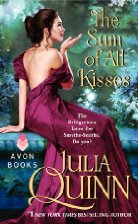 As his brutish father’s only hope for an heir, Hugh Prentice has not had an easy time of it, and when he got drunk and shot his best friend, his life got considerably worse. Now a cripple, he’s finally managed to get his father’s heavy hand away from Daniel Smythe-Smith, but has a lifetime left of loneliness to deal with. As his brutish father’s only hope for an heir, Hugh Prentice has not had an easy time of it, and when he got drunk and shot his best friend, his life got considerably worse. Now a cripple, he’s finally managed to get his father’s heavy hand away from Daniel Smythe-Smith, but has a lifetime left of loneliness to deal with.
Lady Sarah Pleinsworth’s first season was abruptly cancelled when her cousin Daniel was shot and exiled as her family went into mourning. She’s never quite forgiven Hugh for delaying her marriage prospects and making her cousins miserable; a series of disastrous encounters haven’t helped the situation, either. But when Sarah is forced into contact with Hugh at her cousin Honoria’s wedding, purely as a favor, she discovers that she actually likes him, and that his good looks don’t hurt, either.
Julia Quinn’s romances are always reliably sweet and, well, romantic. They rely much more on sparkling character interactions and adorable situations than any other author I’ve ever read; these are, for me at least, properly feel good books. And I approached this one in exactly the right frame of mind to need a pick-me-up with a romance I could get behind, without ridiculously high expectations. On this, the author delivered perfectly, and I read The Sum of All Kisses in one day, closing it with a smile.
One of the aspects I liked the most, as usual with Quinn’s romances, was in fact that interaction between the characters. Hugh and Sarah really don’t like each other at the beginning and had me wondering how they were going to believably end up together. But their dislike is based on fundamental misunderstanding and frustration due to the situation. As soon as they’re together for a longer period of time and have no choice but to talk to one another, the problems start to resolve and they realize that actually they do like one another. Those roadblocks they created were mental, and together they can overcome them quite easily.
It’s a classic situation where two people just don’t know each other enough, and make some misjudgements as a result, but then once they do know one another, things start to change. I loved the fact that they just enjoy one another’s company for a nice chunk of the book; they like each other and that’s one of the things I love about Julia Quinn’s romances. This is a perfect example of that.
The only part of the book I didn’t like were some aspects towards the end – I felt that a certain amount of drama was excessive and kind of unnecessary on the heroine’s behalf. All was quickly cleared up, though, and I did actually enjoy the ending.
Very highly recommended!
All external links are affiliate links. I received this ebook for free for review.
 When Juliet Montague’s husband George leaves her, she’s trapped in a cycle of Jewish not-quite-widowhood. She can’t divorce him without his presence, as under Jewish law the man must divorce his wife, but until he dies, assuming she knows about it, she can’t marry or really even look at another Jewish man. In the conservative Jewish community of her parents, she’s just not treated in the same way as other women, made worse by the fact that she’s spent seven years as a single mother putting practicalities ahead of her artistic nature. When she turns thirty and goes out to buy a refrigerator, which she’s dutifully saved towards, she is instead captivated by an artist on the street who asks to paint her picture for the same cost. Juliet falls into a world of artists in 1960’s London, enriching her life immeasurably. When Juliet Montague’s husband George leaves her, she’s trapped in a cycle of Jewish not-quite-widowhood. She can’t divorce him without his presence, as under Jewish law the man must divorce his wife, but until he dies, assuming she knows about it, she can’t marry or really even look at another Jewish man. In the conservative Jewish community of her parents, she’s just not treated in the same way as other women, made worse by the fact that she’s spent seven years as a single mother putting practicalities ahead of her artistic nature. When she turns thirty and goes out to buy a refrigerator, which she’s dutifully saved towards, she is instead captivated by an artist on the street who asks to paint her picture for the same cost. Juliet falls into a world of artists in 1960’s London, enriching her life immeasurably.
What this book is really about is how Juliet finds herself – still loving her children as much as ever, but redeeming her own identity as a person. She lost it so easily when her husband left simply because she had to. When she meets the artist, Charles Fussell, she remembers what she felt before she’d met George and regains a part of herself that she lost with him. Through meeting other artists, and eventually embarking on a love affair, she begins to re-discover who she is. This is cleverly symbolized by the fact that each artist she meets tends to paint her, capturing little bits of Juliets throughout her life.
It’s easy to relate to Juliet as a character. She’s not quite a pariah, but she is ostracized all the same. Her parents love her, as she loves her children, but she doesn’t fit in. It’s uncomfortable for her but it’s excruciating in some ways for her children, Frieda and Leonard. They are mocked by the other children for their mother’s status and because they’ve lost their father. Their eventually paths in life diverge but reflect how that struggle helps to form their futures. Frieda becomes a very traditional, strict Jew herself in the vein of her grandparents, while Leonard embraces his mother’s artistic leanings wholeheartedly.
As for Juliet, she does seem to find pieces of herself as she goes along. I got the feeling that wife and motherhood swept her away and her identity was lost to a degree in the search of promoting other people’s happiness. It becomes clear fairly early on why she started hiding pieces of herself away, but when George leaves she simply can’t gain the freedom that might have helped her on that journey sooner.
I’d probably only say that this book was a little bit slow; I actually read the whole book in one day, but split up by several other things. I never really felt glued to the page and I would have been able to set it aside for longer if I’d had to. It’s more of a contemplative book, rather than one with a fast-moving plot.
I enjoyed The Gallery of Vanished Husbands, but I didn’t love it quite as much as I did Mr Rosenblum’s List. I’ll definitely continue looking out for future books by this author, though. She has a lot of potential and she writes beautifully, with compelling characters. Recommended.
All external book links are affiliate links. I received this book for free for review.
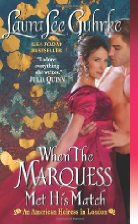 Lady Belinda Featherstone is a matchmaker; having made a very successful match herself as an American heiress to a British nobleman, she now guides young American heiresses on the social niceties of British society. In short, she teaches them how to make a catch, never mind the fact that her marriage wasn’t a grand success, because she’s determined to marry them off to nice men who will treat them properly. But when Nicholas, Marquess of Trubridge asks her help in finding an American heiress, Belinda is less than keen to help. Nicholas is exactly the kind of man she’d warn her heiresses off. So she sets him up with the most boring possible women, not only because he’s dangerous, but because she might just want him for herself. Lady Belinda Featherstone is a matchmaker; having made a very successful match herself as an American heiress to a British nobleman, she now guides young American heiresses on the social niceties of British society. In short, she teaches them how to make a catch, never mind the fact that her marriage wasn’t a grand success, because she’s determined to marry them off to nice men who will treat them properly. But when Nicholas, Marquess of Trubridge asks her help in finding an American heiress, Belinda is less than keen to help. Nicholas is exactly the kind of man she’d warn her heiresses off. So she sets him up with the most boring possible women, not only because he’s dangerous, but because she might just want him for herself.
I was pleasantly surprised when I first encountered Laura Lee Guhrke a couple of years ago; it’s been a while since she last released a book, but I’ve been catching up on the Girl Bachelor series in the background (typically, not reviewing them at all except for a mini review). I’ve really enjoyed every single book I’ve read by her and When The Marquess Met His Match was no exception to that rule.
One of the things I have enjoyed about the books I’ve read by Guhrke so far is the masterful way she builds the relationship between the characters. Neither Belinda nor Nicholas is precisely ready for their relationship to happen. Belinda has been so scarred by essentially being told she wasn’t wanted by her husband, with whom she’d fallen in love, that she can’t imagine herself ever feeling for a man who might treat her the same way. Similarly, Nicholas doesn’t really want to marry but desperately needs the money, and the last thing he wants is to fall for the matchmaker who apparently doesn’t have much money at all. Because of their misconceptions about one another, they struggle with their attraction, but eventually work it out for themselves. It all works so well and the couple’s interactions genuinely sparkle each and every time.
It’s also very amusing how Belinda works hard to put Nicholas off, particularly at the beginning when she’s determined to set him up with all of the least attractive women available. The balance between humor and more serious, romance-y scenes works really well here, and lightens the book rather than bogging it down with the baggage that both characters have.
A very satisfying read, and well worth it for romance fans in particular. Laura Lee Guhrke is becoming an auto-buy for me (and a very exciting find on Edelweiss in this case). Fortunately, I still have a considerable amount of backlog to get through before I have to wait anxiously for new releases!
All external book links are affiliate links. I received this book for free for review.
 If you haven’t read Oryx and Crake or The Year of the Flood, you should do so before reading this book, or this little review, as it may contain spoilers. If you haven’t read Oryx and Crake or The Year of the Flood, you should do so before reading this book, or this little review, as it may contain spoilers.
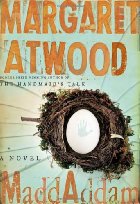
A small group of humans and “Crakers”, genetically modified humanoid beings created by Crake, have survived the devastating plague that has wiped out much of humanity. This book picks up right where The Year of the Flood left off and deftly weaves together the stories from those two books into one cohesive, fascinating whole.
I didn’t read Oryx and Crake when it first came out; I actually only read it because I got The Year of the Flood as a review copy. But I’ve been entranced throughout by the way that Atwood has constructed this particular post-apocalyptic world. I admired the world-building in the first book and the characterization of the second; MaddAddam combines these two aspects. These few remaining people are creating a new reality and new myths to support that reality. The past is important, but which elements of the past get remembered? It’s a key question in this novel as we watch what the characters to do to pass on those myths to future generations.
I’d highly recommend all three of these books; I actually suspect they’d be best read together in one go, which I didn’t manage to do. But however you read them, make sure you don’t miss this excellent trilogy.
All external links are affiliate links. I received this book for free for review.
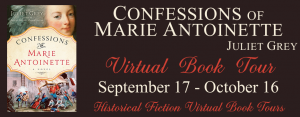
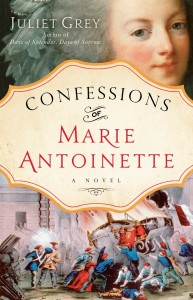 The revolutionaries are taking France over. Before Marie Antoinette realizes it, they’ve invaded her home and threatened the lives of her family and loved ones. Marie Antoinette herself is reviled as a foreign, an inconsiderate woman who has no discrimination about who she sleeps with or why. She must be the cause of all the wrongs that the people have experienced and they are calling for her head. The Revolution is right at the gates of Versailles and the once-loved King and Queen of France become, somehow, enemies of the people, prisoners of the state, their lives hanging by fragile threads. The revolutionaries are taking France over. Before Marie Antoinette realizes it, they’ve invaded her home and threatened the lives of her family and loved ones. Marie Antoinette herself is reviled as a foreign, an inconsiderate woman who has no discrimination about who she sleeps with or why. She must be the cause of all the wrongs that the people have experienced and they are calling for her head. The Revolution is right at the gates of Versailles and the once-loved King and Queen of France become, somehow, enemies of the people, prisoners of the state, their lives hanging by fragile threads.
This story was never going to end well. Everyone who has even the remotest familiarity with French history knows the fate of Louis XVI and Marie Antoinette. An author who isn’t writing an alternate history knows the ending. Still, though, after spending this whole trilogy with Marie Antoinette, the final volume of her story is heart-breaking. I can’t begin to imagine how it must have felt for the author, and the many people who choose this tragic woman as their subject, once the final page is written.
Despite the inevitable ending and the gradually more desperate tone of the book, Confessions of Marie Antoinette is a book that continued the excellence of the rest of the trilogy and concluded it in a way that is perfectly appropriate to Marie Antoinette’s story. The book is not without its moments. I thought personally one of the most touching was the way in which their immediate family was drawn closer together, towards the middle of the book. In captivity, stripped of the trappings of royalty, the “Capets” become a small, surprisingly loving nuclear family. They’re weathering a crisis together and it does indeed bring them together.
Somehow this makes the rest of the book all the sadder.
Grey navigates the confusing environment of the French Revolution deftly. It would be easy to get bogged down in politics, but she always manages to keep a central focus on Marie Antoinette and her family. While there is necessarily an element of telling, not showing, owing to the fact that Marie Antoinette spends a lot of the book away from the action, I never felt like the story slowed to accommodate it.
Instead, Grey uses a second viewpoint character, Louison, to give us an idea of the revolutionary feeling. I think Louison is intended to show how the citizens could get so caught up in revolutionary fervor that they let a minority commit truly radical acts. I never really connected with her, though, maybe because I was too busy feeling for the royal family.
I would definitely recommend this trilogy of books to anyone who is interested in reading excellent fiction about Marie Antoinette. As the conclusion, Confessions of Marie Antoinette is just as good as the previous two books by Juliet Grey, perfect for historical fiction lovers.
I read this book as part of the Historical Fiction Virtual Book Tour. For more viewpoints, check out the tour schedule.
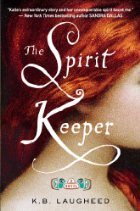 Katie O’Toole is the unlucky thirteenth child of Irish immigrants, living in the wilds of Pennsylvania, when Native Americans attack her small town and kill many of her family. Katie, however, with her flaming red hair and bright blue eyes, is hailed by one of the natives as the subject of his vision. Instead of being harmed, she is treated as precious and given the “choice” of going along with two natives – both of a different clan than the attackers – or staying with her family and being ransomed back to her family. For Katie this requires almost no thought, as she’s spent her life in unappreciated semi-servitude to her parents and siblings, but she vastly underestimates the difficulties that face her as she and her two new companions make their way west. Katie O’Toole is the unlucky thirteenth child of Irish immigrants, living in the wilds of Pennsylvania, when Native Americans attack her small town and kill many of her family. Katie, however, with her flaming red hair and bright blue eyes, is hailed by one of the natives as the subject of his vision. Instead of being harmed, she is treated as precious and given the “choice” of going along with two natives – both of a different clan than the attackers – or staying with her family and being ransomed back to her family. For Katie this requires almost no thought, as she’s spent her life in unappreciated semi-servitude to her parents and siblings, but she vastly underestimates the difficulties that face her as she and her two new companions make their way west.
I was genuinely surprised by how very much I enjoyed this book. The description sounded enticing, but I tried to go into it with no expectations in case it didn’t work out the way that I hoped. Instead, it far surpassed my expectations. This ended up being a delightful book that still manages to handle some very serious and important concerns.
First of all, racism. The early American colonists were very, very wrong in their treatment of Native Americans, basically claiming every last bit of land in the country that they made up (ignoring previous boundaries and societal organizations). Katie is the sole narrator of this book, but she witnesses prejudices first hand against her companions on numerous occasions. She even makes up her own misconceptions based on that racism, only to have them knocked down and torn apart by the men she’s travelling with. In this case she doesn’t know any better, doesn’t know anything different from what she’s been told. She naively assumes that their expectations of life match her expectations of life and watching that change as she realized that she was dealing with a people completely different from her own was fascinating. If anything it shows how important it is to broaden our horizons and open our minds.
Katie also undergoes a significant period of grief, which I can’t touch on without spoiling the story. But it was a moving experience and really showed how naive she was, despite the hardships of her life before. It’s almost as though, after that complete change, she no longer applies the logic of her previous life to her current life. I really enjoyed Katie as a character overall, actually; I found her easy to relate to and learn along with her about the new world that she finds herself in.
The book is written in a style meant to mimic how a woman of her era would have spoken or written, which I found distracting at first but then basically stopped noticing as I got further into the book. I’m not sure how others would feel about this, but it definitely didn’t get in the way of my appreciation of the book, although I can’t say it added much.
And, of course, The Spirit Keeper has an absolutely wonderful romance with just a touch of fantasy – interpretation left up to the reader mainly. Again, I don’t want to give away any details, but I really loved this aspect of the book. The book only ended too soon – I’d have happily kept on reading for another hundred pages. I look forward to more from K. B. Laugheed in the future.
All external book links are affiliate books. I received this book for free for review.
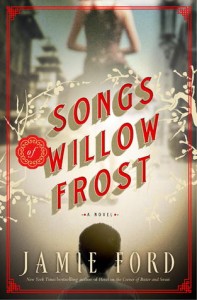 Twelve year old William is an orphan, as far as he knows. From the moment his mother’s limp body was carried away five years ago, he’s been a lost soul at an orphanage in Seattle. He has a few friends, including his blind best friend Charlotte, but he longs for a family. As a Chinese-American, though, his chances for adoption are incredibly slim, and he’s resigned himself to years of the same treatment. On the orphans’ collective, made-up birthday, he’s taken to see a movie. To his shock, William recognizes an actress in the film – his mother! Willow Frost looks and sounds just like the beautiful mother he lost five years ago. William decides that he simply must find her and begins in earnest to seek his family again. Twelve year old William is an orphan, as far as he knows. From the moment his mother’s limp body was carried away five years ago, he’s been a lost soul at an orphanage in Seattle. He has a few friends, including his blind best friend Charlotte, but he longs for a family. As a Chinese-American, though, his chances for adoption are incredibly slim, and he’s resigned himself to years of the same treatment. On the orphans’ collective, made-up birthday, he’s taken to see a movie. To his shock, William recognizes an actress in the film – his mother! Willow Frost looks and sounds just like the beautiful mother he lost five years ago. William decides that he simply must find her and begins in earnest to seek his family again.
A few years ago I read Jamie Ford’s Hotel on the Corner of Bitter and Sweet, a book that I really liked and which I still think about sometimes. I was very much looking forward to this book, so perhaps a bit of disappointment was inevitable. William’s story just didn’t grab me in the same way, nor did the intertwined tale of his mother. The story is actually considerably depressing, as life was for a Chinese woman left mostly to fend for herself as Willow was. I desperately wanted life to improve for her, but as their stories unfolded, William’s place in the orphanage made the outcome clear.
This was still a very beautifully written book, with a number of evocative scenes. I’m honestly not sure why I personally failed to connect with it when I felt so strongly about Ford’s previous book. Looking back on reading it, most of what I remember is rainy, dreary Seattle and the insurmountable hardships that Willow faced throughout her young life, as well as certain plot events around William that I can’t share. I wanted to reach into the book and fix everything for each of the characters, but sadly that isn’t something actually possible.
Would I still recommend that others read this book? I think so. It’s still a telling portrait of the life of Chinese-Americans in the early twentieth century and the difficult lives they faced. It also paints a picture of early Hollywood. Some of the relationships within are very well written, too. My experience doesn’t seem common, but overall I don’t think this was the book for me. Still, if you would enjoy the elements described above, I suspect you would greatly appreciate Songs of Willow Frost.
All external book links are affiliate links. I received this book for free for review.
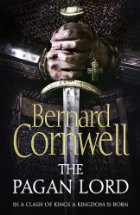 In the seventh installment of Bernard Cornwell’s Warrior Chronicles, Uhtred of Bebbanburg has fallen from the favour of the King of Wessex. Unfortunately, he’s also fallen from the favour of the Mercians. Double dealing drives him from his home and he decides that the time is ripe to take back what is his – Bebbanburg. Leading a small band of loyal retainers north, Uhtred sneaks his way into the home of his ancestors, but capturing what is his may be a goal that eludes him once again. As Danes and Saxons struggle for control of the British isles, where will Uhtred fit in? In the seventh installment of Bernard Cornwell’s Warrior Chronicles, Uhtred of Bebbanburg has fallen from the favour of the King of Wessex. Unfortunately, he’s also fallen from the favour of the Mercians. Double dealing drives him from his home and he decides that the time is ripe to take back what is his – Bebbanburg. Leading a small band of loyal retainers north, Uhtred sneaks his way into the home of his ancestors, but capturing what is his may be a goal that eludes him once again. As Danes and Saxons struggle for control of the British isles, where will Uhtred fit in?
By this point in the series, I feel like I’ve grown to know Uhtred very, very well. He’s aged and grown somewhat wiser through the years of the story; when he remembers his younger years, it’s easy for the reader to remember them, too, through the books. It’s a strange position for a series to be in, because we’re intimately acquainted with all the characters and conflicts, but the author has to keep the series fresh and maintain interest. With six books to get through before this one, new readers may be put off. They shouldn’t be, though – Cornwell’s books are amongst the best historical fiction has to offer on the Anglo-Saxon period and I love seeing the kingdom of England rise through his eyes.
Because really, that’s what these books are about. Uhtred’s personal struggles are certainly there, with his strong desire to retake his home castle of Bebbanburg and to be with the people he loves, but central to each is the fact that there is a huge struggle between Danes and Saxons that clearly is going to come to an end. As this is history, we know that the Anglo-Saxons win the day and create a united England, but Uhtred doesn’t know that. Cornwell is excellent at telling the story as it comes, so that Uhtred makes no assumptions about what is going to happen. Instead, he focuses on his own goals and loyalties, sticking to a personal moral code and to the men who have gained his loyalty over the last few years.
This book remains as solidly enjoyable as the rest of the series. I love following Uhtred’s adventures. He’s such a great character and he’s really well defined. The battle scenes are as vivid as ever, putting readers straight into the middle of the action so that I could almost feel what it would be like to stand in the shield wall. This part of Anglo-Saxon history is one of my favorites and it’s fascinating watching England come together through his eyes. As I was reading this book initially, I wondered how long the series would go on, but at this point I think it really has to continue until England is united, and I hope Uhtred is there to see it happen.
I recommend The Pagan Lord as I would with every installment of the series, but I do recommend starting with The Last Kingdom, the first of Uhtred’s adventures. It will put everything in context.
All external book links are affiliate links. I received this book for free for review.
 History is written by the victors. It’s a common phrase that nearly everyone has said or heard. Our history books and our world views are shaped by the people who won wars. Europe’s states, particularly those of western Europe, seem fixed in place. Italy, Germany, Spain; these are definite countries, aren’t they? History is written by the victors. It’s a common phrase that nearly everyone has said or heard. Our history books and our world views are shaped by the people who won wars. Europe’s states, particularly those of western Europe, seem fixed in place. Italy, Germany, Spain; these are definite countries, aren’t they?
Well, as it turns out, and as those who study European history might know, not really. The borders, names, and actual existences of states in Europe have shifted dramatically over the course of the last 2,000 years, with many states completely and totally forgotten except by those who once lived in them. There were seven kingdoms and duchies called “Burgundy”, none of which exist now. Spain was historically fragmented into different countries in the middle ages and exists in an uneasy state now with Catalans seeking independence (and simultaneously forgetting states of their own). The united states of Italy and Germany are fairly new and the destruction of Prussia happened in the twentieth century. And Poland? Poland was completely absorbed into other countries for a time, while the Kingdom of Montenegro not only failed to exist after World War I, no one actually seemed to care. The country only gained independence again in 2006.
Unsurprisingly, I absolutely loved this book. It took me a month to read (during which time I read plenty of fiction) but I found it absolutely fascinating. The book is arranged in roughly chronological order from around the dissolution of the Roman Empire to the fall of the Soviet Union, with 15 states that have either vanished or had huge parts of their history forgotten by the popular consciousness. There’s no real connection between the choices except that they’re all in Europe. Each chapter is broken into three parts. The first part looks at what is happening in the region today, to give us context for the history which follows in the second part. The third part then looks at how well the history has been remembered (or misremembered). This structure worked really well for me; I always like having some sort of context to understand history, and I know enough about the bits and pieces around most of the “vanished” kingdoms to understand the history pretty well too. He goes into more detail with some countries than others, which according to some other reviews makes the book a bit dry, but I didn’t find that to be the case at all.
Naturally this is only a surface glance at each of the 15 “kingdoms” – which can also be empires, duchies, republics, etc. – but it’s a starting point to go out and explore more. Unfortunately a few of the places have been forgotten so thoroughly that the remaining documentation is slight or non-existent, or in another language, but Davies has copious notes at the back of the book, although I’d have loved a suggested reading list of sorts for each.
I really enjoyed the way Davies looked at how history is remembered, too. Each country is different, of course, but it’s fascinating to see how countries treat their own pasts. One of the most extensive was, unsurprisingly, at the end of the chapter on Ireland. Ireland is hardly a forgotten country, but its relationship with England and eventually the United Kingdom is very complicated. Davies ruminates at length on the future of the UK, which he doesn’t think is going to last very long.
All in all, Vanished Kingdoms was completely and totally fascinating. I only wished there were more kingdoms to read about! Very highly recommended.
All external book links are affiliate links. I purchased this book.
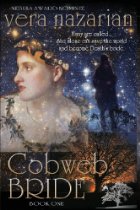 In all four corners of the world, people are about to die. Every moment, someone’s struggle comes to an end. But suddenly, death stops. No one can die, even those with mortal wounds. All of the citizens in the Kingdom of Lethe are perplexed and terrified. Battles rage on, assassinations fail spectacularly, and the elderly continue suffering past their time. Then Death himself arrives and asks for his Cobweb Bride. Only once his bride is found will death resume and the kingdom return to normal. But with no sign of the Cobweb Bride and no hints on where to find her, how will the citizens restore normality to their lives? In all four corners of the world, people are about to die. Every moment, someone’s struggle comes to an end. But suddenly, death stops. No one can die, even those with mortal wounds. All of the citizens in the Kingdom of Lethe are perplexed and terrified. Battles rage on, assassinations fail spectacularly, and the elderly continue suffering past their time. Then Death himself arrives and asks for his Cobweb Bride. Only once his bride is found will death resume and the kingdom return to normal. But with no sign of the Cobweb Bride and no hints on where to find her, how will the citizens restore normality to their lives?
Cobweb Bride is a crowd-funded phenomenon by the award-winning author Vera Nazarian. This, plus the concept of the story, had me immediately sold, and I was very eager to read this book.
This book feels unlike anything I’ve read that’s been traditionally published at the moment. It reminded me most of books that I used to read as a child, when fantasy was paramount. The descriptions are incredibly evocative and the world described, though derived from medieval Europe, feels different and special. I could picture the thin, sickly Infanta and the rosy group of girls headed off to find out if one of them was the Cobweb Bride. I could feel the cold seeping into the bones of those who should have died. I could see the royal court and the forests. For someone who isn’t a visual reader, I found this remarkable and really well done.
I also loved the concept. Nazarian doesn’t stop at the end of death for humans; animals and plants can’t die, either. This means that even food supplies are threatened, and by the middle of the book people have to rely on food that’s already dead. She envisions what happens in a body that continues working even after all the elements that make us alive have gone. It’s eerie but really thought through. And some of the conflicts that arise within the story are solely based on this, because supposedly dead people are still alive. The relations between an assassin and the person he would have successfully killed were my favorite part of the book.
Where the book falls down a bit is the way the plot is laid out. It’s a very good story, don’t get me wrong, but the beginning seems to last for a long time. Nazarian very carefully sets the scene for the rest of the book, but as a result it feels like it takes a while to get going. We’ve realized that death has stopped coming after the first two stories, so there is no further surprise factor, it’s just setting up the different storylines to interact in the rest of the book. Once those four storylines are set, I felt the book sped up considerably and I remained spellbound by the story.
Cobweb Bride ends with a lot left open, as it’s the first in a trilogy. I for one will definitely be looking forward to the next, Cobweb Empire, which is released next week on September 25th! Recommended to those who really enjoy fantasy.
All external book links are affiliate links. I received this book for free for review.
|
|



Recent Comments