|
|
 Hal Montgomery is alive and at war on the Christmas truce during the first World War in 1914. The British and the Germans laid aside their arms for one day and met halfway across No Man’s Land, exchanging gifts and conversation as though they hadn’t just been trying to kill one another and didn’t intend to do so again in a matter of hours. Hal finds himself chatting with a German officer named Wilhelm who is engaged to a British girl. He’d formerly lived in Stratford-upon-Avon and met a schoolteacher, Sam, with whom he fell deeply in love. Wilhelm gives Hal a picture of himself and asks him to let Sam know that he’s alive, still loves her, and still wants to marry her if he ever gets the opportunity. Hal Montgomery is alive and at war on the Christmas truce during the first World War in 1914. The British and the Germans laid aside their arms for one day and met halfway across No Man’s Land, exchanging gifts and conversation as though they hadn’t just been trying to kill one another and didn’t intend to do so again in a matter of hours. Hal finds himself chatting with a German officer named Wilhelm who is engaged to a British girl. He’d formerly lived in Stratford-upon-Avon and met a schoolteacher, Sam, with whom he fell deeply in love. Wilhelm gives Hal a picture of himself and asks him to let Sam know that he’s alive, still loves her, and still wants to marry her if he ever gets the opportunity.
Shortly afterwards, Hal is shot and crippled in a way that he means he’ll probably never return to the front and may always walk with a limp. This actually gives him the perfect opportunity to find Sam, with whom he’s developed an obsession, and deliver Wilhelm’s picture to her. Instead of honorably fulfilling that request, Hal himself falls in love with Sam and determines to spend the rest of his life loving her, regardless of how she feels about him.
Initially, I really enjoyed this book, and it definitely made me reconsider all the other ARCs on my shelf in which I’ve lost interest. I’m trying to get through them now and this one seemed to declare itself a winner right away. It has a fascinating story, starting with that legendary Christmas truce, and ending up dealing with difficult questions for people living in the early twentieth century. Sam has borne a child out of wedlock, for example, and the scrutiny and discrimination towards her is immense, even leading towards her potential expulsion as a schoolteacher. Her relationship with Hal is frowned upon by all of society and they pretend to be married to escape censure. These are all issues that we no longer have to deal with and the book made me deeply consider how profoundly life has changed.
Throughout the novel, the war goes on, and it ends at about the same time as the book ends. As a result, many of the people Hal knows and loves are off at the front even when he can no longer be there himself. His perspective gives us an insight into the daily stress that people were under but also contrasts the scene of the war with the surprisingly ordinary daily life in Britain. It’s too easy for people to forget that war is happening, even when their lives are consumed with spying and reading intelligence daily as Hal’s is. Still, his losses hit hard, and I found myself regretting all of the deaths that happened.
I had a few disappointments with the book, despite the fact that I did enjoy it and thought it was well-written. First of all, Hal is almost unbearably selfish. I could not believe he didn’t give Sam Wilhelm’s picture, lied to her about meeting him, and then did his very best to make her fall in love with him, mainly because he was so attracted to her. I hated him at times for that. Sam herself wasn’t a particularly standout character and I found her to often be cold and to use Hal in her own ways to get what she wanted. In that respect they deserved each other. My favorite character was probably the child Will, who just doesn’t understand what is going on and wants what a child wants, his parents to be together and happy with him. The ending was also completely unsatisfying. I’m not going to lie, it fit in with the characters’ personalities, but it was not what I wanted out of it, and so I was disappointed even if I should have seen it coming.
So, Gifts of War. It was well-written and interesting, but lacked the spark that would have connected me better to the characters and the story, and I ended up unsatisfied with it as a whole. If Mackenzie Ford were to write another book, I would probably read it, but I would lower my expectations accordingly.
I am an Amazon Associate. I received this book for free for review from the publisher a shamefully long time ago.
 Sabine’s life hasn’t been easy since she fled from her career as a cushy opera star. She’s gone as far as offering sex for food; she ends up in a saloon sleeping with the proprietor and hiring other prostitutes to dance and sell drinks as well as sell themselves. When she was seventeen, however, her life was full of bright lights, scandal, and music she thought she couldn’t live without. When a little bit of that music comes back into her life, Sabine has to choose between the life she thought she’d left behind, and all its complications, and shutting away that life forever, if she still can. Sabine’s life hasn’t been easy since she fled from her career as a cushy opera star. She’s gone as far as offering sex for food; she ends up in a saloon sleeping with the proprietor and hiring other prostitutes to dance and sell drinks as well as sell themselves. When she was seventeen, however, her life was full of bright lights, scandal, and music she thought she couldn’t live without. When a little bit of that music comes back into her life, Sabine has to choose between the life she thought she’d left behind, and all its complications, and shutting away that life forever, if she still can.
Sabine’s story is told through alternating viewpoints; her adult life serves as the current narrative, while her more youthful diary regularly fills us in on the backstory behind her career and her more youthful life. At first, I had a really difficult time reconciling the two. The older Sabine, known as Marguerite to hide her past, is cynical and has closed off much of her personality. In vivid contrast, youthful Sabine is full of hope at the start, can’t imagine a life without music, and is almost unbearably teenage in her thoughts and emotions. She’s ridiculously self-centred, almost certain that the stage has an empty slot just waiting for her voice to fill it, and is prone to vivid imagination and silly delusions of love. I couldn’t help but like the older, more mature version better, even as I admired Chance’s skill in creating a teenager that recalled a little too clearly what it feels like to have everything be so brightly colored and full of drama.
The atmospheres of each location really drew me in. Seattle feels damp and grim, full of people who are mainly at the end of their ropes. It perfectly matches Sabine’s attitude at the same, where her own life has lot all of its former glitter. As she begins to open up again to music, so does Seattle; the first musical lands in town and Sabine begins to make a friend who tries her best to lighten up her life, when Sabine isn’t busy lying about her past. In vivid contrast is the soap opera-esque world of the stage, where Sabine is universally adored on stage but confused, in love, yet often very alone off stage. Everyone is sleeping with everyone else and the diary entries from this period are as high strung as Sabine herself. While I liked the back stage peek of the historical opera, I didn’t like the vast amounts of scandal that seemingly dripped from these pages; Sabine made choices I couldn’t condone and the entire world there was foreign and not particularly appealing to me. When Sabine herself grew uncomfortable with it, I felt I had judged it all rightly and wasn’t surprised that eventually she was driven to flee as she does in the beginning of the book.
The last thing that I didn’t like about the book – I liked most of it, honest – was the ending. I felt Sabine made the wrong choice. I couldn’t understand the logic behind it and while I liked that she was human and thus fallible, I suppose I hoped she would have learned in the way that I would have. But she didn’t, and so the whole book left me feeling a bit disappointed. The writing was beautiful and the story was well done, but I just couldn’t connect in that essential way with the characters or even truly understand their decisions. It’s wonderful for a backstage peek at opera houses of the period, and an atmospheric glimpse into a very youthful Seattle, but Prima Donna wasn’t the stand out historical fiction novel I hoped it would be.
I am an Amazon Associate. I received this book for free from a publicist for review.
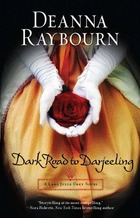 Lady Julia and Brisbane may have tied the knot, but that doesn’t mean intrigue has absented itself from their lives. No, even on their honeymoon, there is a mystery which they are compelled to solve. When Julia’s siblings Portia and Plum turn up, asking Julia and Brisbane to come to see Portia’s former lover, Jane, who is pregnant and suspects her husband has been killed, the new couple simply cannot say no. When Brisbane stays behind and doesn’t immediately go to the estate with Julia, she is distressed but resolves to try and find the murderer out for herself. What she does find is a strange mix of people both old and new and a mystery she cannot begin to guess how to solve, if there even is one at all. Lady Julia and Brisbane may have tied the knot, but that doesn’t mean intrigue has absented itself from their lives. No, even on their honeymoon, there is a mystery which they are compelled to solve. When Julia’s siblings Portia and Plum turn up, asking Julia and Brisbane to come to see Portia’s former lover, Jane, who is pregnant and suspects her husband has been killed, the new couple simply cannot say no. When Brisbane stays behind and doesn’t immediately go to the estate with Julia, she is distressed but resolves to try and find the murderer out for herself. What she does find is a strange mix of people both old and new and a mystery she cannot begin to guess how to solve, if there even is one at all.
It’s not a secret that I’m a big fan of this series, so I was thrilled when I found it on Netgalley, saving me the cost of importing the book just to see what happened (although this is one I do intend to purchase a paper copy of). I was a little worried about how it would go once Julia and Brisbane were actually married. Although none of the books’ plots have revolved around their romance, it has been a big part of the series and the tension between them has been a main linking factor of all the books; no matter what they’re trying to figure out, these two people have been drawn to one another. As it turns out, they still are very attracted to each other, although Raybourn fades to black so we never witness any of their more intimate scenes, for which I was grateful. They have their arguments, but they are still very in love throughout this particular novel, and I didn’t feel the lack of their courtship too keenly.
The mystery itself in the book was an interesting one, with pieces I didn’t put together until the end, but I’m not sure I was meant to. I often could tell that the real culprit wasn’t any of the people Julia actually suspected but I didn’t guess who it was; I did assume there was a murderer or the book would have ended without any sort of climax. As it stood, however, quite a few things did happen at the end of the book, few of which were particularly happy, and Raybourn drops us off with a nice cliffhanger that has me ready for the next in the series immediately.
What I liked the most about this book, as I often do in series that earn themselves a place on my favorites list, was the fact that the relationships within the series continue to grow and change with each installment. I also love that we learn bits about each character as the series progresses. Bits and pieces of the past come back to haunt them and play a role in each new storyline, so we’re always tied neatly in to the past. The books themselves have storylines but the whole series is an arc as we learn more and more about each individual character.
I still love this series and I am already anxious for number five! Dark Road to Darjeeling is a fantastic installment in a series that is just pure pleasure. If you enjoy historical fiction and mysteries, you will enjoy this series.
I am an Amazon Associate. I received this book for review through Netgalley.
 In the late twelfth century, Jerusalem falls to the Muslim world once again, to the shock of a Christian community used to claiming much of the holy land. Richard the Lionheart decides that the throne of England just isn’t enough for him and heads off with a large party of men to save the Christian kingdom and, perhaps, to crown himself King of Jerusalem. Meanwhile, in the holy city itself, sultan and chivalrous warrior Saladin worries about the oncoming Christian threat, especially when Richard starts to win. In the mix is thrown Miriam, a Jewish girl who lost nearly everything to the savagery of the Christians, and whose uncle is one of Saladin’s most trusted advisors. Will she bridge the gap between cultures? In the late twelfth century, Jerusalem falls to the Muslim world once again, to the shock of a Christian community used to claiming much of the holy land. Richard the Lionheart decides that the throne of England just isn’t enough for him and heads off with a large party of men to save the Christian kingdom and, perhaps, to crown himself King of Jerusalem. Meanwhile, in the holy city itself, sultan and chivalrous warrior Saladin worries about the oncoming Christian threat, especially when Richard starts to win. In the mix is thrown Miriam, a Jewish girl who lost nearly everything to the savagery of the Christians, and whose uncle is one of Saladin’s most trusted advisors. Will she bridge the gap between cultures?
Here is yet another book that has me torn in two. My first problem with it is historical inaccuracy, and I mean historical inaccuracy in a ridiculously large way. First of all, Pasha has the king’s children Richard, John, and Joanna at Henry II’s deathbed, with nary a mention of the man who was actually there, which was Henry’s bastard son Geoffrey. He conveniently neglects to mention that Henry was in fact at war with Richard at the time. Then, Richard claims that he wants the kingdom of England above all, which is clearly not true – it’s widely accepted that Richard was groomed to take Eleanor’s place as Duke of Aquitaine, a land with which he was better acquainted and mostly fought for. England was not a very important kingdom in comparison with France, and it’s only the dominance of England from Elizabeth’s reign onwards that made it of any real importance to the rest of the world. Secondly, the crusade Richard goes on is almost ridiculously simplified, with many of the major characters sidelined because they didn’t suit the story. For example, there is no Berengaria, Richard’s wife, and Guy of Lusignan is conveniently forgotten as soon as Jerusalem is captured. The story was originally a film script and the historical inaccuracy makes that pretty obvious, as it’s simplified to suit a movie time span and a novel could have been much more complex and accurate. The crusade is pretty exciting by itself; it doesn’t need all this editing. It also bothered me that Richard was constantly referred to as a boy and inexperienced when in reality, he was 32 and had been leading armies since he was 16 years old. 32 year olds aren’t even boys in the modern world; in the medieval world, this struck me as very out of place.
You can argue that this book is fiction, but I honestly just don’t see a reason to change so much of history in a historical novel.
On the other hand, this is one of the few books about the crusades that I can remember reading by a Muslim, and Pasha highlights many of the important aspects of Muslim culture which are so conveniently forgotten in the modern world. First and foremost, this is the fact that Muslims are peaceful people. They co-existed happily with all other religions, including Christians, until the Christians themselves decided to kill them to gain back Jerusalem – and even then, after the treaty was signed, the existing Christians were generally allowed to live in peace. The same is true of Jews, by the way, who were systematically persecuted by Christians everywhere but were mainly left alone by Muslims. This was also true in Muslim Spain. Saladin himself, as Pasha writes in his author’s note, was in fact an incredibly honorable man, and many of these bits that Pasha included were in fact accurate. He really emphasizes the fact that the crusades are the background of the conflicts we’re still experiencing today; the fact that Jews and Muslims used to live together peacefully seems almost remarkable to us today given current conflicts in the Middle East. He also provides an excellent list of follow-up reading for those who are interested in the crusades and this crusade in particular.
As a result, for all my complaints about its inaccuracy, Shadow of the Swords is a book that has something to say for those who’d like to look more closely at it. Unfortunately, I think its over-simplifying and changing of history will cause those who read it to also question the reality of the situation between Muslims, Jews, and Christians. As a result, I recommend it with reservations, and highly suggest that readers of this book also seek out an excellent non-fiction book written from a Muslim perspective, The Crusades Through Arab Eyes by Amin Maalouf.
I am an Amazon Associate. I received this book for free for review from the publisher.
 Ellie is a rural Irish girl, born to the snobby family in the village. As a child she feels isolated from the other children, except for John, with whom she shares an immediate kinship. When they grow into adults, it’s only natural that they fall in love and get married; it’s been happening for their entire lives. What isn’t natural is John’s zest for the Irish revolutionary movement and the aim to take the country back from the British. When he is seriously injured and needs an expensive operation to walk again, Ellie faces the reality of heading to New York City for a year and working to pay for his medical care. Once she’s there, though, Ellie discovers that she might not want to leave. Ellie is a rural Irish girl, born to the snobby family in the village. As a child she feels isolated from the other children, except for John, with whom she shares an immediate kinship. When they grow into adults, it’s only natural that they fall in love and get married; it’s been happening for their entire lives. What isn’t natural is John’s zest for the Irish revolutionary movement and the aim to take the country back from the British. When he is seriously injured and needs an expensive operation to walk again, Ellie faces the reality of heading to New York City for a year and working to pay for his medical care. Once she’s there, though, Ellie discovers that she might not want to leave.
I’m of two minds about this novel, again. It was quite engaging while I was reading it and I loved the depiction of New York City, particularly the differences between the big fancy city with electricity everywhere and rural Ireland with basically nothing. I did think it was a little peculiar that the novel is titled Ellis Island but Ellie spends about three pages there! Still, it was interesting to read about it in fiction now that I’ve actually walked the halls of Ellis Island myself. At least one set of my great-grandparents went through the famed immigration island and even though Ellie goes after the initial rush, it’s still an interesting depiction.
It doesn’t really hold up to Brooklyn, which may be my favorite book this year and which covers a similar theme of an Irish girl moving to New York City to make money, and that definitely colored my interpretation of it as well. Ellie and Eilis are completely different girls and lead totally different lives; unfortunately I related more to Eilis. Ellie seems almost vain at times, especially closer to the end of the book. Mainly I loved that she eventually decided to make something of herself and seize the old American dream.
Unfortunately, I disliked most of the ending and I felt she was giving in to a life she didn’t really want to lead. Others have interpreted her return to Ireland differently, but I saw a girl giving up her real dreams for a man, and that’s just something I can’t get behind. Even if she still retained her ambitious bent, she isn’t living the life she wanted out of guilt.
While an engaging read, Ellis Island lacks substance and doesn’t really satisfy the ambitious female reader. While some might say that Ellie found what she really wanted, all I saw was her giving up her newfound happiness for the sake of tradition.
I am an Amazon Associate. I purchased this book.
 The late seventeenth and early eighteenth century are considered the beginning of the Age of Enlightenment in the western world, but it was certainly not so for women. Because Eleanor Goodricke is taught science from a young age and loves the natural world, she’s looked down on by her neighbors and even ostracized at times. Her life is full of austerity due to her father’s Puritan roots and her love of science replaces any girlish indulgences. When her father dies, she’s alone in the world with Tickenham Court and a guardian who views her as strange, just like the rest of the townspeople do. When Eleanor meets Edmund Ashfield, she falls immediately in love, but she’s destined for larger passion with his best friend Richard Glanville. She also furthers the scientific study of butterflies and becomes a female entomologist no matter how strange others consider her. The late seventeenth and early eighteenth century are considered the beginning of the Age of Enlightenment in the western world, but it was certainly not so for women. Because Eleanor Goodricke is taught science from a young age and loves the natural world, she’s looked down on by her neighbors and even ostracized at times. Her life is full of austerity due to her father’s Puritan roots and her love of science replaces any girlish indulgences. When her father dies, she’s alone in the world with Tickenham Court and a guardian who views her as strange, just like the rest of the townspeople do. When Eleanor meets Edmund Ashfield, she falls immediately in love, but she’s destined for larger passion with his best friend Richard Glanville. She also furthers the scientific study of butterflies and becomes a female entomologist no matter how strange others consider her.
If there was any doubt that I have revived my interest in historical fiction, this book casts it all aside. It took me five days to read but it was worth each and every one of those days. This was a fascinating book and I was completely drawn into Eleanor’s life and loves, both of men and of butterflies. I thought about it when I wasn’t reading it and I longed to get back to it in order to find out what was happening. Even though some of the story is immediately apparent just from reading Eleanor’s name on the back cover, I didn’t feel spoiled at all and instead wondered what would happen and how it would happen.
As with much of the historical fiction I’ve been reading lately, I have read few books set in this time period and I was fascinated by the changing cultures of the times. The Puritans’ reign has waned, but Eleanor still endures a stark childhood and bears the prejudices of the daughter of a man who fought for Oliver Cromwell. This, despite the fact that she is so often prejudiced against herself, reveals the fragility of human prejudice and the ultimately unsubstantial reasons we have for setting ourselves against others. It’s that prejudice which proves her undoing in this novel and perhaps in life, even when she discovers some of her long-held beliefs are blatantly untrue and harmful.
Reading this book is a bit like riding a roller coaster. I wanted, just for a minute, for Eleanor’s life to be peaceful and calm, for her to spend time with her butterflies and her eventual children and just be. Of course, that must have happened in her actual life, but the book skips to the most eventful periods in order to keep the pace up throughout nearly six hundred pages. It certainly succeds, because despite the time I took to read this book, I was never once bored and never even thought that I wished it was going faster. Trust me, that never happens; usually I become impatient with books after two days!
Mountain freely admits that she’s played a little bit with the facts, but it’s hard to blame her; Eleanor Glanville did have a thrilling life in reality and she deserves more credit for her scientific study in particular. Mountain has really crafted a wonderful book here, with a gorgeous setting (I could picture the marshes and why Eleanor loved them) and a heroine who is simultaneously a representation of her time and a woman that is perfectly recognizable. Lady of the Butterflies is a fantastic historical fiction read and one that comes highly recommended by me.
I am an Amazon Associate. I received this book for free through the LibraryThing Early Reviewers program.
 Mattie dreams of being a writer, filling notebooks when she can get them and choosing words of the day to expand her vocabulary, but since her mother died and her brother left she’s been more like a housekeeper to her father and three younger sisters. She longs to move to New York and make a go of her talents at Barnard College, so she starts slowly saving for the day when she can escape her rural life. She takes a job at the Glanmore, a fancy hotel for tourists, to get enough money to go, but her attention is distracted when she discovers an unsettling truth about a capsized boat and a death that once looked innocent. Mattie dreams of being a writer, filling notebooks when she can get them and choosing words of the day to expand her vocabulary, but since her mother died and her brother left she’s been more like a housekeeper to her father and three younger sisters. She longs to move to New York and make a go of her talents at Barnard College, so she starts slowly saving for the day when she can escape her rural life. She takes a job at the Glanmore, a fancy hotel for tourists, to get enough money to go, but her attention is distracted when she discovers an unsettling truth about a capsized boat and a death that once looked innocent.
Told back and forth over two different time periods in Mattie’s life, Mattie’s story quickly gains suspense while retaining its literary bent. I loved the fact that each chapter has a word before it and the author works the word into the story over the course of the chapter. Mattie herself loves reading and adores writing, and she’s supported in that by her school teacher, who firmly believes that she can make something more of herself than becoming a simple farm wife. Mattie is torn between her ambitions and the attention paid to her by a handsome local, which adds another dimension to the story as she struggles with immediate infatuation and long-term dreams and desires.
I also just loved the setting. In rural New England, life is not easy, and Mattie’s father and uncle experience all the risks of a country life. Mattie herself endures the hardships of it, with backbreaking work constantly and reluctant days missed off school – which she adores – to help out around the farm. But there’s also a beauty to it which shone through in Donnelly’s writing, really rounding out the book. I got such a feel for the time period that I immediately wondered why more books aren’t set in early twentieth century New England; it’s in such stark contrast to the rest of the nation.
Finally, there was the suspense of the murder, and the slow reveal of precisely what happened and why. We begin to understand why Mattie holds the secret, what she fears, and this laces the entire book together as it heads toward its conclusion, both towards her decision for her future and the final discovery of why a girl drowned in the lake. It was surprisingly gripping at times and I got through it very quickly. Mattie’s character, despite her fervent desire for independence, was completely believable and I appreciated both her literary mind and her romantic impulses. She felt like a real teenager and I was anxious for her to make what I considered the right choice.
A Northern Light is a beautiful and enthralling book, with a main character to root for, a fantastic setting, and a curious and heartbreaking mystery. This is the kind of book teens should be reading, and I would have loved it even more had I been one.
I am an Amazon Associate. I purchased this book.
 Jack and Sadie Rosenblum move to England just before the start of World War II, their little girl in tow and big dreams in their heads. In Jack’s head, at least, as he longs to be a proper Englishman. On arrival in England, Jack receives a checklist of ways to become English. Jack fails to recognize the nuances of the said list and instead decides to conform to everything as though it were a requirement, marking him out as a foreigner just when he wants to fit in. Meanwhile, his wife Sadie wants to cherish her roots, and daughter Rose becomes a genuine native. When Jack reaches the final item on his list – joining a golf course – he struggles to find membership as a German Jew, and embarks on a quest to build his own golf course in a small rural town. Jack and Sadie Rosenblum move to England just before the start of World War II, their little girl in tow and big dreams in their heads. In Jack’s head, at least, as he longs to be a proper Englishman. On arrival in England, Jack receives a checklist of ways to become English. Jack fails to recognize the nuances of the said list and instead decides to conform to everything as though it were a requirement, marking him out as a foreigner just when he wants to fit in. Meanwhile, his wife Sadie wants to cherish her roots, and daughter Rose becomes a genuine native. When Jack reaches the final item on his list – joining a golf course – he struggles to find membership as a German Jew, and embarks on a quest to build his own golf course in a small rural town.
This book was completely charming in just about every way. Natasha Solomons writes in a wonderful, easy to read prose style but conveys the very true difficulties of adapting into a new society. Perhaps it’s unlikely that a man would conform to a list in order to fit in, but Jack uses the pamphlet as guidelines and doesn’t ever get close enough to English people in order to learn otherwise. They shut him out and treat him as a bit of a dummy, but again, he can’t pick up on those nuances – and when he does, they hurt so much that he simply ignores them. It’s enough to break your heart.
I loved the relationships in this novel, particularly when Jack and Sadie move out of London and try to fit in a country town. They’re still outsiders, true, but it’s a little bit different when you’re the only outsiders and don’t have your own community to rely on. The reactions of the townspeople to them are vastly interesting, as are those with their London friends who occasionally come for a visit. This part of the book seemed remarkably true to life for me; obviously, no one discriminates against me quite so much, but I have seen nationalities band together and form friendships based on nothing but their similar backgrounds; if you’re the only foreigner, attitudes and behaviors change.
Finally, I loved the culinary threads woven throughout the novel. It’s so true that food is a clear link to heritage; smells and flavors remind us of certain times in our lives as nothing else does. I wanted to try everything that Sadie made for myself; it’s so evocatively described that I could almost but not quite taste it. The food also made clear how Sadie felt in ways that the prose by itself couldn’t quite express, adding another layer on to the cultural isolation of the family and her character in particular.
Truly, Mr. Rosenblum’s List was a delightful book. It warred with my emotions and is surprisingly sad in parts, but it’s a remarkable depiction of the immigrant experience and manages to be a fantastic story besides.
This book is known as Mr. Rosenblum Dreams in English in the US. I’m an Amazon Associate and I purchased this book.
 Mina Murray thinks she’s a lucky woman. She has a fiance who some may have considered out of her reach, a pair of best friends, and enjoys her time teaching before she’s married. But she has dreams about a man she can’t identify, dreams that go beyond what a proper lady should be capable of imagining, and her friend Lucy appears to be in serious trouble with the men who wish to court her. Worst of all, Mina’s fiance goes on a trip to Romania and doesn’t write her, finally emerging seriously ill on the border, making Mina question the future she’s planned for herself and long for the man of her dreams to appear in the flesh. Mina Murray thinks she’s a lucky woman. She has a fiance who some may have considered out of her reach, a pair of best friends, and enjoys her time teaching before she’s married. But she has dreams about a man she can’t identify, dreams that go beyond what a proper lady should be capable of imagining, and her friend Lucy appears to be in serious trouble with the men who wish to court her. Worst of all, Mina’s fiance goes on a trip to Romania and doesn’t write her, finally emerging seriously ill on the border, making Mina question the future she’s planned for herself and long for the man of her dreams to appear in the flesh.
I’m not sure if this is another case of me being far too fond of the original, but I just didn’t seem to love this one as much as everyone else did. It was definitely engaging and drew me in, but it kept reminding me of the original Dracula and making me long to read that one instead of continuing to read this story that turned it all upside down. I appear to have a soft spot for certain favorite books and I don’t always like other authors popping in and changing things. I have enjoyed Essex’s other books, but this one just didn’t have the same effect on me.
Setting my partiality aside, I did like how Essex turned the sexual stereotypes in Dracula on their head. Instead of women sitting in the background, having brains like men and not brains in their own right, Mina takes the forefront here, and has perfectly normal feelings and desires that all women share. Instead of being ashamed of her sexuality, Mina learns to appreciate it and to acknowledge her feelings. The scenes in the asylum are just heartbreaking; perfectly ordinary women are consigned to terrible lives simply because men decided they were too lustful, something that sadly did happen at the time.
I’ve seen a few complaints floating around about the novel’s sexuality; this isn’t really something I had a problem with. The thing about vampires is that they have always been sexual – seriously, think about it – we’re just a little more comfortable about admitting it these days. Saying that, I would definitely not recommend this book if you don’t want any of that in your books, because it is fairly frequent and a major part of the story.
Unfortunately, all the book really inspired me to do was start reading Dracula again. Dracula in Love may work better for you if you’re not so attached to the original (seriously, a friend and I nicknamed ourselves Mina and Lucy in high school), but I would still recommend Stealing Athena and Leonardo’s Swans first.
I am an Amazon Associate. I received this book for free from the publisher for review.
 On one November night in 1940, the city of Coventry was to be changed forever by the bombs of the German Luftwaffe. The destruction was immense; what wasn’t destroyed by bombs was consumed by the fires that they set, including the city’s immense medieval cathedral. The bombs will also drastically change the lives of three people trapped in the destruction; Harriet, a widow since the first World War, Jeremy, a young firewatcher, and Maeve, Jeremy’s mother. On one November night in 1940, the city of Coventry was to be changed forever by the bombs of the German Luftwaffe. The destruction was immense; what wasn’t destroyed by bombs was consumed by the fires that they set, including the city’s immense medieval cathedral. The bombs will also drastically change the lives of three people trapped in the destruction; Harriet, a widow since the first World War, Jeremy, a young firewatcher, and Maeve, Jeremy’s mother.
This was such a stunning book; it’s hard to describe just how much. It’s one of those that highlights the sudden and unexpected connections between people, the reactions of different people to catastrophic events, and somehow comes out recognizing the significance of such horror yet also showing how healing, with space and time, is possible. For some, the world goes back to the way it was, changed but still the same old world, while others’ lives end in a blaze of wanton destruction.
My husband lived in Coventry for a few years, and as a result I too have been there. I’ve seen plenty of documentaries about it, heard the stories of survivors, and even visited the old cathedral. It’s still a bombed out shell; there are still two charred beams that form a cross where the altar once was. I have even spent time thinking about what wonderful medieval architecture was lost due to the bombing; the city as it is now is mostly concrete and ugly and its original character, with which these characters would have been so familiar, is utterly lost. But in this book, none of that is important; it’s all about survival.
I think it was the character of Harriet who touched me the most, probably because her reactions are similar to what mine probably would be in a crisis. She really just wants to get out. She helps people when she sees them, but there’s always a tinge of reluctance to it, because she knows full well that she might die. Death was brought home to her when she lost her husband of just a few weeks in the first World War, so she’s all too aware of what her fate might be. She’s completely unlike Jeremy, who seems virtually unaware that he could die at any moment; he’s too young to realize how fragile life is. And Maeve, of course, is consumed with worry for her son; she’ll happily go back into the flames for him, while Harriet only does so because she knows it’s right.
The entire book really got across the feeling of what it must have been like to live through that night, as horrific as it was, but I couldn’t tear my eyes from the page. It was compelling, breathtaking, and heartbreaking in turns. It’s an evocative depiction of the senselessness of war, while simultaneously demonstrating the strength that individual people have even when they don’t expect it. Coventry is highly recommended.
I am an Amazon Associate. I purchased this book.
|
|



Recent Comments