|
|
 The affair between Adele Hugo, Victor Hugo’s wife, and Charles Saint-Beuve has gone down in history as a mistake made by everyone; a doomed love affair that simply never should have started. Chock full of details that only history can make believeable, like Saint-Beuve’s hermaphroditism and cross-dressing, and the intoxicating world of 19th century France, the book is really a love story about two people who have made mistakes but have never ceased longing for one another. The affair between Adele Hugo, Victor Hugo’s wife, and Charles Saint-Beuve has gone down in history as a mistake made by everyone; a doomed love affair that simply never should have started. Chock full of details that only history can make believeable, like Saint-Beuve’s hermaphroditism and cross-dressing, and the intoxicating world of 19th century France, the book is really a love story about two people who have made mistakes but have never ceased longing for one another.
I knew I wanted to read another book by Humphreys after Coventry and she certainly hasn’t let me down here. The book is short, but it covers thirty years of the couple’s affair, even after one of them has passed on. We alternate between Adele’s and Saint-Beuve’s voices, witnessing their struggles to be together from both sides. Adele, obviously, cannot leave her husband, who grows increasingly famous, particularly because of her children, while Saint-Beuve struggles to become the man he longs to be in Victor’s ever-present shadow.
I had actually never heard of the affair between Saint-Beuve and Adele, but since reading this book have really come to realize that it was well known in its time and almost universally derided. Saint-Beuve in particular has borne the brunt of the ridicule, possibly because he was actually a hermaphrodite.
This makes for a very interesting book, but instead of making it seem at all vulgar or strange, Humphreys weaves it into his personality and makes his cross-dressing and his confusion sexually just another aspect of him, just like his desire to write is a part of him but does not define him. I thought this was an incredibly sensitive way to handle the subject and Humphreys does an extraordinary job, both with his personality and the way that Adele sees him and falls in love with him and is physically attracted to him despite things like cross-dressing which would immediately put off many straight women in the present.
Another aspect of the book that I really enjoyed, which I briefly alluded to above, is Saint-Beuve’s struggle to define himself. He virtually lives in Victor’s shadow – struggling to surpass Victor’s writing skills, falling in love with his wife, and even at times coveting Victor’s children. He tries so hard to set himself apart, but is all he really wants to be Victor. It’s a real struggle with individuality.
Humphreys is a beautiful writer and her words set nineteenth-century Paris alight. The atmosphere, especially when the couple are together, is wonderful and immediately grants us a sense of place.
A lovely, tender but sad read, The Reinvention of Love is the perfect choice for those who prefer their literary fiction set in the past with a whole heap of doomed romance.
All book links to external sites are affiliate links. I received this book for free from Amazon Vine.
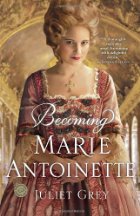 Maria Antonia is only a young girl when she’s informed that she is to be the bride of the future King of France – if she can get up to scratch, that is. She quite distinctly must become Marie Antoinette, a woman capable of being Queen of France, with the bearing, appearance, accent, and knowledge that any queen needs. She is melded to progress her family’s agenda, then sent to a brand new country to meet a completely new family, as though her life in Austria never existed. This first installment of a new trilogy fictionalizing Marie Antoinette’s life truly does describe how she became the queen remembered throughout history. Maria Antonia is only a young girl when she’s informed that she is to be the bride of the future King of France – if she can get up to scratch, that is. She quite distinctly must become Marie Antoinette, a woman capable of being Queen of France, with the bearing, appearance, accent, and knowledge that any queen needs. She is melded to progress her family’s agenda, then sent to a brand new country to meet a completely new family, as though her life in Austria never existed. This first installment of a new trilogy fictionalizing Marie Antoinette’s life truly does describe how she became the queen remembered throughout history.
Grey’s novel takes on the life of Marie Antoinette somewhat earlier than other books do and appears to be really taking an exhaustive look at her. I’d never before read about her struggles to actually be accepted as the appropriate wife of the Dauphin; it must have been hard for any young girl to be judged wanting so very much by her future family. She endures extra lessons, surgery on her teeth, and is constantly inspected for improvements.
As you might expect, then, Grey’s Marie Antoinette is a very sympathetic girl. She’s used to the relative flexibility of the Austrian court, even with her strict mother, and the laxness of her tutors who will falsify her results rather than force her to actually learn. Preparing to enter the French court – and then actually doing so – is a rather unpleasant revelation, and we can feel for the girl who has lost everything familiar to her.
Marie Antoinette’s relative innocence navigating the court in France continues, even as she is forced to seduce her own husband by order of her mother. She must become pregnant to solidify her family’s position and to provide an heir to the throne, but her husband is reticent for reasons mysterious to her. The poor girl is not only in an unfamiliar court, confused by the immorality around her, but is also rejected by the one she hoped would treat her well.
If you’re looking at a very sympathetic look at Marie Antoinette, you could hardly go wrong with this one. It’s also very well written, with fantastic descriptions of life in Vienna and Versailles. Grey has done quite a bit of research, as she explains in her author’s note, and almost everything she uses is true to history. She does an excellent job of matching the personalities of Marie Antoinette and Louis XVI, who both mainly just wanted to escape from their duties and be normal – a tragic story for those who know what is coming.
While I’ve read the story of Marie Antoinette’s life before, I found myself very much enjoying Becoming Marie Antoinette and looking forward to the next volumes. The author’s treatment of a familiar story is well done, and will have the most reluctant reader feeling very much for a young girl cast adrift in an unfamiliar world.
All book links to external sites are affiliate links. I received this book for free for review from Netgalley.
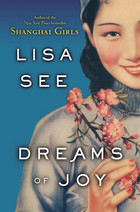 This review contains spoilers for Shanghai Girls. This is the sequel to that book. This review contains spoilers for Shanghai Girls. This is the sequel to that book.
Joy has just learned that her entire life is a lie. Her parents aren’t really her birth parents and she believe she’s caused her father’s suicide. Unable to bear the consequences and taught the ideals of Mao’s China, Joy flees to Shanghai, convinced she’ll find the life she’s always wanted in the arms of Communism. Pearl, her mother in love if not in body, immediately goes after her daughter. She knows how bad China is, while Joy has no idea. Getting into China is easy; getting out of China is very difficult. As Pearl searches for Joy and Joy searches for meaning, both women end up learning more about who they are and what they treasure most in their lives.
Lisa See’s books have always been great reads, full of the detail and culture of the times they portray and rich with realistic characters. This book is no exception. While we saw the collapse of Shanghai in the last book, in this one we’re witness to how it has changed. I went through a minor obsession with books about China a while ago and this book was a return to a culture that still fascinates me even as it is horrifying. In this book, we’re in the midst of the ‘Great Leap Forward’. American teenager Joy has to accept that the ideals she’d been taught about life in China were wrong, and that life could be immensely harder for her than it had ever been previously. She also has to learn – the hard way – that she isn’t always right, and that stubbornness can lead to huge mistakes.
Meanwhile, it’s Pearl who can see how much the China of her youth has changed, how some things are the same but others are incredibly different. I found all of this fascinating and particularly well done, evoking memories from reading Shanghai Girls a while ago while providing a new, refreshing storyline that breathed different life into characters I already knew. Only May is on the edge of this book; it’s about mother and daughter, here, not about sisters, and the difficulty of parenthood on both sides of the equation.
If you’ve enjoyed other books by Lisa See, you will definitely enjoy this one too. I wouldn’t recommend reading it prior to Shanghai Girls, but it does fill in the gaps reasonably well so I don’t think a newcomer would be lost. Dreams of Joy definitely earns its spot next to her others as a moving story with well-developed characters and thoughtful questions set in a fascinating country.
All book links to external sites are affiliate links. I received this book for free for review from LibraryThing Early Reviewers.
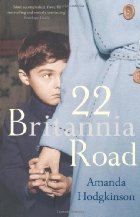 World War II had a massive effect on lives across the world; Silvana and Janusz, living in war zones, have been affected more than most. Separated at the very beginning of the war as a young married couple with a small son, Janusz immediately joins the army while Silvana is left in Warsaw with their son Aurek. Soon forced to flee the city, Silvana and Aurek hide in the woods, while Janusz eventually finds himself in England as a veteran. Six years after their separation, they’re reunited and start family life in a small house in Ipswich, but both have changed, and both have damaging secrets they’re determined to keep. World War II had a massive effect on lives across the world; Silvana and Janusz, living in war zones, have been affected more than most. Separated at the very beginning of the war as a young married couple with a small son, Janusz immediately joins the army while Silvana is left in Warsaw with their son Aurek. Soon forced to flee the city, Silvana and Aurek hide in the woods, while Janusz eventually finds himself in England as a veteran. Six years after their separation, they’re reunited and start family life in a small house in Ipswich, but both have changed, and both have damaging secrets they’re determined to keep.
22 Britannia Road has received a great deal of acclaim on its release, so I was expecting quite a lot from this novel. World War II stories are everywhere these days, so it does take something special or a different perspective to help a book stand out from the crowd. With its post-war story told simultaneously with the immediate history leading up to the war and afterwards, along with its Polish characters, the book easily accomplishes that much, providing a new family perspective on the hardships endured during the war.
Silvana and Janusz’s reunion is uneasy; they barely remember what one another look like. Everything in their lives has changed. For Aurek, things are even more difficult and confusing, as he simply doesn’t remember his father and just wants to go live with his mother in the woods again. He has no concept of society, much less that required by the strict British school system and, partly, his father, who wants a son to be proud of.
One of the most interesting aspects of the book was actually Aurek’s reaction to other children, school, his father, and so on; it demonstrates the adaptability of children as much as it shows how much adults struggle to accept the same tasks. Oddly, in this way it reminded me of Room by Emma Donoghue, even though the subject matters diverge wildly.
And then, of course, there are the secrets, which have the potential to destroy the family’s newly forged life. Complicating things are people who thrust themselves into the Nowaks’ newly forged lives, like Aurek’s first friend Peter and his elegant father. Silvana is a character that is difficult to understand, with her complicated past, while I think Janusz longs for the life that will be familiar to most readers; a promotion, a son to be proud of, a wife who loves him, a shiny new car. The opening scenes of the book, when he paints his house worrying what his stranger wife and child will appreciate, while reminiscing about the woman he’s fallen in love with in France, were actually some of the most poignant for me in the entire book.
While, for me, 22 Britannia Road wasn’t earth shattering, it was a book that certainly shed another light on life during and after World War II, particularly for immigrants. And it’s a worthy look into the minds of both adults and children who have to deal with the nearly unimaginable happening thanks to the horrors of war. Recommended.
All book links to external sites are affiliate links. I received this book for free from Amazon Vine.
 Mary Russell stumbles upon the great Sherlock Holmes while rambling in the countryside. He’s retired – supposedly – to take up beekeeping, but her young mind is agile and ready to be challenged. After she proves herself, he takes her on as an apprentice, and the two begin to solve crimes together. Mary Russell stumbles upon the great Sherlock Holmes while rambling in the countryside. He’s retired – supposedly – to take up beekeeping, but her young mind is agile and ready to be challenged. After she proves herself, he takes her on as an apprentice, and the two begin to solve crimes together.
The central premise of this book is the idea that Sherlock Holmes was a real person, and the books and stories featuring him were elaborate fictionalizations of his real-life crime-solving. In his older years, Holmes still solves crimes, but does his best to stay out of the public eye. Still, Mary knows who he is, and as the central narrator, is determined to keep him within her sites. Soon we discover that her intellect is quite up to his as her own skills develop over the course of the novel.
Roughly the first half of this book is set out in episodes. Mary and Holmes set out to solve a couple of crimes together as he begins to train her. After she’s accepted as a fully fledged apprentice, the book gains more speed as the crimes get somewhat more desperate. Naturally, our two central characters also begin to develop a relationship with one another, both a respect for each other’s minds and a whole-hearted affection for each other’s character.
I was surprised by how much I genuinely enjoyed this book. Mysteries in the style of Sherlock Holmes frustrate me more often than not; because so much of the conclusions are derived from information that is never presented to the reader, it can be easy to get annoyed that it’s impossible to guess the conclusion. With this, though, I seem to have developed the ability to ignore that and simply follow the two characters along their journey. I suspect this is because the mysteries, while important to the plot, are not all that holds the book together. The narrative is very well done and the relationships between the characters develop naturally and realistically. About halfway through, I realized I just didn’t want to put the book down; I wanted to continue and find out what happened next.
I’m a bit late to this series, and now there are a number of installments that I’ll need to catch up on. I’ve known of it for quite some time, but never really had the impulse to begin until I was offered the latest book for review. So I’ll be skipping ahead to the last book, but believe me when I say I’ll also catch up on the ones I’ve missed. The Beekeeper’s Apprentice is a great start to a series I’m very happy to have finally discovered.
All book links to external sites are affiliate links. I purchased this book.
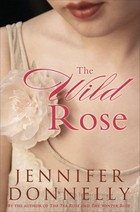 This book follows directly on from The Tea Rose and The Winter Rose. As a result, this review will have spoilers for both. This book follows directly on from The Tea Rose and The Winter Rose. As a result, this review will have spoilers for both.
Though Seamie Finnegan and Willa Alden love each other, they were driven apart by an accident resulting in the loss of Willa’s leg. Now, unable to satisfy her greatest passion of climbing, Willa spends most of her time finding other ways to endanger herself and live on the edge. She spends her time photographing mountains in Tibet, following wars, and getting captured. Seamie, meanwhile, can’t forget Willa or cease worrying about her, no matter how hard he tries; even burying his sorrows in the pursuit of other women can’t seem to erase his memory of her.
Surrounding the couple are a cast familiar to anyone who has read any of the Rose trilogy – Fiona and Joe, who are getting older now, their brigade of children, India and Sid, and other more minor characters from the earlier books. It’s always nice to see familiar characters again; Seamie himself has been in all of the books, while Willa featured prominently in the last one. Part of the appeal of such a series is definitely getting stuck in with characters to care about.
Unfortunately, that was one of the flaws in this book for me; I couldn’t like the characters that Willa and Seamie became. Willa is driven to do truly ridiculous deeds simply to escape the fact that she’s lost her leg, to defy death just because she can – and because she doesn’t care if it takes her. Despite her seemingly courageous behavior, she complained. Often. Seamie, meanwhile, treats one character in particular very badly, and makes promises that he simply can’t keep. I couldn’t like characters that could act like this, no matter how strong their love is supposed to be.
As with all of the books, there are several other plots going on. We are deep in the midst of World War I for much of the book, with an associated German espionage plot taking up a lot of the book’s time. That had an unexpected ending, one which actually made me consider reading the book over again to see if I could pick up the pieces. Fiona and Joe’s children are growing up, with their oldest girl taking on a political mind of her own and one of their sons off to fight in the war. And India does what she does best, doctoring the soldiers who return even as she worries about the ones that she herself loves.
The book held my attention, though, and does deal with some more complicated issues. The effect of front line warfare on a person’s mind, for instance, is one that is surprisingly hard hitting towards the end of the book. Infidelity plagues several characters, as does blackmail and the difficult circumstances people find themselves in during wartime.
Personally, though, I felt like this particular installment suffered more from the same flaws as the first one, with characters that are simply too large for life and are difficult to believe in. Too many famous people in one family, too many lucky escapes; even the share of tragedy the book has doesn’t quite outweigh this for me. It’s a good read, but this series for me just doesn’t match Donnelly’s standalone works. Still, I’d recommend the entire trilogy to those who seek out well-written historical family sagas. The Wild Rose is a good read – just don’t expect it to be A Northern Light.
All book links to external sites are affiliate links. I received this book for free for review from Netgalley.
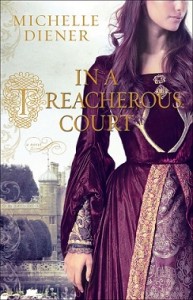 Susanna Horenbout, a young painter with a famous father, is sent to Henry VIII’s court in order to serve as the king’s personal illuminator. Before she even approaches the presence of the king, she’s the focus of an attempted murder, and is placed under the protection of courtier John Parker. As she and Parker develop intense feelings for one another, they’re also forced to contend with plots against the king by some of his closest advisors. Can their careers – and indeed their lives – survive the best efforts of their foes? Susanna Horenbout, a young painter with a famous father, is sent to Henry VIII’s court in order to serve as the king’s personal illuminator. Before she even approaches the presence of the king, she’s the focus of an attempted murder, and is placed under the protection of courtier John Parker. As she and Parker develop intense feelings for one another, they’re also forced to contend with plots against the king by some of his closest advisors. Can their careers – and indeed their lives – survive the best efforts of their foes?
The subject of this book is very intriguing; there is little new in Tudor England fiction these days, but a female painter and a mystery surrounding her seemed like it had potential to be quite the read. While this was overall an enjoyable book, it did have some flaws that marred what could have been an exceptional and unusual debut in the over-saturated Tudor-obsessed historical fiction world.
The primary flaw was the speed of the narrative. This is a short book and actions throughout feel rushed. It’s hard to get attached to characters who are constantly going, without much rest for pages. It seems as though every time the two main characters get an interlude to develop their relationship, they’re interrupted by something related to the general mystery / intrigue plot, and personally I always prefer character development to a racing plot. The plot itself is a good intrigue plot, and perfectly suited for those who are after that sort of thing – it’s just rushed along without much chance for a break.
Overall, it’s a real shame, because Diener has a beautiful way with words and I could tell that there were moments in this book that I could have happily luxuriated in her turns of phrase. I will certainly be eagerly looking for any books she writes in the future, because I think she could become quite good if she lets the historic world and her characters take on a bit more prominence. I believe this book is the first in a series, so I’ll be looking forward to advance reviews of the next.
While In a Treacherous Court does have its flaws, it also has its perks, and it’s worth a read for anyone seeking a fast, different historical fiction read set in the Tudor world.
All book links to external sites are affiliate links. I received this book for free for review.
 Cora Cash, one of America’s greatest heiresses in the late Victorian era, naturally has a scheming mama. And that scheming mama wants her incredibly wealthy daughter married to a British peer. She’d like a prince, but she’ll settle for a duke, regardless of what Cora really wants – which is her American friend Teddy. But when Cora meets the Duke, Ivo, by complete accident, she begins to fall for him and finds herself married to him in very short order. But British society is further from home than just the ocean crossing and Cora soon finds herself in over her head between her mother-in-law, the Prince Regent, and the many preferences and proprieties that encapsulate her new husband’s every day life. Cora Cash, one of America’s greatest heiresses in the late Victorian era, naturally has a scheming mama. And that scheming mama wants her incredibly wealthy daughter married to a British peer. She’d like a prince, but she’ll settle for a duke, regardless of what Cora really wants – which is her American friend Teddy. But when Cora meets the Duke, Ivo, by complete accident, she begins to fall for him and finds herself married to him in very short order. But British society is further from home than just the ocean crossing and Cora soon finds herself in over her head between her mother-in-law, the Prince Regent, and the many preferences and proprieties that encapsulate her new husband’s every day life.
This book is sold as similar to Jane Austen and Edith Wharton, as a book that is reminiscent of Downton Abbey, a television series I recently watched and fell in love with. It had huge shoes to fill, so perhaps it’s not a surprise that it came up short. It was an enjoyable read, but much shallower than all three comparisons. In reality, I came across someone else saying it was like The Luxe series for adults, and I think that’s probably the most apt description I’ve seen yet.
Part of the problem with the book is that much of it is told and little of it is shown to us. Cora is meant to be a stubborn, plucky heroine, determined to escape the shadows of her mother’s influence, but in reality she is a girl who reacts, not a girl who acts. She seems much more comfortable letting her money and comfort slide her along through life without really fighting for anything she cares about. Even towards the end of the book, most of her ‘growth’ consists of ordering the butler to do things to spite her mother-in-law.
The one aspect I really enjoyed was the story of Cora’s colored maid Bertha. Bertha has her own difficulties as a colored lady’s maid, particularly in her native US. Things begins to change for her as she moves to England with Cora and the stigma fades away to some extent, offering her the first chance of an independent life she has really ever had. But her loyalty to Cora often gets in the way. This was actually a really fascinating aspect of the story and had me wondering what ladies’ maids really thought – were they loyal to the women who had fashioned their entire careers? I wished others servants were equally fleshed out because I’m sure the more fleshed out dynamics of an American versus British ‘downstairs’ would have been fascinating. As it is, Bertha ignores most of the other servants, completely isolating herself.
The American Heiress was certainly an enjoyable read that I managed to zip through in just one day. But I think the many comparisons it’s received have done it a disservice, and the book is best treated as a lighter historical read than classic material. Historical beach reading at its best.
All book links to external sites are affiliate links. I received this book for free for review.
Since I wasn’t able to hold a giveaway in honor of my recent blogoversary, I decided to offer one belatedly! I thought I’d giveaway a few of the historical fiction books I’ve reviewed and am about to review over the next few days. It’s a flash giveaway – the prizes are in the US and I’d like to send them on Friday, so the contest is only open until tomorrow (Thursday July 28th) at 12 noon EST. Open only to those with a US address – sorry, I am going to run an international giveaway soon!
I have two prize packs of two books each, so there will be two winners!
One winner will receive:

I read The Queen of Last Hopes and really enjoyed it, while In a Treacherous Court is set to release next week and I’ll be reviewing it then! These are both ARCs and gently read.
The second pack consists of:
I loved Madame Tussaud and, while Dracula, My Love wasn’t my favorite, many other bloggers read and enjoyed it. The first is an ARC, the second is a finished copy, and neither have been read.
To enter, please just fill in the form below!
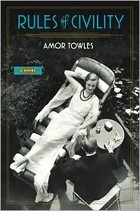 Katey Kontent is one secretary of many in 1938 New York City, living with her stylish friend Eve and generally just having fun as a single 25-year-old. She and Eve don’t make much money, but they have their routines set at the boardinghouse and consider one another best friends. Then, while out one night, the girls bump into Tinker Grey, a wealthy young man that Kate immediately pegs as wealthy, privileged, and unattainable. But Tinker goes on to make a huge effect on their lives in a pivotal year for both women. Katey vividly learns the results of her own choices and how she has the power to shape her own destiny. Katey Kontent is one secretary of many in 1938 New York City, living with her stylish friend Eve and generally just having fun as a single 25-year-old. She and Eve don’t make much money, but they have their routines set at the boardinghouse and consider one another best friends. Then, while out one night, the girls bump into Tinker Grey, a wealthy young man that Kate immediately pegs as wealthy, privileged, and unattainable. But Tinker goes on to make a huge effect on their lives in a pivotal year for both women. Katey vividly learns the results of her own choices and how she has the power to shape her own destiny.
This was a truly incredible read. It sounded fantastic, but I really didn’t expect to end up loving it quite as much as I did. I read it entirely on public transport, which usually makes for distractions, but not with this book, as I was completely and totally absorbed in my Kindle no matter what happened – to the extent that at times I worried I’d miss my stop and had to put it away!
The first and primary thing I loved about this book was the atmosphere. It is so successful at evoking late 30’s New York. The parties, the restaurants, the high societies, right down to the difficulties of Kate’s initial job at the secretary pool and her various fading living spaces. Tinker’s life is vividly contrasted with Kate’s starting position – and then there is the stereotypical older woman, Anne, who complicates everything Kate thinks she knows over and over again throughout the book. It’s a vivid backdrop that explores the nature of wealth, hard work, and simple luck, and rings true as a very American story.
I adored the perspective of single women trying very hard to make it for themselves. The book is from Kate’s point of view, and she is a strong woman – not afraid to be feminine, but constantly reaching for the stars and refusing to settle for anything less than she truly deserves. She has to make a number of choices over this pivotal year in her life, and she learns very sharply that her decisions make her destiny.
The supporting characters are definitely not without their charms and complete the whole picture that the novel makes. Eve is equally determined to escape her past and her well-meaning parents by living it up somewhere she is completely anonymous; Kate’s love interests display that old-fashioned form of wooing; and best of all, the characters are bookworms. They’re often well read, make comments about what they’re reading, and bring me in with the sort of allusions that only another reader would adore.
Rules of Civility completely won me over and I’d happily recommend it to any other reader; it’s just that good.
All book links to external sites are affiliate links. I received this book for free for review from Netgalley.
|
|



Recent Comments