|
|
 Or, the problem with older romance novels. Or, the problem with older romance novels.
Belliane, better known as Lianna, is a Frenchwoman determined to keep her castle in Normandy at all costs. But Henry V is invading, and he wants to marry her to Enguerrand of England, both to promote his friend and make life easier for himself. In protest, Lianna marries a Frenchman, but meets Rand not knowing who he is. Lianna and Rand both lie to one another and begin to fall in love – until Lianna’s husband dies and marriage goes on as planned. Both betrayed in the midst of battle, Lianna and Rand must decide what really matters to them, love or country.
I almost gave up this book on every other page. I don’t honestly know why I kept going. It has all my least favorite aspects of a romance novel. These two lust after one another and suddenly decide it’s love. Their lies are the foundation for almost everything bad that happens to them, and they don’t forgive one another even though of course they have to sleep with each other all the time. Because when you’re furious with someone, you really want to have sex with them. Yep. And Lianna is almost too unconventional to be true; how many noble ladies went around in the smocks of poor women with their hair down and learned to shoot newfangled guns? Sure, it’s a war, but I just found it very hard to believe. Besides that, she’s too stupid to live. She doesn’t realize the French guy she’s marrying is a slimeball, she walks straight into at least two traps, and she leaves her baby in the care of the wife of slimeball’s son. She’s basically the cause of ALL the relationship problems as Rand is completely lovesick.
The love story was the most disappointing one I’ve read in a long time, and the characters had dialogue I couldn’t imagine anyone saying. It’s too corny, too impassioned, too ridiculous. Very few romances are historically accurate in this respect, but I have to at least believe in the chemistry to put all that aside. And here I did not. Reading this book helped me realize how people could easily disdain the genre.
I do have to give the author a little respect, though, because her history is largely accurate. All the hallmarks of Henry V’s campaign and Agincourt are here, and all in all once Lianna and Rand are married and stop stripping every five seconds the book doesn’t suffer quite so much. The only part that annoyed me with the history was the constant mentions of chivalry, and it’s clear that the author doesn’t quite understand that chivalry == war for medieval knights. It’s not the Victorian always-be-nice-to-ladies idea. That’s only a tiny part of it. Being violent is being chivalric. That’s the point. All medieval romances aren’t this bad; I just read Scoundrel’s Kiss and enjoyed it a lot. The Lily and the Leopard just reinforces all the stereotypes. When you seriously hope there isn’t going to be a happy ending because you hate the characters, you know you have a problem. Yuck.
No Amazon link; the book is out of print. And that’s a good thing. I bought this one so you don’t have to.
 I’ve had some inspiring success with my reading this week. I’ve been diligently reading A Suitable Boy, which I’m really enjoying. There are a few political parts that are slightly boring, but it’s such a small fraction of such a huge book, and I’ve found myself feeling like I’m living in India with all the characters. I’m discovering that I really like books about changing cultures; they’re exposing the cracks and trying to figure out who they are. In this book, the British have fairly recently pulled out of India, many of the families were partitioned away from their homes thanks to the creation of Pakistan, and the countryside hierarchy is about to change completely thanks to new legislation. And, of course, there is Lata’s (and her mother’s) struggle to find “a suitable boy” in a changing India. It’s so interesting and enjoyable, but I’m going through it slowly. I figure I’ll get frustrated if I go days without finishing any books, so I’ve been reading lighter books alongside it. It is nice to live in a book for a while though. and I’m thrilled that I have another of Vikram Seth’s books hanging around for when I’ve finished. I’ve had some inspiring success with my reading this week. I’ve been diligently reading A Suitable Boy, which I’m really enjoying. There are a few political parts that are slightly boring, but it’s such a small fraction of such a huge book, and I’ve found myself feeling like I’m living in India with all the characters. I’m discovering that I really like books about changing cultures; they’re exposing the cracks and trying to figure out who they are. In this book, the British have fairly recently pulled out of India, many of the families were partitioned away from their homes thanks to the creation of Pakistan, and the countryside hierarchy is about to change completely thanks to new legislation. And, of course, there is Lata’s (and her mother’s) struggle to find “a suitable boy” in a changing India. It’s so interesting and enjoyable, but I’m going through it slowly. I figure I’ll get frustrated if I go days without finishing any books, so I’ve been reading lighter books alongside it. It is nice to live in a book for a while though. and I’m thrilled that I have another of Vikram Seth’s books hanging around for when I’ve finished.
I also have had some lovely book acquisitions this weekend. My mother-in-law gave me a bookstore gift card for my birthday, so I had a lovely time selecting 84, Charing Cross Road by Helene Hanff, Arthur & George by Julian Barnes, Carter Beats the Devil by Glen David Gold, and The Amazing Adventures of Kavalier & Clay by Michael Chabon. I’ve already read the first one and should have a review this week. I also was inspired by The House of the Mosque and Dawn at She Is Too Fond of Books to read Persepolis by Marjane Satrapi and get another perspective on the Islamic Revolution in Iran. I really enjoyed that, too. So this week I read my first non-fiction of the year, my first graphic novel of the year, and my first classic of the year, which was The Custom of the Country by Edith Wharton. In short, I am accomplishing my goals to diversify my reading so far, and I hope I can keep it up!
I hope to get a lot read this week, as Keith is headed off for 3 days away to start his new job, and I’ve finished the game I was playing on my Xbox 360. I’ve been thinking of reviewing the games when I finish them – if others can review film and TV, I don’t see why I can’t review games, and I will probably complete less than one a month – but I haven’t decided yet. I haven’t worked out how to knit and read at the same time, but we still watch enough TV and movies to give me plenty of time for both. Next Sunday I will be in the air heading home for a couple of weeks, so posting may be slightly more sporadic as I haven’t as many scheduled posts these days. In any case, I hope you all have a lovely week and a good book to keep you company!
 Aqa Jaan’s family has lived in the house of the mosque for centuries. Two of his cousins also live in the house; one is the mosque’s imam and the other is the muezzin. At first glimpse, their lives are going about as they have been for hundreds of years; television exists, but the house’s inhabitants studiously avoid it, and the women still cover themselves even though others in Tehran no longer bother. The family’s daughters are waiting for respectable men to approach their families to offer marriage, and the imam’s son is studying diligently to take his father’s place when he dies. Yet all is not the same, as a revolution is forming in 1970s Iran, and that revolution stands to change the family’s ways forever. Aqa Jaan’s family has lived in the house of the mosque for centuries. Two of his cousins also live in the house; one is the mosque’s imam and the other is the muezzin. At first glimpse, their lives are going about as they have been for hundreds of years; television exists, but the house’s inhabitants studiously avoid it, and the women still cover themselves even though others in Tehran no longer bother. The family’s daughters are waiting for respectable men to approach their families to offer marriage, and the imam’s son is studying diligently to take his father’s place when he dies. Yet all is not the same, as a revolution is forming in 1970s Iran, and that revolution stands to change the family’s ways forever.
I found this book totally fascinating. I know so little of Iran, let alone what it’s like to live there, and I really felt like this book put me right in the midst of a revolution. Enough of their culture was established so that I felt terror and confusion just as the house’s residents did, and I was amazed at what some of the family was capable of doing for political purposes. It was all in the name of Islam, which makes it worse for me. I could see today’s political situation in the making, and it made me so sad that Iran couldn’t have continued on its former path of slow liberation without becoming extremists and closing up completely. The book does reveal how things can spiral out of control, without the people necessarily giving consent or realizing what they are doing. A few extremists can change the entire country given just a little encouragement, and that’s exactly what happens here.
My favorite character in the book was definitely Aqa Jaan. It’s predicted early in the novel that he’ll be the last one left of the family, and indeed this seems to be the case as his family either become extremists or become targets in the revolution, or simply disappear of their own volition. His emotions are often heartbreaking and I wished things could be different for him as his family began to fall apart. This is such a stunning novel of a country falling apart; it’s almost as though Aqa Jaan’s family is a microcosm of that, split between all the different factions, while he just wants life to remain as it has been for hundreds of years.
There is a lot of anti-Americanism here, but given the political circumstances, it’s understandable and didn’t put me off the book despite the fact that I am American. I also was left wondering how much of the book is true. The author, who fled Iran in 1988, was an illegal journalist and leftist there, and I expect much of the revolution was witnessed by him first-hand. He’s using a pen name here to honor executed friends (though his own name is available on wikipedia) and he dedicates the book to his own Aqa Jaan, so my curiosity is definitely piqued.
Honestly, I can’t recommend this book highly enough. It inspires me to read more non-fiction to learn more about the conflict and to read more multi-cultural fiction. This book helped me understand what’s happening in the world today and still engaged all of my emotions and thoughts. You should not miss The House of the Mosque.
I am an Amazon Associate. I received this book for free from the publisher for review.
 Do you read the inside flaps that describe a book before or while reading it? Do you read the inside flaps that describe a book before or while reading it?
I haven’t done a Booking Through Thursday question in a long time! And the answer is no, I don’t. I really, really hate spoilers. I prefer to know pretty much nothing about a book going into it. I used to read the flaps or back cover because I didn’t have an effective way of getting recommendations, but I am always irritated when I’m halfway through a book and the events on the back cover haven’t happened yet. I prefer to go into a book knowing virtually nothing about its contents. Maybe a general idea of what it’s about, where it’s set, that sort of thing, really as vague as possible. I like to know that others thought it was good and worth a read, but really books work best when they’re left to unfold on their own.
I do occasionally read the flaps after I’ve finished, but I generally find that they’re getting more spoilery as time goes on. Maybe that’s just because my hatred of spoilers is growing, but this is why I write my own summaries. I try to give as little away as possible, but I know other people would probably like to know what a book is about, so I do continue to include that first paragraph of summary.

This is my first time participating in this meme, hosted by Alyce of At Home with Books. Since it’s Edith Wharton’s turn on the Classics Circuit and I’ll be bringing you a review of one of her books, The Custom of the Country, later this month, I decided to feature my favorite, The Age of Innocence.

I adore this book. I was frustrated in high school by a lack of new reads. I liked mostly the same stuff as I do now, but there was a whole lot more romance and fantasy reading going on then, as I needed a lot of comfort with all the angst and drama that goes hand in hand with teenagerhood. I think eventually I wanted something a little deeper. I don’t remember how my teacher recommended Edith Wharton to me. I read a lot of great books through her senior year; she gave us both fascinating modern literature and a great selection of classics, and I often wish I owned more of the books we read that year so I could give them a try as an older reader. I know I started with Ethan Frome and loved that. Then I moved on to this, and I really liked it on the first reading. Eventually we had to choose a book to write a research paper on, and I decided to go with this one.
It was only digging through it and isolating its themes that I completely fell in love with it. This happens to me a lot, because apparently whenever I pick a book apart and it holds up to my digging, it becomes a favorite. I love the image of the restrained New York society and how Newland is inspired so deeply by Ellen Olenska to realize just how stifled he is, but struggles with the conflict between his passion and his duty. Edith Wharton’s writing is beautiful and brings me deeply into this novel every time I read it. And, this may constitute a spoiler so skip the rest of this paragraph if you haven’t read it, I love the ending, although I was devastated the first time. I thought it was perfect for the story as a teenager and that view has remained the same. It’s a gorgeous, tragic novel that simply astonishes me. It’s a book that I want to start again every time I read it.
This is actually one of my top two of all time. The other is Jane Eyre by Charlotte Bronte. This is why I should read more classics!
 Mary Toliver DuMont knows she is dying. When she looks back on her life and reflects on all the mistakes she’s made, she chooses to sell her family’s huge farm rather than leave it to her great-niece as Rachel is expecting. In this multi-generational saga, the characters take us back through their lives to the beginning of many of their problems so that the conclusion becomes understandable. This family has experienced it all, and their mistakes may prevent the happiness of the newest generation. Mary Toliver DuMont knows she is dying. When she looks back on her life and reflects on all the mistakes she’s made, she chooses to sell her family’s huge farm rather than leave it to her great-niece as Rachel is expecting. In this multi-generational saga, the characters take us back through their lives to the beginning of many of their problems so that the conclusion becomes understandable. This family has experienced it all, and their mistakes may prevent the happiness of the newest generation.
I often love sagas of this variety and Roses was not really an exception. There’s little better than investing yourself in several hundred pages of a fictional family’s complicated and generally tragic life. Here the central tragedy is that Mary Toliver and Percy Warwick don’t marry, even though they are clearly the loves of each other’s lives, due to misunderstandings and mistakes. Those resonate throughout the book and influence decisions made by all the characters throughout.
These families are descended through Lancastrian and Yorkist immigrants to the United States and as a result use a system of roses to signal forgiveness (and unforgiveness) to one another. I have to admit I rolled my eyes a little at this, as it just seems way too sentimental for real life, but it works really well as a device within the story, so I got used to it very quickly and appreciated how the author wove it in, making the title perfectly appropriate for the book. I also really liked the characters for the most part, especially Percy; Mary and Rachel were slightly too abrasive for me to love them, but I still liked them.
Despite the fact that I was swept up in the story and really enjoyed it, I have to say I had an issue with the central reason for frustration. Everyone blames everything on Somerset, and it seemed to me what really happened was that the characters made bad decisions. Getting rid of the land would not have solved their problems, talking would. I could definitely understand the issue an early twentieth century southern magnate would have had with his wife out in the fields all day, but I do think there’s such a thing as compromise. Mary and Percy are just too stubborn to have things their own way.
Roses is a saga in a great tradition, but it’s not a perfect one. Still, if you enjoy reading about strong characters and don’t mind a little bit of tragedy and suspending belief, this would be a wonderful choice. I’d also suggest it to people who enjoyed Dallas on TV – the Texas feel is so similar here.
I am an Amazon Associate, so if you purchase books through my links I will earn a tiny percentage of the profit at no cost to you. Thanks! I received this book for free from the publisher.
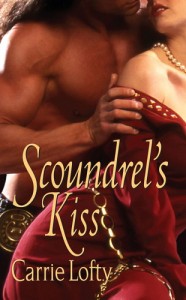 Yesterday, I reviewed Carrie’s newest book, Scoundrel’s Kiss. I also had the pleasure of interviewing her recently and I hope you all enjoy the answers as much as I did! Yesterday, I reviewed Carrie’s newest book, Scoundrel’s Kiss. I also had the pleasure of interviewing her recently and I hope you all enjoy the answers as much as I did!
1. I loved that Scoundrel’s Kiss was set outside the typical locations for a historical romance. Why did you choose to set it in medieval Spain?
It’s set in the Kingdom of Castile, which comprises part of modern-day Spain. Thinking back, I don’t remember exactly what first started me thinking about Spain as a setting, but I knew I wanted to feature two elements to this story: a warrior monk and an opium addict. That meant I needed to find a place where their love could blossom. Spain was not only a hotbed of religious and military activity in the 13th century, but it was also along Arab trade routes. The Arabs traded with the Chinese, which mean that opium was available for purchase in Spain. Ta-dah! I’d found my setting.
2. Ada is a far cry from the average blushing virgin heroine. Was it a difficult task for you to make an opium addict a sympathetic character?
Yes, Ada is…trying. It was difficult making her sympathetic, in that I disliked how Ada behaved toward the finale of my Robin Hood-themed debut, WHAT A SCOUNDREL WANTS. She makes her sister, Meg, make a really unfair choice, and her behavior is downright selfish. So I wasn’t in a sympathetic place when I sat down to write her love story. But then I remembered an old saying about villains: the villain is the hero of his own story. That jolted me into taking Ada’s side, so to speak, and learning where she was vulnerable, why she was hurting so desperately, and how I could help redeem her. In the end, I think her happily ever after is justly deserved, if only for how hard she works at earning it.
3. When it comes to writing, do you plot out your books carefully or does the story come to you as you go?
I start with the setting. Always. Then I research and brainstorm in tandem, trying to find my characters. What sort of people *could* have lived in this time and place? Are they native? Just passing through? There for the long haul? Bored and desperate to get out? Once I have the setting and the characters very firm in my mind, then I start writing and never look back. You could call me a prepared pantser!
4. Do you have a particular favorite time period in history?
I’ll always have a fondness for the American Old West. I did my master’s thesis on the lives and legends of Jesse James and Wild Bill Hickok, and how their stories helped shape American culture after the Civil War. Plus I was a sucker for western-set romances when I was a teenager, back when they were *everywhere*. I haven’t yet tried my hand at a western of my own, but I can’t help but think that I will someday. That period of history has been such a part of my life!
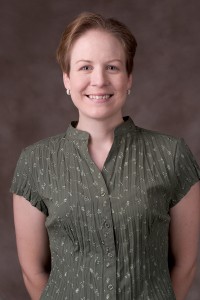 5. Are you planning on returning to any of the characters in Scoundrel’s Kiss for another book? What’s next for you? 5. Are you planning on returning to any of the characters in Scoundrel’s Kiss for another book? What’s next for you?
I’d like to continue with Jacob’s story, and then to find a partner for Blanca, but that remains to be seen. Otherwise, my historical romance set in Napoleonic Austria will help launch Carina Press, Harlequin’s new all-digital venture, in June. In it, a widowed violin prodigy begins a steamy affair with the renowned composer she’s always idolized, only to learn that he stole the symphony he’s most famous for. In addition, I’m co-writing with Ann Aguirre under the name Ellen Connor (http://EllenConnor.com). We write hot-n-dirty apocalyptic paranormal romances, and our “Dark Age Dawning” trilogy will be coming soon from Penguin.
6. What do you suggest we read while waiting for your next book? Any favorites you’d like to share with us?
I love lush, beautiful writing, so my favorite romance authors are Candice Procter, Penelope Williamson, Laura Kinsale, and Patricia Gaffney. They all craft such amazing stories, not simply packed with emotion and fascinating characters, but with poetic language to describe every aspect of the hero and heroine’s lives. I read those books and knew that’s what I wanted to write. Those are the kinds of stories I love to read, so why not give them a try in my own style with my own unique voice? I’d unabashedly recommend any of their books to those who haven’t yet read them!
Thanks for stopping by, Carrie!
To win a copy of Scoundrel’s Kiss for your very own, just leave a comment. There is one up for grabs. Readers in the US and Canada will receive a signed copy, whereas international readers will receive an unsigned copy from the Book Depository. Make sure you leave a valid email address in the “email” field of the comment form to win. This contest will be open until January 26th. Good luck! The winner of this contest is Lana.
 Ada, an Englishwoman who has found herself in medieval Spain after fleeing her homeland, is addicted to opium and will do almost anything to get it. She ends up at a slavery auction, blissfully addicted and completely unaware of her circumstances. Luckily for her, she’s spotted by two men: Gavriel, a former warrior and now dedicated novice, and her friend Jacob. Between them, they rescue her and take her away, but she faces a hard battle fighting her opium addiction. Can Gavriel’s dedication to her cure her of her addiction – and help him face down the trouble from his past? Ada, an Englishwoman who has found herself in medieval Spain after fleeing her homeland, is addicted to opium and will do almost anything to get it. She ends up at a slavery auction, blissfully addicted and completely unaware of her circumstances. Luckily for her, she’s spotted by two men: Gavriel, a former warrior and now dedicated novice, and her friend Jacob. Between them, they rescue her and take her away, but she faces a hard battle fighting her opium addiction. Can Gavriel’s dedication to her cure her of her addiction – and help him face down the trouble from his past?
I loved how this romance was different and yet still had all the essential ingredients for a wonderful romantic read. First off, the book is set in medieval Spain. There’s currently a total glut of historical romance (and regular fiction for that matter) set in England, which is all well and good, but sometimes I’m looking for something different. This fit that bill, and the author even includes a helpful note about what’s accurate and what’s different about her history at the end. I love when authors do this, it shows such dedication to their research that I really respect and admire. Her website lists the books she used to research in case readers are interested.
Secondly, I loved the characters. Gavriel himself feels familiar, as there are plenty of emotionally scarred warriors hanging around in the romance genre (I think immediately of Kev/Merripen in Seduce Me at Sunrise), but his character is done well and his journey to redemption is admirable and engaging.
It’s Ada that is different. She has severe issues with her life; opium addiction just one of the ways in which she is unusual. She’s treated her sister horribly, she’s seduced a man for her own purposes, and she’s not even willing to be rescued from the drug she’s addicted to. I started the book really wondering how the author was going to pull this off. Characters are absolutely essential to a successful romance, because really the entire book is centralized on the relationship between two people, and Ada was not a character that I liked at first. Somehow, though, I found myself really caring about Ada by the end. She recovers herself and realizes that many of her actions have been wrong, and that she can do better. Gavriel helps her on that path, but it’s really her that becomes strong and dedicated, and he’s not a necessity for it to happen.
Finally, I really loved the adventurous take that Lofty took with this one. Everyone fights and travels, so there is plenty of action mixed in with the more thoughtful and romantic scenes. It really helps to move the book along and provide a dimension which isn’t totally focused on the central romance. I always appreciate that.
Scoundrel’s Kiss has made me especially eager to read the author’s first book, What A Scoundrel Wants, which uses the Robin Hood legends and introduces Ada and her sister. This was a great read and I definitely recommend it.
I am an Amazon Associate, so if you purchase books through my links I will earn a tiny percentage of the profit at no cost to you. Thanks! I received this book for free from the author as an ebook.
I had fully intended to participate in this weekend’s Bloggiesta, because there are definitely things that need to get done around here. I need to make sure I’ve visited everyone participating in my challenge, set up a link page for reviews, and consolidate the info on a tab, I have an opinion post I’ve been meaning to write, and I have 3 reviews that need to get done. And I’m sure there are plenty of other tasks that I could do, like fix the images from when I lost my blog awhile ago, but to be honest, Friday rolled around and I just wasn’t feeling it. My husband got into an accident on Thursday and while he’s perfectly fine, repairs are frustratingly expensive in a month where money is very tight due to his job switch. As in, we have two months to get through on about half of a month’s pay. So, it’s either cut deeply into savings we need, or go back to the credit card we just paid off. It’s so frustrating; if he could have crashed two months from now, we could have shrugged it off fairly easily, that’s how much more he’ll be making, but now we just have to get by somehow. The road wouldn’t have been icy in March anyway. Needless to say, I won’t be getting those books I mentioned in the last post until March, and my birthday on Tuesday is looking a whole lot less exciting. The fact that my job prospects are horrid to say the least has not really been helping.
So, what have I been doing besides fretting? Reading a ton of comfort reads. I’ve read a book a day so far this month, which is downright strange after I declared I wanted to read less. I went straight for the comfort reads and have been completely indulging myself, although I did start A Suitable Boy, my target challenge read for the month, and I’m enjoying it so far. 100 pages a day will get it read in a couple of weeks. It is nice to see my TBR numbers shoot down for once, especially considering I was anticipating a shoot upwards with my birthday and Christmas so close together. Since I haven’t actually received any books – I haven’t even received my Holiday Swap gift – it’s going to go down even further, although I think my parents have some books for me at home, where I’ll be in a couple of weeks.
Those comfort reads have actually got the wheels in my brain turning though. Yesterday I finished an older medieval romance, The Lily and the Leopard by Susan Wiggs, and it really had me thinking how much had changed, and how it’s pretty easy to see why others can disdain romance novels. I really didn’t like it. Too much physical activity and purposeful misunderstandings had me both failing to believe in the romance and wanting to slap the characters. Sure, there are some modern books like this, but the few I’ve read this year have proven far more worthy. It’s set right before and during the Battle of Agincourt and the author’s research is surprisingly decent, but I just have so many things to say about this. When I feel better about life, expect a post!
Anyway, apologies for the depressing nature of this post! I hope to be back to my cheerful nature sometime soon, just wanted to let everyone know what was going on. I’m planning a visit to Massachusetts in 3 weeks to see some of my college friends and I can’t wait. I haven’t seen one of them in over a year because I haven’t been home for long enough and the train is expensive, but I’ve been lucky this time and I’m heading up at a fraction of the cost, albeit only for about a day. As long as the weather doesn’t prevent it, all I have to do is suffer through the flight, since I abhor flying more than anything else, and hopefully when I return to the UK I will have an interview or two to attend. Fingers most definitely crossed.
I hope everyone else is having a much brighter start to their 2010! See you next week!
 Words cannot describe Arissa Illahi’s grief when her husband dies in the September 11th attacks on the World Trade Center. The videotape sitting on her dresser doesn’t cease to remind her that they were due to have their baby’s first ultrasound, and she never imagined raising her child alone. Arissa also finds her husband’s unfinished novel, a project that powered her husband through his life and now must help propel Arissa through her grief. Words cannot describe Arissa Illahi’s grief when her husband dies in the September 11th attacks on the World Trade Center. The videotape sitting on her dresser doesn’t cease to remind her that they were due to have their baby’s first ultrasound, and she never imagined raising her child alone. Arissa also finds her husband’s unfinished novel, a project that powered her husband through his life and now must help propel Arissa through her grief.
Saffron Dreams is such a moving book. Arissa’s grief is portrayed beautifully and is extremely touching. I could almost feel how much pain she was suffering, certainly enough to hope that nothing of its like ever touches me. Married only two years and left pregnant, Arissa has to rely on her in-laws, people she didn’t really know until her husband died, but who left their own lives to help her fix her own. Her slow recognition of what matters in life is admirable and her journey constituted an emotional but worthwhile read.
Abdullah’s writing is smooth and beautiful, too:
The brush fell from my guilty hands, landing on the floor with a tired thud. I stepped back as if struck and looked at the picture in mad fixation. Staring back at me from the canvas, behind the dull last strokes that failed to hide the subject, were entwined towers engulfed in reddish blue smoke. And in the midst of the smoldering slivers was the face of a forlorn and lost child. – p. 6
So much of the book is conveyed right there. We know what Arissa is feeling and what she’s trying to tell us.
I also found the book pinpointed many important and significant issues that followed the attacks. Arissa is a Muslim, but she can’t understand why other Muslims would do such a thing, when it’s not really a part of her faith; she hates that news reporters lump them in together and ask her how she feels about being betrayed by one of her own kind; she experiences religious hatred when she wears her headscarf after the attacks and finally removes it to give her son a better chance at a normal life. She not only has to adjust to her changing life but a changing world and fit in a place for herself when she’s faced with so much discrimination. I felt that the author here built a strong and understandable character, flawed and human but someone the reader can still root for, with a journey to self-discovery that was still compelling and touching.
I really enjoyed Saffron Dreams. In its pages I found a character to care about, a story to enjoy, and issues to think about. Highly recommended.
I am an Amazon Associate. I received this book for free from the author for review.
 On the West Coast of this alternate United States, vampires reign supreme, but Marius Dumont has a problem. He’s in love with Jillian Cooper and always has been, but he must marry Tatiana Asprey, a New York werewolf, in order to maintain peace between their races against the humans. He’s determined to put his love aside for politics until a deadly virus hits the vampire population, and he and Jillian must team up to discover a cause and a cure before it’s too late. Interspersed with their gripping story is the Victorian tale of Edward Vaughan and Charlotte Paxton, an uneven match that proves the basis for everything Jillian and Marius deal with in the present day. On the West Coast of this alternate United States, vampires reign supreme, but Marius Dumont has a problem. He’s in love with Jillian Cooper and always has been, but he must marry Tatiana Asprey, a New York werewolf, in order to maintain peace between their races against the humans. He’s determined to put his love aside for politics until a deadly virus hits the vampire population, and he and Jillian must team up to discover a cause and a cure before it’s too late. Interspersed with their gripping story is the Victorian tale of Edward Vaughan and Charlotte Paxton, an uneven match that proves the basis for everything Jillian and Marius deal with in the present day.
Even though Crimson & Steam is apparently the eighth novel set in this universe, I had no trouble at all quickly picking up on the story and surprisingly falling in love with it. It will shock no one that the Victorian sections were my favorite part. When it comes to romance, generally the only kind I like is historical, and Edward and Charlotte have a very sweet story that is totally relevant to the modern day part.
What is surprising is how much I liked that modern day part. Jillian and Marius don’t really have a romance exactly; they are soul mates and Marius is capable of hearing Jillian’s thoughts and sensing her emotions no matter where she is. It’s established that they’ve had this connection for a good long while. At first, I had Jill pegged as a very weak and whiny heroine, incapable of facing the world without a man she’d come to rely on. She got stronger in the end, but ultimately I still preferred Charlotte, the Victorian heroine. Marius could have been annoying himself, given his clear love for Jillian yet insistence on marrying someone else, but I thought the political situation was well played out and I understood his motives.
I liked it all so much, I think, because there was a clever plot behind it and the focus was on that, rather than what was happening between Marius and Jillian. The side characters of Tatiana and Hayden, Jillian’s ex-boyfriend with some back story issues of his own, really livened up the story. There is just the right amount of suspense and because it doesn’t feel much like a romance novel, I wasn’t sure the happy ending was guaranteed in either of the storylines. I found I was much more engaged and interested as a result. Plus, I loved the steampunk world and reading about it in the present day and then back to its Victorian origins was a lot of fun.
Crimson & Steam was a great light read that I’d recommend to romance or urban fantasy fans. An intriguing world, a clever plotline, and a few great characters make this a very enjoyable book.
I am an Amazon Associate. I received this book from the author for free as an ebook.
|
|


Recent Comments