|
|
 I know I meant myself to space out my rereads over the course of each month, but I honestly just couldn’t wait to read the next in the Anne series! I was very tempted to start Anne of Avonlea immediately after finishing Anne of Green Gables a couple of weeks ago, but I managed to make myself wait until the 2nd of March. I’m not sure I’ll make it until April before I read Anne of the Island but I’m not sure that’s a bad thing either! I know I meant myself to space out my rereads over the course of each month, but I honestly just couldn’t wait to read the next in the Anne series! I was very tempted to start Anne of Avonlea immediately after finishing Anne of Green Gables a couple of weeks ago, but I managed to make myself wait until the 2nd of March. I’m not sure I’ll make it until April before I read Anne of the Island but I’m not sure that’s a bad thing either!
Anyway, in this installment, Anne and Marilla set about their relatively peaceful life in Avonlea. Anne has become the teacher at the school, which poses its own unique challenges. She wants her students to love her, but at times it seems as though Anthony Pye will never oblige. Meanwhile, Marilla’s third cousin finds himself with two twins that he can no longer take care of, and so the two ladies find themselves with Davy and Dora. Dora is a perfect princess, but Davy is mischievous and a ridiculously lovable handful.
As Anne gets a little older, she starts to enter the world of womanhood. As a result, this book focuses a lot more on romance. It’s hard to believe a seventeen year old young woman would completely fail to have any interest in the men around her, but somehow for Anne it works – she’s still busy being imaginative even as her friends start to fall in love. She recognizes that this stage in her life is very much the next one, but instead of developing crushes herself reflects on the fact that her childhood is really over.
It’s a funny juxtaposition because she’s now treated as an adult by everyone around her – she’s the teacher at the Avonlea school, responsible for instilling education and virtue in the minds of a classroom full of young people. She’s very much in charge of Davy and Dora at times as she and Marilla share responsibility for them. Her bringing up is clearly over because she’s automatically entrusted with bringing up the next generation of young kids, even at sixteen and seventeen.
Like the last one, this book is divided into a series of episodes in Anne’s life. She has a variety of adventures, but they aren’t quite as fun as they were when she was a child; instead, the incidents are more adult in nature. She works to gain the affection of the children in the school; Davy nearly loses Dora and she has to find her; and she plays a part in befriending an older, single woman and trying to reunite her with her long-lost love. Because Anne is mostly done growing up, the book holds together a little less cohesively around these incidents, but it’s still a delightful and overall comforting read.
I had half-forgotten a lot of this book, with my memory fixated on bits and pieces throughout rather than specific episodes, like in the last. I do think I liked it better than I did as a child, though, mainly because I have a much greater appreciation for more adult activities. At 12, I didn’t really care about Anne’s society or the efforts she undertook to teach children. It’s more interesting to me now, especially because I can appreciate the book in more ways. As with the first, finishing this book made me want to pick up the next in the series right away, which is always an encouraging sign when you do intend to read an entire series!
I am an Amazon Associate. I purchased this book.
February was a bit of a mixed bag for me in many ways. In the “real world”, very little actually happened! It was mainly just more of the same; I’ve started an exercise routine in earnest, have been working as usual, and am in general modestly busy. Nothing to complain about but nothing to get excited about either. I did manage to finish an Xbox game I’d got for my birthday, Assassin’s Creed II, so I’m doing a decent job of keeping up my other hobbies as well.
The month was also mixed in terms of reading. I managed to keep up with part of my re-reading goal. I finished Anne of Green Gables and have just sneaked in the start of The Eye of the World by Robert Jordan. I’ll count that as being mostly on track. I’m still failing pretty hard at writing reviews on time, but I think I’d best just accept that and keep trying to write a full week’s reviews each weekend. The quality of the books I read varied – I had more duds than usual, but as always some good ones as well. In total I read 18 books this month.
Fiction
- To Serve a King, Donna Russo Morin
- Pictures of You, Caroline Leavitt
- The Mischief of the Mistletoe, Lauren Willig
- All That’s True, Jackie Lee Miles
- The Mistress of Abha, William Newton
- Love in the Afternoon, Lisa Kleypas
- Some Girls Are, Courtney Summers
- A Fatal Waltz, Tasha Alexander
- Dracula, My Love, Syrie James
- The Orchid Affair, Lauren Willig
- Tears of Pearl, Tasha Alexander
- Snapped, Pamela Klauffke
- When Beauty Tamed the Beast, Eloisa James
- West of Here, Jonathan Evison
Nonfiction
- Bad Science, Ben Goldacre
- Flow, Elissa Stein and Susan Kim
- She-Wolves, Helen Castor
- A Computer Called Leo, Georgina Ferry
In March, I’m looking forward to reading two more Wheel of Time books. I think this may be the year of fantasy re-reads, however, because George R.R. Martin has just confirmed that July 12th is the release date for A Dance with Dragons, the next in A Song of Ice and Fire.
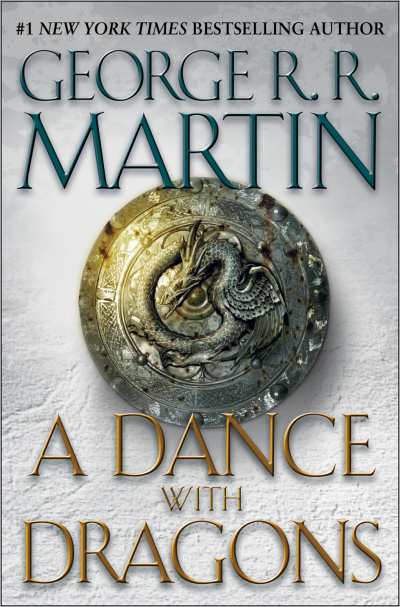
I flat out loved the first three and enjoyed the fourth, so this is a must read – but I’ve been waiting five years for it to come out. That means I’ll have to read those four books as well, before July, because no way am I having that spoiled for me. And then there’s The Wise Man’s Fear, Patrick Rothfuss’s new book, which came out two days ago, and necessitates re-reading The Name of the Wind. Looks like I’ll be busy … but in a very good way.
How was your reading month?
 What would Dracula look like from Mina’s point of view? Syrie James takes this question and twists it, causing Mina to fall in love with Dracula before she knows he’s Dracula. Just as in the original book, she goes to visit her friend Lucy and her mother in Whitby, but what we don’t see are her secret meetings with a mysterious and attractive man, because she doesn’t mention them. And when she discovers that his true identity is Dracula, the story changes, to accommodate Mina’s new truth. What would Dracula look like from Mina’s point of view? Syrie James takes this question and twists it, causing Mina to fall in love with Dracula before she knows he’s Dracula. Just as in the original book, she goes to visit her friend Lucy and her mother in Whitby, but what we don’t see are her secret meetings with a mysterious and attractive man, because she doesn’t mention them. And when she discovers that his true identity is Dracula, the story changes, to accommodate Mina’s new truth.
The original Dracula is one of my favorite books, and as a result I seem to have a lot of trouble with any book that modifies the story in any way. And so it happened here, for a variety of reasons. Some things made sense told James’s way – like how the four men actually killed Lucy because of the danger of blood transfusions – but some don’t.
First of all, I felt like there was too much explaining on Dracula’s part. Every single move in the original novel is carefully explained and turned around by Dracula himself when Mina starts to ask questions. It happens every time the men discover something and, though I know it’s a novel, I honestly had just had enough of his excuses. If I were Mina I’d have chucked him out immediately, simply because there comes a point when you get tired of hearing the same story. Plus, I found it crazy that she’d trust the word of a mysterious stranger over that of the husband she’d known and loved her entire life. Maybe passion makes people crazy, but I often wanted to smack her around. And even though she and Dracula have plenty of intelligent conversations, none of these are actually explicit in the text – we just learn about all the things they had in common. I didn’t feel the connection or the spark between them.
Other than that, the book mainly follows the original’s plot, with some diversions explaining more of Mina’s backstory. These did give the book an interesting angle, going into more detail about how she and Jonathan met and the origins of her parents, but overall weren’t really enough to justify the whole basis of the book as a love story between Mina and Dracula. It didn’t help that I felt Mina was a surprisingly weak character. Her intelligence, for me, was belied by the fact that she never really questioned Dracula. She just went along with his explanations and continued to fall in love with him – she never considers that he might be manipulating her, as she knows he can do. She starts to wake up in some respects by the end of the book, but for the most part I just didn’t like her, which is a disappointment given how fond I am of the original.
In all honesty, I do think my fondness for the original has stopped me enjoying more modern takes on it as much as I might had I never read it. As a result, I just didn’t really connect with this book.
Plenty of others have felt differently about Dracula, My Love. If one of them is you, please let me know in the comments and I’ll feature your review here.
I am an Amazon Associate. I received this book for free for review from LibraryThing Early Reviewers.
 Periods are touchy subjects for both men and women. But, given that more than half the population either gets them, will get them, or has had them in the past, this is a fairly silly state of affairs, and Elissa Stein and Susan Kim aren’t afraid to call it just that. This is a history of menstruation and everything to do with it, from uncomfortable symptoms to advertising to the pill to just what women did before pads or tampons ever existed. Periods are touchy subjects for both men and women. But, given that more than half the population either gets them, will get them, or has had them in the past, this is a fairly silly state of affairs, and Elissa Stein and Susan Kim aren’t afraid to call it just that. This is a history of menstruation and everything to do with it, from uncomfortable symptoms to advertising to the pill to just what women did before pads or tampons ever existed.
I first came across this book when Rebecca at the Book Lady’s Blog raved about it nearly a year ago. After it failed to show up in local bookstores or in my library, I finally got a copy of my own for Christmas. I was surprised to find that it’s textbook-sized and bound, but on opening it, it’s fairly obvious why because the inside has lots of old ads and paraphernalia devoted to periods. These were oddly delightful as well as worrying; the authors poke at the problems with them and the misconceptions they delivered, especially the earlier ones, but I had fun imagining my grandma and my mom looking at them when they were brand new.
As for the actual content of the book, I had a sort of mixed reaction to it, simply because I can’t really understand empowerment around periods. I’ll spare you the details, but I’ll certainly never love my own period, and encouragement to do so never sits quite right with me. The authors take this fully into account as they do discuss the many reasons women struggle with this aspect of their lives, and though they blame a lot of the stigma on advertising, there is not really much question that periods can be painful and unpleasant.
One of the most valuable chapters for me was the amount they question PMS and other familiar medicalizations of classic “female” symptoms. Yes, it’s a serious problem for some women, but it’s honestly frustrating when someone else (usually a man) dismisses a genuine complaint by asking if a woman is about to have her period. When surveyed, a large percentage of people agreed that men had cyclical mood swings too – so a lot of what is simply our nature as human beings can be happily ignored by people who think we’re just complaining because we’re about to start bleeding. This is a worthwhile thing to mention; it frustrates me and no doubt many women to be dismissed because of bodily functions, and is something straight out of the nineteenth century that annoyingly persists.
My favorite sections were also those that dealt with history, as you might expect. I was appalled to learn what women did before pads and tampons, which is why I mentioned it in the summary, and am now actively relieved that I live in a time when they are readily available. But the way the whole advertising business built up around feminine products and feminine hygiene is quite a fascinating look into what happens when you have a product half of the population must buy at one time or another, and how you can use that condition to make them buy even more of your brand and not another. All very interesting, if not a little off-putting. I was also very surprised to learn that a huge percentage of women stick to the same brand throughout their lives, which explains why the industry works so hard at advertising. And this is true, so I don’t know why I was surprised – no matter where the sale is, at the risk of TMI, I go for the same brand, which always perplexes my husband who thinks I should just get the cheapest kind.
Flow is a great, chatty book that encourages women to open up about their periods, providing essential knowledge for today as well as a look back at where we’ve been. Highly recommended – for both genders, although I don’t think too many men will be brave enough to whip this one out in public!
I am an Amazon Associate. I purchased this book.
|
|



Recent Comments