|
|
 Time // Late Sunday afternoon, 17:15 Time // Late Sunday afternoon, 17:15
Place // Same desk as always
Eating // We’ll be having a beef rogan josh for dinner – an experiment from Jamie Oliver’s 15 minute meals
Drinking // Just water at the moment
Reading // I’m not reading anything right now. I finished Panic by Lauren Oliver this afternoon and Promise of Blood by Brian McClellan yesterday. I’m pondering what to nominate for the Hugos and still not firm on what to choose. I’m going to have to pick something eventually, there’s just one day left. No idea what I’m going to read next. Kingmaker by Toby Clements is next up on the TBR pile, but I’m not sure I’m in the mood for the Wars of the Roses. I might keep my head in fantasy while I ride out the next couple of stressful weeks.
Watching // Still watching a crazy number of shows and mostly just seem interested in making it worse for myself! We seem to be sticking with Red Dwarf right now and Breaking Bad when there’s more time in the evenings. I started watching Call the Midwife for when my husband is too busy with his final university course to watch with me. He’s never a huge fan of historical dramas, but that doesn’t mean I have to miss out.
Cooking // I’ve been cooking a little bit. As mentioned above, I’m attempting a Jamie Oliver 15 minute meal later on tonight, and am trying to get back into it. Some, at least.
Learning // Back to the crocheting. I finished this interesting-looking frog just yesterday:

He’s not perfect, primarily because I ran out of the light green yarn before I could make his eyes, but it’s been a while since I actually finished a crochet project, so I’m just happy to have one done.
Gaming // I’m not sure I’ve even touched a game since the last time I played Halo 3 weeks ago. Oh, I tell a lie – I have played a little bit of Final Fantasy XIII, just to try and finish that game once and for all. With 2 sequels it can’t be that dreadful.
Loving/Hating // Loving the daffodils, the occasional nice days, the sunshine. I’ve been doing the 100 Happy Days challenge for the last week and making more of an effort to find things that make me happy. It’s working, a little, although at the same time I worry that it means I’m giving off this false message of perfect happiness to the social media world. Definitely not true. It’s reminding myself that happiness is a choice; that I can focus on the lovely things that make life wonderful and ignore everything that is getting me stressed and depressed. Ignore maybe isn’t the right word, but I have a bad habit of remaining worried and stressed about things that I either can’t help or can’t do anything about at a given time.
Anticipating // The end of the current round of stress at work. I had a moment two weeks ago when I thought things weren’t too bad and the universe seems to have decided to punish me for it. I want to go back to thinking things are not too bad. I’m hoping that time will come in a couple of weeks, but we’ll see.
Credit goes to Kim for the Currently format!
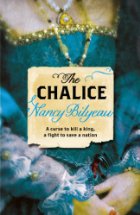 Joanna Stafford has been cast out of Dartford Priory with her fellow novices and nuns thanks to the dissolution of the monasteries, but she’s still attempting to live quietly with her five-year-old cousin, Arthur. Fate won’t let her, though; an unexpected visit with relations who have been restored to prominence embroils Joanna in a plot that threatens the very heart of the nation. Even as she attempts to move past her previous life with a man who loves her, she can’t escape the threads of prophecy that wind themselves tighter and tighter as England’s future grows murky. Joanna Stafford has been cast out of Dartford Priory with her fellow novices and nuns thanks to the dissolution of the monasteries, but she’s still attempting to live quietly with her five-year-old cousin, Arthur. Fate won’t let her, though; an unexpected visit with relations who have been restored to prominence embroils Joanna in a plot that threatens the very heart of the nation. Even as she attempts to move past her previous life with a man who loves her, she can’t escape the threads of prophecy that wind themselves tighter and tighter as England’s future grows murky.
When I started this book, I’d somehow missed that it was a second book in a series – my own fault for not reading summaries or synopsis of any kind! The author does a good job of filling us in on the missing history, but I would highly recommend reading The Crown first so you don’t miss anything even if by accident.
That aside, though, I really liked this book, to my surprise as generally Tudor fiction doesn’t do it for me any more. Joanna is great as a main character and has a perspective unlike any that I’d read before. She has two struggles in this book; the first is against the prophecy which attempts to dictate her life and the second is to actually find what that life should be after her life in the priory. She’s a very religious girl by nature and by education and her inclinations in that way color her interactions with other people.
I liked the way that the prophecy was interwoven into the story. One of the things that is difficult to grasp for a modern mindset is that, in the medieval period at least, “magic” was often stuck in with religion without people struggling to differentiate between the two. I think this is starting to change at this point in time, but the prophecies around Joanna don’t really conflict with her faith. The messages from the prophets are a gift, not a curse, although Joanna grapples with what they actually mean she must do. The implications of them are interesting albeit extremely unlikely from a historical perspective.
Probably the only thing that annoyed me about this particular book was the love interests. Joanna is clearly a novice in the ways of love as she is with the church, and she never expected to have romantic contact with men. The dissolution of the monasteries changed all that. Joanna is now not only beautiful, but she’s an eligible romantic interest, and two men have feelings for her; Geoffrey Scoville and Brother Edmund, a former monk. Because I had no real background without reading The Crown, I wasn’t able to see how these relationships developed, and I think that affected how I perceived them in this book. Plus, I felt like one in particular pretty much forced himself at her more than once when she wasn’t too thrilled about it, which meant I was not his biggest fan.
Still, though, I really enjoyed reading The Chalice and I can only imagine that I’d have liked it even more if I’d read The Crown, too. I definitely recommend that you start there, but it looks like Nancy Bilyeau is an author to watch.
All external book links are affiliate links. I received this book for free for review.
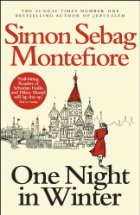 Andrei Kurbsky’s father was exiled to a labor camp and he and his mother have spent the last few years in Stalinabad. In 1945 Russia, everyone is under suspicion, and with Andrei’s chequered family history, it seems like a small miracle that he’s been accepted into Moscow’s top school – where Stalin’s own children were educated. Andrei finds himself rubbing shoulders with the children of film stars and top governmental officials, developing a crush on a girl called Serafima, who is one of the most sought-after teenagers in the school. He is swept into the Romantics Club, where several of the students re-enact scenes from Eugene Onegin, one of Pushkin’s most famous plays. But when two of the teens end up dead, Andrei, Serafima, and their friends, just children, land in Lubyanka prison, subject to the brutal interrogation methods that could end up destroying them and their entire families. Andrei Kurbsky’s father was exiled to a labor camp and he and his mother have spent the last few years in Stalinabad. In 1945 Russia, everyone is under suspicion, and with Andrei’s chequered family history, it seems like a small miracle that he’s been accepted into Moscow’s top school – where Stalin’s own children were educated. Andrei finds himself rubbing shoulders with the children of film stars and top governmental officials, developing a crush on a girl called Serafima, who is one of the most sought-after teenagers in the school. He is swept into the Romantics Club, where several of the students re-enact scenes from Eugene Onegin, one of Pushkin’s most famous plays. But when two of the teens end up dead, Andrei, Serafima, and their friends, just children, land in Lubyanka prison, subject to the brutal interrogation methods that could end up destroying them and their entire families.
If you’ve ever wondered what it might be like to have the state watch your every move, and arrest you on the slightest provocation, this book is one to read. It perfectly evokes the atmosphere of suspense and suspicion that haunted every single person in Moscow and in the rest of the Soviet Union. Any false move – even one that isn’t false – and prison awaited, along with the potential for exile to a labor camp where many suffered, including in this book Andrei’s father. For an idea of what this was like, I’d go read One Day in the Life of Ivan Denisovich by Aleksandr Solzhenitsyn – unforgettable. But this book covers instead the questioning, the wondering, and the suspense. No one was immune, not even these children.
Montefiore has written previous histories of Stalinist Russia, including biographies of the man himself, so he’s clearly done his research on the period which makes it easier to trust what he says. This is a surprisingly suspenseful novel; it’s easy to genuinely worry about Serafima, Andrei, and the other teens and children who find themselves in prison without being quite sure what they’ve done. The back story is revealed slowly, so we know Serafima has a secret from nearly the beginning of the book but aren’t sure what it is.
What I really liked in particular was the contrast between the children’s and some of their teacher’s love for what might be termed old Russian culture and the suspicious, derelict city of Moscow. Russia is still suffering the effects of the war and Stalin’s paranoia only increases as he ages; meanwhile in school, the teens admire the romance of Pushkin’s poetry and adore the teacher who shows them how life in the country used to be.
I really liked One Night in Winter; it’s a readable, tense, suspenseful account of what life may have been like during Stalin’s dictatorship. It has multiple threads of romance and mystery throughout, as well as a sincere homage to Russian culture. Recommended.
All external book links are affiliate links. I received this book for free for review.
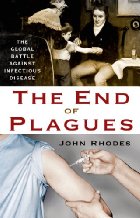 Disease is a constant in our lives. For those who aren’t privileged enough to live or be born in a first-world country, disease and death is an even greater, every day fear. But many of these diseases are now preventable, primarily due to vaccination, and it’s the history as well as the future of this very modern medical miracle that Rhodes explores with this book. As an example, smallpox used to kill two million people or more every year. Now, it’s virtually extinct, surviving in just two known test tubes in the world. Rhodes starts with the pioneering work of Edward Jenner and moves through time to explore the discovery and science of vaccination, its history, and the current fight against some of the world’s fiercest diseases. Disease is a constant in our lives. For those who aren’t privileged enough to live or be born in a first-world country, disease and death is an even greater, every day fear. But many of these diseases are now preventable, primarily due to vaccination, and it’s the history as well as the future of this very modern medical miracle that Rhodes explores with this book. As an example, smallpox used to kill two million people or more every year. Now, it’s virtually extinct, surviving in just two known test tubes in the world. Rhodes starts with the pioneering work of Edward Jenner and moves through time to explore the discovery and science of vaccination, its history, and the current fight against some of the world’s fiercest diseases.
The End of Plagues was a fascinating and unexpectedly inspiring book. I had never really learned (or don’t remember) anything about the history of vaccines in school or otherwise, but I’m always interested in learning more about the world. This book spans the entire world when it comes to the history of immunisation and the fight to eradicate diseases. Most of the discoveries were made in Europe and in the United States, but the latter part of the book focuses heavily on the struggles which have and still are taking place in the Middle East and Africa to finally defeat some of the illnesses with vaccines. Disease is truly global and Rhodes looks at the entire world to get a clearer picture of where progress lies; it’s easy to forget that diseases we’ve obliterated from our own countries still flourish in others with many still suffering from illnesses we no longer see. But the progress that we’ve collectively made is astounding and it’s inspiring to read about so many countries coming together and choosing to protect their people and improve the world in the fact of extraordinary difficulties.
The history was really interesting too, although the book skipped around a little bit in the initial chapters which made it harder to follow. I got the drift quickly though, as discoveries came in hard and fast after Jenner first made his vaccine. One thing I was surprised to learn is the chequered history of older vaccinations. Because the vaccines were actually developed before the corresponding science, there was a huge amount of trial and error and it’s immensely safer now that we actually understand exactly what happens when a vaccine is placed into someone’s body. It’s a balancing act and in many ways it’s fortuitous that Jenner made his discovery exactly how and when he did (the book refers to this as serendipity and it resulted in a couple of discoveries). Vaccines are safer now, but despite the element of luck those initial vaccines and the ongoing campaigns now have eliminated scourges that have haunted humans throughout history.
Rhodes is extremely fair when it comes to understanding why people refuse vaccines for their children and even shares his own experience with doubt. Although links between vaccination and autism have been disproven, there is still a vocal minority of people who are firmly against vaccination for various reasons. While their children definitely benefit from herd immunity, these people open cracks in our defense against serious illnesses. Rhodes explores the history of vaccination and where those worries come from. In the end, though it’s small consolation to the few parents whose children do suffer side effects, vaccination has changed the world much for the better. The simple fact that children can play outside in midsummer without worrying about permanent paralysis or death proves this. Rhodes isn’t heavy-handed, but logical and understanding; worries are there, but he went ahead and vaccinated his daughter because he knew the consequences that ensued from a lapse in that “herd immunity”.
Definitely recommended – whether you’re questioning vaccination, whether you’re interested in history, whether you’re curious about efforts to cure current scourges (primarily malaria and HIV), whether you just want to learn something new. This is a book I’m glad to have read.
All external links are affiliate links. I received this book for free for review.
Time // Sunday evening, 19:08
Place // The usual desk
Eating // Not much right now; I had a veggie pie earlier and will be having pulled pork for dinner.
Drinking // Copious amounts of tea to keep myself alert enough to get some work done
Reading // I’m currently in the middle of two books, the first half of A Dance with Dragons by George R.R. Martin and One Night in Winter by Simon Sebag Montefiore. The first is my commuting book on my Kindle. I’ve recently been tackling longer reads on the commute because I know I’ll make consistent progress while sitting on the train, although it took me a really long time to get into ADwD given how much I remember loving the previous books in the series. As for the latter, I’m about 150 pages in and completely hooked. I really want to know what’s going to happen to these arrested children in Stalinist Russia, and I hope it isn’t the worst.
Watching // We are watching too many shows right now thanks to our recent sign up to Netflix and its wealth of treasures. We discovered Sherlock quite recently and I have very happily jumped on the Benedict Cumberbatch bandwagon. We have just the last episode of season 3 left so please no spoilers. We also just recently started continuing with Breaking Bad and will then move on to House of Cards. When we don’t have much time, we’re re-watching Red Dwarf.
Cooking // I’ve still not been getting on as well as I should have been with cooking this year. Maybe now that it’s lightening up in the evenings my motivation will come back. I’m still pinning recipes away so the desire to make delicious food hasn’t diminished, at least.
Learning // Not much to be honest. I’m considering investing in my first DSLR and getting better at photography. I did a bit of crafting towards the start of the year and re-taught myself how to knit, but I haven’t kept it up.
Gaming // In my new quest to get used to first-person shooters, I am playing the first Halo game on my Xbox. I can’t say I’m in love with it, but I must admit it’s helpful after a stressed day at work.
Loving/Hating // I love how warm it was today and the fact that daffodils are popping up! I can’t wait for summer; my husband says I’m wishing my life away, but I am so tired of being cold.

Mostly hating that it’s not really spring despite one lovely day. It’ll be cold again tomorrow.
Anticipating // Summer; visiting my parents in May; planning this year’s holiday (still not decided).
Credit goes to Kim for the Currently format!
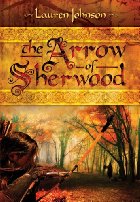 When Robin, Lord Locksley, arrives home from four years on Crusade, his family is astonished. His fiancée has become engaged to someone else, his mother has re-married a sheriff, and his estates have become entrusted to his young nephew, who has become the ward of the Viponts, one of the most dangerous families in Nottingham. They believed he was dead. Alive, he has to fight to regain what should be his by right. In doing so, he realizes that the Vipont family has been mistreating many of the lowborn families he grew up with; taxes are extremely high and the Viponts are closely allied to the Count of Mortmain, or John, King Richard I’s younger brother, who rules the country while his elder sibling is imprisoned in Germany. Justice is subverted and new laws are created to benefit the lords, not those who suffer under their leadership. Robin is convinced that something needs to be done, and as a lord without any of the benefits of lordship, perhaps he’s the one to do it. When Robin, Lord Locksley, arrives home from four years on Crusade, his family is astonished. His fiancée has become engaged to someone else, his mother has re-married a sheriff, and his estates have become entrusted to his young nephew, who has become the ward of the Viponts, one of the most dangerous families in Nottingham. They believed he was dead. Alive, he has to fight to regain what should be his by right. In doing so, he realizes that the Vipont family has been mistreating many of the lowborn families he grew up with; taxes are extremely high and the Viponts are closely allied to the Count of Mortmain, or John, King Richard I’s younger brother, who rules the country while his elder sibling is imprisoned in Germany. Justice is subverted and new laws are created to benefit the lords, not those who suffer under their leadership. Robin is convinced that something needs to be done, and as a lord without any of the benefits of lordship, perhaps he’s the one to do it.
The Arrow of Sherwood is written by a trained historian and it really shows in the best possible ways in this book. There are details which make it clear that this isn’t a tale of modern people in fancy old dresses or a gritty hack-and-slash which shows that the Middle Ages must have been brutal; instead, it’s somewhere in the middle, with scenes at court and scenes of battle and thievery. Johnson recaptures what sort of person Robin Hood might have actually been and the book’s realism, in my eyes, is a huge selling point and definitely set it apart. It’s also a bonus that this isn’t a book about the Tudors or the Plantagenets; it’s a realistic re-imagining of a legend and for that I couldn’t help but appreciate it hugely.
The book is well-written and takes us through Robin’s journey, which is fraught with twists and turns as he struggles with the almost insurmountable authority of the Vipont family. The book gives a really good idea of how much local families were stuck with each other; there are only so many people who have authority within a given region and if one person is higher up, that’s it for everyone else. Justice was a red hot iron pushed into your hand; if it was infected, you were guilty, and if it wasn’t, you were innocent.
The only issue I had with it was actually understanding the feasibility of the set-up behind Robin’s rescued prisoners. Towards the middle of the book we essentially have an entire “hundred” of people in a forest, masked as a leper colony, but one that no one ever finds except a couple of peasants and Marian and Elaine. In addition, Robin is juggling double identities and really doesn’t seem to lie very well. I had a difficult time believing he’d be able to keep the secrets with which he is entrusted and I didn’t understand why none of the Viponts ever think to follow Robin on his travels like some of the more minor characters do. The set-up seemed too convenient, although perhaps this is again just my modern brain not actually understanding the scale of a forest.
Definitely recommended for those who enjoy fiction set in the Middle Ages and, even though Robin Hood is a well-known legend, for something a bit different than the masses out there.
All external book links are affiliate links. I received this book for free for review.
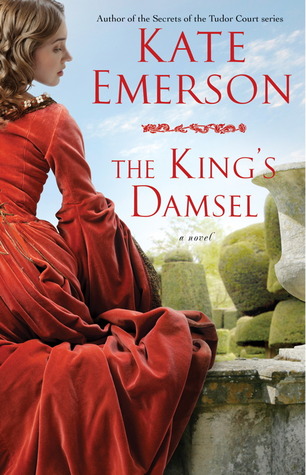 Young Tamsin Lodge, heiress, is sent from the arms of her loving stepmother into the tumultuous world of the Tudor court as a teenager. She quickly realizes that her best option to progress in life is not to mourn for what she’s lost, but to seize the opportunity to gain the influence of powerful people. Her guardian places her as a lady of honor to Princess Mary, who Tamsin grows to love, but as the dynamics of power at court shift, Tamsin has to choose her loyalties carefully and decide what’s best for herself, her family, and her kingdom. Young Tamsin Lodge, heiress, is sent from the arms of her loving stepmother into the tumultuous world of the Tudor court as a teenager. She quickly realizes that her best option to progress in life is not to mourn for what she’s lost, but to seize the opportunity to gain the influence of powerful people. Her guardian places her as a lady of honor to Princess Mary, who Tamsin grows to love, but as the dynamics of power at court shift, Tamsin has to choose her loyalties carefully and decide what’s best for herself, her family, and her kingdom.
The King’s Damsel is a book that should appeal immensely to fans of historical fiction. It’s a richly written, intriguing story of a fictional girl trying to make her way best through a very hostile Tudor court. She’s hampered by her own ignorance, due to her upbringing, but she’s earnest and she tries hard to make a difference. She encounters a huge number of genuine historical figures and indeed has some basis in historical fact. Unfortunately, it was not a book that I personally enjoyed very much, due to three reasons.
The first, which is most certainly not the book’s fault, is that I still haven’t recovered any sort of desire to read fiction about the Tudor court. I overdid this years ago and it seems the desire to actually read these books has not come back. There are a few works of historical fiction which have risen above this, but I didn’t find this to be one of them.
The second is the fact that the back cover gives away practically all of the story, which I’ve actually omitted from my own summary above. I really dislike when this happens; a crucial plot point in the last third of the book really shouldn’t be on the back cover. I’m guessing someone, somewhere thought the book wouldn’t be as appealing to potential readers without this detail, but I spent most of the first 2/3 of the book waiting for that to happen.
The third reason is that I didn’t really get on board with the romance, which seemed too cursory and unrealistic given the actual status of the people involved. I wasn’t really convinced by it, and it didn’t help much that the book skipped years with mostly not much happening. I understand that maybe much didn’t happen, but it didn’t help power the book along at all, and it was a little hard to imagine how a romance happened if the key figures only saw each other once a year. A year is a long time.
The book is only 300 or so pages long and took me 5 days to read, which for me kind of demonstrates how disinterested I was in it. A lot of that probably isn’t the book’s fault – looking elsewhere, it’s had pretty good reviews. It is likely that this book, and this series, might suit someone who is still keen on Tudor historical fiction. But that someone isn’t me.
I received this book for free for review.
February did not hold much excitement over here – in fact, I felt like I was away from home a lot, given that we kicked off the month with a weekend visit to family and the month consisted of not one but two trips for work. Small ones, but time away from home nonetheless. I’m taking this weekend as an opportunity to relax, at least a bit, and recharge, although there is some work that I need to catch up on (isn’t there always?).
In reading terms, February started off slow, as I read two non-fiction books simultaneously. Things warmed up pretty soon, though, and in the middle of the month I rocketed through The Lunar Chronicles by Marissa Meyer, reading two in a day and the third one in a day shortly afterwards. I can already tell you those were the standout books of the month.
As for the rest:
Fiction
- Spilt Milk, Amanda Hodgkinson
- The King’s Damsel, Kate Emerson
- Cinder, Marissa Meyer
- Scarlet, Marissa Meyer
- Book of a Thousand Days, Shannon Hale
- The Lowland, Jhumpa Lahiri
- Queen Jezebel, Jean Plaidy
- Blood Kin, M.J. Scott
- Gabriel’s Ghost, Linnea Sinclair
- Cress, Marissa Meyer
Non-Fiction
- Montaillou, Emmanuel La Roy Ladurie
- Germania, Simon Winder
I managed to continue holding to my reading goals, although just barely; Jhumpa Lahiri’s The Lowland is both by an author of color and set partly in India. Both of my non-fiction choices were set outside of the UK and US, and so was Queen Jezebel, which was set in France. I know Europe isn’t actually very far outside of my comfort zone, but it’s an improvement. I didn’t succeed in writing review this month, though. In fact, I hardly blogged at all.
Favorite of the Month
Book of a Thousand Days should probably be in here too. I just devoured these books; they were the perfect reading experience for a month when I truly felt down in the dumps and stressed for a number of reasons. Really loved them and would highly recommend them.
Ahead for March
Primarily I’m hoping everything calms down a little. I’m also hoping to plan that holiday I mentioned. I need something to look forward to until the current malaise subsides! The increased light in the mornings and evenings is getting me there, bit by bit.
I’m also hoping to read:
- Empress by Shan Sa (actually for real this month – it’s next on the pile!)
- One Night in Winter, Simon Sebag Montefiore
- A Dance with Dragons, George R.R. Martin
- The Iron Kingdom, Christopher Clark
What’s on your schedule for March?
|
|



Recent Comments