

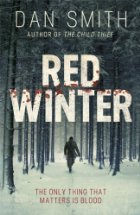
 Kolya is a deserter. He and his brother have left their Red Army unit, disgusted and uncomfortable with the atrocities they have been committing in Russia in 1920. On the way back to his family, Kolya’s brother Alec dies, and Kolya lives for nothing but the chance to spend the rest of his life with his wife and children. But the village is empty. There is no sign of anyone, no hint of what’s happened to them except a legend told by an old woman. Kolya sets off on a desperate trek to find them, through frozen wilderness and into the heart of the army he left behind.
This landed on my doorstep as an unsolicited review copy with a cover that, to be perfectly honest, didn’t appeal to me all that much (okay, not at all). Nor did the cover slogan, “The only thing that matters is blood”, and I think both are doing the novel a huge disservice. I decided to read it because the description sounded interesting and because I’ve been fascinated with Russian history for more than half of my life. The decision I made was the correct one, because behind the bland cover and needlessly violent words was a book that I genuinely enjoyed.
First of all, the setting. Russian wilderness in the grip of coming winter leaps out from the page. The season is perfectly chosen – winter is choking the countryside just as suspicion gone mad is choking the people with fear. Everything feels cold, closed-off, and terrifying. Smith’s writing helps this come alive; it’s easy to be really scared for these characters because there is no hint of what might happen next. Anyone could be an enemy, even your friend, because that’s exactly the attitude that the leaders are using to scare the many, many peasants into submission.
Kolya himself is an excellent character. He’s committed many wrongs and justified them in his head, just like all of the other soldiers, but he wants to make things right. He has finally seen what matters in his life and when he goes to find it, he can’t. It could drive him mad but instead it makes him more determined, although tinged with an edge of despair. I liked both the idea that Kolya was redeeming himself and his admirable drive to find his family. He doesn’t try to do everything; he’s not a superman. He just wants to save the people he cares about, and to me this seems a very human reaction. We perhaps would all like to end every atrocity in the world, but at this point he has to understand what is and isn’t possible and accept it. And this is why the sentence on the cover annoys me – what really makes Kolya move is his family, not “blood”. I worried about what happened to them for him.
The story itself is well-paced. Endless trudging through a frozen forest could have easily become boring, but the actual journey keeps throwing obstacles in Kolya’s way, both good and bad ones, that help inform his plan. It probably does qualify as a thriller, with plenty of exciting scenes and a few fights, but the overall impression the book gave me was quieter than that. Its strengths were in the cold, quiet nights, the air of suspicion and uncertainty, the crunch of hooves moving through a freezing, silent forest.
In conclusion, I really liked Red Winter. I would suggest it to those who enjoy historical fiction, especially if you’re interested like me in the dangerous times when societies are changing or in Russia.
I received this book for free for review consideration.



Recent Comments