|
|
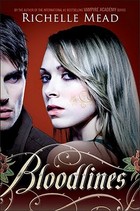 Richelle Mead’s Vampire Academy series is one of the few YA series I’ve actually kept up with over the past year or so; as a result, I immediately latched on to this book as soon as it was released. I was curious to know more about the minor characters from the first series, and Bloodlines follows on seamlessly from those with a change in characters. This means the review will contain spoilers for the Vampire Academy series, but I’ll try and keep them to a minimum. Richelle Mead’s Vampire Academy series is one of the few YA series I’ve actually kept up with over the past year or so; as a result, I immediately latched on to this book as soon as it was released. I was curious to know more about the minor characters from the first series, and Bloodlines follows on seamlessly from those with a change in characters. This means the review will contain spoilers for the Vampire Academy series, but I’ll try and keep them to a minimum.
Sydney Sage worked together with Rose to help save the Moroi world from catastrophe, but her close association with vampires and dhampirs has gotten her into trouble with her fellow Alchemists. After all, the goal of the Alchemists is to keep vampires and other supernatural races from discovery, not to associate with them personally, and as a result Sydney’s motivations have been called into question. But when Lissa’s sister Jill needs cover and a protector, Sydney goes in the place of her sister, who is judged too young for the responsibilities. Living life as a normal high school student, Sydney, along with series regulars Eddie and Adrian, must keep Jill out of harm – but there’s something strange going on at the school, and Sydney decides that finding out might just be worth the risk to her reputation.
Like the rest of the VA series, this was a light read that provided a lot of page-turning entertainment. I’ve always liked Sydney – I’m immediately attracted to fellow nerds and Sydney knows a lot – and I was happy that Mead chose to turn this new series around her story. At the same time, it also feels like we’ve set up a larger story for the rest of the series, which didn’t bother me but might with someone who was looking for a book without a cliffhanger ending.
Also, because it follows on directly from the Vampire Academy series, I feel it’s well worth having read the previous books before digging into this one – you’ll feel immediately familiar with the world and the issues contained in the novel. Otherwise, I feel as though you’ll miss out on the purpose for protecting Jill – the book says, but unless you’ve experienced the rest of the series, the importance may be diminished – and won’t understand the severity of Sydney’s plight.
Overall, another solid, enjoyable entry in this series, worth the read if you’re already invested.
I purchased this book.
 As I’m trying to catch up on my reviews from 2011, and now my As I’m trying to catch up on my reviews from 2011, and now my five six reviews from 2012, I thought I’d better start putting together some mini reviews for those books I can get out of the way quickly! Here are the two short, lighter non-fiction books I read at the end of 2011.
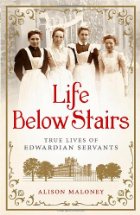
Life Below Stairs, Alison Maloney
Inspired by the success of Downton Abbey, Alison Maloney has composed a brief, easily digestible book about the lives of servants in Edwardian England, around when the period drama is set. The book covers a huge variety of topics and, for me, actually made some of the show’s choices more understandable. For instance, I now understand the purpose and history behind the difference between Miss O’Brien’s clothing and the rest of the maids’, the servant’s ball, and even why Mrs Hughes is a “Mrs” even though she’s not a married woman.
It also highlighted a few of the differences between the show and real life, and the genuine struggles and difficulties that servants had. Life was definitely not as rosy for these folks as it is for the below-stairs servants at Downton. The book has plenty of quotes illustrating this, including one of a poor girl who missed her day off because she was so exhausted from work that she slept through it!
Life Below Stairs also has a few illustrative photos and is a brief overview that will suit fans of the show perfectly, but it’s probably too shallow for anyone who has previously read about the Edwardian period.
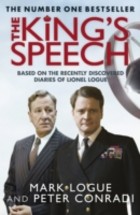 The King’s Speech, Mark Logue and Peter Conradi The King’s Speech, Mark Logue and Peter Conradi
Like almost everyone else who has an interest in English history, I saw The King’s Speech in film form last year and absolutely adored it, so it was a no-brainer for me to pick up its written counterpart. Pleasantly, the book contains a few surprises even for those who have seen the film, particularly because it tells the story of Lionel Logue chronologically and includes plenty of background. Naturally, no one could or desires to fit all of this into a biopic framed around a speech, but I delighted in the extra details and in particular the genuine letters and photographs that accompanied the text.
One thing that struck me was that, even though this was less than 100 years ago, the social gap between Logue and George VI was massive. Just reading their letters to one another makes that clear – and also emphasizes how unusual and important their intimacy was. I found the book almost more valuable for that, in my mind, than for the extra details about that particular case. It’s a window into a world that hasn’t been gone for very long, but which is still utterly fascinating.
Highly recommended for those who enjoyed the movie and who are interested in social history.
 Ashima and Ashoke Ganguli begin their lives together with an arranged marriage and a move to the United States from India. Ashoke is still a student, with ambitions to become a professor, while Ashima stays home to take care of their son, Gogol, who is born shortly after their marriage. The Namesake is really about Gogol, who sits between the generations, watching the effect his life has on his immigrant parents even as he tries to sort out his own culture, to reconcile his Bengali roots with his American present. Ashima and Ashoke Ganguli begin their lives together with an arranged marriage and a move to the United States from India. Ashoke is still a student, with ambitions to become a professor, while Ashima stays home to take care of their son, Gogol, who is born shortly after their marriage. The Namesake is really about Gogol, who sits between the generations, watching the effect his life has on his immigrant parents even as he tries to sort out his own culture, to reconcile his Bengali roots with his American present.
I’ve been hearing about Jhumpa Lahiri for years, and actually I’ve owned this book since 2008. Shameful, I know, especially because once I got started reading this I completely fell in love. It wasn’t a hard task to win me over; Lahiri managed it almost immediately by tying Gogol, the Russian author, to the story in the form of Gogol, the character, adding in a whole range of meaning for me as a reader of that particular author. I loved how the author followed the character throughout his life, subtly reminding him of his parents, and simultaneously making him confused and guilty and a little bit wistful.
I’m an immigrant myself, and though not nearly as isolated as Ashoke and Ashima, I still sympathised with the feeling of being in a foreign land, lacking friends simply because you have no basis for knowing people, and essentially feeling isolated. The couple eventually make themselves at home, but there’s always something there that is lacking, even once you realize that you’ve lived in a foreign place for long enough that you’ll never quite fit in at home, either.
The contrast between the experience of the parents and the children when they visit India, for instance, is striking. Though Ashoke and Ashima are happy enough in the United States, they come back to themselves in India. In vivid contrast, their children feel irritated at the absence from home and confused by a different way of life. They don’t enjoy the visits, but their parents relish them and despair at leaving.
This is also a novel about identity, about the confusion between who you individually are and where you’ve come from. Gogol, in typical young adult fashion, seems to discard everything about his culture, including his own name, in a search to figure out who he truly is. It takes a powerful shock to remind him that there’s more to his background, that there are essential threads of his life that he just missed while he was busy asserting that identity. But he quickly swings back the other way. It’s not a simple thing, working out who you are and entangling it from the mess created of your life up to that point, and Lahiri not only recognizes this but pulls it off beautifully.
A quiet but powerful book about identity and heritage, The Namesake struck every chord correctly with me, catapulting itself onto my 2011 favorites list at the tail end of the year. Very highly recommended.
 I named Courtney Milan as one of my top discoveries of 2011 and books like this one are exactly why she ended up on that list. I named Courtney Milan as one of my top discoveries of 2011 and books like this one are exactly why she ended up on that list.
Smite Turner isn’t a normal hero. Traumatised by his mentally ill mother throughout his childhood, in a time when treatment was more harmful than helpful, he’s grown into a conscientious magistrate fixated on justice who nevertheless sets people apart from him. He knows that they’re unlikely to understand just how he ticks, and as such he’d simply rather be alone – or with his dog. Miranda Darling, in contrast, does just about everything for someone else – under the protection of a figure of the underworld in which she lives, she puts on numerous fake identities to mislead the law. Until she encounters Smite, who never forgets a face, and somehow can’t get hers out of his head.
I feel as though every Courtney Milan book I read is better than the last, and Unraveled was no exception. Treading dangerous waters with a mentally damaged hero, a heroine turned into a mistress, and seedy crime, Milan never puts a foot – or a word – down wrong. Instead, she has created a fantastic, heart-wrenching love story that I simply couldn’t put down. (She even manages to stick a perfectly happy gay couple in there, who helped raise Miranda and gave her a ton of happy memories.)
What I loved most about this book, I think, was that Miranda didn’t “cure” Smite. He is still damaged by his past, and he’s always going to be uncomfortable with certain aspects of intimacy and behavior. That doesn’t change. What does change is that she loves him for who he is, and she understands which of his gestures mean “I love you” when he can’t say the words. In real life, we all know that if we go into a relationship looking to change someone, we’re virtually guaranteed to fail. Why should the world of romance novels be any different? That is why her characters are so appealing, so human, so easily able to sneak their way in and tug at your heartstrings.
At the end of the book, Milan explains the historical context behind the book and her inspiration for setting it in Bristol and amongst those who walk a careful line between breaking the law and staying alive. I loved this – so often romance novels in particular are simply modern day characters dressed up in fancy old-fashioned outfits who go to balls, and while I accept them for that and still enjoy them, I can’t help but love an author who goes out and tells me that she was inspired by actual history.
Just writing about this book has made me wish I could go and read it all over again. It’s such an addicting, romantic read, with characters so appealing that you genuinely won’t want to leave them until you’ve finished. Highly recommended for any romance readers.
I purchased this book. All book links are affiliate links.
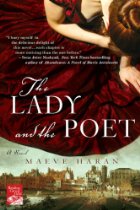 Many of the most famous love poems were inspired by a real life love story. This is certainly the case with John Donne, whose romance with Lady Ann More led to some of the most beautiful, and sometimes risque, poetry in the English language. Though living in relatively stringent Elizabethan England, where societal rules and status were carefully enforced, the relatively high-born Ann falls deeply in love with John, a man who could not properly support a wife at the time. Free-spirited, devoted Ann isn’t willing to let that stand in the way; this is a story of courtship, of frustration, and of literary genius. Many of the most famous love poems were inspired by a real life love story. This is certainly the case with John Donne, whose romance with Lady Ann More led to some of the most beautiful, and sometimes risque, poetry in the English language. Though living in relatively stringent Elizabethan England, where societal rules and status were carefully enforced, the relatively high-born Ann falls deeply in love with John, a man who could not properly support a wife at the time. Free-spirited, devoted Ann isn’t willing to let that stand in the way; this is a story of courtship, of frustration, and of literary genius.
I can’t remember where I got this book; I think it got sent to me for review a while ago, and ultimately that was the reason I finally gave in and picked it up. I haven’t been properly in the mood for historical fiction for some time now, but The Lady and the Poet is such a beautiful, deep, provoking book that it held and indeed rewarded my attention once I finally began reading it.
First of all, let me say that this particular book truly feels historic. It doesn’t just throw relatively modern characters into a setting with fancy dresses, but instead has characters who fit seamlessly into their environment and give us a thorough idea of what an Elizabethan couple might have had to deal with. Ann and John’s love story is actually documented, and the sacrifices they made for one another are firmly rooted in history, which makes this book all the more enchanting, at least for someone like me. I loved the re-imagining of the lives of these two people. The Lady and the Poet reminded me why I enjoy historical fiction so much in the first place.
Secondly, the literary appeal can’t be overstated. Donne wrote a lot of poetry; I even managed to study some of it during my English major days. Haran doesn’t let all that richness fall to the wayside, instead incorporating Donne’s work into the plot, into the love story, and strengthening the story as a whole by using what probably was inspired by Ann in the first place within the book. Much of his work rings true, and knowing that it was written by the man himself adds that extra layer of authenticity and emotion to the book which just doesn’t exist otherwise.
Finally, the book is both gorgeously written and seamlessly plotted, stringing the reader’s attention along the years and the struggles, providing details and descriptions enough but never overwhelming the reader with useless historical detail (although I’ll be the first to admit that I would be happy with more than most). We feel as though we’re in Tudor England, but we’re in the expert hands of a guide we can trust.
The Lady and the Poet is a quiet book, a love story, but one that will worm its way into your mind and heart and refuse to leave. An exceptional choice for those who love historical fiction.
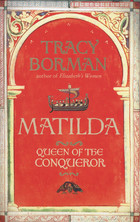 William the Conqueror is one of the most well-known figures in English history, and for good reason; with a single battle, he ended the Anglo-Saxon rule of England and changed many aspects of governance, aristocracy, and even language. That’s simplifying things just a bit, but the impact of the Norman invasion on England can’t be overstated. Left behind in the traditional story of great-men-doing-great-things is Queen Matilda, William’s wife and a power in her own right. What influence did she have on William? On the conquest of England? On her children, who went on to rule the country themselves? That is the story Borman aspires to tell in this biography. William the Conqueror is one of the most well-known figures in English history, and for good reason; with a single battle, he ended the Anglo-Saxon rule of England and changed many aspects of governance, aristocracy, and even language. That’s simplifying things just a bit, but the impact of the Norman invasion on England can’t be overstated. Left behind in the traditional story of great-men-doing-great-things is Queen Matilda, William’s wife and a power in her own right. What influence did she have on William? On the conquest of England? On her children, who went on to rule the country themselves? That is the story Borman aspires to tell in this biography.
I’m not unfamiliar with Matilda; not only have I read about her in fiction, I learned quite a bit about the actual history of her life, too. This book regardless had a lot new to offer and a lot of fodder for thought, especially when it comes to the role of the woman in the medieval world. Borman posits that Matilda’s strong leadership role was preceded and followed by women who expected the same, and that truly there was more of a step backwards after her reign.
For instance, one of Matilda’s namesakes, “Empress” Matilda or Maude, is the prime example. Henry I made her his heir and asked his people to swear loyalty to her – so while he clearly had worries about it, he didn’t pass over her to choose a male heir. Was this the influence of his mother? It’s a fascinating question, and makes the social dynamics that followed Henry I’s death even more intriguing.
Borman also takes a relatively in-depth look at the myths surrounding Matilda and the motivations behind what other people said about her. This is always fascinating stuff for me – I love thinking about how various chroniclers and historians have twisted and portrayed things in ways that suit them best. Matilda suffers this quite a bit and it’s interesting to see Borman’s perspective on which bits are more or less correct. She puts to bed some of the more outlandish tales, like William beating Matilda to a pulp for her to agree to marry him – the world was different then, but probably not THAT different, and Borman’s logic is reasonable.
I also loved that Borman asserted Matilda’s power and influence as both duchess and queen. She witnessed a large number of charters and was personally responsible for ruling in her husband’s absence, something most of us don’t really associate with the Middle Ages. For a piece of chattel, she made and helped with many decisions, and it’s a mark of her influence that she was deeply mourned upon her death. Borman does the usual speculation, pondering what effects Matilda’s “softening” influence may have had while she was alive, as she vividly contrasts William’s rule after her death with those years before.
Overall, Matilda: Queen of the Conqueror is a truly fascinating book for anyone who is interested in female power just before the High Middle Ages. Matilda presents a thoughtful contrast to those who came after; this book would actually fit in wonderfully with Helen Castor’s She-Wolves. Highly recommended.
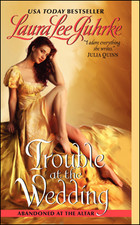 Annabel simply cannot wait to marry her fiance, even though she doesn’t really love him. Why? Because he’s an earl and he can finally confer upon her family the respectability she knows they deserve. Growing up in a Mississippi backwater and learning that love doesn’t lead to anything other than heartbreak has taught her that status and contentment matter above all else. But that’s not enough for Annabel’s family, none of whom likes her fiance, and in act of desperation, her uncle pays Christian du Quesne, the duke of Scarborough, to persuade her to call off the wedding. Annabel simply cannot wait to marry her fiance, even though she doesn’t really love him. Why? Because he’s an earl and he can finally confer upon her family the respectability she knows they deserve. Growing up in a Mississippi backwater and learning that love doesn’t lead to anything other than heartbreak has taught her that status and contentment matter above all else. But that’s not enough for Annabel’s family, none of whom likes her fiance, and in act of desperation, her uncle pays Christian du Quesne, the duke of Scarborough, to persuade her to call off the wedding.
Christian can’t turn down an offer like that, not with his estate in ruins and his refusal to marry an heiress himself. He needs the cash to start investing and making money back. So he agrees, but finds himself longing for more than the money once he meets Annabel and realizes that she really belongs with someone better than Rumsford – himself.
I can’t believe I only discovered Laura Lee Guhrke with this series. How could such an awesome author have been writing books for longer than I’ve been reading romance without me noticing? It doesn’t matter anyway; I’ve discovered her now, and I’m quickly learning that I am going to simply inhale anything she writes. As with the first two in this trilogy of books about being abandoned (or doing the abandoning) at the altar, I just loved the emotional journey of this book and I’m thrilled I had a chance to read it.
On a shallow note, just look how gorgeous that cover is. I’m so pleased that yellow seems to have taken over historical romance covers temporarily, as it’s my favorite color and it suits them well.
Anyway, this book ticked all the right boxes for a wonderful romance. Annabel is a heroine who has been hurt before, suffering from a man who took serious advantage of her and then left her to fend for herself. With a little sister to look after, Annabel’s mission ever since has been to ensure that nothing like that ever happens again. A fortunate endowment from her long-absent and now-dead father means that she can buy her way into the nobility, and so she settles for a man who will provide her with the firm position in society that all poor girls dream of.
Enter Christian, a man who is hell-bent against marrying after the disaster that happened to his first wife. He falls head over heels with Annabel almost at first glimpse; he’s then fixed on helping her avoid her no-good fiance at all costs. But Rumsford, the fiance, isn’t really a villain, just a fairly typical aristocrat with a bit on the side; he’s a foil to get Christian and Annabel together. Once he does so, the book simply sparkles, and had me riveted to the Kindle’s screen as these two come together with, in the end, everything they have.
Trouble at the Wedding is a wonderful, emotional, sometimes funny book that will win the heart of any romance reader. Highly recommended.
All external links are affiliate links. I received this book for free for review from the publisher through Netgalley.
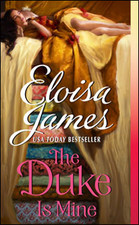 Carrying on with her series inspired by fairy tales, The Duke Is Mine puts a twist on the tale of the Princess and the Pea with this historical romance. Tarquin, the Duke of Sconce, is seeking the perfect bride – or at least his mother is on his behalf. Miss Olivia Lytton – not even a lady – is hardly the perfect choice, particularly as she’s been betrothed to another duke since her birth. While Olivia’s sister Georgiana fits the bill, Tarquin can’t take his eyes from curvy, funny Olivia – but how can they surmount her betrothal and his mother’s expectations in order to be together? Carrying on with her series inspired by fairy tales, The Duke Is Mine puts a twist on the tale of the Princess and the Pea with this historical romance. Tarquin, the Duke of Sconce, is seeking the perfect bride – or at least his mother is on his behalf. Miss Olivia Lytton – not even a lady – is hardly the perfect choice, particularly as she’s been betrothed to another duke since her birth. While Olivia’s sister Georgiana fits the bill, Tarquin can’t take his eyes from curvy, funny Olivia – but how can they surmount her betrothal and his mother’s expectations in order to be together?
I liked the concept behind this book a lot, but it was one of those where too many obstacles fell away from the couple’s feet almost effortlessly so they could be together. In fact, I think it may be the first romance by Eloisa James I’ve had problems with, because I ordinarily love her books.
Let me explain; it’s not that I didn’t have a good time with this book. In fact, I flat out loved the first two thirds. It’s impossible not to feel for Olivia, a girl who describes herself as fat and loud and who tries to suck in her stomach so she doesn’t offend anyone, simply because she doesn’t fit the willow-thin, mouth-shut society-dictated stereotype. To make things worse, she’s not particularly fond of her future husband, but she considers herself resigned to her fate. In Tarquin’s eyes, she is curvy, hilarious, and immediately attractive. She’s a breath of fresh air amidst a crowd of stick-thin debutantes, one of the only romance heroines I’ve read about who does actually have a healthy amount on her bones and is decidedly not a wallflower.
After the couple do fall in love and all secrets are revealed, though, I really started to get frustrated with it. I felt as though all the romantic layers had fallen away so the couple could be together with an incredibly contrived situation to remove any problems. Obviously, many romance novels do this, but good ones shouldn’t make it so obvious. It’s the case of a perfectly good romance spoiled by the addition of a subplot that does incorporate the fairy tale but otherwise seems far, far too convenient. I wanted the couple to face what they’d done and come out stronger, not just escape without anyone ever actually realizing what had happened.
Anyway, if that’s what you go in expecting, I know you’ll enjoy this book; and for what it’s worth, it may have been my mood that made this so irritating to me at the time. But for a book that started out so well, I ended up disappointed. I’d recommend the other two fairy tale books instead, or at least to start, before you venture into reading The Duke Is Mine. Eloisa James really is a fantastic author, and it would be a shame to miss out on the rest of her work.
All book links to external sites are affiliate links. I received this book for free for review from Netgalley.
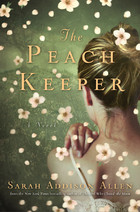 The tiny town of Walls of Water, North Carolina, has been home to logging wealth for generations. But Willa Jackson, the only remaining member of one of the most prominent families, now makes a living for herself running a sporting goods store, and has no desire to be associated with her past. Meanwhile, Paxton Osgood, another scion of the famous families, buries herself in family and town lore, ignoring her personal problems to become an image of a perfect society daughter. Their grandmothers were – and in some ways are – best friends, but these two women couldn’t be further apart. Enter the restoration of the Blue Ridge Madam, Willa’s family’s hereditary house, and Paxton’s pet project. When a skeleton is dug up underneath the peach tree, the women can no longer avoid each other in their mutual quest for their family’s histories. The tiny town of Walls of Water, North Carolina, has been home to logging wealth for generations. But Willa Jackson, the only remaining member of one of the most prominent families, now makes a living for herself running a sporting goods store, and has no desire to be associated with her past. Meanwhile, Paxton Osgood, another scion of the famous families, buries herself in family and town lore, ignoring her personal problems to become an image of a perfect society daughter. Their grandmothers were – and in some ways are – best friends, but these two women couldn’t be further apart. Enter the restoration of the Blue Ridge Madam, Willa’s family’s hereditary house, and Paxton’s pet project. When a skeleton is dug up underneath the peach tree, the women can no longer avoid each other in their mutual quest for their family’s histories.
I’ve made a point of reading all of Sarah Addison Allen’s books since her first one, Garden Spells, captivated me many moons ago. Unfortunately, either I’m changing or her books are – I just wasn’t really feeling the magic on this one. Her prose is still delicious and the touches of fantasy she adds to every day life as charming as always, but the characters in this particular book didn’t strike a chord with me. While the story’s plot is made to sound somewhat exciting, I actually found most of it rather predictable bar one small bit at the end, and the way the characters would end up from the start is obvious.
That isn’t something that normally bothers me; you are hearing from a girl who regularly enjoys romance novels right now, after all. I’m perfectly fine with a generally predictable ending. I suppose what bugged me here is that the entire book is that way, from the plot to the friendships to the romances. And those romances, I had a hard time believing in; they happen too quickly, and one is especially absurd, at least from my perspective. I didn’t find the heartwarming book I was seeking here.
It was a fast read, with a nice atmosphere, as I would expect from one of her books, and I had a fine time reading it, but I was ultimately disappointed in The Peach Keeper. I hope Allen’s next book will be a bigger hit with me.
All external links are affiliate links. I received this book for free for review from Amazon Vine.
 Most of us, especially those of us who are literary, have a cozy image of a typical English village in our minds. Mine has definitely been imparted through reading, but has only been strengthened over the time I’ve lived in England. Uneven rows of thatched roof cottages, wide expanses of farmland, the rectory, and maybe even the manor house on the hill – it depends what historical period your mind works best in. Our ideal of the English village is more myth than any kind of reality, but that doesn’t mean you can’t still love them, and that is the contradiction that Wainwright explores in The English Village. Most of us, especially those of us who are literary, have a cozy image of a typical English village in our minds. Mine has definitely been imparted through reading, but has only been strengthened over the time I’ve lived in England. Uneven rows of thatched roof cottages, wide expanses of farmland, the rectory, and maybe even the manor house on the hill – it depends what historical period your mind works best in. Our ideal of the English village is more myth than any kind of reality, but that doesn’t mean you can’t still love them, and that is the contradiction that Wainwright explores in The English Village.
It’s clear from the start that Wainwright loves the ideal of England as much as the rest of us do. The book is broken down into chapters concerning different aspects of the village, from those cottages I mentioned to the festivals that the villagers used to celebrate. The book concludes with a chapter on the potential future of the English village and the changes that have happened recently, namely a revival in village life and a determination to conserve the bits we have left for the future. Each chapter also contains black and white drawings of, usually, buildings mentioned in the text to give us a good idea of what we’re reading about.
At the core this was really a delightful book. I loved the way that Wainwright pulled history into the idyllic vision that so many of us cherish – not to remove the dream, but to add a layer of realism to it. One of my favorite parts was when he mentioned that some cottages which are now valued at over one million pounds used to be houses for the poor. It’s this dichotomy which sums up that contradiction; the now pretty villages had an underside which has mostly moved to the cities, leaving much of the countryside for the wealthy.
The English Village naturally also covers the history of the village and how it has evolved through time, starting with the Norman Conquest and ending with the people who are keeping the dream alive, either through pubs or restoration. The industrial revolution effectively ended the need to live in cottages scattered across the countryside, but that way of life was common throughout our history until that point. The shift was monumental, although also incremental, and given that I am always a person who is fascinated with those fundamental changes, I was hooked by this in particular.
For anyone who has ever imagined having a little house in the countryside – perhaps a timber-framed, plastered house with a thatch roof, as I’ve wished – The English Village is truly the perfect read. And it would make a great Christmas gift, too; if you’re in poking around the shops this weekend looking for last minute presents, look no further.
All external book links are affiliate links. I received this book for free for review from Amazon Vine.
|
|


Recent Comments