|
|
 From the first videogame to the graphics-intense shooters of the present day, using computers and consoles to play games has a long and fascinating history. Rather than try and cover all of this history, Goldberg focuses on snapshots in time, targeting specific games that changed the industry, pushed it to develop, and / or that succeeded against all the odds. Because it’s so wide, he covers everything from vacuum-tube computers to arcade games to handheld systems, picking and choosing which games to spotlight as he attempts to capture just what inspires us about gaming. From the first videogame to the graphics-intense shooters of the present day, using computers and consoles to play games has a long and fascinating history. Rather than try and cover all of this history, Goldberg focuses on snapshots in time, targeting specific games that changed the industry, pushed it to develop, and / or that succeeded against all the odds. Because it’s so wide, he covers everything from vacuum-tube computers to arcade games to handheld systems, picking and choosing which games to spotlight as he attempts to capture just what inspires us about gaming.
By the author’s choice of title, he’s captured the interest of anyone who has been a video game nerd in the last two decades. “All Your Base are Belong to Us” is a well-known translation error from the game Zero Wing which has taken on a life of its own amongst gamers (as you’ll see in the link above). Because it so clearly caters to me and other gamers like me, I was predisposed to enjoy this book, and enjoy it I did. Unfortunately, there is no mention of the title within the text, which I think will actually confuse people who have a more general knowledge of gaming, and who may actually enjoy this book the most.
Goldberg chooses some interesting moments in gaming, some of which I knew about previously and some of which I didn’t. Games like Pong, Myst, and Bioshock make an appearance, with their creation stories alongside Goldberg’s analysis of how and why they changed gaming. Goldberg is obviously a gamer himself and is able to easily recreate the feelings that make gaming so much fun through his writing. He has interviewed legions of personalities who featured in the games’ creation, adding primary source material to each chapter with his own commentary.
It’s a bit of an uneven book, though, simply by its very nature. He has left out games that had their own significant influence on the industry, because he only has a limited amount of space in this short book, and as a result it’s actually difficult to grasp the entire picture. It’s not really a history of video games either, it’s more a chatty selection of some games that influenced their development as a whole, a journey through interviews with some vibrant gaming personalities. There are some really excellent chapters in here, but I just didn’t feel at the end like Goldberg had achieved his goal of exploring why video games have such an effect on us.
All Your Base Are Belong to Us is a fun read, perfect for someone who wants a skimmable look into gaming history, but it doesn’t achieve quite the depth I’d hoped for. I’m still looking for the perfect history of the gaming industry, or books which focus on different sectors, and am very happy to take suggestions.
All book links to external sites are affiliate links. I received this book for free from Amazon Vine.
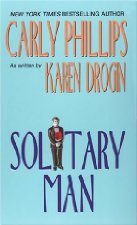 Boston cop Kevin Manning promised his partner that he would look out for his family. But for two months, after sleeping with Tony’s little sister Nikki, Kevin has done just the opposite; blaming himself for the death, he’s hidden himself away thinking that would cause less pain. Instead, Nikki has not only been confused about Kevin’s silence, but is now pregnant with his child. If Kevin wants to be part of their lives, he’ll have to come to terms with the loss of his partner and his own role as a cop, a son, and a father. Boston cop Kevin Manning promised his partner that he would look out for his family. But for two months, after sleeping with Tony’s little sister Nikki, Kevin has done just the opposite; blaming himself for the death, he’s hidden himself away thinking that would cause less pain. Instead, Nikki has not only been confused about Kevin’s silence, but is now pregnant with his child. If Kevin wants to be part of their lives, he’ll have to come to terms with the loss of his partner and his own role as a cop, a son, and a father.
As far as contemporary romances go, this one felt very typical of the genre to me, but in a good way – if you enjoy this sort of thing, you’ll unquestionably like this book. As it’s an ebook reissue of an older book by Carly Phillips, it makes sense that it conforms more closely to characters we consider stereotypes now. Kevin is a standard damaged hero, with a heart of gold who of course loves the girl but who has decided to close himself up emotionally because he’s had too much pain in the past. His father is a dependent alcoholic who has never repented or tried to recover and he’s been trained to consider things his fault, rather than letting people love him and accept love in return.
This leads to a difficult situation for Nikki, who genuinely cares for Kevin and, as most women would be, is downright confused by his behavior. He walks out on her after their first night together, when both are clearly still grieving for her brother Tony, and then vanishes, leaving her to pick up the pieces of her life and somehow fit them back into a shape that resembles happiness. Unsurprisingly, she’s failed, as she can no longer pay the bills to continue her degree and actually get to the stage where she can support herself and the baby. Kevin finds her again waitressing in a bar, dodging men persistent on flirting with her, and is enraged, even though if he’d stuck around he probably would have been able to help.
I have mixed feelings on this book. It frustrates me that, for example, Nikki is rendered so helpless by the absence of men in her lives. She loses all of her possibilities in life on the death of her brother, who can no longer support her through her degree, which makes sense, but then she is forced by pregnancy to give up work and become completely dependent on Kevin. She tries to retain her independence by becoming a waitress, and then by taking steps to continue her education and become her own woman eventually, though, which helped to redeem her in my eyes. Events conspire against her, but she does the best she can overall.
Kevin, however, I just found to be irritating overall. I could see why he had problems, especially when his father appears in the picture, but as a less patient woman, I would have walked out well before Nikki. Still, when he finally does open up (this is a romance, we all know it’s coming), the ending is sweet and I did leave the book behind satisfied. They both have issues to overcome and that makes the ending feel like a proper coming together.
For a fast, romantic contemporary read, Solitary Man would certainly be a good choice.
All book links to external sites are affiliate links. I received this ebook for free for review from a publicist.
 Edward de Lacey’s father reveals, on his deathbed, that he and his two brothers may be without an inheritance after all. That’s because, unknown to everyone, the duke was married – and not divorced – before he married their mother. The heir, Charles, is a wastrel and may now be without any money to waste; Gerard, the youngest, solves his problems with force. That leaves Edward, the middle son and always the one in charge of the estate, to hire a solicitor and get the de Lacey family back to its rightful position. Unfortunately, he snatches London’s top solicitor out from under the nose of Lady Francesca Gordon, who wants to win custody of her niece from the girl’s stepmother, who won’t allow Francesca to even see the girl. As recompense, Francesca demands he help her find another solicitor, in exchange for silencing the tabloid rumors about the brothers’ illegitimacy. Edward de Lacey’s father reveals, on his deathbed, that he and his two brothers may be without an inheritance after all. That’s because, unknown to everyone, the duke was married – and not divorced – before he married their mother. The heir, Charles, is a wastrel and may now be without any money to waste; Gerard, the youngest, solves his problems with force. That leaves Edward, the middle son and always the one in charge of the estate, to hire a solicitor and get the de Lacey family back to its rightful position. Unfortunately, he snatches London’s top solicitor out from under the nose of Lady Francesca Gordon, who wants to win custody of her niece from the girl’s stepmother, who won’t allow Francesca to even see the girl. As recompense, Francesca demands he help her find another solicitor, in exchange for silencing the tabloid rumors about the brothers’ illegitimacy.
As Francesca and Edward’s partnership develops and their cases progress, they grow closer, but at what cost to both of them?
This was a sweet, endearing romance; I really liked both of the main characters, particularly Edward. I think most women are fond of the strong, silent type; Edward certainly has emotions, but he’s good at hiding them behind a more reserved exterior. When the scandal breaks out, his fiance leaves him, and it’s his own fault for telling her. What makes it even sadder was that he was convinced he loved her, at least until he meets fiery Francesca.
It’s pretty obvious from the start that these characters actually work quite well together, as they become invested in one another’s problems and truly develop a partnership as well as a romance. One Night in London is a sweet story that many romance lovers will enjoy – although I’m really not sure about that cover. Don’t let it stop you from enjoying this one!
All book links to external sites are affiliate links. I received this book for review from Netgalley.
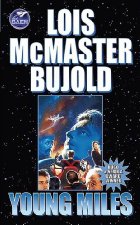 Miles Vorkosigan is born into a noble family on a planet called Barrayar, but with a disability that may permanently bar him from gaining any merit in his warrior-based society. His bones are as fragile as glass and a simple fall can render him unable to walk. Yet Miles is clever, resourceful, and determined to live up to the example set him by his father and grandfather. Miles Vorkosigan is born into a noble family on a planet called Barrayar, but with a disability that may permanently bar him from gaining any merit in his warrior-based society. His bones are as fragile as glass and a simple fall can render him unable to walk. Yet Miles is clever, resourceful, and determined to live up to the example set him by his father and grandfather.
This omnibus edition actually consists of three different stories; two novels and a short story. In The Warrior’s Apprentice, Miles fails to gain entry to the military academy due to his handicaps. Instead he goes off-planet to visit his Betan grandmother, along with his bodyguard Bothari and Bothari’s daughter Elena, with whom Miles is enamored. Miles manages to get himself and his companions into serious trouble in a war zone.
It’s hard to emphasize how pleased I was even just by this first story. The plot is surprisingly complex as Miles manages to think and innovate his way out of the many difficult situations he encounters. But what really makes this shine is the immediate fondness and admiration we feel for Miles, starting off with his painfully failed entry to the military academy. I don’t know if anyone could fail to feel for Miles, but it’s not just pity, it’s admiration of someone who refuses to let his damaged body restrict his possibilities.
Miles isn’t the only fantastic character in these books; each and every one of them is well-drawn. Even just a few encounters lead us to build up relationships and understand how each character relates to one another. Once I’d started reading, I was hooked. While science fiction, these fall more into the genre of “space opera”, which I’ve always understood to be more character and story-focused than science based. I like this definition, from the Wikipedia page: “colorful, dramatic, large-scale science fiction adventure, competently and sometimes beautifully written, usually focused on a sympathetic, heroic central character and plot action, and usually set in the relatively distant future, and in space or on other worlds, characteristically optimistic in tone. It often deals with war, piracy, military virtues, and very large-scale action, large stakes.” To me, this means almost everyone can enjoy this book without getting bogged down in the details.
The second story, The Mountains of Mourning, is short and demonstrates Miles’s life on his home planet, as an old woman comes to him begging for justice. Her baby daughter has been murdered due to a deformity, a subject naturally close to Miles’s heart given his own physical problems, even if they aren’t genetic. This was a perfect contrast to the first novel, showing another side of Miles as we encounter the difficulties he grew up with. Miles still shows his trademark clever ingenuity, but it’s at a completely different pace.
Lastly, we finish with The Vor Game. Ensign Miles hopes for spaceship duty as his first assignment, but instead ends up on frozen Lazkowski Base in the midst of a mutiny. Eventually, he finds himself once again dodging high treason, but with the young emperor in tow, who he has to save from himself, and then from those who would cause him harm. This shows how much Miles has developed since the start of the series, tying in more world-building and giving us a glimpse of how Miles advances through the various challenges that he is presented with.
As Bujold tells us herself, all of these stories touch on growing up. Miles is learning how to inhabit his skin, coming of age in a world of pressures made even worse by his physical problems. This utterly fantastic novel takes a deeper look at prejudices, war, and politics as Miles questions himself and makes decisions that he believes will work the best. I honestly could not believe how much I enjoyed this book – it’s incredibly thoughtful yet action-packed space opera, mixed with just the right amount of humor and tragedy, which has had me eager to read the next book every time. I couldn’t believe how quickly the “pages” fled by as I was wrapped up in this story.
Best of all, if you’d like to try these books for yourself, they are all available freely from the publisher. I know I’ll be reading all books available, and then proceeding to purchase everything Bujold writes in future. I would highly recommend you give this a try!
I downloaded this book for free from the publisher.
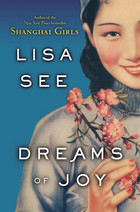 This review contains spoilers for Shanghai Girls. This is the sequel to that book. This review contains spoilers for Shanghai Girls. This is the sequel to that book.
Joy has just learned that her entire life is a lie. Her parents aren’t really her birth parents and she believe she’s caused her father’s suicide. Unable to bear the consequences and taught the ideals of Mao’s China, Joy flees to Shanghai, convinced she’ll find the life she’s always wanted in the arms of Communism. Pearl, her mother in love if not in body, immediately goes after her daughter. She knows how bad China is, while Joy has no idea. Getting into China is easy; getting out of China is very difficult. As Pearl searches for Joy and Joy searches for meaning, both women end up learning more about who they are and what they treasure most in their lives.
Lisa See’s books have always been great reads, full of the detail and culture of the times they portray and rich with realistic characters. This book is no exception. While we saw the collapse of Shanghai in the last book, in this one we’re witness to how it has changed. I went through a minor obsession with books about China a while ago and this book was a return to a culture that still fascinates me even as it is horrifying. In this book, we’re in the midst of the ‘Great Leap Forward’. American teenager Joy has to accept that the ideals she’d been taught about life in China were wrong, and that life could be immensely harder for her than it had ever been previously. She also has to learn – the hard way – that she isn’t always right, and that stubbornness can lead to huge mistakes.
Meanwhile, it’s Pearl who can see how much the China of her youth has changed, how some things are the same but others are incredibly different. I found all of this fascinating and particularly well done, evoking memories from reading Shanghai Girls a while ago while providing a new, refreshing storyline that breathed different life into characters I already knew. Only May is on the edge of this book; it’s about mother and daughter, here, not about sisters, and the difficulty of parenthood on both sides of the equation.
If you’ve enjoyed other books by Lisa See, you will definitely enjoy this one too. I wouldn’t recommend reading it prior to Shanghai Girls, but it does fill in the gaps reasonably well so I don’t think a newcomer would be lost. Dreams of Joy definitely earns its spot next to her others as a moving story with well-developed characters and thoughtful questions set in a fascinating country.
All book links to external sites are affiliate links. I received this book for free for review from LibraryThing Early Reviewers.
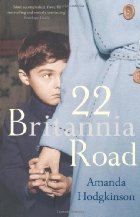 World War II had a massive effect on lives across the world; Silvana and Janusz, living in war zones, have been affected more than most. Separated at the very beginning of the war as a young married couple with a small son, Janusz immediately joins the army while Silvana is left in Warsaw with their son Aurek. Soon forced to flee the city, Silvana and Aurek hide in the woods, while Janusz eventually finds himself in England as a veteran. Six years after their separation, they’re reunited and start family life in a small house in Ipswich, but both have changed, and both have damaging secrets they’re determined to keep. World War II had a massive effect on lives across the world; Silvana and Janusz, living in war zones, have been affected more than most. Separated at the very beginning of the war as a young married couple with a small son, Janusz immediately joins the army while Silvana is left in Warsaw with their son Aurek. Soon forced to flee the city, Silvana and Aurek hide in the woods, while Janusz eventually finds himself in England as a veteran. Six years after their separation, they’re reunited and start family life in a small house in Ipswich, but both have changed, and both have damaging secrets they’re determined to keep.
22 Britannia Road has received a great deal of acclaim on its release, so I was expecting quite a lot from this novel. World War II stories are everywhere these days, so it does take something special or a different perspective to help a book stand out from the crowd. With its post-war story told simultaneously with the immediate history leading up to the war and afterwards, along with its Polish characters, the book easily accomplishes that much, providing a new family perspective on the hardships endured during the war.
Silvana and Janusz’s reunion is uneasy; they barely remember what one another look like. Everything in their lives has changed. For Aurek, things are even more difficult and confusing, as he simply doesn’t remember his father and just wants to go live with his mother in the woods again. He has no concept of society, much less that required by the strict British school system and, partly, his father, who wants a son to be proud of.
One of the most interesting aspects of the book was actually Aurek’s reaction to other children, school, his father, and so on; it demonstrates the adaptability of children as much as it shows how much adults struggle to accept the same tasks. Oddly, in this way it reminded me of Room by Emma Donoghue, even though the subject matters diverge wildly.
And then, of course, there are the secrets, which have the potential to destroy the family’s newly forged life. Complicating things are people who thrust themselves into the Nowaks’ newly forged lives, like Aurek’s first friend Peter and his elegant father. Silvana is a character that is difficult to understand, with her complicated past, while I think Janusz longs for the life that will be familiar to most readers; a promotion, a son to be proud of, a wife who loves him, a shiny new car. The opening scenes of the book, when he paints his house worrying what his stranger wife and child will appreciate, while reminiscing about the woman he’s fallen in love with in France, were actually some of the most poignant for me in the entire book.
While, for me, 22 Britannia Road wasn’t earth shattering, it was a book that certainly shed another light on life during and after World War II, particularly for immigrants. And it’s a worthy look into the minds of both adults and children who have to deal with the nearly unimaginable happening thanks to the horrors of war. Recommended.
All book links to external sites are affiliate links. I received this book for free from Amazon Vine.
 Mary Russell stumbles upon the great Sherlock Holmes while rambling in the countryside. He’s retired – supposedly – to take up beekeeping, but her young mind is agile and ready to be challenged. After she proves herself, he takes her on as an apprentice, and the two begin to solve crimes together. Mary Russell stumbles upon the great Sherlock Holmes while rambling in the countryside. He’s retired – supposedly – to take up beekeeping, but her young mind is agile and ready to be challenged. After she proves herself, he takes her on as an apprentice, and the two begin to solve crimes together.
The central premise of this book is the idea that Sherlock Holmes was a real person, and the books and stories featuring him were elaborate fictionalizations of his real-life crime-solving. In his older years, Holmes still solves crimes, but does his best to stay out of the public eye. Still, Mary knows who he is, and as the central narrator, is determined to keep him within her sites. Soon we discover that her intellect is quite up to his as her own skills develop over the course of the novel.
Roughly the first half of this book is set out in episodes. Mary and Holmes set out to solve a couple of crimes together as he begins to train her. After she’s accepted as a fully fledged apprentice, the book gains more speed as the crimes get somewhat more desperate. Naturally, our two central characters also begin to develop a relationship with one another, both a respect for each other’s minds and a whole-hearted affection for each other’s character.
I was surprised by how much I genuinely enjoyed this book. Mysteries in the style of Sherlock Holmes frustrate me more often than not; because so much of the conclusions are derived from information that is never presented to the reader, it can be easy to get annoyed that it’s impossible to guess the conclusion. With this, though, I seem to have developed the ability to ignore that and simply follow the two characters along their journey. I suspect this is because the mysteries, while important to the plot, are not all that holds the book together. The narrative is very well done and the relationships between the characters develop naturally and realistically. About halfway through, I realized I just didn’t want to put the book down; I wanted to continue and find out what happened next.
I’m a bit late to this series, and now there are a number of installments that I’ll need to catch up on. I’ve known of it for quite some time, but never really had the impulse to begin until I was offered the latest book for review. So I’ll be skipping ahead to the last book, but believe me when I say I’ll also catch up on the ones I’ve missed. The Beekeeper’s Apprentice is a great start to a series I’m very happy to have finally discovered.
All book links to external sites are affiliate links. I purchased this book.
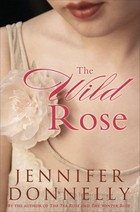 This book follows directly on from The Tea Rose and The Winter Rose. As a result, this review will have spoilers for both. This book follows directly on from The Tea Rose and The Winter Rose. As a result, this review will have spoilers for both.
Though Seamie Finnegan and Willa Alden love each other, they were driven apart by an accident resulting in the loss of Willa’s leg. Now, unable to satisfy her greatest passion of climbing, Willa spends most of her time finding other ways to endanger herself and live on the edge. She spends her time photographing mountains in Tibet, following wars, and getting captured. Seamie, meanwhile, can’t forget Willa or cease worrying about her, no matter how hard he tries; even burying his sorrows in the pursuit of other women can’t seem to erase his memory of her.
Surrounding the couple are a cast familiar to anyone who has read any of the Rose trilogy – Fiona and Joe, who are getting older now, their brigade of children, India and Sid, and other more minor characters from the earlier books. It’s always nice to see familiar characters again; Seamie himself has been in all of the books, while Willa featured prominently in the last one. Part of the appeal of such a series is definitely getting stuck in with characters to care about.
Unfortunately, that was one of the flaws in this book for me; I couldn’t like the characters that Willa and Seamie became. Willa is driven to do truly ridiculous deeds simply to escape the fact that she’s lost her leg, to defy death just because she can – and because she doesn’t care if it takes her. Despite her seemingly courageous behavior, she complained. Often. Seamie, meanwhile, treats one character in particular very badly, and makes promises that he simply can’t keep. I couldn’t like characters that could act like this, no matter how strong their love is supposed to be.
As with all of the books, there are several other plots going on. We are deep in the midst of World War I for much of the book, with an associated German espionage plot taking up a lot of the book’s time. That had an unexpected ending, one which actually made me consider reading the book over again to see if I could pick up the pieces. Fiona and Joe’s children are growing up, with their oldest girl taking on a political mind of her own and one of their sons off to fight in the war. And India does what she does best, doctoring the soldiers who return even as she worries about the ones that she herself loves.
The book held my attention, though, and does deal with some more complicated issues. The effect of front line warfare on a person’s mind, for instance, is one that is surprisingly hard hitting towards the end of the book. Infidelity plagues several characters, as does blackmail and the difficult circumstances people find themselves in during wartime.
Personally, though, I felt like this particular installment suffered more from the same flaws as the first one, with characters that are simply too large for life and are difficult to believe in. Too many famous people in one family, too many lucky escapes; even the share of tragedy the book has doesn’t quite outweigh this for me. It’s a good read, but this series for me just doesn’t match Donnelly’s standalone works. Still, I’d recommend the entire trilogy to those who seek out well-written historical family sagas. The Wild Rose is a good read – just don’t expect it to be A Northern Light.
All book links to external sites are affiliate links. I received this book for free for review from Netgalley.
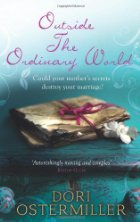 As a child, Sylvia idolizes her beautiful, poised mother, who presents precisely the perfect image to the world – a stereotypically ideal wife and mother. But inside, Sylvia’s mother is anything but, as she’s been carrying on an adulterous affair and involving her children for years. As an adult, Sylvia has a husband and family of her own. She’s grown frustrated with her life and family, trapped in a seeming prison of her own making, until she meets Tai, the father of one of her art students. She’s irresistibly drawn to him. Can she avoid repeating her mother’s mistakes? As a child, Sylvia idolizes her beautiful, poised mother, who presents precisely the perfect image to the world – a stereotypically ideal wife and mother. But inside, Sylvia’s mother is anything but, as she’s been carrying on an adulterous affair and involving her children for years. As an adult, Sylvia has a husband and family of her own. She’s grown frustrated with her life and family, trapped in a seeming prison of her own making, until she meets Tai, the father of one of her art students. She’s irresistibly drawn to him. Can she avoid repeating her mother’s mistakes?
This book is told through two different time periods, both through Sylvia’s eyes; her childhood while she watches her mother slowly unravel her family’s life, and her adulthood where she is finally tempted by a man who isn’t her husband. This was an effective technique for telling the story, as each timeline has its own secrets that aren’t revealed until later in the novel. Both the narrative voices are (obviously) similar but never presented any problems in differentiating themselves to me.
What Sylvia slowly begins to realize is that her adult life has begun to parallel her mother’s, although it takes her a lot longer than it does for the reader. She hasn’t defined herself quite enough for her tastes. She’s an art teacher, but she feels as though she’s lost her own art. Her husband has buried himself in their new house, a project that’s been ongoing for years. Her younger child still needs her, but her older daughter is starting to grow apart from her, and her responsibilities are overwhelming her. She’s not sure where she is in her life, and in steps Tai, a chance to define herself apart from her family, a man who wants to give her attention just as she is. Even as she does that, she’s still not defining herself, merely repeating her mother’s footsteps.
In this sense, the novel is really about the quest of a woman reaching middle age to create her own identity. As readers we can see precisely why she is captivated by Tai, although he remains a more mysterious character. She needs to feel loved again, just for who she is without any of the trappings of her ordinary life.
The novel also carefully explores the damage that infidelity can wreak on a marriage and family, the slow but inexorable ways that couples who love one another deeply are led into adultery, and the difficulties of trying to keep together a marriage despite those faults. Would you stay with someone who had cheated so on you? Even Tai’s son is a victim, though neither Sylvia nor Tai appear to consider those consequences until it’s too late.
This thoughtful novel is an excellent choice for anyone who enjoys fiction about the inner workings of women’s lives and the difficulties wrought on relationships by infidelity. Outside the Ordinary World is a read that will linger in your mind long after you’ve turned the final page.
All book links to external sites are affiliate links. I received this book for free for review.
 In 2044, the US has all but collapsed. Most people, including an impoverished boy called Wade Watts, spend almost all of their time in OASIS, a virtual reality game created by James Halliday. When Halliday dies, he doesn’t create a will, but leaves everything he owns to the finder of an Easter egg (a secret within a game) he’s cleverly hidden within OASIS. The secret is hidden within 80’s references and challenges. Naturally, this gives rise instantly to hunters called “gunters” seeking the Egg. Wade, under his pseudonym Parzival, is the first to find one of the key components of the secret, but finds his life and those of his fellow questers are in very real danger from the “Sixers”, a corporate group determined to seize OASIS for themselves. In 2044, the US has all but collapsed. Most people, including an impoverished boy called Wade Watts, spend almost all of their time in OASIS, a virtual reality game created by James Halliday. When Halliday dies, he doesn’t create a will, but leaves everything he owns to the finder of an Easter egg (a secret within a game) he’s cleverly hidden within OASIS. The secret is hidden within 80’s references and challenges. Naturally, this gives rise instantly to hunters called “gunters” seeking the Egg. Wade, under his pseudonym Parzival, is the first to find one of the key components of the secret, but finds his life and those of his fellow questers are in very real danger from the “Sixers”, a corporate group determined to seize OASIS for themselves.
I loved this book. Absolutely loved every minute of it. Cline does not miss a beat in this phenomenal dystopia, not from the storyline to the characters to the writing itself. It’s the perfect book for gamers, in particular those who remember the old days fondly, and for those who adore adventure, a touch of romance, and thinking about that essential question – “What if?” What if the recession continues? What if virtual worlds take on the real one? What is reality?
I’m not quite old enough to have witnessed 80’s gaming in person, but I’ve been a gamer since I was only 4 and have been surrounded by the same references Cline uses throughout my life. The book is littered with gaming trivia, but I don’t think it would be difficult for a non-gamer to understand, as Wade is an excellent narrator and elucidates every small point, somehow without detracting from the narrative, as the book continues.
And what a narrative it is as Wade takes us on his own personal adventure. It may be a mix of real and virtual, but this is a story to be swept up in. The narrative follows Wade’s journey to find the three keys and gates in hopes that either he or one of the more honest gunters will find the Easter egg before the corporations or the government can do so. OASIS is free and an essential resource for the poor, who use it for easy access to education and an escape from their generally dim, impoverished lives. Wade’s journey is a true adventure in the best sense of the world as he conquers challenges he could barely have imagined, stretching brain and virtual limits to attain his objective. He grows not only physically and mentally but personally, stretching into the persona of Parzival and escaping his past.
Also, as a medievalist, can I tell you how awesome the name choice of “Parzival” is for this character? Arthurian legends mixed with video games! Parzival was a knight who went on a quest for the Holy Grail. How fitting – the Easter Egg is very much a modern Holy Grail.
The supporting characters are equally wonderful, and it’s hard to describe them without spoiling the story. Given that all the characters sport avatars that do not have to match their physical appearances, you can guess what might happen – I was absolutely delighted with the way that Cline handled this aspect of the story and found it completely fitting for our world, subverting expectations in the best ways. Imperfections can be beautiful, too.
As you can probably tell, I adored this book to pieces. It’s the perfect read for anyone who loves gaming, anyone who loves adventure, and anyone who simply loves an exceptionally good story. It’s thoughtful, with a lot to say about our culture, without ever losing its narrative appeal. This is unquestionably a top read of the year for me and I can’t recommend Ready Player One enough.
As such, I’m delighted to say I have one copy to give away to a reader in the US. Just leave a comment to be entered to win – the competition will close one week from today, on August 23rd at 12 noon EST.
All book links to external sites are affiliate links. I received this book for free for review.
|
|


Recent Comments