|
|
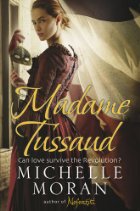 On the eve of the French Revolution in Paris, Marie Grosholtz runs the Salon de Cire with her uncle Curtius, sculpting wax figures of prominent public figures and placing them in realistic settings for public viewings. Their wax figures are so famous that even the royal family come to pay a visit and many nobles request sculptures of themselves. But revolutionary talk is set to change everything and Marie, as new tutor to the king’s sister at Versailles, is in a position to hear everything and witness the fall of the monarchy from the inside. When the revolution begins to threaten her life, Marie must decide between staying in Paris with her family or fleeing to England with her lover, Henri. On the eve of the French Revolution in Paris, Marie Grosholtz runs the Salon de Cire with her uncle Curtius, sculpting wax figures of prominent public figures and placing them in realistic settings for public viewings. Their wax figures are so famous that even the royal family come to pay a visit and many nobles request sculptures of themselves. But revolutionary talk is set to change everything and Marie, as new tutor to the king’s sister at Versailles, is in a position to hear everything and witness the fall of the monarchy from the inside. When the revolution begins to threaten her life, Marie must decide between staying in Paris with her family or fleeing to England with her lover, Henri.
I have been really looking forward to this book for months. I’ve loved all of Michelle Moran’s books set in Egypt and Rome and was thrilled that she’d chosen a time period more to my overall tastes this time. I’ve always been curious about Madame Tussaud and this just seemed like the perfect way to learn a little bit more about her. It would have been easy to be disappointed given the high level of my expectations, but I loved this book just as much as Moran’s previous books. It was immensely satisfying in every way. In fact, the only thing I didn’t like was the cover quote, ‘Can Love Survive the Revolution?’, which just didn’t convey what the book was about at all to me.
I loved the atmosphere in this book in particular. There is a constant sense of danger and suspense around Marie, even at the beginning, particularly due to the talk that occurs in her family’s salon. She can feel what’s going to happen, and as a reader, I know enough of the history of the French Revolution to sense that things aren’t going to go well. As she gets close to members of the royal family, Marie’s outlook on events starts to shift, and she starts to understand the depth of difference between the actual lives of royalty and the people’s perception of them. I particularly enjoyed the scenes set in Versailles – both because I’ve been there and because I recently learned how disgusting the palace used to be from watching a recent TV show, Filthy Cities on the BBC. These added a very welcome extra dimension to my reading and Marie’s Paris.
I also, predictably, loved Marie’s character. As you’ll undoubtedly have noticed, I am a very character-driven reader, and I was thrilled to have one I could really appreciate in Marie. She’s practical, with a keen eye for money and a determination to do her best, but she also has a romantic, sympathetic heart that does emerge on occasion. Her mission in life isn’t to get married and have babies, although she wouldn’t mind doing that as well as her job; she’s about as career oriented as an eighteenth century woman could get. And, we know from the beginning, she succeeded hugely and her name now graces wax museums the world over. I think she would have been pleased.
If you’re a historical fiction fan, I think you’ll love Madame Tussaud. It has the perfect mix of historical detail, atmosphere, story, and great characters. Highly recommended.
All book links to external sites are affiliate links. I purchased this book.
 Hadley is on the edge of spinsterhood with few prospects when she meets young Ernest Hemingway in Chicago at a friend’s party. She is instantly smitten despite warnings from close friends about his unreliability and winds up marrying him with no regrets, vowing to support his writing at the expense of all else. Newly married Hadley and Ernest head to Paris, where he can hobnob with the most exciting writers of his day, but where Hadley struggles to fit in with socialites and snobs. As the couple travel the world, the tensions of society, of Hadley’s desire for family life, and Ernest’s burgeoning fame and importance start to drive a wedge between them, leaving Hadley to be forever known as the Paris wife. Hadley is on the edge of spinsterhood with few prospects when she meets young Ernest Hemingway in Chicago at a friend’s party. She is instantly smitten despite warnings from close friends about his unreliability and winds up marrying him with no regrets, vowing to support his writing at the expense of all else. Newly married Hadley and Ernest head to Paris, where he can hobnob with the most exciting writers of his day, but where Hadley struggles to fit in with socialites and snobs. As the couple travel the world, the tensions of society, of Hadley’s desire for family life, and Ernest’s burgeoning fame and importance start to drive a wedge between them, leaving Hadley to be forever known as the Paris wife.
I surprised myself by how much I enjoyed this book. I was predisposed to like it, shallow as this is, by the beautiful condition it arrived to me as an ARC complete with two picture postcards:

They really helped when envisioning the characters and helped me remember that these people really lived. I have only ever read The Old Man and the Sea by Hemingway, so didn’t really have any preconceived notions about him or his life other than I wasn’t his biggest fan. This book made me incredibly interested in his life and gave me a new historical figure to fixate on in the person of his wife Hadley.
To me this novel illustrated very clearly one of the peculiarities of the writer’s life at the time. Hadley and Ernest are throughout almost constantly struggling for money, pinching pennies and living in unpleasant places, but they are also free to do more or less as they wish. Ernest writes for newspapers and is sent off on excursions, but has days free to work on his fiction and Hadley of course does not work, first keeping house and then taking care of their baby. It’s hard to imagine living such a life as these early twentieth century authors, just breathing in relaxation or going off to party after a few hours’ writing work. Things ease as Hemingway gets more famous, but Hadley is mainly there at the start, when everything is uncertain, when he needs her as an anchor.
The novel also very clearly illustrated how the cracks can grow in a marriage that seems perfectly happy to others. Little disagreements become big disagreements and the magic is lost because neither half works at maintaining their relationship. Even when one tries, both are needed, and there is a clear point of no return here for them. It’s easy to feel for Hadley, who is often thrust in an uncomfortable world and loses friends due to her husband’s moods, and to hope she gets something a bit better in the end. Hemingway is mercurial, needing Hadley’s reassurance, but almost from the start we can see that his success and his selfishness will replace her in the end.
While I never had much interest in the Hemingways before, this work of historical fiction has made me very curious and provided an exceptional story besides of marriage, love, and the writer’s life in the early twentieth century. Highly recommended.
I am an Amazon Associate. I received this book for free for review from Amazon Vine.
 Nina Revskaya, now an old woman, was once a prima ballerina in Moscow at the height of the Soviet Union. Her life revolved around ballet even after she fled the country, when she first danced and then taught others. Nina is now wheelchair bound and finds it incredibly difficult to face her past; still, she decides to auction off all her jewelry, including an amber set that she says belonged to her late husband’s family. Grigory, a professor of Russian literature, has devoted his life to the study of her husband’s work, and has somehow donated the missing piece of the amber set, a gorgeous necklace, to the auction. Will Nina ever be able to face her past and explore the connection that she and Grigory share? Nina Revskaya, now an old woman, was once a prima ballerina in Moscow at the height of the Soviet Union. Her life revolved around ballet even after she fled the country, when she first danced and then taught others. Nina is now wheelchair bound and finds it incredibly difficult to face her past; still, she decides to auction off all her jewelry, including an amber set that she says belonged to her late husband’s family. Grigory, a professor of Russian literature, has devoted his life to the study of her husband’s work, and has somehow donated the missing piece of the amber set, a gorgeous necklace, to the auction. Will Nina ever be able to face her past and explore the connection that she and Grigory share?
I went into Russian Winter with a mind full of positive reviews; I have heard many amazing things about this book, so it had a lot to live up to. Moreover, I have been in love with Russia for over 10 years now, which means I’m automatically excited whenever a book comes my way set there. Perhaps unsurprisingly, then, this book did live up to all of my expectations, because I just loved it and I was completely absorbed in it. I found myself thinking about it when I wasn’t reading and completely caught up in Kalotay’s words when I was. This is a book that is certainly worth your time.
One of my favorite aspects of the book was the way that Kalotay delved deep into Soviet society to examine just how harmful it was, even to its biggest stars. Nina and many of her friends are prima ballerinas, but their families are far from immune. Her husband, worse, is a writer, and they are constantly walking on eggshells. The threat is always there. At one point Nina and her two friends accidentally venture into west Berlin and are shocked at what they see and the freedoms others experience, which is heartbreaking, but they return because of the threats.
I also really loved the way everything was carefully woven together. We are transported between roughly four stories, three of which are in the present and just one in the past, but each is distinctive and adds substantially to the narrative. I loved modern-day Drew and Grigory’s storylines and their own very twenty-first century battles, illustrating perfectly that even though the world around us has changed, people really haven’t. Grief and longing are still very real emotions and I cared for each and every one of the characters in the book.
Finally, to wrap everything up, there is even a little mystery involved, because it takes a substantial proportion of the book to figure out what actually happened to Nina’s life. We know her husband was killed and she fled the Soviet Union from the start of the book, but the details about the jewelry and her connection to Grigory – why he has the necklace – are only slowly revealed. Tied in with the incredibly evocative writing set in two different winters, this storyline kept me glued to the page and genuinely curious about the lives herein.
Russian Winter is an incredible book, beautifully written with a gripping yet poignant storyline. Highly recommended.
I am an Amazon Associate. I received this book for free for review from the publisher.
 Trevor Stratton finds a peculiar box in his office one day; naturally, he can hardly resist opening it, though he has no idea where it has come from. Inside he finds the memorabilia of the life of Louise Brunet, a Frenchwoman who lived much of her life stifled by a boring marriage and the staid affairs of a housewife. But Louise is innately passionate, having loved her young cousin, a soldier killed in World War I, and later developing illicit feelings for her neighbor. As Trevor unravels Louise’s story, he finds that one of his own is just beginning. Trevor Stratton finds a peculiar box in his office one day; naturally, he can hardly resist opening it, though he has no idea where it has come from. Inside he finds the memorabilia of the life of Louise Brunet, a Frenchwoman who lived much of her life stifled by a boring marriage and the staid affairs of a housewife. But Louise is innately passionate, having loved her young cousin, a soldier killed in World War I, and later developing illicit feelings for her neighbor. As Trevor unravels Louise’s story, he finds that one of his own is just beginning.
This was quite an odd book to start out with. Much of the beginning is actually written in second person and I can’t recall the last time I read a book that had such a strong component written like that. I must confess it threw me and I wasn’t sure I would like it, simply because it was so confusing. I wanted to have concrete facts, not have this peculiar vagueness. Lucky for me, and for the book, it all settles after the first quarter of the book or so. I figured out who all of the characters were and understood what the book was trying to do. After that, I enjoyed it a lot more. The book is composed of several different types of writing, between normal prose, letters, and the second person explorations of what’s inside the box.
One of my very favourite aspects of this book was the way that Trevor crafts Louise’s story from her memorabilia. I don’t know about you, but I do sometimes think about what I keep and what it says about me; this story is that writ large, an attempt to derive a woman’s life simply from the objects and letters she kept over the course of her life. There are pictures of all of the objects and I had a lot of fun puzzling over the photographs and examining each object in detail. It’s certainly fun for those of us who hoard to think that someday, someone might make something of all of those little treasures.
Another very appealing part of the book is Louise’s story itself. It’s impossible not to feel for her, even in contemplating adultery, because she is a vibrant person. I felt as though she’d been cheated by life, robbed of her love, and then had much of her spirit taken out of her. But she still leaps off the page with her strong character. I had the feeling that if life had treated her a little differently, she could have been a wonderful woman.
13, Rue Therese is an imaginative look back at the life of a Frenchwoman who survived much of nineteenth century history. Though confusing at first, it swiftly resolves and becomes a pleasant story of discovery and passion. Recommended.
I am an Amazon Associate. I received this book for free for review from Amazon Vine.
 India Selwyn Jones is a female doctor who wants to make a real change in the world. She dreams of opening up her own clinic in Whitechapel, a very poor area of London, and helping women and children have healthier, longer lives no matter their economic status. But her fiance would see her dreams stifled and aims to make her the perfect political wife, simply an asset to him as he rises to the top of British politics. It doesn’t take many ventures into Whitechapel before India meets Sid Malone, legendary bad guy who masterminds gangs of thieves, opium dens, and brothels, making a fortune on the backs of others. India doesn’t know that Sid is actually Charlie Finnegan, brother of Fiona Finnegan from The Tea Rose, but she quickly realizes that he is a gangster with a heart, and they have a cause in common – helping the poor of London to live better lives. India Selwyn Jones is a female doctor who wants to make a real change in the world. She dreams of opening up her own clinic in Whitechapel, a very poor area of London, and helping women and children have healthier, longer lives no matter their economic status. But her fiance would see her dreams stifled and aims to make her the perfect political wife, simply an asset to him as he rises to the top of British politics. It doesn’t take many ventures into Whitechapel before India meets Sid Malone, legendary bad guy who masterminds gangs of thieves, opium dens, and brothels, making a fortune on the backs of others. India doesn’t know that Sid is actually Charlie Finnegan, brother of Fiona Finnegan from The Tea Rose, but she quickly realizes that he is a gangster with a heart, and they have a cause in common – helping the poor of London to live better lives.
After reading The Tea Rose, I didn’t rush to open this, its sequel, simply because I wasn’t really that crazy about it. I knew Jennifer Donnelly could do better, though, and with some urging from my mom, who adored both books, I finally settled down to read it. While it still isn’t as polished as Donnelly’s later books, I found The Winter Rose to be a superior book in almost every way, with more realistic characters, a more intense love story, and another eye-opening peek into the often dreary world of Victorian London. There was even a trip into Africa, further widening the scope of the story, and all adding up to one insanely compelling book.
I loved that the central focus here was more on improving others’ lives, rather than enriching the characters’ own. India is wealthy, but she doesn’t act like a wealthy heiress of the time. She’s far more interested in prenatal care, saving lives, and eventually doing what she can just to make people happier. She eschews a comfortable position taking care of wealthy women to focus on those who really need her, and determines to make their lives better without wringing every last penny from them. Sid is also wealthy, but on the dark side of wealth; he knows what it’s like to be poor and does indeed do his part to shelter others from harm. He is a good man who sometimes does bad things. Though they are both superior to their peers in many ways, they never achieve the surreal perfection that both Fiona and Joe did in The Tea Rose; they remain firmly true to life and I was glad to follow them on their adventures. Fiona and Joe also feature in this book, though not the main characters; even with them Donnelly has dialled down the perfection and made them both more human and fallible while still retaining their core characters.
The scope of the novel is immense but the story doesn’t drag; it keeps moving and skips some of the parts which could have become boring. In fact, I read the last 300 pages in one sitting, staying up far later than normal to actually finish the book. I read it in about three days; its predecessor took me over a week. That should tell you how much more I enjoyed this book! I particularly loved the parts in Africa at the end; they were so evocative and suspenseful that I kept turning the pages well past when I should have stopped.
The Winter Rose is a fabulous, sprawling novel that takes into account not only characters’ lives and loves but the wide-ranging social situation of the poor and the wealthy. Highly recommended, and now I can’t wait to read The Wild Rose in August.
I am an Amazon Associate. I purchased this book.
 The marriage of Monsieur Montespan and his wife, Francoise de Mortemart, was an accident, but at first a fortuitous one. Montespan’s brother, Francoise’s fiance, was killed in a duel, leaving him free to claim the beautiful lady. They begin their marriage deeply in love with one another and have children together. Francoise, however, starts to chafe at their poor lifestyle and the couple becomes mired in debt. To make up for it, Montespan heads off to a series of wars, while his wife enters the court, taking on the name “Athenais”. She is so beautiful, charming, and accomplished that she attracts the eye of legendary Louis XIV. What is a loving husband to do? The marriage of Monsieur Montespan and his wife, Francoise de Mortemart, was an accident, but at first a fortuitous one. Montespan’s brother, Francoise’s fiance, was killed in a duel, leaving him free to claim the beautiful lady. They begin their marriage deeply in love with one another and have children together. Francoise, however, starts to chafe at their poor lifestyle and the couple becomes mired in debt. To make up for it, Montespan heads off to a series of wars, while his wife enters the court, taking on the name “Athenais”. She is so beautiful, charming, and accomplished that she attracts the eye of legendary Louis XIV. What is a loving husband to do?
I’ve only recently become interested in the reign of Louis XIV; in high school, I had a history teacher who was fascinated by him, which led to a bit of an overdose. After I visited Versailles last October, though, I couldn’t help but be intrigued by the man who had built the palace, the “Sun King”. As a result, I snapped this book up for review and have really been looking forward to reading it. I was particularly attracted by the fact that it was written by a Frenchman; I’ve read plenty of Americans and Brits writing fiction about French history but rarely a French novel in translation. I was not disappointed, especially given that the book is written in a much grimmer style than most historical fiction I’ve read.
By this I mean Teule doesn’t miss portraying history as it really was, at least as far as a modern novel can, including all the excesses that to us seem rather vile; nobles stuffing their rotting teeth with butter, the horrors of the duel, even the fact that the king visited with people while on his chamber pot, which I’ve heard before from multiple sources. He’s also quite happy to describe the pleasures that Montespan took with his wife, but given Teule is French, this is no surprise; even when I went to Paris I could tell things were a lot freer in this respect. This is no romantic, sanitized version of history. I questioned at times whether things were that disgusting, but given what I’ve actually learned about the past, it wouldn’t surprise me to learn that it was all true.
The rest of the book is very accurate, at least as far as I can check. It seems excessive, but yes, Montespan did actually protest the fact that his wife was the King’s mistress, reject his offerings, and set up mourning for their love while she was still alive. Even Athenais’s new hairstyle is as described. It’s sensational, but the best kind of sensational because it actually happened. I felt incredibly sorry for the poor man but at the same time wanted to give him a push into getting over his wife. I’ve since learned that poor Montespan has been ridiculed throughout history for refusing to sit back and let the King take his wife while he enjoyed the spoils of it, so I’m glad Teule has at least done his part to turn this around and show the court as a darker and more sinful place than normally portrayed.
If you’re interested in historical fiction that portrays a version of Louis XIV’s court without thick rose-colored glasses on, Monsieur Montespan is an excellent choice. Moreover, it gives us a perspective outside the glittering world of court and Versailles, which I for one quite appreciated. Recommended.
I am an Amazon Associate. I received this book for free for review.
 After her husband leaves her for a professional woman that can have his children, Leonora Manin decides to seek her heritage in Venice. Her mother fell in love with a Venetian, but wound up raising Leonora alone in London, separating her from an essential part of her heritage. Leonora arrives in Venice to learn about Corradino, one of her ancestors, and to find herself again in the city of her birth. Her story is interwoven with that of Corradino, her famous ancestor who was at the time the most skilled glassblower in the world. After her husband leaves her for a professional woman that can have his children, Leonora Manin decides to seek her heritage in Venice. Her mother fell in love with a Venetian, but wound up raising Leonora alone in London, separating her from an essential part of her heritage. Leonora arrives in Venice to learn about Corradino, one of her ancestors, and to find herself again in the city of her birth. Her story is interwoven with that of Corradino, her famous ancestor who was at the time the most skilled glassblower in the world.
I remember a lot of other bloggers reviewing this book when it came out a good while ago. It seemed to be good, but not spectacular – that was enough for me to acquire it on my Kindle when it was on offer for just £1. I hoped to find something a little more than others did, but in the end I felt the same, just liking the story rather than really getting into it.
The first thing that turned me off from the book was the style of the writing. It was okay, but I often felt like it was trying just a bit too hard to inject the prose with beauty. It felt flat and stilted instead, with descriptions of Venice dragging on, and I really disliked the way the perspective was sometimes taken away from the main characters and written from an observer’s point of view. The book also switched around haphazardly between characters, sometimes having one new perspective for a single chapter and nowhere else in the book, which threw me off when it felt like the first half of the book was simply Leonora and Corradino. Why introduce other narrators when it’s already hard enough to connect with the two established?
The romance also happened much too quickly. They’d hardly met by the time Leonora decided she was permanently in love, and to be honest I never really connected with either of them. I did enjoy Leonora’s perspective, especially in the beginning, and felt for her, but just could not understand her attraction nor her reckless disregard for certain consequences. And I say this as a happy reader of romance novels, because I adore a good love story – unfortunately, this isn’t one. Everything was written to be a big deal, with lots of excitement and feeling and drama, but I couldn’t believe in it at all.
To top that all off, I didn’t even really like the historical parts, usually my favorites. Corradino was too cocky for my tastes, much too sure of himself, and I didn’t like what happened with the plot in that section. It just didn’t tie together as well as I would have liked; moreover, I never really “got” why Leonora felt more of a connection to Corradino than her own father, who also blew glass. Was it just because he was more famous?
I sound very critical here, but I don’t mean to be – I did actually enjoy reading The Glassblower of Murano. It passed the time well and I found it good for a casual read. But if you’re looking for a proper, in depth work of historical fiction (or even a fun switch between history and the present) I’d recommend you look elsewhere.
I am an Amazon Associate. I purchased this book.
 Margaret’s life has been fraught with about as many difficulties as possible. Born of Anglo-Saxon and Hungarian heritage, she is a princess, and her brother Edgar the rightful heir to the English throne. But her father is dead, William the Conqueror has seized the throne, and she and her family find themselves shipwrecked in Scotland. To secure King Malcolm’s support for her brother’s claim, Margaret has to marry him, though all she wants from life is to be a nun. Eva is Scottish royalty of another sort, albeit illegitimate, a bard sent to Malcolm’s court from Moray by his rival Queen Gruadhe, better known as Lady Macbeth. Ostensibly a hostage, Eva is really intended as a spy, but she finds herself torn between two loyalties as she befriends the new queen. Margaret’s life has been fraught with about as many difficulties as possible. Born of Anglo-Saxon and Hungarian heritage, she is a princess, and her brother Edgar the rightful heir to the English throne. But her father is dead, William the Conqueror has seized the throne, and she and her family find themselves shipwrecked in Scotland. To secure King Malcolm’s support for her brother’s claim, Margaret has to marry him, though all she wants from life is to be a nun. Eva is Scottish royalty of another sort, albeit illegitimate, a bard sent to Malcolm’s court from Moray by his rival Queen Gruadhe, better known as Lady Macbeth. Ostensibly a hostage, Eva is really intended as a spy, but she finds herself torn between two loyalties as she befriends the new queen.
I had vaguely heard of Queen Margaret before, but certainly not in as much detail as this book offers. My knowledge of history usually stops at the English border, though not really by choice, and that desire to know a little bit more is what inspired me to pick up this book. After finishing it, I am definitely eager to know more about Margaret and Malcolm and the entire situation in Scotland.
As historical novels go, I liked this one. It was quite an entertaining read; though at the times there was a bit too much info-dumping, overall I felt the story flowed smoothly and was just the right length for the book’s 330 pages. Margaret’s life had many facets between her spirituality, her love for the king and her children, and her desire to do her best for her people. King depicts her as a truly inspiring queen, much as I would imagine she’s been perceived throughout history, who is even willing to disobey her husband for what she believes in.
Eva, the main fictional character of the narrative, actually fits in very well. She’s the perfect lens through which we can see Margaret as she’s perceived, rather than as she perceives herself, especially as her friendship with the queen develops. The novel really starts to come into its own after they’ve met for this reason and depicts a heart-warming relationship between women as well as an interesting story. Eva is really the drive behind the plot, as it is she who is consistently torn between loyalties. She has to decide to what lengths she’ll go to obtain the information Queen Gruadh wants without feeling as though she’s betraying Margaret. Otherwise, not much really happens that’s out of the ordinary; Margaret marries, has children, prays, and gives to the poor. That’s about it.
With a few great characters, relationships, and its fair share of inner turmoil, Queen Hereafter is an excellent choice for historical fiction lovers who are craving a tale set in Scotland.
I am an Amazon Associate. I received this book for free for review.
 The fourth in the Lady Emily Ashton series starts with Colin and Emily married, at long last. They’re off on their honeymoon to Constantinople, intent on spending a lot of time together and only a little bit of time exploring the town. But fate doesn’t leave them alone, as a mystery falls literally into their laps on the train with a man, Sir Richard, falling unconscious at dinner. The plot thickens on arrival in Constantinople as a young English girl, Ceyden, is murdered in the harem, who turns out to be Sir Richard’s daughter. Colin and Emily are immediately off to solve the mystery and figure out who is behind the murder. The fourth in the Lady Emily Ashton series starts with Colin and Emily married, at long last. They’re off on their honeymoon to Constantinople, intent on spending a lot of time together and only a little bit of time exploring the town. But fate doesn’t leave them alone, as a mystery falls literally into their laps on the train with a man, Sir Richard, falling unconscious at dinner. The plot thickens on arrival in Constantinople as a young English girl, Ceyden, is murdered in the harem, who turns out to be Sir Richard’s daughter. Colin and Emily are immediately off to solve the mystery and figure out who is behind the murder.
I knew I couldn’t wait long to read this after finishing A Fatal Waltz and I was glad to immerse myself in Colin and Emily’s world once again. It’s such a thrill to see that they’re finally married; rather than prolonging the suspense, Alexander has just tied the knot and shown that, for once, novels aren’t always dependent on romantic tension. And I was glad the characters could finally release their proper Victorian strongholds – though this novel fades to black, it’s obvious that they enjoy being married a considerable amount!
Other than that, however, I found I wasn’t as interested in this particular mystery as I had been previously. Though the atmosphere is very interesting and well done, the plot itself wasn’t what drew me along. It didn’t help that Colin was actually away for what felt like half the book, leaving Emily to solve things on her own. In some ways, I felt this dragged the story on a bit longer than it would have otherwise. There also isn’t the continuing tension that sprinkled through the last installment, with the bullets left everywhere, which meant that the plot moved a little less quickly. Until the end, that is, when everything gets very exciting.
What did work, however, was the emotional intensity of the novel. As a Victorian lady, Emily is forced to deal with the reality of marriage and its consequences. She hardly knew her first husband and had very little time with him, so the risk of pregnancy was not particularly high. Here, though, it’s obvious that marital relations result in pregnancies and Emily is terrified. Her friend Ivy is pregnant and very delicate back in England, which is a huge weight on her mind, and it doesn’t help that she too could wind up pregnant at almost any time. I felt like this was an incredible insight into the mind of a true Victorian woman; so often books are still written as though babies are always wonderful miracles, particularly in more romantic genres, because that’s the reality of today, when the vast majority of women and babies in western countries survive. What’s so often ignored is that children were far more likely to lead to death a hundred years ago, both for their mothers and themselves. This book presents Emily’s fear in a very realistic way that was easy to relate to.
Tears of Pearl was another excellent addition to the Lady Emily Ashton series. Possibly not enough to persuade those who weren’t enamored with the first or second to continue, but it worked very well for this fan of the series. It won’t be long until I continue with the next!
I am an Amazon Associate. I purchased this book.
 Laura Grey is a plant in Andre Jaouen’s household, acting as a governess to his children but sent by the Pink Carnation to find out more about his allegiances. Laura, originally a Frenchwoman, does have the experience to teach the children at the same time, since she’s spent half her 32 years as a governess. The surprise is that Jaouen has much more in common with Laura’s side than anyone initially thought, and the challenge will be to keep everyone safe as certain members of the French government begin to suspect him. In the modern world, Eloise and Colin head to Paris to meet his mother, but her husband (who is actually of Colin’s generation) has some nasty plans in store to prove his position as the new head of the family. Laura Grey is a plant in Andre Jaouen’s household, acting as a governess to his children but sent by the Pink Carnation to find out more about his allegiances. Laura, originally a Frenchwoman, does have the experience to teach the children at the same time, since she’s spent half her 32 years as a governess. The surprise is that Jaouen has much more in common with Laura’s side than anyone initially thought, and the challenge will be to keep everyone safe as certain members of the French government begin to suspect him. In the modern world, Eloise and Colin head to Paris to meet his mother, but her husband (who is actually of Colin’s generation) has some nasty plans in store to prove his position as the new head of the family.
After the light-hearted fun that was The Mischief of the Mistletoe, we’re right back in the thick of Napoleonic France with The Orchid Affair. Things are not easy or delightful for Laura and Andre. The dark side of the series and the espionage factor have come back in force, as Laura is immediately aware of the danger around her when she presents herself as a governess, right at the start of the book. Things simply escalate as the story continues. The modern day story doesn’t lighten things up here either; instead, Colin and Eloise are hit with some unpleasant bombshells of their own of varying severity. Willig’s writing is still as witty and polished as ever, but we’re much more aware that things can and sometimes do go wrong.
Regardless, it was nice to be transported back to the feel the books had at the beginning of the series, to be reminded that these books are about spies and that post-Revolutionary France was still a ridiculously dangerous place to be. Certainly some of the last few have run the risk of letting us slip into a delightful idyll of romance, but this book isn’t like that. Even the inevitable relationship between Laura and Andre, when it comes, isn’t like that. Instead, it’s a meeting of minds and a love borne almost out of necessity. They’re attracted from the start, but I got the feeling that neither of them would have acted on it without some external pushes. I can’t say I’m as fond of this couple as I have been of previous couples, but overall the storyline works very well and flows completely naturally – I was able to speed right through this book.
The Pink Carnation series is still an auto-buy for me; I continue to enjoy each and every installment of the series. I would definitely recommend them to anyone looking for delightful, romantic, and sometimes suspenseful reads centered around spies in Napoleonic France and eighteenth century England.
I am an Amazon Associate. I purchased this book.
|
|



Recent Comments