|
|
 What would Dracula look like from Mina’s point of view? Syrie James takes this question and twists it, causing Mina to fall in love with Dracula before she knows he’s Dracula. Just as in the original book, she goes to visit her friend Lucy and her mother in Whitby, but what we don’t see are her secret meetings with a mysterious and attractive man, because she doesn’t mention them. And when she discovers that his true identity is Dracula, the story changes, to accommodate Mina’s new truth. What would Dracula look like from Mina’s point of view? Syrie James takes this question and twists it, causing Mina to fall in love with Dracula before she knows he’s Dracula. Just as in the original book, she goes to visit her friend Lucy and her mother in Whitby, but what we don’t see are her secret meetings with a mysterious and attractive man, because she doesn’t mention them. And when she discovers that his true identity is Dracula, the story changes, to accommodate Mina’s new truth.
The original Dracula is one of my favorite books, and as a result I seem to have a lot of trouble with any book that modifies the story in any way. And so it happened here, for a variety of reasons. Some things made sense told James’s way – like how the four men actually killed Lucy because of the danger of blood transfusions – but some don’t.
First of all, I felt like there was too much explaining on Dracula’s part. Every single move in the original novel is carefully explained and turned around by Dracula himself when Mina starts to ask questions. It happens every time the men discover something and, though I know it’s a novel, I honestly had just had enough of his excuses. If I were Mina I’d have chucked him out immediately, simply because there comes a point when you get tired of hearing the same story. Plus, I found it crazy that she’d trust the word of a mysterious stranger over that of the husband she’d known and loved her entire life. Maybe passion makes people crazy, but I often wanted to smack her around. And even though she and Dracula have plenty of intelligent conversations, none of these are actually explicit in the text – we just learn about all the things they had in common. I didn’t feel the connection or the spark between them.
Other than that, the book mainly follows the original’s plot, with some diversions explaining more of Mina’s backstory. These did give the book an interesting angle, going into more detail about how she and Jonathan met and the origins of her parents, but overall weren’t really enough to justify the whole basis of the book as a love story between Mina and Dracula. It didn’t help that I felt Mina was a surprisingly weak character. Her intelligence, for me, was belied by the fact that she never really questioned Dracula. She just went along with his explanations and continued to fall in love with him – she never considers that he might be manipulating her, as she knows he can do. She starts to wake up in some respects by the end of the book, but for the most part I just didn’t like her, which is a disappointment given how fond I am of the original.
In all honesty, I do think my fondness for the original has stopped me enjoying more modern takes on it as much as I might had I never read it. As a result, I just didn’t really connect with this book.
Plenty of others have felt differently about Dracula, My Love. If one of them is you, please let me know in the comments and I’ll feature your review here.
I am an Amazon Associate. I received this book for free for review from LibraryThing Early Reviewers.
 Now engaged to Colin Hargreaves, Lady Emily Ashton finds herself with fiance in tow at a house party given by the mentor of her best friend Ivy’s husband Robert. Emily isn’t fond of Lord Fortescue but knows she needs to support her friend. Unfortunately, she discovers a new nemesis at the party in the form of Kristiana von Lange, an Austrian countess who clearly has previously been enamored with Emily’s fiance. Even worse, the host of the party is murdered, and Ivy’s husband is arrested for the crime. In a quest to rescue her newly pregnant friend’s husband, Emily finds herself travelling to Vienna in search of a murderer. Now engaged to Colin Hargreaves, Lady Emily Ashton finds herself with fiance in tow at a house party given by the mentor of her best friend Ivy’s husband Robert. Emily isn’t fond of Lord Fortescue but knows she needs to support her friend. Unfortunately, she discovers a new nemesis at the party in the form of Kristiana von Lange, an Austrian countess who clearly has previously been enamored with Emily’s fiance. Even worse, the host of the party is murdered, and Ivy’s husband is arrested for the crime. In a quest to rescue her newly pregnant friend’s husband, Emily finds herself travelling to Vienna in search of a murderer.
It had been too long since I read the last Emily Ashton mystery when I picked this one up, and as a result the details in my head were a bit foggy. I couldn’t really remember what happened in the last one, A Poisoned Season. Lucky for me, these mysteries each stand fairly well on their own two feet, and I found myself slipping into the story effortlessly as I became reacquainted with Emily’s world.
Emily remains something of an unconventional heroine at this point in the series. She may be engaged to a respectable man, but she’s still more inclined to drink port and get herself involved in her society and solving its crimes than a respectable lady of her time might, as Emily’s mother often notes. As a result, she remains somewhat anachronistic, at least to this reader, but her character is so delightful and believes so deeply in the way women should be treated – as equals – that it’s impossible for a modern girl not to appreciate and like her. Her romance with Colin is still breathtaking despite their engagement; in this at least, the author stays true to Victorian mores as Emily behaves properly for once and completely resists even touching Colin in the presence of others. They do exchange kisses, but that’s as far as it goes, and this creates a really nice and unusual sense of both restraint and excitement. We can feel how eager they are to be married and the waiting makes it almost better – especially when Emily gets jealous of Kristiana. She starts to feel very human in this one.
The plot itself didn’t honestly do all that much to capture my attention, especially at the start. I was more enjoying the atmosphere and character development. I wasn’t racing through to get to the end, but as the book is 300 pages long and I read it on a Saturday, I finished it in one sitting. I loved the part of the novel that was set in Vienna. I do love England, but it’s just wonderful to have a change of scene, and this brooding, snow-covered city suited the mood of the book perfectly. Emily’s investigations frequently led to a few twists and turns with the mystery itself, with some tense scenes particularly towards the end. I have two more of these books, so I knew nothing was really going to happen to Emily, but there were no guarantees about anyone else.
A Fatal Waltz served its purpose well; it is a diverting, very romantic historical mystery that has plenty for modern readers to get involved in. I actually really enjoyed it and cracked open the next Emily Ashton book just a week later. I don’t think I’ll be letting the rest of the series sit as long as I left this one!
I am an Amazon Associate. I purchased this book.
 Ivor Willoughby’s father has been a non-existent presence in his life. Apart from a couple of weeks when Ivor was a boy, his father has spent the entirety of his life in Arabia, soldiering and having adventures. The Willoughby family have always been warriors, so when Ivor grows to manhood he realizes that he, too, longs to travel to Arabia. He aims primarily to find his father, but when he arrives in Abha he discovers that the people are not as forthcoming as he would have liked. Instead, he hears stories of a woman called Na’ema, and as he searches further wonders just how this warrior woman is tied to his father. Ivor Willoughby’s father has been a non-existent presence in his life. Apart from a couple of weeks when Ivor was a boy, his father has spent the entirety of his life in Arabia, soldiering and having adventures. The Willoughby family have always been warriors, so when Ivor grows to manhood he realizes that he, too, longs to travel to Arabia. He aims primarily to find his father, but when he arrives in Abha he discovers that the people are not as forthcoming as he would have liked. Instead, he hears stories of a woman called Na’ema, and as he searches further wonders just how this warrior woman is tied to his father.
I very rarely outright dislike books that I choose to read these days, but unfortunately this book just did not sit right with me and I did not enjoy reading it. If I hadn’t received it from LibraryThing Early Reviewers, I can guarantee it would have been a DNF. Unfortunately I did feel obliged to review it, and so I trudged onward and managed to get the whole thing read.
At first glance, the book looks very appealing. Lately, my aim in historical fiction and history has been to experience places and stories that are new to me, that I haven’t read twenty times before. Saudi Arabia is most definitely new to me, and I loved the idea of a mysterious warrior woman. Ivor’s search for his father is clearly meant to be very epic, with lots of adventure, or at least that’s how I interpreted the premise.
Unfortunately, the book fails on these levels. The story itself is, frankly, not interesting. There is a great deal of set-up at the beginning, but when Ivor actually gets to Arabia he does very little but listen to other people tell him stories about his father. The book cover promises whispers of Na’ema’s story, but in reality her story is shouted from the rooftops and all he has to do is find her. She’s not particularly mysterious except in one aspect, which I won’t spoil but which was not actually that exciting. I couldn’t help but think the story would have been far more compelling from Ivor’s father Robert’s point of view. All the action happens around him, so why not just tell it from his perspective? The characters would surely have been more fleshed out if the reader had actually met them.
Moreover, I struggled to get along with the actual history of the book. Newton more or less drops us in it and doesn’t really explain the wider context of the story. I felt I would have liked to know which bits were true, if any, and which weren’t; this would have made it more valuable as historical fiction at least. Instead, I just feel confused, like I’ve wasted the time I spent reading it. To make matters worse, the writing isn’t even particularly good, and at times Ivor’s interjections to the reader are clunky and irritating. There is absolutely no suspense and nothing to keep the reader going through the pages of telling.
I had high hopes for The Mistress of Abha, but I was let down. As a result, I regrettably would not recommend this book.
I am an Amazon Associate. I received this book for free from LibraryThing Early Reviewers for review.
 Genevieve, a gently born girl growing up in sixteenth century France, has been raised with the belief that her parents are dead, thanks to the French King Francois, and that her true loyalties lie with the English King Henry VIII. Her mission in life has always been to eradicate him, leaving the way open for Henry to reclaim France as his ancestors tried so many times. But when Genevieve is sent to the French court, she finds that things are not at all what she expected. Court intrigue is rife, true, but she begins to make friends and, worse, to get to know the king who has been turned into a villain by her aunt throughout her life. When the time comes to fulfill her mission, will she follow through? Genevieve, a gently born girl growing up in sixteenth century France, has been raised with the belief that her parents are dead, thanks to the French King Francois, and that her true loyalties lie with the English King Henry VIII. Her mission in life has always been to eradicate him, leaving the way open for Henry to reclaim France as his ancestors tried so many times. But when Genevieve is sent to the French court, she finds that things are not at all what she expected. Court intrigue is rife, true, but she begins to make friends and, worse, to get to know the king who has been turned into a villain by her aunt throughout her life. When the time comes to fulfill her mission, will she follow through?
Quite a few factors contributed to my enjoyment of this novel. To be honest, I was a bit wary of it before beginning; these days, there is far too much fiction centering on this period in history, but I immediately was drawn to the fact that it took place in France, not England, and that the heroine found herself with very torn loyalties. It’s always fascinating for me when a character in a book has cause to question beliefs she’s been indoctrinated with; I firmly believe that we should all question and learn things for ourselves, so I very nearly felt like applauding when she started to realize that things were not as they’d been portrayed.
Plus, I genuinely liked Genevieve as a heroine. She’s an attractive character who draws others in despite herself; she’s thoughtful, intelligent, but still prone to the foibles any teenager would suffer. She’s not all golden-hearted, either, because she can’t stand her ‘rival’ in the court and has some very dark thoughts. Her relationships with others are continually developing as they get to know her in ways that kept me turning the pages – I couldn’t wait to see how she’d react to the latest bit of knowledge. She also gets to know some very influential French figures, including not only the King as aforementioned but his mistress, Anne d’Heuilly, and encounters the prince Henri, his wife Catherine de Medicine, and his respective mistress, Diane de Poitiers. There were also a few heartrending moments in the book – they were towards the end, so I can’t elaborate, but have stayed with me since I finished reading.
Finally, the French court is magnificently depicted in this book. It’s full of descriptions of clothing, food, and behaviour that had me riveted and transported me to the period. Ever since I went to France, I have felt much more interested in fiction and non-fiction set in the country, and To Serve a King satisfied this craving on many fronts. It not only delivered that wonderful atmosphere, but an engaging story with a few twists, lively and sparkling characters, and very solid writing. I highly recommend this to historical fiction lovers everywhere.
I am an Amazon Associate. I received this book for free from the author for review.
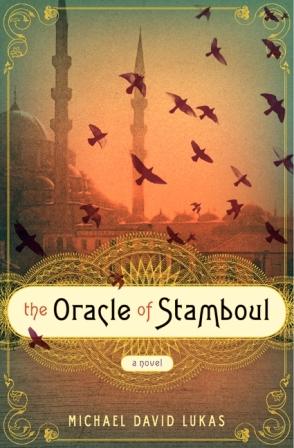 Eleanora Cohen is born on a day of omens. A flock of purple and white hoopoes take over her house in Constanta, two midwives mysteriously appear to assist in her birth, and unfortunately her mother dies, leaving her and her father alone in the world. Eleanora’s father asks his late wife’s sister, Ruxandra, to help raise the child, and so she grows up for a few years, long enough to display a precocious intelligence and to alienate her aunt with that extraordinary cleverness. When Eleanora’s father makes plans to travel to Stamboul, Eleanora decides to stow away on his ship rather than be left behind with her aunt, a decision that has unforeseen consequences. Eleanora Cohen is born on a day of omens. A flock of purple and white hoopoes take over her house in Constanta, two midwives mysteriously appear to assist in her birth, and unfortunately her mother dies, leaving her and her father alone in the world. Eleanora’s father asks his late wife’s sister, Ruxandra, to help raise the child, and so she grows up for a few years, long enough to display a precocious intelligence and to alienate her aunt with that extraordinary cleverness. When Eleanora’s father makes plans to travel to Stamboul, Eleanora decides to stow away on his ship rather than be left behind with her aunt, a decision that has unforeseen consequences.
The Oracle of Stamboul lies in that peculiar area of magical realism. It’s set in a firmly historical basis, but includes just a few touches of fantasy to keep us on our toes. Eleanora’s incredible intelligence for me might as well have been fantasy, and of course the flock of hoopoes as well as the myth surrounding Eleanora’s birth just adds to the book’s overall touch of mysticism. It’s something that I’m not always comfortable with, but which worked very well in this particular book. It’s appropriate to the slightly distant, slightly magical atmosphere that pervades the novel and Eleanora’s perception of the world around her.
Eleanora herself I found immensely appealing. Despite her cleverness, she has a fragility about her that makes it clear she’s just a girl trying to cope in the wider world. One incident earlier in the book displayed this perfectly for me; in a shop with her aunt, Eleanora discovers an error in their bill and says so quite loudly. She thinks she’s saving money, but her aunt hustles her out of the shop, scolds her, and puts a stop to her lessons. She doesn’t understand the world the way adults do, not yet, and it’s this alternating combination of intelligence and vulnerability which make her such an appealing heroine.
The story itself wasn’t quite as strong as I’d expected. While it goes along smoothly, the climax wasn’t what I’d hoped it to be, and to some extent that soured my reaction to the rest of the book. I felt slightly misled by the cover copy, which indicated that Eleanora would have a great impact on the Ottoman Empire – I think I was expecting more of an alternate history than I actually got. I don’t know very much about the fall of the Ottoman Empire, and personally I would have liked more. I didn’t feel as solidly grounded in the period as I would ideally have done. Perhaps the details would have weighed the book down for others, but not for me – I kept wanting to know more, looking up things on Wikipedia to try and connect the dots. The book had the right atmosphere and a good story, but lacked the historical substance and basis for me to really fall in love with it. For someone who knows more about this period and place in history, this particular concern would be irrelevant, but I genuinely was made curious by the story and characters. I wanted more from not only the history, but from the story itself.
Nevertheless, The Oracle of Stamboul was a thoughtful, especially well-written piece of historical fiction, with just the right touch of magic to set it apart from its fellows. Recommended.
 Want to read others’ reviews? Check out a few other stops on this TLC book tour: Want to read others’ reviews? Check out a few other stops on this TLC book tour:
Tuesday, February 8th: The Bodacious Pen
Tuesday, February 8th: The Reading Date
Tuesday, February 8th: Katie’s Nesting Spot
Wednesday, February 9th: Bibliophibian
Thursday, February 10th: One Girl Collecting
Thursday, February 10th: Confessions of a Rambling Mind
I am an Amazon Associate. I received this book for free for review from the publisher.
 Venice in the early fifteenth century is a nest of scandal. The titular Duke does not actually rule; instead, his mother, the Duchess Alexa, rules for him with her brother-in-law, the much-despised Alonzo. They’ve conspired to wed their niece, Giulietta, to the King of Cyprus, conveniently ignoring the fact that she’s not interested. Meanwhile, Tycho, a pale man who can’t stand the sun and has supernatural strength, awakens in the hold of a ship, bound with silver chains. When he is released, he runs into the head of the Assassini, an association of assassins. Their numbers have decreased drastically and said leader is aging. He immediately conscripts Tycho into training, not caring what his reasons for avoiding the sun are, merely doing his best to protect Venice in this troubled time. Venice in the early fifteenth century is a nest of scandal. The titular Duke does not actually rule; instead, his mother, the Duchess Alexa, rules for him with her brother-in-law, the much-despised Alonzo. They’ve conspired to wed their niece, Giulietta, to the King of Cyprus, conveniently ignoring the fact that she’s not interested. Meanwhile, Tycho, a pale man who can’t stand the sun and has supernatural strength, awakens in the hold of a ship, bound with silver chains. When he is released, he runs into the head of the Assassini, an association of assassins. Their numbers have decreased drastically and said leader is aging. He immediately conscripts Tycho into training, not caring what his reasons for avoiding the sun are, merely doing his best to protect Venice in this troubled time.
Despite the appealing nature of this book – full of politics, darkness, and supernatural beings – I had a difficult time getting into it. It’s received positive reviews across the internet, so apparently I am an anomaly, but I found the book too dark, and much too sexual and bloody for my personal liking. This probably fits with the nature of it, but is difficult to take and often felt like an unnecessary add-on. Moreover, the book’s plot moves very quickly. Usually, with a book like this, it’s fine to be tossed right in the mix of things, and get a grip as you move on and finally figure out who people are and what’s going on. The problem with this one was that I never really felt I had a handle on what was happening.
What I did like was the atmosphere in general and the setting. Historical Venice with magic – I could hardly ask for more. Grimwood sets the scene very well and is a master at descriptive language. The magical aspects seem to sit perfectly within the historical context, so this part of the book at least was easy to sink into. The battle scenes were also well done, and were among the few times I actually felt compelled to continue reading.
Unfortunately, I couldn’t get on with the characters either. The plot moves so quickly that we flit between a variety of them, never really caring about any of them. Worse, by the end quite a few of them are dead – but because I was never attached to any of them, this produced none of the emotional impact that it should have done. The book left me with the feel that I should have enjoyed it more, given its positive points and its very appealing plotline. For others who are in the mood for a speedy political read in a fantastic setting, I suspect The Fallen Blade would suit better.
I am an Amazon Associate. I received this book for free for review from Netgalley.
 Margaret of Anjou has no idea what’s in store for her when she travels as a seasick French fifteen-year-old to marry the English king Henry VI. Not fluent in English and, due to her nationality, viewed as an enemy by many English people, Margaret doesn’t have the easiest time of it, particularly when her marriage fails to bring peace between England and France and takes years to produce an heir to the throne. Amidst suspicions over his illegitimacy, challenges to her husband’s throne, and eventual war between her suspects, Margaret struggles to retain the birthrights of herself, her husband, and her son. Margaret of Anjou has no idea what’s in store for her when she travels as a seasick French fifteen-year-old to marry the English king Henry VI. Not fluent in English and, due to her nationality, viewed as an enemy by many English people, Margaret doesn’t have the easiest time of it, particularly when her marriage fails to bring peace between England and France and takes years to produce an heir to the throne. Amidst suspicions over his illegitimacy, challenges to her husband’s throne, and eventual war between her suspects, Margaret struggles to retain the birthrights of herself, her husband, and her son.
Susan Higginbotham is a historical fiction writer who never fails to deliver the books that I personally want to read. Well-written, historically accurate, and meticulously detailed, she is an expert at transporting me back in history while never really throwing me out of the story with something I obviously know to be wrong. Even when she does change something to suit her purposes, I know that it will be logical and fully explained at the end, as everything is here. With this latest book, I got all of this and wasn’t disappointed at all. If anyone can make me enjoy a book set during a period about which I know entirely too much, Higginbotham is unquestionably that author.
And I did enjoy The Queen of Last Hopes. At its heart it is a good depiction of Margaret’s life and a more careful examination of the motivations that this so often vilified woman had for the actions she took over the course of her life. She’s not dismissed as a villain, for once, but instead rehabilitated. Unfortunately, though, I think in this case Higginbotham went a little further towards good than I really would have preferred. I would agree that she was made to seem excessively cruel because she was a woman, a crime perpetuated over the centuries, simply because she took a role most people would rather envision a man having. But that doesn’t mean she had to be so very good; I think creating an affair for her went some way towards mitigating this, but not entirely.
Still, I related to Margaret, and for the first time I felt I could understand what the real woman must have gone through as everyone turned against her and everything she cared about was at risk. I’d find it difficult not to. The book is told through differing viewpoints and I found hers to be by far the most appealing, even though she was on the sidelines of almost all the events. Those other characters give us the perspective on her that we need to remain balanced throughout the course of the novel; they save the book from excessive telling by giving us a way to see the events through those characters’ eyes.
Overall, The Queen of Last Hopes was an engaging historical novel for me that suited my expectations perfectly. I would have preferred a more balanced version of Margaret, but I could still relate to her and was still wrapped up in her story. Though not my favorite of Higginbotham’s books, this is still a good move towards looking more realistically at Margaret of Anjou.
I am an Amazon Associate. I received this book for free from the publisher for review.
 On one cold winter in Wisconsin, 1907, Ralph Truitt awaits his mail-order bride at the train station. All he has are a photo, of a plain innocent-looking woman, and letters from her. The woman who steps off the train is too beautiful, instantly causing Ralph to be suspicious, but he’s been unloved for far too long, and in any case has a mission for his new wife. He wants Catherine Land to persuade his son, Antonio, to return to him, for a final chance at forgiveness. But he has no idea how complex the ties are truly between him and his new wife, nor the conspiracies which soon crop up amongst these three very different people. On one cold winter in Wisconsin, 1907, Ralph Truitt awaits his mail-order bride at the train station. All he has are a photo, of a plain innocent-looking woman, and letters from her. The woman who steps off the train is too beautiful, instantly causing Ralph to be suspicious, but he’s been unloved for far too long, and in any case has a mission for his new wife. He wants Catherine Land to persuade his son, Antonio, to return to him, for a final chance at forgiveness. But he has no idea how complex the ties are truly between him and his new wife, nor the conspiracies which soon crop up amongst these three very different people.
This book, while bleak, is surprisingly addictive. Goolrick’s tone throughout is contemplative, which perfectly fits the winter atmosphere and the secret, devious plots that the characters harbor and then keep from each other. It’s well-paced, with everything revealed at just the right moment, enough to keep me stuck to the page while I waited for the next revelation, the next step in the plan. I couldn’t say I liked any of the characters, but I did appreciate the story itself very much.
One important warning; if you’re a bit squeamish about sex, this is not the book for you. The characters are very explicit in their thoughts and actions and much of their relationships are actually based on sex. I’d argue that it’s got more in there than many romance novels I’ve read, and certainly more than the ones I prefer. The whole book is charged through with it. It’s a dark gothic romance without any little details actually left out, and in my opinion it’s best approached that way. But the beauty of the story is truly that both characters learn that sex and desire aren’t love, that marriage isn’t easy, and without so much emphasis on the physical side of things, I’m not sure it would have the same impact.
To make it all that much better, Catherine, despite being a prostitute and very uneducated, adores books and knowledge, and her time spent in the library is some of the happiest of her life. Though I never really cared all that much about the characters, this one little thing did help quite a bit towards making me like her. It’s just one of those little signs that she hasn’t let the circumstances of her life destroy her spirit, and as a result I kept hoping for a good chance for her and a bit of redemption by the end.
A Reliable Wife was an intoxicating read; suspenseful plot, moving emotions, and fantastic setting. It may be a little bit too racy for some, and I never quite fell in love with the characters, so I can’t recommend it whole-heartedly, but it was nevertheless for me an excellent book.
I am an Amazon Associate. I purchased this book.
 Fiona Finnegan may be a poor tea worker in London, but she and her boyfriend Joe have big dreams. They want to own their own shop rather than work for other people and they know exactly how to do it. But while their dreams are big in their heads, and their love consumes their hearts, other factors are working against them. For one thing, Jack the Ripper is wreaking his vengeance on London whores, but no one knows when he’ll strike other women instead. And another woman has her sights set on Joe, a woman who can offer him more than Fiona in terms of wealth and prospects. Everything collides against her and Fiona finds herself en route to the United States, where she’ll finally learn to run her own shop and eventually confront the ghosts of her past. Fiona Finnegan may be a poor tea worker in London, but she and her boyfriend Joe have big dreams. They want to own their own shop rather than work for other people and they know exactly how to do it. But while their dreams are big in their heads, and their love consumes their hearts, other factors are working against them. For one thing, Jack the Ripper is wreaking his vengeance on London whores, but no one knows when he’ll strike other women instead. And another woman has her sights set on Joe, a woman who can offer him more than Fiona in terms of wealth and prospects. Everything collides against her and Fiona finds herself en route to the United States, where she’ll finally learn to run her own shop and eventually confront the ghosts of her past.
After I so enjoyed both A Northern Light and Revolution, I knew I wanted to read more by Jennifer Donnelly, and all recommendations coming in told me that The Tea Rose was the book to read. Luckily, I already had it – so if you’ll recall, I made it one of the books I aimed to read by the end of 2010, and I succeeded. I think reading the other two books first was a bit of an injustice to it, but it was good and absorbing in its own way.
For a start, this is an epic saga of Fiona’s life, which is fairly obvious from its length. We follow her from her teenage years, which are hard-working but relatively peaceful and full of dreams, into the turmoil of her twenties, and then into her accomplished thirties – at which point she has to go back and face her demons. There’s no question that it was an absorbing story and that I was eager to find out what happened next to Fiona – it didn’t drop my attention once over the course of its 550 (large) pages.
At the same time, it feels a bit less polished than Donnelly’s other works. It’s the kind of book where Fiona is responsible for all great inventions, in that way reminding me a bit of that series by Jean M. Auel (but without the constant caveman porn), where Ayla even manages to invent a sewing needle. Fiona constantly has ideas that set her apart from everyone else, and while I enjoyed the core story, I felt it was just a bit too much. I didn’t think one woman revolutionized the store, and then went on to revolutionize tea, in quite the same way, and it almost made it more difficult to relate to Fiona because she was just too extraordinary. Joe is similarly just too perfect; sure he makes mistakes, but his character isn’t really flawed and his genius wins out. In this way it was nothing like Donnelly’s other books, which I did feel had realistic and flawed characters. It is a first book and, having read later work, feels that way.
Still, for a first book, it is very good; the period details is fantastic and it’s immediately absorbing. I’m going to continue reading the series, especially considering I already own The Winter Rose, and I have high hopes for where Donnelly will go next. The Tea Rose is recommended for those who enjoy sagas set in Victorian England and New York City.
I am an Amazon Associate. I purchased this book.
 At only nine years old, Liesel Meminger witnesses the death of her brother and is sent away by her mother to live with another family. Liesel doesn’t really understand what’s going on or why she has to leave her mother. Hitler’s domination of Germany increases as Liesel grows up, comforted by her adoptive father and loved but scolded in ways by her adopted mother. Narrated by Death himself, a character with a completely different and novel perspective, Liesel’s story is a powerful one about love, war, and childhood. At only nine years old, Liesel Meminger witnesses the death of her brother and is sent away by her mother to live with another family. Liesel doesn’t really understand what’s going on or why she has to leave her mother. Hitler’s domination of Germany increases as Liesel grows up, comforted by her adoptive father and loved but scolded in ways by her adopted mother. Narrated by Death himself, a character with a completely different and novel perspective, Liesel’s story is a powerful one about love, war, and childhood.
I don’t give many books a five star rating on LibraryThing (I don’t rate books at all here on the blog, but I still do there). It’s incredibly rare that I find a book which works for me on all levels – that touches me, that makes me think, that gives me a new perspective on life. The Book Thief is one such book, and somehow I waited nearly two full years to actually open it for the first time. What a mistake – I hope it’s one you won’t make, if you do have this one waiting on your TBR shelf.
It’s difficult to pinpoint precisely what makes this book so special. There are vast numbers of books written in or about World War II that are very good; there is plenty of fiction in particular and it’s a number that seems to rise regularly. It’s one of those books that makes things you’ve always known somehow become real, even through fiction. Liesel’s feelings towards Max, the Jew that her family hides in their basement, do precisely this. Their relationship, so tenuous to start, expressed through books and words, becomes magical and real as the novel progresses.
The entire book revolves around the power of words. Liesel is the titular book thief; she adores books, but they’re hard to come by for a poor family in Nazi Germany. Censorship means millions of books are burned or changed, so Liesel’s treasures become fewer and far between. Simultaneously, it is words that allow Hitler and his party to take power, to persuade people that those who believe in other religions are not people, to cause the deaths of millions around the globe. This power of words is demonstrated in so many ways throughout the book; as a reader and a writer, I found so much to connect with and a vast amount of truth in this particular theme.
The book also demonstrates the merciless nature of war. It’s a hard thing to take, especially when you become so very attached to certain characters, but it makes me think of real life as well. More than anything, strangely, this part of the book reminded me of The Children’s Book by A.S. Byatt, because it is another that demonstrates how war can take away people we desperately love. Like many of my generation, I’ve never had anyone I loved taken from me due to a war, despite the fact that we are fighting one and I know a number of soldiers, and I think this faint shadow of that grief is entirely necessary to remind all of us who are not involved ourselves how evil a thing these wars actually are.
I would highly recommend The Book Thief to almost anyone at all; it’s a book that is beautifully written with a number of powerful themes, yet still surprisingly different from many of the books about World War II out there. If you already own it, don’t let it sit on your shelf any longer.
I am an Amazon Associate. I received this book as a gift.
|
|



Recent Comments