|
|
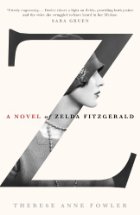 Zelda Sayre is a vivid eighteen-year-old from Montgomery, Alabama, always the life of the party, when she meets F. Scott Fitzgerald. The youngest in her family, Zelda loves being the center of attention, and Scott is happy to put her at the focal point of his universe – for a time. As an aspiring author, but simultaneously a man who enjoys having fun, Scott is torn between numerous passions in a way that isn’t clear to Zelda when they meet. When they marry, they’re both certain that their lives are going to be full of success and love, with no perception of just what might happen when two vivid personalities clash. Zelda Sayre is a vivid eighteen-year-old from Montgomery, Alabama, always the life of the party, when she meets F. Scott Fitzgerald. The youngest in her family, Zelda loves being the center of attention, and Scott is happy to put her at the focal point of his universe – for a time. As an aspiring author, but simultaneously a man who enjoys having fun, Scott is torn between numerous passions in a way that isn’t clear to Zelda when they meet. When they marry, they’re both certain that their lives are going to be full of success and love, with no perception of just what might happen when two vivid personalities clash.
I knew very little about Zelda Fitzgerald before I started reading this book. I had heard before that she had held back Scott’s career and that she’d been in a mental institution; I’d also read somewhere that she and Scott loved each other despite the difficulties. This book gave me a lot of insight, I felt, into the kind of woman Zelda might have been, and went a long way towards explaining how two people can love each other an absurd amount and yet hate each other at the exact same time.
The novel starts with Zelda as a young, impressionable teenager who meets Scott and completely falls for him, a Northerner with ambitions completely different from any that the boys she knows have. They quickly marry and the book spans the rest of their lives up until Scott’s death, so we get an insight as to how Zelda may have felt about all of his achievements, including his lack of them at times.
What I also really appreciated was that the novel gets across how Zelda might have felt as the wife of a man who was famous. She suffers hugely from a lack of her own identity, which made perfect sense to me; how would an ambitious, talented girl feel when she’s constantly shuffled to the side? I can’t imagine now, for myself, living in a time where my only duty was to keep house for my husband, simply because I’m not the sort of person who would be happy pouring all of my effort into someone else’s life without any real recognition of my own. This is especially true for Zelda, who watches as her husband spends the hours he’s meant to be working with a bottle in his hand, and who feels that she’s lost her own identity to support his. Her struggles were so clearly understandable to me and I could feel their mutual frustration pouring out of the pages. What’s heartbreaking about this book is that it’s also obvious that they do love each other, but it’s a destructive kind of love that is powerful but takes something huge out of both of them.
I also hadn’t realized that Zelda was a creative force in her own right, painting, writing, and dancing in a way that might have brought her recognition on her own. Perhaps not if she’d never met Scott, but once she has a foothold in the creative world, she keeps on going. She had her own art exhibitions and she was invited to dance professionally; she even had her own published novel and short stories. I had never had any idea, and now I’m actually very curious to read the fictional accounts, on both sides, of their marriage.
A wonderful book that brought a historical figure to life for me, Z is a spellbinding read. Highly recommended.
All external book links are affiliate links. I received this book for free for review.
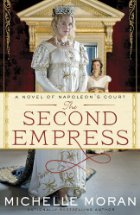 If Princess Maria Lucia of Austria doesn’t marry Napoleon Bonaparte, he’ll topple her father from his throne and ruin her family’s future. It’s not even a choice, in her mind, and so she leaves everything she loves behind to become the next Empress of France, in a journey startlingly reminiscent of Marie Antoinette, the beheaded Austrian queen of France. In Napoleon’s court, she meets his sister, Pauline, whose mood swings and affairs are legendary, and her chamberlain Paul, a Haitian who longs to return to his native land but can’t stop loving Pauline. Together they endure one of France’s most turbulent periods. If Princess Maria Lucia of Austria doesn’t marry Napoleon Bonaparte, he’ll topple her father from his throne and ruin her family’s future. It’s not even a choice, in her mind, and so she leaves everything she loves behind to become the next Empress of France, in a journey startlingly reminiscent of Marie Antoinette, the beheaded Austrian queen of France. In Napoleon’s court, she meets his sister, Pauline, whose mood swings and affairs are legendary, and her chamberlain Paul, a Haitian who longs to return to his native land but can’t stop loving Pauline. Together they endure one of France’s most turbulent periods.
Michelle Moran has penned some of my favorite historical novels and I love the way she gives a focus to women in history who haven’t really been spotlighted in her last three. Marie-Louise has always existed in the shadow of Napoleon’s great love story with Josephine, his first wife and empress, and it’s lovely that Moran chose to give her a focus with this book. Napoleon’s sister Pauline is better known, but still not usually in the limelight, and Paul is a completely different focus altogether.
Unfortunately, while this premise was good, I actually preferred Marie-Louise to both Paul and Pauline. I felt much more for her as she left her home and her actual lover to marry this man that extorted money from her country and threatened her father. I should have felt more for both Paul and Pauline, but the former didn’t really appeal to me and the latter just seemed out of touch with reality. I kept hoping to get back to Marie-Louise’s story and I rushed through the other chapters so that I could spend more time with her. I can understand how Pauline in particular might appeal to another reader because she really is a character, and I know a lot of the elements here were taken from fact, but I couldn’t really feel for her at all.
Another reason I didn’t really love this one as much as some of Moran’s other books was because I found out that Marie-Louise only met Adam, the lover she leaves in the book when she has to go marry Napoleon, much later on when she’s already a married woman. I felt disappointed by this; it’s such a huge part of the plot in the beginning, when we discover Marie-Louise isn’t an innocent and that everyone knows she loves someone else, that I felt let down to discover it wasn’t really close to the truth. I would have preferred a narrative constructed more around the historical reality, and I think her departure already had the potential to be quite emotional. It isn’t a minor detail, either, like moving a date around, and it just made me feel that the way the historical gaps had been filled in wasn’t believable any more. It was a real shame and I will confess that it left me disappointed. Am I being unfair here? Maybe a little – but I always prefer the gaps in the historical record to be filled in, and an emotional reality imagined, and discovering that the emotional reality simply couldn’t have happened does have an impact on my feelings about the book.
While I still enjoyed actually reading The Second Empress, I’m afraid that I’d recommend one of Moran’s other books first, and to accept that this read might land much more on the fiction side of historical fiction.
All external book links are affiliate links. I received this book for free for review.
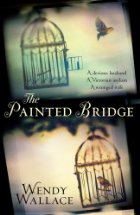 After less than a year of marriage, Anna’s rigid clerical husband decides that she isn’t a suitable wife for him, and has her committed to a mental institution. She’s perfectly sane, but that doesn’t matter to anyone – not to the fake doctors whose signatures let him commit her to the hospital, not to the employees, not to the real doctors in the hospital, and certainly not to her husband. Anna is determined to escape, but she has no idea how, until she meets Lucas St. Clair. St. Clair is a young doctor who is attempting to use photography to discern the true nature of patients’ souls. Will his pictures show Anna as the innocent she is or the madwoman everyone believes? After less than a year of marriage, Anna’s rigid clerical husband decides that she isn’t a suitable wife for him, and has her committed to a mental institution. She’s perfectly sane, but that doesn’t matter to anyone – not to the fake doctors whose signatures let him commit her to the hospital, not to the employees, not to the real doctors in the hospital, and certainly not to her husband. Anna is determined to escape, but she has no idea how, until she meets Lucas St. Clair. St. Clair is a young doctor who is attempting to use photography to discern the true nature of patients’ souls. Will his pictures show Anna as the innocent she is or the madwoman everyone believes?
I have to start off this review by saying I didn’t really manage to connect with this book. There were plenty of interesting elements, but they never combined for me into something that I genuinely liked much. It sounds like such an interesting premise; although we know that pictures aren’t really the key to the soul, when photography was a new art, people weren’t really sure what its purpose was. The idea that a doctor would try and use it to diagnose mental patients sounded very interesting to me. Moreover, the idea of an innocent woman condemned to one of these mental hospitals held a certain amount of appeal, even though I already knew that Anna’s life was going to be terrible once she was committed.
The main problem, unfortunately, was that I didn’t really connect with Anna at all. The reason that she’s deemed unsuitable by her husband is because she went to the seaside on her own to try and give aid to some shipwrecked sailors. To be perfectly honest, this does seem like a strange thing for a young woman in Victorian England to do without telling her husband. She even sells some of his things to get money for the sailors and proceeds to stay in an inn on her own without any supervision. Her behavior by no means justified the punishment, but she seemed foolish and naive, which made it hard for me to like her. I often say that I don’t really need to like a character to enjoy a book, but a lot of this story hinges on feeling sympathy for Anna, and it’s not really a complex character study that might justify her strange behavior. There is a reason for it, but not until the end of the book, and not quite earth-shattering even then.
While I didn’t fall in love with it overall, there were certain elements that I did like. One was the different ways that the women were constrained – maybe not appropriate to say I liked it, but it showed the limitations of a woman’s role once a man was in control at the time. The asylum is run by a man with a wife and teenage daughter, and both the wife and daughter are constrained because of what the men in their lives do. The other “patients” are obviously prisoners and generally with little wrong with them. Even the female employees in the institution have no control over their lives, and the one who does seize control comes to an unfortunate end. Anna’s own imprisonment is just one way that a Victorian woman could be trapped by the men around her.
With some interesting ideas, The Painted Bridge could have been an excellent book. For a different reader, it could be an exceptional read. Unfortunately, it wasn’t for this one.
All external book links are affiliate links. I received this book for free for review.
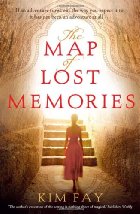 Irene Blum’s world is falling apart. Certain that she’s going to be appointed curator of the museum where she works when her mentor retires, she’s devastated when the board appoints someone else instead of her. Though it’s 1925 and the position of women is uncertain, Irene thought that her hard work and determination over the course of her life would pay off. Then her mentor, Henry Simms, gives her a task; go to Cambodia and find ten copper scrolls that depict the history of the Khmer people. Irene has always loved Cambodia and learning that her parents were there before gives her a new incentive to go. Armed with knowledge and taking a few people with her along the way, Irene’s journey is about more than ten scrolls; it’s about finding a purpose in her life beyond a single museum. Irene Blum’s world is falling apart. Certain that she’s going to be appointed curator of the museum where she works when her mentor retires, she’s devastated when the board appoints someone else instead of her. Though it’s 1925 and the position of women is uncertain, Irene thought that her hard work and determination over the course of her life would pay off. Then her mentor, Henry Simms, gives her a task; go to Cambodia and find ten copper scrolls that depict the history of the Khmer people. Irene has always loved Cambodia and learning that her parents were there before gives her a new incentive to go. Armed with knowledge and taking a few people with her along the way, Irene’s journey is about more than ten scrolls; it’s about finding a purpose in her life beyond a single museum.
I heard quite a bit about this book when it came out and I was really looking forward to reading it for its UK paperback release, which took place last week. I mean, it sounds fascinating and has some of my favorite elements; it’s historical fiction, centered around museums and exciting artifacts, and had the potential to delve into the history of the Khmer people. I’ve never been to Cambodia or to see Angkor Wat, the legendary temple complex that they built, but it’s on my wishlist of places I’d love to go, and so the setting was bound to captivate me. And while that happened, what was lacking for me was the characters.
The main character, Irene, does visibly grow and change over the course of the novel. Her life doesn’t go as she expected, and rather than break, she bends and grows stronger because of it. Her plan falls apart, so she puts together a new plan and forges forward. Despite this, though, I never felt that I liked her very much, nor did I really feel for any of the other characters. I got the feeling that certain revelations were meant to be deep and insightful, but I wasn’t there with the characters. I was never quite interested enough in the outcome of the story to actually pick the book up when I wasn’t already in a convenient position to do so. It was fine while I was reading it, but I wasn’t drawn in, and I didn’t feel that I was really experiencing an adventure story as I might have hoped.
All that said, there are certainly great points to this novel, and it’s been appreciated by plenty of other people. The writing is well done and I liked the atmosphere that it evoked, especially towards the end when Irene finally makes it to Cambodia. I think it’s more a book about one woman’s discovery, rather than quite what I’d expected. If you keep that in mind, I expect you’ll enjoy The Map of Lost Memories a great deal more than I did.
All external book links are affiliate links. I received this book for free for review.
 Emma of Normandy never suspects that she’ll be married before her sister – or that she’ll be sent north to England to wed King Ethelred, an aging monarch who disdains her immediately on her arrival. Emma’s life on arrival in England is far from what she thinks a marriage should be like. Her husband doesn’t respect her and she misses her family and all that is familiar from home. Worse, her husband’s seven children stand between her offspring and the throne of England. But Emma soon realizes that the only power she or her children will ever have is that she can seize herself, and the sooner the better. Emma of Normandy never suspects that she’ll be married before her sister – or that she’ll be sent north to England to wed King Ethelred, an aging monarch who disdains her immediately on her arrival. Emma’s life on arrival in England is far from what she thinks a marriage should be like. Her husband doesn’t respect her and she misses her family and all that is familiar from home. Worse, her husband’s seven children stand between her offspring and the throne of England. But Emma soon realizes that the only power she or her children will ever have is that she can seize herself, and the sooner the better.
Queen Emma is a fascinating historical figure. I’ve spent a small amount of time studying her life, though not in any great detail, enough to know what generally happened to her. It wasn’t long before I realized that Shadow on the Crown was covering only a tiny fraction of her life, because it went into much greater detail and imagined things I’d never considered before about the start of her life. While this part is often skimmed over in favor of her later life, I was riveted by Bracewell’s narrative and re-imagining of Emma’s young married life. I want to emphasize that a lot of this is imagining, and Bracewell includes the very useful author’s note so we can see where she’s changed history to better suit her narrative.
As I would have imagined, really, life in a foreign land as depicted here isn’t easy, especially when Emma is descended from England’s enemies, the Vikings. The Vikings were a scourge on England’s coast throughout Ethelred’s reign, so it’s no surprise that her relations to them cause distrust and unhappiness – even more so when a young, foreign queen marries an older king and ruins the chances for English women. Not only that, but while she doesn’t expect her husband to like her, he doesn’t even respect her, and he mistreats her frequently. It was easy to get attached to and feel for Emma, and I liked how the author put little hints in regarding where the story was going to go in the future.
I also felt that the author gave readers a great sense of what life might be like under a Viking siege. At one point, the characters’ lives are at risk, with events taking a terrifying turn. It was easy to understand how terrified they were and why some of them took the actions they did. Bracewell doesn’t use this event just for the sake of gratuitous violence, but actually uses the events of the raid to further the plot along. Several characters experience key events that help us understand their characters better and which will make a lot of sense going down the line.
Though by no means an entirely positive tale of a young queen, Bracewell’s ideas shed a lot of light on how Emma became the women she was later on, and I’m greatly looking forward to finding out how she fleshes out Emma’s story and reveals the multiple facets of her life as we go along. Recommended!
All external book links are affiliate links. I received this book for free for review.
 This review will contain spoilers for Blackout. You should always read that first before you read this book or this review! This review will contain spoilers for Blackout. You should always read that first before you read this book or this review!
Mike, Polly, and Eileen have finally found one another in the midst of the London Blitz in 1941, but they’ve discovered, to their dismay, that none of them can get back to their own time. Oxford in 2060 is several lifetimes away and they may need to resign themselves to living in the Blitz forever. They keep trying, however, sending messages to the future and coding things to let their time travelling cohorts find them more easily, and slowly the pieces of how they got lost in the past start to fall together.
These two books – Blackout and All Clear - have received a lot of criticism for being too long and under-edited. I’ve seen plenty of cynical remarks to the effect that two books sell more copies than one. I am going to say that I never really felt that way. They were long books, yes, but perhaps I read through them so quickly that neither dragged for me. After I finished Blackout, I immediately picked up All Clear so I could get right back into the disrupted lives of these three time-travelling characters.
I was glad that, not too long into this book, the plot threads start to go together and everything begins to make more sense. While the first book was about each character’s realization that they are trapped in an incredibly dangerous historical period, the second book is about how they will get themselves out of that and what actually happened to a few of the other characters mentioned in the previous book. They are still very much required to deal with the situation, but everything actually wraps up. There were a couple of characters introduced in the first book without any real background story and their roles were clarified and we did figure out who they all were.
Everything I loved about the first book is still true; the atmosphere remains fantastic throughout and I appreciated that we continued to get a feel of the different parts of the war, too. The main focus is really on London and precisely what happened, and there are some very tense and dramatic scenes as the characters fight to keep themselves and others alive. Willis really can make you feel as though you’re in the midst of each and every struggle with the characters.
There isn’t much else I have to say about this book that I didn’t say about the first, but rest assured that if you are looking for a dramatic read set during World War II and don’t mind or would love a little time travel in your books, this is a duology well worth reading. Highly recommended.
All external book links are affiliate links. I purchased this book.
 In 2060, humans have discovered time travel, and it’s now a fantastic method for historians to get a real view of what happened in the past. For three young historians, England during World War II is the destination of choice. Eileen, or Merope in 2060, is assigned to be a maid in a country house, looking after evacuees. Mike Davis finds himself posted to just before Dunkirk to watch the boats depart. Polly Sebastian, meanwhile, heads straight into the heart of the London Blitz. Each goes armed with knowledge to survive his or her particular assignment and full knowledge of where their “drop” points are and when they’re meant to check in. But, around the same time for each of them, things start to go wrong, and these historians find that rather than simply observing history, they have to live it. In 2060, humans have discovered time travel, and it’s now a fantastic method for historians to get a real view of what happened in the past. For three young historians, England during World War II is the destination of choice. Eileen, or Merope in 2060, is assigned to be a maid in a country house, looking after evacuees. Mike Davis finds himself posted to just before Dunkirk to watch the boats depart. Polly Sebastian, meanwhile, heads straight into the heart of the London Blitz. Each goes armed with knowledge to survive his or her particular assignment and full knowledge of where their “drop” points are and when they’re meant to check in. But, around the same time for each of them, things start to go wrong, and these historians find that rather than simply observing history, they have to live it.
I put Blackout on my pile for Long-Awaited Reads Month and am I glad – this is a book I shouldn’t have put off for a year. There were many aspects about it that I really, really liked, and by the time I reached the end, I was thrilled that I had All Clear on the shelf waiting for me to pick this story back up again. The book doesn’t really end, it just cuts off, and there are many loose plotlines left dangling for the second book to pick up again. I’ve since had a poke around the internet and I’m fortunate to have picked it up after All Clear was published; one big complaint for early readers is that they were left hanging for an entire year. I’m happy that won’t happen to me.
While my edition of this book is over 600 pages long, I found that it fled by as I got wrapped up in the individual problems of Eileen, Mike, and Polly. My previous experience with Willis’s time travel books is Doomsday Book which I also loved, so I was prepared to get deep inside each character’s mind as everything starts to go wrong. I actually found the whole process that each of them went through really fascinating – they’re all so confident in their ability to escape at will that they don’t really think much about where they’re going. Polly, for instance, gets an implant with each and every bombing incident during the part of the Blitz that she is meant to experience, so she’s not meant to be in any real danger. Instead, she’s assigned to just watch how those who are actually in danger experience it, and that’s all she expects. Of course, when the drop doesn’t open and she realizes that she’s actually stuck in the middle of the London Blitz, and sometimes has no real way of actually knowing where and when is safe, her perspective completely changes.
At that point, when the three of them start to wonder about what’s happened to their retrieval teams and their drop points, they each start to actually live in the midst of World War II. There is some element of repetitiveness, as a lot of what they experience is quite similar; there are meant to be retrieval teams that investigate if they haven’t returned at a certain point, and they each spend a lot of time pondering their arrival. In addition, they start to worry that they’ve affected history, despite the apparent truth that historians can’t alter history, particularly Mike, who finds himself seemingly changes events at a critical period in World War II. Not only do they panic about what happens next to themselves, they start to feel as though they genuinely *don’t* know what’s going on in the war.
I particularly loved how Willis depicted ordinary heroism in the face of extraordinary danger. At times, particularly during the bombing raids, her descriptions reminded me how devastating a war this was for London and that it didn’t happen all that long ago. Even for people who weren’t that close to the bombs, living with the reality and unpredictability that each night might be their last took an incredible amount of courage. The atmosphere that she evokes is incredibly well done. One of my very favorite parts of the book had a Shakespearean actor getting up in the middle of an air raid shelter and going through monologues to distract the others in the shelter. That scene is going to stay with me for some time.
Blackout is a book that I had an amazing time with, but don’t read it unless you have All Clear ready to go immediately after – otherwise, you’ll be frustrated that it ends in the middle with no resolution whatsoever. So far it looks like I’ll be recommending these!
All external book links are affiliate links. I purchased this book and its sequel.
 Isabella of Castile is not expected to rise to greatness. Not only does she have an older half-brother, but she also has a younger full brother, and both are ahead of her in the line to the throne. But when crisis strikes her family and plunges Castile into civil war, Isabella finds herself fighting to claim the throne for herself and her own descendants. Alongside her is Fernando, heir to Aragon, and her chosen husband, even when her family wishes for her to marry someone else. Throughout Isabella’s struggles, one thing is always for certain, and that is her goal to do her best for her people. Isabella of Castile is not expected to rise to greatness. Not only does she have an older half-brother, but she also has a younger full brother, and both are ahead of her in the line to the throne. But when crisis strikes her family and plunges Castile into civil war, Isabella finds herself fighting to claim the throne for herself and her own descendants. Alongside her is Fernando, heir to Aragon, and her chosen husband, even when her family wishes for her to marry someone else. Throughout Isabella’s struggles, one thing is always for certain, and that is her goal to do her best for her people.
Isabella of Castile and Ferdinand of Aragon are historical figures that are familiar to most American children (and likely plenty of others as well); they financed Columbus’s journey to “the New World” and, as much as I dislike what ensued from that journey, it’s taught to us from a very young age. As I grew older, I learned more about them. They unified a Christian Spain on something of a crusade and set off the Inquisition, an infamous institution throughout the early modern era. They’re fascinating figures, and Isabella herself is a perfect candidate for a historical fiction novel.
Fortunately, C.W. Gortner sticks to his excellent record and does Isabella justice. Gortner is one of those authors who can always remind me why I’ve spent so much of my life so far reading historical fiction. He really brings Isabella and her world to life, fully fleshing out her character and spending just the right amount of time on descriptions of the world around her and the events that shape her personality. Starting from a young age and going right up until she is the mother of several children, Gortner captures a huge chunk of Isabella’s life and explores how she might have felt over a number of both traumatic and inspiring events.
Before going into this particular book, I really wondered how Gortner was going to handle Isabella’s strict Catholicism. It’s very widely recognized that the Inquisition, and religious persecution in general, is an atrocity that practically everyone reading this review will wish was consigned to the distant past. He handles this with a delicate touch; Isabella regrets what she is doing and is forced into it by essentially riots. In order to satisfy the majority, she has to persecute the minority. I’m not sure how accurate this is in terms of real life, but it is a way of getting around this issue.
Another delicately handled situation is Fernando’s infidelity. Powerful men have received a pass on cheating for most of history, and Isabella’s husband isn’t an exception to this rule. How she deals with it is I feel surprisingly realistic, and I liked that Gortner didn’t invent fidelity when it was incredibly unlikely.
All things considered, The Queen’s Vow is a fantastic portrayal of Isabella of Castile, the story of a girl who grows into medieval Spain’s greatest queen, and an excellent book besides. Very highly recommended to those who enjoy historical fiction.
I received this book for free for review. All external book links are affiliate links.
 Anne Morrow is a shy college student when her father, the US Ambassador to Mexico, invites Charles Lindbergh, the world-famous aviator who has just completed the first solo flight from New York to Paris, to his family’s Christmas. Anne hardly knows what to say to Charles, and imagines that he’s fallen for her beautiful sister Elisabeth; but Charles surprises her, inviting her for a secret flight and eventually proposing marriage to her. Covering the whole of the Lindberghs’ marriage, The Aviator’s Wife is a striking portrayal of how Anne’s thinking developed, how she went from biddable, awe-struck wife to become her own person and chart her own course in life. Anne Morrow is a shy college student when her father, the US Ambassador to Mexico, invites Charles Lindbergh, the world-famous aviator who has just completed the first solo flight from New York to Paris, to his family’s Christmas. Anne hardly knows what to say to Charles, and imagines that he’s fallen for her beautiful sister Elisabeth; but Charles surprises her, inviting her for a secret flight and eventually proposing marriage to her. Covering the whole of the Lindberghs’ marriage, The Aviator’s Wife is a striking portrayal of how Anne’s thinking developed, how she went from biddable, awe-struck wife to become her own person and chart her own course in life.
Having previously read and enjoyed one of Benjamin’s previous books, The Autobiography of Mrs Tom Thumb, I’ve been looking forward to reading The Aviator’s Wife. I don’t know much about the Lindberghs, but I had heard of Charles and his flight over the Atlantic in The Spirit of St. Louis, and so I was curious to read about his wife’s point of view. This is especially true once I’d learned that she was a pioneer in her own right, going alongside her husband to make records that no other woman had ever done. I’m all about historical women getting the recognition that they rightly deserve, and just because she was married to a more famous man doesn’t mean she should spend all of history in the shadows.
This was an insightful and thoughtful book; Benjamin has a way with words that makes you feel as though you’re inside her characters’ minds and living their experiences for yourself. I loved her depictions of Anne’s life particularly in the early years of her marriage to Charles, when she felt like everything and anything was possible, and I found her ways of describing how Anne behaved even when she disagreed with Charles to be realistic. Her research seemed thorough; as with all excellent historical fiction authors, she covers in the footnotes what was and wasn’t true, but throughout the whole book I did feel as though there was a ring of authenticity.
In particular, Anne struggles to find herself, especially after she’s had children and lived in the shadow of her husband for years. She isn’t sure what her own purpose is, and I think this will still ring true for many women who define themselves by the people around them rather than as themselves. It really brought her out as a realistic character for me, and the combination of historical fiction and women’s issues worked exceptionally well. Since I knew virtually nothing about these people’s lives, each detail was new to me, even the kidnapping, and so I was as desperate as the characters to find out what happened next and how their stories would progress.
I’d certainly recommend this book to others who enjoy historical or women’s fiction; I was captivated by it, and Anne’s story certainly deserves a second look. I’m now inspired to not only keep on reading Melanie Benjamin’s books, but to seek out a few of the many books that have been written by and about the Lindberghs to add some non-fiction to my newly acquired interest in them.
All external book links are affiliate links. I received this book for free for review.
 Blonde little Elsa Emerson loves the stage. Born in 1920, she’s just in time for the delight of the silver screen and the glamour of acting. She grows up around and on her father’s stage, playing small roles, and loving and being loved by her two sisters, especially beautiful Hildy. When tragedy strikes her family, Elsa decides that she should live her life on a bigger stage, and when Gordon-from-Florida Pitts comes to her small town in Michigan, Elsa heads straight for Hollywood. There, she’s christened Laura Lamont by the most famous producer in town, transforming from blonde and wholesome country girl to glamorous screen star. Blonde little Elsa Emerson loves the stage. Born in 1920, she’s just in time for the delight of the silver screen and the glamour of acting. She grows up around and on her father’s stage, playing small roles, and loving and being loved by her two sisters, especially beautiful Hildy. When tragedy strikes her family, Elsa decides that she should live her life on a bigger stage, and when Gordon-from-Florida Pitts comes to her small town in Michigan, Elsa heads straight for Hollywood. There, she’s christened Laura Lamont by the most famous producer in town, transforming from blonde and wholesome country girl to glamorous screen star.
The early days of Hollywood have always held a strange fascination for me. Modern celebrities don’t interest me at all, but the first years of films have passed into the realm of history, and the fact that we can still see all of these people on screen today makes their lives all the more interesting. Laura Lamont is, of course, fictional, but she’s been written in such a way that she could have been many famous actresses from our time. Her transformation from “ordinary” girl to superstar is actually quite remarkable; with the change of name, hairstyle, and diet, Elsa becomes Laura in a way that she hadn’t precisely anticipated, and the consequences of that are profound.
What I most liked about this, I think, was the way that Laura’s life was so far from perfect. The contrast between her public and her private lives was absolutely immense. Even when she grows older, the reaction that she gets from people who loved her old films is notable compared to her actual life outside them; it shows how little we really know about celebrities when they keep their personal lives quiet, and how eternal they seem to us when, in reality, they are flawed and age just as the rest of us do. We don’t really spend all that much time experiencing a “glamorous” lifestyle through Laura’s eyes; the book really focuses on her actual life behind the screen and her family, both at home in Michigan and in Hollywood.
Straub is naturally influenced by what happened in real-life Hollywood; I’ve even seen various guesses of who Laura herself is inspired by. Some of her silver screen friends are somewhat obvious, but I didn’t spend much time trying to pin who was inspired by who. For those who know more about Hollywood history than I do, there is undoubtedly quite a bit to spot here in terms of influences, but it’s not critical to liking the book, at least it wasn’t for me.
A thoroughly enjoyable read, although sometimes unsettling thanks to the ups and downs of Elsa / Laura’s life, Laura Lamont’s Life in Pictures is a good choice for anyone who enjoys thinking about the early days of Hollywood or is at all interested in the lives of celebrities behind the scenes.
I received this book for free for review.
|
|



Recent Comments