|
|
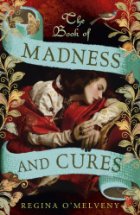 Dottoressa Gabriella Mondini’s father left ten years ago in search of more exotic cures for his book of medicine. Since then, Gabriella, who he trained as a doctor himself, has seen to her round of patients and rattled around in her house with only her mother for company. Her father’s letters have become increasingly vague, without locations, and she’s begun to worry that he’ll never return. When she’s informed that she is no longer allowed to practice medicine in her home city of Venice, Gabriella feels her ties to her home fall away, and sets off on a journey in search of her lost father and the secrets he’d discovered. Dottoressa Gabriella Mondini’s father left ten years ago in search of more exotic cures for his book of medicine. Since then, Gabriella, who he trained as a doctor himself, has seen to her round of patients and rattled around in her house with only her mother for company. Her father’s letters have become increasingly vague, without locations, and she’s begun to worry that he’ll never return. When she’s informed that she is no longer allowed to practice medicine in her home city of Venice, Gabriella feels her ties to her home fall away, and sets off on a journey in search of her lost father and the secrets he’d discovered.
From the very start of this book, Gabriella is in opposition against everyone around her, and she spends quite a large portion of the book fighting against expectations or, when she’s not able to safely, hiding from those who would do her harm. She spends parts of the book dressed as a boy, or pretending she isn’t actually a doctor, but mostly she is proud of and enjoys her calling, so she shares it with those around her.
This does, however, make for a book that feels kind of exhausting as you’re reading it. Gabriella’s journey takes her from Venice up to Edinburgh and down to Northern Africa; it feels as though she travels forever and that things never get easier. And, every time I thought they just might, she decides to keep moving on and ignore the fact that happiness might be around the corner. I could understand that she hadn’t found her father yet, but she sacrifices a considerable amount in the pursuit of him.
It’s because her search isn’t really about finding her father; it’s about finding who she actually is on her own, without him. Just being a doctor in her native Venice isn’t enough, not when she’s just resting on her father’s laurels, and she somehow believes that in finding him, she’ll settle a part of her heart that’s been lost since he left. It’s a very readable journey, but in all honesty, I did actually find it exhausting and frustrating as she turns down several opportunities to find that something.
Otherwise, I enjoyed this book; it portrays a huge swathe of Europe through a foreigner’s eyes. It’s a relatively easy read, yet remains heartfelt throughout the novel as Gabriella sorts through all of her feelings about the world around her and the people who inhabit that world.
The Book of Madness and Cures is a solid read, though not without its flaws; I’d probably only recommend it to someone else who already enjoys historical fiction or a book about a woman who seeks to discover herself.
All external book links are affiliate links. I received this book for free from the publisher.
 Emil Larsson is a Swedish tax inspector of sorts at the close of the 18th century, responsible for ensuring that shipping to and from Stockholm’s port is run properly. A frequent gambler and relatively happy singleton, he is dismayed when his employer demands that he acquire a wife in order to appear more respectable. While waiting to get his own cards read in order to help him find this wife, Larsson discovers that Mrs Sparrow, who runs his favorite gaming house, is actually very close to the Swedish king, and that his own fortune is a small part of the overall scheme taking control of Swedish politics. Emil Larsson is a Swedish tax inspector of sorts at the close of the 18th century, responsible for ensuring that shipping to and from Stockholm’s port is run properly. A frequent gambler and relatively happy singleton, he is dismayed when his employer demands that he acquire a wife in order to appear more respectable. While waiting to get his own cards read in order to help him find this wife, Larsson discovers that Mrs Sparrow, who runs his favorite gaming house, is actually very close to the Swedish king, and that his own fortune is a small part of the overall scheme taking control of Swedish politics.
Those who have read about the French Revolution may recognize that this time period was dramatic for Sweden, too; Count Axel von Fersen, one of Marie Antoinette’s rumored lovers and a key component in their failed escape plan, was Swedish and closely connected to the royal family there. France’s royal family aren’t the only ones in danger, as Sweden’s monarchy is fragile too, with a revolution brewing. Framed through this series of octavos, Emil has to work out the eight influential people around him and understand just how those people influence others in order to help change the fate of the Swedish nation – if he possibly can.
I wasn’t really sure about this book while I was reading it and I’m still not really sure about it as I’m reviewing it. Just looking at it heightens expectations; the British hardcover version of the book is truly beautiful, an elegant hardcover without a dust jacket and with a solid feel to the pages. The story is told through alternating viewpoints and as a result I found it surprisingly difficult to get at all interested in any of the characters, even Emil. He, for one, seems very mercenary and self-serving; once told he has to get married, he just chooses pretty girls without making any real attempt to get to know them or relate to them. I don’t think I’m someone who really needs to fall in love with a character in order to enjoy a book, but I certainly think it would have helped this one.
In addition, it’s a book that starts out slowly and really needs an initial element to help draw readers in. Purported to be a mix of romance, history, intrigue, and card-playing, it sounds more exciting than it actually is. There were some parts I found fascinating; the sections around fan-making and the fan language, for instance, and the little bits of history about the Swedish royal family and the history. The book is well written and very descriptive, bringing this frostier part of the world to life; but I felt while I was reading that there was something missing, a spark that would bring it all together and move this from being a good book into a great one.
A book I’d probably hesitate to recommend to any but a fellow historical fiction reader, The Stockholm Octavo is a decent read but not one that lives up to its promise, for me at least.
I am an Amazon Associate. I received this book for free for review.
 Rinette Leslie, a girl who can read truth in flowers, is entrusted with a casket by Scotland’s dying queen. Destined for Mary, known to history as Queen of Scots, the casket contains predictions made by Nostradamus, meant to protect her from the folly in her future. But foolishly, Rinette shows the casket to her young husband, the man she loves with all her heart, and decides not to go back to Edinburgh to put it in its secret hiding place or give the casket to Mary. After all, she’s happy in her seaside castle, and she trusts him. But when the secret of the casket gets out, the lives of Rinette, her husband, and her young child are in grave danger. Rinette Leslie, a girl who can read truth in flowers, is entrusted with a casket by Scotland’s dying queen. Destined for Mary, known to history as Queen of Scots, the casket contains predictions made by Nostradamus, meant to protect her from the folly in her future. But foolishly, Rinette shows the casket to her young husband, the man she loves with all her heart, and decides not to go back to Edinburgh to put it in its secret hiding place or give the casket to Mary. After all, she’s happy in her seaside castle, and she trusts him. But when the secret of the casket gets out, the lives of Rinette, her husband, and her young child are in grave danger.
I’ve never heard of the art of “floromancy” before, but it’s an art that makes sense and has a grounding in history. Rinette can read flowers, by which I mean she can apply the meanings of flowers to the future. It kind of goes along with the idea that a certain color rose means passion, a different one love, a different one grief, and so on, but Rinette can see meanings in all different kinds of flowers, as though they speak to her. It’s an intriguing premise and adds an element of magic to what could have been a relatively standard historical thriller.
It is a thriller, this book; it’s full of twists and turns and death and mystery. Rinette is put through agonies on multiple occasions, her spirit crushed, buried in mourning and regret and sorrows, all due to a casket that she didn’t even want anything to do with. All she wants is to live quietly in Granmuir by the sea, and it’s a desire that grows with time as her life spins out of control, forced to the whims of the court and the royalty around her. Loupas did a great job creating such a sympathetic character who suffers much too severely for the faults of youth that many of us will recognize in ourselves. Her mistake in trusting the husband she adores, a man who clearly isn’t trustworthy, haunts her even as she seeks to find his murderer and exact revenge.
I also loved the refreshing take that this sort of book gave on sixteenth-century Scotland; we’re right at the start of Mary’s reign, and even at her court, many of the more controversial elements of her later life are only just beginning. The future is still completely open to her, but she’s not an admirable character, and it’s very clear that we’re not meant to like her or her mother. Instead, Rinette gets all of our sympathy, and she certainly deserves it.
I would definitely recommend The Flower Reader to a reader who is generally interested in historical fiction, particularly those who love Tudor era fiction but are tired of Henry VIII and his antics. It’s a well-paced, well-written read with a good basis in history but enough of a fantasy touch to make it feel fresh.
All external book links are affiliate links. I received this book for free for review.
 Newly crowned queen, Marie Antoinette and her husband Louis XVI represent a return to glory for France and new hope for the future – for a short while, at least. Unfortunately, the disaffection that the French feel towards their monarchy only grows, and Marie Antoinette, guilty or not, is the focal point of their unhappiness. Everything from her expenditure to her origin is put into question, whether right or wrong, and her struggle to have a child isn’t a help either. Throughout these difficult years of Louis’s reign, Marie Antoinette faces daily struggles in all areas of her life, from deceitful subjects to a secret affair to growing discontent among the French people. Newly crowned queen, Marie Antoinette and her husband Louis XVI represent a return to glory for France and new hope for the future – for a short while, at least. Unfortunately, the disaffection that the French feel towards their monarchy only grows, and Marie Antoinette, guilty or not, is the focal point of their unhappiness. Everything from her expenditure to her origin is put into question, whether right or wrong, and her struggle to have a child isn’t a help either. Throughout these difficult years of Louis’s reign, Marie Antoinette faces daily struggles in all areas of her life, from deceitful subjects to a secret affair to growing discontent among the French people.
Juliet Grey’s first book in the Marie Antoinette trilogy was incredibly captivating; the detail rich story of a young girl taken to a foreign court and specifically groomed to be a queen worked perfectly under her control. Days of Splendor, Days of Sorrow is much the same, while portraying the middle years of Marie Antoinette’s life and the start of her reign.
It’s easy to forget that this queen was just a teenager when her husband came to the throne; a lot of eighteen and nineteen-year-olds are completely incapable of acting like adults, and here she is expected to bear a child, settle down, and behave respectably. Forced into an incredibly awkward situation where she is unable to actually serve the purpose of getting France an heir through no fault of her own, she has nowhere to go but seek pleasure and distraction elsewhere.
Juliet Grey does an exceptional job of helping the reader understand Marie Antoinette’s faults and the reasons for them, especially when it comes to feeling sympathetic for her. That was definitely one of the highlights of the book for me; I felt so strongly for this particular character that I really wanted history to change. And even as it charged down its pre-set track, I still felt for her and wanted things to improve somehow, some way.
There were actually elements of the history that I’d forgotten but which were clearly pivotal in Marie Antoinette’s life and which play a big role in this book. I also really liked the way the author re-integrated some of the aspects of the previous book into the beginning of this one, so I was reminded of how much I appreciated the little details of her transition to a princess of France. It puts the book into its proper context.
It’s also a reminder of how welcome this trilogy is, as it does such a better job of portraying an entire life than a single book could. Marie Antoinette’s life is complex and changing. Even in this book, a considerable amount of time is skipped, but these years are very eventful ones and they set the scene for the inevitable, which we all know is coming.
This whole trilogy is a very well-done, evocative portrait of the French court during the reign of Louis XVI and Marie Antoinette, and does a fantastic job of getting inside the famous queen’s head and positing what might have motivated her to act as she did. Days of Splendor, Days of Sorrow is highly recommended – but I do suggest you start with the first in the trilogy. I’m simultaneously dreading and anticipating the last installment, as I’m sure it will be an excellent read, though incredibly heart-rending.
All external book links are affiliate links. I received this book for free for review as part of the Historical Fiction Virtual Book Tour.
 Thomas of Hookton and his men, familiar to readers of Bernard Cornwell after the events of his Grail Quest series, are still in the middle of France, seeking to help Edward III and his son Edward, the Prince of Wales, called the Black Prince but not in his own time, to win the Hundred Years’ War. Focusing on the Battle of Poitiers, a true historic battle fought by the Black Prince, Cornwell takes Thomas around the lead-up to the battle where he must seek another holy relic, protect his wife and his men, and face down corruption from the Church’s most inner circles. Thomas of Hookton and his men, familiar to readers of Bernard Cornwell after the events of his Grail Quest series, are still in the middle of France, seeking to help Edward III and his son Edward, the Prince of Wales, called the Black Prince but not in his own time, to win the Hundred Years’ War. Focusing on the Battle of Poitiers, a true historic battle fought by the Black Prince, Cornwell takes Thomas around the lead-up to the battle where he must seek another holy relic, protect his wife and his men, and face down corruption from the Church’s most inner circles.
I love reading Bernard Cornwell’s medieval historical fiction; when I’m reading one of his books, I feel I’m actually getting fairly close to the way things would have been in a battle, at least as close as fiction can bring me at present. Cornwell does sometimes like to introduce slight supernatural elements which do serve to remind me that actually, I’m not in the *real* 1356. In context, though, knowing that people of this era believed that they had holy relics and deeply in the power of their religion, this works surprisingly well, and doesn’t ruin the feel of the book for me at all. In this book, Thomas is after a sword; in his previous trilogy, he sought the Holy Grail.
Throughout 1356, the characters do move around the countryside, and we learn about many of the things that made the Black Prince and the Hundred Years’ War relatively famous. The chevauchées throughout the countryside, weakening the French significantly, the practice of tournaments, and the strength of the English archers and the significant advantage they represented all feature majorly in the book. Chivalry is demonstrated most eloquently through a particular character, Roland, who believes himself to be a knight without reproach, convinced by romances that he was meant to always fight honorably and in a certain way. He learns, over the course of the book, that actually, it’s about winning, not really so much about remaining honorable at this stage in history. Chivalry is a fascinating subject and one that I spent some time studying, and I loved that Cornwell featured a small tournament on the outskirts of the battle, as did genuinely happen, as part of Roland’s learning process.
As usual, Cornwell’s battle scenes are gripping and his writing kept me very interested as I progressed through the book. I really like his down-to-earth style. I generally don’t feel too attached to his characters, but I felt like this set of them was very well-rounded, as though they could have been real people, helped by the fact that I’ve read books featuring them before. Even the new additions stand out in my memory, though, and I liked how they faced individual challenges, yet all had a part to play in the massive battle that came at the end.
Overall, another excellent addition to Cornwell’s impressive collection of historical fiction works. You needn’t read the Grail Quest series to enjoy this book, although I do think it adds to it – all you need is a keen interest in history. Recommended.
All external book links are affiliate links. I received this book for free for review from the publisher.
Bernard Cornwell’s latest novel, 1356, releases this week from Harper Collins in the UK. In honor of the release, the publisher has given me permission to share this excerpt with you – a perfect demonstration of just how excellent Cornwell is at writing battle scenes. Enjoy, and I hope you’ll return to read my review of the whole book tomorrow!
“The dauphin’s battle aimed itself at the centre of the English line. The widest gap in the hedge was there and, as the French came closer, they saw the largest banners flying above the waiting men-at-arms beyond the gap, and those banners included the impudent flag that quartered the French royal arms with England’s lions. That banner proclaimed that the Prince of Wales was there and, through the slits in their visors, the French could see the prince mounted on a horse, sitting close behind the line, and the battle anger was on them now. Not just anger, but terror, and for some men joy. Those men worked their way to the front rank. They were hungry for fighting, they were confident, and they were savagely good at their trade. Many other men were drunk, but the wine had given them bravado, and the arrows were slicing in from left and right, striking shields, crumpling on armour, sometimes finding a weak spot, but the attack flowed around the fallen men and, so very close now, the French broke into a run, screaming, and fell on the English.
That first rush was the most important. That was when the shortened lances could knock the enemy over, when the axes and hammers and maces would be given extra impetus by the charge, and so the dauphin’s men screamed at the tops of their voices as they charged, as they swung, thrust, and chopped their weapons.
And the English line went back.
They were forced back by the fierceness of the charge and by the weight of men who crammed through the gap, but though they went back, they did not break. Blades crashed on shields. Axes and maces slashed down. Lead-weighted steel crumpled helmets, shattered skulls, forced blood and brains to spurt through split metal, and men fell and in falling made obstacles, and other men tripped on them. The impact of the charge was slowed, men tried to stand and were stunned by blows, but the French had forced their way through the gap and now were widening the fight, attacking left and right as more men came through the hedge.
The English and Gascons were still being driven back, but slowly now. The initial impact had left men dead, wounded, bleeding, and moaning, but the line was not broken. The commanders, their horses close behind the dismounted men-at-arms, were shouting at them to stay closed up. To keep the line. And the French were trying to break the line, to cut and hammer their way through the shields so they could shatter the English into small groups that could be surrounded and slaughtered. Men hacked with axes, screamed obscenities, thrust with lances, swung maces, and the shields splintered, but the line held. It went backwards under the pressure, and more Frenchmen came through the gap, but the Englishmen and Gascons were fighting with the desperation of trapped men and the confidence of troops who had spent months together, men who knew and trusted each other, and who understood what waited for them if the line broke.
‘Welcome to the devil’s slaughteryard, sire,’ Sir Reginald Cobham said to the Prince of Wales.”
I received this book for free for review.
 In this second volume of Ben Kane’s Spartacus duology (read my review of the first), Spartacus has already been acknowledged as a serious threat to the Roman people. While he and his pregnant wife Ariadne are keen to return his army to Thrace and re-take his homeland, his army, made up of slaves from across the empire, is more interested in plundering Rome’s heartland and establishing a base where the land is rich. Spartacus has to choose whether to retake his homeland, but lose his army in the process, or stay in Rome and attempt to subvert the incredible power of the Roman state. In this second volume of Ben Kane’s Spartacus duology (read my review of the first), Spartacus has already been acknowledged as a serious threat to the Roman people. While he and his pregnant wife Ariadne are keen to return his army to Thrace and re-take his homeland, his army, made up of slaves from across the empire, is more interested in plundering Rome’s heartland and establishing a base where the land is rich. Spartacus has to choose whether to retake his homeland, but lose his army in the process, or stay in Rome and attempt to subvert the incredible power of the Roman state.
As with Spartacus: The Gladiator, Ben Kane delivers an action-paced historical fiction novel with Spartacus: Rebellion. Their release relatively close together means that we can seamlessly pick up the story from one to the other, and that’s really the way these books are meant to be read. They are two halves of one story that really belongs in one, and neither book will really stand alone particularly well without the other, especially not this one. It picks up right after the events of the first book and all of the tensions between the characters already exist and intensify over the course of the book.
This might come as a surprise to you, but I actually didn’t know what happened to Spartacus at the end of the book. I won’t spoil it, but this made the book far more gripping than normal historical fiction fare is. Spartacus and all of the people around him really do have to fight for their lives, as the Roman state out in force is determined to kill them and eradicate any threat that they represent to the orderly Roman way of life, slaves and all. It made for a surprisingly exciting book, and I really enjoyed feeling like I had no idea what was going to happen next.
As I’ve mentioned for the previous book in this set of two, Ben Kane writes historical fiction in what I tend to call the “gritty” way. There is no court here, no fancy trappings or much political intrigue; there is battle, and blood, and death, and deception. It’s a refreshing change when you read quite a bit of historical fiction focused on royalty and the people at the top, and though Spartacus is certainly a leader of his men, he doesn’t get puffed up with ego and remains very much an inspiring character, for both the men in the book and for the reader.
This duology is an excellent choice for anyone who prefers the “grittier” historical fiction with all of the violence that entails, or those who are interested in fiction set during the Roman Republic. Definitely recommended.
All external book links are affiliate links. I received this book for free for review.
 Hannah Levi is renowned as the best midwife Venice has to offer. She delivers babies that no other midwife can manage, aided by her set of birthing spoons that enable her to pull reluctant babies from their mother’s wombs, saving both of them. But Hannah is Jewish, which means that she can’t practice on Christian mothers and babies, until a nobleman enters her house and begs for her help to save his wife. Hannah’s initial reluctance vanishes when the count offers her enough money to ransom her husband, who has been captured at sea and enslaved for months. Her choice to try and save mother and baby creates an intense rivalry amongst the count’s family that endangers everything she strove to save and may leave her husband trapped on Malta forever. Hannah Levi is renowned as the best midwife Venice has to offer. She delivers babies that no other midwife can manage, aided by her set of birthing spoons that enable her to pull reluctant babies from their mother’s wombs, saving both of them. But Hannah is Jewish, which means that she can’t practice on Christian mothers and babies, until a nobleman enters her house and begs for her help to save his wife. Hannah’s initial reluctance vanishes when the count offers her enough money to ransom her husband, who has been captured at sea and enslaved for months. Her choice to try and save mother and baby creates an intense rivalry amongst the count’s family that endangers everything she strove to save and may leave her husband trapped on Malta forever.
I wasn’t really sure what to expect from The Midwife of Venice; even though I had it for review, it spent a bit too long on the shelf before I finally persuaded myself to pick it up and give it a try. Compared to The Red Tent and People of the Book – both books I loved – it did sound like something I would like, but I simply don’t crave historical fiction these days. With this book, I was initially reluctant and it took me a few pages to get into it, but before long I became invested in Hannah and Isaac and eager to find out what happened to each of them next.
The story is told through alternating viewpoints, with Hannah in Venice and Isaac stranded in Malta. Each of them deal with completely different difficulties, but one of the constants of the book is their longing to be back together, though they’ve been separated for months and fear the other dead. It’s a story about an established love, which doesn’t occur quite as often as new romance in a book like this one.
In addition, Hannah’s half of the story revolves around the uniquely female sphere of childhood and, in that time, child-rearing. Many of the people she deals with are women, and in fact the only kind character who is male on her side of the story is the count himself. His wife, the previous midwife, and Hannah’s sister all have a role to play in her quest to get her husband back, making the female relationships in this novel intriguing even as we note how precarious their positions are. Hannah, as a Jewish midwife, is intensely vulnerable when delivering a Christian child, as she could be accused of killing the baby and its mother in a heartbeat. Her sister, a converted Christian prostitute, also faces the very severe difficulties of her position, especially when we discover exactly how she ended up that way.
I found Isaac’s side of the story somewhat less compelling, as he battles against people trying to enslave him and stays faithful to his religion despite the temptation of nourishment and safety. I’m not entirely sure why; I know that slave stories are important, but Isaac’s didn’t have much to add, and people in general just seemed too keen to help him. I know this sounds like me saying “he isn’t suffering enough!” but it just felt somewhat unrealistic that he’d have multiple helpers devoted to rescuing him when undoubtedly most captured slaves had a very difficult time of it.
Reservations aside, The Midwife of Venice is a book that I enjoyed very much, and would be a perfect fit for someone looking for historical fiction outside the standard templates of Great Britain, monarchy, or Rome.
All external book links are affiliate links. I received this book for free for review.
 Standing on the edge of the Peninsular War and the true beginning of her adult life, newly married Harriet Raven moves to London, restless and discontented. Her husband, James, is posted to Spain as a Captain of the 9th Regiment, under the command of Lord Wellington. While Harriet befriends Lady Wellington in London, witnessing progress firsthand and trying to work out what she should do with herself, James is thrust for the most part into the thick of battle. Over the course of three years, lives change, and married couples form in isolation of each other, unprepared for what life intends to throw at them. Standing on the edge of the Peninsular War and the true beginning of her adult life, newly married Harriet Raven moves to London, restless and discontented. Her husband, James, is posted to Spain as a Captain of the 9th Regiment, under the command of Lord Wellington. While Harriet befriends Lady Wellington in London, witnessing progress firsthand and trying to work out what she should do with herself, James is thrust for the most part into the thick of battle. Over the course of three years, lives change, and married couples form in isolation of each other, unprepared for what life intends to throw at them.
This is a complicated story that is incredibly difficult to describe. There is a host of historical characters, from Lord and Lady Wellington to the Prince Regent and Frederick Winsor, the man who introduced gas lighting to Britain. Harriet, her husband, and most of the people we are more closely involved with are fictional, seemingly designed to set in contrast the difference between war and home and as always the way society changes. There are many threads to this novel, from the enticing prospect of blood transfusions, to marital infidelity, to war and the endless human need to wage war with one another. Painters, writers, businessmen, scientists, doctors; we get a huge swathe of society in just over 350 pages.
As you might expect, then, this book is something of a challenge; the third person narration switches between characters who are together sometimes within the same paragraph, leaving me feeling somewhat on edge and careful to check that I understood what was happening. The Peninsular War is a conflict that was new to me and in this case Tillyard’s view as a historian ensures that the book contains all the small details that make such a war fleshed out and understandable for her readers. There are many historical events taking place here, changing the very face of London with gas lighting, changing healthcare with experiments on blood transfusion, changing the lives of workers with the introductions of mills and factories.
It’s perhaps too many issues for a single book, and the large cast of characters and huge number of causes limits the author’s ability to simply tell a good story. It’s beautifully written with a number of passages that caught my attention, but there is almost too much happening for any single focus, which means that the book isn’t really all that compelling. It never called to me from its place on the bedside table, although I certainly felt that it should. I just never particularly liked any of the characters, barring perhaps one, but he doesn’t really appear in the narrative quite often enough to draw me in, and I didn’t feel that there was anything about the plot (if there really was one) to keep me going.
Ultimately, I found Tides of War disappointing, even as someone who loves history.
All external book links are affiliate links. I received this book for free for review from Amazon Vine.
 Ruling Rome is a dangerous business, and Emperor Nero is on the throne without an heir, about to learn this to his peril. Young Aulus Caecina Severus, nearly thirty years old and just recently covered in glory thanks to a successful campaign against Boudicca in Britain, is caught up in a scheme against Nero that could lead to incredible danger or even more glory and authority. For his appointed emperor, he’s required to lead armies, commit treason, fight against his own people, and even suffer torture. Told from the perspective of his older self, Severus takes us through what is called the Year of Four Emperors as we witness some of the worst depths of the Roman political machine. Ruling Rome is a dangerous business, and Emperor Nero is on the throne without an heir, about to learn this to his peril. Young Aulus Caecina Severus, nearly thirty years old and just recently covered in glory thanks to a successful campaign against Boudicca in Britain, is caught up in a scheme against Nero that could lead to incredible danger or even more glory and authority. For his appointed emperor, he’s required to lead armies, commit treason, fight against his own people, and even suffer torture. Told from the perspective of his older self, Severus takes us through what is called the Year of Four Emperors as we witness some of the worst depths of the Roman political machine.
Unlike a lot of the other Roman focused historical fiction I read, this isn’t really a blood and guts, down to earth, as it really was book. It could have been fairly easily and at times it approaches that level. After all, Severus sees his fair share of battles, and the book opens with one. But Severus’s tone makes it very clear to us that he is more sophisticated than that. He’s not a plain soldier, but a man who feels he warrants greater things and who has been educated to take them. I think the book’s mildly arrogant tone perfectly fits a Roman citizen who spends most of the book amongst people he calls barbarians in Rome’s conquered territories.
Though the politics of this particular period in history are fairly complex, Venmore-Roland does a good job of simplifying them enough that he won’t lose his audience while keeping the tension high. I’d never heard of this period in history, and I was definitely intrigued enough to keep on reading throughout. There are a lot of back door conversations and at times the info-dumping gets very severe. This is a natural consequence of the fact that our main character is far away from Rome, the nerve center of most of the rebellion, and has to receive information and instructions from messengers. He’s also very, very reactionary in this respect. There are a few times when he takes action, like when he leads a battle and saves his men from complete destruction, but usually he hears about or is faced with an event and has to react to it.
What this book does focus on is the level of treachery that could go on within the Roman empire. Severus takes part in a rebellion against the sitting emperor, other people join the rebellion and then defect, he fights against men who are essentially on the same side as him thanks to treachery, and so on, without spoiling the actual events of the book. It’s an entertaining ride through treason, that’s for certain.
The Last Caesar would be a great historical fiction read for someone who is particularly interested in the Roman empire or would like a battle-focused novel without the same blood-and-guts feel of similar books in the genre.
All external book links are affiliate links. I received this book for free for review.
|
|



Recent Comments